<?xml version="1.0" encoding="utf-8" ?>
<rdf:RDF xmlns:rdf="http://www.w3.org/1999/02/22-rdf-syntax-ns#" xmlns:dc="http://purl.org/dc/elements/1.1/" xmlns:syn="http://purl.org/rss/1.0/modules/syndication/" xmlns="http://purl.org/rss/1.0/">


<channel rdf:about="https://www.iea.usp.br/en/search_rss">
  <title>en</title>
  <link>https://www.iea.usp.br</link>

  <description>
    
            These are the search results for the query, showing results 1 to 15.
        
  </description>


  <image rdf:resource="https://www.iea.usp.br/logo.png" />

  <items>
    <rdf:Seq>
      
        <rdf:li rdf:resource="https://www.iea.usp.br/en/news/biodiversity-future-of-life" />
      
      
        <rdf:li rdf:resource="https://www.iea.usp.br/en/news/the-challenges-to-agriculture-from-climate-change" />
      
      
        <rdf:li rdf:resource="https://www.iea.usp.br/en/news/seminar-discusses-education-for-agroecology-in-various-sectors" />
      
      
        <rdf:li rdf:resource="https://www.iea.usp.br/en/news/tour-saopaulo1" />
      
      
        <rdf:li rdf:resource="https://www.iea.usp.br/en/programme" />
      
      
        <rdf:li rdf:resource="https://www.iea.usp.br/en/news/opening-ica" />
      
      
        <rdf:li rdf:resource="https://www.iea.usp.br/en/imagens/logotipo-cop-21" />
      
      
        <rdf:li rdf:resource="https://www.iea.usp.br/en/imagens/logo-ubias" />
      
      
        <rdf:li rdf:resource="https://www.iea.usp.br/en/images/live" />
      
      
        <rdf:li rdf:resource="https://www.iea.usp.br/en/news/jose-luis-lezama-discusses-the-outlook-for-climate-negotiations" />
      
      
        <rdf:li rdf:resource="https://www.iea.usp.br/en/news/intercontinental-academias-programme" />
      
      
        <rdf:li rdf:resource="https://www.iea.usp.br/en/imagens/ii-edicao-intercontinental-academia" />
      
      
        <rdf:li rdf:resource="https://www.iea.usp.br/en/news/iea-participates-in-event-on-social-movements-in-turkey" />
      
      
        <rdf:li rdf:resource="https://www.iea.usp.br/en/imagens/stem-cell" />
      
      
        <rdf:li rdf:resource="https://www.iea.usp.br/en/imagens/home-paisagens" />
      
    </rdf:Seq>
  </items>

</channel>


  <item rdf:about="https://www.iea.usp.br/en/news/biodiversity-future-of-life">
    <title>The Importance of Biodiversity for the Future of Life</title>
    <link>https://www.iea.usp.br/en/news/biodiversity-future-of-life</link>
    <description></description>
    <content:encoded xmlns:content="http://purl.org/rss/1.0/modules/content/"><![CDATA[<p><img src="https://www.iea.usp.br/imagens/photo-vera-lucia-imperatriz" alt="Photo Vera Lucia Imperatriz" class="image-left" title="Photo Vera Lucia Imperatriz" />It is significant that the <a class="external-link" href="http://ica.usp.br/">Intercontinental Academia</a> commenced in 2015 and tackled “time” as its central theme, because this is surely a critical year when humanity must make urgent decisions about its future.</p>
<p class="Text">On three occasions this year, world leaders will decide about forthcoming decades. In July, the heads of state will gather to discuss how to finance development. In September, the United Nations’ Sustainable Development Goals will be adopted. In December, UN member countries will negotiate the new Global Climate Agreement.</p>
<p class="Text">To discuss difficulties imposed upon life on our planet in the recent past, global transformations and the prospects for biodiversity in the coming decades, the Intercontinental Academia invited biologist <a class="external-link" href="http://ica.usp.br/people/vera-lucia-imperatriz-fonseca">Vera Lúcia Imperatriz-Fonseca</a>, from the Biosciences Institute of the University of São Paulo and coordinator of Ecosystems Services research group of the IEA.</p>
<p class="Text">On April 25, Vera Lucia gave the conference <i>Biodiversity and Global Policies</i>, in which she addressed the impact of human actions on the environment, highlighting the growing loss of biodiversity and the negotiations that could lead to the protection of ecosystems and to mitigating the effects of climate change on them.</p>
<p class="Text">Vera Lúcia adheres to the proposal that classifies our planet’s history from the onset of the Industrial Revolution, in the 19<sup>th</sup> century, as a new epoch, the <i>Anthropocene</i>, which follows the Holocene that began 11,500 years ago, at the end of the last glaciation. The intense, human-induced transformations of the environment would be the defining feature of the Anthropocene.</p>
<p class="Text">Vera Lúcia also stated that several important indicators related to global change began to grow exponentially in the mid-20<sup>th</sup> century, including total world population, use of previously virgin land, world Gross Domestic Product (GDP), river drainage, fertilizer consumption, water use, paper consumption, international tourism, use of motor vehicles and urban population. One consequence of this situation is that an enormous portion of the Earth’s surface is now occupied by urban areas, agriculture and livestock.</p>
<p class="Text">According to her, we should take notice of the huge amounts of carbon emissions that are “transferred” from country to country by the international trade of goods. The same applies to the use of water in the production of industrial and agricultural goods. She said that, in these terms, China is a major importer of water, “although it is also adopting various measures to restore the environment for future generations.”</p>
<p class="Text">She said that in 1700 the world population was 650 million and that less than 2% of terrestrial ecosystems had been altered, whereas the forecast for 2025 is that population will reach 8.2 billion and that more than half of the ecosystems will have undergone change.</p>
<p class="Text">Vera Lúcia reported that awareness of the environmental and sustainability issues has grown since the 1972 <i>Brundtland Report</i> of the World Commission on Environment and Development and subsequent forums on biodiversity and climate negotiation, such as Rio 92, Rio +20 and others.</p>
<p class="Text">She also mentioned the hurdles we face to adopt international policies for the benefit of the environment, such as the Millennium Ecosystem Assessment (MA) initiative.</p>
<p class="Text">In 2000, the then-U.N. Secretary General, Kofi Annan, asked 1,360 experts to expound the importance of preserving nature. This survey resulted in the Millennium Ecosystem Assessment, which assessed the consequences for human well-being of changes in ecosystems, as well as the scientific bases for actions needed to improve ecosystem conservation and sustainability.</p>
<p class="Text">However, Vera Lucia stated, when the effort was presented to UN member states, they did not embrace it, because they deemed it was an initiative of the UN Secretariat and not something negotiated and approved by the signatory countries of the organization.</p>
<p class="Text">According to Vera Lucia, after governments rejected the MA, a group of countries, with the active participation of then-French president Jacques Chirac, began to wonder if there might be new possibilities for dealing with biodiversity and they “eventually organized a panel similar to the Intergovernmental Panel on Climate Change (IPCC).”</p>
<p class="Text">“Chirac believed that much was already known about climate change, and that similar work had to be carried out with regard to biodiversity.”</p>
<p class="Text">In the UK, there was talk of a “perfect storm,” characterized by population growth, sprawling urbanization and climate change, comingled with the goals of poverty reduction, namely, the need to provide more food, more water and more energy to those in need.</p>
<p class="Text">The proposal asked several questions, including whether 9 billion people can be fed equitably, sustainably and healthily, how to deal with the future demand for water, how to provide sufficient energy, how to mitigate the effects of climate change – and if all this can be done while preserving biodiversity at an acceptable level.</p>
<p class="Text">“Preservation is essential because biodiversity takes a long time to come about; furthermore, the morphology, anatomy and appearance of animals are very important aspects of genetic biodiversity – and we will need them if we hope to face the manifold upcoming transformations, especially those resulting from climate change. Molecular tools provide examples of how to identify populations, and how to assess if they are suited for thermal regulation or have the ability to live in harsh environmental conditions.”</p>
<p class="Text">Vera Lúcia recalled that the UN will adopt a new agenda in September, the Sustainable Development Goals (SDG), developed by researchers. “In this new paradigm, we have the economy at the center, the society around it and the system supports life on Earth surrounding both.”</p>
<p class="Text">This unified panorama comprises a set of six goals derived from combining the Millennium Development Goals with the conditions necessary to ensure the stability of the Earth’s systems.</p>
<p class="Text">The six goals are: better living conditions and livelihoods, sustainable food security, sustainable water security, universal clean energy, productive and healthy ecosystems, and governance for sustainable societies.</p>
<p class="Text">In the final part of the conference, Vera Lúcia spoke of a project in which she is directly involved, the Intergovernmental Platform on Biodiversity and Ecosystem Services (EPBES), launched in April 2012. The platform was created by the international community as an independent intergovernmental body open to all UN members.</p>
<p class="Text">The initiative aims to provide politically relevant knowledge of biodiversity and ecosystem services to support decision-making, and currently includes 124 member countries, as well as several United Nations partner agencies: the Food and Agriculture Organization (FAO), the Educational, Scientific and Cultural Organization (UNESCO), the Environment Program (UNEP) and the Development Program (UNDP).</p>]]></content:encoded>
    <dc:publisher>No publisher</dc:publisher>
    <dc:creator>Fernanda Rezende</dc:creator>
    <dc:rights></dc:rights>
    
      <dc:subject>Biology</dc:subject>
    
    
      <dc:subject>Ecology</dc:subject>
    
    
      <dc:subject>Climate Change</dc:subject>
    
    
      <dc:subject>Intercontinental Academia</dc:subject>
    
    
      <dc:subject>Event</dc:subject>
    
    <dc:date>2015-05-27T14:25:00Z</dc:date>
    <dc:type>News Item</dc:type>
  </item>


  <item rdf:about="https://www.iea.usp.br/en/news/the-challenges-to-agriculture-from-climate-change">
    <title>The Challenges to Agriculture from Climate Change</title>
    <link>https://www.iea.usp.br/en/news/the-challenges-to-agriculture-from-climate-change</link>
    <description></description>
    <content:encoded xmlns:content="http://purl.org/rss/1.0/modules/content/"><![CDATA[<p style="text-align: justify; "><img src="https://www.iea.usp.br/imagens/logo-da-cop21-1" alt="Logo da COP21 - 1" class="image-right" title="Logo da COP21 - 1" />After discussing Brazil’s water crisis and energy matrix in the first two debates, the cycle <i>Towards COP 21: The Groundwork to Paris</i> will dedicate the third meeting to the challenges to agriculture posed by climate change. The event will be held on October 14, at 9:30 am.</p>
<p class="Text" style="text-align: justify; ">The topic of debate will be <i>Climate Change and Food Security: Will We Be Able To Feed 10 Billion People?</i> Marcelo Vieira, from the Brazilian Rural Society, will be the speaker and moderator, and the panelists will be Paulo Faveret, from the National Bank for Economic and Social Development (BNDES); Luiz Fernando Amaral, from Rabobank; and Weber Amaral, from USP’s Luiz de Queiroz School of Agriculture.</p>
<p class="Text" style="text-align: justify; ">The main issues to be discussed are:</p>
<ul style="text-align: justify; ">
<li>How agriculture will feed 10 billion people</li>
<li>How to reconcile the production of food, fiber and energy in a sustainable and conscious manner</li>
<li>The role of agriculture as an important vector for adaptation and for reducing the emission of greenhouse gases</li>
<li>Agriculture as a key element for generating income and reducing the impacts on urban environments in a scenario of climate change and of economic, political and environmental instability.</li>
</ul>
<p style="text-align: justify; "> </p>
<table class="tabela-esquerda-200-borda">
<tbody>
<tr>
<th>
<h3><span>Related material</span></h3>
<p><a href="https://www.iea.usp.br/midiateca/video/videos-2015/las-negociaciones-climaticas-de-paris-2015-y-el-futuro-del-clima-planetario" class="external-link">Las Negociaciones Climáticas de París 2015 y el Futuro del Clima Planetario</a><span> – conference in Spanish with José Luis Lezama (Colegio de México)</span></p>
</th>
</tr>
</tbody>
</table>
<p style="text-align: justify; "><span><strong>THE CYCLE</strong></span></p>
<p style="text-align: justify; ">The cycle <i>Towards COP 21: The Groundwork to Paris – Climate Change, Adaptation, Solutions and Opportunities</i> seeks to identify and discuss opportunities to change patterns of emission of greenhouse gases. Another goal is to make a contribution to the Brazilian government and to the negotiators who will participate in the Conference of Parties on Climate Change Conference (COP 21) to be held in Paris, from November 30 to December 11.</p>
<p class="Text" style="text-align: justify; ">The organizers of the cycle are: University of São Paulo, the Interdisciplinary Climate Investigation center (INCLINE) and IEA’s Research Group Environment and Society. The project has the support of the Brazilian Chapter of the World Water Council, the Brazilian Network of the Global Compact (UNGC), Arquivos do Futuro and CPFL Energia. Three USP professors are in charge of the overall organization: Weber Amaral (Luiz de Queiroz School of Agriculture), Tércio Ambrizzi (Institute of Astronomy, Geophysics and Atmospheric Sciences) and Pedro Jacobi (IEA, FE and Procam-IEE).</p>]]></content:encoded>
    <dc:publisher>No publisher</dc:publisher>
    <dc:creator>Fernanda Rezende</dc:creator>
    <dc:rights>Translation by Carlos Malferrari</dc:rights>
    
      <dc:subject>Agribusiness</dc:subject>
    
    
      <dc:subject>Climate Change</dc:subject>
    
    
      <dc:subject>Commons</dc:subject>
    
    
      <dc:subject>Glocal</dc:subject>
    
    
      <dc:subject>Environment</dc:subject>
    
    
      <dc:subject>Event</dc:subject>
    
    <dc:date>2015-10-08T16:40:00Z</dc:date>
    <dc:type>News Item</dc:type>
  </item>


  <item rdf:about="https://www.iea.usp.br/en/news/seminar-discusses-education-for-agroecology-in-various-sectors">
    <title>Seminar Discusses Education for Agroecology in Various Sectors</title>
    <link>https://www.iea.usp.br/en/news/seminar-discusses-education-for-agroecology-in-various-sectors</link>
    <description></description>
    <content:encoded xmlns:content="http://purl.org/rss/1.0/modules/content/"><![CDATA[<p><img src="https://www.iea.usp.br/imagens/agroecologia-1" alt="Agroecologia" class="image-left" title="Agroecologia" />For agroecological practices to gain strength as an alternative to the current agricultural model, agroecology must expand its presence in Brazil formal and informal education. This was the idea that motivated the seminar <i>Dialogues on Education in Agroecology</i>, which will be held on <strong>September 16, from 9 am to 5 pm</strong> at the IEA’s Events Room. The meeting is organized by the Working Group on Agroecology, of the <a href="https://www.iea.usp.br/en/research/research-groups/philosophy-history-sociology-of-science-and-technology" class="external-link">IEA’s Research Group on Philosophy, History and Sociology of Science and Technology</a>.</p>
<p class="Text">The discussion of concepts and practices related to education for agroecology will involve representatives from various sectors: universities, social movements, and non-governmental and rural organizations.</p>
<p class="Text">Iara Fonseca, member of the Working Group on Agroecology and organizer of the meeting, explains that the choice of speakers tried to take into account the different experiences of each one with agroecological practices, establishing a dialogue between the various kinds of knowledge.</p>
<p class="Text">The speakers will be:</p>
<ul>
<li>Psychologist Beatriz Stamato, professor of Agroecology at the State University of Paraíba;</li>
<li>Forest engineer Fernando Silveira Franco, coordinator of the agronomy course with emphasis on agroecology and sustainable rural systems at São Carlos Federal University;</li>
<li>Militant of Paraná’s Landless Movement Mirelle Gonçalves, member of the educational board of the Latin American School of Agroecology;</li>
<li>Peasant Rosiéle Cristiane Ludtke, who works on the services provided by the Technical Assistance and Rural Extension (ATER);</li>
<li>UNICAMP professor Sônia Maria Bergamasco, former advisor to the Ministry of Agrarian Development;</li>
<li>Agronomist Valdemar Arl, consultant and founding member of the Ecovida Agroecology Network.</li>
</ul>
<p>They will discuss the areas where agroecological education can now be found, the methodology used, the pedagogical foundations, the political orientation and the various contributions to the subject.</p>
<p class="Text">Currently, instruction on agroecology education takes place in formal education (technical, undergraduate and graduate courses), in informal education (courses provided by social movements, cooperatives and associations) and in rural extension work driven by agroecological principles (ATER’s services).</p>]]></content:encoded>
    <dc:publisher>No publisher</dc:publisher>
    <dc:creator>Fernanda Rezende</dc:creator>
    <dc:rights>Original version in Portuguese by Fernanda Rezende</dc:rights>
    
      <dc:subject>Agribusiness</dc:subject>
    
    
      <dc:subject>Ecology</dc:subject>
    
    
      <dc:subject>Research Group: Philosophy, History, and Sociology of Science and Technology</dc:subject>
    
    
      <dc:subject>Sustainability</dc:subject>
    
    <dc:date>2015-08-27T14:50:00Z</dc:date>
    <dc:type>News Item</dc:type>
  </item>


  <item rdf:about="https://www.iea.usp.br/en/news/tour-saopaulo1">
    <title>Scientific &amp; Cultural Tour Reveals Aspects of São Paulo’s Social Inequality and Interculturalism</title>
    <link>https://www.iea.usp.br/en/news/tour-saopaulo1</link>
    <description></description>
    <content:encoded xmlns:content="http://purl.org/rss/1.0/modules/content/"><![CDATA[<table class="tabela-direita-borda">
<tbody>
<tr>
<th>
<h3>Related</h3>
<p><a href="https://www.iea.usp.br/en/news/the-relationship-between-the-university-of-sao-paulo-and-the-city-of-sao-paulo-the-buildings-and-monuments-that-display-the-myriad-architectural-influences-in-the-state-capital-and-an-overview-of-the-city2019s-social-economic-and-cultural-history-were-pre" class="external-link">Participants of the Intercontinental Academia Become Acquainted with São Paulo’s Multifariousness</a></p>
<p><a class="external-link" href="http://www.ica.usp.br/media-center/photos/roteiro-cientifico-cultural-201ccentralidades-2194-periferias201d-19-de-abril-de-2105">Pictures</a></p>
</th>
</tr>
</tbody>
</table>
<p class="Sub2"><span>The contrasts between the central region and the outskirts of the city of São Paulo were made clear to participants of the <a class="external-link" href="http://www.ica.usp.br/">Intercontinental Academia</a> (ICA) who took the scientific and cultural tour “Centralities ↔ peripheries” on Sunday, April 19. The tour also included an exposition on the relationship between migration flows and interculturality in São Paulo.</span></p>
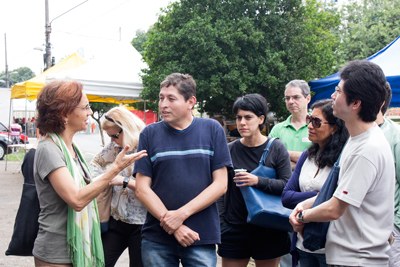
<p class="Text">The tour began downtown, at the Pateo do Collegio, São Paulo’s founding landmark, continued at USP’s Law School in São Francisco Square and the Sé Cathedral. In the second part, participants visited some of the surrounding  area and learned a little about specific features of the Pacaembu and Canindé neighborhoods, where they visited the Kantuta Square. The itinerary of the third part included the outskirts – or “periphery” as it’s more commonly called – and, specifically, the Vila Madeiros district, in the North Zone, with a lunch stop at the Mocotó restaurant. Participants also visited USP Leste (the East Zone campus of the University of São Paulo), in Jardim Matarazzo, and the Nutritional Education and Recovery Center (CREN) in Vila Jacuí.</p>
<p class="Text">The tour was hosted by <a class="external-link" href="http://www.ica.usp.br/people/speakers/sylvia-duarte-dantas">Sylvia Dantas</a>, coordinator of IEA’s Intercultural Dialogues research group and professor at UNIFESP; <a class="external-link" href="http://www.ica.usp.br/people/speakers/ana-lydia-sawaya">Ana Lydia Sawaya</a>, coordinator of IEA’s Nutrition and Poverty research group and professor at UNIFESP as well; <a class="external-link" href="http://www.ica.usp.br/people/speakers/fernando-mussa-abujamra-aith">Fernando Aith</a>, councilor for the UNESCO Chair on Education for Peace, Human Rights, Democracy and Tolerance (based at the IEA) and professor at USP’s Medical School; and <a class="external-link" href="http://www.ica.usp.br/people/speakers/susana-pasternak">Suzana Pasternak</a>, professor at USP’s School of Architecture and Urbanism (FAU).</p>
<p class="Sub1">INTERCULTURALITY</p>
<p><img src="https://www.iea.usp.br/imagens/Roteiro-cientifico-cultural-Centralidades-Periferias-29-web.jpg/@@images/c99c668d-67ba-4f49-a0f2-19a15a2f4e12.jpeg" alt="Praça Kantuta" class="image-left" title="Praça Kantuta" />Dantas explained that São Paulo was built with the help of immigrants from all over the world, especially those of Japanese and Italian descent, who arrived in the first half of the 20<sup>th</sup> century to meet the demand for agricultural and industrial labor, and who exerted great influence in the city’s cultural milieu.</p>
<p class="Text">According to her, in recent decades the city has been experiencing new immigration flows, particularly of Bolivians, who already number more than 300,000. Attracted by the growth of the Brazilian economy, these immigrants come to São Paulo in search of jobs and a better life. Many of them are in the country illegally and are submitted to degrading working conditions, low pay and exhausting work in clothing sweatshops in the Bom Retiro and Brás districts.</p>
<p class="Text">The ICA participants had the opportunity to learn more about the universe of these immigrants in Kantuta Square, where a Bolivian street market attracts nearly 3,000 people every Sunday to enjoy typical foods, crafts, folklore and dances from different regions of Bolivia. Rodrigo González, vice-president of the Padre Bento Bolivian Gastronomic, Cultural and Folklore Association, which organizes the market, spoke to the researchers about the importance of the weekly event to pass on Bolivian culture to newer generations, already born in Brazil, and to promote  cultural exchanges with Brazilians and with other Latin American immigrants.</p>
<p class="Sub1">THE LAWFUL CITY VS. THE UNLAWFUL CITY</p>
<p>As they passed through the Pacaembu neighborhood, <a class="external-link" href="http://www.ica.usp.br/people/senior-committee/martin-grossmann">Martin Grossmann</a>, IEA’s director, explained the architectural plan of the region. Based on the “garden city” concept, the project was inspired by British architecture of the Victorian era and sought to respect the natural topography, resulting in sinuous streets and houses with large lots and ample gardens.</p>
<p class="Text">Grossmann noted that this type of urban development, in a neighborhood reserved for São Paulo’s elite, contrasts with the precarious housing in the city center, where drug addicts and the homeless sleep on sidewalks or squat empty buildings, resisting the movement to expel low-income residents from downtown.</p>
<p class="Text">Aith stressed that the contrast is one of the effects of São Paulo’s accelerated growth, especially since the 1950s. Over this period, the process of uncontrolled urbanization was intensified, with a chaotic occupation of urban spaces splitting the city in two different worlds: a “lawful” city, benefitted with urban planning, regular housing and public services such as transport, water mains, electricity, schools and hospitals; and an “unlawful” city, always growing towards the periphery, in the midst of great poverty, giving rise to slums and to all kinds of substandard housing.</p>
<p class="Text">According to the councilor, in the lawful city, the difficulty of having access to regular housing, derived from São Paulo’s deep socioeconomic inequalities, pushes the poor to ever more distant places, with inadequate adequate transportation, health, sanitation and educational infrastructure.</p>
<p class="Text">In these remote areas, the people occupy land that belongs to others (private owners or the State) and embark on “self-constructions” – houses made of cheap material and built with the labor of friends and neighbors. Aith stressed that only when these illegal occupations are already at an advanced, irreversible stage does the State take action to “legalize” them by means of redevelopment projects.</p>
<p class="Sub1">THE PERIPHERY</p>
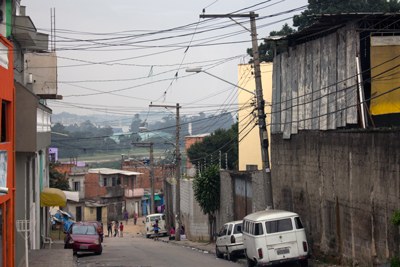
<p><img src="https://www.iea.usp.br/imagens/periferia/@@images/e81607a7-8900-405b-8378-9a273a102ad9.jpeg" alt="Periferia" class="image-right" title="Periferia" />The transition between the lawful city and the unlawful city was observed as the tour advanced towards the outskirts. In Vila Medeiros, the ICA researchers found an example of an urbanized suburb, an entire neighborhood that had actually begun as an irregular occupation. In the vicinity of USP Leste, they saw ramshackle houses built inside an ecological park, where construction is supposedly forbidden by environmental laws.</p>
<p class="Text">The group obtained a more detailed picture of living conditions in the periphery from Sawaya’s exposition on the work of the CREN in Vila Jacuí, a neighborhood that emerged from the illegal occupation of an area of fountainheads that is part of an ecological reserve.</p>
<p class="Text">Although it has been “reurbanized,” Vila Jacuí still lacks public infrastructure and services, and is overwhelmed by drug trafficking. With one of the lowest Human Development Index (HDI) in São Paulo’s East Zone, the district’s CREN is one of the few instruments to improve the population’s quality of life.</p>
<p class="Text">The CREN operates there since 1993, combating and preventing both malnutrition and obesity in children and adolescents, offering nutritional assessment programs, development and learning evaluation, treatment for infections, education, and insertion into the world of culture. To these ends, it has a day hospital that treats nearly 100 children, offering them five balanced meals a day.</p>
<p class="Text">Besides contributing to the nutritional and educational recovery of children and adolescents, the CREN is also a place for family gatherings and the practice different activities. Computers are available to the community, as well as a fully equipped playroom and the infrastructure for physical and cultural activities (music, theater, dance and sports).</p>
<p class="Text">Sawaya, who is former coordinator and current scientific director of the CREN, stressed the importance of the project as an initiative to develop youth participation and provide opportunities for children and young people to move away from crime. According to her, of the people who attend the center, 60% have a family member in prison and 70% have a relative addicted to drugs or alcohol.</p>
<p class="Text">She also pointed out that over its 23 years of operation, the project has helped 3 million children and contributed to substantially reduce the number of murders in the environs.</p>
<p class="Text">Report by Flavia Dourado<br />Translation by Carlos Malferrari</p>]]></content:encoded>
    <dc:publisher>No publisher</dc:publisher>
    <dc:creator>Fernanda Rezende</dc:creator>
    <dc:rights></dc:rights>
    
    <dc:date>2015-04-22T21:35:00Z</dc:date>
    <dc:type>News Item</dc:type>
  </item>


  <item rdf:about="https://www.iea.usp.br/en/programme">
    <title>Programme</title>
    <link>https://www.iea.usp.br/en/programme</link>
    <description></description>
    
    <dc:publisher>No publisher</dc:publisher>
    <dc:creator>Fernanda Rezende</dc:creator>
    <dc:rights></dc:rights>
    
    <dc:date>2018-03-20T18:43:01Z</dc:date>
    <dc:type>File</dc:type>
  </item>


  <item rdf:about="https://www.iea.usp.br/en/news/opening-ica">
    <title>Opening of the Intercontinental Academia Highlights the Project’s Uniqueness and Relevance</title>
    <link>https://www.iea.usp.br/en/news/opening-ica</link>
    <description></description>
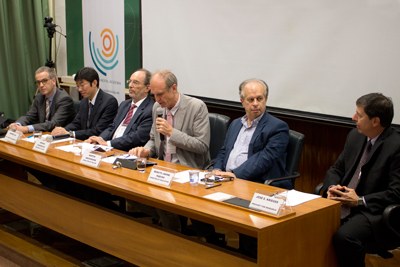
    <content:encoded xmlns:content="http://purl.org/rss/1.0/modules/content/"><![CDATA[<p>The opening session of the <a class="external-link" href="http://ica.usp.br">Intercontinental Academia</a> (ICA), which took place on the evening of April 17 at USP’s Medical School, was marked by the enthusiasm of all those present for the uniqueness of the project and its importance for scientific and cultural cooperation between scholars from different countries, institutions and fields of knowledge.</p>
<p class="Text">The minister of Education, <a class="external-link" href="http://www.ica.usp.br/people/speakers/renato-janine-ribeiro">Renato Janine Ribeiro</a>, who is a member of IEA’s Scientific Committee in the project, stressed the significance of this initiative to integrate people with various cultural and academic backgrounds at a time when words like “knowledge” and “wisdom” have acquires various meanings and when “there are so many doubts about what to do with knowledge, and wisdom is no longer a constant in science.”</p>
<p class="Text"><img src="https://www.iea.usp.br/imagens/ica-abertura-mesa-2/@@images/a9382acb-2107-481d-8e23-7da9f072574f.jpeg" alt="ICA Abertura mesa 2" class="image-left" title="ICA Abertura mesa 2" />The president of the National Council for Scientific and Technological Development (CNPq), <a class="external-link" href="http://www.ica.usp.br/people/iea-usp-scientific-committee/hernan-chaimovich">Hernan Chaimovich</a>, who is also a member of IEA’s Scientific Committee, said that the ICA is an example of “non canonical” activity that must play a greater role in the training of scholars: “The choice of one subject to be analyzed by people from different cultures and backgrounds has an extremely rich intellectual relevance; it is an example of how to overcome interdisciplinarity and achieve an academically competitive transculturality anywhere in the world.” Chaimovich also stressed the quality of the scientific profile of the young scholars selected for the project.</p>
<p class="Text">USP’s dean of Research, <a class="external-link" href="http://www.ica.usp.br/people/iea-usp-scientific-committee/jose-eduardo-krieger">José Eduardo Krieger</a>, represented the president of the university, <a class="external-link" href="http://www.ica.usp.br/people/speakers/marco-antonio-zago">Marco Antonio Zago</a>, at the ceremony. Krieger, who is chairman of IEA’s Scientific Committee, said the project contributes to leverage the most productive formats of scientific collaboration networks. He also drew attention to the fact that the ICA is characterized by interdisciplinarity and the integration of young researchers, “who will play an important role in the society of their home countries.”</p>
<p class="Text"><a class="external-link" href="http://www.ica.usp.br/people/general-secretary/people">Carsten Dose</a><span>, from the Institute of Advanced Studies of the University of Freiburg (Germany), general secretary of the project, congratulated all participants on behalf of all the institutes for advanced study that comprise the Ubias network (University-Based Institutes for Advanced Study), ICA’s mother organization. He said the materialization of the proposal that emerged in 2012 is a clear demonstration of how Ubias’ member institutes can work together. Dose also paid tribute to the former director of the IEA, César Ades (1943-2012), who attended the meeting that established Ubias in October 2010 and impressed everyone with his enthusiasm for the new entity.</span>The director of the IEA, <a class="external-link" href="http://www.ica.usp.br/people/senior-committee/martin-grossmann">Martin Grossmann</a>, presented the history and characteristics of the project, explaining that side by side with reflections on the concepts of time in various sciences, other activities and discussion topics were also included, such as a discussion on the future of the university and the development of a MOOC (Massive Open Online Course), a free course about time to be offered via the Web.</p>
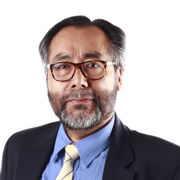
<p class="Text"><a class="external-link" href="http://www.ica.usp.br/people/speakers/dapeng-cai">Dapeng Cai</a>, from the Institute for Advanced Research (IAR) at Nagoya University (Japan), a partner of the IEA in the implementation of the ICA, highlighted the efforts to bring about this project and the importance of the final product being a MOOC about time. In his view, the creation of a MOOC shows that the ICA, in addition to enabling the sharing of knowledge among all scholars involved, is also concerned with sharing results with the public at large.</p>]]></content:encoded>
    <dc:publisher>No publisher</dc:publisher>
    <dc:creator>Fernanda Rezende</dc:creator>
    <dc:rights></dc:rights>
    
    <dc:date>2015-04-20T18:30:00Z</dc:date>
    <dc:type>News Item</dc:type>
  </item>


  <item rdf:about="https://www.iea.usp.br/en/imagens/logotipo-cop-21">
    <title>Logotipo COP-21</title>
    <link>https://www.iea.usp.br/en/imagens/logotipo-cop-21</link>
    <description></description>
    
    <dc:publisher>No publisher</dc:publisher>
    <dc:creator>Fernanda Rezende</dc:creator>
    <dc:rights></dc:rights>
    
    <dc:date>2015-08-18T19:46:06Z</dc:date>
    <dc:type>Image</dc:type>
  </item>


  <item rdf:about="https://www.iea.usp.br/en/imagens/logo-ubias">
    <title>Logo Ubias</title>
    <link>https://www.iea.usp.br/en/imagens/logo-ubias</link>
    <description></description>
    
    <dc:publisher>No publisher</dc:publisher>
    <dc:creator>Fernanda Rezende</dc:creator>
    <dc:rights></dc:rights>
    
    <dc:date>2015-11-03T11:54:32Z</dc:date>
    <dc:type>Image</dc:type>
  </item>


  <item rdf:about="https://www.iea.usp.br/en/images/live">
    <title>Live</title>
    <link>https://www.iea.usp.br/en/images/live</link>
    <description></description>
    
    <dc:publisher>No publisher</dc:publisher>
    <dc:creator>Fernanda Rezende</dc:creator>
    <dc:rights></dc:rights>
    
    <dc:date>2017-02-02T14:42:58Z</dc:date>
    <dc:type>Image</dc:type>
  </item>


  <item rdf:about="https://www.iea.usp.br/en/news/jose-luis-lezama-discusses-the-outlook-for-climate-negotiations">
    <title>José Luis Lezama Discusses the Outlook for Climate Negotiations</title>
    <link>https://www.iea.usp.br/en/news/jose-luis-lezama-discusses-the-outlook-for-climate-negotiations</link>
    <description></description>
    <content:encoded xmlns:content="http://purl.org/rss/1.0/modules/content/"><![CDATA[<p><img src="https://www.iea.usp.br/imagens/joseluislezamafotowikipedia130px.jpg" alt="José Luis Lezama de la Torre" class="image-right" title="José Luis Lezama de la Torre" />The outlook for the <a class="external-link" href="http://www.cop21paris.org/">21<sup>st</sup> Conference of the Parties</a>, COP-21, will be discussed by <a href="https://www.iea.usp.br/en/persons/speakers/jose-luis-lezama" class="external-link">José Luis Lezama</a>, researcher from the <a class="external-link" href="http://www.colmex.mx/">Colegio de Mexico</a> and an expert on environmental policy, at the conference <i>Las Negociaciones Climáticas de Paris 2015 y el Futuro del Clima Planetario</i>, to be held on September 17, at 3:30 pm at the IEA’s Events Room. Lezama will speak in Spanish, without simultaneous translation.</p>
<p class="Text">Scheduled for December in Paris, the COP-21 will attempt to reach a new, legally binding universal agreement on climate to limit global warming to less than 2 °C. This would be an unprecedented feat in the 20 years of climate negotiations under the aegis of the United Nations. Every year, the COP brings together the 195 signatory nations of the United Nations Framework Convention on Climate Change (UNFCCC), created during the Rio-92 conference.</p>
<p class="Text">“The climate summit in Paris will be a date of no return, a D-Day, a Year 1000,” says Lezama. For him, the expectations regarding the 2015 conference are due to the possibility that its decisions might avoid a disaster of major proportions or an “apocalyptic end for humankind.”</p>
<p class="Text">However, as Lezama explained, the agreements and disagreements between nations follow a complex plot: they derive from “the political and economic logic of the relations between countries, the deep articulations and interdependencies between the developed and underdeveloped, between their elites, their poor and the ecosystems that support the socioeconomic and political systems of both worlds.”</p>
<p class="Text">An example of what he is referring to happened during the COP-15. Held in Copenhagen, Denmark, the 2009 meeting went down in history for the repression of the demonstrations organized by environmental NGOs and for the inability of Danish leaders to coalesce. At the time, the hosts dreamed of reaching agreement to replace the Kyoto Protocol, which was adopted at COP-3.</p>
<p class="Text">This is the second event that the IEA holds to discuss the prospects of the Conferences of the Parties. In late 2014, the Institute’s Research Group on Environment and Society organized the seminar “COP-20: What Can We Expect?”, coordinated by Pedro Jacobi.</p>]]></content:encoded>
    <dc:publisher>No publisher</dc:publisher>
    <dc:creator>Fernanda Rezende</dc:creator>
    <dc:rights>Original version in Portuguese by Fernanda Rezende</dc:rights>
    
      <dc:subject>Environment</dc:subject>
    
    
      <dc:subject>Climate Change</dc:subject>
    
    
      <dc:subject>Commons</dc:subject>
    
    
      <dc:subject>Glocal</dc:subject>
    
    <dc:date>2015-08-27T14:55:00Z</dc:date>
    <dc:type>News Item</dc:type>
  </item>


  <item rdf:about="https://www.iea.usp.br/en/news/intercontinental-academias-programme">
    <title>Intercontinental Academia's Programme</title>
    <link>https://www.iea.usp.br/en/news/intercontinental-academias-programme</link>
    <description></description>
    <content:encoded xmlns:content="http://purl.org/rss/1.0/modules/content/"><![CDATA[<h3><span>April 20</span></h3>
<div id="_mcePaste">8:30 am</div>
<div id="_mcePaste">Master class with José Goldemberg</div>
<div id="_mcePaste">The 80 years of the University of São Paulo: a critical review</div>
<div id="_mcePaste"></div>
<div id="_mcePaste">10:30 am</div>
<div id="_mcePaste">Talk with Matthew Kleban</div>
<div id="_mcePaste">Cosmic History and Time’s Arrow</div>
<div id="_mcePaste">Kleban will begin by outlining what we know of the cosmological history of the universe.  He will discuss theories of the big bang - whether it was the “beginning” of time, or whether there were events that preceded it - and their implications for the ultimate fate of the universe.  Lastly, he will discuss the “arrow” of time - why there is a difference between past and future - and how this difference relates to cosmology.</div>
<div id="_mcePaste"></div>
<div id="_mcePaste">2 pm</div>
<div id="_mcePaste">Talk with Laymert Garcia dos Santos</div>
<div id="_mcePaste">Myth and Technoscience in Transcultural Amazonas</div>
<div id="_mcePaste">The talk will focus on the transcultural experiment of conceiving and staging a multimedia opera whose subject is the Amazonian rainforest as seen from the shamanistic and the technoscientific perspectives.</div>
<div id="_mcePaste"></div>
<div id="_mcePaste">4 pm</div>
<div id="_mcePaste">Talk with René Nome</div>
<div id="_mcePaste">Playing with Time in Chemistry</div>
<div id="_mcePaste">Technological developments allowing us to observe molecules in real time will be summarized. Along the way, several examples of how we play with time in chemistry will be presented.</div>
<div id="_mcePaste"></div>
<div id="_mcePaste">6 pm</div>
<div id="_mcePaste">Talk with Eliezer Rabinovici</div>
<div id="_mcePaste">Constructing Time In Physics- Attempts</div>
<div id="_mcePaste">How physicists have been attempting to come to grips with the experience of a time and it's flow. This will involve glimpses at the concepts discovered and developed to study large and small time scales. Such ideas includes Unified theories and String theory. This lecture will be at a popular level while touching upon basic problems in Physics.</div>
<div id="_mcePaste"></div>
<div></div>
<h3>April 21</h3>
<div id="_mcePaste">9:30 am</div>
<div id="_mcePaste">Talk with Sami Pihlström</div>
<div id="_mcePaste">Time and Eternity</div>
<div id="_mcePaste">A brief philosophical talk on the philosophy of time from this specific perspective, with a connection to the philosophy of religion.</div>
<div id="_mcePaste"></div>
<div id="_mcePaste">10:30 am</div>
<div id="_mcePaste">Talk with Carolina Escobar</div>
<div id="_mcePaste">Adjustment to temporal cycles and the dangers of disrupted biological rhythms</div>
<div id="_mcePaste">Organisms living on Earth are exposed to geographical cycles which require rhythmic adjustments in behavior and physiology in order to anticipate these cyclic changes. In this talk temporal cycles and their impact on individuals will be discussed, as well as the mechanisms that allow temporal adaptation. Next, the relevance of a correct synchrony between the biological timing and the external cycles will be discussed as a factor for health and wellbeing. Finally experimental models for temporal disruption will be presented and the results obtained with such models indicating the loss of homeostasis and of behavioral adaptation.</div>
<div id="_mcePaste"></div>
<div>2 pm</div>
<div id="_mcePaste">Talk with Ruud Buijs</div>
<div id="_mcePaste">The timing of brain and body physiology</div>
<div id="_mcePaste">In our conversation I will aim to cover the mechanisms that our brain is using to synchronize our physiology to the requirements of the day. The importance of such synchronization for our health has been demonstrated in many different studies. The first task of our brain is that it needs to take care of itself, for that it has an elaborate system that provides it continuously with information about the state of our body. Naturally the state of energy in our body is of the utmost importance because our brain uses up to 20% of the available energy most in the form of glucose. Only if that is available in sufficient amounts then the brain can think of reproducing itself. Because the available energy depends for all organisms on the energy of the sun many systems have developed that take into account the day night cycle and thus the availability of food. This appears to be the main organizational principle in most organisms. Therefore we will see a very close association between time energy and physiology.  Therefore time is important for the functioning temperature regulation, reproduction, metabolism, circulation and immune system. Therefore the mechanisms of this interweaving of time with these different physiological systems will be the topic of our conversation.</div>
<div id="_mcePaste"></div>
<div>4 pm</div>
<div id="_mcePaste">Talk with Hideyo Kunieda</div>
<div id="_mcePaste">Time in Astronomy</div>
<div id="_mcePaste">How time is related to astronomy, specially discussing time delay surrounding the black holes (the effect of the general theory of relativity)</div>
<div id="_mcePaste"></div>
<div>6 pm</div>
<div id="_mcePaste">Talk with Till Roenneberg</div>
<div id="_mcePaste">Circadian behaviour and sleep in the real world</div>
<div id="_mcePaste"></div>
<h3>April 22</h3>
<div id="_mcePaste">8:30 am</div>
<div id="_mcePaste">Talk mediated by Vera Imperatriz Fonseca with Tiago Quental and Luiz Gylvan Meira Filho</div>
<div id="_mcePaste"></div>
<div id="_mcePaste">Earth's time and the Anthropocene</div>
<div id="_mcePaste"></div>
<div>Tiago Quental - The dynamics and drivers of biodiversity in geological time</div>
<div id="_mcePaste">The history of biodiversity is characterized by a recurrent extinction of species and by a continual replacement of different branches in the tree of life. This replacement dynamics is ultimately determined by changes in speciation and extinction rates. The fossil record offers an unprecedented opportunity to understand the deep time history of biodiversity because it directly preserves this unfolding dynamics. Here I will present how we can use the fossil record of mammals to discuss the history of biodiversity and the potential factors that might drive changes in speciation and extinction rates at a geological time scale. I show that the wax and wane in diversity has a deterministic component, that the decline of diversity is equally controlled by a failure to originate a new species as by a rise in extinction rate, and that biotic interactions might be equally relevant as climate change on controlling changes in biodiversity at deep time.</div>
<div id="_mcePaste"></div>
<div>Luiz Gylvan Meira Filho - Time scales of and climate change</div>
<div id="_mcePaste">Climate is defined as the statistics of the variables that describe the instantaneous state of the climate system (atmosphere, oceans and biosphere).  The use of proxy variables allows us to retrace the history of the main climate variables as far back as 70 million years before present.  A summary of our presente knowledge will be presented, showing variability of climate in all time scales.  Of particular interest is the history of atmospheric carbono dioxide concentration and temperature over the last eight hundred thousand years, which are closely correlated, the records over the past twelve thousand years, called the Holocene of Anthropocene, when civilization developed.  In the recente period since the industrial revolution, human activities resulted in the emission of carbono dioxide and other greenhouse gases in a time scale shorter than that of the natural feedback mechanisms;  This inbalance of time scales is driving the global climate into regions of the phase space not occupied before.</div>
<div id="_mcePaste"></div>
<div>10:30 am</div>
<div id="_mcePaste">Talk with Karl-Heinz Kohl</div>
<div id="_mcePaste">Concepts of time across the cultures: an anthropological view</div>
<div id="_mcePaste">What people understand by “time” – if an equivalent to the English term exists at all – is always culturally embedded. How time is conceptualized depends strongly from each society’s mode of production and forms also a central part of its religious worldview. In my paper, I will compare the linear time concept of modern industrial societies to the time concepts of early agrarian, pastoral and hunter-gatherer societies to show the differences as well as some surprising similarities.</div>
<div id="_mcePaste"></div>
<div>2 pm</div>
<div id="_mcePaste">Wrap-up of the four previous talks</div>
<div id="_mcePaste"></div>
<div>4 pm</div>
<div id="_mcePaste">Talk with Course Success Team of Coursera</div>
<div id="_mcePaste"></div>
<div>6 pm</div>
<div id="_mcePaste">Talk with Takao Kondo</div>
<div id="_mcePaste">Circadian clock: Chronometry of living organism to live on the Earth</div>
<div id="_mcePaste">As we depend on mechanical/electrical clock, living organisms have accurate chronometer in the cells to fit their life to the 24 hour cycle in environment of the Earth. Kondo will report recent progress of the biochronometry and discuss it with chronometer that our industry developed to understand a principle of time of the day.</div>
<div id="_mcePaste"></div>
<h3>April 23</h3>
<div id="_mcePaste">8:30 am</div>
<div id="_mcePaste">Resting day with social-cultural activities</div>
<div id="_mcePaste"></div>
<h3>April 24</h3>
<div id="_mcePaste">10 am</div>
<div id="_mcePaste">Workshop with Brazilian Minister of Education, Renato Janine Ribeiro (for oficial participants and other guests)</div>
<div id="_mcePaste">The University of the future</div>
<div id="_mcePaste"></div>
<div>3 pm</div>
<div id="_mcePaste">The Future of the Universities</div>
<div id="_mcePaste">with Marco A. Zago, Carlos Vogt, Naomar de Almeida Filho, Luiz Bevilacqua, John Heath and Klaus Capelle. Debaters: Helena B. Nader and Marcelo Knobel. Moderation: Sabine Righetti</div>
<div id="_mcePaste"></div>
<div>6 pm</div>
<div id="_mcePaste">Report by Marcelo Knobel</div>
<div id="_mcePaste"></div>
<h3>April 25</h3>
<div id="_mcePaste">8:30 am</div>
<div id="_mcePaste">Talk with Leopold Nosek</div>
<div>Birth and myth: A reflection on temporality</div>
<div id="_mcePaste"></div>
<div>10:30 am</div>
<div id="_mcePaste">Plenary</div>
<div id="_mcePaste"></div>
<div>2 pm</div>
<div id="_mcePaste">Talk with Till Roenneberg about his experience with Coursera</div>
<div id="_mcePaste">Circadian clocks: how rhythms structure life</div>
<div id="_mcePaste"></div>
<div>4 pm</div>
<div id="_mcePaste">Raising questions</div>
<div id="_mcePaste"></div>
<div>6 pm</div>
<div id="_mcePaste">Talk with Vera Lucia Imperatiz-Fonseca</div>
<div id="_mcePaste">Biodiversity and Global Policies</div>
<div id="_mcePaste"></div>
<h3>April 26</h3>
<div id="_mcePaste">8:30 am</div>
<div id="_mcePaste">Raising questions</div>
<div id="_mcePaste"></div>
<div>2 pm</div>
<div id="_mcePaste">Plenary</div>
<div id="_mcePaste"></div>
<div>6 pm</div>
<div id="_mcePaste">Talk with Regina P. Markus</div>
<div id="_mcePaste">STOP, STOP... A necessary pause in the flow of time</div>
<div id="_mcePaste">The crosstalk on synchronization of the internal and environmental time is an universal concept and is associated to adaption of life on earth. Gene clocks, special neuronal pathways and hormonal outputs regulate and sinchronize all the biological funcions, and the relationship between living organisms. But, there is a moment, when stoping internal timing is essential. There is a moment when synchronization of body function are secondary. How and why internal timing needs to be transiently stopped will be discussed.</div>
<div id="_mcePaste"></div>
<h3>April 27</h3>
<div id="_mcePaste">8:30 am</div>
<div id="_mcePaste">Designing a MOOC on time</div>
<div id="_mcePaste"></div>
<div>2 pm</div>
<div id="_mcePaste">Designing and Proposals</div>
<div id="_mcePaste"></div>
<div>6 pm</div>
<div id="_mcePaste">Talk with Massimo Canevacci</div>
<div id="_mcePaste">The ethnographic  experiences of digital cultures and the syncretic mix of spacetimes</div>
<div id="_mcePaste">My paper will present an anthropological perspective on time through the key-concept of ubiquity: ubiquitimes. Digital cultures and communication are going to transform the classical distinction of space-and-time, favouring a decentred and non-linear experiences of spacetimes. A strong metaphorical use of this term has been used recently on web-culture. A shared affirmation is that the web is ubiquitous and so ubiquities characterizes internet´s space-time (human and not-human) relations. Ubiquitimes also expands a restless montage of syncretic concepts and polyphonic methods in digital culture. I’ll discuss the differences between the traditional avant-garde concepts of simultaneity and of the theological one of ubiquity. Than I’ll present the digital emergence and the contemporary different meanings of ubiquity as immanent inter-connections and inter-sections  on  times-and-spaces. Ubiquitimes play a logical-sensorial immanence of material/immaterial character; express tensions beyond hegemonic dualism or regressive dichotomous ratio. Ubiquitimes is the exact imagination potentiality connected to digital every-day life. I’ll select some empirical cases in order to demonstrate my hypotheses on auto-generative experiences of ubiquitous times (ubiquitimes) in different cultures and persons: a mythical Greek divinity (Kairos), a Swatch advertising, a Bororo funeral ritual, a post-Euclidean architect (Zaha Hadid), and finally the subjective experiences with digital technologies (multividual).</div>
<div id="_mcePaste"></div>
<h3>April 28</h3>
<div id="_mcePaste">8:30 am</div>
<div id="_mcePaste">Presentation</div>
<div id="_mcePaste"></div>
<div>2 pm</div>
<div id="_mcePaste">Plenary</div>
<div id="_mcePaste"></div>
<div>6 pm</div>
<div id="_mcePaste">Talk with Scientific Committe</div>
<div id="_mcePaste"></div>
<h3>April 29</h3>
<div id="_mcePaste">8:30 am</div>
<div id="_mcePaste">Closing report</div>
<div id="_mcePaste"></div>
<div>2 pm</div>
<div id="_mcePaste">Time off</div>
<div id="_mcePaste"></div>
<div>7 pm</div>
<div id="_mcePaste">Closing dinner with Neka Menna Barreto (for oficial participants and other guests)</div>
<div id="_mcePaste"></div>]]></content:encoded>
    <dc:publisher>No publisher</dc:publisher>
    <dc:creator>Fernanda Rezende</dc:creator>
    <dc:rights></dc:rights>
    
    <dc:date>2015-04-20T14:55:00Z</dc:date>
    <dc:type>News Item</dc:type>
  </item>


  <item rdf:about="https://www.iea.usp.br/en/imagens/ii-edicao-intercontinental-academia">
    <title>II edição Intercontinental Academia</title>
    <link>https://www.iea.usp.br/en/imagens/ii-edicao-intercontinental-academia</link>
    <description></description>
    
    <dc:publisher>No publisher</dc:publisher>
    <dc:creator>Fernanda Rezende</dc:creator>
    <dc:rights></dc:rights>
    
    <dc:date>2015-06-03T20:16:44Z</dc:date>
    <dc:type>Image</dc:type>
  </item>


  <item rdf:about="https://www.iea.usp.br/en/news/iea-participates-in-event-on-social-movements-in-turkey">
    <title>IEA Participates in Event on Social Movements in Turkey</title>
    <link>https://www.iea.usp.br/en/news/iea-participates-in-event-on-social-movements-in-turkey</link>
    <description></description>
    <content:encoded xmlns:content="http://purl.org/rss/1.0/modules/content/"><![CDATA[<table class="tabela-direita-400">
<tbody>
<tr>
<th><img src="https://www.iea.usp.br/imagens/manifestantes-no-parque-gezi-istambul-turquia" style="float: right; " title="Manifestantes no Parque Gezi, Istambul, Turquia" class="image-inline" alt="Manifestantes no Parque Gezi, Istambul, Turquia" /></th>
</tr>
<tr>
<td style="text-align: right; "><strong>Gezi Park in Istambul,<br />June 1, 2013</strong></td>
</tr>
<tr>
<td><img src="https://www.iea.usp.br/imagens/manifestacao-no-largo-da-batata-sao-paulo" style="float: right; " title="Manifestação no Largo da Batata, São Paulo" class="image-inline" alt="Manifestação no Largo da Batata, São Paulo" /></td>
</tr>
<tr>
<td style="text-align: right; "><strong>Largo da Batata in São Paulo,<br />June 17, 2013</strong></td>
</tr>
</tbody>
</table>
<p>The IEA, the <a class="external-link" href="http://www.ifhc.org.br/en/">Fernando Henrique Cardoso Institute (iFHC)</a>, the <a class="external-link" href="http://www.istanbulinstitute.org/">Istanbul Institute</a> and the <a class="external-link" href="http://www.brasilturquia.com.br/">Brazil-Turkey Cultural Center</a> are the organizers of the workshop <i>New Social Movements in Turkey and Brazil</i>, which will be held on September 7 at Ipek University, Istanbul.</p>
<p class="Text">Sergio Fausto, executive director of the iFHC, <a href="https://www.iea.usp.br/en/persons/visiting-professors/bernardo-sorj/bernardo-sorj" class="internal-link">Bernardo Sorj</a>, visiting professor at the IEA, and <a href="https://www.iea.usp.br/en/iea/organization/direction" class="internal-link">Martin Grossmann</a>, director of the IEA, will be among the lecturers at the event, which will bring together experts from the two countries in digital media, journalism, history, politics and social movements.</p>
<p class="Text">The workshop will have three sub-themes:</p>
<ul>
<li>The cultural dimension of the new social movements: political culture, citizenship awareness and cultural changes that engender new demands (problems, solutions and suggestions);</li>
<li>Case study: the nature of the new social movements within the context of the demonstrations at Gezi Park, in Istanbul, and in several Brazilian cities, the role of digital media and the governments’ response;</li>
<li>The impacts of the new social movements on democracy and on the attitudes of governments (legal, social, cultural, political and economic dimensions).</li>
</ul>
<p> </p>
<table class="invisible">
<tbody>
<tr>
<td>
<h3>Related material</h3>
<h3>Events</h3>
<p><b>June 21, 2013</b></p>
<h3><a href="https://www.iea.usp.br/en/news/iea-debates-the-street-protests-across-brazil" class="external-link">What’s Happening?</a></h3>
<ul>
<li><a href="https://www.iea.usp.br/en/news/the-street-demonstrations-in-debate" class="external-link">Synthesis — The Street Demonstrations in Debate</a></li>
<li><a href="https://www.iea.usp.br/midiateca/video/videos-2013/o-que-esta-acontecendo" class="external-link">Video (in Portuguese)</a>— <a href="https://www.iea.usp.br/en/media-library/photos/events-2013/o-que-esta-acontecendo-agora-iea-debate-manifestacoes-nas-ruas-21-de-junho-de-2013" class="external-link">Photos</a></li>
</ul>
<p> </p>
<p><b>July 3, 2013</b></p>
<h3><a href="https://www.iea.usp.br/en/news/new-meeting-of-researchers-addresses-the-effects-of-the-street-protests-in-brazil" class="external-link">What's next?</a></h3>
<ul>
<li><a href="https://www.iea.usp.br/en/news/moviment-of-moviments" class="external-link">Synthesis — The Meanings and Consequences of a Movement of Movements</a></li>
<li><a href="https://www.iea.usp.br/midiateca/video/videos-2013/como-avancar" class="external-link">Video (in Portuguese)</a>— <a href="https://www.iea.usp.br/en/media-library/photos/events-2013/como-avancar-03-de-julho-de-2013" class="external-link">Photos</a></li>
</ul>
</td>
<th><img src="https://www.iea.usp.br/imagens/banner-do-workshop-new-social-movements-in-turkey-and-brazil/@@images/d76db706-bef5-4df8-b60f-ca03c7edddf3.jpeg" alt="Banner do workshop New Social Movements in Turkey and Brazil" class="image-right" title="Banner do workshop New Social Movements in Turkey and Brazil" /><br /><br /></th>
</tr>
</tbody>
</table>
<h3></h3>
<ul>
</ul>
<div>
<h3 style="text-align: right; "><span class="discreet">Photos (from the top): <a class="external-link" href="https://www.flickr.com/photos/turquoisedays/8956858368/" style="text-align: right; " target="_blank">Alan Hilditch</a> and Eric Hayashi</span></h3>
</div>]]></content:encoded>
    <dc:publisher>No publisher</dc:publisher>
    <dc:creator>Fernanda Rezende</dc:creator>
    <dc:rights>Original version in Portuguese by Mauro Bellesa</dc:rights>
    
      <dc:subject>Contemporary Societies Laboratory</dc:subject>
    
    
      <dc:subject>Event</dc:subject>
    
    
      <dc:subject>Glocal</dc:subject>
    
    
      <dc:subject>Social Sciences</dc:subject>
    
    <dc:date>2015-08-27T14:50:00Z</dc:date>
    <dc:type>News Item</dc:type>
  </item>


  <item rdf:about="https://www.iea.usp.br/en/imagens/stem-cell">
    <title>Home Stem Cell</title>
    <link>https://www.iea.usp.br/en/imagens/stem-cell</link>
    <description>Célula-tronco</description>
    
    <dc:publisher>No publisher</dc:publisher>
    <dc:creator>Fernanda Rezende</dc:creator>
    <dc:rights>Pixabay - CCO Public Domain</dc:rights>
    
    <dc:date>2015-09-24T13:07:05Z</dc:date>
    <dc:type>Image</dc:type>
  </item>


  <item rdf:about="https://www.iea.usp.br/en/imagens/home-paisagens">
    <title>Home Paisagens</title>
    <link>https://www.iea.usp.br/en/imagens/home-paisagens</link>
    <description></description>
    
    <dc:publisher>No publisher</dc:publisher>
    <dc:creator>Fernanda Rezende</dc:creator>
    <dc:rights>Douglas Pfeiffer Cardoso/Flickr</dc:rights>
    
    <dc:date>2015-10-21T18:51:01Z</dc:date>
    <dc:type>Image</dc:type>
  </item>


</rdf:RDF>