<?xml version="1.0" encoding="utf-8" ?>
<rdf:RDF xmlns:rdf="http://www.w3.org/1999/02/22-rdf-syntax-ns#" xmlns:dc="http://purl.org/dc/elements/1.1/" xmlns:syn="http://purl.org/rss/1.0/modules/syndication/" xmlns="http://purl.org/rss/1.0/">


<channel rdf:about="https://www.iea.usp.br/en/search_rss">
  <title>en</title>
  <link>https://www.iea.usp.br</link>

  <description>
    
            These are the search results for the query, showing results 1 to 5.
        
  </description>


  <image rdf:resource="https://www.iea.usp.br/logo.png" />

  <items>
    <rdf:Seq>
      
        <rdf:li rdf:resource="https://www.iea.usp.br/en/news/paulo-saldiva-ary-plonski-are-appointed-director-and-deputy-director-of-the-iea" />
      
      
        <rdf:li rdf:resource="https://www.iea.usp.br/en/news/new-study-group-seek-to-reconcile-recent-biotechnology-and-traditional-medicine" />
      
      
        <rdf:li rdf:resource="https://www.iea.usp.br/en/news/sabbatical-2018" />
      
      
        <rdf:li rdf:resource="https://www.iea.usp.br/en/news/celso-lafer-new-board-member" />
      
      
        <rdf:li rdf:resource="https://www.iea.usp.br/en/news/board-of-the-iea-has-three-new-members" />
      
    </rdf:Seq>
  </items>

</channel>


  <item rdf:about="https://www.iea.usp.br/en/news/paulo-saldiva-ary-plonski-are-appointed-director-and-deputy-director-of-the-iea">
    <title>Paulo Saldiva and Ary Plonski are appointed director and deputy director of the IEA</title>
    <link>https://www.iea.usp.br/en/news/paulo-saldiva-ary-plonski-are-appointed-director-and-deputy-director-of-the-iea</link>
    <description></description>
    <content:encoded xmlns:content="http://purl.org/rss/1.0/modules/content/"><![CDATA[<p>The Official State Gazette of São Paulo (<a class="external-link" href="https://www.imprensaoficial.com.br/DO/BuscaDO2001Documento_11_4.aspx?link=/2016/executivo%2520secao%2520ii/abril/12/pag_0057_C6N5ROBQPO87Ke8MPKV1K1REFGF.pdf&amp;pagina=57&amp;data=12/04/2016&amp;caderno=Executivo%20II&amp;paginaordenacao=100057">Diário Oficial do Estado de São Paulo</a>, in Portuguese) has published the appointment of Paulo Saldiva and Guilherme Ary Plonski for the positions of director and deputy director of the IEA on April 12. They were elected by the Institute's Electoral College on <span>February 18</span><span>. Of the total of 101 votes, 92 have chosen the winning slate. There have also been six invalid votes and three blank ones. The result has been determined by the Electoral Commission of the Institute and accredited by the Committee for Legislation and Resources (CLR) before being approved by USP's Vice-President Vahan Agopyan.</span></p>
<table class="tabela-esquerda-200">
<tbody>
<tr>
<th><img src="https://www.iea.usp.br/imagens/paulo-saldiva-1/@@images/108cabb1-d809-4312-a7e5-21fe066762ef.jpeg" alt="Paulo Saldiva" class="image-inline" title="Paulo Saldiva" /></th>
</tr>
<tr>
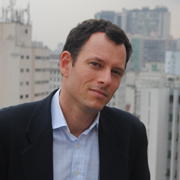
<td><strong>Pathologist Paulo Saldiva, from <span>the USP's School of Medicine (FM)</span></strong></td>
</tr>
</tbody>
</table>
<p><a href="https://www.iea.usp.br/en/iea/organization/directorship" class="external-link"><strong>Paulo Saldiva</strong>,</a> a pathologist and a professor at the Department of Pathology of the USP's School of Medicine (FM), was the deputy director of the IEA until April 2016. He took office in late February last year, replacing Carlos Roberto Ferreira Brandão, from the USP's Museum of Zoology (MZ). His research focuses on pulmonary pathology, environmental pathology and air pollution. He has been a member of the World Health Organization committee that established air quality standards and of the committe of the WHO's International Agency for Research on Cancer, which set the carcinogenic potential of air pollution. From 2004 to 2014, he joined the Science Advisory Committee on air pollution at the Harvard School of Public Health. As director of the IEA, his tenure will last four years.</p>
<table class="tabela-direita-200">
<tbody>
<tr>
<th><img src="https://www.iea.usp.br/midiateca/foto/eventos-2014/homenagem-aos-honorarios-iea-15-de-dezembro-de-2014/hhonorarios-25.jpg/@@images/9f0de2ba-8698-4adf-809e-5fe4044fb703.jpeg" alt="Guilherme Ary Plonski" class="image-inline" title="Guilherme Ary Plonski" /></th>
</tr>
<tr>
<td><strong>Ary Plonski, <span>a professor at the USP's Faculty of Economics, Management and Accounting (FEA)</span></strong></td>
</tr>
</tbody>
</table>
<p> </p>
<p> </p>
<p><strong><br /><a href="https://www.iea.usp.br/en/persons/researchers/copy4_of_alfons-martinell-sempere" class="external-link">Guilherme Ary Plonski</a></strong>, who will also hold his position for four years, is an engineer and a professor at the Department of Management of the USP's Faculty of Economics, Management and Accounting (FEA), and at the Department of Industrial Engineering of the USP's Polytechnic School (POLI). He was the managing director (2001-2006) of the Institute of Technological Research of the State of São Paulo (IPT) and president of the National Association of Entities Promoting Innovative Enterprises (ANPROTEC). Plonski integrates the Board of Governors of the Israel Institute of Technology (TECHNION). From December 2012 to April this year he was a member of the IEA's Board, leaving his second term in it to take over his new position.</p>
<p><span><span> </span></span><span>The electoral college has been made up of the following categories:</span></p>
<div>
<div>
<ul>
<li><span>current and former members of the IEA's Board;</span></li>
<li><span>the president of the Institute's Research Committee;</span></li>
<li><span>former directors and deputy directors of the IEA;</span></li>
<li><span>directors of faculties and research units at USP, and of their congregations in the University Council.</span></li>
</ul>
</div>
<p><span><br /><strong>Proposals</strong></span></p>
<p>Alongside the continuity of the successfully developed activities, the candidates propose three new guidelines:</p>
<ol>
<li>the creation of an Advanced School of Leadership Formation;</li>
<li>studies on urbanity and quality of life;</li>
<li>the transformation of the University into a transformative University.</li>
</ol>
<p><span><br />Regarding the first item, Saldiva and Plonski propose that the IEA should shelter people who wish for an "immersion in the full range of variables related to managing complex and important issues for the development of pubic policies, taking advantage of the wealth of knowledge available at USP in all its units."</span></p>
<p>As for urbanity and quality of life, the professors present the proposal to create a space for dialogue and convergence of all stakeholders in proposing scientific studies and research aimed at improving the living of the inhabitants of metropolitan areas.</p>
<p>With regard to the third item, they propose two actions:</p>
<ul>
<li>to make the IEA a reference center that consolidates initiatives aimed at the deep understanding of the processes and prospects for transformation of the University that thrive in the Institute itself or elsewhere at USP;</li>
<li>to turn the IEA into the link between USP and the legislative branch (Congress, Legislative Assembly of the State of São Paulo and city councils of the municipalities where there is a USP campus), in order to contribute to the improvement of legislation on capital issues such as health, education, generation of employment and income, sanitation, environment, energy, transport, public safety and food security.</li>
</ul>
</div>
<ul>
</ul>]]></content:encoded>
    <dc:publisher>No publisher</dc:publisher>
    <dc:creator>Richard Meckien</dc:creator>
    <dc:rights></dc:rights>
    
      <dc:subject>IEA</dc:subject>
    
    
      <dc:subject>Institutional</dc:subject>
    
    
      <dc:subject>Board</dc:subject>
    
    <dc:date>2016-04-12T14:40:00Z</dc:date>
    <dc:type>News Item</dc:type>
  </item>


  <item rdf:about="https://www.iea.usp.br/en/news/new-study-group-seek-to-reconcile-recent-biotechnology-and-traditional-medicine">
    <title>New study group will seek to reconcile recent biotechnology and traditional medicine</title>
    <link>https://www.iea.usp.br/en/news/new-study-group-seek-to-reconcile-recent-biotechnology-and-traditional-medicine</link>
    <description></description>
    <content:encoded xmlns:content="http://purl.org/rss/1.0/modules/content/"><![CDATA[<table class="tabela-direita">
<tbody>
<tr>
<th><img src="https://www.iea.usp.br/imagens/transplante-de-figado" alt="Transplante de fígado" class="image-inline" title="Transplante de fígado" /></th>
</tr>
<tr>
<td><strong>Silvano Raia believes that the compatibility of methods is more urgent in the area of transplants</strong></td>
</tr>
</tbody>
</table>
<p dir="ltr">IEA-USP's Board approved the creation of a study group on Recent Therapeutic Biotechnology and Traditional Medicine<span> during their 190th meeting, held on December 12. The proposal had been submitted by physician Silvano Raia, a professor at the School of Medicine (FM-USP), who will coordinate the group. The deputy coordinator will be geneticist Mayana Zatz, a professor at the Institute of Biosciences (IB-USP).</span></p>
<p dir="ltr">A<span>ccording to the project, t</span>he aim of the group<span> is "to discuss the compatibility of new therapeutic methods based on recent biotechnology with traditional medicine's therapeutic methods, focusing on ethical, religious, legal and medical aspects." The group's activities are scheduled for the 2019/20 biennium.</span></p>
<p dir="ltr">Raia, who conducted the first liver transplant in Latin America in 1985, argues that the harmony between methods is most urgently needed in the area of transplants.</p>
<p><strong>Justification</strong></p>
<p dir="ltr">According to him, the good results obtained <span>with organ transplants</span> in recent years have created an unattainable demand for the health system, which can not handle the increasingly long queues. The development of the living-donor transplant has remedied the organ shortage, but did not bring the definitive solution, since the transplant often causes the death of the donor.</p>
<p dir="ltr">One of the most serious cases, says Raia, is waiting for kidney transplants. "In Brazil, in 2017, 150,000 patients were on dialysis, of which 21,059 were indicated for transplants," stated the doctor in the presentation document of the group. "Of these, 1,176 died for lack of organs." Raia also recalled that only in the last year dialysis patients cost two billion reais to the Unified Health System (SUS).</p>
<table class="tabela-esquerda">
<tbody>
<tr>
<th><img src="https://www.iea.usp.br/imagens/silvano-raia" alt="Silvano Raia" class="image-inline" title="Silvano Raia" /></th>
</tr>
<tr>
<td><strong>Silvano Raia</strong></td>
</tr>
</tbody>
</table>
<p dir="ltr">In an attempt to overcome the shortage of transplanted kidneys, Zatz and Raia conduct a project to enable kidney xenotransplantation at USP's Center for Human Genome and Stem Cell Studies (CEGH-Cel). The method consists of the use of swine organs in transplants in humans. According to Raia, the rejection of the organ can be prevented through genetic engineering, specifically by the CRISPR-Cas9 method.</p>
<p dir="ltr">Raia states that the procedure would be capable of "radically altering the scenario of solid organ transplants in Brazil and abroad." However, he points out that the use of animal organs in humans will prompt ethical, religious, legal and medical discussions in society. "Efforts will have to be directed towards reconciling this new approach with the principles of traditional medicine," he says. "It is this compatibility that is being addressed by the future study group."</p>
<p> </p>
<p><strong>Members and methodology</strong></p>
<p dir="ltr">In addition to the coordinators, the group will have four other permanent members, namely <span>geneticist </span><span>Maria Rita dos Santos e Passos Bueno,</span><span> a professor at the IB-USP, and physicians </span>Jorge Elias Kalil Filho, a professor at FM-USP, Rodrigo Vianna, a professor at the University of Miami, and Jorge Alberto Costa e Silva, president of the Brazilian Brain Institute (INBRACER).</p>
<table class="tabela-direita">
<tbody>
<tr>
<th><img src="https://www.iea.usp.br/imagens/mayana-zatz" alt="Mayana Zatz" class="image-inline" title="Mayana Zatz" /></th>
</tr>
<tr>
<td><strong>Mayana Zatz</strong></td>
</tr>
</tbody>
</table>
<p dir="ltr">Five collaborating researchers will also be part of the group: Luiz Carlos de Caires Júnior, Ernesto da Silveira Goulart Guimarães and Luciano Abreu Brito, all from the IB-USP, Fr. Mário Marcelo Coelho, a zoologist and PhD-holder in moral theology from the Accademia Alfonsiana, and Roberto Romano da Silva, a professor at the State University of Campinas (UNICAMP).</p>
<p dir="ltr">The activities will be developed through bimonthly meetings and semiannual thematic seminars, which will have an expanded audience and invited experts. In the presentation document, the group demonstrates interest in developing a research project that will be submitted to development agencies "in order to strengthen the activities and production of the study group".</p>
<p dir="ltr"><span>In addition, the group assignments include the delimitation of subtopics and topics to be discussed, a survey on bibliographic references and specialists who can contribute with the addressed subjects, and the elaboration of a term of reference to guide each of the thematic seminars. The group also showed interest in developing their activities concomitantly with those that have been carried out at the <a class="external-link" href="http://www.anm.org.br/index.asp">National Academy of Medicine (ANM)</a>. According to Raia, who is also a member of the ANM, parallel studies have already been approved by the Academy's board of directors at a meeting held on March 22, 2018.</span></p>
<p dir="ltr" style="text-align: right; "><span class="discreet">Photo 1: Gabriel Borda / Flickr<br />Photos 2 and 3: Victor Matioli / IEA-USP</span></p>]]></content:encoded>
    <dc:publisher>No publisher</dc:publisher>
    <dc:creator>Richard Meckien</dc:creator>
    <dc:rights>Original version in Portuguese by Victor Matioli.</dc:rights>
    
      <dc:subject>Study group</dc:subject>
    
    
      <dc:subject>Genetics</dc:subject>
    
    
      <dc:subject>Health</dc:subject>
    
    
      <dc:subject>Board</dc:subject>
    
    
      <dc:subject>Medicine</dc:subject>
    
    <dc:date>2018-12-17T17:55:00Z</dc:date>
    <dc:type>News Item</dc:type>
  </item>


  <item rdf:about="https://www.iea.usp.br/en/news/sabbatical-2018">
    <title>IEA Sabbatical Year Program has defined researchers for 2018</title>
    <link>https://www.iea.usp.br/en/news/sabbatical-2018</link>
    <description></description>
    <content:encoded xmlns:content="http://purl.org/rss/1.0/modules/content/"><![CDATA[<p><span>The group of USP professors participating in the <a href="https://www.iea.usp.br/en/persons/sabbatical" class="external-link">IEA's Sabbatical Year Program</a> in 2018 is already defined. There will be six professors in total, being five with one-year projects and one with a six-month project. The names were announced on September 30 in the Official State Gazette.</span></p>
<p><span>After analyzing the projects of 14 candidates, the Board of the IEA selected researchers from the following fields of knowledge: archaeology; performing arts and fashion; history; administration and innovation; law and public policy; and education.</span></p>
<p dir="ltr">The group is formed by professors Fabíola Andréa Silva, from the Museum of Archaeology and Ethnology (MAE); Fausto Roberto Poço Viana, from the School of Communications and Arts (ECA); Maria Helena Pereira Toledo Machado, from the Faculty of Philosophy, Languages and Literature, and Human Sciences (FFLCH); Geciane Silveira Porto, from the Faculty of Economics, Administration and Accounting at Ribeirão Preto (FEARP); Diogo Coutinho, from the Faculty of Law (FD); and Gladys Beatriz Barreyro, from the School of Arts, Sciences and Humanities (EACH).</p>
<p dir="ltr"><span>USP's president Marco Antonio Zago approved a resolution on June 19, 2015, establishing the Sabbatical Year Program at the IEA, an old aspiration of the Institute.</span></p>
<p dir="ltr"><span>The selected professors will conduct research at the IEA only, getting relieved of their activities, including teaching, at the unit or organ to which they are linked. Every professor in the exercise of a sabbatical year will have the following duties: to conduct at least one public lecture per semester and to produce a new and original paper or other outcome (book or work of art, for example). In the case of producing a paper, this will be published in the journal "Estudos Avançados" and / or the IEA website.</span></p>
<h3 dir="ltr">Selected projects</h3>
<p><strong><img src="https://www.iea.usp.br/imagens/DiogoRosenthalCoutinho.jpg" alt="Diogo Rosenthal Coutinho" class="image-left" title="Diogo Rosenthal Coutinho" />Diogo Rosenthal Coutinho (FD-USP)</strong></p>
<p dir="ltr">A professor at the Department of Economic and Financial Law of USP's Faculty of Law, Coutinho will develop the research project 'Uncertainty and legal barriers to innovation in Brazil', which will last 12 months. The project will discuss the roles of law in public policies and public-private relations in the field of innovation in Brazil. It is based on the premise that in order to foster innovation it is necessary to design, structure and articulate legal-institutional arrangements and contractual instruments capable of effectively coordinating key actors such as the State, companies and entrepreneurs, and universities. Coutinho will work with the hypothesis that despite a series of advances in legislation law can still be considered part of the set of "bottlenecks" to innovation in the country. At the end of the research, he intends to produce two academic articles, one in Portuguese and one in English.</p>
<p dir="ltr"> </p>
<p dir="ltr"><strong><img src="https://www.iea.usp.br/imagens/fabiola-andrea-silva-perfil" alt="Fabíola Andrea Silva - Perfil" class="image-left" title="Fabíola Andrea Silva - Perfil" />Fabíola Andréa Silva (MAE-USP)</strong></p>
<p dir="ltr">A professor and researcher at USP's Museum of Archaeology and Ethnology, Silva will conduct research at the IEA for 12 months. With the project 'Ethnography of Archaeology: an Interdisciplinary Study on the Use of Ethnographic Data in the Production of Archaeological Knowledge', she will seek to demonstrate and analyze the contribution of ethnographic practice to the production of archaeological knowledge in the Americas. Her research project is divided into two parts: 1. critical review of the bibliography on the use of ethnographic data and ethnographic practice in archaeological interpretation; 2. enforcement of an ethnographic practice in the context of an archaeological investigation. Silva will seek to understand how ethnography is entangled in archaeological practices, and how ethnographic data has contributed, over time, to archaeological interpretations of materiality.</p>
<p dir="ltr"> </p>
<p dir="ltr"><strong><img src="https://www.iea.usp.br/imagens/fausto-roberto-poco-viana-perfil" alt="Fausto Roberto Poço Viana - Perfil" class="image-left" title="Fausto Roberto Poço Viana - Perfil" />Fausto Roberto Poço Viana (ECA-USP)</strong></p>
<p dir="ltr">A professor at the Department of Performing Arts of USP's School of Communications and Arts, Viana will carry out the project 'Dressing the contemporary scene: Brazilian <span>clothing from</span> before 1500 until the end of the seventeenth century,' which will last 12 months and is already being developed by him. He will address the identification, creation, modeling and confection of costumes made or woen in Brazil from before 1500 to 1890. The research is focused on the work of the performing arts, notably the creation of scene costumes, both the realistic and the experimental ones, and artistic recreations. The researcher will study the historical background, life in society, fabrics, clothing and suits, trade and production of textiles, if any, different materials and adornments / props used, colors of fabrics, costumes and body painting, forms of sewing and confection of the costumes and categorization <span>in Brazil of that time</span>. During the sabbatical program, Viana intends to organize an electronic portal to organize research data and their products, a sort of a virtual museum.</p>
<p dir="ltr"> </p>
<p><strong><img src="https://www.iea.usp.br/imagens/geciane-silveira-porto" alt="Geciâne Silveira Porto - Perfil" class="image-left" title="Geciâne Silveira Porto - Perfil" />Geciane Silveira Porto (FEARP-USP)</strong></p>
<p dir="ltr"><span>A professor at the Faculty of Economics, Administration and Accounting at USP in Ribeirão Preto, Porto works in the areas of innovation management and entrepreneurship. At the IEA, she will carry out a 12-month research project entitled 'Evolution of cooperation networks and emerging technologies in the biotechnology segments: an application of Ars Dynamics in patents". The study aims to analyze the evolution of the technological efforts of the biotechnology sector in Brazil and in the world, applying the technique of analysis of dynamic social networks to build cooperation networks among companies, universities and research institutes, as well as to map the technological routes that have resulted in the development of patented inventions in the biotechnology segments of these networks. Porto hopes to map the main players, the promising technologies and their target markets in the last 20 years, and to verify the insertion of the Brazilian actors in the respective collaborative networks, which will allow to monitor the trends of emerging technologies.</span></p>
<p dir="ltr"> </p>
<div><strong><img src="https://www.iea.usp.br/imagens/gladys-beatriz-barreyro-perfil" alt="Gladys Beatriz Barreyro - Perfil" class="image-left" title="Gladys Beatriz Barreyro - Perfil" />Gladys Beatriz Barreyro (EACH-USP)</strong></div>
<div><br class="kix-line-break" />A professor of the School of Arts, Sciences and Humanities (EACH), Barreyro works in the area of education, especially with policies and evaluation of higher education, at the global, regional and national levels. She will carry out the six-month research project 'Internationalization of Higher Education: Use of rankings,' which will investigate the impact of the results of Brazilian universities in <span>international rankings</span>, focusing on two institutions: the University of São Paulo (USP) and the State University of Campinas (UNICAMP). Among her goals, Barreyro wants to investigate if and what transformations these rankings have generated in institutional identity and in the purposes of teaching, research and extension.</div>
<div>
<p dir="ltr"> </p>
<p dir="ltr"><strong><img src="https://www.iea.usp.br/imagens/maria-helena-pereira-toledo-machado-perfil" alt="Maria Helena Pereira Toledo Machado - Perfil" class="image-left" title="Maria Helena Pereira Toledo Machado - Perfil" />Maria Helena Pereira Toledo Machado (FFLCH-USP)</strong></p>
<p dir="ltr">A professor at the Department of History of USP's Faculty of Philosophy, Languages and Literature, and Human Sciences (FFLCH), Machado specializes in the social history of slavery, abolition and post-emancipation. At the IEA, she will conduct research with the 12-month project 'The story of a black curator in São Paulo from slavery to post-emancipation (João de Camargo - 1858-1942),' which intends to elaborate a biography of the popular slave-born curator João de Camargo, of Sorocaba, in the countryside of the State of São Paulo, founder of the '<span>Nosso Senhor do Bonfim da Água Vermelha' </span>Church. The focus is on the recovery of his cult and healing practices, seeking to also understand the reasons that justify the survival of this cult to the present time. Thus, Machado hopes to contribute to the deepening of the understanding in the area of the history of culture and the history of religions, as well as the role played by Afro and Afrodescendent cults in the addressed period.</p>
</div>]]></content:encoded>
    <dc:publisher>No publisher</dc:publisher>
    <dc:creator>Richard Meckien</dc:creator>
    <dc:rights>Original version in Portuguese by Fernanda Rezende and Vinicius Sayão.</dc:rights>
    
      <dc:subject>Institutional</dc:subject>
    
    
      <dc:subject>Board</dc:subject>
    
    
      <dc:subject>Sabbatical</dc:subject>
    
    
      <dc:subject>Research</dc:subject>
    
    <dc:date>2017-10-03T17:40:00Z</dc:date>
    <dc:type>News Item</dc:type>
  </item>


  <item rdf:about="https://www.iea.usp.br/en/news/celso-lafer-new-board-member">
    <title>Celso Lafer is the new member of IEA's Board</title>
    <link>https://www.iea.usp.br/en/news/celso-lafer-new-board-member</link>
    <description></description>
    <content:encoded xmlns:content="http://purl.org/rss/1.0/modules/content/"><![CDATA[<table class="tabela-direita">
<tbody>
<tr>
<th><img src="https://www.iea.usp.br/midiateca/foto/eventos-2014/octavio-paz-y-la-politica-31-de-julho-de-2014/celso-lafer/@@images/a93fbeb5-4c8c-463b-a76f-aa3b0999270c.jpeg" alt="Celso Lafer" class="image-inline" title="Celso Lafer" /></th>
</tr>
<tr>
<td><strong>Celso Lafer, from <span>USP's Faculty of Law</span></strong></td>
</tr>
</tbody>
</table>
<p>Former Foreign Minister of Brazil, Celso Lafer, also a professor at USP's Faculty of Law, is the new member of IEA's Board. He will take over the vacant position of <a href="https://www.iea.usp.br/en/persons/researchers/eugenio-bucci-1" class="external-link">Eugênio Bucci</a>, from USP's School of Communications and Arts (ECA).</p>
<p dir="ltr">With a term of two years, Lafer will represent the active or retired USP professors, a position chosen by the University's president from a triple list defined by the Board.</p>
<p dir="ltr">Former lecturer in the Department of Philosophy and General Theory of Law at USP's Faculty of Law, Lafer was also Minister of Development, Industry and Commerce in 1999 and Minister of Foreign Affairs on two occasions: in 1992, under Fernando Collor, and from 2001 to 2002, during the last two years of the Fernando Henrique Cardoso administration. He was also ambassador and head of the Permanent Mission of Brazil to the United Nations and to other international organizations based in Geneva.</p>
<p dir="ltr">In 2006, Lafer was elected to occupy chair 14 of the Brazilian Academy of Letters, in the succession of Miguel Reale. He is also a member of the Brazilian Academy of Sciences. Graduated in law from USP in 1967, he earned his master's and doctoral degrees in Political Science from Cornell University in 1967 and 1970, respectively. In 1977 he obtained a degree in Public International Law at USP.</p>
<div style="text-align: right; "><span class="discreet">Photo: Sandra Codo / IEA-USP</span></div>
<div style="text-align: right; "><span class="discreet"><br /></span></div>]]></content:encoded>
    <dc:publisher>No publisher</dc:publisher>
    <dc:creator>Richard Meckien</dc:creator>
    <dc:rights>Original version in Portuguese by Vinicius Sayão.</dc:rights>
    
      <dc:subject>IEA</dc:subject>
    
    
      <dc:subject>Institutional</dc:subject>
    
    
      <dc:subject>Board</dc:subject>
    
    <dc:date>2017-11-30T18:55:00Z</dc:date>
    <dc:type>News Item</dc:type>
  </item>


  <item rdf:about="https://www.iea.usp.br/en/news/board-of-the-iea-has-three-new-members">
    <title>Board of the IEA has three new members</title>
    <link>https://www.iea.usp.br/en/news/board-of-the-iea-has-three-new-members</link>
    <description></description>
    <content:encoded xmlns:content="http://purl.org/rss/1.0/modules/content/"><![CDATA[<p><span id="docs-internal-guid-2db3f32f-6686-bda8-5f91-bab3116af838"> </span></p>
<p dir="ltr">The IEA's <a href="https://www.iea.usp.br/en/iea/organization/board" class="external-link">Board</a> will have three new members as of this month. Two of them have been appointed by USP's President <a href="https://www.iea.usp.br/en/news/marco-antonio-zago-sworn-in-as-new-rector" class="external-link">Marco Antonio Zago</a>, while the student representative has been chosen by the student members of the University Council of USP.</p>
<p dir="ltr">Director of USP's Polytechnic School (POLI), <a href="https://www.iea.usp.br/en/persons/researchers/jr-piqueira" class="external-link">José Roberto Piqueira</a> will fill the place left by Professor <a href="https://www.iea.usp.br/en/persons/researchers/beatriz-barbuy" class="external-link">Beatriz Barbuy</a>, from USP's Institute of Astronomy, Geophysics and Atmospheric Sciences (IAG), who was a member of the Board since July 2015. Piqueira holds a degree in Electrical Engineering from USP's School of Engineering (EESC) at the São Carlos campus <span>(1974), where he al</span>so obtained a master's degree (1983). His PhD was obtained from POLI, where he also became a full professor of Control and Automation, besides being the current director.</p>
<p dir="ltr"><span>Denise Alves Fungaro, <span>graduated in Chemistry (1983) from the University of São Paulo, will become the Board's r</span></span>epresentative of civil society. Fungaro holds a master's degree (1987) and a PhD (1993), both in Chemistry and from USP. She completed postdoctoral studies (1998) at the University of Coimbra, Portugal, in the area of electrochemistry applied to the environment. She is currently a researcher at the Nuclear and Energy Research Institute (IPEN-CNEN / SP). She will fill the place left by Ricardo Ohtake, who was a member between 2015 and 2016, and is the current head of the <a href="https://www.iea.usp.br/en/research/chairs/olavo-setubal-chair-of-arts-culture-and-science" class="external-link">Olavo Setubal Chair in Arts, Culture and Science</a>.</p>
<p dir="ltr">Without a student representative since Tomás Costa de Azevedo Marques, the Board will now have Ladislau Pereira Sanders Filho occupying this position. Sanders is currently a master's degree student in Human Geography at USP and develops research in agrarian geography, territorial disputes and social movements, as well as reproduction of the peasantry class and agriculture under the development of the capitalist mode of production.</p>
<p dir="ltr"><span>The terms of <span>Fungaro</span> and Sanders will be of one year, for being representatives of the civil society and the students, respectively. Piqueira will take position for two years.</span></p>]]></content:encoded>
    <dc:publisher>No publisher</dc:publisher>
    <dc:creator>Richard Meckien</dc:creator>
    <dc:rights>Original version in Portuguese by Vinicius Sayão.</dc:rights>
    
      <dc:subject>Institutional</dc:subject>
    
    
      <dc:subject>Interdisciplinarity</dc:subject>
    
    
      <dc:subject>Board</dc:subject>
    
    <dc:date>2017-09-15T18:25:00Z</dc:date>
    <dc:type>News Item</dc:type>
  </item>


</rdf:RDF>