<?xml version="1.0" encoding="utf-8" ?>
<rdf:RDF xmlns:rdf="http://www.w3.org/1999/02/22-rdf-syntax-ns#" xmlns:dc="http://purl.org/dc/elements/1.1/" xmlns:syn="http://purl.org/rss/1.0/modules/syndication/" xmlns="http://purl.org/rss/1.0/">


<channel rdf:about="https://www.iea.usp.br/en/search_rss">
  <title>en</title>
  <link>https://www.iea.usp.br</link>

  <description>
    
            These are the search results for the query, showing results 1 to 6.
        
  </description>


  <image rdf:resource="https://www.iea.usp.br/logo.png" />

  <items>
    <rdf:Seq>
      
        <rdf:li rdf:resource="https://www.iea.usp.br/en/news/estudos-avancados-has-politics-as-main-theme" />
      
      
        <rdf:li rdf:resource="https://www.iea.usp.br/en/news/how-becoming-sick-became-forbidden-expression-in-the-modern-world" />
      
      
        <rdf:li rdf:resource="https://www.iea.usp.br/en/news/seminar-discusses-the-risks-of-trumps-economic-policy-for-brazil-and-latin-america" />
      
      
        <rdf:li rdf:resource="https://www.iea.usp.br/en/news/scientific-look-at-the-complexity-of-sao-paulo" />
      
      
        <rdf:li rdf:resource="https://www.iea.usp.br/en/news/metropolises-in-crisis-water-management-in-Mexico-and-Spain" />
      
      
        <rdf:li rdf:resource="https://www.iea.usp.br/en/news/unemployment-in-Brazil-and-future-prospects" />
      
    </rdf:Seq>
  </items>

</channel>


  <item rdf:about="https://www.iea.usp.br/en/news/estudos-avancados-has-politics-as-main-theme">
    <title>"Estudos Avançados" #92 has politics as main theme</title>
    <link>https://www.iea.usp.br/en/news/estudos-avancados-has-politics-as-main-theme</link>
    <description></description>
    <content:encoded xmlns:content="http://purl.org/rss/1.0/modules/content/"><![CDATA[<p><img src="https://www.iea.usp.br/imagens/capa-da-revista-estudos-avancados-92" style="float: right; " title="Capa da revista &quot;Estudos Avançados&quot; 92" class="image-inline" alt="Capa da revista &quot;Estudos Avançados&quot; 92" />Politics is present in two sets of texts in issue 92 of the journal '<a href="https://www.iea.usp.br/en/journal" class="external-link">Estudos Avançados</a>,' launched at the end of April. The dossiers include articles on political representation, representative democracy, the foundations of Brazilian society, public policies, the current phase of capitalism, the use of public resources and justice militancy for two characters in Brazilian history.</p>
<p>The issue is dedicated to the memory of councilwoman Marielle Franco, murdered on March 14, in Rio de Janeiro, as well as the driver who accompanied her, Anderson Gomes.</p>
<p>The editor of the journal, <a href="https://www.iea.usp.br/en/persons/researchers/alfredo-bosi" class="external-link">Alfredo Bosi</a>, comments that measures to build legitimately democratic politics in the dossier "Politics and Money," which opens the edition, constitute "a complex equation of several unknowns whose resolution should not be postponed indefinitely". Measures include the need for "parties not to be mere labels or a sum of interests, but civilian associations endowed with coherent values and principles."</p>
<p>This is not enough, warns Bosi: "It is necessary to rid the nation of the ghosts of the colonial and slave-owning past and, at the same time, to design an economic regime that limits the abuses of financial-rentier capitalism without giving in to dirigiste statism."</p>
<p>The association between politics and money should not necessarily lead to disastrous results, but instead "ally itself for the common good, as shown in the text about spending on public health improvement," says the editor.</p>
<p>In the opening article of the dossier, "How to Save Politics?," Jacques Marcovitch, professor emeritus from USP's Faculty of Economics, Administration and Accounting, defends two sets of proposals favoring the emergence of leaderships that are "capable of presenting results and contributing to the well-being of the community."</p>
<p>The first set addresses party governance, the hypothesis of a reinvention of the media, and the role of academia as a space for debate. The second set contemplates the expected "protagonism of civil society, and possible contributions to substantive changes in the party agenda and in politics in its broader perception."</p>
<p>Former president at USP and former director at the, Marcovitch proposes that academic institutions, media and nongovernmental organizations take action for this transformation in order to "save politics from its misconduct."</p>
<p>According to economist Luiz Carlos Bresser-Pereira, professor emeritus from the Getúlio Vargas Foundation in São Paulo, financial-rentier capitalism is the appropriate denomination for the mixed character of the post-war capitalist social organization, especially since the 1980s. It is a society in which "capitalists are predominantly rentiers, while high technobureaucrats are either the top executives of companies or financiers."</p>
<p>In the article "Financial-Rentier Capitalism," Bresser-Pereira analyzes the development of this social organization in the 20th century and concludes that "the new importance of rentiers and financiers represents a serious trap for contemporary capitalism." In his opinion, although finances play an important role in the financing of investment, financiers are not interested in it. "Neither them nor the rentiers are committed to the growth of the country or to the well-being of the people. Both represent more a liability than a social asset." The economist concludes with a question that has no answer according to him: "Will there be endogenous mechanisms in capitalism and democracy capable of changing this situation? "</p>
<p>The approach of Fábio Konder Comparato, professor emeritus of USP's Faculty of Law, starts from the historical elements of the formation of Brazil. In the article "Is There Still Any Hope?," he comments on facts from the colonial and empire periods, which, in his view, shaped Brazilian society. These "congenital vices" are, according to Comparato: the absolute predominance of private interest over the public good, Brazil as the destination of criminals degraded by Portugal, the endemic addiction to corruption by public officials and oligarchic domination.</p>
<p>For the jurist, Brazilian history "does not repeat itself, it remains the same." Faced with this reality, he concludes with two questions: "Is there still any hope that sovereignty or supreme power will in the future actually belong, not in a purely symbolic way, to the Brazilian people? How long will we have to wait until all Brazilian citizens, including the poorest, are 'free and equal people in dignity and rights,' as proclaimed by the Universal Declaration of Human Rights?"</p>
<p>The dossier ends with a discussion of a practical example of the importance of improving the management of public resources for the benefit of the population. In "Public Health Expenses: Brief History, Current Situation and Future Prospects," <a href="https://www.iea.usp.br/en/persons/researchers/paulo-saldiva" class="external-link">Paulo Saldiva</a>, a professor of pathology at USP's School of Medicine and director of the IEA, and Mariana Veras, a specialist in public policies and strategic planning, and a researcher in the same department of pathology, address the Unified Health System (SUS) in its almost 30 years of operation.</p>
<p>The authors acknowledge that the system has promoted advancements in the service to the population, but also presents "ills of financing and mismanagement". The article also discusses future challenges and principles that should guide actions for the country "to reach a more efficient level in health care."</p>
<p><strong>Other themes</strong></p>
<p>Examples of participatory democracy and cultural practices are portrayed in five texts of the second section of the issue, entitled "Politics". There are also further articles with contributions that "deepen the meaning of the struggles of great historical militants for justice: Tiradentes and Luiz Gama," says the publication's editor.</p>
<p>The third set of texts contains articles on Brazilian fictionists and poets. Besides poet and essayist Augusto Meyer, aspects of the work of modern and contemporary poets and writers (Mário de Andrade, Carlos Drummond de Andrade, Rubem Fonseca and Raduan Nassar) and the romantic narrative (José de Alencar) are analyzed.</p>
<p>Issue 92 also includes articles on the contradictions of research and graduate studies in Brazil, and on <i>Mosaico do Gurupi</i>, the most threatened region of Amazonia, as well as four recently published book reviews on university Marxism in São Paulo, Machado de Assis, Nise da Silveira and José Murilo de Carvalho.</p>
<p>The list below contains the names of the authors who have contributed with each one of the addressed themes:</p>
<p><strong>Politics and Money</strong></p>
<p><strong></strong><i><i>Jacques Marcovitch</i><br /></i><i><i>Luiz Carlos Bresser-Pereira</i><br /></i><i><i>Fábio Konder Comparato</i><br /></i><i><i>Paulo Hilário Nascimento Saldiva and Mariana Veras</i></i></p>
<p><strong>Politics</strong></p>
<p><i><i>Murilo Gaspardo</i><br /></i><i><i>Daniel Afonso da Silva</i><br /></i><i><i>Celso Frederico</i><br /></i><i><i>Amanda Patrycia Coutinho de Cerqueira</i><br /><i>José Murilo de Carvalho</i></i></p>
<p><strong>Luiz Gama</strong></p>
<p><strong></strong><i><i>Diego A. Molina</i><br /></i><i><i>Lúcia Klück Stumpf and Júlio César de Oliveira Vellozo</i></i></p>
<p><strong>Fiction Reading</strong></p>
<p><strong></strong><i><i>Alfredo Bosi</i><br /><i>Cristiane Rodrigues de Souza<br /><i>José Feres Sabino<br /><i>Belinda Mandelbaum<br /><i>Simone Rossinetti Rufinoni<br /><i>Fernando Paixão<br /><i>Machado de Assis</i></i></i></i></i></i></i></p>
<p><strong>Assorted articles</strong></p>
<p><strong></strong><i><i>Paulo César Soares</i><br /><i>Danielle Celentano, Magda V. C. Miranda, Eloisa Neves Mendonça, Guillaume X. Rousseau, Francisca Helena Muniz, Vivian do Carmo Loch, István van Deursen Varga, Luciana Freitas, Patrícia Araújo, Igor da Silva Narvaes, Marcos Adami, Alessandra Rodrigues Gomes, Jane C. Rodrigues, Cláudia Kahwage, Marcos Pinheiro and Marlúcia B. Martins</i></i></p>
<p><strong>Reviews</strong></p>
<p><strong></strong><i><i>Cecília Helena L. de Salles Oliveira</i><br /></i><i><i>Yudith Rosenbaum</i><br /></i><i><i>Pedro Meira Monteiro</i><br /><i>Deni Alfaro Rubbo</i></i></p>
<ul>
</ul>]]></content:encoded>
    <dc:publisher>No publisher</dc:publisher>
    <dc:creator>Richard Meckien</dc:creator>
    <dc:rights>Original version in Portuguese by Mauro Bellesa.</dc:rights>
    
      <dc:subject>Cultural Politics</dc:subject>
    
    
      <dc:subject>Literature</dc:subject>
    
    
      <dc:subject>Journal</dc:subject>
    
    
      <dc:subject>Capitalism</dc:subject>
    
    
      <dc:subject>Politics</dc:subject>
    
    <dc:date>2018-05-04T13:20:00Z</dc:date>
    <dc:type>News Item</dc:type>
  </item>


  <item rdf:about="https://www.iea.usp.br/en/news/how-becoming-sick-became-forbidden-expression-in-the-modern-world">
    <title>How becoming sick became a forbidden expression in the modern world</title>
    <link>https://www.iea.usp.br/en/news/how-becoming-sick-became-forbidden-expression-in-the-modern-world</link>
    <description></description>
    <content:encoded xmlns:content="http://purl.org/rss/1.0/modules/content/"><![CDATA[<table class="tabela-direita">
<tbody>
<tr>
<th><img src="https://www.iea.usp.br/imagens/frederico-azevedo-da-costa-pinto" alt="Frederico Azevedo da Costa Pinto" class="image-inline" title="Frederico Azevedo da Costa Pinto" /></th>
</tr>
<tr>
<td>
<p><strong>Frederico Azevedo da Costa Pinto, one of IEA's sabbatical researchers in 2017</strong></p>
</td>
</tr>
</tbody>
</table>
<p>As natural as demonstrating joy and sadness is the expression of being sick. Among the vast repertoire of animal manifestations, "sick behavior" - as it is called among specialists - is the demonstration of discouragement, prostration, lack of appetite and the will to do nothing. These are clear signs that animals emit when they do not want social contact because they are sick. "It is the way to give the body time to recover and even preserve the social group from getting sick. But this behavior is being increasingly repressed in modern societies by the way workers' productivity is viewed," says Professor <a href="https://www.iea.usp.br/en/persons/researchers/fred-pinto" class="external-link">Frederico Azevedo da Costa Pinto</a>, a specialist in experimental pathology and animal behavior, and participant in the <a href="https://www.iea.usp.br/en/persons/sabbatical/sabbatical-professors" class="external-link">IEA Sabbatical Year Program</a> in 2017.</p>
<p>With the research project "Modern Man: An Animal Socially Deprived of the Right to Become Sick," the pathologist will go through the historical evolution of how the behaviors of sick individuals used to be viewed and how this behavior has been perceived in modern societies. In parallel, he will search for data in the related literature on the expression of this behavior among humans, relating them to the behavior of experimental animals.</p>
<p>The historical evaluation will allow to confront changes in the working day with the productivity expectations of the modern worker, he believes.</p>
<p>If in modern societies becoming ill becomes prohibitive, the counterpoint to "camouflage" disease is the increasingly common use of medicines. "Expressing unhealthy behavior would incur absences at work and therefore we are encouraged to take medication, often self-medication, in order to maintain the expected work day. Associated with this is the fact that the <span>most prescribed and consumed </span>classes of drugs in modern societies are precisely the palliative medicines for pains, colds and allergies, for example," he says.</p>
<p>The project will evaluate investments in research and dissemination of drugs aimed at the temporary relief of the malaise of certain diseases. "They are medicines that do not necessarily shorten the course of the disease; nor do they actually improve health conditions," says Costa Pinto.</p>
<p>"Let's not be purists. Taking medicine helps you getting through illness without suffering. But this does not prevent the individual from also staying in comfort at home. In reality, what we are trying to discuss is the fact that the individual takes medication to force themselves to continue working," he says.</p>
<p>In addition, there is the problem of <span>excess</span> and self-medication. In some countries, legislation allows drugs to be offered on gondolas, making <span>access</span> easier. But there are health systems, as in Canada, for example, where there is no excess or self-medication because there is no such facility of access, he compares.</p>
<p><strong> </strong></p>
<p><strong>Culture and legislation</strong></p>
<p>Cultural differences also influence how the patient behaves. Even legislation can vary as a reflection of the cultural aspect, says the scientist. "Countries with more consistent social protection allow people to get sick, because the legislation provides for a longer sick leave. Even the longer maternity and paternity leave denote this kind of respect for the worker," he recalls.</p>
<p>On the contrary, countries that tend to work longer and with outsourced work place workers at increasingly absurd pressures, suppressing the individual's right to become ill, he says. "The right to get sick tends to become unacceptable in these societies, because they serve a logic that makes individuals expendable," he says.</p>
<p>But what is the problem in not allowing yourself to express the disease? "One of them, the most obvious one, is to take the disease to the social group, in the case of an individual who camouflages an infectious disease, for example," he says. Another problem in not manifesting the disease is the individual becoming increasingly subject to uncured diseases and that may have recurrences or become chronic. "We are talking about everyday diseases, not serious diseases. I have no doubt that not allowing yourself to fall ill will lead to a worse or incomplete recovery, since palliative medicines offer a momentary response to the symptoms of the disease," he says.</p>
<p>In addition, there are long-term emotional changes that seem to be associated with the fact that the person does not stop when they need to. "Not giving yourself this time can generate disorders, including psychological ones," says the pathologist.</p>
<p>All these cultural and legal aspects denote how much each society cares about the health of their citizens, he believes.</p>
<p><strong>Similarities</strong></p>
<p>We are more like animals than we imagine. Bizarre things that we assumed to be exclusive to humans have been observed among bugs. "For example, unplanned copulation, performed simply for the demonstration of power and hierarchical superiority. Hierarchy is key to understanding the behavior of getting sick. A senior executive and a doorman demonstrate different ways to get sick," he says.</p>
<p>The immune system has a lot to do with hierarchy, says the pathologist. "Some people do not demonstrate unhealthy behavior simply because they are more resilient, or because the hierarchical position in a company prevents it. They may not want to show vulnerability. Others do not express unhealthy behavior because they can not lose their jobs," he says.</p>
<table class="tabela-direita">
<tbody>
<tr>
<th><img src="https://www.iea.usp.br/imagens/prurigo-nodularis-doenca-autoimune" alt="Prurigo nodularis doença autoimune" class="image-inline" title="Prurigo nodularis doença autoimune" /></th>
</tr>
<tr>
<td>
<p class="kssattr-macro-title-field-view kssattr-templateId-kss_generic_macros kssattr-atfieldname-title documentFirstHeading" id="parent-fieldname-title"><strong>Prurigo nodularis, an autoimmune disease of unknown cause</strong></p>
</td>
</tr>
</tbody>
</table>
<p>More and more research projects show that things that happen in the nervous system have physical connections. This includes the immune response, which is a protective response to infections. The same response that prepares the body for an immediate response, such as running away from a thug, is also the kind of response that modulates immunity, he compares. "Stress, for example, is an adaptive protective response described 80 years ago that works with this same mechanism," he says.</p>
<p>Subordination and immune response in animals have been studied to also evaluate how a "submissive" animal behaves in face of the disease. A research model, which injects bacteria to simulate disease in a rat pair, showed that the subordinate animal's pressures were different from the dominant's pressures, he says. "In this case, the dominant is allowed to demonstrate disease. The subordinate lends attention to the dominant and <span>demonstrates </span>to be socially submissive <span>all the time</span>, without being concerned with manifesting the unhealthy behavior", compares the scientist.</p>
<p>The most positive effects expected of his research is that it can subsidize public policies, says the researcher. "In a country with social, economic and political problems, it is utopian to think <span>that these aspects of health are even considered. But in practice, I hope at the very least to raise a discussion about where industrial society is pushing the individual. It does not make sense to have an economy growing at the expense of the loss of individual freedom and the health of the individual. In fact, we need to rethink the culture of growth, industrialization, the consumer market, and profit. Growing up is a charge in all social groups and at all levels. But what grows without stopping is a tumor; is cancer," he says.</span></p>
<p style="text-align: right; "><span class="discreet">Images: Leonor Calasans; Michael Katotomichelakis, Dimitrios G Balatsouras, Konstantinos Bassioukas,<br />Nikolaos Kontogiannis, Konstantinos Simopoulos, Vassilios Danielides.</span></p>]]></content:encoded>
    <dc:publisher>No publisher</dc:publisher>
    <dc:creator>Richard Meckien</dc:creator>
    <dc:rights>Original version in Portuguese by Sylvia Miguel.</dc:rights>
    
      <dc:subject>Cognition</dc:subject>
    
    
      <dc:subject>Public Health</dc:subject>
    
    
      <dc:subject>Work</dc:subject>
    
    
      <dc:subject>Humans</dc:subject>
    
    
      <dc:subject>Capitalism</dc:subject>
    
    
      <dc:subject>Sabbatical</dc:subject>
    
    
      <dc:subject>Cities</dc:subject>
    
    <dc:date>2017-05-09T15:05:00Z</dc:date>
    <dc:type>News Item</dc:type>
  </item>


  <item rdf:about="https://www.iea.usp.br/en/news/seminar-discusses-the-risks-of-trumps-economic-policy-for-brazil-and-latin-america">
    <title>Seminar discusses the risks of Trump's economic policy for Brazil and Latin America</title>
    <link>https://www.iea.usp.br/en/news/seminar-discusses-the-risks-of-trumps-economic-policy-for-brazil-and-latin-america</link>
    <description></description>
    <content:encoded xmlns:content="http://purl.org/rss/1.0/modules/content/"><![CDATA[<table class="tabela-direita">
<tbody>
<tr>
<th><img src="https://www.iea.usp.br/imagens/donald-trump" alt="Donald Trump" class="image-inline" title="Donald Trump" /></th>
</tr>
<tr>
<td><strong>US President Donald Trump. His economic policy may require adjustments of the trade and development agenda in Latin America</strong></td>
</tr>
</tbody>
</table>
<p><span><span>What is the risk of Donald Trump's neoconservative agenda interrupting or perverting public policies in Latin America aimed at sustainable development with innovation and democratization of opportunities? </span>How will national and multilateral financial markets and institutions react to the new political scenario that heads to unilateralism? What does the new populism mean on a global scale? </span></p>
<p>Trying to answer these and further questions, economist <a href="https://www.iea.usp.br/en/persons/speakers/gilson-schwartz" class="external-link">Gilson Schwartz</a>, a member of the IEA 2017 <a href="https://www.iea.usp.br/en/persons/sabbatical" class="external-link">Sabbatical Year Program</a>, has organized the seminar 'New Frontiers of Economic Geopolitics: Trump, Brazil and Latin America'. A group of speakers will discuss foreign policy and the profile of the new president of the United States of America on <strong>March 28</strong>, <strong>at 2.00 pm</strong>, in the IEA Events Room. <span>The activity is a partnership between the IEA, USP's International Relations Research Center (NUPRI) and the Knowledge City Research Group, coordinated by Schwartz at the School of Communications and Arts (ECA-USP).</span></p>
<p><span>The event will be broadcast </span><a href="https://www.iea.usp.br/en/aovivo" class="external-link">live</a><span> in the IEA website.</span></p>
<p><span>"The focus of the debate is the identification of the new long-term challenges for the economy and society in Latin America after Trump's surprising victory. It is urgent to re-discuss the development model, not just short-term macroeconomic traps," says Schwartz.</span></p>
<p>The round-table format will bring together Otaviano Canuto, executive director of the International Monetary Fund (IMF) for a group of countries that includes Brazil; Demétrio Magnoli, <span>columnist for </span><i>Folha de S. Paulo</i> and <i>GloboNews</i>; Gesner de Oliveira, a professor at the Getúlio Vargas Foundation (FGV) and director of <i>GO Associados</i>; Octavio de Barros, former chief economist of <i>Bradesco</i> and creator of <i>Instituto República</i>; Marcelo Carvalho, chief economist for Latin America at <i>BNP Paribas</i>; Marcelo P. Cypriano, researcher at the Brazil Investment Link (NUPRI) and strategist at <i>Mont Capital</i>; Guilherme Ary Plonski, deputy director of the IEA; and Rafael Duarte Villa, scientific coordinator of the NUPRI.</p>
<p>According to Schwartz, the discussion will be guided by the theme of innovation, considering its financial, technological and cultural dimensions. The group will discuss the public policies of the new global digital and financial emergency, and the national economic issues that are being replaced in face of the global crisis unleashed by the global financial crisis that began in 2008. The central question will be: Is Latin America, and especially Brazil, prepared for the new global agenda?</p>
<p>The seminar opens a series of activities aimed at formulating a new agenda and global scenarios for economic development policies focused on the digitization of production, consumption and finance. It is also the launching point for the Brazilian Investment Link, which will continue this agenda of debates and research.</p>
<p style="text-align: right; "><span class="discreet">Photo: <a class="text external" href="https://www.flickr.com/people/22007612@N05" rel="nofollow">Gage Skidmore</a></span></p>]]></content:encoded>
    <dc:publisher>No publisher</dc:publisher>
    <dc:creator>Richard Meckien</dc:creator>
    <dc:rights>Original version in Portuguese by Fernanda Rezende.</dc:rights>
    
      <dc:subject>Brazil</dc:subject>
    
    
      <dc:subject>Economic crisis</dc:subject>
    
    
      <dc:subject>Capitalism</dc:subject>
    
    
      <dc:subject>United States</dc:subject>
    
    
      <dc:subject>Sabbatical</dc:subject>
    
    
      <dc:subject>Innovation</dc:subject>
    
    
      <dc:subject>Latin America</dc:subject>
    
    
      <dc:subject>Economy</dc:subject>
    
    <dc:date>2017-03-09T19:10:00Z</dc:date>
    <dc:type>News Item</dc:type>
  </item>


  <item rdf:about="https://www.iea.usp.br/en/news/scientific-look-at-the-complexity-of-sao-paulo">
    <title>A scientific look at the complexity of São Paulo</title>
    <link>https://www.iea.usp.br/en/news/scientific-look-at-the-complexity-of-sao-paulo</link>
    <description></description>
    <content:encoded xmlns:content="http://purl.org/rss/1.0/modules/content/"><![CDATA[<table class="tabela-esquerda">
<tbody>
<tr>
<th><img src="https://www.iea.usp.br/imagens/sao-paulo-copan" alt="São Paulo - Copan" class="image-inline" title="São Paulo - Copan" /></th>
</tr>
<tr>
<td>
<p><strong>The <i>USP Global Cities Program</i> has the support from the rectory of the University and will seek support for public policies for the quality of life of São Paulo</strong></p>
</td>
</tr>
</tbody>
</table>
<table class="tabela-direita-borda">
<tbody>
<tr>
<th>
<h3>Related material</h3>
<p><a href="https://www.iea.usp.br/en/media-library/photos/events-2016/launch-of-the-usp-global-cities-program" class="external-link">Photos</a></p>
<p><a href="https://www.iea.usp.br/en/midiateca/video/videos-2016/lancamento-do-programa-usp-cidades-globais" class="external-link">Video</a> <span>(in Portuguese)</span></p>
</th>
</tr>
</tbody>
</table>
<p>Global cities influence the world. Regardless of their population size, they centralize global decisions. They are places where the best business deals are made and where the best art is located. One can also find the best orchestras, the best universities and the best food there. Their importance even transcends the countries where they are located. They not only attract more investment but also hold the top positions in quality of life. The criteria for a city to become a global city, which have been created by A.T. Kearney management consulting, give São Paulo the 34<sup>th</sup> place in the overall ranking. But the USP Global Cities Program, launched on July 13 at the Oscar Freire Institute of USP's School of Medicine (FM-USP), intends to make São Paulo enter the group of the so-called elite cities, according to <a href="https://www.iea.usp.br/en/persons/researchers/buck-rogers" class="external-link">Marcos Buckeridge</a>, a professor at USP's <span>Institute of Biosciences (IB) and c</span>oordinator of the program.</p>
<table class="tabela-esquerda">
<tbody>
<tr>
<th><img src="https://www.iea.usp.br/imagens/global-cities-elite-group" alt="Global Cities - Elite group" class="image-inline" title="Global Cities - Elite group" /></th>
</tr>
<tr>
<td>
<p><strong>2016 Ranking of the elite cities by A.T. Kerney management consulting</strong></p>
</td>
</tr>
</tbody>
</table>
<p>The event has brought together representatives of the civil society and non-governmental organizations, as well as researchers, politicians, and public and academic managers. <span>Fernando Haddad, the </span>mayor of São Paulo, <span>has also attended the meeting in the company of h</span>is wife, Ana Estela Haddad, a professor at USP's School of Dentistry.</p>
<p>"The initiative is essential to the future of São Paulo. We will offer our databases, our intelligence and our public servants to contribute to the success of the program," said Haddad.</p>
<p>The project has been conceived by the director of the IEA, <a href="https://www.iea.usp.br/en/persons/researchers/paulo-saldiva" class="external-link">Paulo Saldiva</a>, and meets a request from the rectory of USP, which plans to support the program "for years", said the vice-president of the University, Professor Vahan Agopyan.</p>
<p>According to Buckeridge, activities and research should be a base to public policies on quality of life in large cities, especially São Paulo. The idea is to systematize and deepen studies that are already carried out at the University, with a view to planning in areas such as mobility, pollution, waste, health, education, <span>leisure, and </span>land use and occupation. In short, the numerous aspects that involve life in large cities, he said.</p>
<p>"The IEA is already a crucial interlocutor, a sort of 'think tank' able to interact more freely with society with regard to academic rules. The program heads one of the priority themes of USP and I am sure that we will have benefits for the population <span>in a few years</span>," said Agopyan.</p>
<table class="tabela-direita">
<tbody>
<tr>
<th><img src="https://www.iea.usp.br/imagens/lancamento-cidades-globais-1" alt="Lançamento Cidades Globais - 1" class="image-inline" title="Lançamento Cidades Globais - 1" /></th>
</tr>
<tr>
<td>
<p><strong>Vahan, Haddad and Saldiva: <span>constructive partnerships with society and dialogue </span><span>between various fields of knowledge for the success of the program</span></strong></p>
</td>
</tr>
</tbody>
</table>
<p>"We will seek to promote a dialogue between various fields of knowledge from constructive partnerships and common agendas. The University must learn to listen to society and the IEA will be a platform to make this happen. The idea is to link research networks and interested civil society groups to work in the light of scientific knowledge," said Saldiva.</p>
<p><span>Lawyer and environmentalist Fabio Feldmann has attended the opening session and gave a concrete example of how research at the University can become a base to public policy and bring effective results for the quality of life in cities. He recalled the traffic restriction program in São Paulo, which was introduced in 1995, when he was Secretary of State for the Environment. "We created the program based on the studies of Professor Saldiva. I often say that Saldiva designed the project and I carried the can," he joked.</span></p>
<p><span>He explained that t</span>he comment was made to remember the importance of involving politics and knowledge. "What we have seen in Brazil <span>recently i</span>s a radical loss of contents in politics. As we associate politics to content we will have chance to rescue the country. The presence of Saldiva at the IEA is an incredible possibility of a realignment of various social actors. Anyone who has worked in public administration knows that the biggest challenge is how to make this joint," he said.</p>
<p><span>Professor Wilson Jacob Filho, from the <span>FM-USP's </span>Department of Pathology, has represented the unit's director and recalled the importance of the program to, among other goals, work in health and prevention of diseases of different population groups, particularly the elderly.</span></p>
<table class="tabela-direita">
<tbody>
<tr>
<th><img src="https://www.iea.usp.br/imagens/lancamento-cidades-globais-2" alt="Lançamento Cidades Globais - 2" class="image-inline" title="Lançamento Cidades Globais - 2" /></th>
</tr>
<tr>
<td>
<p><strong>Buckeridge: "We have failed to produce databases and information that may support the diagnosis"</strong></p>
</td>
</tr>
</tbody>
</table>
<p>Population ageing, as well as physical and social inclusion of people with functional limitations, are issues that are increasingly becoming priorities in the context of large cities. "The <i>USP Global Cities Program</i> inteds to improve the quality of life of this population profile," said Professor <span>Jacob Filho</span>.</p>
<p><strong>Urban planet</strong></p>
<p><strong></strong><span>Urbanization is present on the worldwide <span>agenda</span>. If today 54% of the population live in urban areas, by 2050 this share will reach two-thirds. In Latin America the proportion will reach 89%, according to the UN report.</span></p>
<p><span>In the May issue of <a class="external-link" href="http://www.sciencemag.org/tags/urban-planet">Science Magazine</a>, 12 papers present diagnostics and revisions to the cities of the future. One of the studies shows that building knowledge-based societies is now a key strategy for the best use of innovative technologies. Knowledge societies will be better prepared to maximize the advances of science, technology and innovation (ST&amp;I), according to the text.</span></p>
<p>"There is nothing more complex than a city. It is the only environment where man is wolf to man. We have been raised in a city concept where car ownership was an alienable right, such as the cigarette was a symbol of success or virility. Tinkering with values is not easy and so the cities are already being studied within the concept of complexity," said Saldiva.</p>
<p><img src="https://www.iea.usp.br/imagens/global-cities-ranking" alt="Global Cities Ranking" class="image-left" title="Global Cities Ranking" /></p>
<p><span>"Unfortunately, none of the 12 articles of Science Magazine mentions the city of São Paulo, showing that we have failed to produce databases and information that may support the diagnosis," said Buckeridge.</span></p>
<p><span></span>Another <a class="external-link" href="http://www.usnews.com/sponsored1?prx_t=lP4BAGSkFAqOEMA">paper</a>, published in U.S.News, shows how the perception or image that people have of a given city can help or hinder their growth. This is because the way cities are seen can <span>or not</span> attract investment and skilled labor, which will influence the prosperity of the place.</p>
<p>Buckeridge showed some details of the ranking of global cities produced by A.T. Kearney. São Paulo ranks #34 in 2016. In 2008, the city held the 31<sup>st</sup> position.</p>
<p>"To create the ranking, the consulting firm has used existing data produced by cities, what we are still unable to do. This shows that have we also failed to gather data. We need to also produce information and new knowledge to give subsidy to public policy. "</p>
<p><span>However, the improvement of the indicators in São Paulo is not only to meet the first world's criteria, but mainly to improve the life quality of its inhabitants, pointed out the professor.</span></p>
<p>"We will seek those international standards, but always with Carmen Miranda's <span>hat</span> on our head. We will not stop being Brazilian. We should not abandon Modern Art Week or Mário de Andrade. We must remember that we can always be innovative. We are able to get those rates while creating new things," said  Buckeridge.</p>
<p>An analysis produced in 2014 by A.T. Kearney created the indicator of global cities of the future, that is, those who would have a chance to approach the position held by the currently called elite cities. In this ranking, São Paulo holds the 4<sup>th</sup> position and the biggest challenges for the city to <span>actually </span>reach this place in the future are related to education and innovation, showed Buckeridge. "Education and innovation are precisely the contribution that the University can give. Therefore I believe that the outlook is positive," said the professor.</p>
<p style="text-align: right; "><span class="discreet">Images: Andre Deak/Flicker and Leonor Calasans</span></p>]]></content:encoded>
    <dc:publisher>No publisher</dc:publisher>
    <dc:creator>Richard Meckien</dc:creator>
    <dc:rights>Original version in Portuguese by Sylvia Miguel.</dc:rights>
    
      <dc:subject>Citizenship</dc:subject>
    
    
      <dc:subject>Institutional</dc:subject>
    
    
      <dc:subject>Interdisciplinarity</dc:subject>
    
    
      <dc:subject>Public Policies</dc:subject>
    
    
      <dc:subject>Capitalism</dc:subject>
    
    
      <dc:subject>Globalization</dc:subject>
    
    
      <dc:subject>USP Global Cities Program</dc:subject>
    
    
      <dc:subject>Cities</dc:subject>
    
    <dc:date>2016-07-18T13:55:00Z</dc:date>
    <dc:type>News Item</dc:type>
  </item>


  <item rdf:about="https://www.iea.usp.br/en/news/metropolises-in-crisis-water-management-in-Mexico-and-Spain">
    <title>Water management in large cities</title>
    <link>https://www.iea.usp.br/en/news/metropolises-in-crisis-water-management-in-Mexico-and-Spain</link>
    <description></description>
    <content:encoded xmlns:content="http://purl.org/rss/1.0/modules/content/"><![CDATA[<p>The experiences of large cities regarding their governance of water resources will be presented at the IEA by experts who will be in Brazil for the <i>V GovAgua - Water Governance Meeting</i>.</p>
<table class="tabela-esquerda">
<tbody>
<tr>
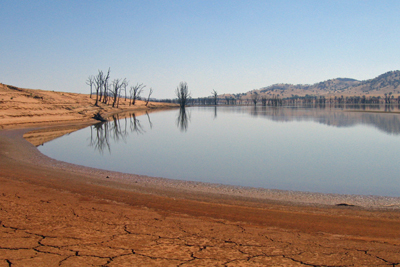
<th><img src="https://www.iea.usp.br/imagens/Escassez-Hidrica-sylvia-Tim-J-Keegan-flickr-copia.jpg" alt="Escassez Hídrica" class="image-inline" title="Escassez Hídrica" /></th>
</tr>
<tr>
<td><br /></td>
</tr>
</tbody>
</table>
<p>Entitled <i>Water Scarcity, Governance and Environmental Justice</i>, the meeting will be held in Spanish. It will take place on <strong>November 10</strong>, <strong>from 9.30 am to 12.30 pm</strong>, in the IEA's Events Room, with moderation of Professor Pedro Jacobi, coordinator of the IEA's Environment and Society research group.</p>
<p>"Metropolitan areas are experiencing prolonged drought crises. The experience shows that the models prioritize the supply of water to the detriment of demand control. The management models also fail to offer low investment in sewage treatment and water-free consumption, a scarce resource," says Professor Jacobi.</p>
<p>The panelists will examine the contexts of water scarcity in the world, the emergence of conflicts, and the reactions and responses of social actors  from the perspective of environmental justice.</p>
<p> </p>
<p><strong>The conferencists</strong></p>
<p><span>Geographer and historian </span><a class="external-link" href="https://grupo.us.es/giest/es/node/299">Leandro del Moral Ituarte</a><span>, who currently heads the Department of Human Geography at the University of Sevilla, specializes in hydraulic works. He has studied the lower basin of the Guadalquivir river, which bathes the territories of Andaluzia, in southern Spain.</span></p>
<p><a href="http://www.centre-cired.fr/spip.php?article749&amp;lang=fr" target="_blank">Bernard Barraqué</a>, research director at the Centre International de Recherche sur l'Environnement et le Développement of Le Centre National de la Recherche Scientifique, in Paris, has focused his recent studies on the allocation of water resources, evaluation of sustainable policies and methods,  institutional and participatory approaches, and comparative analysis of the sustainability of water management in major European cities. He also works at Agro ParisTech - École Nationale du Génie Rural, des Eaux et des Fôrets.</p>
<p>The participation of <a href="http://ugto.academia.edu/AlexRicardoCalderaOrtega" target="_blank">Alex Ricardo Caldera Ortega</a><span>, from the Department of Public Management and Development of the University of Guanajuato, has been cancelled due to the speaker's agenda.</span></p>
<p style="text-align: right; "><span class="discreet">Photo: Tim J. Keegan/Flickr</span></p>]]></content:encoded>
    <dc:publisher>No publisher</dc:publisher>
    <dc:creator>Richard Meckien</dc:creator>
    <dc:rights>Original version in Portuguese by Sylvia Miguel </dc:rights>
    
      <dc:subject>Europe</dc:subject>
    
    
      <dc:subject>Research Group: Environment and Society</dc:subject>
    
    
      <dc:subject>Power</dc:subject>
    
    
      <dc:subject>Interdisciplinarity</dc:subject>
    
    
      <dc:subject>Water</dc:subject>
    
    
      <dc:subject>Capitalism</dc:subject>
    
    
      <dc:subject>Environment</dc:subject>
    
    
      <dc:subject>Sustainability</dc:subject>
    
    
      <dc:subject>Globalization</dc:subject>
    
    
      <dc:subject>Inequality</dc:subject>
    
    
      <dc:subject>Poverty</dc:subject>
    
    
      <dc:subject>Environmental Policy</dc:subject>
    
    
      <dc:subject>Cities</dc:subject>
    
    <dc:date>2015-10-27T17:55:00Z</dc:date>
    <dc:type>News Item</dc:type>
  </item>


  <item rdf:about="https://www.iea.usp.br/en/news/unemployment-in-Brazil-and-future-prospects">
    <title>Unemployment in Brazil and future prospects</title>
    <link>https://www.iea.usp.br/en/news/unemployment-in-Brazil-and-future-prospects</link>
    <description></description>
    <content:encoded xmlns:content="http://purl.org/rss/1.0/modules/content/"><![CDATA[<p style="text-align: justify; ">Labor market, employment, income, social and economic development, and vocational training are recurring themes in the debates at the IEA and in the dossiers published by the Institute's journal <i>Estudos Avançados</i>. On <strong>October 16</strong>, the IEA will host some of the greatest Brazilian specialists to discuss the issue, which will also receive a special dossier to be published in the next edition of the IEA's journal, issue 85. The debate <i>Unemployment in Brazil</i> will take place in the IEA Events Room, <strong>from 9 am to 12 pm</strong>.</p>
<p style="text-align: justify; ">According to the Brazilian Institute of Geography and Statistics (IBGE), in July 2015 there was a record annual growth of the unemployed population, in reference to the series started in 2002. In July, the population that was looking for work in the country reached 1.8 million people, an increase of 9.4% compared to June 2015 and of 56% compared to July 2014.</p>
<p style="text-align: justify; ">In the debate at the IEA, the conferencists will not only analyze this performance, but also present a comprehensive diagnosis of the current situation and future prospects of the labor market.</p>
<p style="text-align: justify; ">With the mediation of Alfredo Bosi, chief editor of <i>Estudos Avançados</i>, the meeting will have as panelists economist Marcio Pochman, who will also coordinate the seminar, Anselmo Luis dos Santos, Executive Director of the UNICAMP's Center for Studies on Unions and Work Economics (CESIT), José Dari Krein, a professor at UNICAMP and also director of CESIT, and economist Patrícia Pelatieri, expert in public finances and executive coordinator of the Inter-Union Department of Statistics and Socioeconomic Studies (DIEESE). Pochmann, Santos and Krein will have articles published in the dossier on unemployment that <i>Estudos Avançados</i> will launch.</p>
<p style="text-align: justify; ">Former president of the Institute of Applied Economic Research (IPEA) and former Secretary of Development, Labor and Social Development of the Municipality of São Paulo, Porchman will examine issues as the changes in the employee's income and the increase of the unemployment rate in big cities. For him, the panorama of the unemployed in the cities stems fundamentally from the advance of the economic recession. The reflections of the economic adjustment policies are reviewed by Pochmann in the article "Economic Adjustment and the recent unemployment in metropolitan Brazil", to be published in the issue 85 of the journal. The article presents consolidated data of recent months and the latest movements in the labor market.</p>
<p style="text-align: justify; ">Santos, from UNICAMP, will analyze the pattern of the insertion of the young in the Brazilian labor market between 2004 and 2015. The phases of relative economic stagnation, the demographic changes, the biggest growth rate in some periods and social policy reflections cause impact on the labor market. The professor will examine these aspects in the debate as he also did in the dossier's article, signed with economist Denis Maracci Gimenez, associate director of the CESIT / UNICAMP.</p>
<p style="text-align: justify; ">The intervention of the union movement in policies which affect employment and unemployment will be the theme of Krein's conference. In the journal's dossier, he has published the article "The unions and the dynamics of work" with other authors.</p>
<p style="text-align: justify; ">The dossier also includes an article by sociologist Clemente Ganz Lúcio, technical director of DIEESE and member of the Council for Economic and Social Development (CDES). In his text, Lúcio not only analyzes the new dynamics of the labor market in Brazil, but also indicates policies and measures to reverse the current situation.</p>]]></content:encoded>
    <dc:publisher>No publisher</dc:publisher>
    <dc:creator>Richard Meckien</dc:creator>
    <dc:rights>Original version in Portuguese by Sylvia Miguel</dc:rights>
    
      <dc:subject>Brazil</dc:subject>
    
    
      <dc:subject>Sociology</dc:subject>
    
    
      <dc:subject>Capitalism</dc:subject>
    
    
      <dc:subject>Inequality</dc:subject>
    
    
      <dc:subject>Poverty</dc:subject>
    
    
      <dc:subject>Employment</dc:subject>
    
    
      <dc:subject>Crisis</dc:subject>
    
    
      <dc:subject>Economy</dc:subject>
    
    <dc:date>2015-10-01T20:20:00Z</dc:date>
    <dc:type>News Item</dc:type>
  </item>


</rdf:RDF>