<?xml version="1.0" encoding="utf-8" ?>
<rdf:RDF xmlns:rdf="http://www.w3.org/1999/02/22-rdf-syntax-ns#" xmlns:dc="http://purl.org/dc/elements/1.1/" xmlns:syn="http://purl.org/rss/1.0/modules/syndication/" xmlns="http://purl.org/rss/1.0/">


<channel rdf:about="https://www.iea.usp.br/en/search_rss">
  <title>en</title>
  <link>https://www.iea.usp.br</link>

  <description>
    
            These are the search results for the query, showing results 61 to 70.
        
  </description>


  <image rdf:resource="https://www.iea.usp.br/logo.png" />

  <items>
    <rdf:Seq>
      
        <rdf:li rdf:resource="https://www.iea.usp.br/en/news/board-of-the-iea-publishes-open-letter-about-the-depredations-of-usp2019s-central-administration-and-the-institute" />
      
      
        <rdf:li rdf:resource="https://www.iea.usp.br/en/media-library/photos/events-2014/o-arquivo-apartheid-racismo-memoria-e-pertencimento-entre-sul-africanos-na-australia-09-de-setembro-de-2014" />
      
      
        <rdf:li rdf:resource="https://www.iea.usp.br/en/news/funeral-bororo" />
      
      
        <rdf:li rdf:resource="https://www.iea.usp.br/en/news/an-interdisciplinary-look-at-the-drought-in-sao-paulo" />
      
      
        <rdf:li rdf:resource="https://www.iea.usp.br/en/news/work-ethics-in-brazil" />
      
      
        <rdf:li rdf:resource="https://www.iea.usp.br/en/news/cop20" />
      
      
        <rdf:li rdf:resource="https://www.iea.usp.br/en/news/2014-agenda-foresees-discussion-of-historical-institutional-and-strategic-issues" />
      
      
        <rdf:li rdf:resource="https://www.iea.usp.br/en/news/aids-brazil" />
      
      
        <rdf:li rdf:resource="https://www.iea.usp.br/en/news/pollinators-of-brazil-wins-premio-jabuti" />
      
      
        <rdf:li rdf:resource="https://www.iea.usp.br/en/news/85-estudos-avancados-suggests-ways-to-overcome-unemployment" />
      
    </rdf:Seq>
  </items>

</channel>


  <item rdf:about="https://www.iea.usp.br/en/news/board-of-the-iea-publishes-open-letter-about-the-depredations-of-usp2019s-central-administration-and-the-institute">
    <title>Board of the IEA publishes open letter about the depredations of USP’s central administration and the institute premises</title>
    <link>https://www.iea.usp.br/en/news/board-of-the-iea-publishes-open-letter-about-the-depredations-of-usp2019s-central-administration-and-the-institute</link>
    <description>Board of the IEA publishes open letter about the invasion and occupation of USP's administrative complex by students in the period from October 1 to November 12, 2013.</description>
    <content:encoded xmlns:content="http://purl.org/rss/1.0/modules/content/"><![CDATA[<p style="text-align: justify; ">At an extraordinary meeting held on November 19, IEA’s board reviewed the events related to invasion, occupation and depredation of USP’s central administration and the IEA by students and wrote the following open letter on the past events.</p>
<p style="text-align: justify; "> </p>
<p style="text-align: justify; "><i><strong>Open letter of the Institute of Advanced Studies’s board regarding the invasion and occupation of USP’s administrative complex by students in the period between October 1 and November 12, 2013.</strong></i></p>
<p style="text-align: justify; "><i>The board of the Institute of Advanced Studies (IEA) of the University of São Paulo hereby expresses its condemnation of the acts of vandalism committed at its headquarters by students that stormed and occupied the premises of the university's central administration in the period between October 1 and November 12, 2013. These acts are an affront to common sense and violate USP’s code of ethics.</i></p>
<p style="text-align: justify; "><i>Apart from significant harm to public property and emotional distress to USP’s employees working there for the benefit of everyone (including the students), the invaders have caused the disruption of academic activities and blocked several administrative procedures, including urgent ones.</i></p>
<p style="text-align: justify; "><i>IEA’s schedule for the fourth quarter of this year has been severely affected, as well as future activities in the planning stages, including the ones in partnership with national and international institutions.</i></p>
<p style="text-align: justify; "><i>Given the reported facts, IEA’s board reaffirms the commitment of the institute to continue its mission, free from constraints on its activities, to ensure the continuity of its unique role as a place for interdisciplinary dialogue, always contemplating the best academic values, management and coexistence .</i></p>
<p style="text-align: justify; "><i>Additionally, the board emphasizes the importance of the following immediate actions:</i></p>
<ol>
<li><i>to formalize, within the IEA, a program that without reducing in any way the liability for mismanagement and destruction promotes broad discussion on the roots of this malaise and proposes institutional policies to USP in order to generate subsidies that contribute to the performance of managers and deliberative forums of the university in proposing initiatives and decision-making;</i></li>
<li><i>to host the IEA provisionally at other facilities, with more appropriate conditions, inside or outside USP’s main campus, until the permanent headquarters of the institute (still in its bidding stage) is completed.</i></li>
</ol>
<p style="text-align: right; "> </p>
<p style="text-align: right; ">Board of the Institute of Advanced Studies of the University of São Paulo</p>
<p style="text-align: right; "><i>São Paulo, November 19, 2013</i></p>
<p style="text-align: left; "><strong>More on this issue: <a href="https://www.iea.usp.br/en/news/42-days-of-devastation" class="external-link">The result of 42 days of occupation</a></strong></p>]]></content:encoded>
    <dc:publisher>No publisher</dc:publisher>
    <dc:creator>Richard Meckien</dc:creator>
    <dc:rights></dc:rights>
    
      <dc:subject>Violence</dc:subject>
    
    
      <dc:subject>Commons</dc:subject>
    
    
      <dc:subject>USP</dc:subject>
    
    
      <dc:subject>IEA</dc:subject>
    
    
      <dc:subject>Ethics</dc:subject>
    
    
      <dc:subject>Transformation</dc:subject>
    
    <dc:date>2013-12-04T19:35:00Z</dc:date>
    <dc:type>News Item</dc:type>
  </item>


  <item rdf:about="https://www.iea.usp.br/en/media-library/photos/events-2014/o-arquivo-apartheid-racismo-memoria-e-pertencimento-entre-sul-africanos-na-australia-09-de-setembro-de-2014">
    <title>Apartheid Archive: Racism, Memory and Belonging among South Africans in Australia - September 9, 2014</title>
    <link>https://www.iea.usp.br/en/media-library/photos/events-2014/o-arquivo-apartheid-racismo-memoria-e-pertencimento-entre-sul-africanos-na-australia-09-de-setembro-de-2014</link>
    <description></description>
    
    <dc:publisher>No publisher</dc:publisher>
    <dc:creator>Richard Meckien</dc:creator>
    <dc:rights></dc:rights>
    
      <dc:subject>Commons</dc:subject>
    
    
      <dc:subject>Racism</dc:subject>
    
    <dc:date>2014-09-09T03:00:00Z</dc:date>
    <dc:type>Folder</dc:type>
  </item>


  <item rdf:about="https://www.iea.usp.br/en/news/funeral-bororo">
    <title>Anthropologist creates support campaign for the funeral of the Bororo’s master of chants</title>
    <link>https://www.iea.usp.br/en/news/funeral-bororo</link>
    <description></description>
    <content:encoded xmlns:content="http://purl.org/rss/1.0/modules/content/"><![CDATA[<table class="tabela-direita-400-borda">
<tbody>
<tr>
<th style="text-align: right; ">
<h3 style="text-align: center; ">STEPS OF A BORORO FUNERAL</h3>
</th>
</tr>
<tr>
<td>
<p><img src="https://www.iea.usp.br/imagens/bororo-4" alt="bororo-4" class="image-inline" title="bororo-4" /></p>
<p style="text-align: right; "><strong>Shallow grave in the village's center, where the body gets watered daily to have its </strong><strong>decomposition </strong><strong>process accelerated</strong></p>
</td>
</tr>
<tr>
<td>
<p><img src="https://www.iea.usp.br/imagens/bororo-1" alt="bororo-1" class="image-inline" title="bororo-1" /></p>
<p style="text-align: right; "><strong>Exhumation of the bones for the most important phase of the funeral</strong></p>
</td>
</tr>
<tr>
<td><img src="https://www.iea.usp.br/imagens/bororo-3" alt="bororo-3" class="image-inline" title="bororo-3" /></td>
</tr>
<tr>
<td style="text-align: right; "><strong>The skull is painted with annatto to represent the mythical being who carries the spirit of the dead</strong></td>
</tr>
</tbody>
</table>
<p style="text-align: justify; ">José Carlos Kuguri, the last master of chants of the Bororo village Meruri, died on June 20 at the age of about 70 years, as a result of pneumonia. Since then, his body has been wrapped in mats and buried in a shallow grave in the village’s center, which is in the south of the Brazilian state of Mato Grosso. The grave is daily watered to accelerate the decomposition of the body.</p>
<p style="text-align: justify; ">Kuguri is having a Bororo funeral, the most important ritual of this ethnicity and considered one of the world's most elaborate funerals. The most important part will take place in October, when the skull and other bones of Kaguri will be removed from the grave, cleaned, painted with annatto and adorned with feathers, becoming a mythical being (a macaw) to carry his spirit, which can thus be purified before moving to the village of the dead.</p>
<p style="text-align: justify; ">"The ritual is connected with the Bororo philosophy, according to which the master of chants plays a central role throughout the process," says anthropologist <a href="https://www.iea.usp.br/en/persons/visiting-professors/copy2_of_massimo-canevacci" class="external-link"><strong>Massimo Canevacci</strong></a>, visiting professor at the IEA-USP who studies the Bororo culture since 1995, having his fieldwork in the villages Meruri and Garças.</p>
<p style="text-align: justify; ">The anthropologist explains that "the master sings in sacred rhythms and melodies" and has the memory of all the chants that should be sung at different times of the ritual. With the chants, he establishes a relationship between the visible and invisible worlds, between the living and the dead: "All the 'dead' return to the Bororo funeral and in that sense no one is totally dead."</p>
<p style="text-align: justify; ">"The completion of this ritual is crucial to the Bororo, as it allows them to play their political role in the world through their practice of autonomous self-representation. Accordingly, the Bororo funeral is part and parcel of contemporary human heritage, so important for all other human beings of any part of the world."</p>
<p style="text-align: justify; ">In support of the ritual, Canevacci has started a crowdfunding campaign on the internet to raise US$ 2,500.00. According to him, the funds are needed for hosting other masters of chants and for the participation of representatives of several other Bororo villages, which will have the responsibility to appoint a successor to José Carlos Kuguri.</p>
<p style="text-align: justify; ">Those who wish to contribute to the crowdfunding must do so by September 15. More information on <a class="external-link" href="https://www.indiegogo.com/projects/the-master-of-songs-funeral-in-the-bororo-culture">www.indiegogo.com/projects/the-master-of-songs-funeral-in-the-bororo-culture</a><span>.</span></p>
<p style="text-align: right; "><span class="discreet">Photos: Massimo Canevacci</span></p>]]></content:encoded>
    <dc:publisher>No publisher</dc:publisher>
    <dc:creator>Richard Meckien</dc:creator>
    <dc:rights></dc:rights>
    
      <dc:subject>Anthropology</dc:subject>
    
    
      <dc:subject>Culture</dc:subject>
    
    
      <dc:subject>Ethnology</dc:subject>
    
    
      <dc:subject>Commons</dc:subject>
    
    <dc:date>2014-08-05T19:05:00Z</dc:date>
    <dc:type>News Item</dc:type>
  </item>


  <item rdf:about="https://www.iea.usp.br/en/news/an-interdisciplinary-look-at-the-drought-in-sao-paulo">
    <title>An interdisciplinary look at the drought in São Paulo</title>
    <link>https://www.iea.usp.br/en/news/an-interdisciplinary-look-at-the-drought-in-sao-paulo</link>
    <description></description>
    <content:encoded xmlns:content="http://purl.org/rss/1.0/modules/content/"><![CDATA[<p style="text-align: justify; "><img src="https://www.iea.usp.br/imagens/evento-verao-2013-2014-e-cenarios-de-estresse-hidrico" alt="Evento &quot;Verão 2013/2014 e Cenários de Estresse Hídrico&quot;" class="image-right" title="Evento &quot;Verão 2013/2014 e Cenários de Estresse Hídrico&quot;" />The Metropolitan Region of São Paulo (RMSP) has been undergoing the bitter consequences of a prolonged drought, which led the Cantareira water reservoir to beat low levels records. The IEA-USP addressed this water shortage situation in the debate "Summer 2013/2014 and Scenarios of Water Stress" on March 19. The event was part of the celebrations of the Water Week 2014, prior to the World Water Day, celebrated on March 22.</p>
<p style="text-align: justify; ">The debate has been organized by a partnership between two of IEA-USP’s research groups: <a href="https://www.iea.usp.br/en/research/research-groups/environmental-sciences" class="external-link">Environment and Society</a>, and <a href="https://www.iea.usp.br/en/research/research-groups/philosophy-history-sociology-of-science-and-technology" class="external-link">Philosophy, History, and Sociology of Science and Technology</a>. They had the support of the Center for Studies in Social and Environmental Governance of USP’s Institute for Energy and Environment (IEE). The meeting has comprised two roundtables, both mediated by Pedro Jacobi, coordinator of IEA’s Environment and Society Research Group.</p>
<p style="text-align: justify; ">The exhibitors were Wagner Ribeiro Costa, professor at USP’s Faculty of Philosophy, Letters and Human Sciences (FFLCH), Maurício de Carvalho Ramos, also a professor at FFLCH, Daniela Libório Di Sarno, professor at PUC-SP’s Faculty of Law and vice president of the Brazilian Institute of Urban Law (IBDU), Marcio Automare, organizational development analyst at the Institute of Land of the State of São Paulo (ITESP), and Susana Prizendt, coordinator of the Paulista Committee of the Permanent Campaign Against Pesticides and for Living.</p>
<p style="text-align: justify; ">The meeting has addressed the water problem from an interdisciplinary perspective, considering environmental, legal, socio-political, philosophical and food safety aspects. According to Jacobi, the idea was to reflect on the problem of water in the RMSP, but covering broader issues involving, among others, inequalities in access to water, changes in rainfall rates caused by the phenomenon of climate change, institutional barriers and the posture of the government in relation to the prevention and remediation of the problem.</p>
<p style="text-align: justify; "><a href="https://www.iea.usp.br/en/media-library/photos/events-2014/verao-2013-14-e-cenarios-de-estresse-hidrico-19-de-marco-de-2014" class="external-link"><b>Photos of the event</b></a></p>
<p style="text-align: justify; "><strong>MEASURES OF THE STATE</strong></p>
<p style="text-align: justify; ">The debate has been heated up by recent measures that have been studied and taken by the state government of São Paulo in order to try to circumvent the critical situation of the Cantareira reservoir, which currently operates at approximately 15 % of its capacity. Among these measures is the proposal of using water from the Paraíba do Sul River reservoirs to supply the RMSP. When asked about the matter, Ribeiro said that he does not consider the proposal timely, since the suggested river is also undergoing a situation of water stress.</p>
<p style="text-align: justify; ">Ribeiro has criticized the emergency works of the state government, which began on March 14 to pump the volume of "dead water" from the bottom of the dams that form the Cantareira reservoir. According to him, this means "to remove the last drop of a water that has been stored for 40 years, stagnant, whose quality is questionable due to the unknown factors associated with it."</p>
<p style="text-align: justify; ">Besides, he said that it was a risky move, which can lead to resource depletion in the region. “That is because to saturate the soil again to the point for the dam to refill, much more than the average rainfall rates in the region will be needed, and those were not achieved this summer."</p>
<p style="text-align: justify; "><strong>FRAGMENTED MANAGEMENT</strong></p>
<p style="text-align: justify; ">Sarno has pointed out the incongruity of the Brazilian legal system in relation to water resources management as the top reason for the shortage in the country. According to her, although the Federal Constitution provides that the management should be shared between the federal government, the states and the municipalities, there is little dialogue between the parties and the administration of water resources ends up getting fragmented.</p>
<p style="text-align: justify; ">"To meet the challenge of shared management, the three [federal, state and municipal] parties need to sit down and discuss. But this step has still not been taken. There are neither vertically talks between the parties nor horizontally ones between institutions," she said.</p>
<p style="text-align: justify; ">This fragmentation gets compounded by the mismatch between the division of the federal system, that obeys political criteria, and the division of watersheds, which follows geographic criteria. The watersheds are important because they put another actor in the scene: the Watershed Committees, which comprise the National System for Water Resources Management. Composed of representatives of the various water user sectors, civil society and government organizations, the committees approve the Water Resources Plan for each watershed, arbitrate conflicts over water use, suggest values ​​for the charging of consumption, among others.</p>
<p style="text-align: justify; ">According to Sarno, the problem is that none of the management models adopted in the country - municipal management and state management by autarchies or contractors - is consistent with the watershed divisions. "The Committees even do part of the management, but who puts the distribution of water into practice is not them, but managing institutions.”</p>
<p style="text-align: justify; "><strong>PUBLIC X PRIVATE</strong></p>
<p style="text-align: justify; ">As for Ribeiro, the biggest obstacle to equate the issue of water in Brazil is the private management of water resources. In the RMSP, for example, the management is done by SABESP, a mixed economy company, publicly listed and traded on the stock exchange, which operates according to the logic of a private institution.</p>
<p style="text-align: justify; ">"Is it the function of the state to pay up, profit and speculate based on the commercialization of water resources? No, it is not the function of the state to make money from the water, as done by SABESP," warned Ribeiro, noting the lack of transparency in the management of the company. "Besides the water flows, there should be transparency in relation to financial flows," he pointed out.</p>
<p style="text-align: justify; ">As Ribeiro, Automare pondered that a government-linked company as SABESP should not behave like a private company, treating water as a product. He also cited the industry of water sold in gallons, whose growth was affecting groundwater, as an example of the commercial exploitation of water resources.</p>
<p style="text-align: justify; ">Sarno also addressed the conflict between public and private interests. According to her, Watershed Committees treat water as a commodity, whose distribution should be equal and the charging should happen only to regulate the consumption. The companies that put management into practice, such as SABESP, treat water as a product for sale.</p>
<p style="text-align: justify; ">According to the lawyer, the managers of metropolitan regions and municipalities do not take into consideration the willingness of the watershed in allowing, for example, the expansion of an industrial district that could endanger the water supply on site. "It takes measures to reconcile urban expansion and the infrastructure for distribution of water in terms of quality and quantity," he warned.</p>
<p style="text-align: justify; "><strong>ETHICAL DIMENSION</strong></p>
<p style="text-align: justify; ">Taking a philosophical approach, Carvalho said that the water can be considered from two sets of properties: material ones, linked to biochemical principles, and symbolic ones, related to its immeasurable value to life, making it a symbol of power.</p>
<p style="text-align: justify; ">According to him, when considering the symbolic properties, water can be conceived both as a resource - a product to be exploited economically -, as well as a good - something free and not marketable in any way. And it is this conception of a good that should be adopted to tackle the problem of water stress from an ethical perspective.</p>
<p style="text-align: justify; ">"Addressing the issue rationally and responsibly involves not putting into practice technoscientific possibilities related to water use that may jeopardize the availability or the material properties of water resources," he said. "If the ethical stance prevailed, there would be no need for rationing and an appeal to the conscience of people would be sufficient," he added.</p>
<p style="text-align: justify; "><strong>PARTICIPATION</strong></p>
<p style="text-align: justify; ">The panelists drew attention to the low involvement of society in discussions on the management of water resources. According to Automare, water has achieved the last place in the priority list of the citizens of the State of São Paulo: "We have been induced to credit the discussion on the subject to the representatives and forgot to get involved." He also emphasized that "the public has no forum for debate, so the situation is in the hands of technocrats."</p>
<p style="text-align: justify; ">Ribeiro has also warned about the paradox that involves the lack of popular participation on the one hand and excess of institutions to manage water on the other. For him, "we have more institutions dealing with water than water itself. There are too much institutions for very little water. And civil society is under-represented within them."</p>
<p style="text-align: justify; "><strong>FOOD SAFETY</strong></p>
<p style="text-align: justify; ">The water problem has also been addressed from the point of view of quality. Addressing the contamination of water resources by pesticides, Prizendt said that the issue should be discussed with a view to replacing the agribusiness, model of conventional production and based on intensive use of pesticides, by agroecology, an alternative model, whose practices intend to maintain the balance of ecosystems and preserve the sources of rivers and the water system as a whole.</p>
<p style="text-align: justify; ">According to her, pesticides are the second leading cause of contamination of rivers, a fact that becomes particularly worrying considering that Brazil is world champion in the use of these substances, accounting for one fifth of what is consumed in the world. Moreover, the agricultural sector accounts for about 70 % of freshwater consumption in Brazil, said the environmentalist.</p>]]></content:encoded>
    <dc:publisher>No publisher</dc:publisher>
    <dc:creator>Richard Meckien</dc:creator>
    <dc:rights></dc:rights>
    
      <dc:subject>Research Group: Environment and Society</dc:subject>
    
    
      <dc:subject>Abstraction</dc:subject>
    
    
      <dc:subject>Water</dc:subject>
    
    
      <dc:subject>Commons</dc:subject>
    
    
      <dc:subject>Environment</dc:subject>
    
    
      <dc:subject>Research Group: Philosophy, History, and Sociology of Science and Technology</dc:subject>
    
    <dc:date>2014-03-24T14:05:00Z</dc:date>
    <dc:type>News Item</dc:type>
  </item>


  <item rdf:about="https://www.iea.usp.br/en/news/work-ethics-in-brazil">
    <title>Adalberto Cardoso examines the metamorphoses of the work ethics in Brazil</title>
    <link>https://www.iea.usp.br/en/news/work-ethics-in-brazil</link>
    <description></description>
    <content:encoded xmlns:content="http://purl.org/rss/1.0/modules/content/"><![CDATA[<table class="tabela-direita-300">
<tbody>
<tr>
<th><img src="https://www.iea.usp.br/en/images/adalberto-moreira-cardoso" alt="Adalberto Moreira Cardoso" class="image-inline" title="Adalberto Moreira Cardoso" /></th>
</tr>
<tr>
<td style="text-align: right; "><b>Sociologist Adalberto Cardoso</b></td>
</tr>
</tbody>
</table>
<p>Diverse aspects of how the work ethics was built in Brazil will be discussed by sociologist Adalberto Cardoso, from the Institute of Social and Political Studies (Iesp) at Rio de Janeiro State University (Uerj), during the speech <i>Multiple Modernities and the Metamorphoses of the Work Ethics in Brazil</i>, on August 4, at 3 pm (GMT -3), in the Faculty Room of the Institute of International Relations (IRI). It will be the third event of the cycle <i>Carioca Afternoons: The University of São Paulo Listens to Rio de Janeiro</i>.</p>
<p class="Sub1"><b>PROTESTANTISM</b></p>
<p>Cardoso notes that Protestant ethics and its links with the spirit of capitalism hold methodical work in high regard and, in keeping with good morals, advocate sacrificing the satisfaction of immediate needs for the sake of greater well-being in the future. He adds that Protestant ethics also see rewards as the result of exercising a “properly understood vocation.” Thus, “entrepreneurship, individualism, and rewards for merit and hard work have replaced the idea of ​​vocation in the bourgeois work ethic.”</p>
<p class="Sub1"><b>SOCIALISM</b></p>
<p>The sociologist points out that an alternative work ethics has been built by organized labor in mutual support societies, labor unions and, later, political parties. This other ethics is based on “solidarity and class equality, avoiding the notion of merit and its religious justification. Its principle of justice is the socialist maxim, ‘From each according to his ability, to each according to his need,’ a principle that is possible only in the affluent society of the communist utopia.”</p>
<p class="Sub1"><b>BRAZIL</b></p>
<p>Cardoso emphasizes that, in Brazil, the main element in the building of a work ethics was slavery, which determined the country’s social relations for centuries, giving rise to the notion of manual labor as something degrading and undignified: “Redeeming manual labor from the stigma of unworthiness took decades, and neither bourgeois ethics nor its egalitarian counterpart became essential part of the expectations of Brazilian workers throughout history.” It is over this background sociologist will discuss the construction of Brazil’s work ethics (or, perhaps, its plural work ethics).</p>
<p class="Sub1"><b>PROFILE</b></p>
<p>In addition to being a professor and researcher at Iesp-Uerj, where he heads the Center for Labor Research and Studies (Nupet), Cardoso is an associate researcher at the Brazilian Center for Analysis and Planning (CEBRAP) and at the Warwick Institute for Employment Research Scientist, as well as grant scholar of Faperj’s “Scientist from our State” program<span style="text-decoration: underline;">.</span></p>
<p class="Text">With a doctor’s degree in Sociology from USP’s School of Philosophy, Letters and Human Sciences (FFLCH), he is the author of 14 books and over 70 articles published in journals and books. He currently coordinates three research projects and works in various fields of labor sociology, urban sociology (including social inequalities) and social theory. The keywords of his <a class="external-link" href="http://buscatextual.cnpq.br/buscatextual/visualizacv.do?id=K4786334H1">Lattes résumé</a> that contextualize his academic production are unionism, class formation, labor market, productive restructuring, globalization, automotive industry, labor law, neo-liberalism, democracy, Latin America, and Vargas Era.</p>
<p class="Sub1"><b>CYCLE</b></p>
<p>The cycle “Rio Afternoons: The University of São Paulo Listens to Rio de Janeiro” invites prominent social scientists from Rio de Janeiro to discuss various aspects of Brazilian reality, in an effort to bring together scholarly reflections on social issues from Brazil’s the two major cities. The cycle is organized by Renato Janine Ribeiro, professor of Ethics and Political Philosophy at the FFLCH-USP and coordinator of the IEA-USP’s <i>Research Group on The Future Questions Us</i>.</p>
<p class="Text">The event is open to the public and admission is free. For information and registration, please send a message to <a class="mail-link" href="mailto:leila.costa@usp.br">leila.costa@usp.br</a>. The event will also be broadcast live <a href="https://www.iea.usp.br/aovivo" class="external-link">on the Web</a>. IRI-USP is located at Av. Professor Martins Rodrigues, Travessas 4 e 5, Cidade Universitária, São Paulo, SP (<a class="external-link" href="http://www.iri.usp.br/index.php?option=com_k2&amp;view=item&amp;layout=item&amp;id=414&amp;Itemid=353">map</a>).</p>
<p class="Text" style="text-align: right; "><span style="text-align: right; "><span class="discreet">English revision by Carlos Malferrari - Photo: Fiocruz</span></span></p>]]></content:encoded>
    <dc:publisher>No publisher</dc:publisher>
    <dc:creator>Mauro Bellesa</dc:creator>
    <dc:rights>Carlos Malferrari (translator)</dc:rights>
    
      <dc:subject>Sociology</dc:subject>
    
    
      <dc:subject>Work</dc:subject>
    
    
      <dc:subject>Commons</dc:subject>
    
    
      <dc:subject>Ethics</dc:subject>
    
    
      <dc:subject>Social Sciences</dc:subject>
    
    <dc:date>2014-07-24T00:50:00Z</dc:date>
    <dc:type>News Item</dc:type>
  </item>


  <item rdf:about="https://www.iea.usp.br/en/news/cop20">
    <title>A Debate on the Contributions the COP 20 May Make to Climate Negotiations</title>
    <link>https://www.iea.usp.br/en/news/cop20</link>
    <description></description>
    <content:encoded xmlns:content="http://purl.org/rss/1.0/modules/content/"><![CDATA[<table class="tabela-direita-400">
<tbody>
<tr>
<th><img src="https://www.iea.usp.br/imagens/alteracoes-nas-precipitacoes-no-final-do-seculo-21" alt="Alterações nas precipitações no final do século 21" class="image-inline" title="Alterações nas precipitações no final do século 21" /></th>
</tr>
<tr>
<td style="text-align: right; "><strong>Changes in rainfall patterns at the end of 21st century according to projections from the US government’s National Oceanic and Atmospheric Administration (NOAA) (in inches of liquid water per year)</strong></td>
</tr>
</tbody>
</table>
<p style="text-align: justify; ">The <a class="external-link" href="http://www.cop20lima.org/">20<sup>th</sup> Conference of the Parties of the UN Framework Convention on Climate Change (COP 20)</a>, which will take place in Lima, Peru, over the first two weeks of December, is particularly important as part of the process of negotiating a new global climate agreement to be signed in Paris, France, in 2015.</p>
<p style="text-align: justify; "><span><span>It is expected that the conference will clarify the main challenges, roadblocks and opportunities available over the course of this complex negotiation process, which, if it reaches fruition, may lead to the realization of a global agreement with responses to the climate crisis.</span></span></p>
<p class="Text" style="text-align: justify; ">What can one truly expect from the COP 20? Will actual foundations be set forth for a new climate agreement that, from now on, engages and commits all actions devoted to reducing negative impacts on climate? These issues will be discussed in the debate “COP 20: What Can We Expect?” which <a href="https://www.iea.usp.br/en/research/research-groups/environmental-sciences" class="external-link">IEA-USP's Environment and Society Research Group</a>, with support from the <a class="external-link" href="http://www.incline.iag.usp.br/data/index_USA.php"><span style="text-align: justify; ">Interdisciplinary Climate Investigation center</span><span style="text-align: justify; "> (INCLINE)</span></a>, will hold on November 26, at 2 pm, at the IEA-USP.</p>
<p style="text-align: justify; "><span><span class="hps"><span>Panel members will include </span></span>Eduardo Felipe Pérez Matias (from Nogueira, Elias, Laskowski e Matias law firm), Ricardo Baitelo (Greenpeace Brazil) and Wagner Costa Ribeiro (from USP’s School of Philosophy, Languages and Literature, and Human Sciences, and IEA-USP). The discussion will be moderated by the research group coordinator, <a href="https://www.iea.usp.br/en/persons/researchers/pedro-roberto-jacobi" class="external-link">Pedro Roberto Jacobi</a> (USP’s School of Education and IEA-USP).</span></p>
<p style="text-align: justify; "><span><span>According to Jacobi, the obstacles and arguments that hinder the adoption of effective commitments by the parties can worsen the progressive withering of multilateral governance on climate change: “As the central controversy of the negotiating process, differentiation may create new foundations to advance actions that mitigate and enable adaptation to climate changes.”</span></span></p>
<p style="text-align: justify; "><span><span>Also according to Jacobi, the central controversies – which are related to the differences – are the degree of responsibility and the ability of each country to measure and acknowledge what it might do to contribute to the actions of adaptation to climate change, inasmuch as mitigation depends on global agreements. For him, the decarbonization agreement between the US and China signed on November 12 is insufficient, but signals changes in the position of the major players.</span></span></p>
<p style="text-align: justify; "><span><span><span style="text-align: justify; ">The event will be broadcast live on the </span><a style="text-align: justify; " href="https://www.iea.usp.br/aovivo">web</a><span style="text-align: justify; ">.</span></span></span></p>
<div>
<div class="kssattr-target-parent-fieldname-inscricao-cc9d4e4bd39d4cd68c7e0a573e48ab46 kssattr-macro-rich-field-view kssattr-templateId-widgets/rich kssattr-atfieldname-inscricao " id="parent-fieldname-inscricao-cc9d4e4bd39d4cd68c7e0a573e48ab46">
<div>
<div class="kssattr-atfieldname-programacao kssattr-templateId-widgets/rich kssattr-macro-rich-field-view kssattr-target-parent-fieldname-programacao-353b5b8bc739427eb693b2f69ac41085" id="parent-fieldname-programacao-353b5b8bc739427eb693b2f69ac41085"></div>
</div>
</div>
</div>
<div>
<h3></h3>
</div>
<div></div>]]></content:encoded>
    <dc:publisher>No publisher</dc:publisher>
    <dc:creator>Richard Meckien</dc:creator>
    <dc:rights>Carlos Malferrari (translator)</dc:rights>
    
      <dc:subject>Research Group: Environment and Society</dc:subject>
    
    
      <dc:subject>Climate Change</dc:subject>
    
    
      <dc:subject>Commons</dc:subject>
    
    
      <dc:subject>Environment</dc:subject>
    
    
      <dc:subject>Geopolitics</dc:subject>
    
    
      <dc:subject>Event</dc:subject>
    
    <dc:date>2014-11-13T17:10:00Z</dc:date>
    <dc:type>News Item</dc:type>
  </item>


  <item rdf:about="https://www.iea.usp.br/en/news/2014-agenda-foresees-discussion-of-historical-institutional-and-strategic-issues">
    <title>2014 agenda foresees discussion of historical, institutional and strategic issues</title>
    <link>https://www.iea.usp.br/en/news/2014-agenda-foresees-discussion-of-historical-institutional-and-strategic-issues</link>
    <description>The preliminary schedule for 2014 has already been set. Highlights include analyzes of historical events that marked Brazil and the world in the 20th century, the debate on strategic issues for the country and reflection on institutional issues linked to the IEA-USP and USP, and the development of scientific cooperation projects with international institutions.</description>
    <content:encoded xmlns:content="http://purl.org/rss/1.0/modules/content/"><![CDATA[<p style="text-align: justify; ">Two important facts will receive special attention from historians and other Brazilian and foreign intellectuals in 2014: the centenary of the First World War outbreak and the 50th anniversary of the military coup in Brazil. Both issues will be addressed by the IEA: the first one in partnership with the <a class="external-link" href="http://www.ibe.usp.br/index.php/pt">Chair von Martius for German and European Studies</a> and <a class="external-link" href="http://www.iri.usp.br/">USP’s Institute of International Relations (IRI)</a>, and the second one through a special dossier in issue 80 of the “Estudos Avançados” journal, to be released in April, and a debate promoted by the <a href="https://www.iea.usp.br/en/research/chairs/unesco-chair-of-education-for-peace-human-rights-democracy-and-tolerance" class="external-link">UNESCO Chair on Education for Peace, Human Rights, Democracy and Tolerance</a>.</p>
<p style="text-align: justify; ">The analysis of the impacts of these facts is essential to the understanding of Brazilian and world history in the 20th century, but not less important are the activities scheduled to discuss dilemmas of the present and prospects for the coming decades in several areas.</p>
<p style="text-align: justify; ">Two initiatives will deal specifically with institutional aspects of USP and the IEA. One of them is the University Governance and Culture of Excellence programme proposed by former rector of USP and former director of the IEA Jacques Marcovitch. It will be a study on ten universities from ten different countries to which it is worth comparing USP.</p>
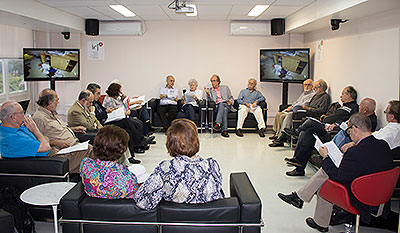
<p style="text-align: justify; "><img src="https://www.iea.usp.br/imagens/1a-reuniao-do-grupo-de-conjuntura-institucional" alt="1ª Reunião do Grupo de Conjuntura Institucional" class="image-right" title="1ª Reunião do Grupo de Conjuntura Institucional" />The other initiative is the creation of the Group for Institutional Situation to debate the most relevant aspects of academic and management policies of the university and the IEA. The first meeting of the group took place on November 19 with the participation of members and former members of IEA’s board and research groups of the institute. At the time, they gathered to discuss the effects of the invasion and occupation by students of USP's administrative complex where the IEA is located.</p>
<p style="text-align: justify; ">A series of discussions organized by IEA’s Direction and visiting professor <a href="https://www.iea.usp.br/en/persons/visiting-professors/bernardo-sorj-1" class="external-link">Bernardo Sorj</a> will deal with the production of meaning in the current sociocultural context, which transfers a constant decision-making process to the individual in an environment where he or she confronts multiple values, many of which are contradictory. The series is entitled ‘Em Busca do Sentido Perdido: Diálogos Interdisciplinares sobre Ciência e Transcendência’ (‘In Search of Lost Sense: Interdisciplinary Dialogues on Science and Transcendence’) and foresees five meetings to be hold throughout the year: ‘A Ciência e o Politeísmo de Valores’ (‘Science and the Polytheism of Values’), ‘O Indivíduo no Ocidente’ (‘The Individual in the West’), ‘O Ser Humano e a Natureza‘ (‘The Human Being and Nature’), ‘O Ser Humano e a Técnica’ (‘The Human Being and Technique’) and ‘O Lugar das Artes na Produção de Sentido’ (‘The Place of the Arts in the Production of Meaning’).</p>
<p style="text-align: justify; ">The issue of Brazilian industrial competitiveness, a sensitive topic to economic performance and development of the country, will be discussed in a cycle with a still undefined format. The proposal was brought up by IEA’s board in 2013 and will be coordinated by advisors Roberto Mendonça Faria, from IEA’s São Carlos Center, and Guilherme Ary Plonski, from USP’s Polytechnic School (POLI) and the Faculty of Economics, Business and Accounting (FEA).</p>
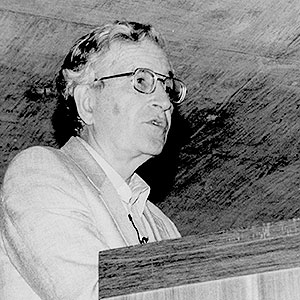
<p style="text-align: justify; "><img src="https://www.iea.usp.br/imagens/noam-chomsky-conferencia-no-iea-em-1996" alt="Noam Chomsky - conferência no IEA em 1996" class="image-left" title="Noam Chomsky - conferência no IEA em 1996" />Two initiatives involve partnerships with foreign IASs, both of them members of the <a class="external-link" href="http://www.ubias.net/">University-based Institute for Advanced Study network (UBIAS)</a>. Together with the <a class="external-link" href="http://www.iar.nagoya-u.ac.jp/">Institute for Advanced Research (IAR) of the University of Nagoya, Japan</a>, the IEA-USP will start the Intercontinental Academy project, which will bring together around 15 young researchers from different areas of knowledge and universities to a collaborative and interdisciplinary study, under the guidance of three senior scientists, with workshops in São Paulo and Nagoya in 2015. The laboratory ‘Interdisciplinary Approaches for Global Challenges: Transatlantic Dialogues’ will be a partnership between the IEA-USP and the <a class="external-link" href="http://www.birmingham.ac.uk/research/activity/ias/index.aspx">University of Birmingham’s Institute of Advanced Studies</a>. The project will bring together British and Brazilian experts in studies to identify possible solutions for the challenges that cities and their residents will face in the coming decades.</p>
<p style="text-align: justify; ">Still in the international context, this summary of the agenda could not fail to highlight the possible presence of the renowned linguist and political activist Noam Chomsky, professor emeritus of the Massachusetts Institute of Technology (MIT), who has been invited to give a conference at the IEA in April. It could be the second visit of Chomsky. He participated in the celebrations of the institute’s 10th anniversary in 1996. Back then, he gave two conferences, one on Linguistics and another one on the application of the Washington Consensus in developing countries, published in issue 29 of ‘Estudos Avançados’.</p>
<p style="text-align: justify; ">The main scheduled activities for 2014 set by research groups, chairs, visiting professors and the journal are listed below.</p>
<p style="text-align: justify; "><strong>RESEARCH GROUPS</strong></p>
<p style="text-align: justify; "><span style="text-decoration: underline;">Amazon Transformation: History and Perspectives - Coordinator: Maritta Koch-Weser</span></p>
<p style="text-align: justify; ">In 2014 the group will continue to establish contacts with a view to developing the project of creating the Rainforest Continent Business School. The project schedule includes visits to the state of Amapá, after invitation by the state government, to the BNDES (national bank for development) in Rio de Janeiro, and to the Ministry of Science, Technology and Innovation, after invitation by Charles Noble, Secretary of Policy and Programmes for Research and Development at the ministry. The group will also continue the discussions originated in the meeting sponsored by FAPESP in North Carolina, as well as arrange meetings for the scientific committee and the work group of the project.</p>
<p style="text-align: justify; "><span style="text-decoration: underline;">Nuclear Astrophysics - Coordinator: Mahir Saleh Hussein</span></p>
<p style="text-align: justify; ">From April 14 to 16, the group will promote the ‘Neutrino and Nuclear Astrophysics Workshop’, with the participation of group members and guests. From the group, the participants will be Pierre Descouvemont (Université Libre de Bruxelles, Belgium), Carlos A. Bertulani (Texas A&amp;M University-Commerce, USA), Leandro Gasques (USP’s Institute of Physics - IF), Elcio Abdalla (IF), Michael Wiescher (University of Notre Dame, USA) and Ani Aprahamian (University of Notre Dame, USA). The guests will be Akif Baha Balantekin (University of Wisconsin-Madison, USA), Alexis Day-Torres (Università di Trento , Italy) and Beatriz Barbuy (USP's Institute of Astronomy, Geophysics and Atmospheric Sciences - IAG).</p>
<p style="text-align: justify; "><span style="text-decoration: underline;">Logic and Theory of Science - Coordinator: Jair Minoro Abe</span></p>
<p style="text-align: justify; ">The group will hold another edition of the ‘Intelligent Computing Systems Workshop’, in addition to continuing with monthly seminars on paraconsistent annotated logic in Biomedicine, Robotics and Automation at USP’s Faculty of Medicine Oscar Freire Institute.</p>
<p style="text-align: justify; "><span style="text-decoration: underline;">Quality of Democracy - Coordinator: José Álvaro Moisés</span></p>
<p style="text-align: justify; ">In February, the group will host Mino Vianello, from the Università degli Studi di Roma La Sapienza, Italy, who will give a lecture on Gender, Power and Quality of Democracy. In the second semester, an international seminar on Access to Justice, Public Security and Quality of Democracy will be hold in partnership with the University of North Carolina, USA. The group will continue to organize events on research topics and books of some of their participants, and to publish texts at www.qualidadedademocracia.com.br. Another activity that will continue in the website is the series of interviews ‘A Qualidade da Democracia em Questão’, which has already set several personalities to be interviewed 2014: Mino Vianello, Francisco Weffort, Fernando Henrique Cardoso, Celso Lafer, Bolívar Lamounier and Simão Schwartzman.</p>
<p style="text-align: justify; "><span style="text-decoration: underline;">Intercultural Dialogues - Coordinator: Sylvia Dantas</span></p>
<p style="text-align: justify; ">The group plans to hold a series of conferences on ‘Challenges of Multiculturalism: Reality and Perspectives’. The goal is to initiate dialogues in the interdisciplinary field of pursuit of dialogue, expansion and articulation of outbreaks, contextualizing and strategies that enable greater rapprochement regarding the complexity of the factors that result from the contact between cultures and the dynamics of increasing intercultural contact, addressing ethnic minorities in the university and among exchange students, migrants, refugees and descendants, and mobility and internationalization of Brazilian universities.</p>
<p style="text-align: justify; "><span style="text-decoration: underline;">Public Policies, Territoriality and Society - Coordinator: Neli Aparecida de Mello-Théry</span></p>
<p style="text-align: justify; ">The group will hold two international workshops in 2014: ‘Environment and Geomatics: Compared Studies France-Brazil’ in November 12-15 in Rennes, France, and ‘Climate Change, Energy Planning and Public Policy’, in partnership with the Latin American Council of Social Sciences (CLACSO) in October.</p>
<p style="text-align: justify; "><span style="text-decoration: underline;">Philosophy, History, and Sociology of Science and Technology - Coordinator: Pablo Rubén Mariconda</span></p>
<p style="text-align: justify; ">In 2014 the group will continue the activities of the FAPESP’s Thematic Project ‘Genesis and Meaning of Technoscience: the Relations between Science, Technology and Society’. Four seminars are already planned: ‘Humans and Animals: the Limits of Humanity’, under the coordination of Lorenzo Baravalle (UFABC) and Pablo Mariconda (IEA-USP); ‘Climate Change, Climate Panels and Economic Growth Model’, with six to eight meetings and coordination of Jose Correa Leite (IEA-USP) and Marcos Barbosa de Oliveira (IEA-USP); ‘Sustainable Forest Management and Stakeholder Values in the Relationship between Scientific Knowledge and Traditional Knowledge: the Value of Cooperation and Competition System’, with four to six meetings and coordination of Ana Teresa Reis da Silva (IEA-USP) and Pablo Mariconda (IEA-USP); and ‘Style of Scientific Thought’, having as coordinators Valter Alnis Bezerra (IEA-USP) and Otávio Bueno (University of Miami, USA). From March 10 to April 9, the group will host Helen Jerônimo, from the University of Lisbon, Portugal , who will give four conferences on Technological Risks: ‘Questioning Concepts of Risk and Uncertainty Regarding Issues of Scientific and Technological Base’, ‘The Scientific Examination: Specificities of Knowledge and Action’, ’When uncertainties are reduced to Risks: The Controversy Around the Hazardous Wastes in Portugal’ and ‘The Continuing Catastrophe: The Fukushima Accident and the uncertainties of Nuclear Power Plants’.</p>
<p style="text-align: justify; "><span style="text-decoration: underline;">Environment and Society - Coordinator: Peter Jacobi</span></p>
<p style="text-align: justify; ">The group has proposed the following research topics for 2014: ‘Solid Waste’ (in March) - discussions on the need to oppose the incineration responses; ‘Water Governance and Transparency’ - presentation of research results; ‘Environment and the Frontiers of Knowledge’ - interdisciplinary debates; ‘Environment and Post-Normal Science’ (in May) - visit of a researcher of the Dutch Environment Agency; ‘Climate Change’ - monitoring of the situation on controversial topics in Brazilian environment policy; ‘Innovation in Environmental Governance’ - various themes regarding government, productive sector and society; and meetings with authors of books on environmental issues.</p>
<p style="text-align: justify; "><span style="text-decoration: underline;">Nutrition and Poverty - Coordinator: Ana Lydia Sawaya</span></p>
<p style="text-align: justify; ">In 2014 the group will focus on the inclusion of content in their section on IEA's website. Another guideline is to deepen activities in partnerships with public bodies, in particular with São Paulo City Hall, whose first lady Ana Estela Haddad joined the group. Ana Estela is a professor of USP’s School of Dentistry and coordinator of the City Hall’s Early Childhood Policy. She has launched the ‘Cidade Carinhosa’ programme, aimed at children up to 6 years old.</p>
<p style="text-align: justify; "><span style="text-decoration: underline;">Innovation and Competitiveness Observatory – Coordinator: Mario Salerno</span></p>
<p style="text-align: justify; ">The activities that have already been planned by the group are the preparation of a new edition of the EngenhariaData report, and the planning and execution of the ‘Trajetória’ project, which aims to recover and systematize information on the trajectory of engineers in the labor market, from studying to current activities. Four events are intended to be hold: the release of the EngenhariaData report and the launch of a new website; a seminar on public and private funding for the productive sector and innovation; a seminar on evaluation criteria in bidding for funding; and a seminar with the new Provost for Research on management project.</p>
<p style="text-align: justify; "><strong>CHAIRS</strong></p>
<p style="text-align: justify; "><span style="text-decoration: underline;">UNESCO Chair on Education for Peace, Human Rights, Democracy and Tolerance</span></p>
<p style="text-align: justify; ">Throughout the year, the chair will hold the ‘City of Human Rights’ project in partnership with USP’s Maria Antonia Center. The project has been given a fund of R$ 180.000,00 after approval by the Provost for Culture and University Extension. In addition, the chair will hold discussions on three topics: Memory and Democracy, the 50th Anniversary of the Military Coup in Brazil, and Dignity and Intolerance.</p>
<p style="text-align: justify; "><span style="text-decoration: underline;">Bernardo O'Higgins Chair</span></p>
<p style="text-align: justify; ">The chair, newly restructured, has already scheduled a workshop on Memory, Society and Culture to be organized by the IEA-USP and the Center for Social Sciences of the Universidad de la Frontera (UFRO), Chilean partner of USP in the agreement of the chair.</p>
<p style="text-align: justify; "><strong>VISITING PROFESSORS</strong></p>
<p style="text-align: justify; "><a href="https://www.iea.usp.br/en/persons/visiting-professors/copy2_of_massimo-canevacci" class="external-link">Massimo Canevacci</a>, from the Università degli Studi di Roma La Sapienza, Italy, will continue his project ‘Self-representation’.</p>
<p style="text-align: justify; "><a href="https://www.iea.usp.br/en/persons/visiting-professors/hugh-matthew-lacey" class="external-link">Hugh Lacey</a>, professor emeritus from Swarthmore College, USA, will work on the conclusion of the dossier ‘Technoscience’ and the Model of Interaction between Science and Values​​.</p>
<p style="text-align: justify; "><a href="https://www.iea.usp.br/en/persons/visiting-professors/bernardo-sorj-1" class="external-link">Bernardo Sorj</a> will continue his research project ‘Middle East Conflict: Scope and Limits of Brazilian External Politics’ and will coordinate, together with the direction of the institute, the series of debates ‘Em Busca do Sentido Perdido: Diálogos Interdisciplinares sobre Ciência e Transcendência’ (‘In Search of Lost Sense: Interdisciplinary Dialogues on Science and Transcendence’).</p>
<p style="text-align: justify; ">‘ESTUDOS AVANÇADOS’ JOURNAL</p>
<p style="text-align: justify; ">In March, the launch event of issue 79 will take place. Its main dossier with be on public transport. In April, issue 80 will be released with a dossier on the 50th anniversary of the military coup in Brazil.</p>]]></content:encoded>
    <dc:publisher>No publisher</dc:publisher>
    <dc:creator>Richard Meckien</dc:creator>
    <dc:rights></dc:rights>
    
      <dc:subject>Abstraction</dc:subject>
    
    
      <dc:subject>Institutional</dc:subject>
    
    
      <dc:subject>Commons</dc:subject>
    
    
      <dc:subject>Glocal</dc:subject>
    
    
      <dc:subject>Research</dc:subject>
    
    
      <dc:subject>Transformation</dc:subject>
    
    
      <dc:subject>History</dc:subject>
    
    <dc:date>2013-12-19T19:10:00Z</dc:date>
    <dc:type>News Item</dc:type>
  </item>


  <item rdf:about="https://www.iea.usp.br/en/news/aids-brazil">
    <title>3rd Forum AIDS and Brazil will take place on November 9</title>
    <link>https://www.iea.usp.br/en/news/aids-brazil</link>
    <description></description>
    <content:encoded xmlns:content="http://purl.org/rss/1.0/modules/content/"><![CDATA[<p>Journalists and experts will gather on <strong>November 9</strong> in order to discuss the importance of information in the fight against AIDS. The <i>3rd Forum AIDS and Brazil</i> has been organized by <a class="external-link" href="http://www.portalimprensa.com.br/">Portal Imprensa</a> in partnership with the IEA, <a class="external-link" href="http://www.unaids.org/">UNAIDS</a> and the <a class="external-link" href="http://www.aids.gov.br/en">Department of STD, AIDS and Viral Hepatitis</a> of the Ministry of Health. The guests will discuss how the access to information may end up with taboos among young people in relation to sex.</p>
<p><span><span>Since the first edition of the forum, Portal Imprensa seeks to revisit the news agenda on AIDS. In the 80s and 90s, the disease was a constant theme in news reporting. One effect of this was the emergence of the habit of often talk about sex, HIV and other everyday matters of youth. This habit, however, seems to have decreased, while records of HIV infection among young people have been increasing.</span></span></p>
<p><span>According to the Ministry of Health research, AIDS cases in Brazil among people aged 15-24 have increased 40% from 2006 to 2015. The survey revealed that 94% of Brazilians know that condoms are the best way to prevent sexually transmitted diseases, but almost half of the respondents (45%) did not use condoms during casual sex they had the year before.</span></p>
<p>At the forum, vloggers Danilo Leonardi and Nelson Sheep will talk about the power of the Internet in the prevention of sexually transmitted diseases. Atila Iamarino will opine on the effectiveness of anti-AIDS campaigns, while Cristine Kist will comment on the role of media in combating HIV. The increase in the number of young people with HIV in Brazil will be handled by Gabriel <span>Estrëla</span>, actor and creator of the project Boa Sorte (<i>Good Luck</i>), Antonio Nardi and Alexandre Santos, both from the <span>Ministry of Health's </span>Secretariat of Health Surveillance.</p>
<p><strong>AIDS in Brazil</strong></p>
<p><span>Fábio Mesquita, director of the Department of STD, AIDS and Viral Hepatitis, says that "the most vulnerable in this context has been the young. In Brazil, although the AIDS epidemic is stable nationally, the fact that in the last 10 years there is a significant increase in AIDS detection rate among people aged 15-24 (from 9.6 per 100 thousand inhabitants in 2004 to 12.7 in 2013) <span>draws attention</span>."</span></p>
<p><span>UNAIDS, the UN program on HIV, says that Brazil now faces a major challenge: to raise awareness and mobilize the youth about the importance of HIV prevention and the elimination of discrimination.</span></p>]]></content:encoded>
    <dc:publisher>No publisher</dc:publisher>
    <dc:creator>Richard Meckien</dc:creator>
    <dc:rights>Original version in Portuguese by Mauro Bellesa</dc:rights>
    
      <dc:subject>Medicine</dc:subject>
    
    
      <dc:subject>Public Health</dc:subject>
    
    
      <dc:subject>Commons</dc:subject>
    
    
      <dc:subject>Event</dc:subject>
    
    <dc:date>2015-10-27T17:05:00Z</dc:date>
    <dc:type>News Item</dc:type>
  </item>


  <item rdf:about="https://www.iea.usp.br/en/news/pollinators-of-brazil-wins-premio-jabuti">
    <title>'Pollinators of Brazil' wins Prêmio Jabuti</title>
    <link>https://www.iea.usp.br/en/news/pollinators-of-brazil-wins-premio-jabuti</link>
    <description>Produced by IEA's Ecosystem Services research group, the book was awarded third place in the Natural Sciences category of the award.</description>
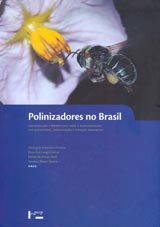
    <content:encoded xmlns:content="http://purl.org/rss/1.0/modules/content/"><![CDATA[<p style="text-align: justify; "><img src="https://www.iea.usp.br/imagens/livropolinizadoresdobrasil.jpg" alt="Polinizadores do Brasil: Contribuição e Perspectivas para a Biodiversidade, Uso Sustentável, Conservação e Serviços Ambientais" class="image-right" title="Polinizadores do Brasil: Contribuição e Perspectivas para a Biodiversidade, Uso Sustentável, Conservação e Serviços Ambientais" />The book ‘Polinizadores no Brasil: Contribuição e Perspectivas para a Biodiversidade, Uso Sustentável, Conservação e Serviços Ambientais’ (‘Pollinators in Brazil: Contribution and Prospects for Biodiversity, Sustainable Use, Conservation and Environmental Services’), produced by <a href="https://www.iea.usp.br/en/research/research-groups/ecosystem-services" class="external-link">IEA’s Ecosystem Services research group</a>, was one of the winners of the 2013 edition of the ‘Prêmio Jabuti’ (‘Tortoise Award’), a well-known literary award in Brazil.</p>
<p style="text-align: justify; ">The work was awarded third place in the Natural Sciences category. The first place went to ‘Flora das Caatingas do Rio São Francisco: História Natural e Conservação’, by José Alves de Siqueira Filho, followed by ‘Biomas Brasileiros: Retratos de um País Plural’, by Fabio Rubio Scarano.</p>
<p style="text-align: justify; ">‘Pollinators in Brazil’ contains 23 studies of 85 researchers from 36 national scientific institutions. Its organizers are Vera Lucia Imperatriz-Fonseca (coordinator of the research group), Dora Ann Lange Canhos, Denise Araújo Alves and Antonio Mauro Saraiva. With 488 pages and priced at R$ 120,00, the book can be purchased in bookstores and online through <a class="external-link" href="http://www.edusp.com.br/english.asp">Edusp’s website</a>.</p>
<p style="text-align: justify; ">The ceremony of the Prêmio Jabuti 2013 was held on November 3, at Sala São Paulo, in São Paulo.</p>
<p style="text-align: justify; "> </p>
<p style="text-align: justify; "><a class="external-link" href="http://www.webbee.org.br/status-polin/"><strong>Book's website</strong></a></p>]]></content:encoded>
    <dc:publisher>No publisher</dc:publisher>
    <dc:creator>Richard Meckien</dc:creator>
    <dc:rights></dc:rights>
    
      <dc:subject>Sustainability</dc:subject>
    
    
      <dc:subject>Commons</dc:subject>
    
    
      <dc:subject>Research Group: Ecosystem Services</dc:subject>
    
    <dc:date>2013-11-04T12:55:00Z</dc:date>
    <dc:type>News Item</dc:type>
  </item>


  <item rdf:about="https://www.iea.usp.br/en/news/85-estudos-avancados-suggests-ways-to-overcome-unemployment">
    <title>'Estudos Avançados' #85 suggests ways to overcome unemployment</title>
    <link>https://www.iea.usp.br/en/news/85-estudos-avancados-suggests-ways-to-overcome-unemployment</link>
    <description></description>
    <content:encoded xmlns:content="http://purl.org/rss/1.0/modules/content/"><![CDATA[<p><img src="https://www.iea.usp.br/imagens/capa-da-revista-estudos-avancados-85-1" alt="Capa da revista &quot;Estudos Avançados&quot; 85" class="image-right" title="Capa da revista &quot;Estudos Avançados&quot; 85" /></p>
<p>Unemployment, which concerns all of the Brazilian society nowadays, is the theme of the <span>main </span>dossier on the 85th issue of the <a href="https://www.iea.usp.br/en/journal" class="external-link"><i>Estudos Avançados</i></a><i> </i>journal, launched on December 17, 2015.</p>
<p><span>According to the publication's editor, Alfredo Bosi, "the dossier not only raises crucial questions of economic theory but also <span>objectively </span>analyzes certain situations", with reflections that "affect the structure of Brazilian capitalism at this time of financialization and <span>acute </span>deindustrialization".</span></p>
<p><span>However, the dossier does not simply identify the economic difficulties of the country and its impact on the labor market. Bosi points out that most of the texts indicate output paths of the crisis, with <span>not always orthodox </span>measures, <span>firstly </span>recommending the reduction in the rate of interest and then progressivity in taxation on high net worth and unproductive income streams, resumption of infrastructure investment, industrial policies, national exploitation of pre-salt resources, maintaining of internal credits, review of health cuts, education and housing, and income transfer through social security measures.</span></p>
<p><span>The collection of texts is also concerned with relevant specific issues such as the role of unions in the dynamics of employment and the labor market for women, young people and blacks, and makes a labor situation <span>comparative </span>study in Brazil, Colombia and Venezuela.</span></p>
<p><span>Organized by economist Marcio Pochman, president of the Perseus Abramo Foundation and a professor at UNICAMP, the dossier contains 13 articles written by 20 experts linked to the Institute of Applied Economic Research (IPEA), the Inter-Union Department of Statistics and Socioeconomic Studies (DIEESE) and nine universities: UNESP</span><span>, UNICAMP, PUC-SP, UFSC, UFF, UFRGS, UFPR, UFSM and PUC-RS.</span></p>
<p>Issue 85 also features articles on urbanism in Brazil (especially in the city of São Paulo), literary criticism and philosophy, as well as reviews of the books <i>Time, Work and Social Domination</i>, by Moishe Postone, and <i>Escritores, Gatos e Teologia</i> ("Writers, Cats and Theology"), by Waldecy Tenório.</p>
<ul>
</ul>]]></content:encoded>
    <dc:publisher>No publisher</dc:publisher>
    <dc:creator>Richard Meckien</dc:creator>
    <dc:rights>Original version in Portuguese by Mauro Bellesa</dc:rights>
    
      <dc:subject>Journal</dc:subject>
    
    
      <dc:subject>Employment</dc:subject>
    
    
      <dc:subject>Commons</dc:subject>
    
    
      <dc:subject>Economy</dc:subject>
    
    <dc:date>2015-12-17T15:55:00Z</dc:date>
    <dc:type>News Item</dc:type>
  </item>


</rdf:RDF>