<?xml version="1.0" encoding="utf-8" ?>
<rdf:RDF xmlns:rdf="http://www.w3.org/1999/02/22-rdf-syntax-ns#" xmlns:dc="http://purl.org/dc/elements/1.1/" xmlns:syn="http://purl.org/rss/1.0/modules/syndication/" xmlns="http://purl.org/rss/1.0/">


<channel rdf:about="https://www.iea.usp.br/en/search_rss">
  <title>en</title>
  <link>https://www.iea.usp.br</link>

  <description>
    
            These are the search results for the query, showing results 1 to 15.
        
  </description>


  <image rdf:resource="https://www.iea.usp.br/logo.png" />

  <items>
    <rdf:Seq>
      
        <rdf:li rdf:resource="https://www.iea.usp.br/en/media-library/photos/events-2013/o-que-esta-acontecendo-agora-iea-debate-manifestacoes-nas-ruas-21-de-junho-de-2013" />
      
      
        <rdf:li rdf:resource="https://www.iea.usp.br/en/news/the-ways-to-access-justice-in-brazil" />
      
      
        <rdf:li rdf:resource="https://www.iea.usp.br/en/news/social-sciences-environmental-crisis" />
      
      
        <rdf:li rdf:resource="https://www.iea.usp.br/en/news/42-days-of-devastation" />
      
      
        <rdf:li rdf:resource="https://www.iea.usp.br/en/news/a-dimensao-politica-da-obra-arquitetonica-de-lina-bo-bardi" />
      
      
        <rdf:li rdf:resource="https://www.iea.usp.br/en/news/moviment-of-moviments" />
      
      
        <rdf:li rdf:resource="https://www.iea.usp.br/en/news/hydroelectric-generation-in-the-amazon" />
      
      
        <rdf:li rdf:resource="https://www.iea.usp.br/en/news/memory-and-democracy" />
      
      
        <rdf:li rdf:resource="https://www.iea.usp.br/en/news/the-impact-of-climate-changes-in-megacities" />
      
      
        <rdf:li rdf:resource="https://www.iea.usp.br/en/news/ideia-of-latin-america-historians" />
      
      
        <rdf:li rdf:resource="https://www.iea.usp.br/en/news/the-history-of-brazil-from-the-perspective-of-criminal-and-civil-law" />
      
      
        <rdf:li rdf:resource="https://www.iea.usp.br/en/news/the-ethical-implications-in-the-use-of-electronic-medical-records" />
      
      
        <rdf:li rdf:resource="https://www.iea.usp.br/en/news/consequences-of-environmental-disaster-mariana" />
      
      
        <rdf:li rdf:resource="https://www.iea.usp.br/en/news/the-challenges-to-agriculture-from-climate-change" />
      
      
        <rdf:li rdf:resource="https://www.iea.usp.br/en/news/the-challenges-of-justice-in-face-of-social-change-in-brazil" />
      
    </rdf:Seq>
  </items>

</channel>


  <item rdf:about="https://www.iea.usp.br/en/media-library/photos/events-2013/o-que-esta-acontecendo-agora-iea-debate-manifestacoes-nas-ruas-21-de-junho-de-2013">
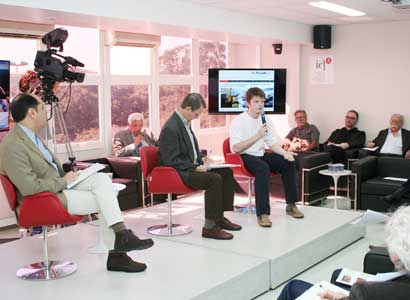
    <title>What's Happening? - IEA debates the street protests across Brazil - June 21, 2013</title>
    <link>https://www.iea.usp.br/en/media-library/photos/events-2013/o-que-esta-acontecendo-agora-iea-debate-manifestacoes-nas-ruas-21-de-junho-de-2013</link>
    <description></description>
    
    <dc:publisher>No publisher</dc:publisher>
    <dc:creator>Richard Meckien</dc:creator>
    <dc:rights></dc:rights>
    
      <dc:subject>Politics</dc:subject>
    
    
      <dc:subject>Contemporary Societies Laboratory</dc:subject>
    
    
      <dc:subject>Commons</dc:subject>
    
    
      <dc:subject>Democracia</dc:subject>
    
    <dc:date>2013-06-21T03:00:00Z</dc:date>
    <dc:type>Folder</dc:type>
  </item>


  <item rdf:about="https://www.iea.usp.br/en/news/the-ways-to-access-justice-in-brazil">
    <title>The ways to access justice in Brazil</title>
    <link>https://www.iea.usp.br/en/news/the-ways-to-access-justice-in-brazil</link>
    <description>The topic will be discussed at the seminar conducted by the IEA with the support of the School of Public Defender of the State of São Paulo on October 3 at USP's Maria Antônia Academic Center.</description>
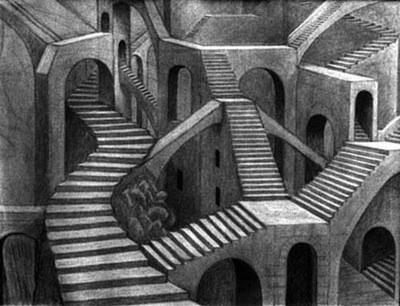
    <content:encoded xmlns:content="http://purl.org/rss/1.0/modules/content/"><![CDATA[<p style="text-align: justify; "><span><img src="https://www.iea.usp.br/imagens/labirinto-de-escadas/@@images/5665d8f2-d8a2-4c94-963b-532bc3364a52.jpeg" alt="Labirinto de escadas" class="image-right" title="Labirinto de escadas" />The various facets of access to justice in Brazil will be discussed at the seminar ‘Acesso à Justiça: Reflexões sobre as Instituições do Sistema de Justiça‘ (‘Access to Justice: Reflections on the Institutions of the Justice System’) on October 3 at the Great Hall of USP’s Maria Antônia Academic Center.</span></p>
<p style="text-align: justify; ">Organized by the <a href="https://www.iea.usp.br/en/research/chairs/unesco-chair-of-education-for-peace-human-rights-democracy-and-tolerance" class="external-link">UNESCO Chair in Education for Peace, Human Rights, Democracy and Tolerance</a>, headquartered at the IEA, the event will be divided into two periods. The first one, beginning at 9.30 am, will have two tables and will address the changes in access to justice since the Brazilian Constitution of 1988 and the roles of the Public Defender Office and the Public Ministry. The second one, also with two tables, will begin at 7 pm and will address the culture of punishment and the judicialization of public policies.</p>
<p style="text-align: justify; ">The panelists of the morning period will be Antônio José Maffezoli Leite, from the Public Defender Office of the State of São Paulo (DPESP), Marcelo Goulart, from the Public Ministry of São Paulo (MPSP), Guilherme de Almeida, from USP’s Faculty of Law (FD), and José Renato Nalini, from the Court of Justice of the State of São Paulo (TJSP).</p>
<p style="text-align: justify; ">In the evening, the participants will be Maria Cecília Asperti, masters student at the FD, Roger Stiefelmann Leal, from the National Treasury Attorney's Office (PGFN) and professor at the FD, Gustavo Octaviano Junqueira, from the DPESP and professor at PUC-SP, and Sergio Adorno, director of USP’s Faculty of Philosophy, Letters and Human Sciences (FFLCH) and coordinator of the UNESCO Chair and of USP’S Center for the Study of Violence (NEV).</p>
<p style="text-align: justify; ">The coordination of the seminar and the mediation of discussions will be in charge of Gustavo Augusto dos Reis, public defender at DPESP and co-organizer of the ‘Defensores  Popular’ (‘Public Defenders’) project.</p>
<p style="text-align: justify; "><span style="text-align: justify; ">The event will be broadcast live at </span><a style="text-align: justify; " href="https://www.iea.usp.br/aovivo" target="_blank">www.iea.usp.br/aovivo</a><span style="text-align: justify; ">.</span></p>
<p style="text-align: justify; "> </p>
<p style="text-align: justify; "><b><a href="https://www.iea.usp.br/en/media-library/photos/events-2013/acesso-a-justica-reflexoes-sobre-as-instituicoes-do-sistema-de-justica-03-de-outubro-de-2013" class="external-link">Photos of the event</a></b></p>
<p style="text-align: justify; "><span style="text-align: justify; "><strong>Support</strong></span></p>
<p style="text-align: justify; "><span style="text-align: justify; "><strong><img src="https://www.iea.usp.br/imagens/logos/logo-da-escola-da-defensoria-publica-do-estado" alt="Logo da Escola da Defensoria Pública do Estado" class="image-inline" title="Logo da Escola da Defensoria Pública do Estado" /></strong></span></p>]]></content:encoded>
    <dc:publisher>No publisher</dc:publisher>
    <dc:creator>Richard Meckien</dc:creator>
    <dc:rights></dc:rights>
    
      <dc:subject>Commons</dc:subject>
    
    <dc:date>2013-09-27T18:15:00Z</dc:date>
    <dc:type>News Item</dc:type>
  </item>


  <item rdf:about="https://www.iea.usp.br/en/news/social-sciences-environmental-crisis">
    <title>The Role of the Social Sciences Facing the Environmental Crisis</title>
    <link>https://www.iea.usp.br/en/news/social-sciences-environmental-crisis</link>
    <description></description>
    <content:encoded xmlns:content="http://purl.org/rss/1.0/modules/content/"><![CDATA[<table class="tabela-esquerda">
<tbody>
<tr>
<th><img src="https://www.iea.usp.br/imagens/heide-hackman" alt="Heide Hackman" class="image-left" title="Heide Hackman" /></th>
</tr>
<tr>
<td><b>Heide Hackmann</b></td>
</tr>
</tbody>
</table>
<p style="text-align: justify; ">The role of the social sciences in understanding the causes and consequences of global environmental change and in developing effective, fair and sustainable solutions to the problem will be discussed at the conference “Changing Global Environments,” organized by <a href="https://www.iea.usp.br/en/research/research-groups/quality-of-democracy" class="external-link">IEA’s Quality of Democracy Research Group</a> and the <a class="external-link" href="http://nupps.usp.br/">Center for Public Policy Research (NUPPs)</a> of the University of São Paulo, on <b>October 24, at 2 pm (GMT -2), in Events Room of IEA</b>. The event will be conducted in English.</p>
<p class="Text" style="text-align: justify; ">The keynote speaker will be <a href="https://www.iea.usp.br/en/persons/exhibitors/heide-hackmann" class="external-link">Heide Hackmann</a>, executive director of the International Social Science Council (ISSC), and panel members will include professors Eduardo Marques, from USP’s School of Philosophy, Letters and Human Sciences (FFLCH); Eduardo Viola, from the Institute of International Relations, University of Brasilia (UnB); and Peter Jacobi, from USP’s School of Education (FE) and coordinator of IEA’s Research Group Environment and Society. The event will be moderated by José Álvaro Moisés, professor at FFLCH, scientific director of NUPPs and coordinator of the research group.</p>
<p class="Text" style="text-align: justify; ">During the conference, Hackmann will present the third edition of the <a href="https://www.iea.usp.br/eventos/documentos/relatorio-mudancas-ambientais-globais" class="external-link">“World Social Science Report,”</a> produced with the collaboration of over 150 scientists from around the world and as a partnership between the ISSC, the United Nations Educational, Scientific and Cultural Organization (UNESCO) and the Organization for Economic Cooperation and Development (OECD).</p>
<p class="Text" style="text-align: justify; "><span>The document emphasizes that social and environmental problems are inseparable and mutually reinforcing. It thus highlights the strategic role of the social sciences in formulating innovative policies and stimulating the social changes necessary to build a more sustainable future.</span></p>
<p class="Text" style="text-align: justify; "><span>In the introduction, the Report states that “through engaged research, [the social sciences] can help society as a whole understand the nature and scope of the changes required at individual, organizational and systemic levels, and how such changes could be realized in politically feasible and culturally acceptable ways.”</span></p>
<p style="text-align: justify; "><img src="https://www.iea.usp.br/imagens/Cartaz-Relatorio-Mundial-72.jpg/@@images/87c315d7-5074-4d97-ba08-55b12fe2a1d3.jpeg" alt="Cartaz Relatorio Mundial Ciências Socias" class="image-right" title="Cartaz Relatorio Mundial Ciências Socias" /></p>
<p class="Text" style="text-align: justify; "><span>The Report makes an eloquent appeal for social scientists to engage more deeply in matters related to global environmental changes; to focus on finding answers to real world issues; to carry out collaborative and interdisciplinary studies; and to involve in this process those who will benefit from their research.</span></p>
<p style="text-align: justify; "><span><b>PROFILE</b></span></p>
<p style="text-align: justify; ">Heide Hackmann, executive director of ISSC, has a Ph.D. in Studies of Science and Technology from the University of Twente, Netherlands, and a Master’s degree in Contemporary Social Theory from University of Cambridge, UK. Since the 1990s, she has worked as consultant and researcher in the field of international science policy. Her current research focuses on science policies, governance of science and evaluation of research.</p>
<p style="text-align: justify; "><span style="text-align: justify; ">The event will be broadcast live on the </span><a style="text-align: justify; " href="https://www.iea.usp.br/aovivo">web</a><span style="text-align: justify; ">.</span></p>]]></content:encoded>
    <dc:publisher>No publisher</dc:publisher>
    <dc:creator>Richard Meckien</dc:creator>
    <dc:rights>Carlos Malferrari (translator)</dc:rights>
    
      <dc:subject>Research Group: Quality of Democracy</dc:subject>
    
    
      <dc:subject>Commons</dc:subject>
    
    
      <dc:subject>Social Sciences</dc:subject>
    
    <dc:date>2014-10-15T19:45:00Z</dc:date>
    <dc:type>News Item</dc:type>
  </item>


  <item rdf:about="https://www.iea.usp.br/en/news/42-days-of-devastation">
    <title>The result of 42 days of occupation</title>
    <link>https://www.iea.usp.br/en/news/42-days-of-devastation</link>
    <description>The scenario found after the reinstatement of the set of buildings that house IEA's dependencies includes vandalism, theft and violations.</description>
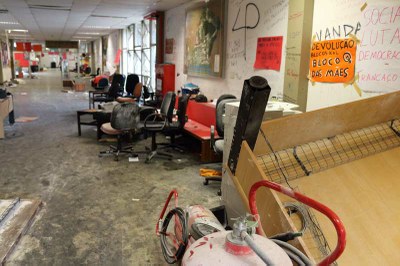
    <content:encoded xmlns:content="http://purl.org/rss/1.0/modules/content/"><![CDATA[<p style="text-align: justify; "><img src="https://www.iea.usp.br/imagens/depredacao-na-reitoria-e-no-iea-1/@@images/cb392b67-88ee-401b-96bd-f58727b8ef7e.jpeg" alt="Depredação na Reitoria e no IEA - 1" class="image-right" title="Depredação na Reitoria e no IEA - 1" />The feeling of all who entered the ensemble of buildings of USP’s central administration yesterday morning was of dismay and indignation. The IEA shares the place provisionally, since February 2011, with several sectors linked to the President, the provosts and other universitary units.</p>
<p style="text-align: justify; ">The invasion and occupation of the buildings by the students <span>ended after 42 days when the courts determined repossession. It all began on October 1, after an unsuccessful attempt by students to invade the meeting of the University Council (Co), which approved the <a href="https://www.iea.usp.br/en/news/changes-in-the-electoral-process-for-rector-and-deputy-rector-of-usp" class="external-link">new rules for the electoral process for President and Deputy President of USP</a>.</span></p>
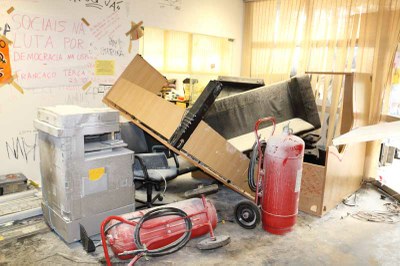
<p style="text-align: justify; ">Shortly after entering the lobby of the hall in which the Co holds its meetings, the scene was of utter devastation, including broken and piled furniture, walls and floors filled with <a class="external-link" href="http://en.wikipedia.org/wiki/Pixa%C3%A7%C3%A3o">“pichação”</a> (a sort of graffiti), broken glass, used fire extinguishers, destroyed models of USP’s future buildings – such as the one where IEA’s headquarters will be located - mattresses, clothes and shoes, plus lots of garbage. The situation was the same all over the ground level. Other spaces showed the violation of doors, cupboards and drawers, not to mention all the scattered official documents on the floor, most of which crushed and trampled.</p>
<p style="text-align: justify; ">When climbing the stairs to the 5th floor of buiding K, place of IEA’s headquarters, signs of further devastation were everywhere: more “pichação” in the lobbies of each floor, destroyed electronic devices and surveillance cameras, dirt and more scattered documents.</p>
<p style="text-align: justify; ">Upon arriving at the IEA, the worst expectations were confirmed. In a vase at the beginning of the floor, three modern keyboards were stacked among scattered computer memories. What was seen next was the result of the action of a band of criminals: doors broken into, equipment stolen, all cabinets and drawers open, papers on tables and the floor.</p>
<p style="text-align: justify; ">It is important to point out that not only material damage has happened. Leaders, researchers and the institute’s staff suffered moral damages by the degradation of their working environment and the violation of their private properties and computer content.</p>
<p style="text-align: justify; "><img src="https://www.iea.usp.br/imagens/depredacao-na-reitoria-e-no-iea-2/@@images/8a1d494c-2ae6-4dca-8230-401d545dcf35.jpeg" alt="Depredação na Reitoria e no IEA - 2" class="image-left" title="Depredação na Reitoria e no IEA - 2" />On this day after, the IEA is trying to return to normalcy, which will not happen anytime soon. It is time to organize whatever is possible and count for losses, including broken and stolen equipment, in order to make a police report and also to, once again, prepare an acquisition list to replace what has been destroyed and taken away. In the last 42 days we had to conduct our activities in disrepair and this way we will go on until we equip ourselves again and are able to use our main <a href="https://www.iea.usp.br/midiateca/foto/institucional/estrutura/" class="external-link">event room</a>, the most affected by theft and vandalism.</p>
<p style="text-align: justify; ">There is something very wrong, absurd and unacceptable when a university has to deal with losses such as stolen equipment and damaged assets due to events led by students.</p>
<p style="text-align: justify; ">The IEA vehemently repudiates everything that has happened and asks: how was this possible? Why? Until when will we be subject to facts like these?</p>
<p style="text-align: justify; "> </p>
<p style="text-align: justify; ">The IEA, as USP's platform for interdisciplinary scientific, institutional and socio-cultural <span>criticism, is at the disposal of the community and society at large to reflect, analyze and discuss the situation, wishing for dialogue, understanding and the stability of this university.</span></p>
<p style="text-align: center; "> </p>
<div id="_mcePaste" style="text-align: center; "></div>
<p style="text-align: right; "><i> USP, November 13, 2013</i></p>
<p style="text-align: right; "><i>Institute of Advanced Studies of the University of São Paulo</i></p>
<p style="text-align: left; "><strong>Related material</strong></p>
<table class="tabela-esquerda-400">
<tbody>
<tr>
<th style="text-align: justify; ">
<p style="text-align: left; "><a href="https://www.iea.usp.br/en/iea/green-room/un-effort-encore" class="external-link"><strong>'Un effort encore!!!" - </strong><span style="text-align: justify; ">Carlos Guilherme Mota</span></a></p>
</th>
</tr>
<tr>
<td><a style="text-align: justify; " href="https://www.iea.usp.br/en/iea/green-room/canevacci-issues-a-letter-to-students-who-occupied-the-rectory-1" class="external-link"><strong>Canevacci issues a letter to students who occupied USP's Central Administration building</strong></a></td>
</tr>
</tbody>
</table>
<table class="plain" style="text-align: center; ">
<tbody>
<tr>
<th>Photo Gallery 1</th><th>Photo Gallery 2</th><th>Photo Gallery 3</th>
</tr>
<tr>
<td>
<p><a href="https://www.iea.usp.br/en/media-library/photos/institutional/depredacao-do-iea" class="external-link">Damage to the IEA</a></p>
<p><a href="https://www.iea.usp.br/en/media-library/photos/institutional/depredacao-do-iea" class="external-link"><img src="https://www.iea.usp.br/en/media-library/photos/institutional/depredacao-do-iea/sala-da-secao-tecnica-de-informatica-1/@@images/392bfc72-9678-4e53-ad1f-3cbe43d1186d.jpeg" alt="Damage to the IEA 15" class="image-inline" title="Damage to the IEA 15" /></a></p>
</td>
<td>
<p><a href="https://www.iea.usp.br/en/media-library/photos/institutional/depredacao-do-predio-da-reitoria" class="external-link">Damage to the USP's Central Administration building</a></p>
<p><a href="https://www.iea.usp.br/en/media-library/photos/institutional/depredacao-do-predio-da-reitoria" class="external-link"><img src="https://www.iea.usp.br/en/media-library/photos/institutional/depredacao-do-predio-da-reitoria/recados/@@images/20b56934-8184-48bc-b3fa-2c25f2609e7c.jpeg" alt="Damage to the rectory's building 20" class="image-inline" title="Damage to the rectory's building 20" /></a></p>
</td>
<td>
<p><a href="https://www.iea.usp.br/en/media-library/photos/institutional/pichacoes" class="external-link">"Pichação" (graffiti-like inscriptions)</a></p>
<p><a href="https://www.iea.usp.br/en/media-library/photos/institutional/pichacoes" class="external-link"><img src="https://www.iea.usp.br/en/media-library/photos/institutional/pichacoes/parte-do-corredor-de-entrada-no-saguao-da-reitoria/@@images/f51449a4-ce15-40f6-93b5-3c5173603abf.jpeg" alt="Pichação 4" class="image-inline" title="Pichação 4" /></a></p>
</td>
</tr>
</tbody>
</table>]]></content:encoded>
    <dc:publisher>No publisher</dc:publisher>
    <dc:creator>Richard Meckien</dc:creator>
    <dc:rights></dc:rights>
    
      <dc:subject>Abstraction</dc:subject>
    
    
      <dc:subject>Violence</dc:subject>
    
    
      <dc:subject>Commons</dc:subject>
    
    
      <dc:subject>Glocal</dc:subject>
    
    
      <dc:subject>USP</dc:subject>
    
    
      <dc:subject>IEA</dc:subject>
    
    
      <dc:subject>Transformation</dc:subject>
    
    <dc:date>2013-11-13T20:10:00Z</dc:date>
    <dc:type>News Item</dc:type>
  </item>


  <item rdf:about="https://www.iea.usp.br/en/news/a-dimensao-politica-da-obra-arquitetonica-de-lina-bo-bardi">
    <title>The Political Dimension of Lina Bo Bardi’s Architectural Oeuvre </title>
    <link>https://www.iea.usp.br/en/news/a-dimensao-politica-da-obra-arquitetonica-de-lina-bo-bardi</link>
    <description></description>
    <content:encoded xmlns:content="http://purl.org/rss/1.0/modules/content/"><![CDATA[<table class="tabela-esquerda-200">
<tbody>
<tr>
<th><img src="https://www.iea.usp.br/imagens/lina-bo-bardi/@@images/28feb2f1-e936-4c3d-92fd-6a5ca85af869.jpeg" alt="Lina Bo Bardi" class="image-left" title="Lina Bo Bardi" /></th>
</tr>
<tr>
<td style="text-align: left; ">
<p align="center" class="Sub2"><strong>The Italian-Brazilian architect Lina Bo Bardi</strong></p>
</td>
</tr>
</tbody>
</table>
<p style="text-align: justify; "><i>Poetics in Lina Bardi: A Political Grammar</i> is the theme of the seminar that <a href="https://www.iea.usp.br/en/research/research-groups/environmental-politics" class="external-link">IEA’s Environmental Policy Research Group</a> will hold on November 25, from 10 am to 5 pm, in the Events Room of the Institute, celebrating the birth centenary of the Italian-Brazilian architect.</p>
<p class="Text" style="text-align: justify; "><span>The meeting will discuss the political dimension of the work of the architect who designed the São Paulo Museum of Art (MASP) and SESC Pompeia, focusing on her ideological commitment to popular culture and on the revolutionary character of her ideas as an intellectual of the Brazilian ethos. The lecturers will discuss particularly the ramifications of her thought, the influence of which extends to this today.</span></p>
<p class="Text" style="text-align: justify; "><span>Bardi emigrated to Brazil in 1946 and, according to Eda Tassara, the group’s coordinator and a professor at USP’s Institute of Psychology, she was confronted with a world still heavily rooted in its colonial past, which made her deeply aware of its cultural Eurocentrism and propelled her to become a forerunner of what was to become Postcolonial Criticism.</span></p>
<p class="Text" style="text-align: justify; "><span>“Initially developed mainly by Latin American thinkers, this movement expanded to other groups of intellectuals coming from Mestizo or Creole societies, or societies still under colonial yoke.”</span></p>
<p style="text-align: justify; "><span>For Tassara, it would be reductionist to attribute the epithet “political architecture” to Lina’s oeuvre. “It is Lina’s poetics that should earn the adjective ‘political’. It was what she sought to represent, whatever the material universe she might be dedicating herself to. And she dedicated herself to the Brazilian ethos, </span></p>
<ul style="text-align: justify; ">
</ul>
<table class="tabela-direita-200" style="text-align: justify; ">
<tbody>
<tr>
<th><img src="https://www.iea.usp.br/imagens/masp" alt="MASP" class="image-right" title="MASP" /></th>
</tr>
<tr>
<td style="text-align: right; "><strong>The São Paulo Museum of Art (MASP), arguably Bardi’s greatest architectural legacyi</strong></td>
</tr>
</tbody>
</table>
<p>The lecturers will address different facets of Bardi, based on the following reflections:</p>
<ul>
<li>Polyphonic Lina: A European Adrift in the World of the Tropics – <a href="https://www.iea.usp.br/en/persons/visiting-professors/copy2_of_massimo-canevacci/copy_of_massimo-canevacci" class="external-link">Massimo Canevacci</a></li>
<li>Intellectual Lina: A Critique of the Colonial Character of Power – Eda Tassara</li>
<li>Architect Lina: Space and the People in the Brazilian Ethos – José Oswaldo de Oliveira, Cilene Gomes and Márcia Augusto Ribeiro</li>
<li>Narrator Lina: Hope in Architectural Design and Utopia – Cristina Pontes Bonfiglioli</li>
<li>Poet Lina: Magic Lantern in the Emptiness of a Pool – Marcello G. Tassara</li>
<li>Dreamer Lina: Geopolitical Imagination and Miscegenation – Sandra Maria Patrício Ribeiro</li>
<li>Persona Lina: A Kaleidoscope – Maureen Bisilliat</li>
</ul>
<p> </p>
<p><span style="text-align: justify; ">The seminar happens on the same day as the encounter </span><i style="text-align: justify; ">Conversazioni e Video su Lina Bo Bardi</i><span style="text-align: justify; "> at the Università La Sapienza di Roma, Rome, Italy. The Italian event is part of the cycle </span><i style="text-align: justify; ">Lina Bo Bardi (1914-2014) – un’Architetta Romana in Brasile</i><span style="text-align: justify; ">, organized by the university’s Department of Architecture and Design, also in celebration of Bardi’s birth centenary.</span></p>
<p class="Text" style="text-align: justify; ">From noon to 1 pm, the lecturers from the Brazilian and the Italian events will debate via teleconference, moderated by architect Alessandra Criconia, member of the cycle’s scientific committee, in Rome, and by Eda Tassara, in São Paulo.</p>
<p class="Text" style="text-align: justify; "><span style="text-align: justify; ">The event will be broadcast live on the </span><a style="text-align: justify; " href="https://www.iea.usp.br/aovivo">web</a><span style="text-align: justify; ">.</span></p>
<p style="text-align: right; "><span class="discreet">Photos: <a class="external-link" href="https://www.flickr.com/photos/sescsp/8639926069/in/photostream">Olney Kuse</a> (top) and <span class="external-link">Benjamin Thompson</span>. </span></p>]]></content:encoded>
    <dc:publisher>No publisher</dc:publisher>
    <dc:creator>Flávia Dourado</dc:creator>
    <dc:rights>Carlos Malferrari (translator)</dc:rights>
    
      <dc:subject>Politics</dc:subject>
    
    
      <dc:subject>Urbanism</dc:subject>
    
    
      <dc:subject>Commons</dc:subject>
    
    
      <dc:subject>Research Group: Environmental Politics</dc:subject>
    
    <dc:date>2014-11-13T15:20:00Z</dc:date>
    <dc:type>News Item</dc:type>
  </item>


  <item rdf:about="https://www.iea.usp.br/en/news/moviment-of-moviments">
    <title>The Meanings and Consequences of a Movement of Movements</title>
    <link>https://www.iea.usp.br/en/news/moviment-of-moviments</link>
    <description></description>
    <content:encoded xmlns:content="http://purl.org/rss/1.0/modules/content/"><![CDATA[<p style="text-align: justify; ">The demonstrations that erupted in June in several state capitals, in Brasília and in hundreds of other Brazilian cities, basically to demand lower public transport fares, stirred up not only the political climate, but also the perception – by government officials, parliamentarians, the media and social scientists – of the degree of dissatisfaction of significant portions of society.</p>
<p class="Text" style="text-align: justify; "><span>Given the increase in the number and size of demonstrations since June 17, the IEA brought together on the same week, on the June 21, a dozen of its scholars for a comprehensive reflection on the significance of the protests.</span></p>
<p class="Text" style="text-align: justify; "><i><span>What’s happening?</span></i><span> [<i>O que está acontecendo?</i>] was the title of the first debate. The overtone of the discussion was the attempt to interpret the motives and profiles of those taking part in the protest demonstrations, particularly the Free Pass Movement (MPL), and of those who were later joining the manifestations.</span></p>
<p class="Text" style="text-align: justify; "><span>With the reduction of transport fares in several cities and the end of the FIFA Confederations Cup, which had motivated protests in several cities hosting the games, both the frequency and the amplitude of the demonstrations abated. That was when the IEA decided to hold a second debate, <i>What’s next </i>[<i>Como Avançar?</i>], on July 3, to assess the prospects for the social and political issues brought to light by the rallies.</span></p>
<table class="tabela-direita-400" style="text-align: justify; ">
<tbody>
<tr>
<th><img src="https://www.iea.usp.br/imagens/como-avancar-1" style="float: right; " title="Como Avançar? - 1" class="image-inline" alt="Como Avançar? - 1" /></th>
</tr>
</tbody>
</table>
<p class="Text" style="text-align: justify; "><span>Many doubts persisted in the new encounter regarding how to define this movement of movements. It was stressed that we must cultivate a certain analytical humility when dealing with such startling facts. In the final round of argumentation, participants presented their views on how society should advance in response to the demands of the protesters.</span></p>
<p class="Text" style="text-align: justify; "><span>Unlike the first debate, when 14 researchers presented their views on the demonstrations, this time only four guests were interviewed: political scientist André Singer, professor at the School of Philosophy, Letters and Human Sciences (FFLCH); journalist Eugênio Bucci, professor at the School of Communications and Arts (ECA); student Matheus Preis, member of the MPL; and anthropologist Maria Lucia Montes, retired professor from FFLCH.</span></p>
<p class="Text" style="text-align: justify; "><span>Questions addressed the four were posed by Sergio Adorno, Renato Janine Ribeiro, Eda Tassara, Bernardo Sorj, Hernan Chaimovich, Pedro Jacobi, Lucia Maciel Barbosa de Oliveira, Graziela Kunsch, Arlene Clemesha, Renato Correa Baena and Martin Grossmann, who was also the moderator.</span></p>
<p class="Text" style="text-align: justify; "><span>Janine began the interview with a question to Maria Lucia (both participating via internet) on the similarities between the current manifestations and those of May 1968 in Paris, which the scholar had experienced firsthand. In her written reply, Maria Lucia said she saw both differences and similarities: “The difference was the clear-cut leftist focus and direction there, which remain undefined here; the similarity is the problem of organization, flawed there and, apparently, here as well, at least until now.”</span></p>
<p class="Text" style="text-align: justify; "><span>Janine’s other question went to Singer, on the situation of Lulism [partisans of former president Lula] vis-à-vis the events. For Singer, Lulism would not be completely superseded by what was happening, “in part because its politics are aimed toward what I call the subproletariat, people with very low income, who are not present in the demonstrations and remain in dire need of the social programs that were implemented.” He stressed that the one common demand of everyone who took part in the demonstrations was the need for better public services. This, however, implies more public spending and goes counter the pressure from the so-called marketplace to restrict such expenditures: “This poses an enormous challenge for Lulism. It is a new challenge and I don’t know how will be faced.”</span></p>
<p class="Text" style="text-align: justify; "><span>Arlene Clemesha asked Bucci what ideas the media in general and the social networks via Internet were offering in response to the crisis of representation. Bucci believes that what is new in the demonstrations is their form: “These movements learned to speak the language of the spectacle.” In his view, the use of the national anthem and of the Brazilian flag is an appropriation of signs typical of the language of the spectacle, whereby protesters knowingly act before the cameras. He mentioned that, according to the advertising market, the media coverage of the demonstrations captivated a noteworthy audience, rivaling the broadcasts of the games of Confederations Cup.</span></p>
<p class="Text" style="text-align: justify; "><span>Eda Tassara asked Preis to what he attributed the genesis of corruption and whether there is any hope regarding this issue. Preis said the MPL does not sound the trumpet against corruption; they consider corruption an overly abstract agenda, with no practical goals that might lead the government to do something about it: “Everyone is against corruption, but must be done to put an end to it?” Preis took the opportunity to comment on the language of the spectacle mentioned by Bucci. In his view, there is indeed a unity of form in the demonstrations, but it is not that of the spectacle. Rather, it is the possibility of affecting directly the workings of the city, “insofar as blocking streets allows you to change how the city works and grants you the power to engage in a more horizontal dialogue with the power that be.”</span></p>
<p class="Text" style="text-align: justify; "><span>Bernardo Sorj (who also participated via internet) asked Singer what could be done to recover the critical tradition that was lost over the last decade, “When we fell into a kind of zealotry over Brazil getting a better and accepted the notion that citizens limit their demands to purely economic issues.” Singer said the chauvinism mentioned by Sorj is a mistaken assessment of the past ten years and that he does not share it: “We are in the process of a weak reformism, that is, changes are being made in Brazil that go towards the redistribution of income, but they are slow changes, especially in the face of the existing inequality.” For him, while there is a question of values, the economic problem and the inequality remain central. On the other hand, Singer said he also agreed with Sorj on how much the social sciences must advance and with Eda Tassara’s comment about the need to approach the events with a lot of intellectual humility.</span></p>
<p class="Text" style="text-align: justify; "><span>Adorno said he identifies a new language in the protests, which embodies violence in one form or another. He wanted to know from Preis how the MPL construed the issue of violence and whether it points to toward a new kind of legitimacy. Preis said violence in the demonstrations came from a minority, but that he does not see it as illegitimate or somehow reprehensible: “Violence represents the existence of a conflict, the awareness that what is being done against the people is not fair, that people will not accept it and will retaliate. Unfortunately, this more philosophical and political analysis of violence was not addressed by the media.”</span></p>
<table class="tabela-direita-400" style="text-align: justify; ">
<tbody>
<tr>
<th><img src="https://www.iea.usp.br/imagens/como-avancar-2" style="float: right; " title="Como Avançar? - 2" class="image-inline" alt="Como Avançar? - 2" /></th>
</tr>
</tbody>
</table>
<p class="Text" style="text-align: justify; "><span>Lucia Maciel was concerned with the role of intellectuals (“if they actually have one in this exercise of political reinvention”) in her question to Bucci. He said that one of the most embarrassing facts in the avalanche of protests was that every consolidated leadership was trampled by the masses – political parties, unions and even NGOs strove limit the damage and show some service. “Where were these leaders and, by extension, where were the intellectuals? Why did the intelligentsia dedicate so much time protecting the powers that be? The better the power, the more powerful should be the critique of the intellectuals. They may have neglected to problematize the issue. This movement is a wake-up call for the anachronism of the old power structures and for the accommodation of intellectual activity.”</span></p>
<p class="Text" style="text-align: justify; "><span>Chaimovich Singer’s question involved the silence of former President Lula and the hypothesis that he was perhaps articulating with the labor movement “to become once again the hero of 1978 with the 2014 elections in mind.” Singer thought it very important that unions called for a “Day of Struggle,” because it was a centralized decision and, therefore, unprecedented. As for the former president, he said he does not believe Lula is getting involved in actions such as the Day of Struggle to prepare his return to an electoral dispute: “In light of the results of surveys, it is evident that his name is mentioned, because the rapidly falling approval rates of the Dilma administration and of all executive branches. Depending on how this situation evolves, the name of the former president will be better placed yet. But I have no way to assess whether he would accept a candidacy or not.”</span></p>
<p class="Text" style="text-align: justify; "><span>Graziela Kunsch asked Preis if he would consider another composition and another function for the new Municipal Traffic and Transportation Advisory Commission, created by the São Paulo city government two days before the debate, comprising 39 members: 13 municipal agencies, 13 organizations connected with transport operators (unions and associations) and 13 representatives from the civil society elected by direct vote. Preis said that a proposal that would meet the wishes of the population would be the creation of an advisory board with most members coming from the general population. For him, the board created by mayor Haddad is an attempt by City Hall to preserve the commoditization of public transportation.</span></p>
<p class="Text" style="text-align: justify; "><span>Baena asked Singer if the proposal for political reform presented by president Dilma might solve the problem of political representation and make it possible to fight corruption and social inequality. Singer said he believed that political reform could help in controlling corruption, “because one of its causes is campaign financing, which is extraordinarily expensive and financed by the economic powers, who do not give money for free; they will want something back later.” He also believes that a reform might promote “a more authentic representation, less influenced by economic power, that advances social justice, as long as Congress becomes less conservative.”</span></p>
<p class="Text" style="text-align: justify; "><span>Jacobi observed that social urban movements of the 1970s and 1980s led to the emergence of participatory democracy, which was later incorporated into the 1988 Constitution, and asked Singer how to extend the participation mechanisms. For Singer, it’s time to resume the experiences of that period and participatory budgeting is a good example: “There is even a proposal for a national system of participatory budgeting and a national system of popular participation.”</span></p>
<p class="Text" style="text-align: justify; "><span>Grossmann’s question went to Bucci and dealt with the fact that the movements in Brazil and around the world suggest a virtuality that is difficult to analyze from the social, anthropological and cultural viewpoints, in a framework that seems to indicate a doorway into something that might be called a new nature. Bucci answered that the movements bring a new place within the urban discourse: “They problematize, cause short circuits or clog the arteries.” Thus, according to Bucci, to the ordering of social life may be added a second nature, an artificial nature, and the confrontation of signs gains material existence: “There is an overflow, not from the public sphere, but from another category of the living world, directly into the political scene. Personal issues, private and intimate questions, very subjective indignations step in, trampling the known mediations of the public sphere.”</span></p>
<p class="Sub1" style="text-align: justify; "><span><strong>Questions from the audience</strong></span></p>
<p style="text-align: justify; ">Claudia Moraes, from UNESP Marilia, asked Preis if the MPL has assessed the transgressions to the initial agenda of the demonstrations and if there is any chance that the movement itself will be institutionalized. Preis said the movement achieved what it wanted – repeal the fare increase – and has now withdrawn to develop a new process: “We won the fight. You can’t simply put up a new agenda artificially. That is not how the movement works. We will continue our struggle for zero-fare public transport, for the municipalization of public transport and for a government by the people.”</p>
<p class="Text" style="text-align: justify; "><span>Adami Campos wanted to know from Singer what stance political parties should adopt in face of the crisis of representation to address the gap between the State and society. Singer said the parties should embark on a process of reflection and transformation aimed at reduced bureaucracy, deprofessionalization and true openness to grassroots movements. But he also said he was not optimistic about it, “because in fact the parties perform electoral and governmental functions that are working; this makes it difficult for them to carry out this operation. Nevertheless, it is what they should do. However, between what should be done and what will be done lies reality.”</span></p>
<table class="tabela-direita-400" style="text-align: justify; ">
<tbody>
<tr>
<th><img src="https://www.iea.usp.br/imagens/como-avancar3-3" style="float: right; " title="Como Avançar3 - 3" class="image-inline" alt="Como Avançar3 - 3" /></th>
</tr>
</tbody>
</table>
<p class="Text" style="text-align: justify; "><span>Gustavo Venturi, from FFLCH, asked Bucci if the crisis of representation also affected the corporate media and if the destruction of TV station vehicles and the demonstrations against reporters were a reflection of this. Bucci said that the history of contacts between the movements and the media was full of contradictions, ranging from solidarity toward journalists who were victims of police violence to rejection of the media organizations, as when TV station vehicles were vandalized and burned. “There is no doubt that, from a certain perspective, the representatives of mass media also represent the powers that be or, somehow, the prevailing political pact. That is why they were attacked. On the other hand, the protesters themselves were supplied with information by combination of practical experiences (in the case of transport) and investigative reporting by journalists.”</span></p>
<p class="Sub1" style="text-align: justify; "><span><strong>Evaluations and proposals</strong></span></p>
<p style="text-align: justify; ">In the last part of the meeting, interviewers and interviewees offered their closing remarks, many of them on the prospects for Brazil after the demonstrations and on the stance to be adopted by various segments of society.</p>
<p class="Text" style="text-align: justify; ">Sorj ended his participation by identifying a unity in the movement: “We want a more decent country.” He framed the current moment as a struggle for a renewed civic nationalism. “Brazil has improved in the last 20 years, but this improvement did not bring an identification with the political system and its institutions.”</p>
<p class="Text" style="text-align: justify; "><span>To advance the matter of public transport in São Paulo, Graziela Kunsch advocated three actions: support for the zero-fare draft bill, which needs 500,000 signatures to be presented to the City Council; a municipal advisory commission on transport fares, with a lean membership, charged with defining the industry’s cost spreadsheet; and the replacement of the current Secretary of Transportation, Jilmar Tatto, “because his actions and statements suggest he has an intense relationship with the transportation industry.”</span></p>
<p class="Text" style="text-align: justify; "><span>Horizontality is the unifying factor of the movements that have taken to the streets in the opinion of Arlene Camecha. She said this factor calls for a new paradigm of political action and asked whether “the proposed political reform is not failing precisely because it was unable to interpret this movement, seeing it was put forth it the most vertical manner possible, by the president’s office.”</span></p>
<p class="Text" style="text-align: justify; "><span>Three aspects called Adorno’s attention: the unfeasibility of conventional explanations, challenging the intelligentsia as much as anyone else and requiring intellectuals “to step out of their comfort zone and apply their wisdom to the facts”; the need to bring back a classical theme – civic courage – because “the demonstrations have shown that there are voices in the underlayers of society that need to be heard and that have burst forth quite civically”; and the political mise-en-scène, “which goes beyond the culture of the spectacle mentioned by Bucci.” He said that, “a group of masked protesters is like a theater chorus; we must analyze the role of the chorus, which is to criticize, to announce the end of times and to herald new times. In terms of the political mise-en-scène, I see only three possibilities: tragedy, drama or comedy.”</span></p>
<p class="Text" style="text-align: justify; "><span>Jacobi argued that governments should have transparent policies, because there are powerful lobbies and billionaire contracts in transportation and solid waste disposal. He also advocated strengthening the mechanisms of participatory democracy, so that we may know “where the money comes from and how to spend it.” Within the university and among public players, Jacobi expects them to further develop the issue of social learning and the dialogue between the various social players.</span></p>
<p class="Text" style="text-align: justify; "><span>Baena said he does not believe in the emergence of a new way of doing politics and providing representativeness: “We, the civilized, must believe that the proper path is institutional and that we can improve the institutions we have. I believe that we should invest in political reform and that this is not merely a matter of campaign financing. We have never experimented with single-member constituencies, never tried other ways to approach our representatives. We must try this out in Brazil. And discuss the next budget as well.”</span></p>
<table class="tabela-direita-400" style="text-align: justify; ">
<tbody>
<tr>
<th><img src="https://www.iea.usp.br/imagens/como-avancar-4" style="float: right; " title="Como Avançar? - 4" class="image-inline" alt="Como Avançar? - 4" /></th>
</tr>
</tbody>
</table>
<p style="text-align: justify; ">“We find it difficult to understand what is happening in terms of images and of strategies,” said Eda Tassara. In terms of images, she believes we are witnessing “a new form of urban performance art, where people customize themselves and attempt to represent things that are not quite clear but reflect the issues of mass media via the network media. It’s almost like a Dada underground working on problematic policies.” For her, representativeness and participation do not work because the political system is permeable to strategic interests of certain sectors that are adversarial to the representation of society.</p>
<p class="Text" style="text-align: justify; "><span>For Lucia Maciel, the manifestations should be thought of as a global movement: “Some evoke May 1968 as a template for a new way of doing politics, but I think the 1990s were richer in movements against neoliberal globalization – see the Global Days of Action, the Zapatista movement and other events that are not part of our reflection. Those movements already provided a new political template that included direct action, life-as-performance, the loss of political seriousness, the use of the internet. These were the essential germs for us to understand what is happening today.”</span></p>
<p class="Text" style="text-align: justify; "><span>Hernan Chaimovich pleaded for a greater participation of the University of São Paulo in debates on issues of interest to society: “This university must take on responsibility out of respect for São Paulo’s taxpayers. Either USP begins speaking as we are speaking here today, or the alleged role of the intellectual will never become a political reality. On the other hand, I must say that Occupy Wall Street had a melodramatic ending, that is, it came to nothing. And this is a possibility that we did not addressed here.”</span></p>
<p class="Text" style="text-align: justify; "><span>Preis advocated expanding the spaces for direct participation of the people, such as neighborhood councils, and questioned the role of the press: “What service has the press rendered society by stifling all political manifestations of the protest movements against the established order that occur daily in the country? Will we have to take hundreds of thousands of people to the streets to stop this media embargo?” He also championed the demilitarization of the police.</span></p>
<p class="Text" style="text-align: justify; "><span>Singer said he maintained his initial position of perplexity in face of the events, and said that the possibility, suggested by Chaimovich, of everything ending abruptly is not absurd, “because this is actually a trait of movements convened by social networks: they are easy to convoke, but are less organized, less permanent.” He stressed that either society organizes itself or no advance will occur, but it is necessary to analyze very carefully the possible lines of advancement to accelerate the process: “While I understand that we are facing new realities, I insist that the old divisions of class, especially in a country like Brazil, remain very important.”</span></p>
<p class="Text" style="text-align: justify; "><span>For Bucci, the aging of Brazil’s political parties has to do with surrendering the party machines to more or less corrupt managing methods, making them efficient within a system of negotiating improper interests. He defended reducing the privileges of politicians, accepting other forms of representation than the parties, “however necessary they may be,” and measuring the quality of public services.</span></p>
<p style="text-align: right; "><span class="discreet">Photos: Mauro Bellesa/IEA-USP</span></p>]]></content:encoded>
    <dc:publisher>No publisher</dc:publisher>
    <dc:creator>Richard Meckien</dc:creator>
    <dc:rights>Original version in Portuguese by Mauro Bellesa. Translation by Carlos Malferrari.</dc:rights>
    
      <dc:subject>Brazil</dc:subject>
    
    
      <dc:subject>Contemporary Societies Laboratory</dc:subject>
    
    
      <dc:subject>Commons</dc:subject>
    
    
      <dc:subject>Political Science</dc:subject>
    
    
      <dc:subject>Politics</dc:subject>
    
    <dc:date>2013-07-24T18:25:00Z</dc:date>
    <dc:type>News Item</dc:type>
  </item>


  <item rdf:about="https://www.iea.usp.br/en/news/hydroelectric-generation-in-the-amazon">
    <title>The many faces of the new era of hydroelectric generation in the Amazon</title>
    <link>https://www.iea.usp.br/en/news/hydroelectric-generation-in-the-amazon</link>
    <description></description>
    <content:encoded xmlns:content="http://purl.org/rss/1.0/modules/content/"><![CDATA[<p style="text-align: justify; "><img src="https://www.iea.usp.br/imagens/amazoniacapajpg.jpg" alt="Amazônia - capa" class="image-right" title="Amazônia - capa" />Wrapped in the triad that comprises the Amazon rainforest, climate and energy generation, economic, social and environmental aspects will be analyzed at the debate "Amazon: The Old and the New Brazilian Hydroelectric Frontier", to be held on May 14, at 2 pm, in the IEA-USP’s Event Room.</p>
<p style="text-align: justify; ">The panelists of the meeting will be Celio Bermann, professor at USP’s <a class="external-link" href="http://www.iee.usp.br/">Institute for Energy and Environment (IEE)</a> and who will be participating via Skype, Gustavo Tosello Pinheiro, coordinator of Intelligent Infrastructure at The Nature Conservancy (TNC) in Brazil, João Andrade, coordinator of the <i>Iniciativa Defensa Socioambiental</i> (an initiative for social and environmental defense) at the Center for Life Institute (ICV), and Pedro Bara Neto, researcher of the Federal University of Rio de Janeiro’s (UERJ) Study Group on the Electricity Sector (GESEL).</p>
<p style="text-align: justify; ">Organized by <a href="https://www.iea.usp.br/en/research/research-groups/environmental-sciences" class="external-link">IEA-USP’s Environment and Society Research Group</a> in partnership with the IEE, and the School of Arts, Sciences and Humanities’s (EACH) <a class="external-link" href="https://uspdigital.usp.br/tycho/gruposPesquisaObter?codigoGrupoPesquisa=0067605FOISZ9K">research group on Environmental Planning and Management (PLANGEA)</a>, both of USP, the meeting will focus on two central questions:</p>
<ul style="text-align: justify; ">
<li><span>What is the scenario of social and environmental conflicts and challenges to the intensification of planning hydroelectric dams in the Amazon?</span></li>
<li><span>Which existing experiences in local development, environmental protection and analyzes of extreme weather events represent opportunities for the inclusion of these topics in various scales of planning hydroelectric dams in the Amazon?</span></li>
</ul>
<p style="text-align: justify; "> </p>
<p style="text-align: justify; "><strong>THEMED DEVELOPMENTS</strong></p>
<p style="text-align: justify; ">The Brazilian Amazon accounts for 51 % of all the hydroelectric potential of the country. However, according to Evandro Moretto, professor of EACH-USP, only a small part of this potential is exploited, since most mills in the region have been built in the 1960s and the 1970s, and in the following two decades there has been a significant expansion in infrastructure for power generation.</p>
<p style="text-align: justify; "><span>Only in the 2000s Brazil started to invest massively in expansion of hydroelectric capacity in the Amazon again. As pointed by Moretto, who will mediate the debate, the installation of more than 150 dams in the region is planned. The highlights are Jirau and Santo Antonio, on the Madeira River, Belo Monte, on the Xingu River, and the project of the basins of the Tapajós and Negro rivers.</span></p>
<p style="text-align: justify; ">According to the professor, discussions around that recovery involve a series of thematic developments - such as weather events, environmental protection and socioeconomic development - which will be addressed at the meeting. As an example, the mediator cites the period of prolonged drought this summer in Brazil, which led to the shortage of large water reservoirs in the Southeast and the Midwest, "while the gates of the plants on the Madeira were opened to let through the highest flow of the river in history in the wake of thousands homeless upstream and downstream of the dams."</p>
<p style="text-align: justify; "><span>Moretto also mentions the particularity of the situation of the Amazon region. On the one hand, it suffers the environmental impacts of large infrastructure projects. On the other hand, it is favored by various actions of environmental protection and local development, "which should not be neglected in planning hydropower projects, under penalty of the new plants being much more impactful and conflictive than Belo Monte already is."</span></p>
<p style="text-align: justify; "><strong>EVENT</strong></p>
<p style="text-align: justify; ">The completion of the discussion is supported by FAPESP, IEE-USP’s Graduate Program in Environmental Science (PROCAM), TNC, Brazilian Association of Impact Assessment (ABAI) and ICV.</p>
<p style="text-align: justify; "><span style="text-align: justify; ">The event will be broadcast live on the </span><a style="text-align: justify; " href="https://www.iea.usp.br/aovivo">web</a><span style="text-align: justify; ">.</span></p>]]></content:encoded>
    <dc:publisher>No publisher</dc:publisher>
    <dc:creator>Richard Meckien</dc:creator>
    <dc:rights></dc:rights>
    
      <dc:subject>Research Group: Environment and Society</dc:subject>
    
    
      <dc:subject>Water</dc:subject>
    
    
      <dc:subject>Commons</dc:subject>
    
    
      <dc:subject>Environment</dc:subject>
    
    
      <dc:subject>Amazon</dc:subject>
    
    <dc:date>2014-05-09T18:10:00Z</dc:date>
    <dc:type>News Item</dc:type>
  </item>


  <item rdf:about="https://www.iea.usp.br/en/news/memory-and-democracy">
    <title>The importance of social and political memory for democracy</title>
    <link>https://www.iea.usp.br/en/news/memory-and-democracy</link>
    <description></description>
    <content:encoded xmlns:content="http://purl.org/rss/1.0/modules/content/"><![CDATA[<div class="kssattr-target-parent-fieldname-text-7757f6d878bf4ceba0a16cd2d1aa12e3 kssattr-macro-rich-field-view kssattr-templateId-widgets/rich kssattr-atfieldname-text " id="parent-fieldname-text-7757f6d878bf4ceba0a16cd2d1aa12e3">
<table class="tabela-direita">
<tbody>
<tr>
<th><img src="https://www.iea.usp.br/imagens/arco-do-presidio-tiradentes" alt="Arco do Presídio Tiradentes" class="image-inline" title="Arco do Presídio Tiradentes" /></th>
</tr>
<tr>
<td style="text-align: right; "><strong>The Tiradentes Prison, where political prisoners were incarcerated during the New State (1937-45) and the military dictatorship (1964-85), was demolished in 1972, leaving only the entrance arch, listed in 1985 as a cultural historic interest "by the symbolic value that it represents for the fight against will and institutionalized violence in our country in the recent past."</strong></td>
</tr>
</tbody>
</table>
<p style="text-align: justify; ">The IEA-USP will present some recent research contributions <span>on the construction, consolidation and preservation of social and political memory in Brazil, Argentina and South Africa a</span>t the seminar <i>Memory, Memorials and the Future of Democracies</i>, to be held from November 12 to 14 at the Institute. (<i><a href="https://www.iea.usp.br/en/news/memoria-e-democracia#programacao" class="external-link">see the programme</a></i>).</p>
<p style="text-align: justify; "><span>According to the organizers, the fundamental proposition of the meeting is to discuss the work done by memorials and museums, and research on memory - which rely on different strategies and methodologies - and thereby "capture what can not be captured: traits, remains and reminiscences that somehow refuse their own continuance."</span></p>
<p style="text-align: justify; "><span> </span><span>When applied to memory, the acts of preserving, maintaining and containing reveal "the efforts to stay due to all of what resisted to the full objectification to be sparsely found on bodies, testimonies, <span>archivable </span>erasures and leftovers, and failures of what can be remembered."</span></p>
<p style="text-align: justify; ">The seminar is sponsored by <a href="https://www.iea.usp.br/en/research/chairs/unesco-chair-of-education-for-peace-human-rights-democracy-and-tolerance" class="external-link">IEA-USP's UNESCO Chair in Education for Peace, Human Rights, Democracy and Tolerance</a>, and the <a class="external-link" href="http://diversitas.fflch.usp.br/">Center for the Study of Diversity, Conflict and Intolerance (Diversitas)</a> of USP's Faculty of Philosophy, Letters and Human Sciences (FFLCH), with support from <a class="external-link" href="http://www.cnpq.br/">CNPq</a>, <a class="external-link" href="http://www.fapesp.br/en/">FAPESP</a> and two of USP units: the <a class="external-link" href="http://www4.fe.usp.br/en/international/institutional/about-the-international-office">Faculty of Education (FE)</a> and the <a class="external-link" href="http://www.ip.usp.br/portal/">Institute of Psychology (IP)</a>.</p>
<p style="text-align: justify; "><span style="text-align: justify; ">The event will be broadcast live on the </span><a style="text-align: justify; " href="https://www.iea.usp.br/aovivo">web</a><span style="text-align: justify; ">.</span></p>
<p><span> </span></p>
<hr />
<br />
<p><a name="programacao"></a></p>
<div class="kssattr-target-parent-fieldname-text-20baa8e034d04136a847805aeafca213 kssattr-macro-rich-field-view kssattr-templateId-widgets/rich kssattr-atfieldname-text ">
<h3><span>PROGRAMME</span></h3>
<div class="kssattr-target-parent-fieldname-programacao-20baa8e034d04136a847805aeafca213 kssattr-macro-rich-field-view kssattr-templateId-widgets/rich kssattr-atfieldname-programacao " id="parent-fieldname-programacao-20baa8e034d04136a847805aeafca213">
<h3></h3>
<h3></h3>
<h3></h3>
<h3><i>November 12</i></h3>
<h3><i> </i><span>3 pm </span><span>— Internal meeting for organizers, executive commission e foreign guests</span></h3>
<p class="visualClear"><strong><span>7 pm <span>— Opening </span></span><span>— </span><span>Memory, Memorials and the Future of Democracies</span></strong></p>
<p class="visualClear"><strong>Participants:</strong> Flavia Schilling, from the FE-USP; Paulo Endo, from the IP-USP and USP's Graduation Program for Humanities, Law and other Legitimacies; Sergio Adorno, director of FFLCH and coordinator of IEA-USP's <span style="text-align: justify; ">UNESCO Chair in Education for Peace, Human Rights, Democracy and Tolerance</span>; and Zilda Iokoi, from FFLCH, where she coordinates the <span style="text-align: justify; ">Center for the Study of Diversity, Conflict and Intolerance (Diversitas)</span>.</p>
<p class="visualClear"><strong><span>8 pm </span><span>— </span><span>Recital with the Campinas Guitar Camerata</span></strong></p>
<h3><i>November 13</i></h3>
<p><strong>10 am — Roundtable </strong><strong>I — Memory of Women: Body and Resistance</strong></p>
<p><strong>Exhibitors:</strong> Janine Gomes da Silva  (Federal University of Santa Catarina), Graciela Jorge (Human Right Secretary of the Recent Past, Uruguay) and Susel Oliveira da Rosa (Federal University of Paraíba)<br /><strong>Coordination</strong><strong>:</strong> Flavia Schilling (USP's Faculty of Law)</p>
<p><strong>3 pm — Roundtable </strong><strong>II — Memory, History and Testimony Culture</strong></p>
<p><strong> </strong><strong>Exhibitors:</strong><span> Janaína de Almeida Teles, from the State Institute of Studies on Violence; Marcio Selligmann-Silva, from UNICAMP's Institute of Language; and Katia Neves, from the Resistance Memorial of São Paulo.</span></p>
<p><strong>Coordination</strong><strong>:</strong> José Sergio de Carvalho (FE-USP).</p>
<h3><i>November 14</i></h3>
<p><strong>10 am — Roundtable III</strong><strong> — History, Memory and Culture</strong></p>
<p><strong>Exhibitors: </strong>Deisy Ventura, from USP's Institute of International Relations (IRI), and Eduardo Bittar, from USP's Faculty of Law.<br /><strong>Coordination</strong><strong>:</strong> Belisário dos Santos Junior, vice-president of the Order of Attorneys of Brazil (OAB). (<i>to be confirmed</i>)</p>
<p><strong>3 pm — Roundtable IV</strong><strong> — Memorials, Archive and Democracy</strong></p>
<p><strong>Exhibitors:</strong><i> </i>Lilia Victoria Pastoriza, coordinator of content at the Instituto Espacio para la Memoria da Escuela de Mecánica de la Armada (Argentina); Garth Stevens, from the University of the Witwatersrand (South Africa); and Umesh Lalloo Bawa, from the University of the Western Cape (South Africa).<br /><strong>Coordination:</strong> Paulo Endo, from the IP-USP and <span>USP's Graduation Program for Humanities, Law and other Legitimacies.</span></p>
<p><strong>6 pm — Closure</strong></p>
</div>
</div>
</div>
<div class="relatedItems"><dl id="relatedItemBox"></dl></div>]]></content:encoded>
    <dc:publisher>No publisher</dc:publisher>
    <dc:creator>Richard Meckien</dc:creator>
    <dc:rights></dc:rights>
    
      <dc:subject>Politics</dc:subject>
    
    
      <dc:subject>Commons</dc:subject>
    
    
      <dc:subject>Democracy</dc:subject>
    
    
      <dc:subject>Event</dc:subject>
    
    <dc:date>2014-10-23T13:55:00Z</dc:date>
    <dc:type>News Item</dc:type>
  </item>


  <item rdf:about="https://www.iea.usp.br/en/news/the-impact-of-climate-changes-in-megacities">
    <title>The impact of climate changes in megacities</title>
    <link>https://www.iea.usp.br/en/news/the-impact-of-climate-changes-in-megacities</link>
    <description></description>
    <content:encoded xmlns:content="http://purl.org/rss/1.0/modules/content/"><![CDATA[<table class="tabela-direita-400">
<tbody>
<tr>
<th><img src="https://www.iea.usp.br/imagens/temperaturas-superficiais-em-atlanta" alt="Variação da temperatura superficial em Atlanta" class="image-inline" title="Variação da temperatura superficial em Atlanta" /></th>
</tr>
<tr>
<td style="text-align: right; "><strong>Image of NASA showing the superficial temperature variation in Atlanta</strong></td>
</tr>
</tbody>
</table>
<p>The impact of climate changes in megacities is the subject of the fourth meeting of the cycle <i style="text-align: justify; ">Towards COP 21: The Groundwork to Paris – Climate Change, Adaptation, Solutions and Opportunities</i>. The debate will take place on <strong>November 19</strong>, <strong>at 9.30 am</strong>, in the IEA Events Room.</p>
<p><span style="text-align: justify; ">The event will be broadcast live on the </span><a style="text-align: justify; " href="https://www.iea.usp.br/aovivo">web</a><span style="text-align: justify; ">.</span></p>
<p>The title of the meeting is <i>Climate change and Megacities: Sustainable Mobility, Public Health and Growth Planning</i>. The panelists will be Luiz Firmino Pereira, Metropolitan Planning Superintendent of the Secretariat of <span>Rio de Janeiro's</span> State Government, and Silvio Barros, Secretary of Planning and General Coordination of Paraná's State Government. Coordination will be in charge of Tomas Alvim and Marisa Moreira Salles, both from the <a class="external-link" href="http://arqfuturo.com.br/">Arquivos do Futuro</a> organization, supporter of the cycle.</p>
<p><span><strong>Goals</strong></span></p>
<p><span style="text-align: justify; ">The cycle </span><span style="text-align: justify; ">seeks to identify and discuss opportunities to change patterns of emission of greenhouse gases. Another goal is to make a contribution to the Brazilian government and to the negotiators who will participate in the <a class="external-link" href="http://unfccc.int/meetings/paris_nov_2015/meeting/8926.php">Conference of Parties on Climate Change Conference (COP 21)</a> to be held in Paris, from November 30 to December 11.</span></p>
<table class="tabela-esquerda-300-borda">
<tbody>
<tr>
<td>
<h3>Related material</h3>
<p><strong>Cycle<br />TOWARDS COP 21</strong></p>
<p><strong><i>1st debate — Climate Changes and Water Crisis</i></strong></p>
<p><a href="https://www.iea.usp.br/en/midiateca/video/videos-2015/as-mudancas-climaticas-e-a-crise-hidrica-ciclo-tematico" class="external-link">Video</a><span> (in Portuguese) | </span><a href="https://www.iea.usp.br/en/media-library/photos/events-2015/as-mudancas-climaticas-e-a-crise-hidrica-ciclo-tematico-30-de-setembro-de-2015" class="external-link">Photos</a></p>
<p><i><strong>2nd debate — Energy and Climate Changes</strong></i></p>
<p><a href="https://www.iea.usp.br/en/midiateca/video/videos-2015/esperando-video-as-mudancas-climaticas-e-a-matriz-energetica-ciclo-tematico" class="external-link">Video</a> (in Portuguese) | <a href="https://www.iea.usp.br/en/media-library/photos/events-2015/as-mudancas-climaticas-e-a-matriz-energetica-ciclo-tematico-08-de-outubro-de-2015" class="external-link">Photos</a></p>
<p><i><strong>3rd debate — <a href="https://www.iea.usp.br/en/news/the-challenges-to-agriculture-from-climate-change" class="external-link">Climate Change and Food Security</a></strong></i></p>
<p><a href="https://www.iea.usp.br/en/midiateca/video/videos-2015/as-mudancas-climaticas-e-a-seguranca-alimentar-ciclo-tematico" class="external-link">Video</a> (in Portuguese) | <a href="https://www.iea.usp.br/en/media-library/photos/events-2015/as-mudancas-climaticas-e-a-seguranca-alimentar-ciclo-tematico-14-de-outubro-de-2015" class="external-link">Photos</a></p>
<hr />
<br />
<p><strong><a href="https://www.iea.usp.br/midiateca/video/videos-2015/las-negociaciones-climaticas-de-paris-2015-y-el-futuro-del-clima-planetario" class="external-link">Las Negociaciones Climáticas de París 2015 y el Futuro del Clima Planetario</a><span> – conference in Spanish with José Luis Lezama (Colegio de México)</span></strong></p>
<ul>
<li><a href="https://www.iea.usp.br/en/media-library/photos/events-2015/las-negociaciones-climaticas-de-paris-2015-y-el-futuro-del-clima-planetario-17-de-setembro-de-2105" class="external-link">Photos</a></li>
</ul>
</td>
</tr>
</tbody>
</table>
<p><span>Each debate has one or two coordinators who also act as moderators of a discussion with the panelists. The format aims to prioritize the dialogue between the panelists and the audience (in person or via internet).</span></p>
<p><span><strong>Document</strong></span></p>
<p>The results of the discussions will be consolidated in a document to be delivered to the Brazilian government and presented in side events at COP 21. After the conference in Paris there will be a new event in which the <span>achieved </span>results will be presented in order to suggests actions to be taken by countries, companies and the society.</p>
<p><span style="text-align: justify; ">The organizers of the cycle are: University of São Paulo, the <a class="external-link" href="http://www.incline.iag.usp.br/data/index_USA.php"><span style="text-align: justify; ">Interdisciplinary Climate Investigation center</span><span style="text-align: justify; "> (INCLINE)</span></a> and the <a href="https://www.iea.usp.br/en/research/research-groups/environmental-sciences" class="external-link">IEA’s Environment and Society </a><a style="text-align: justify; " href="https://www.iea.usp.br/en/research/research-groups/environmental-sciences" class="external-link">Research Group</a>. The project has the support of the Brazilian Chapter of the <a class="external-link" href="http://www.worldwatercouncil.org/">World Water Council</a>, the <a class="external-link" href="http://www.pactoglobal.org.br/">Brazilian Network of the Global Compact (UNGC)</a>, Arquivos do Futuro and CPFL Energia. Three USP professors are in charge of the overall organization: Weber Amaral (Luiz de Queiroz School of Agriculture), Tércio Ambrizzi (Institute of Astronomy, Geophysics and Atmospheric Sciences) and <a href="https://www.iea.usp.br/en/persons/researchers/pedro-roberto-jacobi" class="external-link">Pedro Jacobi</a> (IEA, FE and Procam-IEE).</span></p>
<p style="text-align: right; "><span class="discreet">Photo: <a class="external-link" href="https://en.wikipedia.org/wiki/File:Atlanta_thermal.jpg#file">NASA/Wikipedia</a></span></p>]]></content:encoded>
    <dc:publisher>No publisher</dc:publisher>
    <dc:creator>Richard Meckien</dc:creator>
    <dc:rights>Original version in Portuguese by Mauro Bellesa.</dc:rights>
    
      <dc:subject>Research Group: Environment and Society</dc:subject>
    
    
      <dc:subject>Climate Change</dc:subject>
    
    
      <dc:subject>Commons</dc:subject>
    
    
      <dc:subject>Glocal</dc:subject>
    
    
      <dc:subject>Transformation</dc:subject>
    
    
      <dc:subject>Environment</dc:subject>
    
    
      <dc:subject>Cities</dc:subject>
    
    
      <dc:subject>Event</dc:subject>
    
    <dc:date>2015-11-13T16:30:00Z</dc:date>
    <dc:type>News Item</dc:type>
  </item>


  <item rdf:about="https://www.iea.usp.br/en/news/ideia-of-latin-america-historians">
    <title>The Idea of ​​Latin America that Historians Built and Disseminated</title>
    <link>https://www.iea.usp.br/en/news/ideia-of-latin-america-historians</link>
    <description></description>
    <content:encoded xmlns:content="http://purl.org/rss/1.0/modules/content/"><![CDATA[<table class="tabela-direita-200">
<tbody>
<tr>
<th><img src="https://www.iea.usp.br/imagens/antonio-mitre" alt="Antonio Mitre" class="image-inline" title="Antonio Mitre" /></th>
</tr>
<tr>
<td style="text-align: right; "><strong>Historian Antonio Mitre, exhibitor at the first meeting of the cycle <i>Latin American Identities</i></strong></td>
</tr>
</tbody>
</table>
<p style="text-align: justify; ">The first meeting of the “Latin American Identities” conference cycle will focus on “The Latin America of Historians,” and will take place on April 15, at 4 pm, at the IEA’s Events Room. The lecturer will be historian Antonio Mitre, from the Department of Political Science of Minas Gerais Federal University (UFMG).</p>
<p style="text-align: justify; ">Panelists of the event will be historians Boris Fausto, of the International Situation Analysis Group (Gacint) of USP’s Institute of International Relations (IRI); Gabriela Pellegrino Soares, from USP’s School of Philosophy, Literature and Human Sciences (FFLCH); and Guillermo Palacios, from Colegio de Mexico. The event is coordinated by political scientist <a href="https://www.iea.usp.br/en/persons/visiting-professors/bernardo-sorj-1" class="external-link">Bernard Sorj</a>, a visiting professor at the IEA.</p>
<p style="text-align: justify; ">The meetings of the Latin American Identities cycle will take place in the months of April, June, September and November 2015. According to Sorj, the goal of the cycle is not “affirm or deny the validity of the existence of a Latin American identity or of the Latin American dream of a ‘great motherland,’ but rather to understand how the idea of ​​Latin America was – and continues to be – built and disseminated, particularly by artists, intellectuals and social scientists.”</p>
<p style="text-align: justify; ">According to him, over the course of a long historical process, Latin America acquired multiple connotations associated with political, cultural and economic projects. Thus, the notion of a Latin American unity has become “part wishful thinking and part reality, partly political will and partly product of ponderous objective and dynamic factors.”</p>
<p style="text-align: justify; ">“When generalizations about Latin America emphasize unity, we find that they arise from an unawareness of the continent’s diversity. However, we must also acknowledge that the winds that blow in one country, even if they find different national conditions along the way, also affect with particular force the entire region,” he added.</p>
<p style="text-align: justify; "><span style="text-align: justify; ">The event will be broadcast live on the </span><a style="text-align: justify; " href="https://www.iea.usp.br/aovivo">web</a><span style="text-align: justify; ">.</span></p>
<p style="text-align: right; "><span class="discreet">Photo: UFMG</span></p>]]></content:encoded>
    <dc:publisher>No publisher</dc:publisher>
    <dc:creator>Richard Meckien</dc:creator>
    <dc:rights>Carlos Malferrari (translator)</dc:rights>
    
      <dc:subject>Latin America</dc:subject>
    
    
      <dc:subject>History</dc:subject>
    
    
      <dc:subject>Commons</dc:subject>
    
    
      <dc:subject>Event</dc:subject>
    
    <dc:date>2015-03-18T13:35:00Z</dc:date>
    <dc:type>News Item</dc:type>
  </item>


  <item rdf:about="https://www.iea.usp.br/en/news/the-history-of-brazil-from-the-perspective-of-criminal-and-civil-law">
    <title>The history of Brazil from the perspective of criminal and civil law</title>
    <link>https://www.iea.usp.br/en/news/the-history-of-brazil-from-the-perspective-of-criminal-and-civil-law</link>
    <description>The IEA will hold a debate on October 23 in which the relationship between the Brazilian legal codes and the socio-economic trajectory of the country will be explored.</description>
    <content:encoded xmlns:content="http://purl.org/rss/1.0/modules/content/"><![CDATA[<p style="text-align: justify; "><img src="https://www.iea.usp.br/imagens/lenio-streck/@@images/0b992161-3a60-4702-ac4a-bf91b883aec0.jpeg" alt="Lenio Streck" class="image-right" title="Lenio Streck" />Brazilian legal codes offer an opportunity to look back on the country's socio-economic trajectory from the days of the empire (1822-1889) to the present. To explore these intersections between law and historical overview, the IEA will conduct the debate ‘Direito, Sociedade e História: Relendo o Brasil a Partir do Direito Penal e do Direito Civil’ (‘Law, Society and History: Rereading Brazil From Criminal Law and Civil Law’) on October 23, at 4 pm.</p>
<p style="text-align: justify; ">The purpose of the meeting is to compare the institutional design of Brazilian legislation and the different conjunctures of the economy and social relations in the country in a historical perspective, showing the links between the criminal and civil laws and the context in which they have been created.</p>
<p style="text-align: justify; ">As an example of these linkages, jurist Lenio Luiz Streck, exhibitor of the meeting, mentions the cases of the first and second criminal codes of the country, which have been designed to meet the interests of slaveholders and to "catch former slaves". He also mentions the establishment of the right to property, which would have been the result from claims of slavers.</p>
<p style="text-align: justify; ">According to the jurist, also professor of the Graduate Program in Law of the Universidade do Vale do Rio dos Sinos (UNISINOS) and prosecutor of the state of Rio Grande do Sul, the civil code has been created for “those who have”, while the criminal code has been created for “those who have not”, this being the institutional configuration that is responsible for the impunity of the Brazilian elite.</p>
<p style="text-align: justify; ">The panelists of the meeting will be Fernando Facury Skaff, professor of the Department of Economic, Financial and Tax Law of USP’s School of Law, and José Renato Nalini, judge of the Court of Justice of the State of São Paulo and IEA’s former adviser. The mediation will be in charge of Renato Janine Ribeiro, professor of Ethics and Political Philosophy at USP’s Faculty of Philosophy, Letters and Human Sciences and adviser at the IEA.</p>
<p style="text-align: justify; ">The debate will take place in the Amphitheatre Prof. Dr. Luiz Richid Trabulsi of the building ICB III at USP’s Institute of Biomedical Sciences.</p>
<p style="text-align: justify; "> </p>
<p style="text-align: justify; "><a href="https://www.iea.usp.br/en/media-library/photos/events-2013/direito-sociedade-e-historia-relendo-o-brasil-a-partir-do-direito-penal-e-do-direito-civil-23-de-outubro-de-2013" class="external-link"><b>Photos of the event</b></a></p>]]></content:encoded>
    <dc:publisher>No publisher</dc:publisher>
    <dc:creator>Richard Meckien</dc:creator>
    <dc:rights></dc:rights>
    
      <dc:subject>Brazil</dc:subject>
    
    
      <dc:subject>Justice</dc:subject>
    
    
      <dc:subject>Commons</dc:subject>
    
    
      <dc:subject>History</dc:subject>
    
    <dc:date>2013-10-22T13:40:00Z</dc:date>
    <dc:type>News Item</dc:type>
  </item>


  <item rdf:about="https://www.iea.usp.br/en/news/the-ethical-implications-in-the-use-of-electronic-medical-records">
    <title>The ethical implications in the use of electronic medical records</title>
    <link>https://www.iea.usp.br/en/news/the-ethical-implications-in-the-use-of-electronic-medical-records</link>
    <description>On October 16 the IEA will conduct a debate on ethical issues related to access and use of information from electronic medical records at USP.</description>
    <content:encoded xmlns:content="http://purl.org/rss/1.0/modules/content/"><![CDATA[<p style="text-align: justify; "><img src="https://www.iea.usp.br/imagens/estetoscopio-e-computador" alt="Estetoscópio e computador" class="image-left" title="Estetoscópio e computador" />‘Interaction between Information Technology and Ethics at the University’ is the theme of the roundtable that the IEA and USP’s Ethics Committee will hold on October 16, at 3 pm. The meeting will discuss the level of protection of the information stored in the electronic medical records of hospital and outpatient attendances made by USP, focusing on confidentiality of personal data of patients.</p>
<p style="text-align: justify; ">Among the aspects to be covered there are: safety of the information in internal networks of health care services; who has access to data; and the use of data in teaching and research, including publication in journals and presentation at scientific meetings.</p>
<p style="text-align: justify; ">The debate’s coordination and mediation will be in charge of Dalton Luiz de Paula Ramos, head of the Department of Social Dentistry of USP’s Faculty of Dentistry (FO) and member of the National Committee of Ethics in Research (CONEP).</p>
<p style="text-align: justify; ">Luiz Natal Rossi, professor at USP’s Polytechnic School (POLI) and director of the Informatics Department of the General Administration Coordination (CODAGE), Marco Antonio Gutierrez, president of the Brazilian Society of Health Informatics (SBIS) and director of the Informatics Service at the Hospital das Clínicas’ Heart Institute, linked to USP’s Faculty of Medicine, and Sergio Surugi Siqueira, professor at the Department of Pharmacy and dean of the School of Health and Biosciences, both at PUC-PR, and member of Conep, will attend the debate.</p>
<p style="text-align: justify; ">The event will take place in Auditorium 2 of the Institute of USP’s Astronomy, Geophysics and Atmospheric Sciences (IAG).</p>]]></content:encoded>
    <dc:publisher>No publisher</dc:publisher>
    <dc:creator>Richard Meckien</dc:creator>
    <dc:rights></dc:rights>
    
      <dc:subject>Medicine</dc:subject>
    
    
      <dc:subject>Commons</dc:subject>
    
    <dc:date>2013-10-14T14:05:00Z</dc:date>
    <dc:type>News Item</dc:type>
  </item>


  <item rdf:about="https://www.iea.usp.br/en/news/consequences-of-environmental-disaster-mariana">
    <title>The consequences of the environmental disaster in Mariana</title>
    <link>https://www.iea.usp.br/en/news/consequences-of-environmental-disaster-mariana</link>
    <description></description>
    <content:encoded xmlns:content="http://purl.org/rss/1.0/modules/content/"><![CDATA[<table class="tabela-direita">
<tbody>
<tr>
<th><img src="https://www.iea.usp.br/imagens/bento-rodrigues-devastado-pela-lama-da-samarco" alt="Bento Rodrigues devastado pela lama da Samarco" class="image-inline" title="Bento Rodrigues devastado pela lama da Samarco" /></th>
</tr>
<tr>
<td style="text-align: right; "><strong>
<div id="_mcePaste">Bento Rodrigues, a subdistrict of Mariana, ravaged</div>
<div id="_mcePaste">by the mud released by the disrupted dam of the miner Samarco</div>
</strong></td>
</tr>
</tbody>
</table>
<p class="mceContentBody documentContent">The disruption of a tailings dam in Mariana, in the State of Minas Gerais, on November 5, is the largest environmental disaster ever occurred in Brazil and one of the five largest in world history.</p>
<p class="mceContentBody documentContent">In addition to causing the death of 13 people (there are <span>still</span><span> </span><span>eight missing persons), destroying the homes of 250 families in the Mariana subdistricts, and several other social and economic impacts, the mudslide has affected water resources (especially the Doce River, until its mouth in the State of Espírito Santo), and terrestrial and marine ecosystems.</span></p>
<p class="mceContentBody documentContent">On <strong>December 7</strong>, <strong>at 2 pm</strong>, at the seminar <i>The Environmental Damage of Samarco - Impacts and Recovery</i>, five professors of USP, covering various disciplines, will explain the severity of the consequences of the disaster and what needs to be done for the environmental recovery of the affected areas.</p>
<p class="mceContentBody documentContent">The exhibitors and their topics will be:</p>
<p class="mceContentBody documentContent">Ana Paula Fracalanza (EACH and Procam-IEE-USP) - The Impacts on Water Resources</p>
<p class="mceContentBody documentContent">Luis Enrique Sánchez (EP-USP) - The recovery of degraded areas</p>
<p class="mceContentBody documentContent">Marcos Buckeridge (IB-USP) - The Impacts on Ecosystems</p>
<p class="mceContentBody documentContent">Pedro Luiz Cortês (ECA-USP) - The Dynamics of Tragedy</p>
<p class="mceContentBody documentContent"><a href="https://www.iea.usp.br/en/persons/researchers/pedro-roberto-jacobi" class="external-link">Pedro Jacobi</a> (IEA, FE and Procam-IEE-USP) - The Social Impacts</p>
<p class="mceContentBody documentContent">Moderation will be in charge of Jacobi, who coordinates the <a href="https://www.iea.usp.br/en/research/research-groups/environmental-sciences" class="external-link">IEA's Environment and Society Research Group</a>, organizer of the event.</p>
<p style="text-align: right; "><span class="discreet">Photo: Federal Senate</span></p>]]></content:encoded>
    <dc:publisher>No publisher</dc:publisher>
    <dc:creator>Richard Meckien</dc:creator>
    <dc:rights>Original version in Portuguese by Mauro Bellesa</dc:rights>
    
      <dc:subject>Water</dc:subject>
    
    
      <dc:subject>Research Group: Environment and Society</dc:subject>
    
    
      <dc:subject>Commons</dc:subject>
    
    
      <dc:subject>Environment</dc:subject>
    
    
      <dc:subject>Ecosystems</dc:subject>
    
    
      <dc:subject>Event</dc:subject>
    
    <dc:date>2015-12-01T11:25:00Z</dc:date>
    <dc:type>News Item</dc:type>
  </item>


  <item rdf:about="https://www.iea.usp.br/en/news/the-challenges-to-agriculture-from-climate-change">
    <title>The Challenges to Agriculture from Climate Change</title>
    <link>https://www.iea.usp.br/en/news/the-challenges-to-agriculture-from-climate-change</link>
    <description></description>
    <content:encoded xmlns:content="http://purl.org/rss/1.0/modules/content/"><![CDATA[<p style="text-align: justify; "><img src="https://www.iea.usp.br/imagens/logo-da-cop21-1" alt="Logo da COP21 - 1" class="image-right" title="Logo da COP21 - 1" />After discussing Brazil’s water crisis and energy matrix in the first two debates, the cycle <i>Towards COP 21: The Groundwork to Paris</i> will dedicate the third meeting to the challenges to agriculture posed by climate change. The event will be held on October 14, at 9:30 am.</p>
<p class="Text" style="text-align: justify; ">The topic of debate will be <i>Climate Change and Food Security: Will We Be Able To Feed 10 Billion People?</i> Marcelo Vieira, from the Brazilian Rural Society, will be the speaker and moderator, and the panelists will be Paulo Faveret, from the National Bank for Economic and Social Development (BNDES); Luiz Fernando Amaral, from Rabobank; and Weber Amaral, from USP’s Luiz de Queiroz School of Agriculture.</p>
<p class="Text" style="text-align: justify; ">The main issues to be discussed are:</p>
<ul style="text-align: justify; ">
<li>How agriculture will feed 10 billion people</li>
<li>How to reconcile the production of food, fiber and energy in a sustainable and conscious manner</li>
<li>The role of agriculture as an important vector for adaptation and for reducing the emission of greenhouse gases</li>
<li>Agriculture as a key element for generating income and reducing the impacts on urban environments in a scenario of climate change and of economic, political and environmental instability.</li>
</ul>
<p style="text-align: justify; "> </p>
<table class="tabela-esquerda-200-borda">
<tbody>
<tr>
<th>
<h3><span>Related material</span></h3>
<p><a href="https://www.iea.usp.br/midiateca/video/videos-2015/las-negociaciones-climaticas-de-paris-2015-y-el-futuro-del-clima-planetario" class="external-link">Las Negociaciones Climáticas de París 2015 y el Futuro del Clima Planetario</a><span> – conference in Spanish with José Luis Lezama (Colegio de México)</span></p>
</th>
</tr>
</tbody>
</table>
<p style="text-align: justify; "><span><strong>THE CYCLE</strong></span></p>
<p style="text-align: justify; ">The cycle <i>Towards COP 21: The Groundwork to Paris – Climate Change, Adaptation, Solutions and Opportunities</i> seeks to identify and discuss opportunities to change patterns of emission of greenhouse gases. Another goal is to make a contribution to the Brazilian government and to the negotiators who will participate in the Conference of Parties on Climate Change Conference (COP 21) to be held in Paris, from November 30 to December 11.</p>
<p class="Text" style="text-align: justify; ">The organizers of the cycle are: University of São Paulo, the Interdisciplinary Climate Investigation center (INCLINE) and IEA’s Research Group Environment and Society. The project has the support of the Brazilian Chapter of the World Water Council, the Brazilian Network of the Global Compact (UNGC), Arquivos do Futuro and CPFL Energia. Three USP professors are in charge of the overall organization: Weber Amaral (Luiz de Queiroz School of Agriculture), Tércio Ambrizzi (Institute of Astronomy, Geophysics and Atmospheric Sciences) and Pedro Jacobi (IEA, FE and Procam-IEE).</p>]]></content:encoded>
    <dc:publisher>No publisher</dc:publisher>
    <dc:creator>Fernanda Rezende</dc:creator>
    <dc:rights>Translation by Carlos Malferrari</dc:rights>
    
      <dc:subject>Agribusiness</dc:subject>
    
    
      <dc:subject>Climate Change</dc:subject>
    
    
      <dc:subject>Commons</dc:subject>
    
    
      <dc:subject>Glocal</dc:subject>
    
    
      <dc:subject>Environment</dc:subject>
    
    
      <dc:subject>Event</dc:subject>
    
    <dc:date>2015-10-08T16:40:00Z</dc:date>
    <dc:type>News Item</dc:type>
  </item>


  <item rdf:about="https://www.iea.usp.br/en/news/the-challenges-of-justice-in-face-of-social-change-in-brazil">
    <title>The challenges of justice in face of social change in Brazil</title>
    <link>https://www.iea.usp.br/en/news/the-challenges-of-justice-in-face-of-social-change-in-brazil</link>
    <description></description>
    <content:encoded xmlns:content="http://purl.org/rss/1.0/modules/content/"><![CDATA[<p style="text-align: justify; "><span><img src="https://www.iea.usp.br/imagens/andrea-pacha-2" alt="Andrea Pachá - 2" class="image-right" title="Andrea Pachá - 2" />The first meeting of the conference cycle </span><i>Tardes Cariocas: A USP Ouve o Rio de Janeiro</i><span> (“Carioca Afternoons: USP Listens to Rio de Janeiro”) will take place on April 28, at 3 pm, in IEA-USP’s Event Room. Coordinated by Renato Janine Ribeiro, a professor at USP’s Faculty of Philosophy, Letters and Human Sciences (FFLCH) and a member of the Institute’s board, the cycle will bring thinkers of Rio de Janeiro to discuss issues of social sciences and intensify the exchange of ideas between the two main Brazilian cities.</span></p>
<p style="text-align: justify; ">The theme of the debut event will be “Life Is not Fair”. Jurist Andréa Maciel Pachá will discuss the new challenges faced by the Brazilian justice in light of social changes in the last two decades. According to her, "such changes require a plural look by the magistrate and the ability to accept and condone many rights that emerge."</p>
<p style="text-align: justify; ">Pachá will focus on family conflicts she has brokered as a magistrate, addressing the expectation of "fair" in face of affection and helplessness within the limits of State action and the alternative forms of settlement of disputes.</p>
<p style="text-align: justify; ">The exhibition of the jurist will be related to the book of chronicles "Life is Not Fair", of which she is the author. It contains stories she has witnessed over 15 years as a judge of the Family Court. Released in 2012 by the publisher Agir, the work is being adapted into a television series and a play.</p>
<p style="text-align: justify; ">Graduated in Law from the State University of Rio de Janeiro (UERJ), Andréa Maciel Pachá is a judge of the 4th Court for Orphans and Family Succession of the Court of Justice of Rio de Janeiro. She has been an adviser to the National Council of Justice (CNJ), being responsible for creating the National Register of Adoption, the Commission of Conciliation and Access to Justice, and the deployment of the Courts for Violence against Women across the country. In 2008 and 2009 Pachá aimed to discuss doctrinal issues and provide policy expertise to the courts.</p>
<p style="text-align: justify; ">Among the names confirmed for the next editions of <i>Tardes Cariocas: A USP Ouve o Rio de Janeiro</i> there are Luiz Eduardo Soares, a professor at the UERJ and former National Secretary of Public Security of the Ministry of Justice (MJ), Adalberto Cardoso Moreira, a professor at UERJ’s Institute of Social and Political Studies (IESP), Alba Zaluar, a visiting professor at IESP, and Luiz Bevilacqua, professor emeritus from UERJ’s Alberto Luiz Coimbra Institute for Graduation in Engineering (COPPE) and former executive secretary of the Ministry of Science, Technology and Innovation (MCTI).</p>
<p style="text-align: justify; ">The event will be broadcast live on the <a href="https://www.iea.usp.br/aovivo">web</a>.</p>]]></content:encoded>
    <dc:publisher>No publisher</dc:publisher>
    <dc:creator>Richard Meckien</dc:creator>
    <dc:rights></dc:rights>
    
      <dc:subject>Justice</dc:subject>
    
    
      <dc:subject>Law</dc:subject>
    
    
      <dc:subject>Commons</dc:subject>
    
    
      <dc:subject>Social Sciences</dc:subject>
    
    <dc:date>2014-04-04T19:50:00Z</dc:date>
    <dc:type>News Item</dc:type>
  </item>


</rdf:RDF>