<?xml version="1.0" encoding="utf-8" ?>
<rdf:RDF xmlns:rdf="http://www.w3.org/1999/02/22-rdf-syntax-ns#" xmlns:dc="http://purl.org/dc/elements/1.1/" xmlns:syn="http://purl.org/rss/1.0/modules/syndication/" xmlns="http://purl.org/rss/1.0/">


<channel rdf:about="https://www.iea.usp.br/en/search_rss">
  <title>en</title>
  <link>https://www.iea.usp.br</link>

  <description>
    
            These are the search results for the query, showing results 1 to 2.
        
  </description>


  <image rdf:resource="https://www.iea.usp.br/logo.png" />

  <items>
    <rdf:Seq>
      
        <rdf:li rdf:resource="https://www.iea.usp.br/en/news/ubias-chooses-aging-common-theme-member-institutes-2018" />
      
      
        <rdf:li rdf:resource="https://www.iea.usp.br/en/news/children-who-care-global-perspectives-on-childrens-hidden-care-giving-roles-within-their-families" />
      
    </rdf:Seq>
  </items>

</channel>


  <item rdf:about="https://www.iea.usp.br/en/news/ubias-chooses-aging-common-theme-member-institutes-2018">
    <title>UBIAS chooses "Aging" as the common theme for the member institutes in 2018</title>
    <link>https://www.iea.usp.br/en/news/ubias-chooses-aging-common-theme-member-institutes-2018</link>
    <description></description>
    <content:encoded xmlns:content="http://purl.org/rss/1.0/modules/content/"><![CDATA[<table class="tabela-direita">
<tbody>
<tr>
<th><img src="https://www.iea.usp.br/imagens/idosos" alt="Idosos" class="image-inline" title="Idosos" /></th>
</tr>
<tr>
<td><strong>Life expectancy should rise five years by 2050</strong></td>
</tr>
</tbody>
</table>
<p>"Aging - Life, Culture and Civilizations" will be the Topic of the Year in 2018. The choice is valid for the members of the <a class="external-link" href="http://www.ubias.net">UBIAS</a> network, which gathers institutes of advanced studies based on universities around the world.</p>
<p>When choosing a topic, UBIAS seeks to identify a theme of global importance to be explored in different activities and formats. The aim is to stimulate the researchers to have new insights on the subject and closer communication between the institutes.</p>
<p><strong>Longevity</strong></p>
<p>In support of the choice of topic this year, UBIAS points out that demographic studies indicate a five-year increase in average life expectancy by 2050. Increased longevity is associated with so-called "healthy aging," ie the increase of more healthy years to life.</p>
<p>"This reinforces the great gains in well-being associated with change, but there are problems that remain: increased longevity is not evenly distributed and the breadth of social inequalities continues, which in turn raises several other issues."</p>
<p>If in several African countries the decline in infant mortality associated with high fertility rates leads to a large number of young people with high unemployment among them, there is a reverse demographic change in several European countries. Population aging, with a dramatic increase in the incidence of advanced age-related diseases - dementia, for example - is considered an economic and social challenge in many parts of the world, the organization argues.</p>
<p><strong>Culture</strong></p>
<p>UBIAS emphasizes that the issue of age should be approached and analyzed in a broad context, and from various disciplinary perspectives. "The ways in which we see and interpret the signs of aging as well as age segmentation in the course of life - for example, when someone is considered part of elderly - have changed throughout history and are subject to wide cultural differences."</p>
<p>This is why the proposed work for the institutes is not restricted to biological aging and its consequences. From this perspective, UBIAS suggests some questions to be discussed in the activities: "Do cultures and societies have an age of themselves? How about the Universe? In relation to cultural artifacts, from buildings to works of art, what is the role of age? What is there to say about the age of concepts and  the sciences?"</p>
<p>Topic-of-the-Year activities can range from an event to a series of meetings, including conferences and public discussions, workshops, seminars, or a conference cycle. UBIAS encourages the institutes to invite researchers from other institutes as lecturers or participants, as well as joint activities between two or more institutes.</p>
<p>The first Topic of the Year was "Media and Data Control," in 2016. In 2017, the theme was "<a href="https://www.iea.usp.br/en/news/fear-ubias-topic-of-the-year" class="external-link">Fear</a>." The topic for 2019 will be chosen by the directors of the institutes during the UBIAS <a href="https://www.iea.usp.br/en/ubias-directors-meeting-2018" class="external-link">global meeting</a> at the IEA-USP from March 19 to 22 this year.</p>
<p style="text-align: right; "><span class="discreet">Photo: Marcelo Camargo/Agência Brasil</span></p>]]></content:encoded>
    <dc:publisher>No publisher</dc:publisher>
    <dc:creator>Richard Meckien</dc:creator>
    <dc:rights>Original version in Portuguese by Mauro Bellesa.</dc:rights>
    
      <dc:subject>Sociology</dc:subject>
    
    
      <dc:subject>Ubias</dc:subject>
    
    
      <dc:subject>Public Health</dc:subject>
    
    
      <dc:subject>Public Policies</dc:subject>
    
    
      <dc:subject>Elderly</dc:subject>
    
    
      <dc:subject>Inequality</dc:subject>
    
    <dc:date>2018-01-03T11:40:00Z</dc:date>
    <dc:type>News Item</dc:type>
  </item>


  <item rdf:about="https://www.iea.usp.br/en/news/children-who-care-global-perspectives-on-childrens-hidden-care-giving-roles-within-their-families">
    <title>Children Who Care – Global Perspectives on Children’s Hidden Care-Giving Roles within their Families</title>
    <link>https://www.iea.usp.br/en/news/children-who-care-global-perspectives-on-childrens-hidden-care-giving-roles-within-their-families</link>
    <description></description>
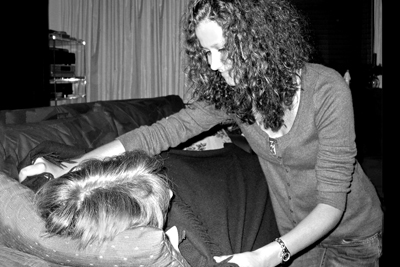
    <content:encoded xmlns:content="http://purl.org/rss/1.0/modules/content/"><![CDATA[<p style="text-align: justify; "><img src="https://www.iea.usp.br/imagens/YoungCarers-tucking1-bw-by-Produnis-self-made-first-published-at-NursingWiki.-Licensed-under-CC-BY-SA-3.0-via-Commons-https-commons.wikimedia.orgwikiFile-YoungCarers_tucking1_bw.jpg%23mediaFile-YoungCarers_tucking1_bw" alt="Jovens cuidadores " class="image-left" title="Jovens cuidadores " />Children and young people have been increasingly spending their time in a position which grows throughout the world. Tens of millions of them become informal caregivers of older members of their own family, often parents, grandparents or close relatives who are ill, disabled or in need of assistance, support and supervision.</p>
<p style="text-align: justify; ">Studies in this area, especially in the UK, Australia, the United States and sub-Saharan Africa, show that there is a diversity of social policies evolving to support these <span>unpaid </span>young care providers. However, it remains a hidden world which lacks global visibility and more knowledge on the theme.</p>
<p style="text-align: justify; ">Professor <a href="https://www.iea.usp.br/en/persons/speakers/saul-becker" class="external-link">Saul Becker</a>, Pro-Vice-Chancellor at the <a class="external-link" href="http://www.birmingham.ac.uk/index.aspx">University of Birmingham</a> and a specialist in this line of research, will address the theme at the conference <i>Children Who Care – Global Perspectives on Children’s Hidden Care-Giving Roles within their Families</i>, that will take place on <strong>October 21</strong>, in the IEA's Events Room, <strong>from 9.30 am to 12 pm</strong>. <a href="https://www.iea.usp.br/en/persons/researchers/ana-lydia-sawaya" class="external-link">Ana Lydia Sawaya</a>, coordinator of the <a href="https://www.iea.usp.br/en/research/research-groups/nutrition-and-poverty" class="external-link">IEA's Nutrition and Poverty Research Group</a> and a professor at UNIFESP, will participate as a debater.</p>
<p style="text-align: justify; ">Becker's work has influenced the academic debate and the implementation of public policies and practices that are designed to meet the needs of young carers. In his speech, he will explore the hidden worlds of children who provide assistance and care to adults, showing how and why some countries have identified and legislated this role as that of a specific group that requires support and intervention. In most countries, these children and young people remain hidden, invisible and isolated, with negative consequences for their lives, families and society as a whole.</p>
<p style="text-align: justify; "><span>Studies in the area suggest that the informal care provided by the young in developed and developing nations can be located along a continuous flow of care. They also show that these young people have much in common, regardless of where they live or how the social security systems of their countries are developed. Thus, there is a global need for these young people to get recognized, identified, analyzed and assisted as a distinct group of "vulnerable children".</span></p>
<p style="text-align: justify; "><span>Through its </span><a class="external-link" href="http://www.birmingham.ac.uk/research/activity/ias/index.aspx">Institute of Advanced Studies</a><span>, the University of Birmingham is linked to the </span><a class="external-link" href="http://www.ubias.net/">University-Based Institute of Advanced Studies (UBIAS)</a><span>, a network that brings together 34 institutes for advanced studies of the whole world. Created in 2010, it aims to promote the scientific exchange between generations, disciplines and cultures.</span></p>]]></content:encoded>
    <dc:publisher>No publisher</dc:publisher>
    <dc:creator>Richard Meckien</dc:creator>
    <dc:rights>Original version in Portuguese by Sylvia Miguel</dc:rights>
    
      <dc:subject>Human Rights</dc:subject>
    
    
      <dc:subject>Education</dc:subject>
    
    
      <dc:subject>Citizenship</dc:subject>
    
    
      <dc:subject>Interdisciplinarity</dc:subject>
    
    
      <dc:subject>Public Health</dc:subject>
    
    
      <dc:subject>Public Policies</dc:subject>
    
    
      <dc:subject>Elderly</dc:subject>
    
    
      <dc:subject>Social Sciences</dc:subject>
    
    
      <dc:subject>Globalization</dc:subject>
    
    
      <dc:subject>Sociology</dc:subject>
    
    
      <dc:subject>Medicine</dc:subject>
    
    
      <dc:subject>World</dc:subject>
    
    
      <dc:subject>Cities</dc:subject>
    
    
      <dc:subject>Childhood</dc:subject>
    
    <dc:date>2015-10-06T15:10:00Z</dc:date>
    <dc:type>News Item</dc:type>
  </item>


</rdf:RDF>