<?xml version="1.0" encoding="utf-8" ?>
<rdf:RDF xmlns:rdf="http://www.w3.org/1999/02/22-rdf-syntax-ns#" xmlns:dc="http://purl.org/dc/elements/1.1/" xmlns:syn="http://purl.org/rss/1.0/modules/syndication/" xmlns="http://purl.org/rss/1.0/">


<channel rdf:about="https://www.iea.usp.br/en/search_rss">
  <title>en</title>
  <link>https://www.iea.usp.br</link>

  <description>
    
            These are the search results for the query, showing results 1 to 5.
        
  </description>


  <image rdf:resource="https://www.iea.usp.br/logo.png" />

  <items>
    <rdf:Seq>
      
        <rdf:li rdf:resource="https://www.iea.usp.br/en/news/journal-issue-102" />
      
      
        <rdf:li rdf:resource="https://www.iea.usp.br/en/news/journal-87" />
      
      
        <rdf:li rdf:resource="https://www.iea.usp.br/en/media-library/photos/events-2015/as-mudancas-climaticas-e-a-crise-hidrica-ciclo-tematico-30-de-setembro-de-2015" />
      
      
        <rdf:li rdf:resource="https://www.iea.usp.br/en/media-library/photos/events-2015/as-mudancas-climaticas-e-a-seguranca-alimentar-ciclo-tematico-14-de-outubro-de-2015" />
      
      
        <rdf:li rdf:resource="https://www.iea.usp.br/en/news/journal-issue-114" />
      
    </rdf:Seq>
  </items>

</channel>


  <item rdf:about="https://www.iea.usp.br/en/news/journal-issue-102">
    <title>The environment and cultural heritage are highlights of "Estudos Avançados" #102</title>
    <link>https://www.iea.usp.br/en/news/journal-issue-102</link>
    <description> </description>
    <content:encoded xmlns:content="http://purl.org/rss/1.0/modules/content/"><![CDATA[<p><img src="https://www.iea.usp.br/imagens/capa-da-revista-estudos-avancados-102" alt="Capa da revista Estudos Avançados 102" class="image-right" title="Capa da revista Estudos Avançados 102" /></p>
<p><span>Issue #102 of IEA's </span><span>quarterly publication, the journal </span><i><a class="external-link" href="https://www.scielo.br/j/ea/i/2020.v34n99/">Estudos Avançados</a>, </i><span>is now available </span><span>(Portuguese only) </span><span>for free download on the </span><a class="external-link" href="https://www.scielo.br/scielo.php?script=sci_issuetoc&amp;pid=0103-401420200002&amp;lng=pt&amp;nrm=iso">SciELO</a><span> platform, featuring the dossiers "Energy and Environment," "Hybrids of Knowledge," and "Religious Spaces."</span></p>
<p>According to the editor, <a href="https://www.iea.usp.br/en/persons/researchers/sergio-adorno" class="external-link">Sérgio Adorno</a><span>, the multiple facets of the dossier "Energy and Environment" pose strategic questions for sustainable development. "Regardless of the complexity that the relations between energy and environment raise, the dossier addresses problems that have been mobilizing the attention of the scientific community, at least of informed public opinion." Part of the articles deal with case studies, "suggestive of broader trends that are underway in the domain of these relations" between energy and environment, he says.</span></p>
<p><strong>Air quality</strong></p>
<p>According to the article that opens the dossier, "Analysis of Air Quality Monitoring in Brazil," written by researchers from the Health and Sustainability Institute, IEA, and USP's Medical School (FM), only ten states and the Federal District monitor air quality. This is carried out through 371 active stations, 80% of them in the Southeast Region. Five of these states communicate monitoring data <span>to the population</span><span> in real time. The authors emphasize that </span><span>the National Air Quality Network </span><span>is still incomplete</span><span> </span><span>30 years after its creation, "making it impossible for </span><span>environmental agencies</span><span> to adequately manage air quality."</span></p>
<p>Another article in the dossier, "Green Infrastructure to Monitor and Minimize the Impacts of Atmospheric Pollution," analyzes the role of trees in retaining particulate matter, one of the main air contaminants in cities, on their surface. The work has used samples of tree bark from five parks in the city of São Paulo.</p>
<p>The other five articles in the dossier address water integration on the Brazil-Uruguay border, the potential of the state of Rio Grande do Norte for the production of wind energy and the policies necessary for the production of this energy to be consolidated, the problems in the implementation of the Joint Urban Operation for the Port Region of Rio de Janeiro, the importance of biodiversity in the tropical forests of Africa and South America for the production of medicines, pesticides, and other products, and the approximation of the formulations of the Kaiowa and Guarani peoples of Mato Grosso do Sul to the reflections of political ecology.</p>
<p><strong>Climate Adaptation</strong></p>
<p>The second dossier, "Hybrids of Knowledge," brings together articles by members of IEA's research group <a href="https://www.iea.usp.br/en/research/research-groups/environmental-sciences" class="external-link">Environment and Society</a> and dialogues with the previous dossier by addressing issues such as climate adaptation at the local level (including a comparative study between Brazil and Portugal), and policies for water and water resources governance. The purpose of the dossier is "to promote the integration between different fields of knowledge from the perspectives of co-design, co-production, and co-dissemination," explains Adorno.</p>
<p>The article "Integrating Knowledge to Advance Climate Adaptation at the Local Level," written by researchers of USP, Ca' Foscari University of Venice, and Waikato University, warns that climate adaptation is a particularly urgent challenge for decision makers at the municipal and regional levels, considering the gaps in the development of local responses such as lack of data and political will or resources.</p>
<p>Are climate change adaptation policies, plans, and strategies adequately focused on achieving <span>justice,</span><span> reducing inequalities, and demanding rights? The issue is discussed in the article "Climate Justice and Adaptation Strategies to Climate Change in Brazil and Portugal." The study analyzes the scientific production </span><span>on climate justice </span><span>in both countries and discusses how their adaptation strategies and policies incorporate justice-related components.</span></p>
<p><span>The themes of the other three articles in the dossier are the challenges of water governance from the concept of hydrosocial territory, how this governance takes place in the Metropolitan Region of São Paulo, and the conflicts of water and sanitation policies as well as the universalization of these services as a common.</span></p>
<p>The approach to the themes of the dossier "focuses on the multiplicity of actors, interests, and disputes, which makes it possible to assess impacts on the aggravation of social inequalities and on the impasses in the guarantees of human rights for the greatest number of citizens," states the editor. In addition, the articles' methodological, systemic, and interactive approaches allow "knowing and evaluating ongoing experiments and innovations, pointing to a more sustainable future adapted to the scarcity of resources in the context of global environmental changes."</p>
<p><strong>Historical and artistic heritage</strong></p>
<p>The dossier "Religious Spaces" brings together texts presented at a seminar organized by IEA's research group <a href="https://www.iea.usp.br/en/news/time-memory-belonging" class="external-link">Time, Memory, and Belonging</a> in November 2019. The event took stock of current studies on historical and artistic heritage preserved in religious and institutional <span>Catholic </span><span>spaces in Brazil.</span></p>
<p><span>From the context of connected global/local histories, the text "Encrypted/Connected Paths: Jesuit Heritage between Rio de Janeiro and São Paulo" addresses the trajectories of destruction, dispersion, reconstruction, and preservation that marked the history of Jesuit heritage in the Southeast Region, particularly from the old schools in Rio de Janeiro and São Paulo, and from mission locations on the coast of these states.</span></p>
<p><span>In additional four articles, the dossier also discusses the decoration of the São Miguel Arcanjo Chapel, located in the East Zone of the city of São Paulo, the formation of the Jesuit Sacred Art Museum in Embu das Artes, the establishment of Catholic spaces by the black population of São Paulo in the 19th century, and the artistic aspect of the restoration of the Brazilian Benedictine Congregation, promoted by the Congregation of Beuron through the work of members of the Beuron Art School.</span></p>
<p><span>The list below contains the names of the authors who have contributed with each one of the addressed themes:</span></p>
<p><strong>Energy and Environment</strong></p>
<p><i>Evangelina da M. P. A. de Araújo Vormittag, Samirys Sara Rodrigues Cirqueira, Hélio W. Neto, and Paulo H. N. Saldiva<br /></i><i>Ana Paula G. Martins, Andreza P. Ribeiro, Maurício L. Ferreira, Marco Antonio G. Martins, Elnara M. Negri, Marcos Antônio Scapin, Anderson de Oliveira, Mitiko Saiki, Paulo H. N. Saldiva, and Raffaele Lafortezza<br />Fernanda de Moura Fernandes, Gilberto Loguercio Collares, and Rafael Corteletti<br />Gerbeson Carlos B. Dantas, Marcus V. S. Rodrigues, Leonardo M. X. Silva, Marisete D. de Aquino, and Antônio Clécio F. Thomaz<br />Eunice Helena S. Abascal and Carlos A. Bilbao<br />Paulo Roberto Feldmann<br />Spensy K. Pimentel</i></p>
<p><strong>Hybrids of Knowledge</strong></p>
<p dir="ltr"><i>Michele D. Fontana, Fabiano de A. Moreira, Silvia Serrao-Neumann, Giulia Lucertini, Denis Maragno, and Gabriela M. Di Giulio<br />Pedro Henrique Campello Torres, Alberto Matenhauer Urbinatti, Carla Gomes, Luísa Schmidt, Ana Lia Leonel, Sandra Momm, and Pedro Roberto Jacobi<br />Vanessa Lucena Empinotti, Natalia D. Tadeu, Maria Christina Fragkou, and Paulo Antonio de Almeida Sinisgalli<br />Mariana G. Arteiro da Paz, Ana Paula Fracalanza, Estela Macedo Alves, and Flávio J. Rocha da Silva<br />Pedro Roberto Jacobi, Marcos Buckeridge, and Wagner Costa Ribeiro</i></p>
<p><strong>Religious Spaces</strong></p>
<p dir="ltr"><i>Renata Maria de Almeida Martins<br />Thais Cristina Montanari<br />Angélica Brito Silva<br />Fabrício Forganes Santos<br />Klency Kakazu de Brito Yang</i></p>
<div id="_mcePaste">
<div class="tlid-results-container results-container">
<div class="tlid-result result-dict-wrapper">
<div class="result tlid-copy-target">
<div class="text-wrap tlid-copy-target"></div>
</div>
</div>
</div>
</div>]]></content:encoded>
    <dc:publisher>No publisher</dc:publisher>
    <dc:creator>Richard Meckien</dc:creator>
    <dc:rights>Original version in Portuguese by Mauro Bellesa.</dc:rights>
    
      <dc:subject>Water</dc:subject>
    
    
      <dc:subject>Biodiversity</dc:subject>
    
    
      <dc:subject>Energy</dc:subject>
    
    
      <dc:subject>Environment</dc:subject>
    
    
      <dc:subject>Design</dc:subject>
    
    
      <dc:subject>Publications</dc:subject>
    
    
      <dc:subject>Cultural and Historical Heritage</dc:subject>
    
    
      <dc:subject>Journal</dc:subject>
    
    <dc:date>2022-02-01T16:40:00Z</dc:date>
    <dc:type>News Item</dc:type>
  </item>


  <item rdf:about="https://www.iea.usp.br/en/news/journal-87">
    <title>New issue of 'Estudos Avançados' analyzes the Brazilian labour market</title>
    <link>https://www.iea.usp.br/en/news/journal-87</link>
    <description></description>
    <content:encoded xmlns:content="http://purl.org/rss/1.0/modules/content/"><![CDATA[<p><img src="https://www.iea.usp.br/imagens/capa-da-revista-estudos-avancados-87" alt="Capa da revista 'Estudos Avançados' 87" class="image-right" title="Capa da revista 'Estudos Avançados' 87" />"Labour Market" is the theme of the main dossier of the 87th issue of the journal "Estudos Avançados", to be released in the last week of August. The issue contains other two thematic sections: "Energy and Environment" and "Culture and Politics".</p>
<p><span><span>The dossier resumes the discussion on <span>unemployment </span>begun in a previous issue w</span>ith seven articles by historians, sociologists and economists. The opening article, by Alexandre de Freitas Barbosa, from USP's Institute of Brazilian Studies (IEB), outlines the general characteristics of the labour market formation process in Brazil. The panorama analyzed by Barbosa addresses the colonial period up to the end of the process of industrialization (1930-80).</span></p>
<p><span>The set of texts also analyzes specific issues such as labour in the Northeast of Brazil, the effects of economic recession, the reduction of social protection of workers and inequality in the gender division of labour.</span></p>
<p>The section "Energy and Environment" contains five articles on national energy programs and shows that "conviviality is not always easy to ecological ideals and growth policies," according to the journal's editor, Alfredo Bosi.</p>
<p>This second aspect is discussed in an article by Helena Margarido Moreira and Wagner Costa Ribeiro on the position of China in the negotiations on climate change. The authors comment that China seeks to ensure the principle of differentiated responsibilities and be classified as a developing country, avoiding compromising its domestic goals of economic development. The same section presents texts on the interaction of botany and geography with anthropological and environmental bodies.</p>
<p>The articles of the section "Culture and Politics" address controversial issues of social sciences today: multiculturalism seen from the universal and the particular dialectic perspective; the analysis of the June 2013 demonstrations in Brazil from the perspective of the political culture of consumption; the debate on the relationship between science, expertise and democracy; and the treatment given by the media to the Quotas Act. The section also brings a history of the 25 years of work of the <i>Escola de Governo</i> (School of Government), an institution dedicated to explain the working mechanism of political institutions and to cooperate with the correction of the course of the Brazilian political life, according to one of its founders, jurist Fábio Konder Comparato.</p>
<p><span>Texts that address the indigenous people Arara Karo, computational complexity, and books on Walter Benjamin and Haiti complete the issue.</span></p>
<p>The list below contains the names of the authors who have contributed with each one of the addressed themes:</p>
<p><strong>Labour market</strong></p>
<p><i><i>Alexandre de Freitas Barbosa</i><br /></i><i><i>Monica Duarte Dantas<br /></i></i><i><i>Vivian Chieregati Costa<br /><i>Roberto Véras de Oliveira<br /><i>Magda Barros Biavaschi<br /><i>José Alcides Figueiredo Santos<br />Luiz Vicente Fonseca Ribeiro<br /><i>Maria Cristina Cacciamali<br />Fabio Tatei<br /><i>Luana Passos de Souza<br />Dyeggo Rocha Guedes</i> </i></i></i></i></i></i></p>
<p><strong>Energy and Environment</strong></p>
<p><i><i>Edgar Antonio Perlotti<br />Edmilson Moutinho dos Santos<br />Hirdan Katarina de Medeiros Costa<br /></i><i>Marcilei Andrea Pezenatto Vignatti<br />Luiz Fernando Scheibe<br /></i></i><i><i>Maria Assunta Busato<br /><i>Antonio Salatino<br />Marcos Buckeridge<br /><i>Raquel Dezidério Souto<br /><i>Helena Margarido Moreira<br />Wagner Costa Ribeiro</i> </i></i></i></i></p>
<p><span><strong>Culture and Politics</strong></span></p>
<p><i><i>Celso Frederico</i><br /></i><i><i>Isleide Fontenelle</i><br /></i><i><i>Maya Mitre</i><br /></i><i><i>Maria Salete Magnoni</i><br /></i><i>Fábio Konder Comparato</i></p>
<p><span><strong>Indigenism</strong></span></p>
<p><span> </span><i>Betty Mindlin</i></p>
<p><span> </span></p>
<p><strong><span> </span><span>Computation</span></strong></p>
<p><strong><span> </span></strong><i>José Roberto Castilho Piqueir</i><span>a</span></p>
<p><span> </span></p>
<p><strong><span> </span><span>Reviews</span></strong></p>
<p><strong><span> </span></strong><i>Fabio Mascaro Querido<br /></i><span><i>Cristine Koehler Zanella</i></span></p>
<p><span> </span></p>]]></content:encoded>
    <dc:publisher>No publisher</dc:publisher>
    <dc:creator>Richard Meckien</dc:creator>
    <dc:rights>Original version in Portuguese by Mauro Bellesa.</dc:rights>
    
      <dc:subject>Energy</dc:subject>
    
    
      <dc:subject>Work</dc:subject>
    
    
      <dc:subject>Environment</dc:subject>
    
    
      <dc:subject>Culture</dc:subject>
    
    
      <dc:subject>Politics</dc:subject>
    
    
      <dc:subject>Social Sciences</dc:subject>
    
    
      <dc:subject>Journal</dc:subject>
    
    <dc:date>2016-08-15T21:20:00Z</dc:date>
    <dc:type>News Item</dc:type>
  </item>


  <item rdf:about="https://www.iea.usp.br/en/media-library/photos/events-2015/as-mudancas-climaticas-e-a-crise-hidrica-ciclo-tematico-30-de-setembro-de-2015">
    <title>Cycle "Towards COP 21": Climate Change and Water Crisis - September 30, 2015</title>
    <link>https://www.iea.usp.br/en/media-library/photos/events-2015/as-mudancas-climaticas-e-a-crise-hidrica-ciclo-tematico-30-de-setembro-de-2015</link>
    <description></description>
    
    <dc:publisher>No publisher</dc:publisher>
    <dc:creator>Richard Meckien</dc:creator>
    <dc:rights></dc:rights>
    
      <dc:subject>Research Group: Environment and Society</dc:subject>
    
    
      <dc:subject>Climate</dc:subject>
    
    
      <dc:subject>Natural Resources</dc:subject>
    
    
      <dc:subject>Energy</dc:subject>
    
    
      <dc:subject>Water</dc:subject>
    
    
      <dc:subject>Environment</dc:subject>
    
    
      <dc:subject>Environmental Sciences</dc:subject>
    
    
      <dc:subject>Cities</dc:subject>
    
    <dc:date>2015-10-07T20:05:00Z</dc:date>
    <dc:type>Folder</dc:type>
  </item>


  <item rdf:about="https://www.iea.usp.br/en/media-library/photos/events-2015/as-mudancas-climaticas-e-a-seguranca-alimentar-ciclo-tematico-14-de-outubro-de-2015">
    <title>Cycle "Towards COP 21": Climate Change and Food Security - October 14, 2015</title>
    <link>https://www.iea.usp.br/en/media-library/photos/events-2015/as-mudancas-climaticas-e-a-seguranca-alimentar-ciclo-tematico-14-de-outubro-de-2015</link>
    <description></description>
    
    <dc:publisher>No publisher</dc:publisher>
    <dc:creator>Richard Meckien</dc:creator>
    <dc:rights></dc:rights>
    
      <dc:subject>Research Group: Environment and Society</dc:subject>
    
    
      <dc:subject>Climate</dc:subject>
    
    
      <dc:subject>Natural Resources</dc:subject>
    
    
      <dc:subject>Hunger</dc:subject>
    
    
      <dc:subject>Climate Change</dc:subject>
    
    
      <dc:subject>Energy</dc:subject>
    
    
      <dc:subject>Water</dc:subject>
    
    
      <dc:subject>Environment</dc:subject>
    
    
      <dc:subject>World</dc:subject>
    
    
      <dc:subject>Cities</dc:subject>
    
    <dc:date>2015-10-26T16:05:00Z</dc:date>
    <dc:type>Folder</dc:type>
  </item>


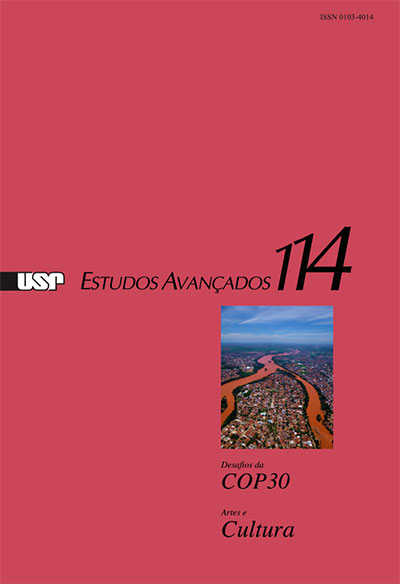
  <item rdf:about="https://www.iea.usp.br/en/news/journal-issue-114">
    <title>"Estudos Avançados" #114 highlights the challenges for COP30</title>
    <link>https://www.iea.usp.br/en/news/journal-issue-114</link>
    <description> </description>
    <content:encoded xmlns:content="http://purl.org/rss/1.0/modules/content/"><![CDATA[<p><img src="https://www.iea.usp.br/imagens/capa-da-edicao-114-da-revista-estudos-avancados" alt="Capa da edição 114 da revista Estudos Avançados" class="image-right" title="Capa da edição 114 da revista Estudos Avançados" /></p>
<div>
<p>In 2022, fossil fuels accounted for 81.9% of all energy consumed worldwide. To combat global warming, it is necessary to reduce the consumption of these fuels and find substitutes for them. However, this energy transition requires solutions to two problems, according to physicist <a href="https://www.iea.usp.br/en/persons/researchers/jose-goldemberg" class="external-link">José Goldemberg</a>: the depletion of oil reserves exploitable with current technologies and costs by 2050 (other reserves should extend this timeframe, but at higher costs), and the reduction of carbon (CO<sub>2</sub>) emissions resulting from the burning of fossil fuels through the use of more efficient technologies.</p>
</div>
<div>
<p>This point of view is reflected in Goldemberg's article "Expectations for COP30 in Belém," which opens the dossier "COP30 Challenges," published in issue #114 of the journal <i><a href="https://www.iea.usp.br/en/journal" class="external-link">Estudos Avançados</a></i>, released this month. Featuring nine papers by 37 researchers from various USP units and six federal universities, the dossier discusses the impacts and ways to fight the climate crisis, addressing topics such as the risks to the Amazon, the effects of climate change on human health, the role that agriculture can play in reducing emissions, CO<sub>2</sub> storage, and the carbon market.</p>
</div>
<p><strong>Climate Negotiations</strong></p>
<p>Goldemberg states that emissions increased globally by 33% between 1992 and 2022, with a 78% increase from developing countries (including China), which in 1991 were already responsible for more than 50% of the emissions. "Therefore, it is clear that the <a class="external-link" href="https://unfccc.int/">United Nations Framework Convention on Climate Change (UNFCCC)</a>, established at the <a class="external-link" href="https://www.un.org/en/conferences/environment/rio1992">1992 Earth Summit</a>, and the <a class="external-link" href="https://unfccc.int/process-and-meetings/the-kyoto-protocol/what-is-the-kyoto-protocol/kyoto-protocol-targets-for-the-first-commitment-period">Kyoto Protocol</a>, adopted in 1997, did not achieve the expected success," says the physicist.</p>
<p>He traces the climate negotiations back to a decision made at the 2009 United Nations Climate Change Conference (COP15) in Copenhagen for developed countries to allocate US$ 100 billion annually until 2020 to meet the needs of developing countries. "Bitter discussions on this topic took place over the years and it was decided that COP29 (Baku, 2024) would be dedicated to finance and review the 2009 decision under the <a class="external-link" href="https://unfccc.int/process-and-meetings/the-paris-agreement">Paris Agreement</a> of 2015."</p>
<p>The physicist highlights that at the closing session of COP29, faced with the imminent risk of failure, the president of the Conference presented a final decision "without consulting the plenary": to adopt the anual target of at least US$ 300 billion in climate finance from various public and private, bilateral, and multilateral sources, including alternative ones, until 2035. Goldemberg explains that this happened despite the fact that UNFCCC's <a class="external-link" href="https://unfccc.int/SCF">Standing Committee on Finance</a> estimates that US$ 5 to US$ 7 trillion (approximately US$ 455-485 billion per year) will be needed from 2022 to 2030.</p>
<p>He remembers that several countries questioned the COP29 decision and lamented the lack of a minimum allocation of resources for least developed countries, as well as the absence of guidelines for advancing the energy transition, in addition to arguing that China and Saudi Arabia should also contribute to climate finance.</p>
<p>"What we hope is that COP30, under the Brazilian presidency, will improve this situation." However, Goldemberg considers it unlikely that the anual US$ 300 billion allocated for climate finance until 2035 will increase, since "Trump's election will reduce the United States' participation in the process." Additionally, there is the impact of global inflation on the amount. "What can be improved is trying to increase the share of concessional resources that will come from public resources," he ponders, citing examples such as the Marshall Plan, created in 1948 by the USA for the European reconstruction, and the Inflation Reduction Act (IRA), adopted in 2022, which "can actually be considered a Marshall Plan to help North American industry face the energy transition."</p>
<p>Nonetheless, he states that climate finance from industrialized countries to developing countries is only part of the effort to reduce emissions: "Internal actions taken by governments can play an important role depending on the right public policy choices." Among these actions, Goldemberg mentions taxes on carbon emissions or the regulation of the emissions market by setting a maximum emission level per sector (or enterprise) and the creation of a market for buying and selling carbon credits like the one created by Brazil in 2024.</p>
<table class="tabela-esquerda">
<tbody>
<tr>
<th><img src="https://www.iea.usp.br/imagens/energia-solar-fotovoltaica" alt="Energia solar fotovoltaica" class="image-inline" title="Energia solar fotovoltaica" /><br /></th>
</tr>
<tr>
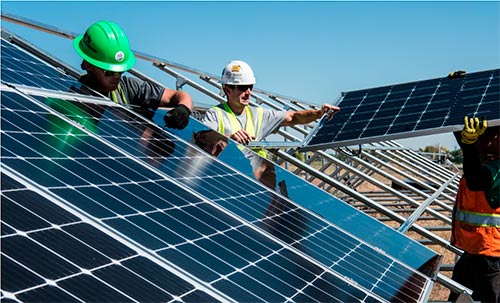
<td><span class="discreet">Emphasis on renewable energy: a more ambitious strategy that developing countries could adopt, according to Goldemberg</span></td>
</tr>
</tbody>
</table>
<p>A more ambitious strategy for developing countries is trying to guide their growth using more efficient technologies and renewable energy sources, the physicist adds.</p>
<p>In the Brazilian case, he comments that the federal government is, "at least rhetorically", taking this path through the <a class="external-link" href="https://www.gov.br/planalto/en/latest-news/2023/08/novo-pac-is-to-invest-brl-1-7-trillion-across-all-brazilian-states">New Growth Acceleration Program</a> (<i>Novo Programa de Aceleração do Crescimento/PAC</i>), which should invest a total amount of R$ 1.7 trillion: R$ 1.3 trillion by the end of 2025 and R$ 400 billion after 2026. "Due to the economic vicissitudes the country is going through and the low investment, the implementation of the <i>Novo PAC</i> is occurring slowly, but still paving the way through indispensable legislative measures to attract 'green' investments."</p>
<p>Goldemberg concludes by saying that holding COP30 in Belém will place a greater emphasis on preserving the Amazon rainforest, even considering that Brazil's contribution to global greenhouse gas emissions is modest (4.43% in 2022). "The success in reducing deforestation in the Amazon and the adoption of a law creating a carbon market in Brazil, which has only occurred in a few developing countries to date, will enable us to lead the way," he says.</p>
<p><strong>Sustainable Society</strong></p>
<p>Physicist Paulo Artaxo, coordinator of USP's Center for Studies on Sustainability of the Amazon Rainforest, also believes that COP30 will be an opportunity for Brazil to regain global leadership on issues related to climate change. He is the author of the article "COP30 and the Worsening Climate Crisis – Pathways to Build a Sustainable Society."</p>
<p>Some of the strategies he cited for adapting to climate change are: improving water resource management; protecting and restoring ecosystems by conserving natural areas; developing sustainable agricultural systems by developing plant varieties more resistant to extreme weather conditions such as droughts and floods; strengthening the health system to address heat-related and vector-borne diseases; disaster resilience planning with contingency plans that include community empowerment and the improvement of infrastructure to protect populations; and implementing educational programs on climate change and sustainability to increase public awareness and engagement.</p>
<p>However, Artaxo warns that the international landscape in which the Conference is taking place is unfavorable to the intensification of global governance. "We need to chart a course for the world to wean itself off fossil fuels, which are the root of the climate problems we face. We also need to structure policies for adapting to the new climate, particularly in the most vulnerable countries. In this task, implementing financing mechanisms is crucial so that less developed countries can implement their energy transition and adapt to the new climate."</p>
<p>According to him, although Brazil accounted for 4.5% of global emissions in 2023, it is not yet among the countries that price greenhouse gas emissions. "This creates difficulties in implementing regulatory policies for the so-called carbon market."</p>
<p>Artaxo emphasizes that the externalities of carbon emissions are not taken into account, adding that zeroing out net emissions (the difference between gross emissions and removals) can boost economies due to the investments needed to enable reductions and damage control. "Obviously, this transition to a low-carbon society must be carried out gradually and in a coordinated manner, also considering the reduction of social inequalities."</p>
<table class="tabela-direita">
<tbody>
<tr>
<th><img src="https://www.iea.usp.br/imagens/regeneracao-natural-assistida-cotriguacu-mt" alt="Regeneração natural assistida - Cotriguaçu/MT" class="image-inline" title="Regeneração natural assistida - Cotriguaçu/MT" /><br /></th>
</tr>
<tr>
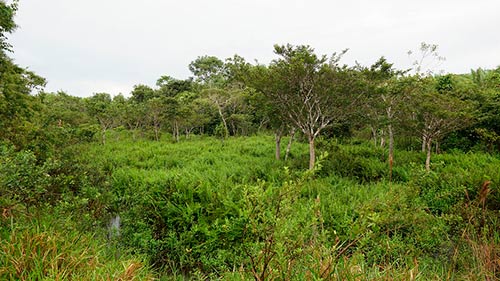
<td><span class="discreet">Assisted natural regeneration (RNA) project in the region of Cotriguaçu, in the state of Mato Grosso</span></td>
</tr>
</tbody>
</table>
<p>He lists a series of measures aimed at reducing Brazilian emissions: reducing deforestation and restoring forest areas; increasing the use of renewable energy; promoting sustainable agriculture with the implementation of agroecological practices; and investing in quality public transportation and urban mobility with low greenhouse gas emissions, having an added benefit of reducing urban air pollution, which affects the health of millions of Brazilians.</p>
<p><strong>Risks for the Amazon</strong></p>
<p>"Amazon at Risk and COP30 as a Critical Opportunity to Avoid the Point of No Return" is an article authored by climatologist <a href="https://www.iea.usp.br/en/persons/researchers/carlos-nobre" class="external-link">Carlos Nobre</a>, a visiting professor at the IEA and holder of the Climate &amp; Sustainability Chair (a partnership between the Institute and USP's President's Office), and researchers Julia Arieira and Diego Oliveira Brandão, both members of the Scientific-Technical Secretariat of the <a class="external-link" href="https://www.sp-amazon.org/">Science Panel for the Amazon</a>. For them, the Conference represents a key opportunity to discuss and develop solutions for "preserving the ecological limits that sustain the integrity of the Amazon rainforest and the well-being of its people."</p>
<p>For this to happen, the authors consider it essential that dialogue between governments, civil society, local communities, the private sector, and academia be anchored in both science and local knowledge. Thus, "COP30 will be decisive in building pathways that reconcile sustainable development and a climate justice that recognizes that the impacts of climate change affect different social groups unequally, both in intensity and vulnerability."</p>
<p>The article analyzes the main threats pushing the Amazon towards its critical thresholds, the tipping points, and discusses governance and nature-based strategies that can halt its destruction and boost its regeneration and sustainable use.</p>
<p>Currently, 23% of the Brazilian Amazon is deforested, an area equivalent to 1 million km<sup>2</sup>, according to the study. Although there has been a reduction in deforestation in recent years, forest fires intensified by the historic drought of 2023-2024 have generated an alarming increase in greenhouse gas emissions, as pointed out by the authors.</p>
<p>The Amazon is also suffering from global warming. Some regions have already exceeded the 1.5°C increase limit (compared to the second half of the 19th century) established by the Paris Agreement: "In 2023, record temperature values were recorded in Manaus and Monte Alegre with annual averages of 28.8°C and 27.9°C, respectively, which were surpassed in 2024. Compared to the average for 1990-2010, these values represented an increase of 1.7°C in Manaus and 0.9°C in Monte Alegre in 2023, and an increase of 1.8°C in both Manaus and Monte Alegre in 2024."</p>
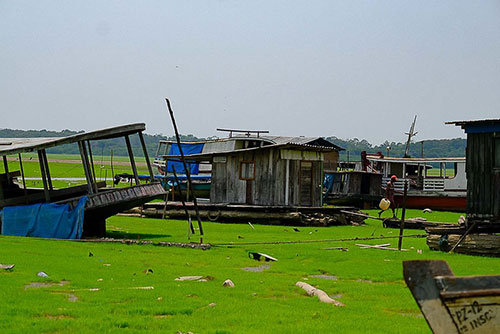
<p>Extreme droughts in the region have become more frequent. Previously, they occurred once every 20 years, but this century the recurrence interval was shortened to 5 years. An extreme drought event is a natural phenomenon associated with rising ocean surface temperatures in the North Tropical Atlantic and the Equatorial Pacific, but it has intensified and become more frequent due to human-induced global warming, the researchers comment. The consequence is a drastic reduction in the water levels of many important rivers in the region. The study explains that global warming above 2°C could further intensify the warming of surface waters in both oceans and, consequently, increase the occurrence of droughts in the Amazon.</p>
<table class="tabela-esquerda">
<tbody>
<tr>
<th><img src="https://www.iea.usp.br/imagens/seca-do-lago-do-aleixo-2023" alt="Seca do Lago do Aleixo - 2023" class="image-inline" title="Seca do Lago do Aleixo - 2023" /><br /></th>
</tr>
<tr>
<td><span class="discreet">Floating houses based on the bottom of Lake Aleixo, near Manaus, during the drought of 2023</span></td>
</tr>
</tbody>
</table>
<p>A synergistic combination of deforestation between 20% and 25%, and global warming of 2°C to 2.5°C could push more than half of the region into a state of irreversible degradation, according to the authors. The interaction between deforestation, forest degradation, fires, and global warming is associated with five potential tipping points: 1) a 2°C increase in average global temperature compared to pre-industrial levels; 2) local annual precipitation below 1,000 mm; 3) accumulated water deficit greater than -400 mm; 4) a dry season lasting more than six months; and 5) a cumulative<span> </span><span>forest cover</span><span> loss of 20%. "Some telling evidence of these processes include prolonged dry season, increased atmospheric vapor pressure deficit, and increased tree mortality rates."</span></p>
<p>The article warns that exceeding the point of no return will jeopardize greenhouse gas emissions control, alter rainfall patterns, and reduce agricultural and forestry productivity (both within and outside the Amazon). Other consequences will include the worsening of social inequalities, and losses in biological and cultural diversity, fueling a cycle of environmental degradation and social injustice.</p>
<p>Given these risks, the researchers emphasize that large-scale forest restoration, the implementation of sustainable infrastructure, regenerative livestock and agriculture practices, and bioindustrialization are essential nature-based solutions to keep the Amazon from environmental and social collapse in addition to curbing destruction. They add that the inclusion of Indigenous peoples and other communities of the region in the discussions is crucial to promoting social justice, sharing <span>benefits</span><span>, and reducing inequalities.</span></p>
<p><strong>Other articles</strong></p>
<p>The dossier includes five additional articles analyzing the consequences of climate change for Brazil in various areas and presenting proposals for minimizing and/or adapting to them. Some of the authors are pathologist <a href="https://www.iea.usp.br/en/persons/researchers/paulo-saldiva" class="external-link">Paulo Saldiva</a>, a full professor at USP's School of Medicine and former director of the IEA; soil specialist Carlos Eduardo Pellegrino Cerri, a professor at the Luiz de Queiroz College of Agriculture (ESALQ/USP) and a researcher at the <a class="external-link" href="https://ccarbon.usp.br/">Center for Carbon Research in Tropical Agriculture</a> (CCARBON/USP); and economic and social development specialist Marcel Burztyn, a full professor at the Center for Sustainable Development at the University of Brasília (UnB).</p>
<p>"Municipal Health Systems and Climate Change: Infrastructure and Resilience Challenges in Brazil," which addresses the harmful effects of climate change on human health, proposes a conceptual, operational, and budgetary transformation for building resilient systems in the country, emphasizing the integration between levels of care, the strengthening of regional governance, and the valuing of community social capital.</p>
<p>Crop and livestock farming is a major contributor to greenhouse gas emissions, but it is also one of the most vulnerable activities to climate change. A paper dedicated to the sector's role in addressing climate change presents information on some agricultural management practices considered options for adaption and mitigation of effects.</p>
<p>Socio-environmental protection is also addressed in the dossier. Researchers from UnB have analyzed the evolution of social protection instruments and present a proposal for integrating public policies to combat poverty and sustainable development. In this proposal, the abundant sunlight in Brazil's semiarid region becomes a solution intstead of a problem due to its use in clean energy generation, resulting in an income for vulnerable communities.</p>
<p>Legal aspects related to greenhouse gases are the subject of two further articles. One of them addresses the monitoring of the integrity and safety of CO<sub>2</sub> storage facilities, while the other is a comparative study of the legislative landscape for this area in Brazil, the United States, the United Kingdom, Norway, Canada, Australia, Japan, and the European Union. A third paper focuses on the creation of a regulated carbon market in Brazil. After analyzing international and national experiences, and legislative initiatives such as bills and the establishment of the Brazilian Greenhouse Gas Emissions Trading System by Law 15.042/24, the authors conclude that fundamental issues remain to be resolved, including those related to the agricultural sector.</p>
<p>The dossier ends with a review of "The Empire of Climate: A History of an Idea," a book by David Livingstone published in 2024 by Princeton University Press. Nilson Cortez Crocia de Barros, a tenured professor at the Federal University of Pernambuco (UFPE), comments that given the evidence of the severe effects of climate change, "Livingstone recovers the broad spectrum of considerations regarding the influence of climate on the human species. This spectrum is mapped along four paths: the medical path, the path of soul-searching, the economic path, and, finally, the military path."</p>
<p><strong>Related themes</strong></p>
<table class="tabela-direita">
<tbody>
<tr>
<th><img src="https://www.iea.usp.br/imagens/caca-diegues" alt="Cacá Diegues" class="image-inline" title="Cacá Diegues" /><br /></th>
</tr>
<tr>
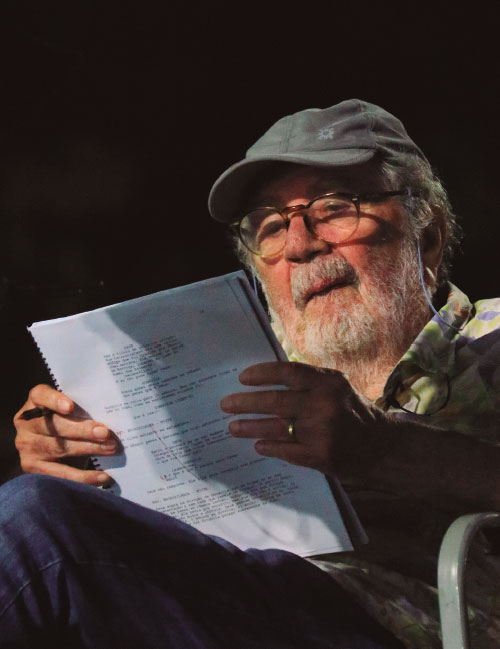
<td><span class="discreet">A<span>n interview with f</span>ilmmaker Cacá Diegues (1940-2025) in 2021 is one of the highlights of issue #114</span></td>
</tr>
</tbody>
</table>
<p>In addition to the opening dossier, issue #114 contains <span>a second set of texts entitled "Society and the Environment." Although it covers a variety of topics, the section is equally connected to those to be discussed at COP30, according to the journal's editor, </span><a href="https://www.iea.usp.br/en/persons/researchers/sergio-adorno" class="external-link">Sérgio Adorno</a><span>. The themes range from natural resources (forests, water, and natural gas) to land issues. The proposal for citizen science and the concept of urban commons are also addressed.</span></p>
<p>The third section of the issue is dedicated to arts and culture. The operetta "Abel, Helena," by Artur Azevedo, the religious influence on artistic production, and the promotion of culture and the arts in Brazil are some of the covered subjects. There is also an interview with filmmaker Cacá Diegues, who died last February at the age of 84. Conducted in 2021 by Noel dos Santos Carvalho, a professor of Brazilian Cinema at the State University of Campinas (UNICAMP), it focuses on public policy, the film market, and attempts to institutionalize film production in the country.</p>
<p>The list below contains the names of the authors who have contributed with each one of the addressed themes:</p>
<p><strong>COP30 Challenges</strong></p>
<p>Expectations for COP30 in Belém - <i>José Goldemberg</i><br />COP30 and the Worsening Climate Crisis – Pathways to Build a Sustainable Society - <i>Paulo Artaxo<br /></i>Amazon at Risk and COP30 as a Critical Opportunity to Avoid the Point of No Return - <i>Carlos Afonso Nobre et al.<br /></i>Municipal Health Systems and Climate Change: Infrastructure and Resilience Challenges in Brazil - <i>Flavio Pinheiro Martins et al.<br /></i>Crop and Livestock Farming as Part of the Solution to Tackle Global Climate Change - <i>Carlos Eduardo Pellegrino Cerri et al.<br /></i>From Social to Socio-Environmental Protection in Times of Climate Change: A Retrospective and a Proposal - <i>Marcel Bursztyn et al.<br /></i>Legal Comparative Analysis of CO<sub>2</sub> Storage Monitoring in Selected Countries - <i>Thaiz da Silva Vescovi Chedid et al.<br /></i>The Regulated Carbon Market in Brazil - <i>Adriana Carvalho Pinto Vieira et al.<br /></i>The Climate Change Apocalypse and the Echoes of the Classical Geographic Mindset - <i>Nilson Cortez Crocia de Barros</i></p>
<p><strong>Society and the Environment</strong></p>
<p>Ecological-Economic Zoning: Overview and Interface with Planning and Public Policies - <i>Marcia Renata Itani et al.<br /></i>The Challenge of the Water/City Dyad in the Management of Urban Aquifers - <i>Filipe da Silva Peixoto and Itabaraci Nazareno Cavalcante<br /></i>A Genealogy of Urban Common Good - <i>Ana Rosa Chagas Cavalcanti and Leandro Silva Medrano<br /></i>Private Management of Public Forests in Brazil: Analysis of Concession Contracts - <i>Victor Pegoraro et al.<br /></i>The Brazilian Academic Milieu and the Application of Citizen Science to Ecological Research - <i>Eduardo Roberto Alexandrino et al.<br /></i>Santa Catarina’s Natural Gas Adhesion to Ascher’s Neo-Urbanism - <i>Leonardo Mosimann Estrella et al.</i><br />From Royal Land Grants to Latifundia: Reconstituting the Chain of Ownership in a Rural Settlement in Goiás - <i>Graciella Corcioli et al.<br /></i>Land Ownership Regularization in the Context of Agrarian Reform: The Case of the Santa Monica Rural Settlement in Terenos, MS - <i>Luciane Cleonice Durante et al.<br /></i>Unfinished Discussions: Disaster and Complex Systems - <i>Leandro Roberto Neves</i></p>
<p><strong>Arts and Culture</strong></p>
<p>Artur Azevedo and the Operetta: "Abel, Helena" - <i>João Roberto Faria<br /></i>Film Production, Cinema Novo, and Brazilian Modernity – Interview with Filmmaker Cacá Diegues - <i>Noel dos Santos Carvalho<br /></i>In the Colors of Creation: Living Religion and Regional Culture in Antônio Poteiro - <i>José Reinaldo F. Martins Filho<br /></i>Towards a Policy of Encounters: Reflections on the Advancement of Culture and Arts in Brazil - <i>Sharine Machado Cabral Melo</i></p>
<ul>
</ul>
<p style="text-align: right; "><span class="discreet">Photos (from the top): Science in HD/Unsplash; HD Mídia/WRI Brasil; Alberto César/Amazônia Real; and personal archive of Cacá Diegues</span></p>
<ul>
</ul>
<ul>
</ul>
<ul>
</ul>
<ul>
</ul>
<ul>
</ul>
<ul>
</ul>
<div id="_mcePaste">
<div class="tlid-results-container results-container">
<div class="tlid-result result-dict-wrapper">
<div class="result tlid-copy-target">
<div class="text-wrap tlid-copy-target"></div>
</div>
</div>
</div>
</div>]]></content:encoded>
    <dc:publisher>No publisher</dc:publisher>
    <dc:creator>Richard Meckien</dc:creator>
    <dc:rights>Original version in Portuguese by Mauro Bellesa.</dc:rights>
    
      <dc:subject>Climate</dc:subject>
    
    
      <dc:subject>Anthropocene</dc:subject>
    
    
      <dc:subject>Greenhouse Gases</dc:subject>
    
    
      <dc:subject>Energy</dc:subject>
    
    
      <dc:subject>Carbon Market</dc:subject>
    
    
      <dc:subject>Cinematography</dc:subject>
    
    
      <dc:subject>Amazon</dc:subject>
    
    
      <dc:subject>Environmental Sciences</dc:subject>
    
    
      <dc:subject>Journal</dc:subject>
    
    <dc:date>2025-07-28T05:40:00Z</dc:date>
    <dc:type>News Item</dc:type>
  </item>


</rdf:RDF>