<?xml version="1.0" encoding="utf-8" ?>
<rdf:RDF xmlns:rdf="http://www.w3.org/1999/02/22-rdf-syntax-ns#" xmlns:dc="http://purl.org/dc/elements/1.1/" xmlns:syn="http://purl.org/rss/1.0/modules/syndication/" xmlns="http://purl.org/rss/1.0/">


<channel rdf:about="https://www.iea.usp.br/en/search_rss">
  <title>en</title>
  <link>https://www.iea.usp.br</link>

  <description>
    
            These are the search results for the query, showing results 1 to 15.
        
  </description>


  <image rdf:resource="https://www.iea.usp.br/logo.png" />

  <items>
    <rdf:Seq>
      
        <rdf:li rdf:resource="https://www.iea.usp.br/en/news/journal-issue-108" />
      
      
        <rdf:li rdf:resource="https://www.iea.usp.br/en/news/journal-issue-99" />
      
      
        <rdf:li rdf:resource="https://www.iea.usp.br/en/news/journal-issue-98" />
      
      
        <rdf:li rdf:resource="https://www.iea.usp.br/en/news/science-education-risk-awareness" />
      
      
        <rdf:li rdf:resource="https://www.iea.usp.br/en/news/ubias-chooses-aging-common-theme-member-institutes-2018" />
      
      
        <rdf:li rdf:resource="https://www.iea.usp.br/en/news/sense-of-humanity-and-hospitality-in-a-world-of-wars-and-hunger" />
      
      
        <rdf:li rdf:resource="https://www.iea.usp.br/en/news/seminar-reflects-on-a-balanced-relationship-between-humans-and-the-environment" />
      
      
        <rdf:li rdf:resource="https://www.iea.usp.br/en/news/children-who-care-global-perspectives-on-childrens-hidden-care-giving-roles-within-their-families" />
      
      
        <rdf:li rdf:resource="https://www.iea.usp.br/en/news/unemployment-in-Brazil-and-future-prospects" />
      
      
        <rdf:li rdf:resource="https://www.iea.usp.br/en/news/spanish-sociologist-discusses-dialectic-environment" />
      
      
        <rdf:li rdf:resource="https://www.iea.usp.br/en/news/francisco-zapata-discusses-mexicos-development-models" />
      
      
        <rdf:li rdf:resource="https://www.iea.usp.br/en/media-library/photos/events-2014/modernidades-multiplas-e-as-metamorfoses-da-etica-do-trabalho-tardes-cariocas-a-usp-ouve-o-rio-de-janeiro-04-de-agosto-de-2014" />
      
      
        <rdf:li rdf:resource="https://www.iea.usp.br/en/media-library/photos/events-2014/debate-em-2-tempos-a-fantasmagoria-da-derrota-o-futebol-como-metafora-25-de-julho-de-2014" />
      
      
        <rdf:li rdf:resource="https://www.iea.usp.br/en/news/soccer-and-society" />
      
      
        <rdf:li rdf:resource="https://www.iea.usp.br/en/news/work-ethics-in-brazil" />
      
    </rdf:Seq>
  </items>

</channel>


  <item rdf:about="https://www.iea.usp.br/en/news/journal-issue-108">
    <title>The precariousness of labor and Alfredo Bosi's thinking are themes of "Estudos Avançados" #108</title>
    <link>https://www.iea.usp.br/en/news/journal-issue-108</link>
    <description> </description>
    <content:encoded xmlns:content="http://purl.org/rss/1.0/modules/content/"><![CDATA[<p><img src="https://www.iea.usp.br/imagens/capa-de-estudos-avancados-108/@@images/18bd9f82-2b90-493b-b1ad-7409e4ef3f67.jpeg" alt="Capa de Estudos Avançados 108" class="image-right" title="Capa de Estudos Avançados 108" /></p>
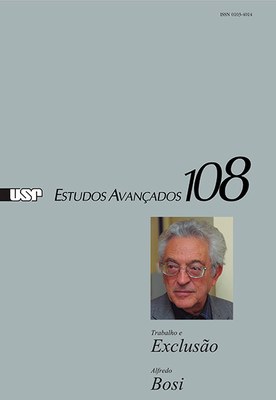
<p><span>The new professional and occupational requirements, the precariousness of employment, and the suppression of rights and guarantees are the central themes of the dossier "Work and Exclusion," part of </span><i><a href="https://www.iea.usp.br/en/journal" class="external-link">Estudos Avançados</a></i><span> #108</span><span>, whose digital version is now available, free of charge, at the </span><a class="external-link" href="https://www.scielo.br/j/ea/i/2023.v37n108/">Scientific Electronic Library Online</a><span> (Portuguese only)</span><span>.</span></p>
<p>The issue also features a set of 11 articles on the activity of <a href="https://www.iea.usp.br/en/persons/researchers/alfredo-bosi" class="external-link">Alfredo Bosi</a> (1936-2021) as a literary critic and engaged thinker. Professor emeritus from the University of São Paulo's Faculty of Philosophy, Languages and Literature, and Human Sciences (FFLCH), and a member of the Brazilian Academy of Letters, Bosi has been director of the IEA and editor of the journal <i>Estudos Avançados</i> for 30 years.</p>
<p><span><strong>Paradox</strong></span></p>
<p><span>In the editorial,</span> the journal's editor, <a href="https://www.iea.usp.br/en/persons/researchers/sergio-adorno" class="external-link">Sérgio Adorno</a>, points out that, "in a parallel and paradoxical way, the advanced forms of work organization represented by the complex digitization of industrial production are articulated and coexist with the reinvention of slavery, which was believed to be banished with the emergence of modern society."</p>
<p>An example of the dynamics of this hateful practice is reported in an article with the main results of research on contemporary slave labor carried out in Açailândia, in the Brazilian state of Maranhão, based on the narratives of workers rescued from this condition.</p>
<p>Another extremely relevant issue addressed in the dossier is the analysis of the discussions that have led to the ratification <span>of Convention no. 189 of the International Labor Organization (ILO)</span><span> by Brazil in 2018. It refers to the establishment of dignified working conditions for domestic workers, a category that brings together more than 7 million workers in the country.</span></p>
<p><span> </span><span>Two articles address the socioeconomic impacts of infrastructure works and distortions in the production chain. The first case is discussed in a study on the adequacy of residents of a beach on the coast of the state of Pará to the construction of a highway on the site. Another article adresses the maintenance of injustices in the production chain of Brazil nuts in quilombos in the region of Alto Trombetas, also in Pará.</span></p>
<p dir="ltr"><strong>Literature and Society</strong></p>
<p>The essays on Bosi especially examine aspects of his work as a literary critic, articulated with social and political concerns that have always been present in his trajectory. The composition of a dossier on "an outstanding humanist, who has denounced violence and the abusive use of power to seek solutions that reconciled the conflict, typical of human relations, with the solidarity inherent in the lives of common men and women," <span>in the words of Adorno,</span><span> could not be different.</span></p>
<p>He highlights three concepts present in Bosi's works that are discussed in the dossier: resistance, ideology, and dialectic. The first focuses on the analysis of the poem <span>"The Machine of the World,"</span><span> by Carlos Drummond de Andrade, and on Bosi’s reflections since the 1970s, when he wrote the essay <i>Poesia e Resistência</i> ("Poetry and Resistance").</span></p>
<p>The topic is taken up again in a text that articulates literature and cinema, using films by Roberto Rosselini and Pier Paolo Pasolini, and is also present in an essay on <i>candomblé</i> featured both in the novel "Tent of Miracles," by Jorge Amado, and in its respective cinematographic adaptation by Nelson Pereira dos Santos.</p>
<p>Traits of Bosi's personality and his passion for poetry are recalled in an article that comments on his book <i>O Ser e o Tempo da Poesia</i> ("The Being and the Time of Poetry"). There is also the identification of a psychoanalytic approach of the critic in his analysis of "Counselor Ayres’ Memorial," by Machado de Assis.</p>
<p>The reflections of Bosi and other critics are addressed in a study on the critical position of Graciliano Ramos in relation to the so-called <i>Romance de 30</i>, a set of literary works produced in the second phase of Brazilian Modernism, between 1930 and 1945.</p>
<p>The meaning and functioning of the concept of dialectic expressed by Bosi in the book "Brazil and the Dialectic of Colonization" are discussed in a dense article that articulates several aspects, such as the reception of the work by critic Roberto Schwartz and "a certain affinity of interests and procedures" with spectropoetics, a philosophical and critical approach developed by Jacques Derrida.</p>
<p>Other essays address Bosi's work on the short story as a literary form and on the poet's position as an intellectual in the face of war, with reference to the poem "The Rose of the People," by Carlos Drummond de Andrade, and <span><i>España, Aparta de Mí este Cáliz</i></span>, by César Vallejo.</p>
<p><strong>Reviews</strong></p>
<p>Issue #108 also features reviews of five books: <span><i>Dar Corpo ao Impossível: O Sentido da Dialética a Partir de Theodor Adorno</i></span><span> ("Giving Body to the Impossible: The Sense of Dialectic from Theodor Adorno" (Autêntica, 2019), by Vladimir Safatle; the translation to Theodor Adorno's "</span>Aspects of the New Right-Wing Extremism" <span>(Editora Unesp, 2020); <i>Teatro Legislativo</i> ("Legislative Theater") (Editora 34, 2020), by Augusto Boal; </span><span><i>Imaginação como Presença: O Corpo e seus Afetos na Experiência Literária</i></span><span> ("Imagination as Presence: The Body and its Affections in Literary Experience," (Editora UFPR, 2020), by Lígia Gonçalves Diniz; and <i>Conversa Comigo</i> ("Talk to Me") (Penalux, 2019), by Ricardo Ramos Filho.</span></p>
<p>The list below contains the names of the authors who have contributed with each one of the addressed themes:</p>
<p><strong>Work and Exclusion</strong></p>
<p>In the Webs of Slavery: Perceptions of Workers Rescued from Situations of Slave Labor in the state of Maranhão<span> - </span><i>Luciano Rodrigues Costa, Alessandra Gomes Mendes Tostes, Ana Pereira dos Santos, and</i><i> Bráulio Figueiredo Alves da Silva</i><br /><span>Memories from the Construction of the PA-458 Highway Connecting Bragança to Ajuruteua in Northeastern Pará on Brazil’s Amazon Coast - </span><i>Zenúbia Oliveira Silva, Francisco Pereira de Oliveira, and César Martins de Souza</i><br /><span>Brazil nut Farming and Quilombos in Alto Trombetas (State of Pará): A Proposal for Socio-Environmental Justice - </span><i>Felipe Souto Alves and Patrícia Chaves de Oliveira</i><br /><span>ILO Convention no. 189: Notes on the Ratification Process in Brazil - </span><i>Thays Monticelli and Alexandre Barbosa Fraga</i><br /><span>Agricultural Policy for Agribusiness: The Use of Taxpayers’ Money to Indirectly Benefit Foreign Multinational Corporations - </span><i>Graciella Corcioli and Gabriel da Silva Medina</i><br /><span>Indigenous Peoples of the Desert: The Bedouins of the Negev. Congress in Beer Sheva, 2000: The Future of Indigenous Peoples - </span><i>Betty Mindlin</i></p>
<p><strong>Alfredo Bosi</strong></p>
<p>Faustian Pact and Resistance in the Poem "The Machine of the World"<span> - </span><i>Marcus Vinicius Mazzari</i><br /><span>Alfredo Bosi: Two Approaches - </span><i>Alcides Villaça</i><br /><span>Traits of Psychoanalysis "in Two Figures from Machado de Assis" - </span><i>Cleusa Rios P. Passos</i><br /><span>Times of Insomnia: Graciliano Ramos and the Inflections of the Neorealistic Novels of the 1930s - </span><i>Erwin Torralbo Gimenez</i><br /><span>Poetry and War: Action and Melancholy in Vallejo and Drummond - </span><i>Pedro Meira Monteiro</i><br /><span>Different Forms of Resistance Poetry - </span><i>Fernando Baião Viotti</i><br />Dialectics and Alteritarian Politics in Brazil and the "Dialectic of Colonization"<i> - Ravel Giordano Paz</i><br /><span>Alfredo Bosi and the Short Forms - </span><i>Diego A. Molina</i><br /><span>Libertarian Christianity and Redemption in Roberto Rossellini and Pier Paolo Pasolini - </span><i>Paulo Roberto Ramos</i><br /><span>Aganju, Xangô, Alapalá: Religious Racism, Resistance and Justice in "Tent of Miracles" (the Novel and the Film) - </span><i>Soleni Biscouto Fressato</i><br /><span>Women’s Cinema as Resistance to Dictatorship: Readings from a Research Source - </span><i>Ana Maria Veiga</i></p>
<p><strong>Reviews</strong></p>
<p><i> </i></p>
<p>Dialectics and Political Action: On <i>Dar Corpo ao Impossível</i>, by Vladimir Safatle<span> - </span><i>Ronaldo Tadeu de Souza</i><br /><span>Adorno, Fascism, and the Aporias of Reason - </span><i>Fabio Mascaro Querido</i><br /><span>What Makes Representative Government Democratic? - </span><i>Gustavo Hessmann Dalaqua</i><br /><span>Reflections on Heideggerian Aspects of Lígia Gonçalves Diniz’s Essay - </span><i>Rafael Fava Belúzio</i><br /><span>Understanding Made of Dialogues and Silences - </span><i>Ieda Lebensztayn</i></p>
<p style="text-align: right; "><span class="discreet">Photo: Leonor Calasans/IEA-USP</span></p>
<ul>
</ul>
<ul>
</ul>
<div id="_mcePaste">
<div class="tlid-results-container results-container">
<div class="tlid-result result-dict-wrapper">
<div class="result tlid-copy-target">
<div class="text-wrap tlid-copy-target"></div>
</div>
</div>
</div>
</div>]]></content:encoded>
    <dc:publisher>No publisher</dc:publisher>
    <dc:creator>Richard Meckien</dc:creator>
    <dc:rights>Original version in Portuguese by Mauro Bellesa.</dc:rights>
    
      <dc:subject>Literature</dc:subject>
    
    
      <dc:subject>Journal</dc:subject>
    
    
      <dc:subject>Work</dc:subject>
    
    
      <dc:subject>Sociology</dc:subject>
    
    
      <dc:subject>Publications</dc:subject>
    
    
      <dc:subject>IEA</dc:subject>
    
    <dc:date>2023-07-20T17:40:00Z</dc:date>
    <dc:type>News Item</dc:type>
  </item>


  <item rdf:about="https://www.iea.usp.br/en/news/journal-issue-99">
    <title>"Estudos Avançados" #99 presents dossier on the COVID-19 pandemic</title>
    <link>https://www.iea.usp.br/en/news/journal-issue-99</link>
    <description> </description>
    <content:encoded xmlns:content="http://purl.org/rss/1.0/modules/content/"><![CDATA[<p><img src="https://www.iea.usp.br/imagens/capa-de-estudos-avancados-99" alt="Capa de &quot;Estudos Avançados&quot; 99" class="image-right" title="Capa de &quot;Estudos Avançados&quot; 99" /></p>
<p><span>Dedicated to the </span><span>COVID-19 </span><span>victims, the 99th </span><span>issue of the journal </span><i><a href="https://www.iea.usp.br/en/journal" class="external-link">Estudos Avançados</a></i><span> presents a dossier on the pandemic caused by the Sars-CoV-2 coronavirus. </span><span>The online version (Portuguese only) is available at </span><a class="external-link" href="https://www.scielo.br/scielo.php?script=sci_issuetoc&amp;pid=0103-401420200002&amp;lng=pt&amp;nrm=iso">SciELO</a>.</p>
<p>According to sociologist <a href="https://www.iea.usp.br/en/persons/researchers/sergio-adorno" class="external-link">Sérgio Adorno</a>, editor of the publication, the object of the dossier is the complexity of the pandemic, reflected in the 17 articles written by 47 researchers from two dozen universities and research institutions in several Brazilian states.</p>
<p><span>"</span>Its multiple aspects are addressed by experienced researchers through extensive investigations, some of which are produced in the effervescence of events, in the seemingly uninterrupted search for scientific responses, and by government plans to stop its natural course, fertilized by unfavorable social and political conditions," notes the editor.</p>
<p>He points out that the pandemic is above all a public health problem, involving different types of collectives, which are represented, for example, by groups with different degrees of vulnerability<span>.</span></p>
<p><span>"</span>Not without reason, the dossier addresses issues more properly situated in this domain, such as the norms of international and national regulatory bodies, and the race for the discovery of vaccines, the performance of tests, and consequent epidemiological modeling that enable the assessment of both scenarios and guidelines for prevention."</p>
<p>However, the pandemic also reveals the harsh social reality, accentuated by the "acute process of economic recession that, in societies like Brazil, means the worsening of social inequalities that are projected with greater intensity in the metropolises, as is the case of São Paulo," says Adorno.</p>
<p>He reinforces that the space studies of the dossier demonstrate how inequalities affect the poorest, the black population, and the residents of neighborhoods where populations with low education and income predominate, "the most vulnerable to contamination and deaths" by COVID-19.</p>
<p>Other topics addressed by the dossier have been highlighted by Adorno, such as issues regarding the right to privacy in the face of intense data tracking and monitoring, the dangers of spreading Sars-Cov-2 in Brazilian biomes, and the absence of government policies<span> </span><span>capable of containing the pandemic's progress </span><span>in the country</span><span>.</span></p>
<p>The dossier begins with an article by the collaborator in the organization of the journal's set of texts, José da Rocha Carvalheiro, a professor of social medicine at USP's School of Medicine in Ribeirão Preto (FMRP) and a member of <a href="https://www.iea.usp.br/en/research/research-groups/innovation-and-competitiveness-observatory" class="external-link">IEA's Innovation and Competitiveness Observatory</a>.</p>
<p>In the article, Carvalheiro states that COVID-19 in Brazil will not be a disease limited in time, but in space: "An endemic disease or, perhaps, a collection of endemic diseases with different characteristics spread across the national territory. Due to the diversity, the control proposals will inevitably have their own characteristics. This requires a coordination effort and political skill on the part of the leaders."</p>
<p>The effort of the journal to collaborate with the academic and public debate about COVID-19 and its consequences does not end in the current issue. Issue #100, to be launched in the next four months, will feature articles on the impact of the pandemic in areas such as <span>(national and international) </span><span>economy, international relations, education, labor market, agriculture, food, and engineering.</span></p>
<p><strong>Youth</strong></p>
<p>Another highlight of the issue is a set of articles on the Brazilian youth, a topic addressed <span>by </span><i>Estudos Avançados </i><span>for the first time</span><span>. Organized with the collaboration of Professor Marilia Pontes Sposito, from USP's School of Education (FE) and co-author of one of the articles, the section "Portrait of Youth" contains six texts written by a dozen education and sociology researchers from USP, the Federal University of ABC (UFABC), the Federal University of São Carlos (UFSCar), the Federal University of Ceará (UFC), the University of Brasília (UnB), </span><span>Pará State University (UEPA), UNISINOS, and the Federal University of Alfenas (UNIFAL).</span></p>
<p>According to Adorno, the section "deals with an issue that is always present in public debates: youth as a social matter." Despite the variety of topics covered, he identifies "t<span>he effort to review theses that seemed consolidated in the specialized literature </span><span>based on original investigations</span><span>" </span><span>as an axis that articulates all contributions.</span></p>
<p>With regard to the educational scope, there are articles on the participation of high school students in the institutional plan of schools (based on the results of research on the subject in urban centers in Brazil, Argentina, Mexico, and Spain), the difficulties for schooling of the Brazilian youth that emerged since the 1990s, and what <span>the occupation of schools in Rio Grande do Sul in May and June 2016 has </span><span>represented for its protagonists.</span></p>
<p>The section also features articles on public performance through the Facebook profiles of young conservatives, youth cultural production on the outskirts of Fortaleza, and the policies and proposals for the professional training of young people and their insertion in the labour market in the last three decades.</p>
<p>The list below contains the names of the authors who have contributed with each one of the addressed themes:</p>
<p><strong>Covid-19 Pandemic</strong></p>
<p><strong> </strong><i>José da Rocha Carvalheiro<br /></i><i>Cláudio Maierovitch Pessanha Henriques and Wa</i><i>gner Vasconcelos<br /></i><i>Paulo Marchiori Buss, Santiago Alcázar, and Luiz Augusto Galvão<br /></i><i>Glauco Arbix<br /></i><i>Carmen Phang Romero Casas, Julio Silva, Rodolfo Castro, Marcelo Ribeiro-Alves, and Carolina Mendes Franco<br /></i><i>Naomar de Almeida Filho<br /></i><i>Raul Borges Guimarães, Rafael de Castro Catão, Oséias da Silva Martinuci, Edmur Azevedo Pugliesi, and Patricia Sayuri Silvestre Matsumoto<br /></i><i>Marcos Silveira Buckeridge and Arlindo Philippi Jr.<br /></i><i>Vinicius Carvalho Jardim and Marcos Silveira Buckeridge<br /></i><i>Gabriela Capobianco Palhares, Alessandro Santiago dos Santos, Eduardo Altomare Ariente, and Jefferson de Oliveira Gomes<br /></i><i>André Luis Acosta, Fernando Xavier, Leonardo Suveges Moreira Chaves, Ester Cerdeira Sabino, Antonio Mauro Saraiva, and Maria Anice Murebe Sallum<br /></i><i>Sandra Caponi<br /></i><i>Márcia Pereira Alves dos Santos, Joilda Silva Nery, Emanuelle Freitas Goes, Alexandre da Silva, Andreia Beatriz Silva dos Santos, Luís Eduardo Batista, and Edna Maria de Araújo<br /></i><i>Eugênio Bucci<br /></i><i>Fernando Xavier, João Rodrigo Windischi Olenscki, André Luis Acosta, Maria Anice Mureb Sallum, and Antonio Mauro Saraiva<br /></i><i>Marcos Antônio Mattedi, Eduardo Augusto Werneck Ribeiro, Maiko Rafael Spiess, and Leandro Ludwig<br /></i><i>José Eli da Veiga</i></p>
<p><strong>Portrait of Youth</strong></p>
<p dir="ltr"><i>Marilia Pontes Sposito, Elmir de Almeida, and Felipe de Souza Tarábola<br /></i><i>Adriano Souza Senkevics and Marília Pinto de Carvalho<br /></i><i>Livia de Tommasi and Maria Carla Corrochano<br /></i><i>Glória Diógenes<br /></i><i>Wivian Weller and Lucélia de Moraes Braga Bassalo<br /></i><i>Luís Antonio Groppo and Rodrigo Manoel Dias da Silva</i></p>
<div id="_mcePaste">
<div class="tlid-results-container results-container">
<div class="tlid-result result-dict-wrapper">
<div class="result tlid-copy-target">
<div class="text-wrap tlid-copy-target"></div>
</div>
</div>
</div>
</div>]]></content:encoded>
    <dc:publisher>No publisher</dc:publisher>
    <dc:creator>Richard Meckien</dc:creator>
    <dc:rights>Original version in Portuguese by Mauro Bellesa.</dc:rights>
    
      <dc:subject>Literature</dc:subject>
    
    
      <dc:subject>Sustainable development</dc:subject>
    
    
      <dc:subject>Journal</dc:subject>
    
    
      <dc:subject>Work</dc:subject>
    
    
      <dc:subject>Public Policies</dc:subject>
    
    
      <dc:subject>Environment</dc:subject>
    
    
      <dc:subject>Culture</dc:subject>
    
    
      <dc:subject>Sociology</dc:subject>
    
    
      <dc:subject>Publications</dc:subject>
    
    <dc:date>2020-07-08T17:40:00Z</dc:date>
    <dc:type>News Item</dc:type>
  </item>


  <item rdf:about="https://www.iea.usp.br/en/news/journal-issue-98">
    <title>"Estudos Avançados" #98 analyzes labor precariousness and transformations</title>
    <link>https://www.iea.usp.br/en/news/journal-issue-98</link>
    <description> </description>
    <content:encoded xmlns:content="http://purl.org/rss/1.0/modules/content/"><![CDATA[<p><img src="https://www.iea.usp.br/imagens/capa-de-estudos-avancados-98" alt="Capa de &quot;Estudos Avançados&quot; 98" class="image-right" title="Capa de &quot;Estudos Avançados&quot; 98" /></p>
<p>At a time of marked reduction in the possibility of work for a large number of workers as a result of restrictions on displacement and public contact due to the COVID-19 crisis, the <span>98th issue of the journal </span><i><a href="https://www.iea.usp.br/en/journal" class="external-link">Estudos Avançados</a></i><span>, released this month</span>, discusses two themes <span>already problematic </span>in Brazil before the pandemic: the still little recognition of care work, which is essential in view of the aging population, and the characteristics and impacts of new forms of work, including on workers' health. <span>The online version (Portuguese only) is available at </span><a class="external-link" href="https://www.scielo.br/scielo.php?script=sci_issuetoc&amp;pid=0103-401420200001&amp;lng=pt&amp;nrm=iso">SciELO</a>.</p>
<p>The content of the issue was defined before the World Health Organization (WHO) declared the pandemic caused by the international spread of the novel coronavirus SARS-CoV-2. Thus, rigorous analyses are not presented, as they could not have been produced in the early stages of the outbreak.</p>
<p>However, the issues addressed in the dossiers deserve extra attention as they are among those for which society must seek answers in the post-pandemic period in order to ensure decent and equal work for everyone, in addition to rights and health protection.</p>
<p>In "Work, Gender, and Care", the first dossier, care for people is analyzed in its various forms. An example is when care occurs as "help," without being characterized as a professional activity or as a parental obligation. The topic is discussed by sociologists Nadya Araujo Guimarães, a senior professor at USP's Faculty of Philosophy, Languages and Literature, and Human Sciences (FFLCH), and Priscila Pereira Faria Vieira, a researcher at the Brazilian Center of Analysis and Planning (CEBRAP).</p>
<p>Helena Hirata, former visiting professor at the IEA and director emeritus of research at the French National Center for Scientific Research (CNRS), addresses the main points of convergence and divergence in the activity of elderly caregivers in Brazil, Japan, and France, without neglecting the centrality of women in this work. The objective is to demonstrate how gender, race, and social class help to build the professional and personal trajectories of caregivers.</p>
<p>In the article "Care and Responsibility," Natacha Borgeaud-Garciandía discusses the work of immigrant caregivers for the elderly in Buenos Aires. A researcher at the Latin American Faculty of Social Sciences (FLACSO), Borgeaud-Garciandía focuses on responsibility as the assumption of a moral obligation towards a vulnerable person. One of the addressed aspects is the role of responsibility in the complexity of the <span>caregivers' </span>exploitation plots within the framework of unequal power relations.</p>
<p>The legal treatment of care in Brazil and public policies aimed at the socialization of social reproduction activities fall short of social demands, according to Regina Stela Corrêa Vieira, a researcher at CEBRAP and a professor of the graduate program in Law at the University of West Santa Catarina (UNOESC). To her, <span>labor law, which "historically ignores or neglects domestic work, whether paid or unpaid," has made some progress such as the Constitutional Amendment 72/2013 and the ratification of Convention C189 of the International Labor Organization (ILO), but currently sees labor reform as a "threat to the hard-won rights of domestic workers."</span></p>
<p>The struggle of these female workers for the enhancement of their professional activity is also analyzed in an article by Louisa Acciari, from the Federal University of Rio de Janeiro (UFRJ), and Tatiane Pinto, from the Federal Rural University of Rio de Janeiro (UFRRJ), who discuss informal negotiations with employers and union mobilization in the category. They propose a redefinition of the concept of work with the full inclusion of care work, something "indispensable to guarantee the dignity and equal rights."</p>
<p><strong>Labor precariousness</strong></p>
<p>The discussion on the lack of rights and dignity in the context of caregivers and domestic employees in general is extended in the second dossier of the isssue to address the characteristics and impacts of the transformations underway in the world of work, including health.</p>
<p>In his article, sanitary professional René Mendes, a collaborating researcher at the IEA, summarizes the concerns that led him to propose the development of the research project "Impacts of the New Morphologies of Contemporary Work on Life, Sickness, and Death."</p>
<p>Mendes starts from the perceptions of existing studies on the problem <span>mainly </span><span>carried out from a sociological perspective, but seeks to deepen the reflections on the nature and complexity of the pathogenesis mechanisms of the new morphologies of work on the workers' life and health </span><span>from the perspective of social epidemiology</span><span>.</span></p>
<p>One of these new forms of work is the "uberization," subject of the article by Ludmila Costhek Abílio, a researcher at the University of Campinas's Center for Union Studies and Labor Economics (CESIT-UNICAMP). Her study is based on empirical research with cosmetic dealers and motorcycle drivers, and on secondary data on Uber drivers and the so-called bike boys.</p>
<p>Abílio's analysis considers two theses: 1) uberization is an ongoing global trend to consolidate the worker as an available subordinate self-manager <span>defined as a just-in-time worker</span><span> devoid of guarantees and rights; 2) companies present themselves as mediators, when they actually operate forms of subordination and work control, in what can be called algorithmic work management.</span></p>
<p>The third article in the dossier, authored by <span>sociologist </span><span>Clemente Ganz Lúcio, a technician at the Inter-Union Department of Statistics and Socioeconomic Studies (DIEESE), presents a brief history and the current context of the debates </span><span>on union reform and the system of labor relations in the National Congress and in the Federal Government. </span>Lúcio points out that countless aspects of the world of work have undergone changes, such as jobs, occupations, labor dynamics, forms of hiring, working hours, and working conditions, among others.</p>
<p>For him, some guidelines should be considered in these changes. One of them is the development of an autonomous and effective system of self-regulation between workers and employers, which supports the union's restructuring of the labor relations system and resolves conflicts through instruments created by the parties.</p>
<p><strong>Bioeconomics, energy, and vegetation</strong></p>
<p>Themes related to the environment and sustainable development have had a regular presence throughout the journal's 33 years, and are present in this issue in three articles. André Luiz Willerding, a biotechnologist at the <span>Amazonas State Secretariat for Economic Development, Science, Technology, and Innovation (SEDECTI), and five other researchers from SEDECTI an </span>Amazonas State University<span>, present an overview of the state's reality regarding the development of bioeconomy strongly linked to the potential of natural resources. According to the authors, the discussion on this theme goes against the search for alternatives for the state's economy, still centralized around the Manaus Industrial Pole, which "becomes increasingly threatened year after year."</span></p>
<p>Another region addressed in this section is the Brazilian Northeast, in an article on the importance of integrating social, economic, and environmental policies around the supply of energy to the semiarid region. Based on the food-water-energy nexus, which seeks to examine the interrelationships of these three essential components of environmental and human quality, Marcel Burztyn, from <span>University of Brasília's</span><span> Center for Sustainable Development (CDS-UnB), proposes the promotion of photovoltaic energy generation by family farmers.</span></p>
<p>When studying issues such as the degree of complexity and diversification of the Brazilian landscape, it must be taken into account that a landscape may be the result of recent environmental changes or relics of much more remote conditions. This is what geologists Daniel Meira Arruda, from the Federal University of Minas Gerais (UFMG), and Carlos Ernesto Gonçalves Rynaud Schaefer, from the Federal University of Viçosa (UFV), point out in another article. They discuss the biogeographic theories formulated and modified over the past 60 years of studies on the reconstruction of Brazil's vegetation under the impact of the climatic changes of the Last Glacial Maximum (LGM), which occurred 18,000 years ago. According to both researchers, the recent advance of global climate models has provided new perspectives for a more faithful reconstruction of the conditions of that period.</p>
<p><strong>Literature and other cultural themes</strong></p>
<p><strong> </strong>The <span>"Culture" </span><span>section brings texts about works by writers Samuel Beckett, José de Alencar and Murilo Mendes, and about the costumes of the Brazilian Indians during the time of Johan Maurits van Nassau-Siegen's </span><span>government</span><span> (1637-1644) during the Dutch occupation in the country's Northeast. The set of articles also includes "The Impediments of Memory," by Jeanne Marie Gagnebin, and "Ideological Automata," by Benhur Bortolotto</span><i>.</i></p>
<p><i>Estudos Avançados</i> #98 also presents tributes for the ten years since the death of Portuguese writer José Saramago, winner of the 1998 Nobel Prize for Literature. There are three articles on some aspects of the author's work written by Jaime Bertoluci, Marcelo Lachat, and Jean-Pierre Chauvin.</p>
<p>Finally, the edition includes reviews of five books: "Reflection as Resistance: Homage to Alfredo Bosi," organized by Augusto Massi, Erwin Torralbo Gimenez, Marcus Vinicius Mazzari, and Murilo Marcondes de Moura; "The French School of Geography: a Contextual Approach," by Vincent Berdoulay; "The Double Night of Linden Trees," by Marcus Vinicius Mazzari; "Historia von D. Johann Fausten," translated, organized, and commented by Magali Moura; and "The Tragical History of the Life and Death of Doctor Faustus," by Christopher Marlowe, with translation and notes by Luís Bueno and Caetano Waldrigues Galindo.</p>
<p>The list below contains the names of the authors who have contributed with each one of the addressed themes:</p>
<p><strong><span>Work, Gender, and Care</span></strong></p>
<p dir="ltr"><i>Nadya Araujo Guimarães and</i><i> Priscila Pereira Faria Vieira<br /></i><i>Helena Hirata<br /></i><i>Natacha Borgeaud-Garciandía<br /></i><i>Regina Stela Corrêa Vieira<br /></i><i>Louisa Acciari and Tatiane Pinto</i></p>
<p><strong>Labor Issues</strong></p>
<p dir="ltr"><i>René Mendes<br /></i><i>Ludmila Costhek Abílio<br /></i><i>Clemente Ganz Lúcio</i></p>
<p><strong>Environment and Development</strong></p>
<p dir="ltr"><i>André Luis Willerding, Leonardo Rodrigo </i><i>da Silva, Roseana Pereira da Silva, Geison </i><i>Maicon Oliveira de Assis, and Estevão Vicente Cavalcanti Monteiro de Paula<br /></i><i>Marcel Bursztyn<br /></i><i>Daniel Meira Arruda and</i><i> Carlos Ernesto Gonçalves Reynaud Schaefer</i></p>
<p dir="ltr"><strong>Culture</strong></p>
<p><i>Jeanne Marie Gagnebin<br /></i><i>Luciano Gatti<br /></i><i>Fabiano Lemos and Ulysses Pinheiro<br /></i><i>Pablo Simpson<br /></i><i>Aline Leal Fernandes Barbosa<br /></i><i>Benhur Bortolotto<br /></i><i>Fausto Viana</i></p>
<p dir="ltr"><strong>José Saramago: Themes and Languages</strong></p>
<p><i>J</i><i>aime Bertoluci<br /></i><i>Marcelo Lachat<br /></i><i>Jean Pierre Chauvin</i></p>
<p dir="ltr"><strong>Reviews</strong></p>
<p><i>Alexandre Koji Shiguehara<br /></i><i>Nilson Cortez Crocia de Barros<br /></i><i>Klaus F. W. Eggensperger<br /></i><i>Rafael Rocca dos Santos</i></p>
<div id="_mcePaste">
<div class="tlid-results-container results-container">
<div class="tlid-result result-dict-wrapper">
<div class="result tlid-copy-target">
<div class="text-wrap tlid-copy-target"></div>
</div>
</div>
</div>
</div>]]></content:encoded>
    <dc:publisher>No publisher</dc:publisher>
    <dc:creator>Richard Meckien</dc:creator>
    <dc:rights>Original version in Portuguese by Mauro Bellesa.</dc:rights>
    
      <dc:subject>Literature</dc:subject>
    
    
      <dc:subject>Sustainable development</dc:subject>
    
    
      <dc:subject>Journal</dc:subject>
    
    
      <dc:subject>Work</dc:subject>
    
    
      <dc:subject>Public Policies</dc:subject>
    
    
      <dc:subject>Environment</dc:subject>
    
    
      <dc:subject>Culture</dc:subject>
    
    
      <dc:subject>Sociology</dc:subject>
    
    
      <dc:subject>Publications</dc:subject>
    
    <dc:date>2020-05-08T17:40:00Z</dc:date>
    <dc:type>News Item</dc:type>
  </item>


  <item rdf:about="https://www.iea.usp.br/en/news/science-education-risk-awareness">
    <title>Awareness of global risks must be a component of scientific education, says researcher</title>
    <link>https://www.iea.usp.br/en/news/science-education-risk-awareness</link>
    <description></description>
    <content:encoded xmlns:content="http://purl.org/rss/1.0/modules/content/"><![CDATA[<p><dl class="image-right captioned" style="width:400px;">
<dt><img src="https://www.iea.usp.br/imagens/mauriciio-pietrocola-pinto-de-oliveira-10-5-19/image" alt="Maurício Pietrocola Pinto de Oliveira - 10/5/19" title="Maurício Pietrocola Pinto de Oliveira - 10/5/19" height="404" width="400" /></dt>
 <dd class="image-caption" style="width:400px;">Maurício Pietrocola: ''A conscientização sobre riscos deve passar do nível local para o global''</dd>
</dl></p>
<p>Despite the shortcomings and inequalities in many societies in accessing the benefits provided by scientific and technological development, large portions of humanity take advantage of significant improvements in the quality of life <span>to varying degrees</span>. Many of these improvements, however, come at high costs in environmental, social, and even cultural terms.</p>
<p>Research on the atomic nucleus and the consumption of fossil fuels, for example, led to two civilizing risks: the ever-present possibility of nuclear conflict and climate change due to global warming caused by greenhouse gases.</p>
<p>It is also clear that awareness of the negative implications of many consumption and behavior habits, such as the indiscriminate use of plastics and automobiles or the excessive consumption of meat, has grown in significant parts of the population in recent decades.</p>
<p>"The problem is that people are still basically concerned with the negative impacts at the individual and local level, without considering the interrelation of all factors on a global scale," says educator <a href="https://www.iea.usp.br/en/persons/researchers/mauricio-oliveira" class="external-link">Mauricio Pietrocola</a>, a professor at USP' School of Education (FE) and a participant in the 2019 <a href="https://www.iea.usp.br/en/persons/sabbatical" class="external-link">Sabbatical Year Program</a>.</p>
<p><strong>Scientific education</strong></p>
<p>At the IEA, Pietrocola is developing the project <span>"Scientific Education in the Risk Society."</span> The objective is to identify how students in basic education can be awakened to perceive the risks inherent in scientific and technological development, not only from a local point of view, but also in connection with global aspects. "Young people must be able to understand the risks, be aware of their causes and implications, and be able to take actions that contribute to minimizing these risks, not only at <span>individual or local </span>levels, but also globally. For this to be achieved, it will be necessary to adapt teacher training and curricula," says the researcher.</p>
<table class="tabela-esquerda-200-borda">
<tbody>
<tr>
<td>
<h3>Related material</h3>
<p><strong>News</strong></p>
<ul>
<li><a href="https://www.iea.usp.br/en/news/sabbatical-program-2019" class="external-link">Sabbatical Year Program chooses seven researchers for 2019</a></li>
<li><a href="https://www.iea.usp.br/en/news/research-project-analyzes-global-influence-fifa-world-cup-brics-members" class="external-link">Research project analyzes the use of the FIFA World Cup by three BRICS members in order to increase their global influence</a></li>
<li><a href="https://www.iea.usp.br/en/news/evolutionary-approaches-to-culture" class="external-link">New scientific field analyzes cultural transmission from an evolutionary point of view</a></li>
<li><a href="https://www.iea.usp.br/en/news/peripheral-cultural-collectives" class="external-link">Dennis de Oliveira analyzes peripheral cultural collectives in São Paulo</a></li>
</ul>
</td>
</tr>
</tbody>
</table>
<p>The sociological framework used by him to characterize the current period of humanity as that of a "risk society" is based, above all, on the formulations of sociologists Ulrich Beck (1944-2015) and Anthony Giddens.</p>
<p>In the preface to "<span>Reflexive Modernization: Politics, Tradition and Aesthetics in the Modern Social Order,"</span> published in 1995 in partnership with Scott Lash, they state that "as a species, we are no longer guaranteed our survival, even in the short term - and this is a consequence of our own actions, as a collective humanity." They warn that "new areas of unpredictability are often created by the very attempts to control them."</p>
<p>For <span>Beck, Giddens, and Lash</span>, the great relevance acquired by ecological issues "is due to the fact that the 'environment' is no longer something external to human social life, but completely impregnated and reordered by it. (...) What used to be is today so completely entangled with what is 'social' that, in this area, we can no longer take anything for granted."</p>
<p><strong>Late modernity</strong></p>
<p>In the conception of risk society formulated by Beck, he considers that globalization has played a fundamental process in the diffusion of risks on a global scale, including the diffusion of technologies and industrialization in addition to possibilities and consumption habits, in a context in which globalization is one of the engines that he, together with Giddens and Lash, calls late modernity or reflexive modernity.</p>
<p>We are a society that experiences post-nature, a reflection of how technoscience has transformed nature into technonature. In this type of modernity, the central concerns of society change from the development and implementation of new technologies to the management of risks associated with existing technologies," comments the researcher.</p>
<p>He explains that until the middle of the 20th century science education was thought almost exclusively as a kind of qualification for young people who wanted to pursue a profession of a scientific or technological nature, of a higher or technical level.</p>
<p>"After World War II, scientific education is understood as more than a training for scientists and technicians, and that science and technology are much more connected with society. Then, a movement emerges to think about the importance of science for the citizen who will not become a scientist or technician."</p>
<p>As a result, curricula are being reformulated to reflect scientific education as one of the aspects of citizenship training. "For the past 30 to 40 years we have been working on curricula and teacher training with this purpose." However, says Pietrocola, this concern still reflects orientation towards good practices, "about what should be done or not, with science being a grading tool of that scale."</p>
<p>In his studies, Beck begins to show that the relationship between science and society is so complex that it is no longer possible to distinguish where one or the other begins, explains the researcher. "Certain social practices only came into existence from science and technology. An example of this is communication. Until the invention of the telegraph, communication was linked to the speed of the fastest horses. Today it can happen in less than a second." Beck also showed that the globalization process started to generate several types of risks, different from those previously existing, "risks that the very science and technology create."</p>
<p><span>According to Pietrocola, school curricula are still very much focused on risks and individual or local needs, such as the importance of using sunscreen, for example. "But if someone decides to buy a car for greater mobility, they will not only contribute to the congestion and pollution of their city, but also to global warming, the melting of the polar ice caps, and the submersion of the Maldives Islands."</span></p>
<p>The nefarious consequences "are <span>more or less <span>evenly </span></span>distributed across the planet". The researcher explains that this goes against the logic of capitalism itself, which sought to produce wealth in one place and export <span>(environmental, above all)</span> risks to another. "Confined profit and risks used to be the pattern, including used tires, broken cell phones, and other discarded products and waste being sent to poor countries. This confinement of risk disappeared with late modernity."</p>
<p><strong>Methodology</strong></p>
<p>Pietrocola and his mentored students are working on two fronts. One of them is student-centered and will firstly map their perception of the risks arising from scientific and technological development. "The prospect is that the level of this perception is very low." Then, the project will raise awareness of the global scope of risks previously considered to have local impact only. The third phase will be dedicated to the identification of individual and group educational actions that can contribute to the reduction of risks at local and global levels.</p>
<p>"If we can get students to go through these three stages, we will also have to work on another front, which involves curricular additions and teacher training for methodological use." Australia, the United Kingdom, and the United States already deal with the risk <span>issue </span>in their curricula, "but I do not know to what extent civilizing risks are being addressed," he comments. In the Brazilian case, he considers that emphasis is placed only on risks in which local impact is perceived..</p>
<p>In the second semester, Pietrocola intends to start working with teachers from a public school in the municipality of Osasco and hold a cycle of seminars on the principle of precaution, inequality, global warming, and other topics with specialists from Brazil and the United States, Canada, and the United Kingdom. In 2020, fieldwork will take place in the schools, making it possible to see how much teachers and students are already aware of the issue of global risks.</p>
<p style="text-align: right; "><span class="discreet">Photo: Leonor Calasans / IEA-USP</span></p>]]></content:encoded>
    <dc:publisher>No publisher</dc:publisher>
    <dc:creator>Richard Meckien</dc:creator>
    <dc:rights>Original version in Portuguese by Mauro Bellesa.</dc:rights>
    
      <dc:subject>Sociology</dc:subject>
    
    
      <dc:subject>Basic Education</dc:subject>
    
    
      <dc:subject>Science</dc:subject>
    
    
      <dc:subject>ST&amp;I</dc:subject>
    
    
      <dc:subject>Research</dc:subject>
    
    
      <dc:subject>Sabbatical</dc:subject>
    
    
      <dc:subject>Education</dc:subject>
    
    <dc:date>2019-05-10T16:25:00Z</dc:date>
    <dc:type>News Item</dc:type>
  </item>


  <item rdf:about="https://www.iea.usp.br/en/news/ubias-chooses-aging-common-theme-member-institutes-2018">
    <title>UBIAS chooses "Aging" as the common theme for the member institutes in 2018</title>
    <link>https://www.iea.usp.br/en/news/ubias-chooses-aging-common-theme-member-institutes-2018</link>
    <description></description>
    <content:encoded xmlns:content="http://purl.org/rss/1.0/modules/content/"><![CDATA[<table class="tabela-direita">
<tbody>
<tr>
<th><img src="https://www.iea.usp.br/imagens/idosos" alt="Idosos" class="image-inline" title="Idosos" /></th>
</tr>
<tr>
<td><strong>Life expectancy should rise five years by 2050</strong></td>
</tr>
</tbody>
</table>
<p>"Aging - Life, Culture and Civilizations" will be the Topic of the Year in 2018. The choice is valid for the members of the <a class="external-link" href="http://www.ubias.net">UBIAS</a> network, which gathers institutes of advanced studies based on universities around the world.</p>
<p>When choosing a topic, UBIAS seeks to identify a theme of global importance to be explored in different activities and formats. The aim is to stimulate the researchers to have new insights on the subject and closer communication between the institutes.</p>
<p><strong>Longevity</strong></p>
<p>In support of the choice of topic this year, UBIAS points out that demographic studies indicate a five-year increase in average life expectancy by 2050. Increased longevity is associated with so-called "healthy aging," ie the increase of more healthy years to life.</p>
<p>"This reinforces the great gains in well-being associated with change, but there are problems that remain: increased longevity is not evenly distributed and the breadth of social inequalities continues, which in turn raises several other issues."</p>
<p>If in several African countries the decline in infant mortality associated with high fertility rates leads to a large number of young people with high unemployment among them, there is a reverse demographic change in several European countries. Population aging, with a dramatic increase in the incidence of advanced age-related diseases - dementia, for example - is considered an economic and social challenge in many parts of the world, the organization argues.</p>
<p><strong>Culture</strong></p>
<p>UBIAS emphasizes that the issue of age should be approached and analyzed in a broad context, and from various disciplinary perspectives. "The ways in which we see and interpret the signs of aging as well as age segmentation in the course of life - for example, when someone is considered part of elderly - have changed throughout history and are subject to wide cultural differences."</p>
<p>This is why the proposed work for the institutes is not restricted to biological aging and its consequences. From this perspective, UBIAS suggests some questions to be discussed in the activities: "Do cultures and societies have an age of themselves? How about the Universe? In relation to cultural artifacts, from buildings to works of art, what is the role of age? What is there to say about the age of concepts and  the sciences?"</p>
<p>Topic-of-the-Year activities can range from an event to a series of meetings, including conferences and public discussions, workshops, seminars, or a conference cycle. UBIAS encourages the institutes to invite researchers from other institutes as lecturers or participants, as well as joint activities between two or more institutes.</p>
<p>The first Topic of the Year was "Media and Data Control," in 2016. In 2017, the theme was "<a href="https://www.iea.usp.br/en/news/fear-ubias-topic-of-the-year" class="external-link">Fear</a>." The topic for 2019 will be chosen by the directors of the institutes during the UBIAS <a href="https://www.iea.usp.br/en/ubias-directors-meeting-2018" class="external-link">global meeting</a> at the IEA-USP from March 19 to 22 this year.</p>
<p style="text-align: right; "><span class="discreet">Photo: Marcelo Camargo/Agência Brasil</span></p>]]></content:encoded>
    <dc:publisher>No publisher</dc:publisher>
    <dc:creator>Richard Meckien</dc:creator>
    <dc:rights>Original version in Portuguese by Mauro Bellesa.</dc:rights>
    
      <dc:subject>Sociology</dc:subject>
    
    
      <dc:subject>Ubias</dc:subject>
    
    
      <dc:subject>Public Health</dc:subject>
    
    
      <dc:subject>Public Policies</dc:subject>
    
    
      <dc:subject>Elderly</dc:subject>
    
    
      <dc:subject>Inequality</dc:subject>
    
    <dc:date>2018-01-03T11:40:00Z</dc:date>
    <dc:type>News Item</dc:type>
  </item>


  <item rdf:about="https://www.iea.usp.br/en/news/sense-of-humanity-and-hospitality-in-a-world-of-wars-and-hunger">
    <title>Sense of humanity and hospitality in a world of wars and hunger</title>
    <link>https://www.iea.usp.br/en/news/sense-of-humanity-and-hospitality-in-a-world-of-wars-and-hunger</link>
    <description></description>
    <content:encoded xmlns:content="http://purl.org/rss/1.0/modules/content/"><![CDATA[<p>Diversity is a feature of the contemporary world, from which some trends that transform countries in modern towers of Babel derive. Increasing global migration, aging, migration by sectarian wars and hunger are some traces of modernity.</p>
<p><span>The consequences of the Middle East conflicts put <span>the impact of the astonishing figures of war and hunger refugees </span>in evidence in the international agenda, with no similar situation in history.</span></p>
<p>The theme leads to the discussion of the principle of hospitality, defined by philosopher Jacques Derrida as the ability to receive the other as different, but essentially the same. It also raises a comparative analysis of the European and Brazilian reaction to the issue. <i>The Challenge of Hospitality: Migrants and Refugees</i> is the title of the debate to be held by the IEA on <strong>October 22</strong>, <strong>at 2.30 pm</strong>, in the Institute's Events Room.</p>
<p>This will be the second meeting of the Laboratory of Global Megatrends and Challenges to Democracy. The conference will have the coordination of Portuguese political scientist Álvaro de Vasconcelos, an assistant professor at the USP's Institute of International Relations (IRI), and the participation of Geraldo Adriano Godoy de Campos, a professor at the ESPM's course of international relations, and <a href="https://www.iea.usp.br/en/persons/researchers/sylvia-duarte-dantas-1" class="external-link">Sylvia Dantas</a>, coordinator of the <a href="https://www.iea.usp.br/en/research/research-groups/intercultural-dialogues" class="external-link">IEA's Intercultural Dialogues research group</a>. The laboratory was started in June this year with the debate <i><a href="https://www.iea.usp.br/en/news/identity-based-nationalism-in-focus" class="external-link">The Challenge of Identity-Based Nationalism</a></i>.</p>
<table class="tabela-direita-borda">
<tbody>
<tr>
<th>
<h3>Related material</h3>
<p><a href="https://www.iea.usp.br/en/news/identity-based-nationalism-in-focus" class="external-link">Identity-Based Nationalism in Focus</a></p>
</th>
</tr>
</tbody>
</table>
<p><span>"We have watched the drama of those who hoped to find refuge and hospitality and ended up finding walls, barbed wire, violence and mistrust in many countries that have 'fear of the other', especially Muslims and those who come from the Middle East," says Vasconcelos.</span></p>
<p>The war in Syria has forced four million people to leave the country and eight million to move internally. In addition to them there are war refugees from Iraq, Afghanistan, Sudan, Eritrea and Somalia. Thus, the number of refugees in the world in 2014 reached 59.5 million according to estimates by the <a class="external-link" href="http://www.unhcr.org/cgi-bin/texis/vtx/home">UN Refugee Agency</a><span>.</span></p>
<p><span>The event will be broadcast live over the </span><a href="https://www.iea.usp.br/en/aovivo" class="external-link">web</a><span>.</span></p>]]></content:encoded>
    <dc:publisher>No publisher</dc:publisher>
    <dc:creator>Richard Meckien</dc:creator>
    <dc:rights>Original version in Portuguese by Sylvia Miguel</dc:rights>
    
      <dc:subject>Europe</dc:subject>
    
    
      <dc:subject>Human Rights</dc:subject>
    
    
      <dc:subject>Sociology</dc:subject>
    
    
      <dc:subject>Citizenship</dc:subject>
    
    
      <dc:subject>Democracy</dc:subject>
    
    
      <dc:subject>Geopolitics</dc:subject>
    
    
      <dc:subject>Violence</dc:subject>
    
    
      <dc:subject>War</dc:subject>
    
    
      <dc:subject>Migration</dc:subject>
    
    
      <dc:subject>Globalization</dc:subject>
    
    
      <dc:subject>Social Sciences</dc:subject>
    
    
      <dc:subject>Middle east</dc:subject>
    
    
      <dc:subject>Political Science</dc:subject>
    
    
      <dc:subject>World</dc:subject>
    
    
      <dc:subject>Nationalism</dc:subject>
    
    
      <dc:subject>Event</dc:subject>
    
    
      <dc:subject>History</dc:subject>
    
    <dc:date>2015-10-16T16:35:00Z</dc:date>
    <dc:type>News Item</dc:type>
  </item>


  <item rdf:about="https://www.iea.usp.br/en/news/seminar-reflects-on-a-balanced-relationship-between-humans-and-the-environment">
    <title>Seminar reflects on a balanced relationship between humans and the environment</title>
    <link>https://www.iea.usp.br/en/news/seminar-reflects-on-a-balanced-relationship-between-humans-and-the-environment</link>
    <description></description>
    <content:encoded xmlns:content="http://purl.org/rss/1.0/modules/content/"><![CDATA[<p style="text-align: justify; "><img src="https://www.iea.usp.br/imagens/paisagem-no-rio-grande-do-sul" alt="Paisagem no Rio Grande do Sul" class="image-right" title="Paisagem no Rio Grande do Sul" />The <a href="https://www.iea.usp.br/en/research/research-groups/environmental-politics" class="external-link">IEA's Environmental Politics research group</a> will hold the international seminar <i>Landscapes: Home, Path and Water</i> <strong>from October 22 to 29</strong>, in three different venues. Researchers from Brazil, Italy and Portugal will reflect on the fundamental conditions for the establishment of a balanced relationship between humans and the environment.</p>
<p style="text-align: justify; "><span>According to Eda Tassara, coordinator of the research group, by addressing the presence and representation of home, path and water in the landscape and in the city, the seminar aims to "contribute to the intentional, poetic and shared construction of a more balanced social environment in the future in comparison to nowadays". She explains that the seminar's title is inspired in a statement by French geographer Jean Brunhes (1869-1930): "There are three key things to start a human community: home, path and water." She adds that psychologist Omar Ardans, from the Federal University of Santa Maria, by commenting on Brunhes's statement, said that its content "is in no way contradicted by the current state of life on the planet. On the contrary, it is even more modern than at the time of his writing."</span></p>
<p style="text-align: justify; "><span>However, there is one condition for the establishment of this balance, as Ardans's comment cited by the researcher: "That balance does not exist in (or to) a single individual, in a vacuum. Instead, the spaces of coexistence of this individual, and the participation in community and societal contexts define <span>the particular form of conquered balance (or, at worst, desired).</span>along with the physical environment and objects built by humans."</span></p>
<p style="text-align: justify; "><span>That's why, he said, "the first word for the proposed reflection should be 'city', privileged form of organization of the man on the grounds that he dwells." In support of this choice, Tassara points out that American urban planner and thinker Lewis Mumford (1895-1990) opened his book "The Culture of Cities" with a statement saying that the city "is the point of maximum concentration of force and culture in a community."</span></p>
<p style="text-align: justify; "><span>She also recalls that Italian philosopher Rosario Assunto (1915-1994) argued that "the concrete environment, the environment we live in and of which we live, is always the environment as a way of territory: a landscape". It follows that "landscape" is the second word of the seminar, "understood as the way that nature and man gave to the territory as they organized it on the basis of life."</span></p>
<p style="text-align: justify; "><span>Viewed from these perspectives, landscape and city can be understood as "more-than-spaces" inextricably linked, with the balance of the assembly having crucial importance for human life, but not just for it, according to Tassara. "Both our organic existence as the persistence of the very way of life of our community / society depend on this balance. Recognizing this mobilizes our reflection on the essential aspects of the human-environment relationship that is expressed in the countryside and in the cities."</span></p>
<p style="text-align: right; "><span class="discreet">Photo: <a class="external-link" href="http://www.flickr.com/photos/dpfeiffercardoso">Douglas Pfeiffer Cardoso/Flickr</a></span></p>]]></content:encoded>
    <dc:publisher>No publisher</dc:publisher>
    <dc:creator>Richard Meckien</dc:creator>
    <dc:rights>Original version in Portuguese by Mauro Bellesa</dc:rights>
    
      <dc:subject>Sociology</dc:subject>
    
    
      <dc:subject>Commons</dc:subject>
    
    
      <dc:subject>Research Group: Environmental Politics</dc:subject>
    
    
      <dc:subject>Environment</dc:subject>
    
    
      <dc:subject>Cities</dc:subject>
    
    
      <dc:subject>Event</dc:subject>
    
    <dc:date>2015-10-15T13:35:00Z</dc:date>
    <dc:type>News Item</dc:type>
  </item>


  <item rdf:about="https://www.iea.usp.br/en/news/children-who-care-global-perspectives-on-childrens-hidden-care-giving-roles-within-their-families">
    <title>Children Who Care – Global Perspectives on Children’s Hidden Care-Giving Roles within their Families</title>
    <link>https://www.iea.usp.br/en/news/children-who-care-global-perspectives-on-childrens-hidden-care-giving-roles-within-their-families</link>
    <description></description>
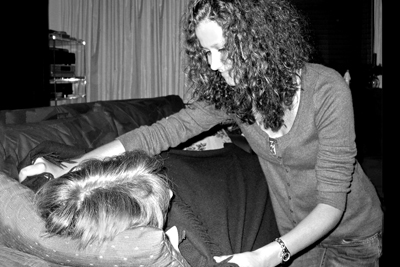
    <content:encoded xmlns:content="http://purl.org/rss/1.0/modules/content/"><![CDATA[<p style="text-align: justify; "><img src="https://www.iea.usp.br/imagens/YoungCarers-tucking1-bw-by-Produnis-self-made-first-published-at-NursingWiki.-Licensed-under-CC-BY-SA-3.0-via-Commons-https-commons.wikimedia.orgwikiFile-YoungCarers_tucking1_bw.jpg%23mediaFile-YoungCarers_tucking1_bw" alt="Jovens cuidadores " class="image-left" title="Jovens cuidadores " />Children and young people have been increasingly spending their time in a position which grows throughout the world. Tens of millions of them become informal caregivers of older members of their own family, often parents, grandparents or close relatives who are ill, disabled or in need of assistance, support and supervision.</p>
<p style="text-align: justify; ">Studies in this area, especially in the UK, Australia, the United States and sub-Saharan Africa, show that there is a diversity of social policies evolving to support these <span>unpaid </span>young care providers. However, it remains a hidden world which lacks global visibility and more knowledge on the theme.</p>
<p style="text-align: justify; ">Professor <a href="https://www.iea.usp.br/en/persons/speakers/saul-becker" class="external-link">Saul Becker</a>, Pro-Vice-Chancellor at the <a class="external-link" href="http://www.birmingham.ac.uk/index.aspx">University of Birmingham</a> and a specialist in this line of research, will address the theme at the conference <i>Children Who Care – Global Perspectives on Children’s Hidden Care-Giving Roles within their Families</i>, that will take place on <strong>October 21</strong>, in the IEA's Events Room, <strong>from 9.30 am to 12 pm</strong>. <a href="https://www.iea.usp.br/en/persons/researchers/ana-lydia-sawaya" class="external-link">Ana Lydia Sawaya</a>, coordinator of the <a href="https://www.iea.usp.br/en/research/research-groups/nutrition-and-poverty" class="external-link">IEA's Nutrition and Poverty Research Group</a> and a professor at UNIFESP, will participate as a debater.</p>
<p style="text-align: justify; ">Becker's work has influenced the academic debate and the implementation of public policies and practices that are designed to meet the needs of young carers. In his speech, he will explore the hidden worlds of children who provide assistance and care to adults, showing how and why some countries have identified and legislated this role as that of a specific group that requires support and intervention. In most countries, these children and young people remain hidden, invisible and isolated, with negative consequences for their lives, families and society as a whole.</p>
<p style="text-align: justify; "><span>Studies in the area suggest that the informal care provided by the young in developed and developing nations can be located along a continuous flow of care. They also show that these young people have much in common, regardless of where they live or how the social security systems of their countries are developed. Thus, there is a global need for these young people to get recognized, identified, analyzed and assisted as a distinct group of "vulnerable children".</span></p>
<p style="text-align: justify; "><span>Through its </span><a class="external-link" href="http://www.birmingham.ac.uk/research/activity/ias/index.aspx">Institute of Advanced Studies</a><span>, the University of Birmingham is linked to the </span><a class="external-link" href="http://www.ubias.net/">University-Based Institute of Advanced Studies (UBIAS)</a><span>, a network that brings together 34 institutes for advanced studies of the whole world. Created in 2010, it aims to promote the scientific exchange between generations, disciplines and cultures.</span></p>]]></content:encoded>
    <dc:publisher>No publisher</dc:publisher>
    <dc:creator>Richard Meckien</dc:creator>
    <dc:rights>Original version in Portuguese by Sylvia Miguel</dc:rights>
    
      <dc:subject>Human Rights</dc:subject>
    
    
      <dc:subject>Education</dc:subject>
    
    
      <dc:subject>Citizenship</dc:subject>
    
    
      <dc:subject>Interdisciplinarity</dc:subject>
    
    
      <dc:subject>Public Health</dc:subject>
    
    
      <dc:subject>Public Policies</dc:subject>
    
    
      <dc:subject>Elderly</dc:subject>
    
    
      <dc:subject>Social Sciences</dc:subject>
    
    
      <dc:subject>Globalization</dc:subject>
    
    
      <dc:subject>Sociology</dc:subject>
    
    
      <dc:subject>Medicine</dc:subject>
    
    
      <dc:subject>World</dc:subject>
    
    
      <dc:subject>Cities</dc:subject>
    
    
      <dc:subject>Childhood</dc:subject>
    
    <dc:date>2015-10-06T15:10:00Z</dc:date>
    <dc:type>News Item</dc:type>
  </item>


  <item rdf:about="https://www.iea.usp.br/en/news/unemployment-in-Brazil-and-future-prospects">
    <title>Unemployment in Brazil and future prospects</title>
    <link>https://www.iea.usp.br/en/news/unemployment-in-Brazil-and-future-prospects</link>
    <description></description>
    <content:encoded xmlns:content="http://purl.org/rss/1.0/modules/content/"><![CDATA[<p style="text-align: justify; ">Labor market, employment, income, social and economic development, and vocational training are recurring themes in the debates at the IEA and in the dossiers published by the Institute's journal <i>Estudos Avançados</i>. On <strong>October 16</strong>, the IEA will host some of the greatest Brazilian specialists to discuss the issue, which will also receive a special dossier to be published in the next edition of the IEA's journal, issue 85. The debate <i>Unemployment in Brazil</i> will take place in the IEA Events Room, <strong>from 9 am to 12 pm</strong>.</p>
<p style="text-align: justify; ">According to the Brazilian Institute of Geography and Statistics (IBGE), in July 2015 there was a record annual growth of the unemployed population, in reference to the series started in 2002. In July, the population that was looking for work in the country reached 1.8 million people, an increase of 9.4% compared to June 2015 and of 56% compared to July 2014.</p>
<p style="text-align: justify; ">In the debate at the IEA, the conferencists will not only analyze this performance, but also present a comprehensive diagnosis of the current situation and future prospects of the labor market.</p>
<p style="text-align: justify; ">With the mediation of Alfredo Bosi, chief editor of <i>Estudos Avançados</i>, the meeting will have as panelists economist Marcio Pochman, who will also coordinate the seminar, Anselmo Luis dos Santos, Executive Director of the UNICAMP's Center for Studies on Unions and Work Economics (CESIT), José Dari Krein, a professor at UNICAMP and also director of CESIT, and economist Patrícia Pelatieri, expert in public finances and executive coordinator of the Inter-Union Department of Statistics and Socioeconomic Studies (DIEESE). Pochmann, Santos and Krein will have articles published in the dossier on unemployment that <i>Estudos Avançados</i> will launch.</p>
<p style="text-align: justify; ">Former president of the Institute of Applied Economic Research (IPEA) and former Secretary of Development, Labor and Social Development of the Municipality of São Paulo, Porchman will examine issues as the changes in the employee's income and the increase of the unemployment rate in big cities. For him, the panorama of the unemployed in the cities stems fundamentally from the advance of the economic recession. The reflections of the economic adjustment policies are reviewed by Pochmann in the article "Economic Adjustment and the recent unemployment in metropolitan Brazil", to be published in the issue 85 of the journal. The article presents consolidated data of recent months and the latest movements in the labor market.</p>
<p style="text-align: justify; ">Santos, from UNICAMP, will analyze the pattern of the insertion of the young in the Brazilian labor market between 2004 and 2015. The phases of relative economic stagnation, the demographic changes, the biggest growth rate in some periods and social policy reflections cause impact on the labor market. The professor will examine these aspects in the debate as he also did in the dossier's article, signed with economist Denis Maracci Gimenez, associate director of the CESIT / UNICAMP.</p>
<p style="text-align: justify; ">The intervention of the union movement in policies which affect employment and unemployment will be the theme of Krein's conference. In the journal's dossier, he has published the article "The unions and the dynamics of work" with other authors.</p>
<p style="text-align: justify; ">The dossier also includes an article by sociologist Clemente Ganz Lúcio, technical director of DIEESE and member of the Council for Economic and Social Development (CDES). In his text, Lúcio not only analyzes the new dynamics of the labor market in Brazil, but also indicates policies and measures to reverse the current situation.</p>]]></content:encoded>
    <dc:publisher>No publisher</dc:publisher>
    <dc:creator>Richard Meckien</dc:creator>
    <dc:rights>Original version in Portuguese by Sylvia Miguel</dc:rights>
    
      <dc:subject>Brazil</dc:subject>
    
    
      <dc:subject>Sociology</dc:subject>
    
    
      <dc:subject>Capitalism</dc:subject>
    
    
      <dc:subject>Inequality</dc:subject>
    
    
      <dc:subject>Poverty</dc:subject>
    
    
      <dc:subject>Employment</dc:subject>
    
    
      <dc:subject>Crisis</dc:subject>
    
    
      <dc:subject>Economy</dc:subject>
    
    <dc:date>2015-10-01T20:20:00Z</dc:date>
    <dc:type>News Item</dc:type>
  </item>


  <item rdf:about="https://www.iea.usp.br/en/news/spanish-sociologist-discusses-dialectic-environment">
    <title>Spanish Sociologist Discusses the Dialectic of Structure and the Environment at the IEA</title>
    <link>https://www.iea.usp.br/en/news/spanish-sociologist-discusses-dialectic-environment</link>
    <description></description>
    <content:encoded xmlns:content="http://purl.org/rss/1.0/modules/content/"><![CDATA[<p style="text-align: justify; ">The organization of modern societies around the idea of “unlimited” growth generates a steady accumulation of goods and materials, the consequence of which has been social exclusion and an environmental crisis. The social sciences have the vital role of questioning this model that shaped the way we see the world.</p>
<p class="Text" style="text-align: justify; ">To demonstrate some conclusions of his thoughts on this issue, <a href="https://www.iea.usp.br/en/persons/speakers/aledo-tur" class="external-link">Antonio Aledo Tur</a>, professor of Sociology of the Environment at the <a class="external-link" href="http://www.ua.es/en/index.html">Universidad de Alicante</a> (Spain), will hold in the IEA’s Events Room a debate and a discursive analysis of what has taken place in Brazil with regard to dams. <i>El Paradigma de la Modernidad y sus Impactos Socioambientales</i> [<i>The Paradigm of Modernity and its Socio-Environmental Impacts</i>] is the theme of the conference, which will be held on <strong>September 23</strong>, <strong>from 10 am to 12 pm</strong>. The lecture (given in Spanish, without translation) is organized by the <a href="https://www.iea.usp.br/en/research/research-groups/environmental-sciences" class="external-link">IEA’s Environment and Society Research Group</a>, coordinated by <a href="https://www.iea.usp.br/en/persons/researchers/pedro-roberto-jacobi" class="external-link">Pedro Jacobi</a>, from USP’s School of Education.</p>
<table class="tabela-direita" style="text-align: justify; ">
<tbody>
<tr>
<th><img src="https://www.iea.usp.br/imagens/antonio-aledo-tur-72.jpg" alt="Antonio Aledo Tur" class="image-inline" title="Antonio Aledo Tur" /></th>
</tr>
<tr>
<td style="text-align: right; "><strong>Antonio Aledo Tur, a specialist in sociology of tourism and environmental sociology</strong></td>
</tr>
</tbody>
</table>
<p class="Text" style="text-align: justify; "><span>Aledo Tur’s research focuses on the dialectic between the imposition of the structures and the human ability to adapt to them, regardless of whether they are environmental, social, economic, political or cultural.</span></p>
<p class="Text" style="text-align: justify; "><span>His master’s dissertation, <i>The Colonization of Yucatan through its Vernacular Architecture</i> (Louisiana State University, 1992), and his doctoral thesis, <i>El Entorno de Conquista</i> (University of Alicante, 1997), show how the structures of architecture and urbanism establish a dialogue with the structures of the process of conquest and colonization of Mayan lands in the Yucatan region.</span></p>
<p class="Text" style="text-align: justify; "><span>In recent studies, Aledo Tur has turned his attention to tourism, seen as an activity that transformed the region and the society of Alicante. Research on residential tourism on the Spanish coast unfolded into analyses of the same subject in Brazil’s northeastern seaboard. This type of tourism has been a driver of employment and income generation in several Spanish and Brazilian coastal towns. But it is also having serious social and environmental impacts, especially because of the lack of planning that characterizes the constructions of this kind of enterprise.</span></p>
<p class="Text" style="text-align: justify; "><span>In addition to studies in the Sociology of Tourism, Aledo Tur has also dedicated himself to a line of research in the field of Environmental Sociology, where he specialized in analyses of the social and environmental impacts of major public works, such as dams and reservoirs, using participatory methods to diagnose the impacts. In particular, he has focused on the social impacts of the Panama Canal Expansion Project (2005-2006). In the light of political ecology, he analyzed the impact of large hydroelectric plants in the Paraná River, Brazil.</span></p>
<p style="text-align: justify; "><span><strong>The conferencist</strong></span></p>
<p style="text-align: justify; ">Aledo Tur graduated in Geography and History from the University of Alicante. He holds a master’s degree in Anthropology from Louisiana State University and a Ph.D. in Sociology from the University of Alicante. He was professor of Anthropology at the Catholic University of Murcia and at the University of Alicante. He is currently responsible for the disciplines of Environment and Methods and Techniques of Social Research in Tourism at Alicante, where he also coordinates the doctoral program of the Sociology department. He is coordinator of the Society and Environment Group of the Spanish Federation of Sociology, and of the Network of Spanish Environmental Sociologists.</p>
<p class="Text" style="text-align: justify; "><span>On April 18, 2013, he took part in the IEA’s conference on the problems of the Spanish Mediterranean, when he gave the lecture <i><a href="https://www.iea.usp.br/en/eventos/eventos-gerais/201csobre-la-incuestionabilidad-del-riesgo-el-modelo-inmobiliario-espanol-y-la-gestion-politica-de-los-territorios-y-comunidades-costeras201d-1" class="external-link">L</a><span><a href="https://www.iea.usp.br/en/eventos/eventos-gerais/201csobre-la-incuestionabilidad-del-riesgo-el-modelo-inmobiliario-espanol-y-la-gestion-politica-de-los-territorios-y-comunidades-costeras201d-1" class="external-link">a Incuestionabilidad del Riesgo: El Modelo Inmobiliario Español y la Gestión Política de los Territorios y Comunidades Costeras</a></span></i>.</span></p>]]></content:encoded>
    <dc:publisher>No publisher</dc:publisher>
    <dc:creator>Richard Meckien</dc:creator>
    <dc:rights>Original version in Portuguese by Sylvia Miguel. Translation by Carlos Malferrari.</dc:rights>
    
      <dc:subject>Environment</dc:subject>
    
    
      <dc:subject>Research Group: Environment and Society</dc:subject>
    
    
      <dc:subject>Ecology</dc:subject>
    
    
      <dc:subject>Sociology</dc:subject>
    
    <dc:date>2015-09-04T19:15:00Z</dc:date>
    <dc:type>News Item</dc:type>
  </item>


  <item rdf:about="https://www.iea.usp.br/en/news/francisco-zapata-discusses-mexicos-development-models">
    <title>Francisco Zapata Discusses Mexico’s Development Models</title>
    <link>https://www.iea.usp.br/en/news/francisco-zapata-discusses-mexicos-development-models</link>
    <description></description>
    <content:encoded xmlns:content="http://purl.org/rss/1.0/modules/content/"><![CDATA[<table class="tabela-direita">
<tbody>
<tr>
<th><img src="https://www.iea.usp.br/imagens/home-francisco-zapata" alt="Francisco Zapata" class="image-right" title="Francisco Zapata" /></th>
</tr>
<tr>
<td style="text-align: right; "><strong>Chilean sociologist Francisco Zapata</strong></td>
</tr>
</tbody>
</table>
<p>Sociologist Francisco Zapata, a professor and researcher at the Center of Sociological Studies of El Colegio de México, will be at the IEA-USP on <strong>June 9 and 11</strong>, when he will give two conferences on the relations between development models and the transformations of Mexican society.</p>
<p class="Text"><span>Organized by the IEA in partnership with El Colegio de México, the two meetings will take place at 2 pm, at IEA-USP’s Events Room.</span></p>
<p class="Text"><span>On June 9, the theme will be <i>Tiempos Neoliberales in Mexico </i>[<i>Neoliberal Times in Mexico</i>]. Zapata will discuss the flourishing of Neoliberalism and the resulting changes in the country’s labor market. The exposition will address particularly the 1982-2013 period, characterized by the transition from an industrialization model based on the replacement of imports to the transnationalization of the domestic market, and from a corporatist model of political domination to a democratic one. The discussant will be philosopher Reginaldo Moraes, professor at UNICAMP’s Institute of Philosophy and Human Sciences, and the event will be moderated by sociologist Iram Rodrigues, professor at USP’s School of Economics, Administration and Accounting (FEA).</span></p>
<p class="Text">At the June 11 conference, Zapata will discuss <i>Ciencias Sociales y Desarrollo Nacional en Mexico</i> [<i>Social Sciences and National Development in Mexico</i>]. He will review the various stages of the relationship between the social sciences and the type of national development promoted by the Mexican State, focusing on the political, economic and social transformations that took place as Mexican society established itself. The discussant will be sociologist <a href="https://www.iea.usp.br/en/persons/visiting-professors/bernardo-sorj-1" class="external-link">Bernardo Sorj</a>, visiting professor at the IEA.</p>
<p><strong>The Lecturer</strong></p>
<p>Francisco Zapata graduated in Sociology from Pontificia Universidad Católica de Chile, and earned a doctorate in Sociology from the École Pratique des Hautes Etudes (France). He has been visiting professor at several universities around the world, including Yale and Notre Dame, both in the United States. He is currently a professor and researcher at the Center of Sociological Studies of El Colegio de México, where he studies trade union movements, labor relations and regional development in the Latin American context. His most recent books are <i>Historia mínima del sindicalismo latinoamericano</i>, published by El Colegio de México (2013), and <i>Hacia una sociología latinoamericana del trabajo</i>, published by Universidad Autónoma de Yucatán (2010).</p>]]></content:encoded>
    <dc:publisher>No publisher</dc:publisher>
    <dc:creator>Richard Meckien</dc:creator>
    <dc:rights>Original version in Portuguese by Flávia Dourado and translation by Carlos Malferrari</dc:rights>
    
      <dc:subject>El Colegio de México</dc:subject>
    
    
      <dc:subject>Sociology</dc:subject>
    
    
      <dc:subject>México</dc:subject>
    
    
      <dc:subject>Work</dc:subject>
    
    <dc:date>2015-05-29T19:20:00Z</dc:date>
    <dc:type>News Item</dc:type>
  </item>


  <item rdf:about="https://www.iea.usp.br/en/media-library/photos/events-2014/modernidades-multiplas-e-as-metamorfoses-da-etica-do-trabalho-tardes-cariocas-a-usp-ouve-o-rio-de-janeiro-04-de-agosto-de-2014">
    <title>Carioca Afternoons: USP Listens to Rio de Janeiro - Multiple Modernities and the Metamorphoses of the Work Ethics in Brazil - August 4, 2014</title>
    <link>https://www.iea.usp.br/en/media-library/photos/events-2014/modernidades-multiplas-e-as-metamorfoses-da-etica-do-trabalho-tardes-cariocas-a-usp-ouve-o-rio-de-janeiro-04-de-agosto-de-2014</link>
    <description></description>
    
    <dc:publisher>No publisher</dc:publisher>
    <dc:creator>Richard Meckien</dc:creator>
    <dc:rights></dc:rights>
    
      <dc:subject>Sociology</dc:subject>
    
    
      <dc:subject>Work</dc:subject>
    
    
      <dc:subject>Commons</dc:subject>
    
    
      <dc:subject>Ethics</dc:subject>
    
    
      <dc:subject>Social Sciences</dc:subject>
    
    <dc:date>2014-08-04T03:00:00Z</dc:date>
    <dc:type>Folder</dc:type>
  </item>


  <item rdf:about="https://www.iea.usp.br/en/media-library/photos/events-2014/debate-em-2-tempos-a-fantasmagoria-da-derrota-o-futebol-como-metafora-25-de-julho-de-2014">
    <title>Debate in Two Halves: The Phantasmagoria of Defeat, Soccer as Metaphor - July 25, 2014</title>
    <link>https://www.iea.usp.br/en/media-library/photos/events-2014/debate-em-2-tempos-a-fantasmagoria-da-derrota-o-futebol-como-metafora-25-de-julho-de-2014</link>
    <description></description>
    
    <dc:publisher>No publisher</dc:publisher>
    <dc:creator>Richard Meckien</dc:creator>
    <dc:rights></dc:rights>
    
      <dc:subject>Contemporary Societies Laboratory</dc:subject>
    
    
      <dc:subject>Sociology</dc:subject>
    
    <dc:date>2014-07-25T03:00:00Z</dc:date>
    <dc:type>Folder</dc:type>
  </item>


  <item rdf:about="https://www.iea.usp.br/en/news/soccer-and-society">
    <title>Soccer and society: the effects of Brazil’s defeat</title>
    <link>https://www.iea.usp.br/en/news/soccer-and-society</link>
    <description></description>
    <content:encoded xmlns:content="http://purl.org/rss/1.0/modules/content/"><![CDATA[<p><img src="https://www.iea.usp.br/en/images/brazilian-teams-t-shirt" style="float: right; " title="Brazilian team's t-shirt" class="image-inline" alt="Brazilian team's t-shirt" />To what extent did Brazil’s World Cup performance and elimination affect the country’s image and self-esteem, domestically and abroad, not only with regard to soccer, but particularly in the political, economic, social and cultural spheres?</p>
<p class="Text">This issue will be addressed during the event <i>A Debate in Two Halves: The Phantasmagoria of Defeat, Soccer as Metaphor</i>, that USP’s Institute of Advanced Studies (IEA-USP) will hold on July 25, from 10 am to 4 pm, in the Ruy Leme Room, at the School of Economics, Administration and Accounting (FEA).</p>
<p class="Text">The debate aims to draw a parallel between soccer and society, discussing the sport’s role in the country’s national identity, within the context of a new geopolitics where Brazil is seen as a rising leader.</p>
<p class="Text">In the first-half, from 10 am to 12 pm, the panelists will be Ugo Giorgetti, filmmaker and columnist of the “Sports Edition” section of <i>O Estado de S. Paulo</i> newspaper; Daniela Alfonsi, anthropologist, director of the Museum of Soccer; Luiz Carlos Ribeiro, historian, professor of the History Department at Paraná Federal University; and Bernardo Sorj (via Web), sociologist and visiting professor at IEA-USP.</p>
<p class="Text">The second-half, from 2 to 4 pm, will feature Carlos Melo, political scientist, professor at the Institute of Education and Research (Insper) and member of IEA’s Research Group on the Quality of Democracy; Fernando Mires (via Web), political scientist, professor at the University of Oldenburg, Germany; Germán Labrador Méndez (via Web), professor of the Department of Spanish &amp; Portuguese Languages ​​and Cultures at Princeton University, USA; and Lorenzo Mammì, art critic and professor of the Department of Philosophy at USP.</p>
<p class="Text">Renato Janine Ribeiro, <span style="text-align: justify; ">philosopher, will act as mediator. </span>The debate is part of the ongoing discussions taking place within the <a href="https://www.iea.usp.br/en/research/laboratories/sociedade-contemporaneas" class="external-link">Laboratory of Contemporary Societies</a>, which began in June 2013 in the heat of the street demonstrations that overtook Brazil’s major cities.</p>
<p class="Text">The event is open to the public and admission is free. To register, please email <a class="mail-link" href="mailto:leila.costa@usp.br">leila.costa@usp.br</a>. The event will also be broadcast live <a href="https://www.iea.usp.br/aovivo" class="external-link">on the Web</a>. FEA-USP is located at Av. Professor Luciano Gualberto, 908, Cidade Universitária, São Paulo, SP (<a class="external-link" href="http://www.fea.usp.br/conteudo.php?i=14">map</a>).</p>
<p class="Text" style="text-align: right; "><span style="text-align: right; "><span class="discreet">English revision by Carlos Malferrari - Photo: <a class="external-link" href="http://www.flickr.com/photos/midianinja" style="text-align: right; ">Boris Mercado/Mídia Ninja</a></span></span></p>]]></content:encoded>
    <dc:publisher>No publisher</dc:publisher>
    <dc:creator>Mauro Bellesa</dc:creator>
    <dc:rights>Carlos Malferrari (translator)</dc:rights>
    
      <dc:subject>Brazil</dc:subject>
    
    
      <dc:subject>Contemporary Societies Laboratory</dc:subject>
    
    
      <dc:subject>Geopolitics</dc:subject>
    
    
      <dc:subject>Commons</dc:subject>
    
    
      <dc:subject>Globalization</dc:subject>
    
    
      <dc:subject>Sociology</dc:subject>
    
    
      <dc:subject>Politics</dc:subject>
    
    
      <dc:subject>Social Sciences</dc:subject>
    
    <dc:date>2014-07-24T01:05:00Z</dc:date>
    <dc:type>News Item</dc:type>
  </item>


  <item rdf:about="https://www.iea.usp.br/en/news/work-ethics-in-brazil">
    <title>Adalberto Cardoso examines the metamorphoses of the work ethics in Brazil</title>
    <link>https://www.iea.usp.br/en/news/work-ethics-in-brazil</link>
    <description></description>
    <content:encoded xmlns:content="http://purl.org/rss/1.0/modules/content/"><![CDATA[<table class="tabela-direita-300">
<tbody>
<tr>
<th><img src="https://www.iea.usp.br/en/images/adalberto-moreira-cardoso" alt="Adalberto Moreira Cardoso" class="image-inline" title="Adalberto Moreira Cardoso" /></th>
</tr>
<tr>
<td style="text-align: right; "><b>Sociologist Adalberto Cardoso</b></td>
</tr>
</tbody>
</table>
<p>Diverse aspects of how the work ethics was built in Brazil will be discussed by sociologist Adalberto Cardoso, from the Institute of Social and Political Studies (Iesp) at Rio de Janeiro State University (Uerj), during the speech <i>Multiple Modernities and the Metamorphoses of the Work Ethics in Brazil</i>, on August 4, at 3 pm (GMT -3), in the Faculty Room of the Institute of International Relations (IRI). It will be the third event of the cycle <i>Carioca Afternoons: The University of São Paulo Listens to Rio de Janeiro</i>.</p>
<p class="Sub1"><b>PROTESTANTISM</b></p>
<p>Cardoso notes that Protestant ethics and its links with the spirit of capitalism hold methodical work in high regard and, in keeping with good morals, advocate sacrificing the satisfaction of immediate needs for the sake of greater well-being in the future. He adds that Protestant ethics also see rewards as the result of exercising a “properly understood vocation.” Thus, “entrepreneurship, individualism, and rewards for merit and hard work have replaced the idea of ​​vocation in the bourgeois work ethic.”</p>
<p class="Sub1"><b>SOCIALISM</b></p>
<p>The sociologist points out that an alternative work ethics has been built by organized labor in mutual support societies, labor unions and, later, political parties. This other ethics is based on “solidarity and class equality, avoiding the notion of merit and its religious justification. Its principle of justice is the socialist maxim, ‘From each according to his ability, to each according to his need,’ a principle that is possible only in the affluent society of the communist utopia.”</p>
<p class="Sub1"><b>BRAZIL</b></p>
<p>Cardoso emphasizes that, in Brazil, the main element in the building of a work ethics was slavery, which determined the country’s social relations for centuries, giving rise to the notion of manual labor as something degrading and undignified: “Redeeming manual labor from the stigma of unworthiness took decades, and neither bourgeois ethics nor its egalitarian counterpart became essential part of the expectations of Brazilian workers throughout history.” It is over this background sociologist will discuss the construction of Brazil’s work ethics (or, perhaps, its plural work ethics).</p>
<p class="Sub1"><b>PROFILE</b></p>
<p>In addition to being a professor and researcher at Iesp-Uerj, where he heads the Center for Labor Research and Studies (Nupet), Cardoso is an associate researcher at the Brazilian Center for Analysis and Planning (CEBRAP) and at the Warwick Institute for Employment Research Scientist, as well as grant scholar of Faperj’s “Scientist from our State” program<span style="text-decoration: underline;">.</span></p>
<p class="Text">With a doctor’s degree in Sociology from USP’s School of Philosophy, Letters and Human Sciences (FFLCH), he is the author of 14 books and over 70 articles published in journals and books. He currently coordinates three research projects and works in various fields of labor sociology, urban sociology (including social inequalities) and social theory. The keywords of his <a class="external-link" href="http://buscatextual.cnpq.br/buscatextual/visualizacv.do?id=K4786334H1">Lattes résumé</a> that contextualize his academic production are unionism, class formation, labor market, productive restructuring, globalization, automotive industry, labor law, neo-liberalism, democracy, Latin America, and Vargas Era.</p>
<p class="Sub1"><b>CYCLE</b></p>
<p>The cycle “Rio Afternoons: The University of São Paulo Listens to Rio de Janeiro” invites prominent social scientists from Rio de Janeiro to discuss various aspects of Brazilian reality, in an effort to bring together scholarly reflections on social issues from Brazil’s the two major cities. The cycle is organized by Renato Janine Ribeiro, professor of Ethics and Political Philosophy at the FFLCH-USP and coordinator of the IEA-USP’s <i>Research Group on The Future Questions Us</i>.</p>
<p class="Text">The event is open to the public and admission is free. For information and registration, please send a message to <a class="mail-link" href="mailto:leila.costa@usp.br">leila.costa@usp.br</a>. The event will also be broadcast live <a href="https://www.iea.usp.br/aovivo" class="external-link">on the Web</a>. IRI-USP is located at Av. Professor Martins Rodrigues, Travessas 4 e 5, Cidade Universitária, São Paulo, SP (<a class="external-link" href="http://www.iri.usp.br/index.php?option=com_k2&amp;view=item&amp;layout=item&amp;id=414&amp;Itemid=353">map</a>).</p>
<p class="Text" style="text-align: right; "><span style="text-align: right; "><span class="discreet">English revision by Carlos Malferrari - Photo: Fiocruz</span></span></p>]]></content:encoded>
    <dc:publisher>No publisher</dc:publisher>
    <dc:creator>Mauro Bellesa</dc:creator>
    <dc:rights>Carlos Malferrari (translator)</dc:rights>
    
      <dc:subject>Sociology</dc:subject>
    
    
      <dc:subject>Work</dc:subject>
    
    
      <dc:subject>Commons</dc:subject>
    
    
      <dc:subject>Ethics</dc:subject>
    
    
      <dc:subject>Social Sciences</dc:subject>
    
    <dc:date>2014-07-24T00:50:00Z</dc:date>
    <dc:type>News Item</dc:type>
  </item>


</rdf:RDF>