<?xml version="1.0" encoding="utf-8" ?>
<rdf:RDF xmlns:rdf="http://www.w3.org/1999/02/22-rdf-syntax-ns#" xmlns:dc="http://purl.org/dc/elements/1.1/" xmlns:syn="http://purl.org/rss/1.0/modules/syndication/" xmlns="http://purl.org/rss/1.0/">


<channel rdf:about="https://www.iea.usp.br/search_rss">
  <title>Instituto de Estudos Avançados da Universidade de São Paulo</title>
  <link>https://www.iea.usp.br</link>

  <description>
    
            These are the search results for the query, showing results 1 to 6.
        
  </description>


  <image rdf:resource="https://www.iea.usp.br/logo.png" />

  <items>
    <rdf:Seq>
      
        <rdf:li rdf:resource="https://www.iea.usp.br/en/news/science-of-food-due-to-new-challenges" />
      
      
        <rdf:li rdf:resource="https://www.iea.usp.br/en/news/new-study-groups-will-conduct-research-urban-agriculture-sao-paulo" />
      
      
        <rdf:li rdf:resource="https://www.iea.usp.br/en/news/in-search-of-sustainable-agriculture" />
      
      
        <rdf:li rdf:resource="https://www.iea.usp.br/en/events/fair-data-fair-ontologies" />
      
      
        <rdf:li rdf:resource="https://www.iea.usp.br/en/media-library/photos/events-2016/can-we-achieve-sustainable-agriculture-september-5" />
      
      
        <rdf:li rdf:resource="https://www.iea.usp.br/en/news/biota" />
      
    </rdf:Seq>
  </items>

</channel>


  <item rdf:about="https://www.iea.usp.br/en/news/science-of-food-due-to-new-challenges">
    <title>The science of food due to new challenges</title>
    <link>https://www.iea.usp.br/en/news/science-of-food-due-to-new-challenges</link>
    <description></description>
    <content:encoded xmlns:content="http://purl.org/rss/1.0/modules/content/"><![CDATA[<table class="invisible">
<tbody>
<tr>
<th><img src="https://www.iea.usp.br/imagens/agricultura-leslie-firbank-2" alt="Agricultura - Leslie Firbank - 2" class="image-inline" title="Agricultura - Leslie Firbank - 2" /></th>
</tr>
</tbody>
</table>
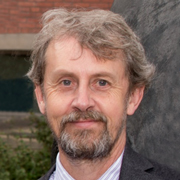
<p>The first world is concerned about food quality of their population, and is increasingly investing in research and public policies aimed at healthy eating and sustainable food production. In England, for example, eight leading universities have joined forces to launch the <i>N8 Agrifood Programme</i>, a project focused on the sustainability of supply chains and food <span>health</span>. English agro-ecologist Leslie Firbank, a professor at the University of Leeds and one of the scientists leading the <i>N8 Agrifood</i>, has visited the IEA to speak precisely about sustainability in agriculture, an issue that he heads next to the international program.</p>
<p>At the conference <i><i>Can we achieve sustainable agriculture?</i></i>, given on September 5, Firbank advocated a concept derived from the famous definition of the Brundtland Report. For the scientist, sustainability in agriculture must meet today's needs without compromising the needs of the future.</p>
<table class="tabela-direita">
<tbody>
<tr>
<th><img src="https://www.iea.usp.br/imagens/agricultura-leslie-firbank-1" alt="Agricultura - Leslie Firbank 1" class="image-inline" title="Agricultura - Leslie Firbank 1" /></th>
</tr>
<tr>
<td>
<p><strong>Agro-ecologist Leslie Firbank, from the University of Leeds</strong></p>
</td>
</tr>
</tbody>
</table>
<p>"This involves the production of biomass and fiber, animal husbandry, the health of farmers and consumers, as well as the financial needs of the productive chains, and also the maintenance and conservation of ecosystem services. But there is always the danger of leaving the <span>track and forgetting that sustainability is also about looking at the needs of future generations," he said.</span></p>
<p>Future needs will depend on the natural capital that we conserve now, but the companies are not giving due respect to this assumption, Firbank showed. England faces a serious problem with land available for agriculture. Soil carbon has been reduced to drastic levels due to the intensive agricultural use for decades. "T<span>he soil is e</span>ither incredibly dry or totally wet, until the crops get decimated," he said.</p>
<p>Soil and climate conditions have led Britain to become an importer of wheat, one of its main crops in the past. The region is also facing new diseases of their livestock. "But people do not give due weight to it and do not even know where <span>food</span> comes from or how it is produced. There is a mindset that if we do not produce, we can buy from anything from any other country that does," he said.</p>
<p><span>Expert in animal bioscience </span><a href="https://www.iea.usp.br/en/persons/speakers/helen-miller" class="external-link">Helen Miller</a><span>, also from the University of Leeds, took part in the debate, which has been moderated by </span><a href="https://www.iea.usp.br/en/persons/researchers/pablo-mariconda" class="external-link">Pablo Mariconda</a><span>, a professor at USP's Faculty of Philosophy, Languages and Literature, and Human Sciences (FFLCH), and coordinator of the </span><a href="https://www.iea.usp.br/en/research/research-groups/philosophy-history-sociology-of-science-and-technology" class="external-link">IEA's Philosophy, History, and Sociology of Science and Technology Research Group</a><span>.</span></p>
<p><strong>Local solutions</strong></p>
<p>Unlike agriculture in the decades from 1970 to 1990, with the domination of an equal model for all types of farming, agricultural production of the new millennium will be characterized by the differentiation and diversity thanks to precision agriculture, according to Firbank's belief.</p>
<table class="tabela-esquerda">
<tbody>
<tr>
<th><img src="https://www.iea.usp.br/imagens/agricultura-leslie-firbank-4" alt="Agricultura - Leslie Firbank - 4" class="image-inline" title="Agricultura - Leslie Firbank - 4" /></th>
</tr>
<tr>
<td>
<p><strong>Precision agriculture: the needs of a varied diet</strong></p>
</td>
</tr>
</tbody>
</table>
<p>For the specialist, precision agriculture will gain great vitality, as it allows directing production according to demand. "We can think of local solutions for local needs using local expertise. Precision farming allows contemplating the differentiation and diversity <span>again, </span>and thus producing exactly what we want with the least possible impact on the landscape," he said.</p>
<p>Therefore, agricultural activities will need funding to develop. "Without funding, few will have access to cutting edge technologies. The fertilizers are much more accurate. Robotic systems allow determining the ideal diet for each animal. But all this innovation requires money. Then there is the danger that only large rural businesses will survive, or those with money to invest."</p>
<p>In addition, the rural sector has changed due to its own natural, social and economic conditions, with the advent of global climate change, increasing urbanization and new behaviors. "What used to work 20 or 30 years ago is no longer a solution because society has different needs," he says.</p>
<p><strong><span>Management of d</span>emand </strong></p>
<p>Firbank has noted that food production in 2009 tripled in comparison to the 1960s and thus the world has no problem of production but of food distribution. Nevertheless, there are still many unmet needs for agriculture, and even then, we are pushing the limits of the carrying capacity of terrestrial systems.</p>
<p>"We still have an unresolved issue about whether we can live safely operating only in the same land space already used and if it will be able to meet everyone fairly. This does not have to do with agriculture only but also with industries and other sectors, and with how wealth is distributed on the planet," he said.</p>
<p>For the specialist, the agriculture of the future will have to face the challenge of food demand management, reducing losses in the field, transportation and storage. Moreover, the quality of food supply at affordable prices is a matter of political decision. "In England, we have food banks that markets and distributors put available to the public when the product is close to expire," he said.</p>
<p>Food security will also involve the strengthening of productive chains so that they are able to get along with production and price shocks. But not only that. Public policies should promote healthy eating.</p>
<table class="tabela-direita">
<tbody>
<tr>
<th><img src="https://www.iea.usp.br/imagens/agricultura-leslie-firbank-3" alt="Agricultura - Leslie Firbank - 3" class="image-inline" title="Agricultura - Leslie Firbank - 3" /></th>
</tr>
<tr>
<td>
<p><strong>"People do not know the origin of food anymore. Milk comes in bottles and meat is a supermarket package," says Firbank</strong></p>
</td>
</tr>
</tbody>
</table>
<p>"In Leeds, life expectancy in the poorest places is five times lower than in the richest places and this has a close relationship with the quality of food. In this case, it is not about access to food, but food education and concern over what children eat," he said.</p>
<p><strong>Land value</strong></p>
<p>The availability of farmland is a widely debated issue in England, because the habitat have been destroyed over time and their preservation has been neglected. "Now, without the EU funding, it is likely that very little <span>of the natural habitat </span>will be left in England," he believes.</p>
<p>English cities are expanding and territory planning values the urban land to the detriment of rural areas. "The mentality is that we can buy food from other countries which are agricultural exporters, such as Brazil. But around the world, quality agricultural land is <span>increasingly </span>being found in the cities."</p>
<table class="tabela-esquerda-borda">
<tbody>
<tr>
<th>
<h3>Related material</h3>
<p><a href="https://www.iea.usp.br/en/media-library/video/can-we-achieve-sustainable-agriculture" class="external-link">Video </a>| <a href="https://www.iea.usp.br/en/media-library/photos/events-2016/can-we-achieve-sustainable-agriculture-september-5" class="external-link">Photos</a></p>
</th>
</tr>
</tbody>
</table>
<p>The labor market in rural areas is also neglected, said Firbank. "There is a lack of human capital in the countryside. It is increasingly rare to find people with skills, and committed to food and agriculture <span>in the area</span>. Young people do not see the agricultural area as a valuable career. A newly formed biologist would rather work with genetics, life sciences and related careers because they find them more attractive. "</p>
<p>The <i>N8 Agrifood Programme</i> and other public policies in Europe have been trying to change that. "People in general do not value the countryside. For them, milk comes from bottles and meat is a supermarket package. We are trying to get over this and one of the initiatives is <i>Farm Sunday</i>, an annual event in which hundreds of farms open their gates to the public and students can see how a farm is. Last year, 500,000 people attended the event," he said.</p>
<p><strong>More autonomous cities</strong></p>
<table class="tabela-direita">
<tbody>
<tr>
<th><img src="https://www.iea.usp.br/imagens/agricultura-leslie-firbank-5" alt="Agricultura - Leslie Firbank - 5" class="image-inline" title="Agricultura - Leslie Firbank - 5" /></th>
</tr>
<tr>
<td>
<p><strong>Community garden of USP's School of Public Health (above). Berlin-Tempelhof Airport, disabled in 2008 for community and leisure horticulture (below).</strong></p>
</td>
</tr>
<tr>
<td><img src="https://www.iea.usp.br/imagens/horta-berlim-1" alt="Horta Berlim - 1" class="image-inline" title="Horta Berlim - 1" /></td>
</tr>
</tbody>
</table>
<p>Facing the challenges, it is necessary to encourage the autonomy of cities as to the production of food, though many cities do not have space to produce food for everyone. "This is not about commodities. But instead of importing everything, we should encourage the production of vegetables and fruits for local consumption. In Leeds we do not have enough space to produce food for everyone. While it is desirable, I do not see urban agriculture as a political solution to food security problems," he says.</p>
<p>However, one can think of urban agriculture as an education movement, food culture and socialization more than one route of food supply. "We still have little statistics and it seems that urban agriculture still works more like a hobby or a supplement to the food that people already have. At the University of Leeds we have a vegetable garden as part of a research project. The place is really nice and at harvest times anyone can go there and get what they want. The area is twice this room here (IEA Events Room). But putting it in a broader context, would it be enough to feed all the people of the university?," asked Firbank.</p>
<p>Professor Thais Mauad, from USP's School of Medicine (FM), responsible for the community garden project of USP's School of Public Health (FSP) and coordinator of the <a href="https://www.iea.usp.br/en/news/new-study-groups-will-conduct-research-urban-agriculture-sao-paulo" class="external-link">IEA's Study Group on Urban Agriculture</a>, said that the urban gardens have indeed been fulfilling an important social role <span>in Brazil</span>.</p>
<p>"This is not to provide food in quantity for everyone, although many poor communities now have access to healthy and cheap food thanks to several projects of urban gardens. In fact, community gardens have been fulfilling a <span>relevant </span>social and educational role to all these populations," she said.</p>
<p style="text-align: right; "><span class="discreet">Photos: Pixabay; Leonor Calasans; Sylvia Miguel</span></p>]]></content:encoded>
    <dc:publisher>No publisher</dc:publisher>
    <dc:creator>Richard Meckien</dc:creator>
    <dc:rights>Original version in Portuguese by Sylvia Miguel.</dc:rights>
    
      <dc:subject>Agribusiness</dc:subject>
    
    
      <dc:subject>Urban agriculture</dc:subject>
    
    
      <dc:subject>Public Policies</dc:subject>
    
    
      <dc:subject>Environment</dc:subject>
    
    
      <dc:subject>Sustainability</dc:subject>
    
    
      <dc:subject>Engineering</dc:subject>
    
    
      <dc:subject>Research Group: Philosophy, History, and Sociology of Science and Technology</dc:subject>
    
    
      <dc:subject>Agro-ecology</dc:subject>
    
    
      <dc:subject>Biotechnology</dc:subject>
    
    <dc:date>2016-09-13T16:50:00Z</dc:date>
    <dc:type>Notícia</dc:type>
  </item>


  <item rdf:about="https://www.iea.usp.br/en/news/new-study-groups-will-conduct-research-urban-agriculture-sao-paulo">
    <title>New study group will conduct research on urban agriculture in São Paulo</title>
    <link>https://www.iea.usp.br/en/news/new-study-groups-will-conduct-research-urban-agriculture-sao-paulo</link>
    <description></description>
    <content:encoded xmlns:content="http://purl.org/rss/1.0/modules/content/"><![CDATA[<table class="tabela-direita">
<tbody>
<tr>
<th><img src="https://www.iea.usp.br/imagens/horta-da-faculdade-de-medicina-da-usp" alt="Horta da Faculdade de Medicina da USP" class="image-inline" title="Horta da Faculdade de Medicina da USP" /></th>
</tr>
<tr>
<td>
<p><strong>Community garden: the project has managed to involve students, staff and professors of the FM.</strong></p>
</td>
</tr>
</tbody>
</table>
<p><span>The Study Group on Urban Agriculture (GEAU) will hold debates and conduct studies on the theme "Urban and Peri-urban Agriculture in São Paulo: Possibilities, Connections and Contemporaneity". Approved by the IEA's Board on May 9, it will be coordinated by Professor Thais Mauad, from the USP's School of Medicine (FM), an expert in urban health and founder of the community garden at the FM.</span></p>
<p><span> </span>The GEAU will be hosted at the IEA for two years, producing scientific studies on Urban and Peri-urban Agriculture (UPA) with emphasis on the city of São Paulo and its metropolitan region (RMSP).</p>
<p><span>Among the activities that have already been planned is a seminar with the participation of professors and researchers from the University of Melbourne to be held <span>in August</span>. The debate will address the research topic of Professor Mauad: "Achieving sustainable food production and irrigation in São Paulo and Melbourne," which seeks to understand, improve and promote the resilience of urban food production systems in these two cities.</span></p>
<p><span>The schedule for 2017 includes the presentation of the studies' results, as well as the publication of articles and the participation of group members in conferences and seminars.</span></p>
<table class="tabela-esquerda">
<tbody>
<tr>
<th><img src="https://www.iea.usp.br/imagens/horta-do-iee" alt="Horta do IEE" class="image-inline" title="Horta do IEE" /></th>
</tr>
<tr>
<td>
<p><strong>The <span>garden </span>of the IEE is the result of the project <i>Criando Terra no IEE</i> ("Creating Earth at the IEE"), an example of urban gardening in an academic environment.<br /></strong></p>
</td>
</tr>
</tbody>
</table>
<p><span><span>The GEAU has six members and two collaborating researchers from different areas. Given its interdisciplinary approach, the group brings together experts from the FM, the USP's Faculty of Philosophy, Languages and Literature, and Human Sciences (FFLCH), the Graduation Program in Environmental Sciences (PROCAM) of the USP's Institute for Energy and Environment (IEE), the Getúlio Vargas Foundation and the Université Rennes 2.</span></span></p>
<p><span>The research team was the winner in the academic category of the 5th Fecomércio Sustainability Award in 2015, with the project "Urban Agriculture: Production, Retail and Food Consumption." For the members of the GEAU, the award is "a great step forward in spreading the importance of urban agriculture in Brazil and São Paulo."</span></p>
<p><span>The studies should contribute to the debate about the nature of actors, social relations, socio-spatial dynamics and impacts generated by the <span>UPA</span>. The understanding of the new socio-spatial configurations generated by this branch are important to foster the academic debate on the contemporary urban world, according to the project's proponents.</span></p>
<p><span>In addition to establishing partnerships and disseminating the concept of urban agriculture, the studies aim at contributing with theoretical and methodological frameworks to explain urban phenomena, especially regarding the situation of the city of São Paulo and Latin America.</span></p>
<table class="tabela-direita">
<tbody>
<tr>
<th><img src="https://www.iea.usp.br/imagens/horta-berlim-1" alt="Horta Berlim - 1" class="image-inline" title="Horta Berlim - 1" /></th>
</tr>
<tr>
<td>
<p><strong><span>The Berlin-Tempelhof airport was di</span>sabled in 2008 and turned into an horticulture and leisure space after the claiming of civil movements.</strong></p>
</td>
</tr>
</tbody>
</table>
<p> </p>
<p><strong><span>Study Group on Urban Agriculture </span>(GEAU)</strong></p>
<p><strong>Coordination</strong>: Thais Mauad (FM-USP)</p>
<p><strong>Vice-coordination</strong>: Valéria de Marcos (FFLCH-USP)</p>
<p><strong>Permanent members:</strong></p>
<p>Angélica Campos Nakamura, <span>Giulia Giacchè, </span><span>Guilherme Reis Ranieri, </span><span>Gustavo Nagib, </span><span>Luís Fernando Amato Lourenço and L</span><span>ya Cynthia Porto de Oliveira.</span></p>
<p><strong><span> </span><span>Collaborating researchers:</span></strong></p>
<p>Mário Aquino Alves and <span>Amalia Inés Geraiges de Lemos.</span></p>
<p> </p>
<p style="text-align: right; "> </p>
<p style="text-align: right; "><span class="discreet">Photos: HortaFSPUSP.blogspot.com.br / Cecília Bastos and Marcos Santos (JornalUSP)/ Sylvia Miguel (personal archive)</span></p>]]></content:encoded>
    <dc:publisher>No publisher</dc:publisher>
    <dc:creator>Richard Meckien</dc:creator>
    <dc:rights>Original version in Portuguese by Sylvia Miguel.</dc:rights>
    
      <dc:subject>Education</dc:subject>
    
    
      <dc:subject>Agro-ecology</dc:subject>
    
    
      <dc:subject>Sustainability</dc:subject>
    
    
      <dc:subject>Interdisciplinarity</dc:subject>
    
    
      <dc:subject>Society</dc:subject>
    
    
      <dc:subject>Food safety</dc:subject>
    
    
      <dc:subject>Environmental Policy</dc:subject>
    
    
      <dc:subject>Cities</dc:subject>
    
    <dc:date>2016-05-19T19:50:00Z</dc:date>
    <dc:type>Notícia</dc:type>
  </item>


  <item rdf:about="https://www.iea.usp.br/en/news/in-search-of-sustainable-agriculture">
    <title>In search of sustainable agriculture</title>
    <link>https://www.iea.usp.br/en/news/in-search-of-sustainable-agriculture</link>
    <description></description>
    <content:encoded xmlns:content="http://purl.org/rss/1.0/modules/content/"><![CDATA[<table class="tabela-direita">
<tbody>
<tr>
<th><img src="https://www.iea.usp.br/imagens/Leslie-Firbank-Perfil.jpg" alt="Leslie Firbank" class="image-inline" title="Leslie Firbank" /></th>
</tr>
<tr>
<td><strong><span style="text-align: justify; ">Agro-ecologist </span>Leslie Firbank</strong></td>
</tr>
</tbody>
</table>
<p><span style="text-align: justify; ">Agro-ecologist <a href="https://www.iea.usp.br/en/persons/speakers/copy_of_jane-ohlmeyer" class="external-link">L</a></span><a href="https://www.iea.usp.br/en/persons/speakers/copy_of_jane-ohlmeyer" class="external-link">eslie Firbank</a>, from the University of Leeds, will be at the IEA to discuss how and whether it is possible to achieve sustainable food production. At the conference <i>Can We Achieve Sustainable Agriculture?</i>, which takes place on <strong>September 5</strong><strong>,</strong><strong> at 2 pm</strong><strong>,</strong> in the IEA Events Room, he will make an analysis of the main <span>currently adopted </span>agricultural models and raise <span>evolution </span>possibilities of the practice in a time of climate change and population growth. The talk will be broadcast <a href="https://www.iea.usp.br/en/aovivo" class="external-link">live</a> by the IEA website.</p>
<p><span>In his presentation, Firbank will evaluate whether agriculture has been adopting</span><span> techniques that prioritize the quality of the land by maintaining the natural capital required for its use in the future. He argues that there is a "safe and just operating space" for agriculture, where food can be produced in sufficient quantity without harming the environment.</span></p>
<p><span>According to the researcher, it is possible to <span>accurately </span>quantify the environmental impact of agriculture through different techniques. The great difficulty is to judge whether a farm is within its safe and just operating space.</span></p>
<p>The conference is part of the activities of the Working Group on Agroecology of the <a href="https://www.iea.usp.br/en/research/research-groups/philosophy-history-sociology-of-science-and-technology" class="external-link">IEA's Philosophy, History, and Sociology of Science and Technology <span>Research Group</span></a>. The comments will be in charge of <a href="https://www.iea.usp.br/en/persons/speakers/helen-miller" class="external-link">Helen Miller</a>, also from the University of Leeds, and <a href="https://www.iea.usp.br/en/persons/speakers/jonathan-oxley" class="external-link">Jonathan Oxley</a>, from N8 Agrifood. The moderator will be philosopher <a href="https://www.iea.usp.br/en/persons/researchers/pablo-mariconda" class="external-link">Pablo Mariconda</a>, a professor at USP's Faculty of Philosophy, Languages and Literature, and Human Sciences (FFLCH), and coordinator of the research group.</p>]]></content:encoded>
    <dc:publisher>No publisher</dc:publisher>
    <dc:creator>Richard Meckien</dc:creator>
    <dc:rights></dc:rights>
    
      <dc:subject>Agribusiness</dc:subject>
    
    
      <dc:subject>Biodiversity</dc:subject>
    
    
      <dc:subject>Environmental Sciences</dc:subject>
    
    
      <dc:subject>Research Group: Philosophy, History, and Sociology of Science and Technology</dc:subject>
    
    
      <dc:subject>Agro-ecology</dc:subject>
    
    
      <dc:subject>Public event</dc:subject>
    
    <dc:date>2016-08-26T17:15:00Z</dc:date>
    <dc:type>Notícia</dc:type>
  </item>


  <item rdf:about="https://www.iea.usp.br/en/events/fair-data-fair-ontologies">
    <title>FAIR Data Requires FAIR Ontologies: how Do we Do?</title>
    <link>https://www.iea.usp.br/en/events/fair-data-fair-ontologies</link>
    <description></description>
    <content:encoded xmlns:content="http://purl.org/rss/1.0/modules/content/"><![CDATA[<div class="kssattr-target-parent-fieldname-text-69d0218562c643ad9cceea31ef7dd80d kssattr-macro-rich-field-view kssattr-templateId-widgets/rich kssattr-atfieldname-text " id="parent-fieldname-text-69d0218562c643ad9cceea31ef7dd80d">
<p><strong><a href="https://www.iea.usp.br/eventos/fair-data-ontologies" class="external-link">Clique aqui para a versão em Português</a></strong></p>
<p><span>The </span><a class="external-link" href="https://www.embrapa.br/busca-de-publicacoes/-/publicacao/1136670/implantacao-da-rede-tematica-go-fair-agro-brasil-primeiros-passos">GO FAIR Brazil Agriculture and Biodiversity Thematic Networks</a><span> invites to this lecture, which will address issues related to the FAIR principles, and to the construction and organization of ontologies through the presentation of AgroPortal and OntoPortal. Anyone interested in the topics of construction, organization, provision, and use of ontologies will be able to benefit from the presentation.</span></p>
<h3></h3>
<p><span><strong><strong>Presenter</strong></strong></span></p>
<a href="https://www.iea.usp.br/en/persons/speakers/clement-jonquet" class="external-link"> </a>
<p align="left"><a href="https://www.iea.usp.br/en/persons/speakers/clement-jonquet" class="external-link"></a><a href="https://www.iea.usp.br/en/persons/speakers/clement-jonquet"><span>Clement Jonquet</span></a> (INRAE-MISTEA/University of Montpellier-LIRMM)</p>
<p align="left"><strong><span>Moderator</span></strong></p>
<p align="left"><span><a href="https://www.iea.usp.br/en/persons/researchers/debora-drucker">Débora Drucker</a> (EMBRAPA)</span></p>
<h3><span>Registration</span></h3>
<p>Free and public event <strong>|</strong> Registration required<br />Online event <strong>|</strong> No attendance certification will be provided<br />The event will be held in English and there will be no simultaneous translation into Portuguese <strong>|</strong> Live transmission at <a href="https://www.iea.usp.br/aovivo" class="external-link">http://www.iea.usp.br/aovivo</a></p>
<h3><strong>Organization</strong></h3>
<p style="text-align: left; "><a class="external-link" href="http://saudeplanetaria.iea.usp.br/en/o-que-e-saude-planetaria/">Planetary Health</a></p>
</div>
<div></div>]]></content:encoded>
    <dc:publisher>No publisher</dc:publisher>
    <dc:creator>Richard Meckien</dc:creator>
    <dc:rights></dc:rights>
    
      <dc:subject>Planetary Health</dc:subject>
    
    
      <dc:subject>Public event</dc:subject>
    
    
      <dc:subject>Agro-ecology</dc:subject>
    
    
      <dc:subject>Philosophy of Science</dc:subject>
    
    <dc:date>2023-09-25T18:50:00Z</dc:date>
    <dc:type>Evento</dc:type>
  </item>


  <item rdf:about="https://www.iea.usp.br/en/media-library/photos/events-2016/can-we-achieve-sustainable-agriculture-september-5">
    <title>Can we Achieve Sustainable Agriculture? - September 5, 2016</title>
    <link>https://www.iea.usp.br/en/media-library/photos/events-2016/can-we-achieve-sustainable-agriculture-september-5</link>
    <description></description>
    
    <dc:publisher>No publisher</dc:publisher>
    <dc:creator>Richard Meckien</dc:creator>
    <dc:rights></dc:rights>
    
      <dc:subject>Agribusiness</dc:subject>
    
    
      <dc:subject>Biodiversity</dc:subject>
    
    
      <dc:subject>Environmental Sciences</dc:subject>
    
    
      <dc:subject>Research Group: Philosophy, History, and Sociology of Science and Technology</dc:subject>
    
    
      <dc:subject>Agro-ecology</dc:subject>
    
    <dc:date>2016-09-05T03:00:00Z</dc:date>
    <dc:type>Pasta</dc:type>
  </item>


  <item rdf:about="https://www.iea.usp.br/en/news/biota">
    <title>Biota-Synthesis calls for applications to select eight postdoctoral projects</title>
    <link>https://www.iea.usp.br/en/news/biota</link>
    <description></description>
    <content:encoded xmlns:content="http://purl.org/rss/1.0/modules/content/"><![CDATA[<table class="tabela-direita-300">
<tbody>
<tr>
<th><img src="https://www.iea.usp.br/imagens/agricultura-sustentavel" alt="Agricultura sustentável" class="image-inline" title="Agricultura sustentável" /></th>
</tr>
<tr>
<td><span class="discreet">Center will collaborate in the elaboration of public policies for sustainable agriculture and other areas</span></td>
</tr>
</tbody>
</table>
<p>The Biota-Synthesis, one of the centers of the <a class="external-link" href="https://fapesp.br/en/about">São Paulo Research Foundation</a> for problem-oriented projects, is calling for applications from those interested in competing for one of the eight vacancies to conduct postdoctoral research <strong>until 10:00 (UTC-3) am on March 14</strong>.</p>
<p>Although the postdoctoral positions are open to Brazilian and foreign researchers who have a PhD degree, fluency in Portuguese is desired to facilitate the discussion and dialogue with the different actors involved in the project. Candidates must present a project in the areas of modeling, ecosystem services, restoration, urban ecology, human health, climate change, nature-based solutions, and collaborative policy design. A same applicant can apply for more than one scholarship at the same time.</p>
<p>The desired profile for these postgraduates is of professionals with great ability to work collaboratively in teams, with high capacity for listening and dialogue with researchers and social actors with different backgrounds and professional experiences, in addition to the modeling and analysis capabilities that will be detailed for each profile. Each postdoctoral fellow will have a specific research project and supervisor, but it is expected that this group of fellows will work together, in close collaboration with the coordination team of the Biota-Synthesis.</p>
<table class="tabela-direita-300-borda">
<tbody>
<tr>
<td>
<h3><i>About the Center</i></h3>
<p><i>T<span>he "Center of Analysis and Synthesis of Nature-based Solutions" will be funded by FAPESP for a 5-year period (2022-2026) and brings together researchers from five universities, seven research institutes of the State of São Paulo and four NGOs, as well as technicians and decision makers from the State Secretariats of Infrastructure and Environment, Public Health, and Agriculture. The Center will be based at the IEA.</span></i></p>
<p><i>The goal of the Center is to support the State of São Paulo in the development of socio-environmental public policies related to agricultural sustainability, ecological restoration, zoonosis control, and disease prevention in urban areas, considering essentially nature-based solutions.</i></p>
<p><i>It will work following a "synthesis science" approach, with heterogeneous and collaborative working groups, which will meet periodically in an immersive way for brainstorming discussions. These meetings will be intercalated with the analysis and modeling of existing databases, where the active participation of postdoctoral fellows is expected.</i></p>
</td>
</tr>
</tbody>
</table>
<p>FAPESP postdoctoral fellowships are competitive (R$ 7,373.10 - approximately US$ 1,340.00) and granted for 24 months, with the possibility of extension for two additional years. The fellowships include a research contingency fund, equivalent to 10% of its annual value which should be spent on items directly related to the research activity.</p>
<p>Applications must be submitted through the following <a class="external-link" href="https://forms.gle/yVECcrK4eyq3Y5h16">form</a>. The necessary <span>documents are the following</span></p>
<p>• Curriculum Vitae following the FAPESP <a class="external-link" href="https://fapesp.br/6351/instructions-for-the-elaboration-of-a-curricular-summary">format</a>, including Lattes (for Brazilian candidates), ORCID, and Publon links, as well as citation indicators (e.g. number of publications and citations, H index); please indicate experience in teamwork and with the development of public policy, if applicable;</p>
<p>• Research statement specifying why the candidate is suitable for the fellowship position;</p>
<p>• Three reference persons who can be consulted if the candidate is selected for an interview.</p>
<p>For each of the 8 fellowships, 3-5 candidates will be selected for an interview (to be conducted virtually). The initial selection will consider the adequacy of the candidate to the fellowship profile, as well as the candidate's professional experience and publication records.</p>
<p>The interviews are expected to take place at the end of March/beginning of April, and the fellowship will begin in May, after validation of the selective process by FAPESP, according to the Foundations's <a class="external-link" href="https://fapesp.br/15095/norma-para-concessao-de-bolsas-de-pos-doutorado-vinculadas-a-projetos-tematicos">norms</a> (Portuguese only). All postdoctoral fellows will be formally linked to the <a class="external-link" href="https://prp.usp.br/pos-doutorado/">postdoctoral program</a> (Portuguese only) of the University of São Paulo.</p>
<p>More on each fellowship opportunity:</p>
<p>1 - <a href="https://www.iea.usp.br/en/research/research-opportunities/biota1" class="internal-link">Estimation and Prediction of Pollination and Associated Ecosystem in Agricultural Landscapes</a></p>
<p>2 - <a href="https://www.iea.usp.br/en/research/research-opportunities/biota-2" class="internal-link">Modeling Future Scenarios for Pollination and Associated Ecosystem Services in Face of Landscape and Climate Changes</a></p>
<p>3 - <a href="https://www.iea.usp.br/en/research/research-opportunities/biota3" class="internal-link">Supporting Decisions for Forest Ladscape Restoration and Forest-Based Economy</a></p>
<p>4 - <a href="https://www.iea.usp.br/en/research/research-opportunities/biota4" class="internal-link">Operationalizing Policies for Forest Landscape Restoration and Forest-Based Eonomy</a></p>
<p>5 - <a href="https://www.iea.usp.br/en/research/research-opportunities/biota5" class="internal-link">Regulation of Zoonotic Diseases in Urban and Rural Ladscapes</a></p>
<p>6 - <a href="https://www.iea.usp.br/en/research/research-opportunities/biota6" class="internal-link">Ecosystem Services Modeling and Human Weell-Being in Urban Landscapes</a></p>
<p>7 - <a href="https://www.iea.usp.br/en/research/research-opportunities/biota7" class="internal-link">Nature-Based Solutions (NBS) and Urban Interventions for Climate Adaptation in Urban Areas</a></p>
<p>8 - <a href="https://www.iea.usp.br/en/research/research-opportunities/biota8" class="internal-link">Collaborative Environmental Policy Design for the State of São Paulo</a></p>
<p><span>Should there be any questions, please send a message to </span><a class="mail-link" href="mailto:biotasintese@usp.br">biotasintese@usp.br</a><span>.</span></p>]]></content:encoded>
    <dc:publisher>No publisher</dc:publisher>
    <dc:creator>Richard Meckien</dc:creator>
    <dc:rights>Original version in Portuguese by Mauro Bellesa.</dc:rights>
    
      <dc:subject>Forestry</dc:subject>
    
    
      <dc:subject>Ecology</dc:subject>
    
    
      <dc:subject>Public Policies</dc:subject>
    
    
      <dc:subject>Bioeconomics</dc:subject>
    
    
      <dc:subject>Research</dc:subject>
    
    
      <dc:subject>Environment</dc:subject>
    
    
      <dc:subject>Sustainability</dc:subject>
    
    
      <dc:subject>Health</dc:subject>
    
    
      <dc:subject>Agro-ecology</dc:subject>
    
    
      <dc:subject>Biotechnology</dc:subject>
    
    <dc:date>2022-01-19T16:30:00Z</dc:date>
    <dc:type>Notícia</dc:type>
  </item>


</rdf:RDF>