<?xml version="1.0" encoding="utf-8" ?>
<rdf:RDF xmlns:rdf="http://www.w3.org/1999/02/22-rdf-syntax-ns#" xmlns:dc="http://purl.org/dc/elements/1.1/" xmlns:syn="http://purl.org/rss/1.0/modules/syndication/" xmlns="http://purl.org/rss/1.0/">


<channel rdf:about="https://www.iea.usp.br/search_rss">
  <title>Instituto de Estudos Avançados da Universidade de São Paulo</title>
  <link>https://www.iea.usp.br</link>

  <description>
    
            These are the search results for the query, showing results 1 to 15.
        
  </description>


  <image rdf:resource="https://www.iea.usp.br/logo.png" />

  <items>
    <rdf:Seq>
      
        <rdf:li rdf:resource="https://www.iea.usp.br/en/news/metropolises-in-crisis-water-management-in-Mexico-and-Spain" />
      
      
        <rdf:li rdf:resource="https://www.iea.usp.br/en/news/science-of-food-due-to-new-challenges" />
      
      
        <rdf:li rdf:resource="https://www.iea.usp.br/en/news/hydroelectric-generation-in-the-amazon" />
      
      
        <rdf:li rdf:resource="https://www.iea.usp.br/en/news/the-impact-of-climate-changes-in-megacities" />
      
      
        <rdf:li rdf:resource="https://www.iea.usp.br/en/news/journal-issue-102" />
      
      
        <rdf:li rdf:resource="https://www.iea.usp.br/en/news/consequences-of-environmental-disaster-mariana" />
      
      
        <rdf:li rdf:resource="https://www.iea.usp.br/en/news/the-challenges-to-agriculture-from-climate-change" />
      
      
        <rdf:li rdf:resource="https://www.iea.usp.br/en/media-library/photos/events-2014/verao-2013-14-e-cenarios-de-estresse-hidrico-19-de-marco-de-2014" />
      
      
        <rdf:li rdf:resource="https://www.iea.usp.br/en/news/spanish-sociologist-discusses-dialectic-environment" />
      
      
        <rdf:li rdf:resource="https://www.iea.usp.br/en/news/seminar-reflects-on-a-balanced-relationship-between-humans-and-the-environment" />
      
      
        <rdf:li rdf:resource="https://www.iea.usp.br/en/news/seminar-discusses-the-water-footprint-as-a-tool-for-analyzing-the-issue-of-water" />
      
      
        <rdf:li rdf:resource="https://www.iea.usp.br/en/news/seminar-discusses-strategies-political-intervention-environmental-governance" />
      
      
        <rdf:li rdf:resource="https://www.iea.usp.br/en/news/research-verifies-the-perception-of-young-people-about-sustainability-components" />
      
      
        <rdf:li rdf:resource="https://www.iea.usp.br/en/news/research-group-discusses-the-creation-of-a-rainforest-business-school" />
      
      
        <rdf:li rdf:resource="https://www.iea.usp.br/en/news/rainforest-continent-business-school-project-will-be-discussed-at-the-wilson-center" />
      
    </rdf:Seq>
  </items>

</channel>


  <item rdf:about="https://www.iea.usp.br/en/news/metropolises-in-crisis-water-management-in-Mexico-and-Spain">
    <title>Water management in large cities</title>
    <link>https://www.iea.usp.br/en/news/metropolises-in-crisis-water-management-in-Mexico-and-Spain</link>
    <description></description>
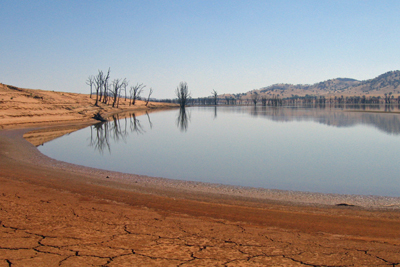
    <content:encoded xmlns:content="http://purl.org/rss/1.0/modules/content/"><![CDATA[<p>The experiences of large cities regarding their governance of water resources will be presented at the IEA by experts who will be in Brazil for the <i>V GovAgua - Water Governance Meeting</i>.</p>
<table class="tabela-esquerda">
<tbody>
<tr>
<th><img src="https://www.iea.usp.br/imagens/Escassez-Hidrica-sylvia-Tim-J-Keegan-flickr-copia.jpg" alt="Escassez Hídrica" class="image-inline" title="Escassez Hídrica" /></th>
</tr>
<tr>
<td><br /></td>
</tr>
</tbody>
</table>
<p>Entitled <i>Water Scarcity, Governance and Environmental Justice</i>, the meeting will be held in Spanish. It will take place on <strong>November 10</strong>, <strong>from 9.30 am to 12.30 pm</strong>, in the IEA's Events Room, with moderation of Professor Pedro Jacobi, coordinator of the IEA's Environment and Society research group.</p>
<p>"Metropolitan areas are experiencing prolonged drought crises. The experience shows that the models prioritize the supply of water to the detriment of demand control. The management models also fail to offer low investment in sewage treatment and water-free consumption, a scarce resource," says Professor Jacobi.</p>
<p>The panelists will examine the contexts of water scarcity in the world, the emergence of conflicts, and the reactions and responses of social actors  from the perspective of environmental justice.</p>
<p> </p>
<p><strong>The conferencists</strong></p>
<p><span>Geographer and historian </span><a class="external-link" href="https://grupo.us.es/giest/es/node/299">Leandro del Moral Ituarte</a><span>, who currently heads the Department of Human Geography at the University of Sevilla, specializes in hydraulic works. He has studied the lower basin of the Guadalquivir river, which bathes the territories of Andaluzia, in southern Spain.</span></p>
<p><a href="http://www.centre-cired.fr/spip.php?article749&amp;lang=fr" target="_blank">Bernard Barraqué</a>, research director at the Centre International de Recherche sur l'Environnement et le Développement of Le Centre National de la Recherche Scientifique, in Paris, has focused his recent studies on the allocation of water resources, evaluation of sustainable policies and methods,  institutional and participatory approaches, and comparative analysis of the sustainability of water management in major European cities. He also works at Agro ParisTech - École Nationale du Génie Rural, des Eaux et des Fôrets.</p>
<p>The participation of <a href="http://ugto.academia.edu/AlexRicardoCalderaOrtega" target="_blank">Alex Ricardo Caldera Ortega</a><span>, from the Department of Public Management and Development of the University of Guanajuato, has been cancelled due to the speaker's agenda.</span></p>
<p style="text-align: right; "><span class="discreet">Photo: Tim J. Keegan/Flickr</span></p>]]></content:encoded>
    <dc:publisher>No publisher</dc:publisher>
    <dc:creator>Richard Meckien</dc:creator>
    <dc:rights>Original version in Portuguese by Sylvia Miguel </dc:rights>
    
      <dc:subject>Europe</dc:subject>
    
    
      <dc:subject>Research Group: Environment and Society</dc:subject>
    
    
      <dc:subject>Power</dc:subject>
    
    
      <dc:subject>Interdisciplinarity</dc:subject>
    
    
      <dc:subject>Water</dc:subject>
    
    
      <dc:subject>Capitalism</dc:subject>
    
    
      <dc:subject>Environment</dc:subject>
    
    
      <dc:subject>Sustainability</dc:subject>
    
    
      <dc:subject>Globalization</dc:subject>
    
    
      <dc:subject>Inequality</dc:subject>
    
    
      <dc:subject>Poverty</dc:subject>
    
    
      <dc:subject>Environmental Policy</dc:subject>
    
    
      <dc:subject>Cities</dc:subject>
    
    <dc:date>2015-10-27T17:55:00Z</dc:date>
    <dc:type>Notícia</dc:type>
  </item>


  <item rdf:about="https://www.iea.usp.br/en/news/science-of-food-due-to-new-challenges">
    <title>The science of food due to new challenges</title>
    <link>https://www.iea.usp.br/en/news/science-of-food-due-to-new-challenges</link>
    <description></description>
    <content:encoded xmlns:content="http://purl.org/rss/1.0/modules/content/"><![CDATA[<table class="invisible">
<tbody>
<tr>
<th><img src="https://www.iea.usp.br/imagens/agricultura-leslie-firbank-2" alt="Agricultura - Leslie Firbank - 2" class="image-inline" title="Agricultura - Leslie Firbank - 2" /></th>
</tr>
</tbody>
</table>
<p>The first world is concerned about food quality of their population, and is increasingly investing in research and public policies aimed at healthy eating and sustainable food production. In England, for example, eight leading universities have joined forces to launch the <i>N8 Agrifood Programme</i>, a project focused on the sustainability of supply chains and food <span>health</span>. English agro-ecologist Leslie Firbank, a professor at the University of Leeds and one of the scientists leading the <i>N8 Agrifood</i>, has visited the IEA to speak precisely about sustainability in agriculture, an issue that he heads next to the international program.</p>
<p>At the conference <i><i>Can we achieve sustainable agriculture?</i></i>, given on September 5, Firbank advocated a concept derived from the famous definition of the Brundtland Report. For the scientist, sustainability in agriculture must meet today's needs without compromising the needs of the future.</p>
<table class="tabela-direita">
<tbody>
<tr>
<th><img src="https://www.iea.usp.br/imagens/agricultura-leslie-firbank-1" alt="Agricultura - Leslie Firbank 1" class="image-inline" title="Agricultura - Leslie Firbank 1" /></th>
</tr>
<tr>
<td>
<p><strong>Agro-ecologist Leslie Firbank, from the University of Leeds</strong></p>
</td>
</tr>
</tbody>
</table>
<p>"This involves the production of biomass and fiber, animal husbandry, the health of farmers and consumers, as well as the financial needs of the productive chains, and also the maintenance and conservation of ecosystem services. But there is always the danger of leaving the <span>track and forgetting that sustainability is also about looking at the needs of future generations," he said.</span></p>
<p>Future needs will depend on the natural capital that we conserve now, but the companies are not giving due respect to this assumption, Firbank showed. England faces a serious problem with land available for agriculture. Soil carbon has been reduced to drastic levels due to the intensive agricultural use for decades. "T<span>he soil is e</span>ither incredibly dry or totally wet, until the crops get decimated," he said.</p>
<p>Soil and climate conditions have led Britain to become an importer of wheat, one of its main crops in the past. The region is also facing new diseases of their livestock. "But people do not give due weight to it and do not even know where <span>food</span> comes from or how it is produced. There is a mindset that if we do not produce, we can buy from anything from any other country that does," he said.</p>
<p><span>Expert in animal bioscience </span><a href="https://www.iea.usp.br/en/persons/speakers/helen-miller" class="external-link">Helen Miller</a><span>, also from the University of Leeds, took part in the debate, which has been moderated by </span><a href="https://www.iea.usp.br/en/persons/researchers/pablo-mariconda" class="external-link">Pablo Mariconda</a><span>, a professor at USP's Faculty of Philosophy, Languages and Literature, and Human Sciences (FFLCH), and coordinator of the </span><a href="https://www.iea.usp.br/en/research/research-groups/philosophy-history-sociology-of-science-and-technology" class="external-link">IEA's Philosophy, History, and Sociology of Science and Technology Research Group</a><span>.</span></p>
<p><strong>Local solutions</strong></p>
<p>Unlike agriculture in the decades from 1970 to 1990, with the domination of an equal model for all types of farming, agricultural production of the new millennium will be characterized by the differentiation and diversity thanks to precision agriculture, according to Firbank's belief.</p>
<table class="tabela-esquerda">
<tbody>
<tr>
<th><img src="https://www.iea.usp.br/imagens/agricultura-leslie-firbank-4" alt="Agricultura - Leslie Firbank - 4" class="image-inline" title="Agricultura - Leslie Firbank - 4" /></th>
</tr>
<tr>
<td>
<p><strong>Precision agriculture: the needs of a varied diet</strong></p>
</td>
</tr>
</tbody>
</table>
<p>For the specialist, precision agriculture will gain great vitality, as it allows directing production according to demand. "We can think of local solutions for local needs using local expertise. Precision farming allows contemplating the differentiation and diversity <span>again, </span>and thus producing exactly what we want with the least possible impact on the landscape," he said.</p>
<p>Therefore, agricultural activities will need funding to develop. "Without funding, few will have access to cutting edge technologies. The fertilizers are much more accurate. Robotic systems allow determining the ideal diet for each animal. But all this innovation requires money. Then there is the danger that only large rural businesses will survive, or those with money to invest."</p>
<p>In addition, the rural sector has changed due to its own natural, social and economic conditions, with the advent of global climate change, increasing urbanization and new behaviors. "What used to work 20 or 30 years ago is no longer a solution because society has different needs," he says.</p>
<p><strong><span>Management of d</span>emand </strong></p>
<p>Firbank has noted that food production in 2009 tripled in comparison to the 1960s and thus the world has no problem of production but of food distribution. Nevertheless, there are still many unmet needs for agriculture, and even then, we are pushing the limits of the carrying capacity of terrestrial systems.</p>
<p>"We still have an unresolved issue about whether we can live safely operating only in the same land space already used and if it will be able to meet everyone fairly. This does not have to do with agriculture only but also with industries and other sectors, and with how wealth is distributed on the planet," he said.</p>
<p>For the specialist, the agriculture of the future will have to face the challenge of food demand management, reducing losses in the field, transportation and storage. Moreover, the quality of food supply at affordable prices is a matter of political decision. "In England, we have food banks that markets and distributors put available to the public when the product is close to expire," he said.</p>
<p>Food security will also involve the strengthening of productive chains so that they are able to get along with production and price shocks. But not only that. Public policies should promote healthy eating.</p>
<table class="tabela-direita">
<tbody>
<tr>
<th><img src="https://www.iea.usp.br/imagens/agricultura-leslie-firbank-3" alt="Agricultura - Leslie Firbank - 3" class="image-inline" title="Agricultura - Leslie Firbank - 3" /></th>
</tr>
<tr>
<td>
<p><strong>"People do not know the origin of food anymore. Milk comes in bottles and meat is a supermarket package," says Firbank</strong></p>
</td>
</tr>
</tbody>
</table>
<p>"In Leeds, life expectancy in the poorest places is five times lower than in the richest places and this has a close relationship with the quality of food. In this case, it is not about access to food, but food education and concern over what children eat," he said.</p>
<p><strong>Land value</strong></p>
<p>The availability of farmland is a widely debated issue in England, because the habitat have been destroyed over time and their preservation has been neglected. "Now, without the EU funding, it is likely that very little <span>of the natural habitat </span>will be left in England," he believes.</p>
<p>English cities are expanding and territory planning values the urban land to the detriment of rural areas. "The mentality is that we can buy food from other countries which are agricultural exporters, such as Brazil. But around the world, quality agricultural land is <span>increasingly </span>being found in the cities."</p>
<table class="tabela-esquerda-borda">
<tbody>
<tr>
<th>
<h3>Related material</h3>
<p><a href="https://www.iea.usp.br/en/media-library/video/can-we-achieve-sustainable-agriculture" class="external-link">Video </a>| <a href="https://www.iea.usp.br/en/media-library/photos/events-2016/can-we-achieve-sustainable-agriculture-september-5" class="external-link">Photos</a></p>
</th>
</tr>
</tbody>
</table>
<p>The labor market in rural areas is also neglected, said Firbank. "There is a lack of human capital in the countryside. It is increasingly rare to find people with skills, and committed to food and agriculture <span>in the area</span>. Young people do not see the agricultural area as a valuable career. A newly formed biologist would rather work with genetics, life sciences and related careers because they find them more attractive. "</p>
<p>The <i>N8 Agrifood Programme</i> and other public policies in Europe have been trying to change that. "People in general do not value the countryside. For them, milk comes from bottles and meat is a supermarket package. We are trying to get over this and one of the initiatives is <i>Farm Sunday</i>, an annual event in which hundreds of farms open their gates to the public and students can see how a farm is. Last year, 500,000 people attended the event," he said.</p>
<p><strong>More autonomous cities</strong></p>
<table class="tabela-direita">
<tbody>
<tr>
<th><img src="https://www.iea.usp.br/imagens/agricultura-leslie-firbank-5" alt="Agricultura - Leslie Firbank - 5" class="image-inline" title="Agricultura - Leslie Firbank - 5" /></th>
</tr>
<tr>
<td>
<p><strong>Community garden of USP's School of Public Health (above). Berlin-Tempelhof Airport, disabled in 2008 for community and leisure horticulture (below).</strong></p>
</td>
</tr>
<tr>
<td><img src="https://www.iea.usp.br/imagens/horta-berlim-1" alt="Horta Berlim - 1" class="image-inline" title="Horta Berlim - 1" /></td>
</tr>
</tbody>
</table>
<p>Facing the challenges, it is necessary to encourage the autonomy of cities as to the production of food, though many cities do not have space to produce food for everyone. "This is not about commodities. But instead of importing everything, we should encourage the production of vegetables and fruits for local consumption. In Leeds we do not have enough space to produce food for everyone. While it is desirable, I do not see urban agriculture as a political solution to food security problems," he says.</p>
<p>However, one can think of urban agriculture as an education movement, food culture and socialization more than one route of food supply. "We still have little statistics and it seems that urban agriculture still works more like a hobby or a supplement to the food that people already have. At the University of Leeds we have a vegetable garden as part of a research project. The place is really nice and at harvest times anyone can go there and get what they want. The area is twice this room here (IEA Events Room). But putting it in a broader context, would it be enough to feed all the people of the university?," asked Firbank.</p>
<p>Professor Thais Mauad, from USP's School of Medicine (FM), responsible for the community garden project of USP's School of Public Health (FSP) and coordinator of the <a href="https://www.iea.usp.br/en/news/new-study-groups-will-conduct-research-urban-agriculture-sao-paulo" class="external-link">IEA's Study Group on Urban Agriculture</a>, said that the urban gardens have indeed been fulfilling an important social role <span>in Brazil</span>.</p>
<p>"This is not to provide food in quantity for everyone, although many poor communities now have access to healthy and cheap food thanks to several projects of urban gardens. In fact, community gardens have been fulfilling a <span>relevant </span>social and educational role to all these populations," she said.</p>
<p style="text-align: right; "><span class="discreet">Photos: Pixabay; Leonor Calasans; Sylvia Miguel</span></p>]]></content:encoded>
    <dc:publisher>No publisher</dc:publisher>
    <dc:creator>Richard Meckien</dc:creator>
    <dc:rights>Original version in Portuguese by Sylvia Miguel.</dc:rights>
    
      <dc:subject>Agribusiness</dc:subject>
    
    
      <dc:subject>Urban agriculture</dc:subject>
    
    
      <dc:subject>Public Policies</dc:subject>
    
    
      <dc:subject>Environment</dc:subject>
    
    
      <dc:subject>Sustainability</dc:subject>
    
    
      <dc:subject>Engineering</dc:subject>
    
    
      <dc:subject>Research Group: Philosophy, History, and Sociology of Science and Technology</dc:subject>
    
    
      <dc:subject>Agro-ecology</dc:subject>
    
    
      <dc:subject>Biotechnology</dc:subject>
    
    <dc:date>2016-09-13T16:50:00Z</dc:date>
    <dc:type>Notícia</dc:type>
  </item>


  <item rdf:about="https://www.iea.usp.br/en/news/hydroelectric-generation-in-the-amazon">
    <title>The many faces of the new era of hydroelectric generation in the Amazon</title>
    <link>https://www.iea.usp.br/en/news/hydroelectric-generation-in-the-amazon</link>
    <description></description>
    <content:encoded xmlns:content="http://purl.org/rss/1.0/modules/content/"><![CDATA[<p style="text-align: justify; "><img src="https://www.iea.usp.br/imagens/amazoniacapajpg.jpg" alt="Amazônia - capa" class="image-right" title="Amazônia - capa" />Wrapped in the triad that comprises the Amazon rainforest, climate and energy generation, economic, social and environmental aspects will be analyzed at the debate "Amazon: The Old and the New Brazilian Hydroelectric Frontier", to be held on May 14, at 2 pm, in the IEA-USP’s Event Room.</p>
<p style="text-align: justify; ">The panelists of the meeting will be Celio Bermann, professor at USP’s <a class="external-link" href="http://www.iee.usp.br/">Institute for Energy and Environment (IEE)</a> and who will be participating via Skype, Gustavo Tosello Pinheiro, coordinator of Intelligent Infrastructure at The Nature Conservancy (TNC) in Brazil, João Andrade, coordinator of the <i>Iniciativa Defensa Socioambiental</i> (an initiative for social and environmental defense) at the Center for Life Institute (ICV), and Pedro Bara Neto, researcher of the Federal University of Rio de Janeiro’s (UERJ) Study Group on the Electricity Sector (GESEL).</p>
<p style="text-align: justify; ">Organized by <a href="https://www.iea.usp.br/en/research/research-groups/environmental-sciences" class="external-link">IEA-USP’s Environment and Society Research Group</a> in partnership with the IEE, and the School of Arts, Sciences and Humanities’s (EACH) <a class="external-link" href="https://uspdigital.usp.br/tycho/gruposPesquisaObter?codigoGrupoPesquisa=0067605FOISZ9K">research group on Environmental Planning and Management (PLANGEA)</a>, both of USP, the meeting will focus on two central questions:</p>
<ul style="text-align: justify; ">
<li><span>What is the scenario of social and environmental conflicts and challenges to the intensification of planning hydroelectric dams in the Amazon?</span></li>
<li><span>Which existing experiences in local development, environmental protection and analyzes of extreme weather events represent opportunities for the inclusion of these topics in various scales of planning hydroelectric dams in the Amazon?</span></li>
</ul>
<p style="text-align: justify; "> </p>
<p style="text-align: justify; "><strong>THEMED DEVELOPMENTS</strong></p>
<p style="text-align: justify; ">The Brazilian Amazon accounts for 51 % of all the hydroelectric potential of the country. However, according to Evandro Moretto, professor of EACH-USP, only a small part of this potential is exploited, since most mills in the region have been built in the 1960s and the 1970s, and in the following two decades there has been a significant expansion in infrastructure for power generation.</p>
<p style="text-align: justify; "><span>Only in the 2000s Brazil started to invest massively in expansion of hydroelectric capacity in the Amazon again. As pointed by Moretto, who will mediate the debate, the installation of more than 150 dams in the region is planned. The highlights are Jirau and Santo Antonio, on the Madeira River, Belo Monte, on the Xingu River, and the project of the basins of the Tapajós and Negro rivers.</span></p>
<p style="text-align: justify; ">According to the professor, discussions around that recovery involve a series of thematic developments - such as weather events, environmental protection and socioeconomic development - which will be addressed at the meeting. As an example, the mediator cites the period of prolonged drought this summer in Brazil, which led to the shortage of large water reservoirs in the Southeast and the Midwest, "while the gates of the plants on the Madeira were opened to let through the highest flow of the river in history in the wake of thousands homeless upstream and downstream of the dams."</p>
<p style="text-align: justify; "><span>Moretto also mentions the particularity of the situation of the Amazon region. On the one hand, it suffers the environmental impacts of large infrastructure projects. On the other hand, it is favored by various actions of environmental protection and local development, "which should not be neglected in planning hydropower projects, under penalty of the new plants being much more impactful and conflictive than Belo Monte already is."</span></p>
<p style="text-align: justify; "><strong>EVENT</strong></p>
<p style="text-align: justify; ">The completion of the discussion is supported by FAPESP, IEE-USP’s Graduate Program in Environmental Science (PROCAM), TNC, Brazilian Association of Impact Assessment (ABAI) and ICV.</p>
<p style="text-align: justify; "><span style="text-align: justify; ">The event will be broadcast live on the </span><a style="text-align: justify; " href="https://www.iea.usp.br/aovivo">web</a><span style="text-align: justify; ">.</span></p>]]></content:encoded>
    <dc:publisher>No publisher</dc:publisher>
    <dc:creator>Richard Meckien</dc:creator>
    <dc:rights></dc:rights>
    
      <dc:subject>Research Group: Environment and Society</dc:subject>
    
    
      <dc:subject>Water</dc:subject>
    
    
      <dc:subject>Commons</dc:subject>
    
    
      <dc:subject>Environment</dc:subject>
    
    
      <dc:subject>Amazon</dc:subject>
    
    <dc:date>2014-05-09T18:10:00Z</dc:date>
    <dc:type>Notícia</dc:type>
  </item>


  <item rdf:about="https://www.iea.usp.br/en/news/the-impact-of-climate-changes-in-megacities">
    <title>The impact of climate changes in megacities</title>
    <link>https://www.iea.usp.br/en/news/the-impact-of-climate-changes-in-megacities</link>
    <description></description>
    <content:encoded xmlns:content="http://purl.org/rss/1.0/modules/content/"><![CDATA[<table class="tabela-direita-400">
<tbody>
<tr>
<th><img src="https://www.iea.usp.br/imagens/temperaturas-superficiais-em-atlanta" alt="Variação da temperatura superficial em Atlanta" class="image-inline" title="Variação da temperatura superficial em Atlanta" /></th>
</tr>
<tr>
<td style="text-align: right; "><strong>Image of NASA showing the superficial temperature variation in Atlanta</strong></td>
</tr>
</tbody>
</table>
<p>The impact of climate changes in megacities is the subject of the fourth meeting of the cycle <i style="text-align: justify; ">Towards COP 21: The Groundwork to Paris – Climate Change, Adaptation, Solutions and Opportunities</i>. The debate will take place on <strong>November 19</strong>, <strong>at 9.30 am</strong>, in the IEA Events Room.</p>
<p><span style="text-align: justify; ">The event will be broadcast live on the </span><a style="text-align: justify; " href="https://www.iea.usp.br/aovivo">web</a><span style="text-align: justify; ">.</span></p>
<p>The title of the meeting is <i>Climate change and Megacities: Sustainable Mobility, Public Health and Growth Planning</i>. The panelists will be Luiz Firmino Pereira, Metropolitan Planning Superintendent of the Secretariat of <span>Rio de Janeiro's</span> State Government, and Silvio Barros, Secretary of Planning and General Coordination of Paraná's State Government. Coordination will be in charge of Tomas Alvim and Marisa Moreira Salles, both from the <a class="external-link" href="http://arqfuturo.com.br/">Arquivos do Futuro</a> organization, supporter of the cycle.</p>
<p><span><strong>Goals</strong></span></p>
<p><span style="text-align: justify; ">The cycle </span><span style="text-align: justify; ">seeks to identify and discuss opportunities to change patterns of emission of greenhouse gases. Another goal is to make a contribution to the Brazilian government and to the negotiators who will participate in the <a class="external-link" href="http://unfccc.int/meetings/paris_nov_2015/meeting/8926.php">Conference of Parties on Climate Change Conference (COP 21)</a> to be held in Paris, from November 30 to December 11.</span></p>
<table class="tabela-esquerda-300-borda">
<tbody>
<tr>
<td>
<h3>Related material</h3>
<p><strong>Cycle<br />TOWARDS COP 21</strong></p>
<p><strong><i>1st debate — Climate Changes and Water Crisis</i></strong></p>
<p><a href="https://www.iea.usp.br/en/midiateca/video/videos-2015/as-mudancas-climaticas-e-a-crise-hidrica-ciclo-tematico" class="external-link">Video</a><span> (in Portuguese) | </span><a href="https://www.iea.usp.br/en/media-library/photos/events-2015/as-mudancas-climaticas-e-a-crise-hidrica-ciclo-tematico-30-de-setembro-de-2015" class="external-link">Photos</a></p>
<p><i><strong>2nd debate — Energy and Climate Changes</strong></i></p>
<p><a href="https://www.iea.usp.br/en/midiateca/video/videos-2015/esperando-video-as-mudancas-climaticas-e-a-matriz-energetica-ciclo-tematico" class="external-link">Video</a> (in Portuguese) | <a href="https://www.iea.usp.br/en/media-library/photos/events-2015/as-mudancas-climaticas-e-a-matriz-energetica-ciclo-tematico-08-de-outubro-de-2015" class="external-link">Photos</a></p>
<p><i><strong>3rd debate — <a href="https://www.iea.usp.br/en/news/the-challenges-to-agriculture-from-climate-change" class="external-link">Climate Change and Food Security</a></strong></i></p>
<p><a href="https://www.iea.usp.br/en/midiateca/video/videos-2015/as-mudancas-climaticas-e-a-seguranca-alimentar-ciclo-tematico" class="external-link">Video</a> (in Portuguese) | <a href="https://www.iea.usp.br/en/media-library/photos/events-2015/as-mudancas-climaticas-e-a-seguranca-alimentar-ciclo-tematico-14-de-outubro-de-2015" class="external-link">Photos</a></p>
<hr />
<br />
<p><strong><a href="https://www.iea.usp.br/midiateca/video/videos-2015/las-negociaciones-climaticas-de-paris-2015-y-el-futuro-del-clima-planetario" class="external-link">Las Negociaciones Climáticas de París 2015 y el Futuro del Clima Planetario</a><span> – conference in Spanish with José Luis Lezama (Colegio de México)</span></strong></p>
<ul>
<li><a href="https://www.iea.usp.br/en/media-library/photos/events-2015/las-negociaciones-climaticas-de-paris-2015-y-el-futuro-del-clima-planetario-17-de-setembro-de-2105" class="external-link">Photos</a></li>
</ul>
</td>
</tr>
</tbody>
</table>
<p><span>Each debate has one or two coordinators who also act as moderators of a discussion with the panelists. The format aims to prioritize the dialogue between the panelists and the audience (in person or via internet).</span></p>
<p><span><strong>Document</strong></span></p>
<p>The results of the discussions will be consolidated in a document to be delivered to the Brazilian government and presented in side events at COP 21. After the conference in Paris there will be a new event in which the <span>achieved </span>results will be presented in order to suggests actions to be taken by countries, companies and the society.</p>
<p><span style="text-align: justify; ">The organizers of the cycle are: University of São Paulo, the <a class="external-link" href="http://www.incline.iag.usp.br/data/index_USA.php"><span style="text-align: justify; ">Interdisciplinary Climate Investigation center</span><span style="text-align: justify; "> (INCLINE)</span></a> and the <a href="https://www.iea.usp.br/en/research/research-groups/environmental-sciences" class="external-link">IEA’s Environment and Society </a><a style="text-align: justify; " href="https://www.iea.usp.br/en/research/research-groups/environmental-sciences" class="external-link">Research Group</a>. The project has the support of the Brazilian Chapter of the <a class="external-link" href="http://www.worldwatercouncil.org/">World Water Council</a>, the <a class="external-link" href="http://www.pactoglobal.org.br/">Brazilian Network of the Global Compact (UNGC)</a>, Arquivos do Futuro and CPFL Energia. Three USP professors are in charge of the overall organization: Weber Amaral (Luiz de Queiroz School of Agriculture), Tércio Ambrizzi (Institute of Astronomy, Geophysics and Atmospheric Sciences) and <a href="https://www.iea.usp.br/en/persons/researchers/pedro-roberto-jacobi" class="external-link">Pedro Jacobi</a> (IEA, FE and Procam-IEE).</span></p>
<p style="text-align: right; "><span class="discreet">Photo: <a class="external-link" href="https://en.wikipedia.org/wiki/File:Atlanta_thermal.jpg#file">NASA/Wikipedia</a></span></p>]]></content:encoded>
    <dc:publisher>No publisher</dc:publisher>
    <dc:creator>Richard Meckien</dc:creator>
    <dc:rights>Original version in Portuguese by Mauro Bellesa.</dc:rights>
    
      <dc:subject>Research Group: Environment and Society</dc:subject>
    
    
      <dc:subject>Climate Change</dc:subject>
    
    
      <dc:subject>Commons</dc:subject>
    
    
      <dc:subject>Glocal</dc:subject>
    
    
      <dc:subject>Transformation</dc:subject>
    
    
      <dc:subject>Environment</dc:subject>
    
    
      <dc:subject>Cities</dc:subject>
    
    
      <dc:subject>Event</dc:subject>
    
    <dc:date>2015-11-13T16:30:00Z</dc:date>
    <dc:type>Notícia</dc:type>
  </item>


  <item rdf:about="https://www.iea.usp.br/en/news/journal-issue-102">
    <title>The environment and cultural heritage are highlights of "Estudos Avançados" #102</title>
    <link>https://www.iea.usp.br/en/news/journal-issue-102</link>
    <description> </description>
    <content:encoded xmlns:content="http://purl.org/rss/1.0/modules/content/"><![CDATA[<p><img src="https://www.iea.usp.br/imagens/capa-da-revista-estudos-avancados-102" alt="Capa da revista Estudos Avançados 102" class="image-right" title="Capa da revista Estudos Avançados 102" /></p>
<p><span>Issue #102 of IEA's </span><span>quarterly publication, the journal </span><i><a class="external-link" href="https://www.scielo.br/j/ea/i/2020.v34n99/">Estudos Avançados</a>, </i><span>is now available </span><span>(Portuguese only) </span><span>for free download on the </span><a class="external-link" href="https://www.scielo.br/scielo.php?script=sci_issuetoc&amp;pid=0103-401420200002&amp;lng=pt&amp;nrm=iso">SciELO</a><span> platform, featuring the dossiers "Energy and Environment," "Hybrids of Knowledge," and "Religious Spaces."</span></p>
<p>According to the editor, <a href="https://www.iea.usp.br/en/persons/researchers/sergio-adorno" class="external-link">Sérgio Adorno</a><span>, the multiple facets of the dossier "Energy and Environment" pose strategic questions for sustainable development. "Regardless of the complexity that the relations between energy and environment raise, the dossier addresses problems that have been mobilizing the attention of the scientific community, at least of informed public opinion." Part of the articles deal with case studies, "suggestive of broader trends that are underway in the domain of these relations" between energy and environment, he says.</span></p>
<p><strong>Air quality</strong></p>
<p>According to the article that opens the dossier, "Analysis of Air Quality Monitoring in Brazil," written by researchers from the Health and Sustainability Institute, IEA, and USP's Medical School (FM), only ten states and the Federal District monitor air quality. This is carried out through 371 active stations, 80% of them in the Southeast Region. Five of these states communicate monitoring data <span>to the population</span><span> in real time. The authors emphasize that </span><span>the National Air Quality Network </span><span>is still incomplete</span><span> </span><span>30 years after its creation, "making it impossible for </span><span>environmental agencies</span><span> to adequately manage air quality."</span></p>
<p>Another article in the dossier, "Green Infrastructure to Monitor and Minimize the Impacts of Atmospheric Pollution," analyzes the role of trees in retaining particulate matter, one of the main air contaminants in cities, on their surface. The work has used samples of tree bark from five parks in the city of São Paulo.</p>
<p>The other five articles in the dossier address water integration on the Brazil-Uruguay border, the potential of the state of Rio Grande do Norte for the production of wind energy and the policies necessary for the production of this energy to be consolidated, the problems in the implementation of the Joint Urban Operation for the Port Region of Rio de Janeiro, the importance of biodiversity in the tropical forests of Africa and South America for the production of medicines, pesticides, and other products, and the approximation of the formulations of the Kaiowa and Guarani peoples of Mato Grosso do Sul to the reflections of political ecology.</p>
<p><strong>Climate Adaptation</strong></p>
<p>The second dossier, "Hybrids of Knowledge," brings together articles by members of IEA's research group <a href="https://www.iea.usp.br/en/research/research-groups/environmental-sciences" class="external-link">Environment and Society</a> and dialogues with the previous dossier by addressing issues such as climate adaptation at the local level (including a comparative study between Brazil and Portugal), and policies for water and water resources governance. The purpose of the dossier is "to promote the integration between different fields of knowledge from the perspectives of co-design, co-production, and co-dissemination," explains Adorno.</p>
<p>The article "Integrating Knowledge to Advance Climate Adaptation at the Local Level," written by researchers of USP, Ca' Foscari University of Venice, and Waikato University, warns that climate adaptation is a particularly urgent challenge for decision makers at the municipal and regional levels, considering the gaps in the development of local responses such as lack of data and political will or resources.</p>
<p>Are climate change adaptation policies, plans, and strategies adequately focused on achieving <span>justice,</span><span> reducing inequalities, and demanding rights? The issue is discussed in the article "Climate Justice and Adaptation Strategies to Climate Change in Brazil and Portugal." The study analyzes the scientific production </span><span>on climate justice </span><span>in both countries and discusses how their adaptation strategies and policies incorporate justice-related components.</span></p>
<p><span>The themes of the other three articles in the dossier are the challenges of water governance from the concept of hydrosocial territory, how this governance takes place in the Metropolitan Region of São Paulo, and the conflicts of water and sanitation policies as well as the universalization of these services as a common.</span></p>
<p>The approach to the themes of the dossier "focuses on the multiplicity of actors, interests, and disputes, which makes it possible to assess impacts on the aggravation of social inequalities and on the impasses in the guarantees of human rights for the greatest number of citizens," states the editor. In addition, the articles' methodological, systemic, and interactive approaches allow "knowing and evaluating ongoing experiments and innovations, pointing to a more sustainable future adapted to the scarcity of resources in the context of global environmental changes."</p>
<p><strong>Historical and artistic heritage</strong></p>
<p>The dossier "Religious Spaces" brings together texts presented at a seminar organized by IEA's research group <a href="https://www.iea.usp.br/en/news/time-memory-belonging" class="external-link">Time, Memory, and Belonging</a> in November 2019. The event took stock of current studies on historical and artistic heritage preserved in religious and institutional <span>Catholic </span><span>spaces in Brazil.</span></p>
<p><span>From the context of connected global/local histories, the text "Encrypted/Connected Paths: Jesuit Heritage between Rio de Janeiro and São Paulo" addresses the trajectories of destruction, dispersion, reconstruction, and preservation that marked the history of Jesuit heritage in the Southeast Region, particularly from the old schools in Rio de Janeiro and São Paulo, and from mission locations on the coast of these states.</span></p>
<p><span>In additional four articles, the dossier also discusses the decoration of the São Miguel Arcanjo Chapel, located in the East Zone of the city of São Paulo, the formation of the Jesuit Sacred Art Museum in Embu das Artes, the establishment of Catholic spaces by the black population of São Paulo in the 19th century, and the artistic aspect of the restoration of the Brazilian Benedictine Congregation, promoted by the Congregation of Beuron through the work of members of the Beuron Art School.</span></p>
<p><span>The list below contains the names of the authors who have contributed with each one of the addressed themes:</span></p>
<p><strong>Energy and Environment</strong></p>
<p><i>Evangelina da M. P. A. de Araújo Vormittag, Samirys Sara Rodrigues Cirqueira, Hélio W. Neto, and Paulo H. N. Saldiva<br /></i><i>Ana Paula G. Martins, Andreza P. Ribeiro, Maurício L. Ferreira, Marco Antonio G. Martins, Elnara M. Negri, Marcos Antônio Scapin, Anderson de Oliveira, Mitiko Saiki, Paulo H. N. Saldiva, and Raffaele Lafortezza<br />Fernanda de Moura Fernandes, Gilberto Loguercio Collares, and Rafael Corteletti<br />Gerbeson Carlos B. Dantas, Marcus V. S. Rodrigues, Leonardo M. X. Silva, Marisete D. de Aquino, and Antônio Clécio F. Thomaz<br />Eunice Helena S. Abascal and Carlos A. Bilbao<br />Paulo Roberto Feldmann<br />Spensy K. Pimentel</i></p>
<p><strong>Hybrids of Knowledge</strong></p>
<p dir="ltr"><i>Michele D. Fontana, Fabiano de A. Moreira, Silvia Serrao-Neumann, Giulia Lucertini, Denis Maragno, and Gabriela M. Di Giulio<br />Pedro Henrique Campello Torres, Alberto Matenhauer Urbinatti, Carla Gomes, Luísa Schmidt, Ana Lia Leonel, Sandra Momm, and Pedro Roberto Jacobi<br />Vanessa Lucena Empinotti, Natalia D. Tadeu, Maria Christina Fragkou, and Paulo Antonio de Almeida Sinisgalli<br />Mariana G. Arteiro da Paz, Ana Paula Fracalanza, Estela Macedo Alves, and Flávio J. Rocha da Silva<br />Pedro Roberto Jacobi, Marcos Buckeridge, and Wagner Costa Ribeiro</i></p>
<p><strong>Religious Spaces</strong></p>
<p dir="ltr"><i>Renata Maria de Almeida Martins<br />Thais Cristina Montanari<br />Angélica Brito Silva<br />Fabrício Forganes Santos<br />Klency Kakazu de Brito Yang</i></p>
<div id="_mcePaste">
<div class="tlid-results-container results-container">
<div class="tlid-result result-dict-wrapper">
<div class="result tlid-copy-target">
<div class="text-wrap tlid-copy-target"></div>
</div>
</div>
</div>
</div>]]></content:encoded>
    <dc:publisher>No publisher</dc:publisher>
    <dc:creator>Richard Meckien</dc:creator>
    <dc:rights>Original version in Portuguese by Mauro Bellesa.</dc:rights>
    
      <dc:subject>Water</dc:subject>
    
    
      <dc:subject>Biodiversity</dc:subject>
    
    
      <dc:subject>Energy</dc:subject>
    
    
      <dc:subject>Environment</dc:subject>
    
    
      <dc:subject>Design</dc:subject>
    
    
      <dc:subject>Publications</dc:subject>
    
    
      <dc:subject>Cultural and Historical Heritage</dc:subject>
    
    
      <dc:subject>Journal</dc:subject>
    
    <dc:date>2022-02-01T16:40:00Z</dc:date>
    <dc:type>Notícia</dc:type>
  </item>


  <item rdf:about="https://www.iea.usp.br/en/news/consequences-of-environmental-disaster-mariana">
    <title>The consequences of the environmental disaster in Mariana</title>
    <link>https://www.iea.usp.br/en/news/consequences-of-environmental-disaster-mariana</link>
    <description></description>
    <content:encoded xmlns:content="http://purl.org/rss/1.0/modules/content/"><![CDATA[<table class="tabela-direita">
<tbody>
<tr>
<th><img src="https://www.iea.usp.br/imagens/bento-rodrigues-devastado-pela-lama-da-samarco" alt="Bento Rodrigues devastado pela lama da Samarco" class="image-inline" title="Bento Rodrigues devastado pela lama da Samarco" /></th>
</tr>
<tr>
<td style="text-align: right; "><strong>
<div id="_mcePaste">Bento Rodrigues, a subdistrict of Mariana, ravaged</div>
<div id="_mcePaste">by the mud released by the disrupted dam of the miner Samarco</div>
</strong></td>
</tr>
</tbody>
</table>
<p class="mceContentBody documentContent">The disruption of a tailings dam in Mariana, in the State of Minas Gerais, on November 5, is the largest environmental disaster ever occurred in Brazil and one of the five largest in world history.</p>
<p class="mceContentBody documentContent">In addition to causing the death of 13 people (there are <span>still</span><span> </span><span>eight missing persons), destroying the homes of 250 families in the Mariana subdistricts, and several other social and economic impacts, the mudslide has affected water resources (especially the Doce River, until its mouth in the State of Espírito Santo), and terrestrial and marine ecosystems.</span></p>
<p class="mceContentBody documentContent">On <strong>December 7</strong>, <strong>at 2 pm</strong>, at the seminar <i>The Environmental Damage of Samarco - Impacts and Recovery</i>, five professors of USP, covering various disciplines, will explain the severity of the consequences of the disaster and what needs to be done for the environmental recovery of the affected areas.</p>
<p class="mceContentBody documentContent">The exhibitors and their topics will be:</p>
<p class="mceContentBody documentContent">Ana Paula Fracalanza (EACH and Procam-IEE-USP) - The Impacts on Water Resources</p>
<p class="mceContentBody documentContent">Luis Enrique Sánchez (EP-USP) - The recovery of degraded areas</p>
<p class="mceContentBody documentContent">Marcos Buckeridge (IB-USP) - The Impacts on Ecosystems</p>
<p class="mceContentBody documentContent">Pedro Luiz Cortês (ECA-USP) - The Dynamics of Tragedy</p>
<p class="mceContentBody documentContent"><a href="https://www.iea.usp.br/en/persons/researchers/pedro-roberto-jacobi" class="external-link">Pedro Jacobi</a> (IEA, FE and Procam-IEE-USP) - The Social Impacts</p>
<p class="mceContentBody documentContent">Moderation will be in charge of Jacobi, who coordinates the <a href="https://www.iea.usp.br/en/research/research-groups/environmental-sciences" class="external-link">IEA's Environment and Society Research Group</a>, organizer of the event.</p>
<p style="text-align: right; "><span class="discreet">Photo: Federal Senate</span></p>]]></content:encoded>
    <dc:publisher>No publisher</dc:publisher>
    <dc:creator>Richard Meckien</dc:creator>
    <dc:rights>Original version in Portuguese by Mauro Bellesa</dc:rights>
    
      <dc:subject>Water</dc:subject>
    
    
      <dc:subject>Research Group: Environment and Society</dc:subject>
    
    
      <dc:subject>Commons</dc:subject>
    
    
      <dc:subject>Environment</dc:subject>
    
    
      <dc:subject>Ecosystems</dc:subject>
    
    
      <dc:subject>Event</dc:subject>
    
    <dc:date>2015-12-01T11:25:00Z</dc:date>
    <dc:type>Notícia</dc:type>
  </item>


  <item rdf:about="https://www.iea.usp.br/en/news/the-challenges-to-agriculture-from-climate-change">
    <title>The Challenges to Agriculture from Climate Change</title>
    <link>https://www.iea.usp.br/en/news/the-challenges-to-agriculture-from-climate-change</link>
    <description></description>
    <content:encoded xmlns:content="http://purl.org/rss/1.0/modules/content/"><![CDATA[<p style="text-align: justify; "><img src="https://www.iea.usp.br/imagens/logo-da-cop21-1" alt="Logo da COP21 - 1" class="image-right" title="Logo da COP21 - 1" />After discussing Brazil’s water crisis and energy matrix in the first two debates, the cycle <i>Towards COP 21: The Groundwork to Paris</i> will dedicate the third meeting to the challenges to agriculture posed by climate change. The event will be held on October 14, at 9:30 am.</p>
<p class="Text" style="text-align: justify; ">The topic of debate will be <i>Climate Change and Food Security: Will We Be Able To Feed 10 Billion People?</i> Marcelo Vieira, from the Brazilian Rural Society, will be the speaker and moderator, and the panelists will be Paulo Faveret, from the National Bank for Economic and Social Development (BNDES); Luiz Fernando Amaral, from Rabobank; and Weber Amaral, from USP’s Luiz de Queiroz School of Agriculture.</p>
<p class="Text" style="text-align: justify; ">The main issues to be discussed are:</p>
<ul style="text-align: justify; ">
<li>How agriculture will feed 10 billion people</li>
<li>How to reconcile the production of food, fiber and energy in a sustainable and conscious manner</li>
<li>The role of agriculture as an important vector for adaptation and for reducing the emission of greenhouse gases</li>
<li>Agriculture as a key element for generating income and reducing the impacts on urban environments in a scenario of climate change and of economic, political and environmental instability.</li>
</ul>
<p style="text-align: justify; "> </p>
<table class="tabela-esquerda-200-borda">
<tbody>
<tr>
<th>
<h3><span>Related material</span></h3>
<p><a href="https://www.iea.usp.br/midiateca/video/videos-2015/las-negociaciones-climaticas-de-paris-2015-y-el-futuro-del-clima-planetario" class="external-link">Las Negociaciones Climáticas de París 2015 y el Futuro del Clima Planetario</a><span> – conference in Spanish with José Luis Lezama (Colegio de México)</span></p>
</th>
</tr>
</tbody>
</table>
<p style="text-align: justify; "><span><strong>THE CYCLE</strong></span></p>
<p style="text-align: justify; ">The cycle <i>Towards COP 21: The Groundwork to Paris – Climate Change, Adaptation, Solutions and Opportunities</i> seeks to identify and discuss opportunities to change patterns of emission of greenhouse gases. Another goal is to make a contribution to the Brazilian government and to the negotiators who will participate in the Conference of Parties on Climate Change Conference (COP 21) to be held in Paris, from November 30 to December 11.</p>
<p class="Text" style="text-align: justify; ">The organizers of the cycle are: University of São Paulo, the Interdisciplinary Climate Investigation center (INCLINE) and IEA’s Research Group Environment and Society. The project has the support of the Brazilian Chapter of the World Water Council, the Brazilian Network of the Global Compact (UNGC), Arquivos do Futuro and CPFL Energia. Three USP professors are in charge of the overall organization: Weber Amaral (Luiz de Queiroz School of Agriculture), Tércio Ambrizzi (Institute of Astronomy, Geophysics and Atmospheric Sciences) and Pedro Jacobi (IEA, FE and Procam-IEE).</p>]]></content:encoded>
    <dc:publisher>No publisher</dc:publisher>
    <dc:creator>Fernanda Rezende</dc:creator>
    <dc:rights>Translation by Carlos Malferrari</dc:rights>
    
      <dc:subject>Agribusiness</dc:subject>
    
    
      <dc:subject>Climate Change</dc:subject>
    
    
      <dc:subject>Commons</dc:subject>
    
    
      <dc:subject>Glocal</dc:subject>
    
    
      <dc:subject>Environment</dc:subject>
    
    
      <dc:subject>Event</dc:subject>
    
    <dc:date>2015-10-08T16:40:00Z</dc:date>
    <dc:type>Notícia</dc:type>
  </item>


  <item rdf:about="https://www.iea.usp.br/en/media-library/photos/events-2014/verao-2013-14-e-cenarios-de-estresse-hidrico-19-de-marco-de-2014">
    <title>Summer 2013/2014 and Scenarios of Water Stress - March 19, 2014</title>
    <link>https://www.iea.usp.br/en/media-library/photos/events-2014/verao-2013-14-e-cenarios-de-estresse-hidrico-19-de-marco-de-2014</link>
    <description></description>
    
    <dc:publisher>No publisher</dc:publisher>
    <dc:creator>Richard Meckien</dc:creator>
    <dc:rights></dc:rights>
    
      <dc:subject>Environment</dc:subject>
    
    
      <dc:subject>Research Group: Environment and Society</dc:subject>
    
    
      <dc:subject>Water</dc:subject>
    
    
      <dc:subject>Research Group: Philosophy, History, and Sociology of Science and Technology</dc:subject>
    
    <dc:date>2014-03-19T03:00:00Z</dc:date>
    <dc:type>Pasta</dc:type>
  </item>


  <item rdf:about="https://www.iea.usp.br/en/news/spanish-sociologist-discusses-dialectic-environment">
    <title>Spanish Sociologist Discusses the Dialectic of Structure and the Environment at the IEA</title>
    <link>https://www.iea.usp.br/en/news/spanish-sociologist-discusses-dialectic-environment</link>
    <description></description>
    <content:encoded xmlns:content="http://purl.org/rss/1.0/modules/content/"><![CDATA[<p style="text-align: justify; ">The organization of modern societies around the idea of “unlimited” growth generates a steady accumulation of goods and materials, the consequence of which has been social exclusion and an environmental crisis. The social sciences have the vital role of questioning this model that shaped the way we see the world.</p>
<p class="Text" style="text-align: justify; ">To demonstrate some conclusions of his thoughts on this issue, <a href="https://www.iea.usp.br/en/persons/speakers/aledo-tur" class="external-link">Antonio Aledo Tur</a>, professor of Sociology of the Environment at the <a class="external-link" href="http://www.ua.es/en/index.html">Universidad de Alicante</a> (Spain), will hold in the IEA’s Events Room a debate and a discursive analysis of what has taken place in Brazil with regard to dams. <i>El Paradigma de la Modernidad y sus Impactos Socioambientales</i> [<i>The Paradigm of Modernity and its Socio-Environmental Impacts</i>] is the theme of the conference, which will be held on <strong>September 23</strong>, <strong>from 10 am to 12 pm</strong>. The lecture (given in Spanish, without translation) is organized by the <a href="https://www.iea.usp.br/en/research/research-groups/environmental-sciences" class="external-link">IEA’s Environment and Society Research Group</a>, coordinated by <a href="https://www.iea.usp.br/en/persons/researchers/pedro-roberto-jacobi" class="external-link">Pedro Jacobi</a>, from USP’s School of Education.</p>
<table class="tabela-direita" style="text-align: justify; ">
<tbody>
<tr>
<th><img src="https://www.iea.usp.br/imagens/antonio-aledo-tur-72.jpg" alt="Antonio Aledo Tur" class="image-inline" title="Antonio Aledo Tur" /></th>
</tr>
<tr>
<td style="text-align: right; "><strong>Antonio Aledo Tur, a specialist in sociology of tourism and environmental sociology</strong></td>
</tr>
</tbody>
</table>
<p class="Text" style="text-align: justify; "><span>Aledo Tur’s research focuses on the dialectic between the imposition of the structures and the human ability to adapt to them, regardless of whether they are environmental, social, economic, political or cultural.</span></p>
<p class="Text" style="text-align: justify; "><span>His master’s dissertation, <i>The Colonization of Yucatan through its Vernacular Architecture</i> (Louisiana State University, 1992), and his doctoral thesis, <i>El Entorno de Conquista</i> (University of Alicante, 1997), show how the structures of architecture and urbanism establish a dialogue with the structures of the process of conquest and colonization of Mayan lands in the Yucatan region.</span></p>
<p class="Text" style="text-align: justify; "><span>In recent studies, Aledo Tur has turned his attention to tourism, seen as an activity that transformed the region and the society of Alicante. Research on residential tourism on the Spanish coast unfolded into analyses of the same subject in Brazil’s northeastern seaboard. This type of tourism has been a driver of employment and income generation in several Spanish and Brazilian coastal towns. But it is also having serious social and environmental impacts, especially because of the lack of planning that characterizes the constructions of this kind of enterprise.</span></p>
<p class="Text" style="text-align: justify; "><span>In addition to studies in the Sociology of Tourism, Aledo Tur has also dedicated himself to a line of research in the field of Environmental Sociology, where he specialized in analyses of the social and environmental impacts of major public works, such as dams and reservoirs, using participatory methods to diagnose the impacts. In particular, he has focused on the social impacts of the Panama Canal Expansion Project (2005-2006). In the light of political ecology, he analyzed the impact of large hydroelectric plants in the Paraná River, Brazil.</span></p>
<p style="text-align: justify; "><span><strong>The conferencist</strong></span></p>
<p style="text-align: justify; ">Aledo Tur graduated in Geography and History from the University of Alicante. He holds a master’s degree in Anthropology from Louisiana State University and a Ph.D. in Sociology from the University of Alicante. He was professor of Anthropology at the Catholic University of Murcia and at the University of Alicante. He is currently responsible for the disciplines of Environment and Methods and Techniques of Social Research in Tourism at Alicante, where he also coordinates the doctoral program of the Sociology department. He is coordinator of the Society and Environment Group of the Spanish Federation of Sociology, and of the Network of Spanish Environmental Sociologists.</p>
<p class="Text" style="text-align: justify; "><span>On April 18, 2013, he took part in the IEA’s conference on the problems of the Spanish Mediterranean, when he gave the lecture <i><a href="https://www.iea.usp.br/en/eventos/eventos-gerais/201csobre-la-incuestionabilidad-del-riesgo-el-modelo-inmobiliario-espanol-y-la-gestion-politica-de-los-territorios-y-comunidades-costeras201d-1" class="external-link">L</a><span><a href="https://www.iea.usp.br/en/eventos/eventos-gerais/201csobre-la-incuestionabilidad-del-riesgo-el-modelo-inmobiliario-espanol-y-la-gestion-politica-de-los-territorios-y-comunidades-costeras201d-1" class="external-link">a Incuestionabilidad del Riesgo: El Modelo Inmobiliario Español y la Gestión Política de los Territorios y Comunidades Costeras</a></span></i>.</span></p>]]></content:encoded>
    <dc:publisher>No publisher</dc:publisher>
    <dc:creator>Richard Meckien</dc:creator>
    <dc:rights>Original version in Portuguese by Sylvia Miguel. Translation by Carlos Malferrari.</dc:rights>
    
      <dc:subject>Environment</dc:subject>
    
    
      <dc:subject>Research Group: Environment and Society</dc:subject>
    
    
      <dc:subject>Ecology</dc:subject>
    
    
      <dc:subject>Sociology</dc:subject>
    
    <dc:date>2015-09-04T19:15:00Z</dc:date>
    <dc:type>Notícia</dc:type>
  </item>


  <item rdf:about="https://www.iea.usp.br/en/news/seminar-reflects-on-a-balanced-relationship-between-humans-and-the-environment">
    <title>Seminar reflects on a balanced relationship between humans and the environment</title>
    <link>https://www.iea.usp.br/en/news/seminar-reflects-on-a-balanced-relationship-between-humans-and-the-environment</link>
    <description></description>
    <content:encoded xmlns:content="http://purl.org/rss/1.0/modules/content/"><![CDATA[<p style="text-align: justify; "><img src="https://www.iea.usp.br/imagens/paisagem-no-rio-grande-do-sul" alt="Paisagem no Rio Grande do Sul" class="image-right" title="Paisagem no Rio Grande do Sul" />The <a href="https://www.iea.usp.br/en/research/research-groups/environmental-politics" class="external-link">IEA's Environmental Politics research group</a> will hold the international seminar <i>Landscapes: Home, Path and Water</i> <strong>from October 22 to 29</strong>, in three different venues. Researchers from Brazil, Italy and Portugal will reflect on the fundamental conditions for the establishment of a balanced relationship between humans and the environment.</p>
<p style="text-align: justify; "><span>According to Eda Tassara, coordinator of the research group, by addressing the presence and representation of home, path and water in the landscape and in the city, the seminar aims to "contribute to the intentional, poetic and shared construction of a more balanced social environment in the future in comparison to nowadays". She explains that the seminar's title is inspired in a statement by French geographer Jean Brunhes (1869-1930): "There are three key things to start a human community: home, path and water." She adds that psychologist Omar Ardans, from the Federal University of Santa Maria, by commenting on Brunhes's statement, said that its content "is in no way contradicted by the current state of life on the planet. On the contrary, it is even more modern than at the time of his writing."</span></p>
<p style="text-align: justify; "><span>However, there is one condition for the establishment of this balance, as Ardans's comment cited by the researcher: "That balance does not exist in (or to) a single individual, in a vacuum. Instead, the spaces of coexistence of this individual, and the participation in community and societal contexts define <span>the particular form of conquered balance (or, at worst, desired).</span>along with the physical environment and objects built by humans."</span></p>
<p style="text-align: justify; "><span>That's why, he said, "the first word for the proposed reflection should be 'city', privileged form of organization of the man on the grounds that he dwells." In support of this choice, Tassara points out that American urban planner and thinker Lewis Mumford (1895-1990) opened his book "The Culture of Cities" with a statement saying that the city "is the point of maximum concentration of force and culture in a community."</span></p>
<p style="text-align: justify; "><span>She also recalls that Italian philosopher Rosario Assunto (1915-1994) argued that "the concrete environment, the environment we live in and of which we live, is always the environment as a way of territory: a landscape". It follows that "landscape" is the second word of the seminar, "understood as the way that nature and man gave to the territory as they organized it on the basis of life."</span></p>
<p style="text-align: justify; "><span>Viewed from these perspectives, landscape and city can be understood as "more-than-spaces" inextricably linked, with the balance of the assembly having crucial importance for human life, but not just for it, according to Tassara. "Both our organic existence as the persistence of the very way of life of our community / society depend on this balance. Recognizing this mobilizes our reflection on the essential aspects of the human-environment relationship that is expressed in the countryside and in the cities."</span></p>
<p style="text-align: right; "><span class="discreet">Photo: <a class="external-link" href="http://www.flickr.com/photos/dpfeiffercardoso">Douglas Pfeiffer Cardoso/Flickr</a></span></p>]]></content:encoded>
    <dc:publisher>No publisher</dc:publisher>
    <dc:creator>Richard Meckien</dc:creator>
    <dc:rights>Original version in Portuguese by Mauro Bellesa</dc:rights>
    
      <dc:subject>Sociology</dc:subject>
    
    
      <dc:subject>Commons</dc:subject>
    
    
      <dc:subject>Research Group: Environmental Politics</dc:subject>
    
    
      <dc:subject>Environment</dc:subject>
    
    
      <dc:subject>Cities</dc:subject>
    
    
      <dc:subject>Event</dc:subject>
    
    <dc:date>2015-10-15T13:35:00Z</dc:date>
    <dc:type>Notícia</dc:type>
  </item>


  <item rdf:about="https://www.iea.usp.br/en/news/seminar-discusses-the-water-footprint-as-a-tool-for-analyzing-the-issue-of-water">
    <title>Seminar discusses the water footprint as a tool for analyzing the issue of water</title>
    <link>https://www.iea.usp.br/en/news/seminar-discusses-the-water-footprint-as-a-tool-for-analyzing-the-issue-of-water</link>
    <description>The event is an initiative of IEA's Environment and Society Research Group and will take place on October 16, at 10 am, in the Auditorium of USP's Museum of Contemporary Art (MAC).</description>
    <content:encoded xmlns:content="http://purl.org/rss/1.0/modules/content/"><![CDATA[<p style="text-align: justify; "><span><img src="https://www.iea.usp.br/imagens/graos-de-soja" alt="Grãos de soja" class="image-right" title="Grãos de soja" />From the recognition of the existence of virtual water flows through the distribution of consumer goods in different scales, water is now understood not only as a local natural resource but also as a global one. This new approach emphasizes the issue of water from new tools, such as the water footprint and its impact on how social actors position themselves and influence the management system of water resources.</span></p>
<p style="text-align: justify; ">To examine this approach, <a href="https://www.iea.usp.br/en/research/research-groups/environmental-sciences" class="external-link">IEA’s Environment and Society Research Group</a> will promote the seminar ‘Water Footprint: Innovation , Co-responsibility and the Challenges of its Application’ on October 16, at 10 am, in the Auditorium of USP’s Museum of Contemporary Art (MAC).</p>
<p style="text-align: justify; "><span>The seminar will discuss the following issues:</span></p>
<p style="text-align: justify; "><i>What would be the impact of this new approach with respect to environmental water needs?</i></p>
<p style="text-align: justify; "><i>How could the concept of virtual water and the water footprint method contribute to the development of standards that regulate the use of water resources or to the development of public policies?</i></p>
<p style="text-align: justify; "><i>How could these understandings impact land use practices, social relations and water use in different countries?</i></p>
<p style="text-align: justify; "><span>The panelists will be Jeroen Warner (University of Wageningen, Netherlands), Vanessa Empinotti (graduate in Environmental Science at USP), Paulo Sinisgalli (USP’s School of Arts, Sciences and Humanities) and Umberto Cinque (FIBRIA). The moderator will be Pedro Roberto Jacobi (coordinator of IEA’s research group and professor at USP’s Faculty of Education and USP’s Graduation Program in Environmental Sciences).</span></p>
<p style="text-align: justify; "><span><span style="text-align: justify; ">The event will be broadcast live from MAC'</span></span><span>s Auditorium at </span><a href="https://www.iea.usp.br/aovivo" target="_blank">www.iea.usp.br/aovivo</a><span>.</span></p>]]></content:encoded>
    <dc:publisher>No publisher</dc:publisher>
    <dc:creator>Richard Meckien</dc:creator>
    <dc:rights></dc:rights>
    
      <dc:subject>Environment</dc:subject>
    
    
      <dc:subject>Commons</dc:subject>
    
    <dc:date>2013-10-11T16:30:00Z</dc:date>
    <dc:type>Notícia</dc:type>
  </item>


  <item rdf:about="https://www.iea.usp.br/en/news/seminar-discusses-strategies-political-intervention-environmental-governance">
    <title>Seminar Discusses Strategies of Political Intervention for Environmental Governance</title>
    <link>https://www.iea.usp.br/en/news/seminar-discusses-strategies-political-intervention-environmental-governance</link>
    <description></description>
    <content:encoded xmlns:content="http://purl.org/rss/1.0/modules/content/"><![CDATA[<p><i>Global Environmental Change, Planning and Public Policies</i> is the name of the seminar that the <a href="https://www.iea.usp.br/en/research/research-groups/public-policies-territoriality-and-society" class="external-link">IEA’s Public Policies, Territoriality and Society Research Group</a> will hold <strong>from March 23 to 27, from 9 am to 6 pm</strong>, at the Institute’s Events Room.</p>
<p class="Text"><span>The meeting will discuss the potential and challenges of policy interventions for environmental governance and territorial planning, focusing on the role of civil society, on policy interventions based on scientific research, and on the tensions between governmental and non-governmental players in the decision-making process.</span></p>
<p class="Text"><span>The first three days of the meeting will be devoted to lectures, debates and workgroups on the three areas of discussion: environmental changes; participation and planning; and public policies. On the fourth day, the Public Policies, Territoriality and Society Research Group will present the academic activities it has been developing at the IEA. On the last day, theme-based workgroups will meet in interdisciplinary research workshops with the participation of professors, researchers and graduate and undergraduate students.</span></p>
<p class="Text"><span>Lecturers include members of the Research Group, professors at USP’s School of Arts, Sciences and Humanities (EACH) and members of the Grupo de Trabajo Cambio Ambiental Global, Cambio Climático, Movimientos Sociales y Políticas Públicas do Consejo Latinoamericano de Ciencias Sociales (Clacso).</span></p>
<p class="Text"><span>The organization of the event is headed by Neli Aparecida de Mello-Thery, professor at EACH and coordinator of the Research Group; Vivian Urquidi, professor at EACH and at the Graduate Program in Latin American Integration (PROLAM); and Suzana Lourenço and Luciana Borges, both doctoral students in Geography at USP’s Department of Geography.</span></p>
<p class="Text"><span>The seminar has the support of the Political Geography Laboratory (GeoPo), of PROLAM, of the Center for Research in International Affairs (Nupri) and of the Geography Department, all of them from the University of São Paulo; and of Clacso.</span></p>
<p class="Text"><span><span style="text-align: justify; ">The event will be broadcast live on the </span><a style="text-align: justify; " href="https://www.iea.usp.br/aovivo">web</a><span style="text-align: justify; ">.</span></span></p>]]></content:encoded>
    <dc:publisher>No publisher</dc:publisher>
    <dc:creator>Richard Meckien</dc:creator>
    <dc:rights>Carlos Malferrari (translator)</dc:rights>
    
      <dc:subject>Environment</dc:subject>
    
    
      <dc:subject>Public Policies</dc:subject>
    
    
      <dc:subject>Event</dc:subject>
    
    <dc:date>2015-03-06T20:05:00Z</dc:date>
    <dc:type>Notícia</dc:type>
  </item>


  <item rdf:about="https://www.iea.usp.br/en/news/research-verifies-the-perception-of-young-people-about-sustainability-components">
    <title>Research verifies the perception of young people about sustainability components</title>
    <link>https://www.iea.usp.br/en/news/research-verifies-the-perception-of-young-people-about-sustainability-components</link>
    <description></description>
    <content:encoded xmlns:content="http://purl.org/rss/1.0/modules/content/"><![CDATA[<table class="tabela-direita">
<tbody>
<tr>
<th><img src="https://www.iea.usp.br/imagens/seminario-use-of-geographic-methods-to-characterize-social-inequalities-29-03-2017" alt="Seminário Use of Geographic Methods to Characterize Social Inequalities - 29/03/2017" class="image-inline" title="Seminário Use of Geographic Methods to Characterize Social Inequalities - 29/03/2017" /></th>
</tr>
<tr>
<td><strong>British and Brazilian seminar participants</strong></td>
</tr>
</tbody>
</table>
<p>A new concept for the analysis of the sustainability conditions of urban and rural areas has been used by researchers in recent years. It is the "food-water-energy nexus" test, which seeks to examine the interrelationships of these three essential components of environmental and human quality. The subject was addressed in a public event on March 29, at the seminar <i>Use of geographic methods to characterize social inequalities</i>.</p>
<p>The seminar was organized by the IEA in partnership with the <a class="external-link" href="http://www.birmingham.ac.uk/research/activity/ias/index.aspx">Institute of Advanced Studies</a> of the University of Birmingham (UoB). Both Institutes are members the network <a class="external-link" href="http://www.ubias.net">University-Based Institutes for Advanced Study</a> (UBIAS) and have been carrying out several activities together in recent years.</p>
<p>Researchers from the UoB, and the universities of Leicester and Northampton participated as exhibitors. The commentator was Thais Mauad, a professor at USP's School of Medicine and coordinator of IEA's <a href="https://www.iea.usp.br/en/news/new-study-groups-will-conduct-research-urban-agriculture-sao-paulo" class="external-link">Study Group on Urban Agriculture</a> (GEAU). The meeting was coordinated by <a href="https://www.iea.usp.br/en/persons/researchers/ligia-barrozo" class="external-link">Ligia Vizeu Barrozo</a>, a professor at USP's Faculty of Philosophy, Languages and Literature, and Human Sciences (FFLCH), and coordinator of IEA's <a href="https://www.iea.usp.br/en/news/study-group-will-address-links-between-health-and-the-geographic-context-of-cities" class="external-link">Study Group on Urban Space and Health</a>.</p>
<p><span>The first panel of the meeting addressed the research <i>(Re)Connect the Nexus: Young Brazilians' Experiences of and Learning about Food, Water and Energy</i>, developed by researchers from the three British universities and the São Paulo State University (UNESP).</span></p>
<table class="tabela-direita-200-borda">
<tbody>
<tr>
<td>
<h3>Related material</h3>
<p><strong>Seminar 'Use of geographic methods to characterize social inequalities'</strong></p>
<p>NEWS</p>
<ul>
<li><a href="https://www.iea.usp.br/en/news/birmingham-researchers-present-studies-on-social-inequalities-in-brazil-and-india" class="external-link">Birmingham researchers present studies on social inequalities in Brazil and India</a></li>
</ul>
<p> </p>
<p>MEDIA LIBRARY</p>
<ul>
<li><a href="https://www.iea.usp.br/en/media-library/video/use-of-geographic-methods-to-characterize-social-inequalities" class="external-link">Video</a> | <a href="https://www.iea.usp.br/en/media-library/photos/events-2017/use-of-geographic-methods-to-characterize-social-inequalities-march-29-2017" class="external-link">Photos</a></li>
</ul>
<hr />
<br />
<p class="documentFirstHeading kssattr-atfieldname-title kssattr-templateId-kss_generic_macros kssattr-macro-title-field-view"><strong>Other conferences held by the Birmingham IAS at the IEA:</strong></p>
<p class="documentFirstHeading kssattr-atfieldname-title kssattr-templateId-kss_generic_macros kssattr-macro-title-field-view"><a href="https://www.iea.usp.br/en/media-library/video/washing-without-water-and-other-stories-of-innovation-accelerating-research-into-societal-innovation" class="external-link">Washing without Water and other Stories of Innovation: Accelerating research into societal innovation</a></p>
<p class="documentFirstHeading kssattr-atfieldname-title kssattr-templateId-kss_generic_macros kssattr-macro-title-field-view"><a href="https://www.iea.usp.br/en/media-library/video/saulbecker" class="external-link">Children Who Care - Global Perspectives on Children’s Hidden Care-Giving Roles within their Families</a></p>
</td>
</tr>
</tbody>
</table>
<p><span>The research is underway and aims to analyze the experiences of young people (10 to 24 years) in the Paraíba River Valley and the North Coast of the State of São Paulo with questions related to food, water resources and energy sources, as well as to verify what they know about the relationship between these three factors.</span></p>
<table class="tabela-direita-300">
<tbody>
<tr>
<th><img src="https://www.iea.usp.br/imagens/peter-kraftl-29-03-2017" alt="Peter Kraftl - 29/03/2017" class="image-inline" title="Peter Kraftl - 29/03/2017" /></th>
</tr>
<tr>
<td><strong>Peter Kraftl</strong></td>
</tr>
</tbody>
</table>
<p>Project coordinator <a href="https://www.iea.usp.br/en/persons/speakers/peter-frankl" class="external-link">Peter Kraftl</a>, from the UoB, talked about the objectives and methodology of the research, the concept of food-water-energy nexus and the questioning of this approach. According to him, the notion of nexus has been advocated primarily by researchers and policy makers in the US and the UK. "One of the questions we want to evaluate is whether this idea is relevant to Brazil."</p>
<p><span>While nexus-based thinking may be useful for policy-making groups, "it involves creating connections and examining trade-offs that end up in an <span>imposed</span> holism, reducing <span>complex </span><span>social and material</span> processes to mere components of the nexus, such as food and water," commented Kraftl. In his view, many researches ignore the reality of life of individuals and communities, and how they engage in the nexus.</span></p>
<p><span><span>Kraftl</span> said that one of the main problems for formulating public policies from the nexus analysis is to minimize the trade-off as much as possible, such as in the dilemma between planting to produce food or biofuels. He asked: "Who makes these decisions? How are they made? What are the advantages and disadvantages of each option?"</span></p>
<p><span>However, he considers that examining how young people and policy makers see the interweaving of the components of the nexus influences people's lives and work, and can favor sustainability education.</span></p>
<p><span>Besides Kraftl, the research was commented by Catherine Walker, from the University of Leicester, who dealt with interviews with leaders and professionals, and Cristiana Zara, from the UoB, who talked about the interviews with young people from the <span>Paraíba River Valley</span>.</span></p>
<p><span>Detailed reference interviews with 5,000 <span>young people</span> in the region began in March. In the same period, qualitative interviews began with 50 young people. A mobile application has been provided to respondents to record their daily experiences regarding food, water, and energy. By June, 50 policy makers, including educators and representatives of the private sector and government agencies, will also be interviewed.</span></p>
<p><span>The project is also holding a video contest. Ten videos will be online on YouTube for young people around the world to vote for their favorites.</span></p>
<p><span>Walker said that the interviews with leaders and professionals is helpful in understanding the context in which young people are growing, their access to resources, restrictions on access, and what they know about natural resources. One of the highlights of these interviews, she says, is the issue of rural exodus. "The young do not find opportunities for development and education in the countryside, and are attracted to cities by a variety of factors. This is worrying, since there are already large concentrations of people in the <span>Paraíba River Valley</span>. And as small food producers move to the city, the land ends up being occupied by intensive agriculture, which demands more water."</span></p>
<p><span>Safety in regard to water has also appeared prominently in the interviews, with many references to the water crisis of 2014/2015. "Several respondents pointed out that people are aware of the importance of resources when they become scarce, but they end up reverting to pre-crisis consumption habits when the supply normalizes."</span></p>
<p>Zara, in turn, pointed out that in the interviews that are being held with 5,000 youngsters they reveal their strong cultural involvement with food, with great appreciation for the role of food in favor of sociability. In the case of water, she said that there is an expansion of concepts about the various uses of the resource (food, sanitation, agriculture, energy production and industrial use), with the incorporation of the theme in education for sustainability," although this does not happen uniformly in the education system."</p>
<p><span>According to Zara, young people show a strong sense of individual responsibility for the proper use of natural resources. "For many of them, if everyone does their small part, this will encourage sustainable practices in the community. At the same time there is a strong sense of the political dimension of the issue, with the demand that the state should also play its part."</span></p>
<p><span>The <span>project led by</span> Kraftl is funded by the National Council of the State Research Support Foundations (via FAPESP) and two UK institutions: the Economic and Social Research Council (ESRC) and the Newton Fund.</span></p>
<table class="tabela-esquerda-300">
<tbody>
<tr>
<th><img src="https://www.iea.usp.br/imagens/sophie-hadfield-hill-29-03-2017" alt="Sophie Hadfield-Hill - 29/03/2017" class="image-inline" title="Sophie Hadfield-Hill - 29/03/2017" /></th>
</tr>
<tr>
<td><strong>Sophie Hadfield-Hill</strong></td>
</tr>
</tbody>
</table>
<p><strong>Urbanism in India</strong></p>
<p>The second part of the event dealt indirectly with aspects related to the nexus, but in the specific context of the Indian urban growth. The theme was the project <i>New Urbanisms in India: Urban Life, Sustainability and Everyday Life</i>, <span>also supported by the ESRC.</span> The speaker was <span>coordinator </span><a href="https://www.iea.usp.br/en/persons/speakers/sophie-hill" class="external-link">Sophie Hadfield-Hill</a>, from the UoB.</p>
<p>According to her, 590 million Indians will be living in cities by 2030, with 91 million middle-class families and 61 cities with more than 1 million inhabitants." The demands for thi<span>s urban growth w</span><span>ill require an investment of US$ 1.2 trillion.</span></p>
<p>Hadfield-Hill spoke about new housing developments under construction on the outskirts of Indian cities and threats to urban areas. "There is the pressure of population growth and migration on urban services, access to sanitation, water and energy, as well as impacts on land and other consequences of social inequality."</p>
<p>The main challenges are the provision of quality water, sewage collection and electricity supply. "According to the World Bank, only 16% of households have sewage collection. No Indian city has 24-hour water supply and only 1/4 of the population has access to electricity."</p>
<p>Despite all these difficulties for urban life in India, Prime Minister Narendra Modi, upon taking office in May 2014, proposed the creation of 100 smart cities, with the adaptation of existing cities and construction of entirely new cities, commented <span>Hadfield-Hill</span>. The proposal received several criticisms, she said, but 20 cities have already been selected through a national competition.</p>
<p>The Indian government defines smart cities as those that "care first about their most pressing needs and the best opportunities for improving the quality of life." They should use a range of approaches that include "digital and information technologies, best practices in urban planning, public-private partnerships, political change and thinking of people first," <span>Hadfield-Hill</span> said.</p>
<p>Among other initiatives, proposals for Indian smart cities include paving that captures the energy of moving cars, online water connections systems and smart bus stops.</p>
<p>As a case study she spoke about the construction of the city of <a class="external-link" href="http://lavasa.com">Lavasa</a> by a private enterprise. It will have five hubs (the first one is ready), house 300,000 inhabitants and receive 2 million tourists a year.</p>
<p>According to her, Lavasa is being built following <span>the principles of new urbanism. Some of them are: sustainability; planned growth of density (population decreases as households move away from the center); mix of housing types, including income groups; ease of access to general services (10 minute-walk from home or work to most of them); architectural quality and urban design.</span></p>
<p style="text-align: right; "><strong><span class="discreet">Photos: Marcos Santos/Jornal da USP</span></strong></p>]]></content:encoded>
    <dc:publisher>No publisher</dc:publisher>
    <dc:creator>Richard Meckien</dc:creator>
    <dc:rights>Original version in Portuguese by Mauro Bellesa.</dc:rights>
    
      <dc:subject>Research</dc:subject>
    
    
      <dc:subject>Environment</dc:subject>
    
    
      <dc:subject>Sustainability</dc:subject>
    
    
      <dc:subject>Cities</dc:subject>
    
    
      <dc:subject>Event</dc:subject>
    
    <dc:date>2017-04-18T13:50:00Z</dc:date>
    <dc:type>Notícia</dc:type>
  </item>


  <item rdf:about="https://www.iea.usp.br/en/news/research-group-discusses-the-creation-of-a-rainforest-business-school">
    <title>Research group discusses the creation of a Rainforest Business School</title>
    <link>https://www.iea.usp.br/en/news/research-group-discusses-the-creation-of-a-rainforest-business-school</link>
    <description>The project is aimed at training specialists in sustainable business in the Amazon, who should be able to harness the economic potential of the standing forest.</description>
    <content:encoded xmlns:content="http://purl.org/rss/1.0/modules/content/"><![CDATA[<p style="text-align: justify; ">The <i>Amazônia em Transformação: História e Perspectivas</i> (Amazon Transformation: History and Perspectives) research group held a roundtable on the theme Economic Valuation of the Standing Forest: New Perspectives for Human Resource Development at IEA on February 21st.</p>
<p style="text-align: justify; ">The meeting brought together a group of guests who play an important role in the environmental,climatic and Amazonian issues in order to present and discuss the proposed development of a Rainforest Business School. The initiative is aimed at training human resources in sustainable business in the Amazon, meeting the demand for specialists prepared to harness the economic potential of the standing forest.</p>
<p style="text-align: justify; "><img src="https://www.iea.usp.br/en/news/Semttulo.jpg" alt="Grupo Amazônia.jpg" class="image-left" title="Grupo Amazônia.jpg" /></p>
<p style="text-align: justify; ">Maritta Koch-Weser, coordinator of the group, opened the discussion with an introduction on the subject. José Pedro de Oliveira Costa, professor of the Architecture and Urbanism faculty at USP (FAU) and assistant coordinator of the group, brokered a debate about the strategic viability of the project in the context of environmental, scientific and academic policies as well as the opportunities of inter-institutional collaboration.</p>
<p style="text-align: justify; ">In the second part of the event, lawyer and environmentalist Fabio Feldmann, who is one of the founders of the NGO SOS Mata Atlântica, moderated a discussion among participants on lines of funding and co-financing for the preparation, planning and implementation of the "Rainforest Business School. Each stage should take about three years.</p>
<p style="text-align: justify; ">Lastly, Koch-Weser led a discussion on possible steps and commitments of collaboration and institutional contributions regarding the formatting of a work program for 2013.</p>
<p style="text-align: justify; ">From what has been discussed at the roundtable, agronomist Warwick Manfrinato and architect Maria de Lourdes Davies de Freitas, executive directors of the Amazônia em Transformação: História e Perspectivas research group, will take the creation of Rainforest Business School to the next step.</p>
<p style="text-align: justify; "> </p>
<p style="text-align: justify; "><a href="https://www.iea.usp.br/en/research/research-groups/amazon-transformation-history-and-perspectives/media-library/reuniao-grupo-amazonia-em-transformacao-historia-e-perspectiva-21-de-fevereiro-de-2013" class="external-link">Photos</a></p>
<p style="text-align: justify; "><a href="https://www.iea.usp.br/midiateca/video/videos-2013/valorizacao-economica-da-floresta-em-pe-novas-perspectivas-para-o-desenvolvimento-de-recursos-humanos" class="external-link">Video of the event</a> (in Portuguese)</p>
<p style="text-align: justify; "><a href="https://www.iea.usp.br/en/news/TranscriodeEventofinalinglsRainforestBusi1.pdf" class="internal-link">The meeting</a></p>]]></content:encoded>
    <dc:publisher>No publisher</dc:publisher>
    <dc:creator>Richard Meckien</dc:creator>
    <dc:rights></dc:rights>
    
      <dc:subject>Research Group: Amazon Transformation: History and Perspectives</dc:subject>
    
    
      <dc:subject>Environment</dc:subject>
    
    
      <dc:subject>Sustainability</dc:subject>
    
    
      <dc:subject>Amazon</dc:subject>
    
    
      <dc:subject>Transformation</dc:subject>
    
    <dc:date>2013-03-15T16:50:00Z</dc:date>
    <dc:type>Notícia</dc:type>
  </item>


  <item rdf:about="https://www.iea.usp.br/en/news/rainforest-continent-business-school-project-will-be-discussed-at-the-wilson-center">
    <title>Rainforest Continent Business School project will be discussed at the Wilson Center</title>
    <link>https://www.iea.usp.br/en/news/rainforest-continent-business-school-project-will-be-discussed-at-the-wilson-center</link>
    <description>A discussion on the Rainforest Continent Business School project will be held on May 15 at the Woodrow Wilson International Center for Scholars, Washington, USA.</description>
    <content:encoded xmlns:content="http://purl.org/rss/1.0/modules/content/"><![CDATA[<p><span style="text-align: justify; ">On May 15th, the Brazil Institute of the Woodrow Wilson International Center for Scholars, Washington, USA, will convene a group of experts interested in learning about and contributing to the creation of the “Rainforest Continent” Business School (RCBS).</span></p>
<p style="text-align: justify; ">The purpose of the meeting is to discuss the creation of the first business school dedicated to the preservation of tropical forests not only as an environmental priority, but also a business proposal. For the discussion, representatives of government agencies, NGOs, universities, private companies and international institutions were invited. The mediator will be anthropologist and environmentalist Maritta Koch-Weser, coordinator of the research group of IEA.</p>
<p style="text-align: justify; ">The proposed school aims at providing expert training for competitive, environmentally and socially sustainable, and science-based business development in tropical rainforests.  It will enable a new generation of professionals to realize the unique economic potential that can be realized within standing forests.</p>
<p style="text-align: justify; ">According to the environmentalist, although it is widely accepted that potentially the standing forest is worth more than the temporary economic benefits derived from its  destruction by activities such as logging, cattle ranching, agriculture and mining, the reality is that in Brazil and other countries that are home to forests there are no academic institutions that offer expertise in Rainforest Business and specialized training in the forest business. The RCBS was conceived to fill this gap.</p>
<p style="text-align: justify; ">The project originated at the University of São Paulo’s Institute of Advanced Studies with “Amazon Transformation: History and Perspectives”, a research group led by Ms. Koch-Weser. On February 21st, she led a comprehensive all-day <a href="https://www.iea.usp.br/en/news/research-group-discusses-the-creation-of-a-rainforest-business-school" class="external-link">discussion</a> of the RCBS project at the University of São Paulo with some thirty senior Brazilian experts from academia, government, multilateral agencies, as well as non-governmental organizations. The May 15th roundtable will bring together a similar group of experts from the United States.</p>
<p style="text-align: justify; "> </p>
<p style="text-align: justify; "><a href="https://www.iea.usp.br/en/news/RCBSApriltext112.pdf" class="internal-link">The project</a></p>
<p> </p>
<div id="_mcePaste" style="text-align: justify; "></div>]]></content:encoded>
    <dc:publisher>No publisher</dc:publisher>
    <dc:creator>Richard Meckien</dc:creator>
    <dc:rights></dc:rights>
    
      <dc:subject>Research Group: Amazon Transformation: History and Perspectives</dc:subject>
    
    
      <dc:subject>Environment</dc:subject>
    
    
      <dc:subject>Sustainability</dc:subject>
    
    
      <dc:subject>Amazon</dc:subject>
    
    
      <dc:subject>Transformation</dc:subject>
    
    <dc:date>2013-04-30T14:05:00Z</dc:date>
    <dc:type>Notícia</dc:type>
  </item>


</rdf:RDF>