<?xml version="1.0" encoding="utf-8" ?>
<rdf:RDF xmlns:rdf="http://www.w3.org/1999/02/22-rdf-syntax-ns#" xmlns:dc="http://purl.org/dc/elements/1.1/" xmlns:syn="http://purl.org/rss/1.0/modules/syndication/" xmlns="http://purl.org/rss/1.0/">


<channel rdf:about="https://www.iea.usp.br/search_rss">
  <title>Instituto de Estudos Avançados da Universidade de São Paulo</title>
  <link>https://www.iea.usp.br</link>

  <description>
    
            These are the search results for the query, showing results 11 to 25.
        
  </description>


  <image rdf:resource="https://www.iea.usp.br/logo.png" />

  <items>
    <rdf:Seq>
      
        <rdf:li rdf:resource="https://www.iea.usp.br/en/news/journal-87" />
      
      
        <rdf:li rdf:resource="https://www.iea.usp.br/en/news/hub-sao-carlos-holds-debate-consequences-of-the-disaster-in-mariana" />
      
      
        <rdf:li rdf:resource="https://www.iea.usp.br/en/news/consequences-of-environmental-disaster-mariana" />
      
      
        <rdf:li rdf:resource="https://www.iea.usp.br/en/news/the-impact-of-climate-changes-in-megacities" />
      
      
        <rdf:li rdf:resource="https://www.iea.usp.br/en/news/metropolises-in-crisis-water-management-in-Mexico-and-Spain" />
      
      
        <rdf:li rdf:resource="https://www.iea.usp.br/en/media-library/photos/events-2015/as-mudancas-climaticas-e-a-seguranca-alimentar-ciclo-tematico-14-de-outubro-de-2015" />
      
      
        <rdf:li rdf:resource="https://www.iea.usp.br/en/news/seminar-reflects-on-a-balanced-relationship-between-humans-and-the-environment" />
      
      
        <rdf:li rdf:resource="https://www.iea.usp.br/en/news/pro-reitoria-de-pesquisa-realiza-workshop-sobre-bioeconomia" />
      
      
        <rdf:li rdf:resource="https://www.iea.usp.br/en/news/the-challenges-to-agriculture-from-climate-change" />
      
      
        <rdf:li rdf:resource="https://www.iea.usp.br/en/media-library/photos/events-2015/as-mudancas-climaticas-e-a-crise-hidrica-ciclo-tematico-30-de-setembro-de-2015" />
      
      
        <rdf:li rdf:resource="https://www.iea.usp.br/en/media-library/photos/events-2015/las-negociaciones-climaticas-de-paris-2015-y-el-futuro-del-clima-planetario-17-de-setembro-de-2105" />
      
      
        <rdf:li rdf:resource="https://www.iea.usp.br/en/news/history-and-environment-necessary-dialogue" />
      
      
        <rdf:li rdf:resource="https://www.iea.usp.br/en/news/spanish-sociologist-discusses-dialectic-environment" />
      
      
        <rdf:li rdf:resource="https://www.iea.usp.br/en/news/jose-luis-lezama-discusses-the-outlook-for-climate-negotiations" />
      
      
        <rdf:li rdf:resource="https://www.iea.usp.br/en/news/seminar-discusses-strategies-political-intervention-environmental-governance" />
      
    </rdf:Seq>
  </items>

</channel>


  <item rdf:about="https://www.iea.usp.br/en/news/journal-87">
    <title>New issue of 'Estudos Avançados' analyzes the Brazilian labour market</title>
    <link>https://www.iea.usp.br/en/news/journal-87</link>
    <description></description>
    <content:encoded xmlns:content="http://purl.org/rss/1.0/modules/content/"><![CDATA[<p><img src="https://www.iea.usp.br/imagens/capa-da-revista-estudos-avancados-87" alt="Capa da revista 'Estudos Avançados' 87" class="image-right" title="Capa da revista 'Estudos Avançados' 87" />"Labour Market" is the theme of the main dossier of the 87th issue of the journal "Estudos Avançados", to be released in the last week of August. The issue contains other two thematic sections: "Energy and Environment" and "Culture and Politics".</p>
<p><span><span>The dossier resumes the discussion on <span>unemployment </span>begun in a previous issue w</span>ith seven articles by historians, sociologists and economists. The opening article, by Alexandre de Freitas Barbosa, from USP's Institute of Brazilian Studies (IEB), outlines the general characteristics of the labour market formation process in Brazil. The panorama analyzed by Barbosa addresses the colonial period up to the end of the process of industrialization (1930-80).</span></p>
<p><span>The set of texts also analyzes specific issues such as labour in the Northeast of Brazil, the effects of economic recession, the reduction of social protection of workers and inequality in the gender division of labour.</span></p>
<p>The section "Energy and Environment" contains five articles on national energy programs and shows that "conviviality is not always easy to ecological ideals and growth policies," according to the journal's editor, Alfredo Bosi.</p>
<p>This second aspect is discussed in an article by Helena Margarido Moreira and Wagner Costa Ribeiro on the position of China in the negotiations on climate change. The authors comment that China seeks to ensure the principle of differentiated responsibilities and be classified as a developing country, avoiding compromising its domestic goals of economic development. The same section presents texts on the interaction of botany and geography with anthropological and environmental bodies.</p>
<p>The articles of the section "Culture and Politics" address controversial issues of social sciences today: multiculturalism seen from the universal and the particular dialectic perspective; the analysis of the June 2013 demonstrations in Brazil from the perspective of the political culture of consumption; the debate on the relationship between science, expertise and democracy; and the treatment given by the media to the Quotas Act. The section also brings a history of the 25 years of work of the <i>Escola de Governo</i> (School of Government), an institution dedicated to explain the working mechanism of political institutions and to cooperate with the correction of the course of the Brazilian political life, according to one of its founders, jurist Fábio Konder Comparato.</p>
<p><span>Texts that address the indigenous people Arara Karo, computational complexity, and books on Walter Benjamin and Haiti complete the issue.</span></p>
<p>The list below contains the names of the authors who have contributed with each one of the addressed themes:</p>
<p><strong>Labour market</strong></p>
<p><i><i>Alexandre de Freitas Barbosa</i><br /></i><i><i>Monica Duarte Dantas<br /></i></i><i><i>Vivian Chieregati Costa<br /><i>Roberto Véras de Oliveira<br /><i>Magda Barros Biavaschi<br /><i>José Alcides Figueiredo Santos<br />Luiz Vicente Fonseca Ribeiro<br /><i>Maria Cristina Cacciamali<br />Fabio Tatei<br /><i>Luana Passos de Souza<br />Dyeggo Rocha Guedes</i> </i></i></i></i></i></i></p>
<p><strong>Energy and Environment</strong></p>
<p><i><i>Edgar Antonio Perlotti<br />Edmilson Moutinho dos Santos<br />Hirdan Katarina de Medeiros Costa<br /></i><i>Marcilei Andrea Pezenatto Vignatti<br />Luiz Fernando Scheibe<br /></i></i><i><i>Maria Assunta Busato<br /><i>Antonio Salatino<br />Marcos Buckeridge<br /><i>Raquel Dezidério Souto<br /><i>Helena Margarido Moreira<br />Wagner Costa Ribeiro</i> </i></i></i></i></p>
<p><span><strong>Culture and Politics</strong></span></p>
<p><i><i>Celso Frederico</i><br /></i><i><i>Isleide Fontenelle</i><br /></i><i><i>Maya Mitre</i><br /></i><i><i>Maria Salete Magnoni</i><br /></i><i>Fábio Konder Comparato</i></p>
<p><span><strong>Indigenism</strong></span></p>
<p><span> </span><i>Betty Mindlin</i></p>
<p><span> </span></p>
<p><strong><span> </span><span>Computation</span></strong></p>
<p><strong><span> </span></strong><i>José Roberto Castilho Piqueir</i><span>a</span></p>
<p><span> </span></p>
<p><strong><span> </span><span>Reviews</span></strong></p>
<p><strong><span> </span></strong><i>Fabio Mascaro Querido<br /></i><span><i>Cristine Koehler Zanella</i></span></p>
<p><span> </span></p>]]></content:encoded>
    <dc:publisher>No publisher</dc:publisher>
    <dc:creator>Richard Meckien</dc:creator>
    <dc:rights>Original version in Portuguese by Mauro Bellesa.</dc:rights>
    
      <dc:subject>Energy</dc:subject>
    
    
      <dc:subject>Work</dc:subject>
    
    
      <dc:subject>Environment</dc:subject>
    
    
      <dc:subject>Culture</dc:subject>
    
    
      <dc:subject>Politics</dc:subject>
    
    
      <dc:subject>Social Sciences</dc:subject>
    
    
      <dc:subject>Journal</dc:subject>
    
    <dc:date>2016-08-15T21:20:00Z</dc:date>
    <dc:type>Notícia</dc:type>
  </item>


  <item rdf:about="https://www.iea.usp.br/en/news/hub-sao-carlos-holds-debate-consequences-of-the-disaster-in-mariana">
    <title>IEA's São Carlos Center holds a debate on the consequences of the disaster in Mariana</title>
    <link>https://www.iea.usp.br/en/news/hub-sao-carlos-holds-debate-consequences-of-the-disaster-in-mariana</link>
    <description></description>
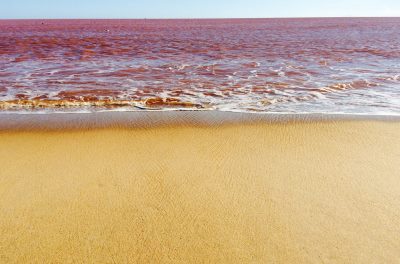
    <content:encoded xmlns:content="http://purl.org/rss/1.0/modules/content/"><![CDATA[<p><img src="https://www.iea.usp.br/polos/sao-carlos/debate_Mariana.jpg" alt="" class="image-left" title="" />Four months after the disruption of the Fundão tailings dam belonging to the mining company Samarco, the disaster that spread iron ore waste troughout the course of the Doce River is still in progress. Thousands of people of <span>the municipality of Mariana, where the catastrophe took place, and of other municipalities that depend on the affected river </span>have had their lives changed because of the toxic mud: coastal communities have lost their main livelihood and the water collection in several municipalities has been impaired.</p>
<p>To discuss the effects of the tragedy, which extends not only to environmental issues, <a href="https://www.iea.usp.br/en/hubs/sao-carlos-en" class="external-link">IEA's São Carlos Center</a> will hold the debate <i>The Doce River Valley: a Disaster in Progress </i>on <strong>March 31</strong>, at <strong>7.00 pm</strong>. The event will bring together four panelists and a moderator with different experiences on the subject. <span style="text-align: justify; ">The event will be broadcast live on the </span><a style="text-align: justify; " href="https://www.iea.usp.br/aovivo">web</a><span style="text-align: justify; ">.</span></p>
<p>Marcelo Tramontano and Luciano Costa, both professors at the USP's Institute of Architecture and Urbanism (IAU), will discuss the experience of traveling through <span>affected</span> areas. <span>Tramontano</span> took about ten days to travel from Mariana, <span>in the State of Minas Gerais, until Linhares, in the State of Espírito Santo, </span>where the mouth of Doce River is located. He has also visited the ports where the ore is shipped abroad: Camburi, in Vitória (the capital of Espírito Santo), where trains arrive after leaving the Doce River Valley; and Ubu, in the municipality of Anchieta, end point of the pipeline that brings the ore directly from Mariana.</p>
<p><span>During his trip, Tramontano interviewed experts, activists, politicians, researchers, environmentalists, and the inhabitants of the region, such as indians, people in riverine settlements and traders. The footage will be used in order to produce a documentary. "The disaster brought <span>the serious problems generated by mining activities</span> to light, an issue that is not restricted to Mariana. All populations <span>throughout the Doce River to the sea</span>, including fauna and flora, are in jeorpardy," said Tramontano.</span></p>
<p><span>Costa gave priority to small <span>cities and </span>local roads, trying to be as close to the Doce River <span>and its tributaries </span>as he could. Working with <span>Rafael Lazzarotto Simioni, a</span> professor at the Faculty of Law of Southern Minas Gerais (MSDS) and at the University of the Sapucaí Valley (UNIVÁS), he has visited two districts that have been completely destroyed by the mud (Camargos and Paracatu de Baixo), and further municipalities on the way to Linhares.</span></p>
<p><span>"Through the photographs that have been taken, our perspective is to bring a set of impressions on the local culture, on the Doce River Valley and on the economic corporations operating in the region beyond the disaster. The 'mud', in my view, has allowed the restoration of a forgotten link between the economic corporations and the<span> geographical space that the </span>Valley is, <span>often treated only as a resource,</span>" said Costa.</span></p>
<p><span>Professor <span>Reinaldo Duque Brasil, from </span>the Federal University of Juiz de Fora (UFJF), had a close experience with the problem. Besides being an expert in the Doce River Basin, he teaches at the UFJF campus of Governador Valadares, one of the cities that have suspended the water supply because of the contamination.</span></p>
<p><span>The group of debaters will be completed by Eduardo Mario Mendiondo, a professor at the USP's School of Engineering in São Carlos (EESC-USP), and general coordinator of the National Center for Monitoring and Natural Disaster Alerts of the Ministry of Science, Technology and Innovation (CEMADEN / MCTI). The moderator will be Marcel Fantin, a professor at the IAU and author of <i>Agregados Minerais, Meio Ambiente e Urbanização na Perspectiva das Políticas Públicas Canadenses: Províncias de Ontário e Québec</i> ("Mineral Aggregates, Environment and Urbanization in the Perspective of the Canadian Public Policy: Provinces of Ontario and Québec"), a book on Canadian public policy that addresses mineral aggregates and the insertion of the mining sector in the <span>process of </span>environmental, <span>urban and regional</span> planning.</span></p>
<p><span>The event is supported by the IAU and will be held in the Jorge Caron A<span>uditorium</span> on the USP's campus 1 in São Carlos.</span></p>]]></content:encoded>
    <dc:publisher>No publisher</dc:publisher>
    <dc:creator>Richard Meckien</dc:creator>
    <dc:rights>Original version in Portuguese by Thais Cardoso.</dc:rights>
    
      <dc:subject>Brazil</dc:subject>
    
    
      <dc:subject>Water</dc:subject>
    
    
      <dc:subject>São Carlos Center</dc:subject>
    
    
      <dc:subject>Environment</dc:subject>
    
    
      <dc:subject>Public event</dc:subject>
    
    <dc:date>2016-03-10T14:05:00Z</dc:date>
    <dc:type>Notícia</dc:type>
  </item>


  <item rdf:about="https://www.iea.usp.br/en/news/consequences-of-environmental-disaster-mariana">
    <title>The consequences of the environmental disaster in Mariana</title>
    <link>https://www.iea.usp.br/en/news/consequences-of-environmental-disaster-mariana</link>
    <description></description>
    <content:encoded xmlns:content="http://purl.org/rss/1.0/modules/content/"><![CDATA[<table class="tabela-direita">
<tbody>
<tr>
<th><img src="https://www.iea.usp.br/imagens/bento-rodrigues-devastado-pela-lama-da-samarco" alt="Bento Rodrigues devastado pela lama da Samarco" class="image-inline" title="Bento Rodrigues devastado pela lama da Samarco" /></th>
</tr>
<tr>
<td style="text-align: right; "><strong>
<div id="_mcePaste">Bento Rodrigues, a subdistrict of Mariana, ravaged</div>
<div id="_mcePaste">by the mud released by the disrupted dam of the miner Samarco</div>
</strong></td>
</tr>
</tbody>
</table>
<p class="mceContentBody documentContent">The disruption of a tailings dam in Mariana, in the State of Minas Gerais, on November 5, is the largest environmental disaster ever occurred in Brazil and one of the five largest in world history.</p>
<p class="mceContentBody documentContent">In addition to causing the death of 13 people (there are <span>still</span><span> </span><span>eight missing persons), destroying the homes of 250 families in the Mariana subdistricts, and several other social and economic impacts, the mudslide has affected water resources (especially the Doce River, until its mouth in the State of Espírito Santo), and terrestrial and marine ecosystems.</span></p>
<p class="mceContentBody documentContent">On <strong>December 7</strong>, <strong>at 2 pm</strong>, at the seminar <i>The Environmental Damage of Samarco - Impacts and Recovery</i>, five professors of USP, covering various disciplines, will explain the severity of the consequences of the disaster and what needs to be done for the environmental recovery of the affected areas.</p>
<p class="mceContentBody documentContent">The exhibitors and their topics will be:</p>
<p class="mceContentBody documentContent">Ana Paula Fracalanza (EACH and Procam-IEE-USP) - The Impacts on Water Resources</p>
<p class="mceContentBody documentContent">Luis Enrique Sánchez (EP-USP) - The recovery of degraded areas</p>
<p class="mceContentBody documentContent">Marcos Buckeridge (IB-USP) - The Impacts on Ecosystems</p>
<p class="mceContentBody documentContent">Pedro Luiz Cortês (ECA-USP) - The Dynamics of Tragedy</p>
<p class="mceContentBody documentContent"><a href="https://www.iea.usp.br/en/persons/researchers/pedro-roberto-jacobi" class="external-link">Pedro Jacobi</a> (IEA, FE and Procam-IEE-USP) - The Social Impacts</p>
<p class="mceContentBody documentContent">Moderation will be in charge of Jacobi, who coordinates the <a href="https://www.iea.usp.br/en/research/research-groups/environmental-sciences" class="external-link">IEA's Environment and Society Research Group</a>, organizer of the event.</p>
<p style="text-align: right; "><span class="discreet">Photo: Federal Senate</span></p>]]></content:encoded>
    <dc:publisher>No publisher</dc:publisher>
    <dc:creator>Richard Meckien</dc:creator>
    <dc:rights>Original version in Portuguese by Mauro Bellesa</dc:rights>
    
      <dc:subject>Water</dc:subject>
    
    
      <dc:subject>Research Group: Environment and Society</dc:subject>
    
    
      <dc:subject>Commons</dc:subject>
    
    
      <dc:subject>Environment</dc:subject>
    
    
      <dc:subject>Ecosystems</dc:subject>
    
    
      <dc:subject>Event</dc:subject>
    
    <dc:date>2015-12-01T11:25:00Z</dc:date>
    <dc:type>Notícia</dc:type>
  </item>


  <item rdf:about="https://www.iea.usp.br/en/news/the-impact-of-climate-changes-in-megacities">
    <title>The impact of climate changes in megacities</title>
    <link>https://www.iea.usp.br/en/news/the-impact-of-climate-changes-in-megacities</link>
    <description></description>
    <content:encoded xmlns:content="http://purl.org/rss/1.0/modules/content/"><![CDATA[<table class="tabela-direita-400">
<tbody>
<tr>
<th><img src="https://www.iea.usp.br/imagens/temperaturas-superficiais-em-atlanta" alt="Variação da temperatura superficial em Atlanta" class="image-inline" title="Variação da temperatura superficial em Atlanta" /></th>
</tr>
<tr>
<td style="text-align: right; "><strong>Image of NASA showing the superficial temperature variation in Atlanta</strong></td>
</tr>
</tbody>
</table>
<p>The impact of climate changes in megacities is the subject of the fourth meeting of the cycle <i style="text-align: justify; ">Towards COP 21: The Groundwork to Paris – Climate Change, Adaptation, Solutions and Opportunities</i>. The debate will take place on <strong>November 19</strong>, <strong>at 9.30 am</strong>, in the IEA Events Room.</p>
<p><span style="text-align: justify; ">The event will be broadcast live on the </span><a style="text-align: justify; " href="https://www.iea.usp.br/aovivo">web</a><span style="text-align: justify; ">.</span></p>
<p>The title of the meeting is <i>Climate change and Megacities: Sustainable Mobility, Public Health and Growth Planning</i>. The panelists will be Luiz Firmino Pereira, Metropolitan Planning Superintendent of the Secretariat of <span>Rio de Janeiro's</span> State Government, and Silvio Barros, Secretary of Planning and General Coordination of Paraná's State Government. Coordination will be in charge of Tomas Alvim and Marisa Moreira Salles, both from the <a class="external-link" href="http://arqfuturo.com.br/">Arquivos do Futuro</a> organization, supporter of the cycle.</p>
<p><span><strong>Goals</strong></span></p>
<p><span style="text-align: justify; ">The cycle </span><span style="text-align: justify; ">seeks to identify and discuss opportunities to change patterns of emission of greenhouse gases. Another goal is to make a contribution to the Brazilian government and to the negotiators who will participate in the <a class="external-link" href="http://unfccc.int/meetings/paris_nov_2015/meeting/8926.php">Conference of Parties on Climate Change Conference (COP 21)</a> to be held in Paris, from November 30 to December 11.</span></p>
<table class="tabela-esquerda-300-borda">
<tbody>
<tr>
<td>
<h3>Related material</h3>
<p><strong>Cycle<br />TOWARDS COP 21</strong></p>
<p><strong><i>1st debate — Climate Changes and Water Crisis</i></strong></p>
<p><a href="https://www.iea.usp.br/en/midiateca/video/videos-2015/as-mudancas-climaticas-e-a-crise-hidrica-ciclo-tematico" class="external-link">Video</a><span> (in Portuguese) | </span><a href="https://www.iea.usp.br/en/media-library/photos/events-2015/as-mudancas-climaticas-e-a-crise-hidrica-ciclo-tematico-30-de-setembro-de-2015" class="external-link">Photos</a></p>
<p><i><strong>2nd debate — Energy and Climate Changes</strong></i></p>
<p><a href="https://www.iea.usp.br/en/midiateca/video/videos-2015/esperando-video-as-mudancas-climaticas-e-a-matriz-energetica-ciclo-tematico" class="external-link">Video</a> (in Portuguese) | <a href="https://www.iea.usp.br/en/media-library/photos/events-2015/as-mudancas-climaticas-e-a-matriz-energetica-ciclo-tematico-08-de-outubro-de-2015" class="external-link">Photos</a></p>
<p><i><strong>3rd debate — <a href="https://www.iea.usp.br/en/news/the-challenges-to-agriculture-from-climate-change" class="external-link">Climate Change and Food Security</a></strong></i></p>
<p><a href="https://www.iea.usp.br/en/midiateca/video/videos-2015/as-mudancas-climaticas-e-a-seguranca-alimentar-ciclo-tematico" class="external-link">Video</a> (in Portuguese) | <a href="https://www.iea.usp.br/en/media-library/photos/events-2015/as-mudancas-climaticas-e-a-seguranca-alimentar-ciclo-tematico-14-de-outubro-de-2015" class="external-link">Photos</a></p>
<hr />
<br />
<p><strong><a href="https://www.iea.usp.br/midiateca/video/videos-2015/las-negociaciones-climaticas-de-paris-2015-y-el-futuro-del-clima-planetario" class="external-link">Las Negociaciones Climáticas de París 2015 y el Futuro del Clima Planetario</a><span> – conference in Spanish with José Luis Lezama (Colegio de México)</span></strong></p>
<ul>
<li><a href="https://www.iea.usp.br/en/media-library/photos/events-2015/las-negociaciones-climaticas-de-paris-2015-y-el-futuro-del-clima-planetario-17-de-setembro-de-2105" class="external-link">Photos</a></li>
</ul>
</td>
</tr>
</tbody>
</table>
<p><span>Each debate has one or two coordinators who also act as moderators of a discussion with the panelists. The format aims to prioritize the dialogue between the panelists and the audience (in person or via internet).</span></p>
<p><span><strong>Document</strong></span></p>
<p>The results of the discussions will be consolidated in a document to be delivered to the Brazilian government and presented in side events at COP 21. After the conference in Paris there will be a new event in which the <span>achieved </span>results will be presented in order to suggests actions to be taken by countries, companies and the society.</p>
<p><span style="text-align: justify; ">The organizers of the cycle are: University of São Paulo, the <a class="external-link" href="http://www.incline.iag.usp.br/data/index_USA.php"><span style="text-align: justify; ">Interdisciplinary Climate Investigation center</span><span style="text-align: justify; "> (INCLINE)</span></a> and the <a href="https://www.iea.usp.br/en/research/research-groups/environmental-sciences" class="external-link">IEA’s Environment and Society </a><a style="text-align: justify; " href="https://www.iea.usp.br/en/research/research-groups/environmental-sciences" class="external-link">Research Group</a>. The project has the support of the Brazilian Chapter of the <a class="external-link" href="http://www.worldwatercouncil.org/">World Water Council</a>, the <a class="external-link" href="http://www.pactoglobal.org.br/">Brazilian Network of the Global Compact (UNGC)</a>, Arquivos do Futuro and CPFL Energia. Three USP professors are in charge of the overall organization: Weber Amaral (Luiz de Queiroz School of Agriculture), Tércio Ambrizzi (Institute of Astronomy, Geophysics and Atmospheric Sciences) and <a href="https://www.iea.usp.br/en/persons/researchers/pedro-roberto-jacobi" class="external-link">Pedro Jacobi</a> (IEA, FE and Procam-IEE).</span></p>
<p style="text-align: right; "><span class="discreet">Photo: <a class="external-link" href="https://en.wikipedia.org/wiki/File:Atlanta_thermal.jpg#file">NASA/Wikipedia</a></span></p>]]></content:encoded>
    <dc:publisher>No publisher</dc:publisher>
    <dc:creator>Richard Meckien</dc:creator>
    <dc:rights>Original version in Portuguese by Mauro Bellesa.</dc:rights>
    
      <dc:subject>Research Group: Environment and Society</dc:subject>
    
    
      <dc:subject>Climate Change</dc:subject>
    
    
      <dc:subject>Commons</dc:subject>
    
    
      <dc:subject>Glocal</dc:subject>
    
    
      <dc:subject>Transformation</dc:subject>
    
    
      <dc:subject>Environment</dc:subject>
    
    
      <dc:subject>Cities</dc:subject>
    
    
      <dc:subject>Event</dc:subject>
    
    <dc:date>2015-11-13T16:30:00Z</dc:date>
    <dc:type>Notícia</dc:type>
  </item>


  <item rdf:about="https://www.iea.usp.br/en/news/metropolises-in-crisis-water-management-in-Mexico-and-Spain">
    <title>Water management in large cities</title>
    <link>https://www.iea.usp.br/en/news/metropolises-in-crisis-water-management-in-Mexico-and-Spain</link>
    <description></description>
    <content:encoded xmlns:content="http://purl.org/rss/1.0/modules/content/"><![CDATA[<p>The experiences of large cities regarding their governance of water resources will be presented at the IEA by experts who will be in Brazil for the <i>V GovAgua - Water Governance Meeting</i>.</p>
<table class="tabela-esquerda">
<tbody>
<tr>
<th><img src="https://www.iea.usp.br/imagens/Escassez-Hidrica-sylvia-Tim-J-Keegan-flickr-copia.jpg" alt="Escassez Hídrica" class="image-inline" title="Escassez Hídrica" /></th>
</tr>
<tr>
<td><br /></td>
</tr>
</tbody>
</table>
<p>Entitled <i>Water Scarcity, Governance and Environmental Justice</i>, the meeting will be held in Spanish. It will take place on <strong>November 10</strong>, <strong>from 9.30 am to 12.30 pm</strong>, in the IEA's Events Room, with moderation of Professor Pedro Jacobi, coordinator of the IEA's Environment and Society research group.</p>
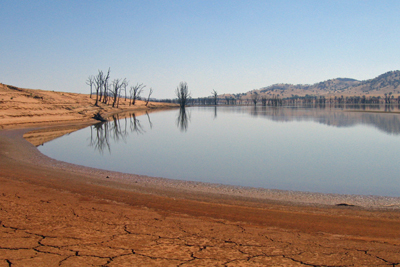
<p>"Metropolitan areas are experiencing prolonged drought crises. The experience shows that the models prioritize the supply of water to the detriment of demand control. The management models also fail to offer low investment in sewage treatment and water-free consumption, a scarce resource," says Professor Jacobi.</p>
<p>The panelists will examine the contexts of water scarcity in the world, the emergence of conflicts, and the reactions and responses of social actors  from the perspective of environmental justice.</p>
<p> </p>
<p><strong>The conferencists</strong></p>
<p><span>Geographer and historian </span><a class="external-link" href="https://grupo.us.es/giest/es/node/299">Leandro del Moral Ituarte</a><span>, who currently heads the Department of Human Geography at the University of Sevilla, specializes in hydraulic works. He has studied the lower basin of the Guadalquivir river, which bathes the territories of Andaluzia, in southern Spain.</span></p>
<p><a href="http://www.centre-cired.fr/spip.php?article749&amp;lang=fr" target="_blank">Bernard Barraqué</a>, research director at the Centre International de Recherche sur l'Environnement et le Développement of Le Centre National de la Recherche Scientifique, in Paris, has focused his recent studies on the allocation of water resources, evaluation of sustainable policies and methods,  institutional and participatory approaches, and comparative analysis of the sustainability of water management in major European cities. He also works at Agro ParisTech - École Nationale du Génie Rural, des Eaux et des Fôrets.</p>
<p>The participation of <a href="http://ugto.academia.edu/AlexRicardoCalderaOrtega" target="_blank">Alex Ricardo Caldera Ortega</a><span>, from the Department of Public Management and Development of the University of Guanajuato, has been cancelled due to the speaker's agenda.</span></p>
<p style="text-align: right; "><span class="discreet">Photo: Tim J. Keegan/Flickr</span></p>]]></content:encoded>
    <dc:publisher>No publisher</dc:publisher>
    <dc:creator>Richard Meckien</dc:creator>
    <dc:rights>Original version in Portuguese by Sylvia Miguel </dc:rights>
    
      <dc:subject>Europe</dc:subject>
    
    
      <dc:subject>Research Group: Environment and Society</dc:subject>
    
    
      <dc:subject>Power</dc:subject>
    
    
      <dc:subject>Interdisciplinarity</dc:subject>
    
    
      <dc:subject>Water</dc:subject>
    
    
      <dc:subject>Capitalism</dc:subject>
    
    
      <dc:subject>Environment</dc:subject>
    
    
      <dc:subject>Sustainability</dc:subject>
    
    
      <dc:subject>Globalization</dc:subject>
    
    
      <dc:subject>Inequality</dc:subject>
    
    
      <dc:subject>Poverty</dc:subject>
    
    
      <dc:subject>Environmental Policy</dc:subject>
    
    
      <dc:subject>Cities</dc:subject>
    
    <dc:date>2015-10-27T17:55:00Z</dc:date>
    <dc:type>Notícia</dc:type>
  </item>


  <item rdf:about="https://www.iea.usp.br/en/media-library/photos/events-2015/as-mudancas-climaticas-e-a-seguranca-alimentar-ciclo-tematico-14-de-outubro-de-2015">
    <title>Cycle "Towards COP 21": Climate Change and Food Security - October 14, 2015</title>
    <link>https://www.iea.usp.br/en/media-library/photos/events-2015/as-mudancas-climaticas-e-a-seguranca-alimentar-ciclo-tematico-14-de-outubro-de-2015</link>
    <description></description>
    
    <dc:publisher>No publisher</dc:publisher>
    <dc:creator>Richard Meckien</dc:creator>
    <dc:rights></dc:rights>
    
      <dc:subject>Research Group: Environment and Society</dc:subject>
    
    
      <dc:subject>Climate</dc:subject>
    
    
      <dc:subject>Natural Resources</dc:subject>
    
    
      <dc:subject>Hunger</dc:subject>
    
    
      <dc:subject>Climate Change</dc:subject>
    
    
      <dc:subject>Energy</dc:subject>
    
    
      <dc:subject>Water</dc:subject>
    
    
      <dc:subject>Environment</dc:subject>
    
    
      <dc:subject>World</dc:subject>
    
    
      <dc:subject>Cities</dc:subject>
    
    <dc:date>2015-10-26T16:05:00Z</dc:date>
    <dc:type>Pasta</dc:type>
  </item>


  <item rdf:about="https://www.iea.usp.br/en/news/seminar-reflects-on-a-balanced-relationship-between-humans-and-the-environment">
    <title>Seminar reflects on a balanced relationship between humans and the environment</title>
    <link>https://www.iea.usp.br/en/news/seminar-reflects-on-a-balanced-relationship-between-humans-and-the-environment</link>
    <description></description>
    <content:encoded xmlns:content="http://purl.org/rss/1.0/modules/content/"><![CDATA[<p style="text-align: justify; "><img src="https://www.iea.usp.br/imagens/paisagem-no-rio-grande-do-sul" alt="Paisagem no Rio Grande do Sul" class="image-right" title="Paisagem no Rio Grande do Sul" />The <a href="https://www.iea.usp.br/en/research/research-groups/environmental-politics" class="external-link">IEA's Environmental Politics research group</a> will hold the international seminar <i>Landscapes: Home, Path and Water</i> <strong>from October 22 to 29</strong>, in three different venues. Researchers from Brazil, Italy and Portugal will reflect on the fundamental conditions for the establishment of a balanced relationship between humans and the environment.</p>
<p style="text-align: justify; "><span>According to Eda Tassara, coordinator of the research group, by addressing the presence and representation of home, path and water in the landscape and in the city, the seminar aims to "contribute to the intentional, poetic and shared construction of a more balanced social environment in the future in comparison to nowadays". She explains that the seminar's title is inspired in a statement by French geographer Jean Brunhes (1869-1930): "There are three key things to start a human community: home, path and water." She adds that psychologist Omar Ardans, from the Federal University of Santa Maria, by commenting on Brunhes's statement, said that its content "is in no way contradicted by the current state of life on the planet. On the contrary, it is even more modern than at the time of his writing."</span></p>
<p style="text-align: justify; "><span>However, there is one condition for the establishment of this balance, as Ardans's comment cited by the researcher: "That balance does not exist in (or to) a single individual, in a vacuum. Instead, the spaces of coexistence of this individual, and the participation in community and societal contexts define <span>the particular form of conquered balance (or, at worst, desired).</span>along with the physical environment and objects built by humans."</span></p>
<p style="text-align: justify; "><span>That's why, he said, "the first word for the proposed reflection should be 'city', privileged form of organization of the man on the grounds that he dwells." In support of this choice, Tassara points out that American urban planner and thinker Lewis Mumford (1895-1990) opened his book "The Culture of Cities" with a statement saying that the city "is the point of maximum concentration of force and culture in a community."</span></p>
<p style="text-align: justify; "><span>She also recalls that Italian philosopher Rosario Assunto (1915-1994) argued that "the concrete environment, the environment we live in and of which we live, is always the environment as a way of territory: a landscape". It follows that "landscape" is the second word of the seminar, "understood as the way that nature and man gave to the territory as they organized it on the basis of life."</span></p>
<p style="text-align: justify; "><span>Viewed from these perspectives, landscape and city can be understood as "more-than-spaces" inextricably linked, with the balance of the assembly having crucial importance for human life, but not just for it, according to Tassara. "Both our organic existence as the persistence of the very way of life of our community / society depend on this balance. Recognizing this mobilizes our reflection on the essential aspects of the human-environment relationship that is expressed in the countryside and in the cities."</span></p>
<p style="text-align: right; "><span class="discreet">Photo: <a class="external-link" href="http://www.flickr.com/photos/dpfeiffercardoso">Douglas Pfeiffer Cardoso/Flickr</a></span></p>]]></content:encoded>
    <dc:publisher>No publisher</dc:publisher>
    <dc:creator>Richard Meckien</dc:creator>
    <dc:rights>Original version in Portuguese by Mauro Bellesa</dc:rights>
    
      <dc:subject>Sociology</dc:subject>
    
    
      <dc:subject>Commons</dc:subject>
    
    
      <dc:subject>Research Group: Environmental Politics</dc:subject>
    
    
      <dc:subject>Environment</dc:subject>
    
    
      <dc:subject>Cities</dc:subject>
    
    
      <dc:subject>Event</dc:subject>
    
    <dc:date>2015-10-15T13:35:00Z</dc:date>
    <dc:type>Notícia</dc:type>
  </item>


  <item rdf:about="https://www.iea.usp.br/en/news/pro-reitoria-de-pesquisa-realiza-workshop-sobre-bioeconomia">
    <title>Bioeconomy will be addressed at the new strategic workshop of the USP's Dean of Research</title>
    <link>https://www.iea.usp.br/en/news/pro-reitoria-de-pesquisa-realiza-workshop-sobre-bioeconomia</link>
    <description></description>
    <content:encoded xmlns:content="http://purl.org/rss/1.0/modules/content/"><![CDATA[<p>Aspects of biotechnology in health, energy and environmental sustainability, and the need for innovation, entrepreneurship and regulation in this field will be discussed at the meeting <i>Bioeconomy</i>, from the series <i>Strategic Workshops</i> of the USP's Dean of Research (PRP). The event will take place on <strong>October 19</strong>, <strong>from 9 am</strong>, in the <span>István Jancsó</span> Auditorium of the Brasiliana Guita and José Mindlin Library.</p>
<p>There will be four sessions with presentations by experts and a debate with the audience. Researchers from USP, UNICAMP and from the private sector will attend. The organizers are two professors from USP: Marie-Anne Van Suys, from the USP's Institute of Biosciences (IB) and Hamilton Varela, a professor at the USP's Institute of Chemistry of the São Carlos campus, advisor to the PRP and president of the IEA's research committee.</p>
<p><span>The event will be broadcast live over the </span><a href="https://www.iea.usp.br/aovivo" class="external-link">web</a><span>.</span></p>
<h3>Programme</h3>
<table class="invisible">
<tbody>
<tr>
<td><span><strong>09.15 am </strong></span></td>
<td><span><strong>Opening Session</strong></span></td>
</tr>
<tr>
<td><span><strong>09.30 am</strong></span></td>
<td><strong>Session 1 – Red Biotechnology (Health and Precision Medicine)<br /></strong><strong>Exhibitors:</strong><span> Luis Carlos  Ferreira (USP's Institute of Biological Sciences - ICB), <br /></span><span>Paulo Arruda (GSK-FAPESP-UNICAMP), <br /></span><span>Glaucius Oliva (<span>USP's Institute of Physics of the São Carlos campus - IFSC</span>) <br />and José Eduardo Krieger (USP's School of Medicine - FM)</span></td>
</tr>
<tr>
<td><span><strong>11.00 am</strong></span></td>
<td><strong>Session 2 – Tools for Biotechnology (Nanomaterials and SynBio)<br /></strong><strong>Exhibitors:</strong><span> Luiz Henrique Catalani (USP's Institute of Chemistry - IQ),<br /> Igor Polikarpov (IFSC), Edgar Andres Ochoa-Cruz (Arcturus BioCloud) and Paula Lins (iGEM)</span></td>
</tr>
<tr>
<td><span><strong>12.15 pm</strong></span></td>
<td><strong>Break</strong></td>
</tr>
<tr>
<td><strong>02.00 pm</strong></td>
<td><strong>Session 3 – Green Biotechnology (Energy and Environment)<br /></strong><strong>Exhibitors:</strong><span> Marcos Buckeridge (USP's Institute of Biosciences), Luciano Verdade (Scope),<br /> Gonçalo Pereira (Granbio) and Carlos Clemente Cerri (USP's Center for Nuclear Energy in Agriculture)</span></td>
</tr>
<tr>
<td><strong>03.30 pm</strong></td>
<td><strong>Break</strong></td>
</tr>
<tr>
<td><span><strong>03.40 pm</strong></span></td>
<td><strong>Session 4 – Innovation and Regulation<br /></strong><strong>Exhibitors: </strong><span>Eduardo Giacomazzi (Industry Federation of the State of São Paulo - FIESP),<br /> Renata Marchetti (Fearp-USP)<br />and Décio Zylberstajn (USP's Faculty of Economics, Management and Accounting - FEA)</span></td>
</tr>
</tbody>
</table>]]></content:encoded>
    <dc:publisher>No publisher</dc:publisher>
    <dc:creator>Richard Meckien</dc:creator>
    <dc:rights>Original version in Portuguese by Mauro Bellesa</dc:rights>
    
      <dc:subject>Event</dc:subject>
    
    
      <dc:subject>Environment</dc:subject>
    
    
      <dc:subject>Transformation</dc:subject>
    
    
      <dc:subject>Innovation</dc:subject>
    
    
      <dc:subject>Medicine</dc:subject>
    
    
      <dc:subject>Biotechnology</dc:subject>
    
    
      <dc:subject>Biofuels</dc:subject>
    
    <dc:date>2015-10-13T20:55:00Z</dc:date>
    <dc:type>Notícia</dc:type>
  </item>


  <item rdf:about="https://www.iea.usp.br/en/news/the-challenges-to-agriculture-from-climate-change">
    <title>The Challenges to Agriculture from Climate Change</title>
    <link>https://www.iea.usp.br/en/news/the-challenges-to-agriculture-from-climate-change</link>
    <description></description>
    <content:encoded xmlns:content="http://purl.org/rss/1.0/modules/content/"><![CDATA[<p style="text-align: justify; "><img src="https://www.iea.usp.br/imagens/logo-da-cop21-1" alt="Logo da COP21 - 1" class="image-right" title="Logo da COP21 - 1" />After discussing Brazil’s water crisis and energy matrix in the first two debates, the cycle <i>Towards COP 21: The Groundwork to Paris</i> will dedicate the third meeting to the challenges to agriculture posed by climate change. The event will be held on October 14, at 9:30 am.</p>
<p class="Text" style="text-align: justify; ">The topic of debate will be <i>Climate Change and Food Security: Will We Be Able To Feed 10 Billion People?</i> Marcelo Vieira, from the Brazilian Rural Society, will be the speaker and moderator, and the panelists will be Paulo Faveret, from the National Bank for Economic and Social Development (BNDES); Luiz Fernando Amaral, from Rabobank; and Weber Amaral, from USP’s Luiz de Queiroz School of Agriculture.</p>
<p class="Text" style="text-align: justify; ">The main issues to be discussed are:</p>
<ul style="text-align: justify; ">
<li>How agriculture will feed 10 billion people</li>
<li>How to reconcile the production of food, fiber and energy in a sustainable and conscious manner</li>
<li>The role of agriculture as an important vector for adaptation and for reducing the emission of greenhouse gases</li>
<li>Agriculture as a key element for generating income and reducing the impacts on urban environments in a scenario of climate change and of economic, political and environmental instability.</li>
</ul>
<p style="text-align: justify; "> </p>
<table class="tabela-esquerda-200-borda">
<tbody>
<tr>
<th>
<h3><span>Related material</span></h3>
<p><a href="https://www.iea.usp.br/midiateca/video/videos-2015/las-negociaciones-climaticas-de-paris-2015-y-el-futuro-del-clima-planetario" class="external-link">Las Negociaciones Climáticas de París 2015 y el Futuro del Clima Planetario</a><span> – conference in Spanish with José Luis Lezama (Colegio de México)</span></p>
</th>
</tr>
</tbody>
</table>
<p style="text-align: justify; "><span><strong>THE CYCLE</strong></span></p>
<p style="text-align: justify; ">The cycle <i>Towards COP 21: The Groundwork to Paris – Climate Change, Adaptation, Solutions and Opportunities</i> seeks to identify and discuss opportunities to change patterns of emission of greenhouse gases. Another goal is to make a contribution to the Brazilian government and to the negotiators who will participate in the Conference of Parties on Climate Change Conference (COP 21) to be held in Paris, from November 30 to December 11.</p>
<p class="Text" style="text-align: justify; ">The organizers of the cycle are: University of São Paulo, the Interdisciplinary Climate Investigation center (INCLINE) and IEA’s Research Group Environment and Society. The project has the support of the Brazilian Chapter of the World Water Council, the Brazilian Network of the Global Compact (UNGC), Arquivos do Futuro and CPFL Energia. Three USP professors are in charge of the overall organization: Weber Amaral (Luiz de Queiroz School of Agriculture), Tércio Ambrizzi (Institute of Astronomy, Geophysics and Atmospheric Sciences) and Pedro Jacobi (IEA, FE and Procam-IEE).</p>]]></content:encoded>
    <dc:publisher>No publisher</dc:publisher>
    <dc:creator>Fernanda Rezende</dc:creator>
    <dc:rights>Translation by Carlos Malferrari</dc:rights>
    
      <dc:subject>Agribusiness</dc:subject>
    
    
      <dc:subject>Climate Change</dc:subject>
    
    
      <dc:subject>Commons</dc:subject>
    
    
      <dc:subject>Glocal</dc:subject>
    
    
      <dc:subject>Environment</dc:subject>
    
    
      <dc:subject>Event</dc:subject>
    
    <dc:date>2015-10-08T16:40:00Z</dc:date>
    <dc:type>Notícia</dc:type>
  </item>


  <item rdf:about="https://www.iea.usp.br/en/media-library/photos/events-2015/as-mudancas-climaticas-e-a-crise-hidrica-ciclo-tematico-30-de-setembro-de-2015">
    <title>Cycle "Towards COP 21": Climate Change and Water Crisis - September 30, 2015</title>
    <link>https://www.iea.usp.br/en/media-library/photos/events-2015/as-mudancas-climaticas-e-a-crise-hidrica-ciclo-tematico-30-de-setembro-de-2015</link>
    <description></description>
    
    <dc:publisher>No publisher</dc:publisher>
    <dc:creator>Richard Meckien</dc:creator>
    <dc:rights></dc:rights>
    
      <dc:subject>Research Group: Environment and Society</dc:subject>
    
    
      <dc:subject>Climate</dc:subject>
    
    
      <dc:subject>Natural Resources</dc:subject>
    
    
      <dc:subject>Energy</dc:subject>
    
    
      <dc:subject>Water</dc:subject>
    
    
      <dc:subject>Environment</dc:subject>
    
    
      <dc:subject>Environmental Sciences</dc:subject>
    
    
      <dc:subject>Cities</dc:subject>
    
    <dc:date>2015-10-07T20:05:00Z</dc:date>
    <dc:type>Pasta</dc:type>
  </item>


  <item rdf:about="https://www.iea.usp.br/en/media-library/photos/events-2015/las-negociaciones-climaticas-de-paris-2015-y-el-futuro-del-clima-planetario-17-de-setembro-de-2105">
    <title>Las Negociaciones Climáticas de París 2015 y el Futuro del Clima Planetario - September 17, 2015</title>
    <link>https://www.iea.usp.br/en/media-library/photos/events-2015/las-negociaciones-climaticas-de-paris-2015-y-el-futuro-del-clima-planetario-17-de-setembro-de-2105</link>
    <description></description>
    
    <dc:publisher>No publisher</dc:publisher>
    <dc:creator>Richard Meckien</dc:creator>
    <dc:rights>Leonor Calasans</dc:rights>
    
      <dc:subject>Climate</dc:subject>
    
    
      <dc:subject>Conferencistas</dc:subject>
    
    
      <dc:subject>Climate Change</dc:subject>
    
    
      <dc:subject>Glocal</dc:subject>
    
    
      <dc:subject>Environment</dc:subject>
    
    
      <dc:subject>El Colegio de México</dc:subject>
    
    
      <dc:subject>Environmental Policy</dc:subject>
    
    <dc:date>2015-09-17T03:00:00Z</dc:date>
    <dc:type>Pasta</dc:type>
  </item>


  <item rdf:about="https://www.iea.usp.br/en/news/history-and-environment-necessary-dialogue">
    <title>History and the Environment: A Necessary Dialogue</title>
    <link>https://www.iea.usp.br/en/news/history-and-environment-necessary-dialogue</link>
    <description></description>
    <content:encoded xmlns:content="http://purl.org/rss/1.0/modules/content/"><![CDATA[<p style="text-align: justify; ">The manner by which historians organize and analyze different approaches to the interlocution between history and the environment is the central axis of the seminar <i>Environment and Historical Dimension: Approach Perspectives</i>, which will take place on <strong>September 28</strong>, <strong>from 10 am to 6 pm</strong> in the IEA’s Events Room. Organized by the <a href="https://www.iea.usp.br/en/research/research-groups/environmental-sciences" class="external-link">IEA's Environment and Society Research Group</a> and by <a href="http://www.anpuhsp.org.br/conteudo/view?ID_CONTEUDO=715" target="_blank"><span>Work Group on Environmental History - ANPUH/SP</span></a>, the debate will bring together experts from various institutions.</p>
<p class="Text" style="text-align: justify; "><span>Brazilian historiography on the environment was structured as a field of thought and research in the late 20<sup>th</sup> century. According to Silvia Helena Zanirato, member of IEA Research Group and professor of Environmental Management at <a class="external-link" href="http://each.uspnet.usp.br/site/"><span>USP’s School of Arts, Sciences and Humanities (EACH)</span></a>, the challenges posed by major social and environmental changes have forced History, as a science, to find new explanatory arguments for the historically acquired habits of social players in their interaction with the physical environment.</span></p>
<p style="text-align: justify; "><span>“The environment is essentially an interdisciplinary field of study and only the sum total of knowledge can help us overcome the environmental crisis. History’s role, in this context, is to seek to understand and explain the processes that have contributed to this crisis, which we know is based on the production and consumption system of the Modern Age,” says Zanirato, one of the coordinators of the seminar, who will take part in the debates on “Historical Knowledge and the Environment: Epistemological Considerations.”</span></p>
<p class="Text" style="text-align: justify; "><span>She says that the academy has not been able to raise the awareness of the public at large of the severity of the socio-environmental problem. “More than discuss, we need to present other possibilities involving consumer habits, lifestyles and the means to move towards a less impacting society. I am aligned with the thought of Mercedes Pardo, for whom nature conservation condition is not mainly physical, but rather cultural,” explains Zanirato.</span></p>
<p class="Text" style="text-align: justify; "><span>“Undeniably, after World War II, with the vertiginous expansion of the mass consumer society, the perception and a growing awareness of a complex interconnected phenomenon of global dimensions began to take shape. The problems intrigued historians, policy makers, scientists, artists and the general population,” says Paulo Henrique Martinez, a professor at <a class="external-link" href="http://www.assis.unesp.br/"><span>Paulista State University (UNESP) in Assis</span></a>, who will also be at the seminar.</span></p>
<p class="Text" style="text-align: justify; "><span>Such phenomena, says Martinez, emerged in the industrialized countries of the northern hemisphere in the form of pollution, destruction of ecosystems and threats of extinction of the local fauna and flora. In poor countries, environmental problems arose in the form of epidemics, accelerated deforestation and degradation of environmental health in rural and urban areas – involving water resources and landfills, in particular – he says.</span></p>
<p class="Text" style="text-align: justify; "><span>For Martinez, environmental history opens communication channels and creates situations for interdisciplinary dialogue, e.g., in studies of urbanization, family farming and public policies. However, interdisciplinary research still needs to go further. “We talk insistently about interdisciplinary research, but operationally we still have a long way to go. Everything remains more in the realm of rhetoric than of effective and concrete experiences and practices,” he believes.</span></p>
<p class="Text" style="text-align: justify; "><span>For Janes Jorge, a professor at <a class="external-link" href="http://www.unifesp.br/campus/gua/">UNIFESP</a>, Brazilian historiography maintains a constant dialogue with other areas of knowledge and an intense debate about the place that historical production occupies in thinking about the environment. Yet, there is still plenty to do in environmental history research and in the dissemination of the knowledge produced in this field, she says.</span></p>
<p class="Text" style="text-align: justify; "><span>“I believe that public policies concerning water, waste, biodiversity, climate change and other environmental issues must converse with scientific knowledge. But the policies are still way too timid for the scale of the problem,” says Jorge.</span></p>
<p class="Text" style="text-align: justify; "><span>Besides Zanirato, Martinez and Jorge, the seminar will be attended by Roger Domenech Collacios (UNESP), Dora Shellard Correa (UNIFIEO), Nelson Aprobato Filho (USP) and José Jonas Almeida (USP).</span></p>]]></content:encoded>
    <dc:publisher>No publisher</dc:publisher>
    <dc:creator>Richard Meckien</dc:creator>
    <dc:rights>Original version in Portuguese by Sylvia Miguel. Translation by Carlos Malferrari.</dc:rights>
    
      <dc:subject>Brazil</dc:subject>
    
    
      <dc:subject>Environment</dc:subject>
    
    
      <dc:subject>Research Group: Environment and Society</dc:subject>
    
    
      <dc:subject>History</dc:subject>
    
    <dc:date>2015-09-15T13:30:00Z</dc:date>
    <dc:type>Notícia</dc:type>
  </item>


  <item rdf:about="https://www.iea.usp.br/en/news/spanish-sociologist-discusses-dialectic-environment">
    <title>Spanish Sociologist Discusses the Dialectic of Structure and the Environment at the IEA</title>
    <link>https://www.iea.usp.br/en/news/spanish-sociologist-discusses-dialectic-environment</link>
    <description></description>
    <content:encoded xmlns:content="http://purl.org/rss/1.0/modules/content/"><![CDATA[<p style="text-align: justify; ">The organization of modern societies around the idea of “unlimited” growth generates a steady accumulation of goods and materials, the consequence of which has been social exclusion and an environmental crisis. The social sciences have the vital role of questioning this model that shaped the way we see the world.</p>
<p class="Text" style="text-align: justify; ">To demonstrate some conclusions of his thoughts on this issue, <a href="https://www.iea.usp.br/en/persons/speakers/aledo-tur" class="external-link">Antonio Aledo Tur</a>, professor of Sociology of the Environment at the <a class="external-link" href="http://www.ua.es/en/index.html">Universidad de Alicante</a> (Spain), will hold in the IEA’s Events Room a debate and a discursive analysis of what has taken place in Brazil with regard to dams. <i>El Paradigma de la Modernidad y sus Impactos Socioambientales</i> [<i>The Paradigm of Modernity and its Socio-Environmental Impacts</i>] is the theme of the conference, which will be held on <strong>September 23</strong>, <strong>from 10 am to 12 pm</strong>. The lecture (given in Spanish, without translation) is organized by the <a href="https://www.iea.usp.br/en/research/research-groups/environmental-sciences" class="external-link">IEA’s Environment and Society Research Group</a>, coordinated by <a href="https://www.iea.usp.br/en/persons/researchers/pedro-roberto-jacobi" class="external-link">Pedro Jacobi</a>, from USP’s School of Education.</p>
<table class="tabela-direita" style="text-align: justify; ">
<tbody>
<tr>
<th><img src="https://www.iea.usp.br/imagens/antonio-aledo-tur-72.jpg" alt="Antonio Aledo Tur" class="image-inline" title="Antonio Aledo Tur" /></th>
</tr>
<tr>
<td style="text-align: right; "><strong>Antonio Aledo Tur, a specialist in sociology of tourism and environmental sociology</strong></td>
</tr>
</tbody>
</table>
<p class="Text" style="text-align: justify; "><span>Aledo Tur’s research focuses on the dialectic between the imposition of the structures and the human ability to adapt to them, regardless of whether they are environmental, social, economic, political or cultural.</span></p>
<p class="Text" style="text-align: justify; "><span>His master’s dissertation, <i>The Colonization of Yucatan through its Vernacular Architecture</i> (Louisiana State University, 1992), and his doctoral thesis, <i>El Entorno de Conquista</i> (University of Alicante, 1997), show how the structures of architecture and urbanism establish a dialogue with the structures of the process of conquest and colonization of Mayan lands in the Yucatan region.</span></p>
<p class="Text" style="text-align: justify; "><span>In recent studies, Aledo Tur has turned his attention to tourism, seen as an activity that transformed the region and the society of Alicante. Research on residential tourism on the Spanish coast unfolded into analyses of the same subject in Brazil’s northeastern seaboard. This type of tourism has been a driver of employment and income generation in several Spanish and Brazilian coastal towns. But it is also having serious social and environmental impacts, especially because of the lack of planning that characterizes the constructions of this kind of enterprise.</span></p>
<p class="Text" style="text-align: justify; "><span>In addition to studies in the Sociology of Tourism, Aledo Tur has also dedicated himself to a line of research in the field of Environmental Sociology, where he specialized in analyses of the social and environmental impacts of major public works, such as dams and reservoirs, using participatory methods to diagnose the impacts. In particular, he has focused on the social impacts of the Panama Canal Expansion Project (2005-2006). In the light of political ecology, he analyzed the impact of large hydroelectric plants in the Paraná River, Brazil.</span></p>
<p style="text-align: justify; "><span><strong>The conferencist</strong></span></p>
<p style="text-align: justify; ">Aledo Tur graduated in Geography and History from the University of Alicante. He holds a master’s degree in Anthropology from Louisiana State University and a Ph.D. in Sociology from the University of Alicante. He was professor of Anthropology at the Catholic University of Murcia and at the University of Alicante. He is currently responsible for the disciplines of Environment and Methods and Techniques of Social Research in Tourism at Alicante, where he also coordinates the doctoral program of the Sociology department. He is coordinator of the Society and Environment Group of the Spanish Federation of Sociology, and of the Network of Spanish Environmental Sociologists.</p>
<p class="Text" style="text-align: justify; "><span>On April 18, 2013, he took part in the IEA’s conference on the problems of the Spanish Mediterranean, when he gave the lecture <i><a href="https://www.iea.usp.br/en/eventos/eventos-gerais/201csobre-la-incuestionabilidad-del-riesgo-el-modelo-inmobiliario-espanol-y-la-gestion-politica-de-los-territorios-y-comunidades-costeras201d-1" class="external-link">L</a><span><a href="https://www.iea.usp.br/en/eventos/eventos-gerais/201csobre-la-incuestionabilidad-del-riesgo-el-modelo-inmobiliario-espanol-y-la-gestion-politica-de-los-territorios-y-comunidades-costeras201d-1" class="external-link">a Incuestionabilidad del Riesgo: El Modelo Inmobiliario Español y la Gestión Política de los Territorios y Comunidades Costeras</a></span></i>.</span></p>]]></content:encoded>
    <dc:publisher>No publisher</dc:publisher>
    <dc:creator>Richard Meckien</dc:creator>
    <dc:rights>Original version in Portuguese by Sylvia Miguel. Translation by Carlos Malferrari.</dc:rights>
    
      <dc:subject>Environment</dc:subject>
    
    
      <dc:subject>Research Group: Environment and Society</dc:subject>
    
    
      <dc:subject>Ecology</dc:subject>
    
    
      <dc:subject>Sociology</dc:subject>
    
    <dc:date>2015-09-04T19:15:00Z</dc:date>
    <dc:type>Notícia</dc:type>
  </item>


  <item rdf:about="https://www.iea.usp.br/en/news/jose-luis-lezama-discusses-the-outlook-for-climate-negotiations">
    <title>José Luis Lezama Discusses the Outlook for Climate Negotiations</title>
    <link>https://www.iea.usp.br/en/news/jose-luis-lezama-discusses-the-outlook-for-climate-negotiations</link>
    <description></description>
    <content:encoded xmlns:content="http://purl.org/rss/1.0/modules/content/"><![CDATA[<p><img src="https://www.iea.usp.br/imagens/joseluislezamafotowikipedia130px.jpg" alt="José Luis Lezama de la Torre" class="image-right" title="José Luis Lezama de la Torre" />The outlook for the <a class="external-link" href="http://www.cop21paris.org/">21<sup>st</sup> Conference of the Parties</a>, COP-21, will be discussed by <a href="https://www.iea.usp.br/en/persons/speakers/jose-luis-lezama" class="external-link">José Luis Lezama</a>, researcher from the <a class="external-link" href="http://www.colmex.mx/">Colegio de Mexico</a> and an expert on environmental policy, at the conference <i>Las Negociaciones Climáticas de Paris 2015 y el Futuro del Clima Planetario</i>, to be held on September 17, at 3:30 pm at the IEA’s Events Room. Lezama will speak in Spanish, without simultaneous translation.</p>
<p class="Text">Scheduled for December in Paris, the COP-21 will attempt to reach a new, legally binding universal agreement on climate to limit global warming to less than 2 °C. This would be an unprecedented feat in the 20 years of climate negotiations under the aegis of the United Nations. Every year, the COP brings together the 195 signatory nations of the United Nations Framework Convention on Climate Change (UNFCCC), created during the Rio-92 conference.</p>
<p class="Text">“The climate summit in Paris will be a date of no return, a D-Day, a Year 1000,” says Lezama. For him, the expectations regarding the 2015 conference are due to the possibility that its decisions might avoid a disaster of major proportions or an “apocalyptic end for humankind.”</p>
<p class="Text">However, as Lezama explained, the agreements and disagreements between nations follow a complex plot: they derive from “the political and economic logic of the relations between countries, the deep articulations and interdependencies between the developed and underdeveloped, between their elites, their poor and the ecosystems that support the socioeconomic and political systems of both worlds.”</p>
<p class="Text">An example of what he is referring to happened during the COP-15. Held in Copenhagen, Denmark, the 2009 meeting went down in history for the repression of the demonstrations organized by environmental NGOs and for the inability of Danish leaders to coalesce. At the time, the hosts dreamed of reaching agreement to replace the Kyoto Protocol, which was adopted at COP-3.</p>
<p class="Text">This is the second event that the IEA holds to discuss the prospects of the Conferences of the Parties. In late 2014, the Institute’s Research Group on Environment and Society organized the seminar “COP-20: What Can We Expect?”, coordinated by Pedro Jacobi.</p>]]></content:encoded>
    <dc:publisher>No publisher</dc:publisher>
    <dc:creator>Fernanda Rezende</dc:creator>
    <dc:rights>Original version in Portuguese by Fernanda Rezende</dc:rights>
    
      <dc:subject>Environment</dc:subject>
    
    
      <dc:subject>Climate Change</dc:subject>
    
    
      <dc:subject>Commons</dc:subject>
    
    
      <dc:subject>Glocal</dc:subject>
    
    <dc:date>2015-08-27T14:55:00Z</dc:date>
    <dc:type>Notícia</dc:type>
  </item>


  <item rdf:about="https://www.iea.usp.br/en/news/seminar-discusses-strategies-political-intervention-environmental-governance">
    <title>Seminar Discusses Strategies of Political Intervention for Environmental Governance</title>
    <link>https://www.iea.usp.br/en/news/seminar-discusses-strategies-political-intervention-environmental-governance</link>
    <description></description>
    <content:encoded xmlns:content="http://purl.org/rss/1.0/modules/content/"><![CDATA[<p><i>Global Environmental Change, Planning and Public Policies</i> is the name of the seminar that the <a href="https://www.iea.usp.br/en/research/research-groups/public-policies-territoriality-and-society" class="external-link">IEA’s Public Policies, Territoriality and Society Research Group</a> will hold <strong>from March 23 to 27, from 9 am to 6 pm</strong>, at the Institute’s Events Room.</p>
<p class="Text"><span>The meeting will discuss the potential and challenges of policy interventions for environmental governance and territorial planning, focusing on the role of civil society, on policy interventions based on scientific research, and on the tensions between governmental and non-governmental players in the decision-making process.</span></p>
<p class="Text"><span>The first three days of the meeting will be devoted to lectures, debates and workgroups on the three areas of discussion: environmental changes; participation and planning; and public policies. On the fourth day, the Public Policies, Territoriality and Society Research Group will present the academic activities it has been developing at the IEA. On the last day, theme-based workgroups will meet in interdisciplinary research workshops with the participation of professors, researchers and graduate and undergraduate students.</span></p>
<p class="Text"><span>Lecturers include members of the Research Group, professors at USP’s School of Arts, Sciences and Humanities (EACH) and members of the Grupo de Trabajo Cambio Ambiental Global, Cambio Climático, Movimientos Sociales y Políticas Públicas do Consejo Latinoamericano de Ciencias Sociales (Clacso).</span></p>
<p class="Text"><span>The organization of the event is headed by Neli Aparecida de Mello-Thery, professor at EACH and coordinator of the Research Group; Vivian Urquidi, professor at EACH and at the Graduate Program in Latin American Integration (PROLAM); and Suzana Lourenço and Luciana Borges, both doctoral students in Geography at USP’s Department of Geography.</span></p>
<p class="Text"><span>The seminar has the support of the Political Geography Laboratory (GeoPo), of PROLAM, of the Center for Research in International Affairs (Nupri) and of the Geography Department, all of them from the University of São Paulo; and of Clacso.</span></p>
<p class="Text"><span><span style="text-align: justify; ">The event will be broadcast live on the </span><a style="text-align: justify; " href="https://www.iea.usp.br/aovivo">web</a><span style="text-align: justify; ">.</span></span></p>]]></content:encoded>
    <dc:publisher>No publisher</dc:publisher>
    <dc:creator>Richard Meckien</dc:creator>
    <dc:rights>Carlos Malferrari (translator)</dc:rights>
    
      <dc:subject>Environment</dc:subject>
    
    
      <dc:subject>Public Policies</dc:subject>
    
    
      <dc:subject>Event</dc:subject>
    
    <dc:date>2015-03-06T20:05:00Z</dc:date>
    <dc:type>Notícia</dc:type>
  </item>


</rdf:RDF>