<?xml version="1.0" encoding="utf-8" ?>
<rdf:RDF xmlns:rdf="http://www.w3.org/1999/02/22-rdf-syntax-ns#" xmlns:dc="http://purl.org/dc/elements/1.1/" xmlns:syn="http://purl.org/rss/1.0/modules/syndication/" xmlns="http://purl.org/rss/1.0/">


<channel rdf:about="https://www.iea.usp.br/search_rss">
  <title>Instituto de Estudos Avançados da Universidade de São Paulo</title>
  <link>https://www.iea.usp.br</link>

  <description>
    
            These are the search results for the query, showing results 31 to 45.
        
  </description>


  <image rdf:resource="https://www.iea.usp.br/logo.png" />

  <items>
    <rdf:Seq>
      
        <rdf:li rdf:resource="https://www.iea.usp.br/noticias/pesquisador-de-grupo-do-iea-polo-sao-carlos-e-eleito-membro-afiliado-da-abc" />
      
      
        <rdf:li rdf:resource="https://www.iea.usp.br/noticias/pedro-wongtschowski-e-novo-membro-do-conselho-deliberativo-do-iea" />
      
      
        <rdf:li rdf:resource="https://www.iea.usp.br/en/news/paulo-saldiva-new-deputy-director" />
      
      
        <rdf:li rdf:resource="https://www.iea.usp.br/en/news/paulo-saldiva-ary-plonski-are-appointed-director-and-deputy-director-of-the-iea" />
      
      
        <rdf:li rdf:resource="https://www.iea.usp.br/en/news/participants-of-the-intercontinental-academia-gather-in-november-as-a-preparation-to-nagoya" />
      
      
        <rdf:li rdf:resource="https://www.iea.usp.br/en/news/open-%20call-%20for-IEA-visiting-professor-programme-2015" />
      
      
        <rdf:li rdf:resource="https://www.iea.usp.br/en/news/open-call-for-candidates-to-apply-for-the-positions-of-director-and-deputy-director-at-the-iea" />
      
      
        <rdf:li rdf:resource="https://www.iea.usp.br/en/research/chairs/olavo-setubal-chair-of-arts-culture-and-science/catedra-olavo-setubal" />
      
      
        <rdf:li rdf:resource="https://www.iea.usp.br/pesquisa/catedras-e-convenios/catedra-olavo-setubal-de-arte-cultura-e-ciencia/olavo-setubal-chair-of-arts-culture-and-science/catedra-olavo-setubal" />
      
      
        <rdf:li rdf:resource="https://www.iea.usp.br/noticias/carlos-roberto-ferreira-brandao" />
      
      
        <rdf:li rdf:resource="https://www.iea.usp.br/noticias/humanidades-e-mundo-contemporaneo" />
      
      
        <rdf:li rdf:resource="https://www.iea.usp.br/noticias/nota-pesar-luiz-roberto-alves" />
      
      
        <rdf:li rdf:resource="https://www.iea.usp.br/en/news/new-research-group-will-examine-the-effects-of-time-acceleration-in-culture" />
      
      
        <rdf:li rdf:resource="https://www.iea.usp.br/en/news/new-headquarters-of-the-iea-inaugurated" />
      
      
        <rdf:li rdf:resource="https://www.iea.usp.br/en/news/new-center-for-advanced-studies-in-costa-rica-has-deputy-director-of-the-iea-in-its-board" />
      
    </rdf:Seq>
  </items>

</channel>


  <item rdf:about="https://www.iea.usp.br/noticias/pesquisador-de-grupo-do-iea-polo-sao-carlos-e-eleito-membro-afiliado-da-abc">
    <title>Pesquisador de grupo do Polo São Carlos é eleito membro afiliado da ABC</title>
    <link>https://www.iea.usp.br/noticias/pesquisador-de-grupo-do-iea-polo-sao-carlos-e-eleito-membro-afiliado-da-abc</link>
    <description></description>
    <content:encoded xmlns:content="http://purl.org/rss/1.0/modules/content/"><![CDATA[<p>A equipe do coordenador de projetos do IEA Polo São Carlos prof. Sérgio Mascarenhas terá agora mais um membro na Academia Brasileira de Ciências (ABC). O pesquisador pelo CNPq junto à Sapra Assessoria Brenno Caetano Troca Cabella foi indicado como membro afiliado (categoria voltada a jovens cientistas até 40 anos) da região de São Paulo para integrar o quadro da ABC até 2019. A lista foi divulgada nesta sexta, dia 5 de dezembro.<span> </span></p>
<p>Graduado em física médica pela USP e mestre e doutor em física aplicada à medicina e à biologia também pela USP, Cabella atua no desenvolvimento de equipamentos de instrumentação biomédica e integra a equipe liderada por Sérgio Mascarenhas que está desenvolvendo monitores de pressão intracraniana não invasivos. Além dele, outro integrante da equipe do prof. Sérgio, o pesquisador Gustavo Henrique Frigieri Vilela, também faz parte do quadro de membros afiliados da ABC.<span> </span></p>
<p><b>Cambridge</b><span> </span></p>
<p>Cabella também foi contemplado com uma bolsa de pós-doutorado do programa Ciência Sem Fronteiras em Engenharia Elétrica e Biomédica para a Universidade de Cambridge. Ele será o segundo membro da equipe do prof. Sérgio em Cambridge, já que o pesquisador Danilo Augusto Cardim foi contemplado com uma bolsa internacional da Universidade na área de neurociências.</p>]]></content:encoded>
    <dc:publisher>No publisher</dc:publisher>
    <dc:creator>Thais Cardoso</dc:creator>
    <dc:rights></dc:rights>
    
      <dc:subject>IEA</dc:subject>
    
    
      <dc:subject>Institutional</dc:subject>
    
    
      <dc:subject>Polo São Carlos</dc:subject>
    
    
      <dc:subject>Transformação</dc:subject>
    
    <dc:date>2014-12-09T18:25:00Z</dc:date>
    <dc:type>Notícia</dc:type>
  </item>


  <item rdf:about="https://www.iea.usp.br/noticias/pedro-wongtschowski-e-novo-membro-do-conselho-deliberativo-do-iea">
    <title>Pedro Wongtschowski é novo membro do Conselho Deliberativo do IEA</title>
    <link>https://www.iea.usp.br/noticias/pedro-wongtschowski-e-novo-membro-do-conselho-deliberativo-do-iea</link>
    <description>Wongtschowski ocupa a vaga de representante da sociedade civil até dezembro de 2026</description>
    <content:encoded xmlns:content="http://purl.org/rss/1.0/modules/content/"><![CDATA[<p><span id="docs-internal-guid-de5d3388-7fff-24a1-ce3e-afedcf21bf67"> </span></p>
<p dir="ltr" style="text-align: left; "><span><img src="https://www.iea.usp.br/imagens/pedro-wongtschowski-perfil/@@images/2f5b72c9-d30a-4493-bdef-aee1fb4ac580.jpeg" alt="Pedro Wongtschowski - Perfil" class="image-left" title="Pedro Wongtschowski - Perfil" />O engenheiro químico Pedro Wongtschowski é o novo membro do Conselho Deliberativo (CD) do IEA. A indicação foi feita pelo reitor da USP, Carlos Gilberto Carlotti Júnior, em 28 de novembro de 2025. Ele sucede a José Vicente, reitor da Universidade Zumbi dos Palmares, na vaga de representante da sociedade civil, sem vínculo de docência com a USP. Sua permanência no CD do IEA será de 5 de dezembro de 2025 a 4 de dezembro de 2026.</span></p>
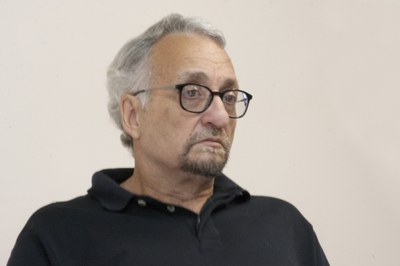
<p dir="ltr" style="text-align: left; "><span>Wongtschowski tem mestrado e doutorado em engenharia química pela Escola Politécnica da USP. É figura de destaque no cenário de inovação e da indústria: preside o Conselho Superior de Inovação e Competitividade da Federação das Indústrias do Estado de São Paulo (FIESP) e coordena a "Mobilização Empresarial pela Inovação" da Confederação Nacional da Indústria (CNI).</span></p>
<p dir="ltr" style="text-align: left; "><span>Ele também é membro do Conselho de Administração da Empresa Brasileira de Pesquisa e Inovação Industrial (Embrapii), do Conselho do Instituto de Estudos oara o Desenvolvimento Industrial (IEDI), do Conselho Diretor do Fundo Nacional de Desenvolvimento Científico e Tecnológico (FNDCT), do Conselho Consultivo da USP, do Conselho Superior da Agência USP de Inovação e do Conselho Consultivo da Associação Nacional de Pesquisa e Desenvolvimento das Empresas Inovadoras (ANPEI).</span></p>
<div style="text-align: left; "><span><br /></span></div>]]></content:encoded>
    <dc:publisher>No publisher</dc:publisher>
    <dc:creator>Gabriella dos Santos</dc:creator>
    <dc:rights></dc:rights>
    
      <dc:subject>Conselho Deliberativo</dc:subject>
    
    
      <dc:subject>Institutional</dc:subject>
    
    
      <dc:subject>Inovação</dc:subject>
    
    
      <dc:subject>capa</dc:subject>
    
    <dc:date>2025-12-11T17:45:00Z</dc:date>
    <dc:type>Notícia</dc:type>
  </item>


  <item rdf:about="https://www.iea.usp.br/en/news/paulo-saldiva-new-deputy-director">
    <title>Paulo Saldiva is the new deputy director of the IEA-USP</title>
    <link>https://www.iea.usp.br/en/news/paulo-saldiva-new-deputy-director</link>
    <description></description>
    <content:encoded xmlns:content="http://purl.org/rss/1.0/modules/content/"><![CDATA[<table class="tabela-direita-200">
<tbody>
<tr>
<th><img src="https://www.iea.usp.br/imagens/paulo-saldiva" alt="Paulo Saldiva - Perfil" class="image-right" title="Paulo Saldiva - Perfil" /></th>
</tr>
<tr>
<td style="text-align: right; "><strong>Paulo Saldiva, new deputy director of the <span style="text-align: right; ">IEA-USP</span></strong></td>
</tr>
</tbody>
</table>
<p>Pathologist Paulo Hilário Nascimento Saldiva, a professor at USP's Faculty of Medicine (FMUSP), is the new deputy director of the IEA-USP. He was elected by the members of the Institute's Board on February 24, when he obtained an absolute majority of votes.</p>
<p><span>It is the first time that a leader of the IEA-USP is chosen according to the guidelines of the new resolution of USP's Statute, which determines the vote in two rounds. The second round takes places only if a candidate does not obtain the absolute majority of votes in the first round. Until 2014, principals and vice-principals were chosen from a triple list prepared by the members of the Congregation and the Departments' Councils of the respective units - such as the Board for the IEA-USP. The final appointment would then be the president's responsibility.</span></p>
<p>Saldiva is the successor of Carlos Roberto Ferreira Brandão, a professor of USP's Zoology Museum, who has been deputy director between 2014 and 2015, and is stepping down to become <a href="https://www.iea.usp.br/en/news/brandao-ibram" class="external-link">president of the Brazilian Institute of Museums (Ibram)</a>, a distinct body of the Ministry of Culture in charge of the administration of federal museums and the formulation of public policies for the area.</p>
<p><span>Saldiva is a full professor since 1996, having graduated in medicine and obtaining a PhD in pathology from the<span> FMUSP</span>. He has been a member of the Scientific Committee of <span>Harvard University's</span> School of Public Health and member of the Air Quality Committee of the World Health Organization (WHO). He is currently a member of the Council of the City of São Paulo. His research focuses on pathology, pulmonary pathophysiology, respiratory diseases, and environmental health and applied ecology.</span></p>]]></content:encoded>
    <dc:publisher>No publisher</dc:publisher>
    <dc:creator>Richard Meckien</dc:creator>
    <dc:rights></dc:rights>
    
      <dc:subject>IEA</dc:subject>
    
    
      <dc:subject>Institutional</dc:subject>
    
    <dc:date>2015-03-03T15:05:00Z</dc:date>
    <dc:type>Notícia</dc:type>
  </item>


  <item rdf:about="https://www.iea.usp.br/en/news/paulo-saldiva-ary-plonski-are-appointed-director-and-deputy-director-of-the-iea">
    <title>Paulo Saldiva and Ary Plonski are appointed director and deputy director of the IEA</title>
    <link>https://www.iea.usp.br/en/news/paulo-saldiva-ary-plonski-are-appointed-director-and-deputy-director-of-the-iea</link>
    <description></description>
    <content:encoded xmlns:content="http://purl.org/rss/1.0/modules/content/"><![CDATA[<p>The Official State Gazette of São Paulo (<a class="external-link" href="https://www.imprensaoficial.com.br/DO/BuscaDO2001Documento_11_4.aspx?link=/2016/executivo%2520secao%2520ii/abril/12/pag_0057_C6N5ROBQPO87Ke8MPKV1K1REFGF.pdf&amp;pagina=57&amp;data=12/04/2016&amp;caderno=Executivo%20II&amp;paginaordenacao=100057">Diário Oficial do Estado de São Paulo</a>, in Portuguese) has published the appointment of Paulo Saldiva and Guilherme Ary Plonski for the positions of director and deputy director of the IEA on April 12. They were elected by the Institute's Electoral College on <span>February 18</span><span>. Of the total of 101 votes, 92 have chosen the winning slate. There have also been six invalid votes and three blank ones. The result has been determined by the Electoral Commission of the Institute and accredited by the Committee for Legislation and Resources (CLR) before being approved by USP's Vice-President Vahan Agopyan.</span></p>
<table class="tabela-esquerda-200">
<tbody>
<tr>
<th><img src="https://www.iea.usp.br/imagens/paulo-saldiva-1/@@images/108cabb1-d809-4312-a7e5-21fe066762ef.jpeg" alt="Paulo Saldiva" class="image-inline" title="Paulo Saldiva" /></th>
</tr>
<tr>
<td><strong>Pathologist Paulo Saldiva, from <span>the USP's School of Medicine (FM)</span></strong></td>
</tr>
</tbody>
</table>
<p><a href="https://www.iea.usp.br/en/iea/organization/directorship" class="external-link"><strong>Paulo Saldiva</strong>,</a> a pathologist and a professor at the Department of Pathology of the USP's School of Medicine (FM), was the deputy director of the IEA until April 2016. He took office in late February last year, replacing Carlos Roberto Ferreira Brandão, from the USP's Museum of Zoology (MZ). His research focuses on pulmonary pathology, environmental pathology and air pollution. He has been a member of the World Health Organization committee that established air quality standards and of the committe of the WHO's International Agency for Research on Cancer, which set the carcinogenic potential of air pollution. From 2004 to 2014, he joined the Science Advisory Committee on air pollution at the Harvard School of Public Health. As director of the IEA, his tenure will last four years.</p>
<table class="tabela-direita-200">
<tbody>
<tr>
<th><img src="https://www.iea.usp.br/midiateca/foto/eventos-2014/homenagem-aos-honorarios-iea-15-de-dezembro-de-2014/hhonorarios-25.jpg/@@images/9f0de2ba-8698-4adf-809e-5fe4044fb703.jpeg" alt="Guilherme Ary Plonski" class="image-inline" title="Guilherme Ary Plonski" /></th>
</tr>
<tr>
<td><strong>Ary Plonski, <span>a professor at the USP's Faculty of Economics, Management and Accounting (FEA)</span></strong></td>
</tr>
</tbody>
</table>
<p> </p>
<p> </p>
<p><strong><br /><a href="https://www.iea.usp.br/en/persons/researchers/copy4_of_alfons-martinell-sempere" class="external-link">Guilherme Ary Plonski</a></strong>, who will also hold his position for four years, is an engineer and a professor at the Department of Management of the USP's Faculty of Economics, Management and Accounting (FEA), and at the Department of Industrial Engineering of the USP's Polytechnic School (POLI). He was the managing director (2001-2006) of the Institute of Technological Research of the State of São Paulo (IPT) and president of the National Association of Entities Promoting Innovative Enterprises (ANPROTEC). Plonski integrates the Board of Governors of the Israel Institute of Technology (TECHNION). From December 2012 to April this year he was a member of the IEA's Board, leaving his second term in it to take over his new position.</p>
<p><span><span> </span></span><span>The electoral college has been made up of the following categories:</span></p>
<div>
<div>
<ul>
<li><span>current and former members of the IEA's Board;</span></li>
<li><span>the president of the Institute's Research Committee;</span></li>
<li><span>former directors and deputy directors of the IEA;</span></li>
<li><span>directors of faculties and research units at USP, and of their congregations in the University Council.</span></li>
</ul>
</div>
<p><span><br /><strong>Proposals</strong></span></p>
<p>Alongside the continuity of the successfully developed activities, the candidates propose three new guidelines:</p>
<ol>
<li>the creation of an Advanced School of Leadership Formation;</li>
<li>studies on urbanity and quality of life;</li>
<li>the transformation of the University into a transformative University.</li>
</ol>
<p><span><br />Regarding the first item, Saldiva and Plonski propose that the IEA should shelter people who wish for an "immersion in the full range of variables related to managing complex and important issues for the development of pubic policies, taking advantage of the wealth of knowledge available at USP in all its units."</span></p>
<p>As for urbanity and quality of life, the professors present the proposal to create a space for dialogue and convergence of all stakeholders in proposing scientific studies and research aimed at improving the living of the inhabitants of metropolitan areas.</p>
<p>With regard to the third item, they propose two actions:</p>
<ul>
<li>to make the IEA a reference center that consolidates initiatives aimed at the deep understanding of the processes and prospects for transformation of the University that thrive in the Institute itself or elsewhere at USP;</li>
<li>to turn the IEA into the link between USP and the legislative branch (Congress, Legislative Assembly of the State of São Paulo and city councils of the municipalities where there is a USP campus), in order to contribute to the improvement of legislation on capital issues such as health, education, generation of employment and income, sanitation, environment, energy, transport, public safety and food security.</li>
</ul>
</div>
<ul>
</ul>]]></content:encoded>
    <dc:publisher>No publisher</dc:publisher>
    <dc:creator>Richard Meckien</dc:creator>
    <dc:rights></dc:rights>
    
      <dc:subject>IEA</dc:subject>
    
    
      <dc:subject>Institutional</dc:subject>
    
    
      <dc:subject>Board</dc:subject>
    
    <dc:date>2016-04-12T14:40:00Z</dc:date>
    <dc:type>Notícia</dc:type>
  </item>


  <item rdf:about="https://www.iea.usp.br/en/news/participants-of-the-intercontinental-academia-gather-in-november-as-a-preparation-to-nagoya">
    <title>Participants of the Intercontinental Academia gather in November as a preparation to Nagoya</title>
    <link>https://www.iea.usp.br/en/news/participants-of-the-intercontinental-academia-gather-in-november-as-a-preparation-to-nagoya</link>
    <description></description>
    <content:encoded xmlns:content="http://purl.org/rss/1.0/modules/content/"><![CDATA[<table class="tabela-esquerda">
<tbody>
<tr>
<th><img src="https://www.iea.usp.br/imagens/center-for-advanced-studies-lmu/@@images/b18bc524-ed54-441b-a53d-dc669bedf3a0.jpeg" alt="Center for Advanced Studies - LMU" class="image-inline" title="Center for Advanced Studies - LMU" /></th>
</tr>
<tr>
<td><strong>The Center for Advanced Studies at the LMU, in Munich.</strong></td>
</tr>
</tbody>
</table>
<p>Senior <span>committee</span><span> members and young researchers of the first edition of the <a class="external-link" href="http://ica.usp.br/">Intercontinental Academia</a> will meet in <strong>November (25-28)</strong> for</span><span> an interim workshop. Held seven months after the first meeting in São Paulo, which has inaugurated the project, this meeting in Munich will enable the participants to advance the discussions and studies being conducted virtually since May, and plan activities for the meeting in Nagoya next March.</span></p>
<table class="tabela-direita-borda">
<tbody>
<tr>
<th>
<h3>Related material</h3>
<p>1st meeting</p>
<p class="kssattr-macro-title-field-view kssattr-templateId-kss_generic_macros kssattr-atfieldname-title documentFirstHeading" id="parent-fieldname-title"><a href="https://www.iea.usp.br/en/news/closing-report" class="external-link">Participants of the Intercontinental Academia present results of the event</a></p>
<p class="kssattr-macro-title-field-view kssattr-templateId-kss_generic_macros kssattr-atfieldname-title documentFirstHeading" style="text-align: left; ">2nd edition of the project</p>
<p><a href="https://www.iea.usp.br/en/news/akemi" class="external-link">Researcher indicated by the IEA is selected for the second edition of the Intercontinental Academia</a></p>
<p><a href="https://www.iea.usp.br/en/news/second-edition-intercontinental-academia-will-address-human-dignity" class="external-link">Second edition of the Intercontinental Academia will address human dignity</a></p>
<p><span>More information:</span><br /><a class="external-link" href="http://intercontinental-academia.ubias.net/" target="_blank">http://intercontinental-academia.ubias.net/</a></p>
</th>
</tr>
</tbody>
</table>
<p>The Intercontinental Academia is a program of the <a class="external-link" href="http://www.ubias.net/">University-Based Institutes for Advanced Study</a> (UBIAS), a network that brings together 36 <span>institutes for </span><span>advanced studies from all continents. The IEA-USP and the </span><a class="external-link" href="http://www.iar.nagoya-u.ac.jp/~iar/?lang=en">Institute for Advanced Research</a><span> (IAR) at the Nagoya University are responsible for the first edition. The meeting in São Paulo was organized by the IEA-USP and took place in April (17-30).</span></p>
<p>The project brings together <a class="external-link" href="http://ica.usp.br/people/candidates">13 young researchers</a> from different countries and areas of expertise to develop studies on the subject "time". At the end of every stage, they will produce content for a Massive Open Online Course (Mooc). The supervision of the research is led by a <a class="external-link" href="http://ica.usp.br/people/senior-committee">scientific senior committee</a><span>.</span></p>
<p>The workshop will take place at the headquarters of the <a class="external-link" href="http://www.en.cas.uni-muenchen.de/index.html">Centre for Advanced Studies of the </a><a class="external-link" href="http://www.en.cas.uni-muenchen.de/index.html">Ludwig-Maximilians</a> <a class="external-link" href="http://www.en.cas.uni-muenchen.de/index.html">Universität</a><span> (LMU)</span><span> and has the support of the </span><a class="external-link" href="https://www.frias.uni-freiburg.de/en/home">Freiburg Institute for Advanced Studies</a><span> (FRIAS). The meeting is intended to:</span></p>
<div id="_mcePaste">
<ul>
<li><span>discuss the work carried out from May to November by the young researchers;</span></li>
<li><span>present and define the program of activities for the meeting in Nagoya;</span></li>
<li><span>think of the details of the MOOC that will be produced by the young researchers;</span></li>
<li><span>discuss the partnership with Coursera.</span></li>
</ul>
</div>
<p> </p>
<p>The scientific committee will be represented by the director of the IEA-USP, <a href="https://www.iea.usp.br/en/persons/researchers/martin-grossmann" class="external-link">Martin Grossmann</a>, as well as <a href="https://www.iea.usp.br/en/persons/researchers/regina-pekelmann-markus" class="external-link">Regina Markus</a>, a professor at the USP's Institute of Biosciences and member of the IEA's Board, <a class="external-link" href="http://ica.usp.br/people/institutional-support">Dapeng Cai</a>, a professor of Economics at the Nagoya University and representative of the IAR-Nagoya; <a class="external-link" href="http://ica.usp.br/people/bernd-kortmann">Bernd Kortmann</a>, academic director of the <span>FRIAS, </span><a class="external-link" href="http://ica.usp.br/people/copy_of_sami-pihlstrom">Sami Pihlström</a><span>, director of the Helsinki Collegium for Advanced Studies, and </span><a class="external-link" href="http://ica.usp.br/people/copy_of_till-roenneberg">Till Roenneberg</a><span>, of the Institute of Medical Psychology at LMU. The General </span><span>Secretary of both UBIAS </span><span>and the project, </span><a class="external-link" href="http://ica.usp.br/people/general-secretary">Carsten Dose</a><span>, will also attend the meeting.</span></p>
<p><span>The young researchers will be represented by </span><a class="external-link" href="http://ica.usp.br/people/boris-roman-gibhardt">Boris Roman Gibhardt</a><span>, from the Bielefeld University, </span><a class="external-link" href="http://ica.usp.br/people/david-gange">David Gange</a><span>, from the University of Birmingham, </span><a class="external-link" href="http://ica.usp.br/people/eduardo-almeida">Eduardo Almeida</a><span>, from USP, </span><a class="external-link" href="http://ica.usp.br/people/eva-von-contzen">Eva von Contzen</a><span>, from the Ruhr-Universität Bochum, </span><a class="external-link" href="http://ica.usp.br/people/helder-nakaya">Helder Nakaya</a><span>, from USP, </span><a class="external-link" href="http://ica.usp.br/people/nikki-moore">Nikki Moore</a><span>, from Rice University, and </span><a class="external-link" href="http://ica.usp.br/people/valtteri-arstila">Valtteri Arstila</a><span>, from the University of Turku.</span></p>]]></content:encoded>
    <dc:publisher>No publisher</dc:publisher>
    <dc:creator>Richard Meckien</dc:creator>
    <dc:rights>Original version in Portuguese by Fernanda Rezende</dc:rights>
    
      <dc:subject>Institutional</dc:subject>
    
    
      <dc:subject>Intercontinental Academia</dc:subject>
    
    
      <dc:subject>Research</dc:subject>
    
    
      <dc:subject>Interdisciplinarity</dc:subject>
    
    <dc:date>2015-11-13T12:35:00Z</dc:date>
    <dc:type>Notícia</dc:type>
  </item>


  <item rdf:about="https://www.iea.usp.br/en/news/open-%20call-%20for-IEA-visiting-professor-programme-2015">
    <title>Open call for IEA-USP's visiting professor program 2015</title>
    <link>https://www.iea.usp.br/en/news/open-%20call-%20for-IEA-visiting-professor-programme-2015</link>
    <description></description>
    <content:encoded xmlns:content="http://purl.org/rss/1.0/modules/content/"><![CDATA[<p>Researchers from international universities who wish to apply for the <a href="https://www.iea.usp.br/en/persons/visiting-professors" class="external-link">visiting professor program in 2015</a> can already submit their projects to the Institute.</p>
<p><span>The applicants must be international researchers of recognized merit, interested in conducting interdisciplinary research and contributing in a unique way with science, culture and society, having the potential to develop various academic activities at the IEA and USP. The submissions will go through the evaluation of the Institute's Board.</span></p>
<p>After the approval of the visiting professor, the Institute will seek funding for grants, be it from the university (<a class="external-link" href="http://www.leginf.usp.br/?resolucao=resolucao-no-6519-de-25-de-marco-de-2013" style="text-align: justify; " target="_blank">Resolution No. 5.910/2011</a>), from research funding agencies <span> (</span><a href="http://www.capes.gov.br/cooperacao-internacional/multinacional/pve" target="_blank">Capes</a><span>, </span><a href="http://www.cienciasemfronteiras.gov.br/web/csf/pesquisador-visitante-especial" target="_blank">Programa Ciência sem Fronteiras</a><span>, </span><a href="http://www.cnpq.br/view/-/journal_content/56_INSTANCE_0oED/10157/100343" target="_blank">CNPq</a><span>, <a href="http://www.fapesp.br/147" target="_blank">Fapesp</a>)</span> or from external resources.</p>
<p><span> </span></p>
<p>All research projects will be reviewed by the IEA-USP's Board and should preferably follow the research lines of <a href="https://www.iea.usp.br/en/research/research-groups" class="external-link">Institute's groups</a>. T<span>he information requested on the application form </span>must be provided within the project.</p>
<p><span> </span></p>
<p>The stay's length may vary from one month to one year with a possible extension for another year. At the end of the research period, the visitors should submit a report of the performed activities and the obtained results.</p>
<p><span><strong>THE PROGRAM</strong></span></p>
<p><span>The IEA-USP has received visiting professors s</span>ince its foundation in 1986. Names like Agustín Cueva, Richard Morse and Peter Burke have developed research among us. The complete list of visiting professors and their projects is available <a href="https://www.iea.usp.br/pesquisa/professores/ex-professores-visitantes/ex-professores-visitantes-internacionais" class="external-link">here</a>.</p>]]></content:encoded>
    <dc:publisher>No publisher</dc:publisher>
    <dc:creator>Richard Meckien</dc:creator>
    <dc:rights></dc:rights>
    
      <dc:subject>Institutional</dc:subject>
    
    
      <dc:subject>Visiting Professors</dc:subject>
    
    <dc:date>2015-03-19T13:30:00Z</dc:date>
    <dc:type>Notícia</dc:type>
  </item>


  <item rdf:about="https://www.iea.usp.br/en/news/open-call-for-candidates-to-apply-for-the-positions-of-director-and-deputy-director-at-the-iea">
    <title>Open call for candidates to apply for the positions of Director and Deputy Director at the IEA</title>
    <link>https://www.iea.usp.br/en/news/open-call-for-candidates-to-apply-for-the-positions-of-director-and-deputy-director-at-the-iea</link>
    <description></description>
    <content:encoded xmlns:content="http://purl.org/rss/1.0/modules/content/"><![CDATA[<p><span><span id="result_box"><span class="hps">The r</span><span class="hps">egistration</span> of s<span class="hps">lates for</span> <span class="hps">the election</span> <span class="hps">of the new</span> <span class="hps">Director and</span> <span class="hps">Deputy Director of the</span> <span class="hps">IEA starts today, <span><span id="result_box"><span class="hps">January 19</span></span></span></span><span>.</span> <span class="hps">The deadline is </span><span class="hps"> </span><span class="hps"> </span><span class="hps"> </span><span class="hps">January 29 and </span><span class="hps">the election</span> will <span class="hps">take place</span> <span class="hps">on </span><span class="hps">February 18.</span> <span class="hps">To be able to apply</span><span>,</span> <span class="hps">candidates should be organized </span><span class="hps">in slates and be full</span><span class="hps"> professors</span> or <span class="hps">associate professors</span> <span class="hps">at the University</span> of São Paulo.<span> </span></span></span></p>
<p><span><span id="result_box"><span> </span></span></span></p>
<p><span class="hps">The <a href="https://www.iea.usp.br/iea/portaria-eleicao-iea" class="external-link">regulation</a></span><a href="https://www.iea.usp.br/iea/portaria-eleicao-iea" class="external-link"> <span class="hps">of the electoral process</span></a><span>, signed by the</span><span> </span><span class="hps">Director of the</span><span> </span><span class="hps">IEA</span><span>,</span><span> </span><span class="hps">Martin</span><span> </span><span class="hps">Grossmann</span><span>,</span><span> </span><span class="hps">has been published in the</span><span> </span><span class="atn hps">"</span><span>Official Gazette of the</span><span> </span><span class="hps">State of São</span><span> </span><span class="hps">Paulo</span><span>"</span><span>.</span></p>
<p><strong>Changes</strong></p>
<p>This election is a milestone in the history of the Institute, since it will be the first one under the new criteria approved by the University Council. The new rules have introduced profound changes in the electoral process (<a href="https://www.iea.usp.br/en/news/election-iea" class="external-link">read more about it</a>), valuing the development of management programmes, the harmony between the Director and the Deputy Director in their execution, and making the process of choosing the <span>IEA leaders</span> more democratic by creating a broad electoral college which will decide who will be elected directly.</p>
<p><span>The electoral college is made up of the following categories:</span></p>
<ul>
<li><span>current and former members of the IEA's Board;</span></li>
<li><span>the president of the Institute's Research Committee;</span></li>
<li><span>former directors and deputy directors of the IEA;</span></li>
<li><span>directors of faculties a</span><span>nd research units at USP, and representatives of their congregations in the University Council.</span></li>
</ul>
<p> </p>
<p><span>Before, the Director and Deputy Director were chosen at different times by the University's President from a triple list voted by the Institute's Board.</span></p>
<p><span><span>An electoral commission has been established t</span>o coordinate the entire process, not only taking care of the administrative aspects of the election (registration, election and counting), but also acting in its disclosure, in identifying potential candidates and encouraging them to apply.</span></p>
<p><span>The five members of the commission are:</span></p>
<ul>
<li><a href="https://www.iea.usp.br/iea/estrutura/conselho-deliberativo/ex-conselheiros/joao-e-steiner" class="external-link">João Steiner</a>, astrophysicist, professor at the USP's Institute of Astronomy, Geophysics and Atmospheric Sciences (IAG) and former director of the IEA;</li>
<li><a href="https://www.iea.usp.br/en/persons/researchers/copy_of_alfons-martinell-sempere" class="external-link">Luiz Bevilacqua</a>, engineer, emeritus professor from the COPPE-UFRJ, former president of the UFABC and former president of the Brazilian Space Agency;</li>
<li><a href="https://www.iea.usp.br/en/pessoas/pasta-pessoam/mayana-zatz" class="external-link">Mayana Zatz</a>, geneticist and<span> professor at the USP's Institute of Biosciences (IB), where she coordinates the Centre for Research on the Human Genome and Stem Cells</span><span> (CEGH-CEL);</span></li>
<li><a href="https://www.iea.usp.br/en/persons/researchers/regina-pekelmann-markus" class="external-link">Regina P. Markus</a>, pharmacologist, <span>professor at the USP's Institute of Biosciences (IB)</span> and member of the IEA's Board;</li>
<li><a href="https://www.iea.usp.br/en/persons/researchers/copy2_of_alfons-martinell-sempere" class="external-link">Sérgio Adorno</a>, sociologist, director of the USP's Faculty of Philosophy, Languages and Literature, and Human Sciences (FFLCH), and coordinator of the Center for the Study on Violence (NEV).</li>
</ul>]]></content:encoded>
    <dc:publisher>No publisher</dc:publisher>
    <dc:creator>Richard Meckien</dc:creator>
    <dc:rights></dc:rights>
    
      <dc:subject>IEA</dc:subject>
    
    
      <dc:subject>Institutional</dc:subject>
    
    
      <dc:subject>Transformation</dc:subject>
    
    <dc:date>2016-01-19T12:15:00Z</dc:date>
    <dc:type>Notícia</dc:type>
  </item>


  <item rdf:about="https://www.iea.usp.br/en/research/chairs/olavo-setubal-chair-of-arts-culture-and-science/catedra-olavo-setubal">
    <title>Olavo Setubal Chair of Art, Culture, and Science</title>
    <link>https://www.iea.usp.br/en/research/chairs/olavo-setubal-chair-of-arts-culture-and-science/catedra-olavo-setubal</link>
    <description></description>
    <content:encoded xmlns:content="http://purl.org/rss/1.0/modules/content/"><![CDATA[<p>The 2012-2016 direction of the IEA strove to lead the University of São Paulo to a new and deeper involvement with culture and the arts. The main result of this endeavor has been the Olavo Setubal Chair of Art, Culture, and Science, offered in 2015 but officially launched in 2016.</p>
<p>A project of the IEA in partnership with Itaú Cultural Institute, the Olavo Setubal Chair is a space to discuss and promote activities related to the world of arts, with special focus on cultural management. Its goal is to foster interdisciplinary reflections on academic, artistic, cultural, and social issues of regional and global scope.</p>
<p class="Text">To give due weight and importance to this initiative, the first person to hold the Chair has been diplomat and essayist <a href="https://www.iea.usp.br/en/persons/researchers/rouanet" class="external-link">Sérgio Paulo Rouanet</a>, former National Secretary of Culture and author of the cultural incentive law that bears his name.</p>
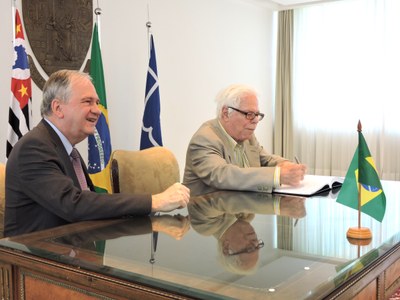
<p class="Text">The official launch took place on February 17, 2016, at a meeting in the President's Office building, with the participation of Rouanet, the director of the Itaú Cultural Institute, Eduardo Saron Nunes, the President of USP, Marco Antonio Zago, Vice-President Vahan Agopyan, the Director of the IEA, <a href="https://www.iea.usp.br/en/research/chairs/persons/researchers/martin-grossmann" class="external-link">Martin Grossmann</a>, and other representatives of the University and the cultural institution.</p>
<table class="tabela-esquerda-400">
<tbody>
<tr>
<th><img src="https://www.iea.usp.br/imagens/marco-antonio-zago-e-sergio-paulo-rouanet/@@images/3334e9c8-eb6a-4659-a152-da4dab5177ef.jpeg" alt="Marco Antônio Zago e Sérgio Paulo Rouanet" class="image-inline" title="Marco Antônio Zago e Sérgio Paulo Rouanet" /></th>
</tr>
<tr>
<td><strong>President Marco Antonio Zago (left) hosting diplomat Sérgio Paulo Rouanet for the official launch of the Chair</strong></td>
</tr>
</tbody>
</table>
<p class="Text">"We are honored to have Sérgio Paulo Rouanet inaugurating the Olavo Setubal Chair. The support of Itaú represents the strengthening of the University's relations with the productive sector, which is very important by allowing the USP to benefit from the presence of personalities as the ambassador," said Zago.</p>
<p class="Text">After the meeting, part of the group visited the Itaú Cultural Institute. According to Marcos Cuzziol, manager of the Innovation Center / Observatory of the institution, the partnership recognizes the special attention of Itaú Cultural towards management and formation of a cultural policy, integrating the 10 years of the Itaú Cultural Observatory, to be celebrated this year.</p>
<p class="Text">The Itaú Cultural Observatory was created in 2006 with a focus on management, economics and cultural policies. Since then, it promotes studies and discussion of these issues, stimulating reflection on culture in its various aspects and analyzing national indicators. Its performance and range are extended with seminars, meetings and lectures; an editorial line of books and the journal <i>Revista Observatório</i>, available for free on the web; and the promotion of research on the cultural field. In addition, since 2009, it holds a free course on cultural management in partnership with the UNESCO Chair on Cultural Policies, with the cooperation of the University of Girona and the support of the Organization of Ibero-American States (OEI). The course has one year of duration and takes place in classrooms and through virtual classes.</p>
<p class="Text"><i style="text-align: right; ">With information from <i>USP's </i>press office</i></p>
<h2><strong>The Chair</strong></h2>
<p class="Text">With a minimum duration of five years, the chair comprises two programs: Global Networks of Young Researchers, and Leaders in Art, Culture, and Science, with a forecast joint endowment of R$ 1,500,000.00, sponsored by the Itaú Cultural Institute. Each program (described below) is granted R$ 150,000.00 annually.</p>
<p class="Text">Even before the official inauguration of the Chair, part of its activities had already begun. The <a class="external-link" href="http://ica.usp.br/">Intercontinental Academia</a>, the São Paulo stage of which was launched in April 2015, is part of the Global Network of Young Researchers Program, aimed at developing new leaders. The programs seek to encourage and promote the interdisciplinary research of young (under 40) scholars.</p>
<p class="Text">The Leaders in Art, Culture, and Science Program follows the template adopted by USP’s José Bonifácio Chair, inaugurated in 2013.</p>
<p class="Text">Each year, the Chair is held by an exponent from the world of art, culture, politics, society, economics or academia, Rouanet being the first among them. In addition to the chairperson, professors, researchers, and national and international personalities participate in the activities, with special attention given to public policies for culture and the arts.</p>
<div>
<p class="Text">"I hope to follow the example of Nélida Piñon, my colleague at the Brazilian Academy of Letters and holder of the José Bonifacio Chair [in 2015], and to help developing this new chair by placing a stone in this new building," said Rouanet.</p>
<p class="Text">The Olavo Setubal Chair extends the central role of the IEA in creating and managing professorships within the University. Over the course of its almost 30 years, the Institute lays claim to 11 chairs (eight elapsed and two active).</p>
<p class="Text">In 2020, with the choice of Nestor García Canclini as chair holder, the renewal for another five years of the agreement between the IEA and Itaú Cultural was also celebrated.</p>
<h2><strong>Olavo Setubal</strong></h2>
<table class="tabela-esquerda-200">
<tbody>
<tr>
<th><img src="https://www.iea.usp.br/imagens/olavo-setubal" alt="Olavo Setúbal - Perfil" class="image-inline" title="Olavo Setúbal - Perfil" /> </th>
</tr>
<tr>
<td><strong>Olavo Setubal, a culture supportive</strong></td>
</tr>
</tbody>
</table>
<p class="Sub1">A renowned businessman, mayor of São Paulo (1975-1979), and foreign minister (1985-1986), Olavo Setubal left his mark on Brazilian culture by creating an important collection of more than 3,600 works of art. He conceived and founded the Itaú Cultural Institute in 1987, of which he was also the director until 2001. Among his many contributions to culture are the conception and construction of the São Paulo Cultural Center and of the Itaú Cultural Encyclopedia of Visual Arts, a computerized database of Brazilian art with scanned reproductions of works dating from the 19th century French mission during the Empire.</p>
<h2><strong>Holders</strong></h2>
<p class="Text"><strong>2024 - Arissana Pataxó, Francy Baniwa, and Sandra Benites</strong></p>
<span> 
<table class="tabela-esquerda">
<tbody>
<tr>
<th><img src="https://www.iea.usp.br/imagens/sandra-benites-perfil" alt="Sandra Benites - Perfil" class="image-inline" title="Sandra Benites - Perfil" /></th>
</tr>
<tr>
<td><img src="https://www.iea.usp.br/imagens/francy-baniwa-perfil" alt="Francy Baniwa - Perfil" class="image-inline" title="Francy Baniwa - Perfil" /></td>
</tr>
<tr>
<td><img src="https://www.iea.usp.br/imagens/arissana-pataxo-perfil" alt="Arissana Pataxó - Perfil" class="image-inline" title="Arissana Pataxó - Perfil" /></td>
</tr>
</tbody>
</table>
</span>
<div>Visual artist, professor and researcher, Arissana Pataxó was born in Porto Seguro (State of Bahia) and is part of the Pataxó ethnic group. She holds a master's degree in ethnic and African studies from the Federal University of Bahia (UFBA), where she is carrying out doctoral research in visual arts, the area of her graduation from the same University. In her artistic work, she addresses indigenous reality and its interaction with other contemporary realities, making use of various techniques and supports. Francy Baniwa is an anthropologist, writer, photographer, filmmaker, and doctoral candidate in social anthropology at the Federal University of Rio de Janeiro (UFRJ), where she became a master in the same area after graduating in sociology from the Federal University of Amazonas (UFAM). She is part of the Wanaliana community, located in the Upper Negro River indigenous land in São Gabriel da Cachoeira (State of Amazonas), and has been active in the indigenous movement in the region for more than 10 years. A PhD candidate in anthropology at (UFRJ), Sandra Benites is the director of visual arts at the Brazilian Foundation for the Arts (FUNARTE) and works as an art curator, educator, and activist for the Guarani Nhandeva people. Born in the Porto Lindo indigenous land in Japorã (State of Mato Grosso do Sul), she became a master in social anthropology through the postgraduate program at the National Museum of UFRJ. She has been deputy curator of Brazilian art at the Assis Chateaubriand São Paulo Museum of Art (MASP).</div>
<br /><strong><span> </span><span>2022/23 - Conceição Evaristo</span></strong></div>
<div><span><br /></span></div>
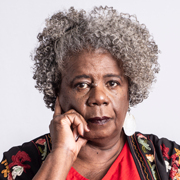
<p><img src="https://www.iea.usp.br/imagens/Ana-Maria-Goncalves-Conceicao-Evaristo-Perfil.jpg" alt="Conceição Evaristo - Perfil" class="image-left" title="Conceição Evaristo - Perfil" />Author of novels, poetry, short stories, and essays, Conceição Evaristo graduated in literature from the Federal University of Rio de Janeiro (UFRJ), obtained a master's degree in Brazilian literature from the Pontifical Catholic University of Rio de Janeiro (PUC-RJ), and a PhD in comparative literature from the Fluminense Federal University (UFF). She defines her work as <i>escrevivência</i>, that is, literary production derived from her life, and the memories and daily lives of people of African descent in Brazil. Her work is considered a reference in the fight against racism and sexismo in the country. Her first publication was at the age of 44, in 1990, in the <i>Cadernos Negros</i> series, by the group <i>Quilombhoje</i>. She is the author of seven books, including <i>Olhos d'Água</i> (2015), winner of the Jabuti Prize. Five of her books have been translated into English, French, Spanish, and Arabic. Evaristo has been awarded the Minas Gerais Government Award for her lifetime of work; the Nicolás Guillén Literature Prize, of the Caribbean Philosophical Association; and the <i>Mestra das Periferias </i>Award, of the Maria and João Aleixo Institute. In 2017, she was honored by the Itaú Cultural Institute with the Conceição Evaristo Occuation and, in 2019, as a literary personality by the Jabuti Prize.</p>
<p class="Text"><strong>2020/21 - <a href="https://www.iea.usp.br/en/persons/researchers/nestor-canclini" class="external-link">Néstor García Canclini</a></strong></p>
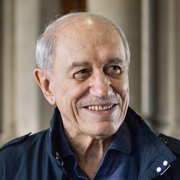
<p><img src="https://www.iea.usp.br/imagens/nestor-canclini-perfil" alt="Néstor Canclini - Perfil" class="image-left" title="Néstor Canclini - Perfil" />Born in 1939, Néstor Garcia Canclini is a cultural anthropologist and the first international name to hold the Chair. His research project is entitled "The Institutionality of Culture in the Current Context of Sociocultural Changes, and it approaches the "de-institutionalization" of culture." Canclini is a professor at the Autonomous Metropolitan University of Mexico City and holds a doctorate in Philosophy from the University of La Plata, and the University of Paris Nanterre. He has taught at USP and at universities in the United States, Spain, and Argentina. In 2014, he received Mexico's National Prize for Sciences and Arts. Among his major works is Culturas Híbridas: <i>Estrategias para Entrar y Salir de la Modernidad</i> (1990), which has been awarded honors in the Iberoamerican Book Award from the Latin American Studies Association in 1992. Currently, his research projects are dedicated to the relationships between aesthetics, art, anthropology, creative strategies, and cultural networks of young people. The focus of his work is globalization and cultural changes in Latin America, with a view to the mixtures between cultures, ethnicities, and references of media and of what is popular and traditional. His studies also include themes that are of interest to both cultural policies and the relationship between technology and culture.</p>
<p class="Text"><strong>2019 - <a href="https://www.iea.usp.br/en/persons/researchers/paulo-herkenhoff" class="external-link">Paulo Herkenhoff</a> and <a href="https://www.iea.usp.br/en/persons/researchers/helena-nader" class="external-link">Helena Nader</a></strong></p>
<table class="tabela-esquerda">
<tbody>
<tr>
<th><img src="https://www.iea.usp.br/imagens/paulo-herkenhoff" alt="Paulo Herkenhoff - Perfil" class="image-inline" title="Paulo Herkenhoff - Perfil" /></th>
</tr>
<tr>
<td><img src="https://www.iea.usp.br/imagens/helena-nader" alt="Helena Nader - Perfil" class="image-left" title="Helena Nader - Perfil" /></td>
</tr>
</tbody>
</table>
<p><span style="text-align: justify; ">Paulo Herkenhoff is currently an independent curator. Former cultural director of the Rio de Janeiro Art Museum (MAR). He was also the director of the Rio de Janeiro Museum of Fine Arts (2003-2006), </span><span style="text-align: justify; ">adjunct curator at the Department of Painting and Sculpture at New York's MoMA </span><span style="text-align: justify; ">(1999-2002), </span><span style="text-align: justify; ">curator general of the 24th São Paulo Art Biennial in 1998,</span><span style="text-align: justify; "> curator of the Eva Klabin Rapaport Foundation, and </span><span style="text-align: justify; ">chief </span><span style="text-align: justify; ">curator of </span><span style="text-align: justify; ">Rio de Janeiro's </span><span style="text-align: justify; ">Museum of Modern Art (MAM) </span><span style="text-align: justify; ">(1985-1999)</span><span style="text-align: justify; ">. Consultant of the Cisneros Collection (Caracas, Venezuela), and of the 9th Documenta in Kassel, Germany (1991). <span style="text-align: justify; ">Helena B. Nader holds a BS in Biological Sciences (medical modality) from the Federal University of São Paulo (UNIFESP) (1970), a degree in Biology from the University of São Paulo (1971), a PhD in Molecular Biology from UNIFESP (1974) and a post doctorate from the University of Southern California (1977). She is a full professor at UNIFESP since 1989, the president of the Brazilian Society for the Progress of Science (SBPC), a full member of the São Paulo Academy of Sciences since 1989 and of the Brazilian Academy of Sciences since 1999. Nader was given the Commander Class of the National Order of Scientific Merit in 2002 and the Grand Cross Class in 2008. In 2005 she was nominated Professor Honoris Causa from the Federal University of Rio Grande do Norte (UFRN). Nader has been Provost of Graduation (1999-2003) and Post-Graduate Studies and Research (2007-2008) of UNIFESP. Her experience in biochemistry emphasizes glycobiology, and cellular and molecular biology of proteoglycans, especially heparin and heparan sulfate. Her works are related to the involvement of these compounds in hemostasis in the control of cell division and transformation.</span></span></p>
<p class="Text"><strong>2018 - <a href="https://www.iea.usp.br/en/persons/researchers/eliana-sousa-silva" class="external-link">Eliana Sousa Silva</a></strong></p>
<p><img src="https://www.iea.usp.br/imagens/eliana-sousa-silva-perfil" alt="Eliana Sousa Silva - Perfil" class="image-left" title="Eliana Sousa Silva - Perfil" />Silva holds a bachelor's degree in Letters from the Federal University of Rio de Janeiro (UFRJ - 1987). She obtained a master's degree (1995) in Education and a PhD (2009) in Social Work, both from the Pontifical Catholic University of Rio de Janeiro (PUC-RJ). In 2007, she founded the Tide Development Network, an NGO that aims to develop the largest set of favelas in Rio de Janeiro: Maré. She is the author of a book that brings together testimonials of residents of the neighborhood. "Testemunhos da Maré" was published in 2012. With experience in the elaboration of social projects, Silva works mainly with social movements, favelas, community education, community work, social diagnosis and public safety. Silva was one of ten people and institutions that won the Itaú Cultural 30 Years Award in 2017, when she and archaeologist Niède Guidon were considered in the Inspiring category. She was also awarded the 2005 Women of the Year Award (Social Area) from Rio de Janeiro's Rotary Club, the 2004 Cláudia Award in the Social Work category, conferred by Editora Abril, and the Ashoka Social Entrepreneurs in 2000.</p>
<p class="Text"><strong>2017 - <a href="https://www.iea.usp.br/en/persons/researchers/ohtake" class="internal-link">Ricardo Ohtake</a></strong></p>
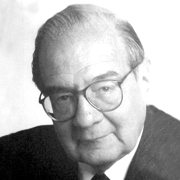
<p class="Text"><img src="https://www.iea.usp.br/imagens/ricardo-othake" alt="Ricardo Ohtake - Perfil" class="image-left" title="Ricardo Ohtake - Perfil" />Ricardo Ohtake graduated from the USP's Faculty of Architecture and Urbanism in 1968 and runs a graphic design office since then. He has been the director of the São Paulo Cultural Center, of the Museum of Image and Sound and of the Brazilian Cinematheque. He has been the Secretary of Green and Environment of the city of São Paulo, and Secretary of Culture of the State of São Paulo. He has participated in books and exhibitions by architects such as Oscar Niemeyer and Vilanova Artigas. Currently he heads the Tomie Ohtake Institute in São Paulo.</p>
<p class="Sub1"><strong>2016 - <a href="https://www.iea.usp.br/en/persons/researchers/rouanet" class="external-link">Sérgio Paulo Rouanet</a></strong></p>
<p><img src="https://www.iea.usp.br/imagens/sergio-paulo-rouanet" alt="Sérgio Paulo Rouanet - Perfil" class="image-left" title="Sérgio Paulo Rouanet - Perfil" /></p>
<p>A national secretary of culture (1991-1992) and career diplomat, Rouanet was Brazil’s ambassador to Denmark and to the Czech Republic. He is the eighth holder of Chair 13 of the Brazilian Academy of Letters, elected on April 23, 1992. He was a visiting professor in the Graduate School of Sociology at the University of Brasilia (UnB), professor of the Rio Branco Institute and visiting professor at the University of Oxford, UK. He graduated in Social and Legal Sciences from the Pontifical Catholic University of Rio de Janeiro, earning postgraduate degrees in Economics from George Washington University, in Political Sciences from Georgetown University and in Philosophy from the New York School for Social Research. He also holds a doctorate in Political Science from the University of São Paulo.</p>
<h2><strong>News</strong></h2>
<ul>
<li><a href="https://www.iea.usp.br/en/news/olavo-setubal-chair-opening" class="external-link">Sérgio Rouanet addresses modernity at the opening of the Olavo Setubal Chair</a></li>
<li><a href="https://www.iea.usp.br/en/news/rouanet-inaugurates-the-olavo-setubal-chair-arts-culture-science" class="external-link">Sérgio Rouanet inaugurates the Olavo Setubal Chair of Arts, Culture and Science</a></li>
<li><a href="https://www.iea.usp.br/en/news/perspectives-of-culture-according-to-ricardo-ohtake" class="external-link">The perspectives of culture according to Ricardo Ohtake</a></li>
<li><a href="https://www.iea.usp.br/en/news/eliana-sousa-silva-takes-on-olavo-setubal-chair" class="external-link">Eliana Sousa Silva, director of the Tide Networks, takes on the Olavo Setubal Chair of Art, Culture and Science</a></li>
<li><a href="https://www.iea.usp.br/en/news/herkenhoff-nader-new-holders-olavo-setubal-chair-2019" class="external-link">Paulo Herkenhoff and Helena Nader are the new holders of the Olavo Setubal Chair</a></li>
<li><a href="https://www.iea.usp.br/en/news/conceicao-evaristo-takes-office" class="external-link">Writer Conceição Evaristo takes office at the Olavo Setubal Chair of Art, Culture, and Science</a></li>
<li><a href="https://www.iea.usp.br/en/news/japanese-museums" class="external-link">Mariko Murata addresses the issues and possibilities of decolonising museums in Japan</a></li>
<li><a href="https://www.iea.usp.br/en/news/indigenous-women-take-ffice" class="external-link">Indigenous women take office as holders of the Olavo Setubal Chair on March 1</a></li>
</ul>
<p class="normal" style="text-align: right; "> </p>
<p class="normal" style="text-align: right; "><span class="discreet">Photo on top: Erika Yamamoto</span></p>
<div></div>]]></content:encoded>
    <dc:publisher>No publisher</dc:publisher>
    <dc:creator>Richard Meckien</dc:creator>
    <dc:rights></dc:rights>
    
      <dc:subject>Institutional</dc:subject>
    
    
      <dc:subject>Culture</dc:subject>
    
    
      <dc:subject>Art</dc:subject>
    
    
      <dc:subject>Olavo Setubal Chair</dc:subject>
    
    <dc:date>2016-02-18T17:15:00Z</dc:date>
    <dc:type>Página</dc:type>
  </item>


  <item rdf:about="https://www.iea.usp.br/pesquisa/catedras-e-convenios/catedra-olavo-setubal-de-arte-cultura-e-ciencia/olavo-setubal-chair-of-arts-culture-and-science/catedra-olavo-setubal">
    <title>Olavo Setubal Chair of Art, Culture, and Science</title>
    <link>https://www.iea.usp.br/pesquisa/catedras-e-convenios/catedra-olavo-setubal-de-arte-cultura-e-ciencia/olavo-setubal-chair-of-arts-culture-and-science/catedra-olavo-setubal</link>
    <description></description>
    <content:encoded xmlns:content="http://purl.org/rss/1.0/modules/content/"><![CDATA[<p>The 2012-2016 Direction of the IEA strove to lead the University of São Paulo to a new and deeper involvement with culture and the arts. The main result of this endeavor has been the Olavo Setubal Chair of Art, Culture, and Science, offered in 2015 but officially launched in 2016.</p>
<p><span>A project of the IEA in partnership with Itaú Cultural Institute, the Olavo Setubal Chair is a space to discuss and promote activities related to the world of arts, with special focus on cultural management. Its goal is to foster interdisciplinary reflections on academic, artistic, cultural, and social issues of regional and global scope.</span></p>
<p class="Text">To give due weight and importance to this initiative, the first person to hold the C<span>hair has been diplomat and essayist </span><a href="https://www.iea.usp.br/pesquisa/persons/researchers/rouanet" class="external-link">Sérgio Paulo Rouanet</a><span>, former National Secretary of Culture and author of the cultural incentive law that bears his name.</span></p>
<p class="Text">The official launch took place on February 17, 2016, at a meeting in the President's Office building, with the participation of Ro<span>uanet, the director of the Itaú Cultural Institute, Eduardo Saron Nunes, the President of USP, Marco Antonio Zago, Vice-President Vahan Agopyan, the Director of the IEA, </span><a href="https://www.iea.usp.br/pesquisa/catedras-e-convenios/catedra-olavo-setubal-de-arte-cultura-e-ciencia/persons/researchers/martin-grossmann" class="external-link">Martin Grossmann</a><span>, and other representatives of the University and the cultural institution.</span></p>
<table class="tabela-esquerda-400">
<tbody>
<tr>
<th><img src="https://www.iea.usp.br/imagens/marco-antonio-zago-e-sergio-paulo-rouanet/@@images/3334e9c8-eb6a-4659-a152-da4dab5177ef.jpeg" alt="Marco Antônio Zago e Sérgio Paulo Rouanet" class="image-inline" title="Marco Antônio Zago e Sérgio Paulo Rouanet" /></th>
</tr>
<tr>
<td><strong>President Marco Antonio Zago (left) hosting diplomat Sérgio Paulo Rouanet for the official launch of the Chair</strong></td>
</tr>
</tbody>
</table>
<p class="Text">"We are honor<span>ed to have Sérgio Paulo Rouanet inaugurating the Olavo Setubal Chair. The support of Itaú represents the strengthening of the University's relations with the productive sector, which is very important by allowing the USP to benefit from the presence of p</span><span>ersonalities as the ambassador," said Zago.</span></p>
<p class="Text">After the meeting, part of the group visited the Itaú Cultural Institute. According to Marcos Cuzziol, manager of the Innovation Center / Observatory of the institution, the partnership r<span>ecognizes the special attention of Itaú Cultural towards management and formation of a cultural policy, integrating the 10 years of the Itaú Cultural Observatory, to be celebrated this year.</span></p>
<p class="Text">The Itaú Cultural Observatory was created in 2006 with a focus on management, economics and cultural policies. Since then, it promotes studies and discussion of these issues, stimulating reflection on culture in its various aspects and analyzing national indicators. Its performance and range are extended with seminars, meetings and lectures; an editorial line of books and the journal <i>Revista Observatório</i>, available for free on the web; and the promotion of research on t<span>he cultural field. In addition, since 2009, it holds a free course on cultural management in partnership with the UNESCO Chair on Cultural Policies, with the cooperation of the University of Girona and the support of the Organization of Ibero-American States (OEI). The course has one year of duration and takes place in classrooms and through virtual classes.</span></p>
<p class="Text"> </p>
<p class="Text"><strong><span style="text-decoration: underline;">The Chair</span></strong></p>
<p class="Text">With a minimum duration of five years, the chair comprises two programs: Global Networks of Young Researchers, and Leaders in Art, Culture, and Science, with a forecast joint endowment of R$ 1,500,000.00, sponsored by the Itaú Cultural Institute. Each pr<span>ogram (described below) is granted R$ 150,000.00 annually.</span></p>
<p class="Text">Even before the official inauguration of the Chair, part of its activities had already begun. The <a class="external-link" href="http://ica.usp.br/">Intercontinental Academia</a>, the São Paulo stage of which was launched in April 2015, is part of the Global Network of Young Researchers Program, aimed at developing new leaders. The programs seek to encourage and promote the interdisciplinary research of young (under 40) scholars.</p>
<p class="Text">The Leaders in Art, Culture, and Science Program follows the template adopted by USP’s José Bonifácio Chair, inaugurated in 2013.</p>
<p class="Text">Each year, the Chair is held by an exponent from the world of art, culture, politics, society, economics or academia, Rouanet being the first among them. In addition to the chairperson, professors, researchers, and national and international personalities participate in the activities, with special attention given to public policies for culture and the arts.</p>
<div>
<p class="Text">"I hope to follow the example of Nélida Piñon, my colleague at the Brazilian Academy of Letters and holder of the José Bonifacio Chair [in 2015], and to help developing this new chair by placing a stone in this new building," said Rouanet.</p>
<p class="Text">The Olavo Setubal Chair extends the central role of the IEA in creating and managing professorships within the University. Over the course of its almost 30 years, the Institute lays claim to 11 chairs (eight elapsed and two active).</p>
<p class="Text">In 2020, with the choice of Nestor García Canclini as chair holder, the renewal for another five years of the agreement between the IEA and Itaú Cultural was also celebrated.</p>
<p class="Text"> </p>
<p class="Text"><strong><span style="text-decoration: underline;">Olavo Setubal</span></strong></p>
<table class="tabela-esquerda-200">
<tbody>
<tr>
<th><img src="https://www.iea.usp.br/imagens/olavo-setubal" alt="Olavo Setúbal - Perfil" class="image-inline" title="Olavo Setúbal - Perfil" /></th>
</tr>
<tr>
<td><strong>Olavo Setubal, a culture supportive</strong></td>
</tr>
</tbody>
</table>
<p class="Sub1"><span>A renowned businessman, mayor of São Paulo (1975-1979) and foreign minister (1985-1986), Olavo Setubal left h</span><span>is mark on Brazilian culture by creating an important collection of more than 3,600 works of art. He conceived and founded the Itaú Cultural Institute in 1987. Among his many contributions to culture are the conception and construction of the São Paulo Cultural Center and of the Itaú Cultural Ency</span><span>clopedia of Visual Arts, a computerized database of Brazilian art, with scanned reproductions of works dating from the 19</span><sup>th</sup><span> century French mission during the Empire.</span></p>
<p class="Sub1"> </p>
<p class="Sub1"><strong><span style="text-decoration: underline;">Holders</span></strong></p>
<p class="Text"><strong>2020/21 - <a href="https://www.iea.usp.br/pesquisa/persons/researchers/nestor-canclini" class="external-link">Néstor García Canclini</a></strong></p>
<p><img src="https://www.iea.usp.br/imagens/nestor-canclini-perfil" alt="Néstor Canclini - Perfil" class="image-left" title="Néstor Canclini - Perfil" />Born in 1939, Néstor Garcia Canclini is a cultural anthropologist and the first international name to hold the Chair. His research project is entitled "The Institutionality of Culture in the Current Context of Sociocultural Changes, and it approaches the "de-institutionalization" of culture." Canclini is a professor at the Autonomous Metropolitan University of Mexico City and holds a doctorate in Philosophy from the University of La Plata, and the University of Paris Nanterre. He has taught at USP and at universities in the United States, Spain, and Argentina. In 2014, he received Mexico's National Prize for Sciences and Arts. Among his major works is Culturas Híbridas: <i>Estrategias para Entrar y Salir de la Modernidad</i> (1990), which has been awarded honors in the Iberoamerican Book Award from the Latin American Studies Association in 1992. Currently, his research projects are dedicated to the relationships between aesthetics, art, anthropology, creative strategies, and cultural networks of young people. The focus of his work is globalization and cultural changes in Latin America, with a view to the mixtures between cultures, ethnicities, and references of media and of what is popular and traditional. His studies also include themes that are of interest to both cultural policies and the relationship between technology and culture.</p>
<p class="Text"><strong>2019 - <a href="https://www.iea.usp.br/pesquisa/persons/researchers/paulo-herkenhoff" class="external-link">Paulo Herkenhoff</a> and <a href="https://www.iea.usp.br/pesquisa/persons/researchers/helena-nader" class="external-link">Helena Nader</a></strong></p>
<p><img src="https://www.iea.usp.br/imagens/paulo-herkenhoff" alt="Paulo Herkenhoff - Perfil" class="image-left" title="Paulo Herkenhoff - Perfil" /><img src="https://www.iea.usp.br/imagens/helena-nader" alt="Helena Nader - Perfil" class="image-left" title="Helena Nader - Perfil" /><span style="text-align: justify; ">Paulo Herkenhoff is currently an independent curator. Former cultural director of the Rio de Janeiro Art Museum (MAR). He was also the director of the Rio de Janeiro Museum of Fine Arts (2003-2006), </span><span style="text-align: justify; ">adjunct curator at the Department of Painting and Sculpture at New York's MoMA </span><span style="text-align: justify; ">(1999-2002), </span><span style="text-align: justify; ">curator general of the 24th São Paulo Art Biennial in 1998,</span><span style="text-align: justify; "> curator of the Eva Klabin Rapaport Foundation, and </span><span style="text-align: justify; ">chief </span><span style="text-align: justify; ">curator of </span><span style="text-align: justify; ">Rio de Janeiro's </span><span style="text-align: justify; ">Museum of Modern Art (MAM) </span><span style="text-align: justify; ">(1985-1999)</span><span style="text-align: justify; ">. Consultant of the Cisneros Collection (Caracas, Venezuela), and of the 9th Documenta in Kassel, Germany (1991). <span style="text-align: justify; ">Helena B. Nader holds a BS in Biological Sciences (medical modality) from the Federal University of São Paulo (UNIFESP) (1970), a degree in Biology from the University of São Paulo (1971), a PhD in Molecular Biology from UNIFESP (1974) and a post doctorate from the University of Southern California (1977). She is a full professor at UNIFESP since 1989, the president of the Brazilian Society for the Progress of Science (SBPC), a full member of the São Paulo Academy of Sciences since 1989 and of the Brazilian Academy of Sciences since 1999. Nader was given the Commander Class of the National Order of Scientific Merit in 2002 and the Grand Cross Class in 2008. In 2005 she was nominated Professor Honoris Causa from the Federal University of Rio Grande do Norte (UFRN). Nader has been Provost of Graduation (1999-2003) and Post-Graduate Studies and Research (2007-2008) of UNIFESP. Her experience in biochemistry emphasizes glycobiology, and cellular and molecular biology of proteoglycans, especially heparin and heparan sulfate. Her works are related to the involvement of these compounds in hemostasis in the control of cell division and transformation.</span></span></p>
<p class="Text"><strong>2018 - <a href="https://www.iea.usp.br/pesquisa/persons/researchers/eliana-sousa-silva" class="external-link">Eliana Sousa Silva</a></strong></p>
<p><img src="https://www.iea.usp.br/imagens/eliana-sousa-silva-perfil" alt="Eliana Sousa Silva - Perfil" class="image-left" title="Eliana Sousa Silva - Perfil" />Silva holds a bachelor's degree in Letters from the Federal University of Rio de Janeiro (UFRJ - 1987). She obtained a master's degree (1995) in Education and a PhD (2009) in Social Work, both from the Pontifical Catholic University of Rio de Janeiro (PUC-RJ). In 2007, she founded the Tide Development Network, an NGO that aims to develop the largest set of favelas in Rio de Janeiro: Maré. She is the author of a book that brings together testimonials of residents of the neighborhood. "Testemunhos da Maré" was published in 2012. With experience in the elaboration of social projects, Silva works mainly with social movements, favelas, community education, community work, social diagnosis and public safety. Silva was one of ten people and institutions that won the Itaú Cultural 30 Years Award in 2017, when she and archaeologist Niède Guidon were considered in the Inspiring category. She was also awarded the 2005 Women of the Year Award (Social Area) from Rio de Janeiro's Rotary Club, the 2004 Cláudia Award in the Social Work category, conferred by Editora Abril, and the Ashoka Social Entrepreneurs in 2000.</p>
<p class="Text"><strong>2017 - <a href="https://www.iea.usp.br/en/persons/researchers/ohtake" class="internal-link">Ricardo Ohtake</a></strong></p>
<p class="Text"><img src="https://www.iea.usp.br/imagens/ricardo-othake" alt="Ricardo Ohtake - Perfil" class="image-left" title="Ricardo Ohtake - Perfil" />Ricardo Ohtake graduated from the USP's Faculty of Architecture and Urbanism in 1968 and runs a graphic design office since then. He has been the director of the São Paulo Cultural Center, of the Museum of Image and Sound and of the Brazilian Cinematheque. He has been the Secretary of Green and Environment of the city of São Paulo, and Secretary of Culture of the State of São Paulo. He has participated in books and exhibitions by architects such as Oscar Niemeyer and Vilanova Artigas. Currently he heads the Tomie Ohtake Institute in São Paulo.</p>
<p class="Sub1"><strong>2016 - <a href="https://www.iea.usp.br/pesquisa/persons/researchers/rouanet" class="external-link">Sérgio Paulo Rouanet</a></strong></p>
<p><img src="https://www.iea.usp.br/imagens/sergio-paulo-rouanet" alt="Sérgio Paulo Rouanet - Perfil" class="image-left" title="Sérgio Paulo Rouanet - Perfil" /></p>
<p>A national secretary of culture (1991-1992) and career diplomat, Rouanet was Brazil’s ambassador to Denmark and to the Czech Republic. He is the eighth holder of Chair 13 of the Brazilian Academy of Letters, elected on April 23, 1992. He was a visiting professor in the Graduate School of Sociology at the University of Brasilia (UnB), professor of the Rio Branco Institute and visiting professor at the University of Oxford, UK. <span>He graduated in Social and Legal Sciences from the Pontifical Catholic University of Rio de Janeiro, earning postgraduate degrees in Economics from George Washington University, in Political Sciences from Georgetown University and in Philosophy from the New York School for Social Research. He also holds a doctorate in Political Science from the University of São Paulo.</span></p>
<p class="normal" style="text-align: right; "><i>With information from <i>USP's </i>press office</i></p>
<p class="normal" style="text-align: right; "><span class="discreet">Photo on top: Erika Yamamoto</span></p>
</div>]]></content:encoded>
    <dc:publisher>No publisher</dc:publisher>
    <dc:creator>Richard Meckien</dc:creator>
    <dc:rights></dc:rights>
    
      <dc:subject>Institutional</dc:subject>
    
    
      <dc:subject>Culture</dc:subject>
    
    
      <dc:subject>Art</dc:subject>
    
    
      <dc:subject>Olavo Setubal Chair</dc:subject>
    
    <dc:date>2016-02-18T17:15:00Z</dc:date>
    <dc:type>Página</dc:type>
  </item>


  <item rdf:about="https://www.iea.usp.br/noticias/carlos-roberto-ferreira-brandao">
    <title>Novo vice-diretor é o zoólogo Carlos Roberto Ferreira Brandão</title>
    <link>https://www.iea.usp.br/noticias/carlos-roberto-ferreira-brandao</link>
    <description>Zoólogo foi escolhido pelo reitor no final de dezembro a partir de listra tríplice elaborada pelo Conselho Deliberativo do Instituto.</description>
    <content:encoded xmlns:content="http://purl.org/rss/1.0/modules/content/"><![CDATA[<table class="tabela-direita-200">
<tbody>
<tr>
<th><img src="https://www.iea.usp.br/imagens/carlos-roberto-ferreira-brandao" alt="Carlos Roberto Ferreira Brandão" class="image-inline" title="Carlos Roberto Ferreira Brandão" /></th>
</tr>
<tr>
<td style="text-align: right; "><strong>O zoólogo Carlos Roberto Ferreira Brandão</strong></td>
</tr>
</tbody>
</table>
<p>Carlos Roberto Ferreira Brandão, professor titular do Museu de Zoologia (MZ) da USP, é o novo vice-diretor do IEA-USP. Ele foi escolhido pelo reitor João Grandino Rodas no final de dezembro a partir de lista tríplice da qual constavam também os nomes dos professores Paulo Saldiva, da Faculdade de Medicina, e Luiz Nunes de Oliveira, do Instituto de Física de São Carlos.</p>
<p>Brandão é doutor em zoologia pelo Instituto de Biociências da USP, onde também fez o mestrado e a graduação. Tornou-se livre docente em 1995. É professor titular do MZ desde 1999, sendo o curador da coleção de insetos Hymenoptera (ordem que inclui abelhas, vespas e formigas) da instituição. Foi diretor do MZ (2001-2005), onde é professor e orientador no Programa de Pós-Graduação em Zoologia. Atua também no Programa de Pós-Graduação em Entomologia da Faculdade de Filosofia, Ciências e Letras de Ribeirão Preto (FFCLRP) da USP.</p>
<p>O zoólogo integrou o Comitê Executivo do International Council of Museums (Icom) (2010-2013) e presidiu o Comitê Brasileiro do organismo (2006-2010). Foi presidente do Comitê Organizador da Conferência Internacional do Icom Rio de Janeiro 2013 e organizador do Icom South-South Museums Dialogue, também em 2013. <span>É pesquisador associado do American Museum of Natural History. Integra comitês editoriais de revistas no país e no exterior e conselhos de entidades culturais, além do Conselho de Relações Internacionais da USP e a Câmara Setorial de Museus da Secretaria de Cultura do Estado de São Paulo.</span></p>
<p style="text-align: right; "><span class="discreet">Foto: UFSCar</span></p>]]></content:encoded>
    <dc:publisher>No publisher</dc:publisher>
    <dc:creator>Mauro Bellesa</dc:creator>
    <dc:rights></dc:rights>
    
      <dc:subject>IEA</dc:subject>
    
    
      <dc:subject>Institutional</dc:subject>
    
    
      <dc:subject>Sala Verde</dc:subject>
    
    
      <dc:subject>Transformação</dc:subject>
    
    <dc:date>2014-01-07T11:00:00Z</dc:date>
    <dc:type>Notícia</dc:type>
  </item>


  <item rdf:about="https://www.iea.usp.br/noticias/humanidades-e-mundo-contemporaneo">
    <title>Novo grupo de pesquisa analisará os reflexos da aceleração do tempo na cultura</title>
    <link>https://www.iea.usp.br/noticias/humanidades-e-mundo-contemporaneo</link>
    <description>Em reunião do Conselho Deliberativo realizada no dia 4 de abril, foi aprovada a criação do Grupo de Pesquisa Humanidades e Mundo Contemporâneo, que ficará sob a coordenação da filósofa Olgária Matos.  
</description>
    <content:encoded xmlns:content="http://purl.org/rss/1.0/modules/content/"><![CDATA[<p>"Aceleração do Tempo e Pós-Democracia: Violência e Comunicação" é o tema a ser explorado pelo Grupo de Pesquisa Humanidades e Mundo Contemporâneo do IEA-USP, aprovado pelo Conselho Deliberativo (CD) em reunião realizada no dia 4 de abril.</p>
<p>Coordenado por<a href="https://www.iea.usp.br/pessoas/pesquisadores/olgaria-chain-feres-matos" class="external-link"> Olgária Matos</a>, professora sênior do Departamento de Filosofia da Faculdade de Filosofia, Letras e Ciências Humanas (FFLCH) da USP, o novo grupo será voltado para a influência da temporalidade acelerada na cultura contemporânea. De acordo com o projeto de pesquisa, o objetivo é analisar "as relações entre a aceleração do tempo, a cultura da inovação e a guerra com o fenômeno urbano como sociedade da comunicação, da informação e do saber".</p>
<p>O projeto é construído em torno de quatro eixos: a cultura do excesso; o distanciamento com as formas de sociabilidade da tradição iluminista; o capitalismo contemporâneo; e a incidência das transformações socioculturais da contemporaneidade no aparelho psíquico do ser humano.</p>
<p>Esses eixos serão investigados a partir de uma perspectiva ampla, que abrange a ética, a política, a ciência e a estética, com foco em núcleos temáticos, como a crise de valores e de identidade, a ruptura com a tradição, o declínio das noções de democracia e de república; o aumento da violência; o capitalismo contemporâneo; o advento da tecnociência; e a obsolescência do gosto.</p>
<p>Entre as questões-chave a serem abordadas pelo grupo estão a crescente desagregação da comunidade política; as lutas por hegemonia; o enfraquecimento dos ideais de direitos universais, espaço público e vida em comum; a emergência do individualismo; o arrefecimento do sentimento de culpa e da preocupação com o outro; a intensificação de diferentes formas de incivilidade; e o desaparecimento do simbólico e do transcendente como estruturantes da vida social e cultural.</p>
<p><b> </b></p>
<p><b>PESQUISADORES</b></p>
<p>De caráter multidisciplinar, o novo grupo é composto por pesquisadores de diversas áreas, entre as quais filosofia, história, literatura, antropologia e psicanálise. A ideia é que cada integrante se dedique a um subtema do projeto, relacionado à sua linha de investigação e a seu domínio de conhecimento. De dois em dois meses, o grupo se reunirá para que os integrantes possam apresentar os resultados parciais, relatar em que estágio da pesquisa se encontram e dialogar com os outros integrantes.<span> </span></p>
<p>Além de ter como integrantes permanentes professores da USP, da Universidade Federal de São Paulo (Unifesp), da Universidade Federal de Minas Gerais (UFMG) e da Pontifícia Universidade Católica de São Paulo (PUC-SP), o grupo contará com pesquisadores convidados da Accademia de Belle Arti Di Frosinone, Itália, do Centre National de la Recherche Scientifique (CNRS), França, e da Universidade Estadual de Campinas (Unicamp).</p>]]></content:encoded>
    <dc:publisher>No publisher</dc:publisher>
    <dc:creator>Flávia Dourado</dc:creator>
    <dc:rights></dc:rights>
    
      <dc:subject>Abstraction</dc:subject>
    
    
      <dc:subject>Violência</dc:subject>
    
    
      <dc:subject>Institutional</dc:subject>
    
    
      <dc:subject>Grupos de Pesquisa</dc:subject>
    
    
      <dc:subject>Humanidades</dc:subject>
    
    
      <dc:subject>Filosofia</dc:subject>
    
    <dc:date>2014-04-14T20:35:00Z</dc:date>
    <dc:type>Notícia</dc:type>
  </item>


  <item rdf:about="https://www.iea.usp.br/noticias/nota-pesar-luiz-roberto-alves">
    <title>Nota de pesar pela morte de Luiz Roberto Alves, membro da Cátedra de Educação Básica</title>
    <link>https://www.iea.usp.br/noticias/nota-pesar-luiz-roberto-alves</link>
    <description>Professor da ECA-USP, ele morreu aos 78 anos em São Paulo.</description>
    <content:encoded xmlns:content="http://purl.org/rss/1.0/modules/content/"><![CDATA[<p><dl class="image-right captioned" style="width:400px;">
<dt><a rel="lightbox" href="/midiateca/foto/2023/i-encontro-intercatedras-da-usp-03-10-2023/luiz-roberto-alves"><img src="https://www.iea.usp.br/midiateca/foto/2023/i-encontro-intercatedras-da-usp-03-10-2023/luiz-roberto-alves/@@images/0dafce02-85e0-44d7-ae9c-32b33a25e477.jpeg" alt="Luiz Roberto Alves" title="Luiz Roberto Alves" height="266" width="400" /></a></dt>
 <dd class="image-caption" style="width:400px;">Luiz Roberto Alves no I Encontro Intercátedras da USP, em 03/10/2023 </dd>
</dl>O IEA-USP lamenta profundamente a morte de Luiz Roberto Alves, professor sênior e livre-docente da Escola de Comunicações e Artes da USP (ECA-USP) e membro da Cátedra Alfredo Bosi de Educação Básica. Ele morreu<strong> </strong>aos 78 anos em São Paulo, no dia 16 de dezembro, no Hospital Beneficência Portuguesa, onde estava internado enfrentando um câncer e as consequências de um recente AVC.<br /><br /><span>Nascido em 3 de janeiro de 1947, em Murutinga do Sul (SP), e formado em Letras pela USP, Luiz Roberto Alves dedicou quase seis décadas à educação, à cultura e às políticas públicas. Antes de sua carreira na universidade, atuou por 23 anos como professor e diretor em escolas públicas, principalmente na região do Grande ABC Paulista, contribuindo para a formação de inúmeras gerações de estudantes.<br /><br /></span><span>Ao longo de sua trajetória acadêmica, Alves acumulou relevantes experiências internacionais, com estudos na Universidade Hebraica de Jerusalém e pós-doutorados na Universidade La Sapienza (Roma) e na Universidade de Florença, com apoio da Bolsa Erasmus Mundus e do CNPq.<br /><br /></span><span>Como pesquisador e docente universitário, foi professor livre-docente e, a partir de 2019, professor sênior da ECA-USP, onde lecionou e orientou em áreas como cultura, comunicação, políticas educacionais e currículo. No IEA-USP, sua atuação na Cátedra Alfredo Bosi de Educação Básica destacou-se pela interlocução entre pesquisa e políticas públicas voltadas à educação básica, formação docente e currículos críticos.<br /><br /></span><span>Em sua carreira pública, Luiz Roberto Alves foi membro do Conselho Nacional de Educação (2012-2016), atuando como presidente da Câmara de Educação Básica entre 2014 e 2016, onde deixou contribuição significativa para a definição de diretrizes educacionais nacionais.<br /><br /></span><span>Além da atuação acadêmica e pública, Alves foi autor de diversas obras nas áreas de educação, cultura e gestão, incluindo "Administrar Via Cultura: Revolução educativo-cultural na ex-Pauliceia Desvairada" (2022) e "Construir Currículos, Formar Pessoas e Constituir Comunidades Educadoras" (2023), frutos de sua pesquisa e de sua reflexão crítica sobre educação e sociedade. Ele também foi consultor da Unesco e dos ministérios da Educação e da Saúde, e deu assessoria a movimentos sociais em temas educativos e culturais.</span></p>
<p style="text-align: right; "><span class="discreet"> Foto: Leonor Calasans/IEA-USP</span></p>]]></content:encoded>
    <dc:publisher>No publisher</dc:publisher>
    <dc:creator>Fernanda Rezende</dc:creator>
    <dc:rights></dc:rights>
    
      <dc:subject>Institutional</dc:subject>
    
    
      <dc:subject>Cátedra de Educação Básica</dc:subject>
    
    
      <dc:subject>capa</dc:subject>
    
    <dc:date>2025-12-17T15:05:00Z</dc:date>
    <dc:type>Notícia</dc:type>
  </item>


  <item rdf:about="https://www.iea.usp.br/en/news/new-research-group-will-examine-the-effects-of-time-acceleration-in-culture">
    <title>New research group will examine the effects of time acceleration in culture</title>
    <link>https://www.iea.usp.br/en/news/new-research-group-will-examine-the-effects-of-time-acceleration-in-culture</link>
    <description></description>
    <content:encoded xmlns:content="http://purl.org/rss/1.0/modules/content/"><![CDATA[<p style="text-align: justify; ">"Time Acceleration and Post-Democracy: Violence and Communication" is the theme to be explored by IEA-USP’s new research group on Humanities and the Contemporary World, approved by the Board in a meeting held on April 4.</p>
<p style="text-align: justify; ">Coordinated by Olgária Matos, Senior Professor at the Department of Philosophy of USP’s Faculty of Philosophy, Letters and Human Sciences (FFLCH), the new group will be focused on the influence of accelerated temporality in contemporary culture. According to the research project, the goal is to analyze "the relationship between time acceleration, culture of innovation and war against the urban phenomena of communication, information and knowledge society."</p>
<p style="text-align: justify; ">The project has been written around four themes: the culture of excess, the distance to the forms of sociability of the Enlightenment tradition, contemporary capitalism and the impact of contemporary socio-cultural changes in the psychic apparatus of the human being.</p>
<p style="text-align: justify; ">These topics will be investigated from a broad perspective, covering ethics, politics, science and aesthetics, and focusing on theme cores such as the crisis of values ​​and identity, the rupture with tradition, the decline of notions of democracy and republic, the increase of violence, contemporary capitalism, the advent of technoscience and the obsolescence of taste.</p>
<p style="text-align: justify; ">Among the key issues to be addressed by the group are the increasing disintegration of the political community, the struggles for hegemony, the weakening of the universal rights ideals, public space and common life, the emergence of individualism, the cooling of guilt and concern for others, the intensification of different forms of incivility, and the disappearance of symbolism and transcendence as structures of social and cultural life.</p>
<p style="text-align: justify; "><strong>RESEARCHERS</strong></p>
<p style="text-align: justify; ">Multidisciplinary, the new group is composed of researchers from diverse fields, including philosophy, history, literature, anthropology and psychoanalysis. The idea is that each member focuses on a sub-theme of the project linked to their research and knowledge domain. Every two months the group will meet so that members can submit partial results, reporting on what stage of the research they are and talking to other members.</p>
<p style="text-align: justify; ">Besides having professors from the faculties of USP, UNIFESP (Federal University de São Paulo), UFMG (Federal University of Minas Gerais) and the Pontifical Catholic University of São Paulo (PUC-SP), the group will feature invited speakers from the Accademia Di Belle Arti Di Frosinone, Italy, the Centre National de la Recherche Scientifique (CNRS), France, and the State University of Campinas (UNICAMP).</p>]]></content:encoded>
    <dc:publisher>No publisher</dc:publisher>
    <dc:creator>Richard Meckien</dc:creator>
    <dc:rights></dc:rights>
    
      <dc:subject>Institutional</dc:subject>
    
    
      <dc:subject>Violence</dc:subject>
    
    
      <dc:subject>Abstraction</dc:subject>
    
    <dc:date>2014-04-29T20:50:00Z</dc:date>
    <dc:type>Notícia</dc:type>
  </item>


  <item rdf:about="https://www.iea.usp.br/en/news/new-headquarters-of-the-iea-inaugurated">
    <title>New headquarters of the IEA inaugurated</title>
    <link>https://www.iea.usp.br/en/news/new-headquarters-of-the-iea-inaugurated</link>
    <description></description>
    <content:encoded xmlns:content="http://purl.org/rss/1.0/modules/content/"><![CDATA[<table class="tabela-direita-400">
<tbody>
<tr>
<th><img src="https://www.iea.usp.br/imagens/inauguracao-da-nova-sede-do-iea-18-1-18-1" alt="Inauguração da nova sede do IEA - 18/1/18 - 1" class="image-inline" title="Inauguração da nova sede do IEA - 18/1/18 - 1" /></th>
</tr>
<tr>
<td><strong>From the left: Linamara Rizzo Battistella, José Goldemberg, Marco Antonio Zago, Alfredo Bosi, Vahan Agopyan, José Renato Nalini and Paulo Saldiva during the unveiling of the commemorating <span>plaque</span></strong></td>
</tr>
</tbody>
</table>
<p>'The IEA has grown, is alive and now occupies the space it deserves,' said USP's President Marco Antonio Zago at the inauguration ceremony of the Institute's new headquarters, on January 18. He and the other speakers of the event have emphasized the distinctive feature of the IEA: a meeting place for researchers from the various areas of knowledge and a channel for the University-society interaction.</p>
<p>The new headquarters are located in the space where the University Council, the General Secretariat and some bodies of the President's Office previously functioned. With an area that is 170% larger than the space currently occupied by the IEA, the site has been totally refurbished to host the Institute.</p>
<table class="tabela-esquerda-200-borda">
<tbody>
<tr>
<td>
<h3>RELATED MATERIAL</h3>
<p><span><strong><strong>I</strong>nauguration ceremony of the Institute's new headquarters</strong></span></p>
<p><strong>Media library</strong></p>
<ul>
<li><a href="https://www.iea.usp.br/en/midiateca/video/videos-2018/inauguracao-das-novas-instalacoes-do-iea" class="external-link">Video</a> (in Portuguese) | <a href="https://www.iea.usp.br/en/media-library/photos/events-2018/inauguration-iea-new-headquarters-january-18-2018" class="external-link">Photos</a></li>
</ul>
</td>
</tr>
</tbody>
</table>
<p><strong>Infrastructure</strong></p>
<p><span><span>If </span></span><span>the Institute used to have facilities for 15 researchers, an event room for 50 people and a meeting room for a dozen researchers, it can now host 40 researchers simultaneously and organize meetings, seminars and conferences <span>for 120 people</span> in the IEA Auditorium (former University Council room) or for 60 people in the Alfredo Bosi Room, named in honor of the only professor to be part of the Institute since its inception. The new academic infrastructure is supplemented by five meeting rooms, three for 12 people and two for five researchers.</span></p>
<div id="_mcePaste">In addition to Zago, FAPESP's President José Goldemberg (creator of the IEA in 1986, when he was the president), State Secretary of Education José Renato Nalini, State Secretary for the Rights of Persons with Disabilities Linamara Rizzo Battistella, the director of the IEA, Paulo Saldiva, and the editor of the journal <i>Estudos Avançados</i>, Alfredo Bosi, former director of the Institute, <span>spoke at the ceremony.</span></div>
<div><span><br /></span></div>
<div><span> </span> <span>Attended by about 80 people, the event has counted on the presence of USP's Vice-President and elected President Vahan Agopyan, UNICAMP's President Marcelo Knobel, the president of the Institute of Technological Research (IPT), José Fernando Gomes Landgraf, as well as provosts, superintendents and directors of USP's units. Former directors, advisers, former advisers, senior professors, sabbatical professors, and research and study group coordinators have completed the group of illustrious presences.</span></div>
<div><span><br /></span></div>
<table class="tabela-esquerda">
<tbody>
<tr>
<th><img src="https://www.iea.usp.br/imagens/area-para-pesquisadores-e-grupos-de-pesquisa-e-estudo" alt="Área para pesquisadores e grupos de pesquisa e estudo" class="image-inline" title="Área para pesquisadores e grupos de pesquisa e estudo" /></th>
</tr>
<tr>
<td><strong><strong>Rooms can host up to 40 researchers simultaneously</strong></strong></td>
<td><br /></td>
</tr>
</tbody>
</table>
<p><strong>Cognition and Ethics</strong></p>
<p>Bosi, who considers the IEA his 'second academic home,' <span>said that by integrating the first composition of the Board in 1987 he realized the vocation of the Institute to be 'a space to approach the people that the geography of the campus had dispersed.' He has</span><span> developed his entire teaching career at the Faculty of Philosophy, Languages and Literature, and Human Sciences (FFLCH).</span></p>
<p>He recalled the 'democratic' discussions on the process of Brazil's re-democratization within the Board in the early years of the Institute. 'Studying these issues was a way to pay off academia's debt to society and contribute to reducing inequalities.'</p>
<table class="tabela-direita-400">
<tbody>
<tr>
<th><img src="https://www.iea.usp.br/imagens/inauguracao-da-nova-sede-do-iea-18-1-18-2" alt="Inauguração da nova sede do IEA - 18/1/18 - 2" class="image-inline" title="Inauguração da nova sede do IEA - 18/1/18 - 2" /></th>
</tr>
<tr>
<td><strong>President Antonio Zago during the ceremony</strong></td>
</tr>
</tbody>
</table>
<p><span>For him, to d</span>iscuss public policies in areas such as education, health, environment and energy alongside the debate on scientific boundaries is the key to the mission of the Institute, since it allows 'dedication to cognition and ethics, truth and the common good.'</p>
<p>Saldiva thanked Goldemberg 'for the vision of creating the IEA' and Bosi 'for perhaps being the person who most embodies the spirit of the Institute, with this link between cognition and ethics.' He also thanked former director Martin Grossmann 'for having started the fight for the IEA to leave a corridor and find a suitable space for its activities.'</p>
<p>Commenting on the president's commitment to the new space of the IEA, Saldiva said that this is the first time that the Institute, in its 31-year history, can count on headquarters that, 'besides representing an area increase, represent something that dignifies USP.'</p>
<p>For Saldiva, the existence of the IEA 'presupposes the idea of exercising an attitude of coexistence, as if the former Faculty of Philosophy, Letters and Sciences at downtown São Paulo was resurfacing.' That was a place where there was close contact between researchers of the natural sciences, the social sciences and the humanities.</p>
<table class="tabela-esquerda">
<tbody>
<tr>
<th><img src="https://www.iea.usp.br/imagens/sala-alfredo-bosi" alt="Sala Alfredo Bosi" class="image-inline" title="Sala Alfredo Bosi" /></th>
</tr>
<tr>
<td><strong>Alfredo Bosi Room</strong></td>
</tr>
</tbody>
</table>
<p><strong>Profile</strong></p>
<p>'The IEA currently gathers 400 researchers, has increased its production, has an impact journal and obtained national and international funds,' commented the director, who sees the Institute as a 'channel of porosity with society, something very important for USP <span>at a moment when the country needs to hear proposals from the University, which should </span><span>be part of the solution to the problems.</span></p>
<p>Linamara Rizzo Battistella stressed the importance of the IEA at a time when 'we are seeing public policies dilute.' José Renato Nalini, who was an adviser at the Institute before assuming the State Secretary of Education, said he had the compliments of Governor Geraldo Alckmin, 'who has great appreciation for the IEA, as demonstrated by the fact that Martin Grossmann was the only new member appointed to the State Board of Education.'</p>
<p>Nalini argued that the IEA should devote itself even more to the problems of public primary education, since 'there is a risk of deepening inequalities between young people with fewer opportunities and those with access to elite private schools.'</p>
<p><strong>Vocation</strong></p>
<p>Like Bosi and Saldiva, Goldemberg has also emphasized the vocation of the IEA to be a place of approaching people. 'When the Institute was created, the Professors' Club also came to be. It was very difficult to talk to people due to the differentiated geography of USP in relation to more compact universities such as Princeton.'</p>
<table class="tabela-direita">
<tbody>
<tr>
<th><img src="https://www.iea.usp.br/imagens/diretoria-e-area-do-staff-academico-administrativo-e-de-comunicacao" alt="Diretoria e área do staff acadêmico, administrativo e de comunicação" class="image-inline" title="Diretoria e área do staff acadêmico, administrativo e de comunicação" /></th>
</tr>
<tr>
<td><strong>Area for the Board of Directors and the academic, administrative and communication staff</strong></td>
</tr>
</tbody>
</table>
<p>'I consider this new space appropriate for the IEA,' said the president of FAPESP. 'Intellectuals can work anywhere, but to make people interact, the place needs to be pleasant, stimulating.'</p>
<p>At the end of the ceremony, USP's president said that throughout his administration he was concerned with living spaces, inserting the new headquarters of the IEA among the actions undertaken for this purpose, such as the creation of Milton Santos Square.</p>
<p>For him, the IEA and the Institute of Brazilian Studies (IEB), whose new headquarters were inaugurated on the same day, represent what 'the <span>University has of </span><span>most important and noble.' He made this point by highlighting IEB's collection and studies on culture, history and Brazilian literature, and the 'central role of the IEA in bringing people and USP closer to society.'</span></p>
<p>Zago said that a triangle of coexistence, interdisciplinarity and interaction with society is now being set up, with one of the vertices being the Brasiliana Guita and Jose Mindlin Library together with the IEB, as both share the same premises, and the others being the IEA and Inova USP Research and Innovation Center, inaugurated in December.</p>
<p style="text-align: right; "><span class="discreet">Photos: Leonor Calasans/IEA-USP | Graphic perspectives: Arthur Santos Francisco/SEF-USP</span></p>]]></content:encoded>
    <dc:publisher>No publisher</dc:publisher>
    <dc:creator>Richard Meckien</dc:creator>
    <dc:rights>Original version in Portuguese by Mauro Bellesa.</dc:rights>
    
      <dc:subject>Institutional</dc:subject>
    
    
      <dc:subject>Science</dc:subject>
    
    
      <dc:subject>Research</dc:subject>
    
    
      <dc:subject>Society</dc:subject>
    
    
      <dc:subject>Interdisciplinarity</dc:subject>
    
    
      <dc:subject>IEA</dc:subject>
    
    <dc:date>2018-01-19T13:35:00Z</dc:date>
    <dc:type>Notícia</dc:type>
  </item>


  <item rdf:about="https://www.iea.usp.br/en/news/new-center-for-advanced-studies-in-costa-rica-has-deputy-director-of-the-iea-in-its-board">
    <title> New center for advanced studies in Costa Rica has deputy director of the IEA in its board</title>
    <link>https://www.iea.usp.br/en/news/new-center-for-advanced-studies-in-costa-rica-has-deputy-director-of-the-iea-in-its-board</link>
    <description></description>
    <content:encoded xmlns:content="http://purl.org/rss/1.0/modules/content/"><![CDATA[<table class="tabela-esquerda">
<tbody>
<tr>
<th><img src="https://www.iea.usp.br/imagens/Home-Guilherme-Ary-Plonki-72.jpg" alt="Homem Guilherme Ary Plonki" class="image-inline" title="Homem Guilherme Ary Plonki" /></th>
</tr>
<tr>
<td>
<p><strong>Professor Guilherme Ary Plonski <span>took office as a member of the institution's board</span></strong></p>
</td>
</tr>
</tbody>
</table>
<p>The promotion of high-level interdisciplinary research advances in Latin America with the creation of the <i>Espacio Universitario de Estudios Avanzados</i> at the University of Costa Rica. The institution held commemorative seminars between September 5 and 7. Professor <a href="https://www.iea.usp.br/en/iea/organization/direction" class="external-link">Guilherme Ary Plonski</a>, <span> deputy director of the IEA-USP, </span>took office as a member of the institution's board.</p>
<p>Plonski gave the lecture 'Advanced studies: an international perspective', in which he showed a bit of the 30-year history of the IEA and the context for the creation of the network <a href="http://www.ubias.net/intercontinental-academia" target="_blank">University-Based Institutes for Advanced Study</a> (UBIAS). Formed in 2010 by advanced research institutes based in universities all around the world, the network discusses the production of knowledge and conducts joint scientific activities with the presence of prominent researchers.</p>
<p>"I see this invitation as a way to bring to the University of Costa Rica the lessons of a little more experienced institute, as there are few of its kind in Latin America. The concept of a center of advanced studies with interdisciplinary research characteristics in which students, professors and researchers feel comfortable to dare border issues is something important for Latin America to become <span>increasingly included in </span>the map of the international networks of advanced studies," said the deputy director.</p>
<p>Plonski points out that the UBIAS network has a large concentration of institutes in Europe, is gaining visibility in Asia and showing some growth in Africa. The United States have different mechanisms of fostering border research, he says. "With this, I realize that we are institutionally responsible for stimulating this model in which we believe, in order to reproduce it with its own characteristics in Latin America, since we are brothers and can assist with 30 years of experience of the IEA-USP."</p>
<p>The <i>Espacio Universitario de Estudios Avanzados</i> began to be formatted about a year ago. The new center has academic proposals similar to other institutes of the kind. But it will not operate independently, since it is linked to the dean of research at the University of Costa Rica.</p>
<p>On the other hand, due to the structure of research <span>financing </span>in Costa Rica, the center<span> shall be free to launch tenders and calls for research and collaboration, unlike what happens in Brazil, where notices and processes for research funding are launched by agencies of development.</span></p>]]></content:encoded>
    <dc:publisher>No publisher</dc:publisher>
    <dc:creator>Richard Meckien</dc:creator>
    <dc:rights>Original version in Portuguese by Sylvia Miguel.</dc:rights>
    
      <dc:subject>IEA</dc:subject>
    
    
      <dc:subject>Institutional</dc:subject>
    
    
      <dc:subject>Research</dc:subject>
    
    
      <dc:subject>Latin America</dc:subject>
    
    <dc:date>2016-10-27T20:55:00Z</dc:date>
    <dc:type>Notícia</dc:type>
  </item>


</rdf:RDF>