<?xml version="1.0" encoding="utf-8" ?>
<rdf:RDF xmlns:rdf="http://www.w3.org/1999/02/22-rdf-syntax-ns#" xmlns:dc="http://purl.org/dc/elements/1.1/" xmlns:syn="http://purl.org/rss/1.0/modules/syndication/" xmlns="http://purl.org/rss/1.0/">


<channel rdf:about="https://www.iea.usp.br/search_rss">
  <title>Instituto de Estudos Avançados da Universidade de São Paulo</title>
  <link>https://www.iea.usp.br</link>

  <description>
    
            These are the search results for the query, showing results 1 to 4.
        
  </description>


  <image rdf:resource="https://www.iea.usp.br/logo.png" />

  <items>
    <rdf:Seq>
      
        <rdf:li rdf:resource="https://www.iea.usp.br/en/media-library/photos/events-2015/o-desafio-da-hospitalidade-emigrantes-e-refugiados-22-de-outubro-de-2015" />
      
      
        <rdf:li rdf:resource="https://www.iea.usp.br/en/news/sense-of-humanity-and-hospitality-in-a-world-of-wars-and-hunger" />
      
      
        <rdf:li rdf:resource="https://www.iea.usp.br/en/news/physicist-eliezer-rabinovici-elected-vp-of-the-cern-board" />
      
      
        <rdf:li rdf:resource="https://www.iea.usp.br/en/news/brazilian-foreign-policy-under-the-critical-gaze-of-bernardo-sorj" />
      
    </rdf:Seq>
  </items>

</channel>


  <item rdf:about="https://www.iea.usp.br/en/media-library/photos/events-2015/o-desafio-da-hospitalidade-emigrantes-e-refugiados-22-de-outubro-de-2015">
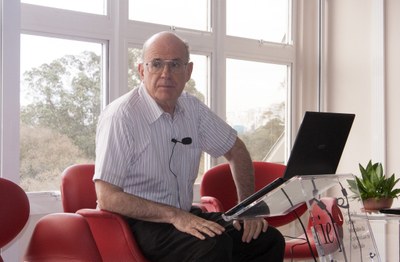
    <title>The Challenge of Hospitality: Migrants and Refugees - October 22, 2015</title>
    <link>https://www.iea.usp.br/en/media-library/photos/events-2015/o-desafio-da-hospitalidade-emigrantes-e-refugiados-22-de-outubro-de-2015</link>
    <description></description>
    
    <dc:publisher>No publisher</dc:publisher>
    <dc:creator>Richard Meckien</dc:creator>
    <dc:rights></dc:rights>
    
      <dc:subject>Europe</dc:subject>
    
    
      <dc:subject>Human Rights</dc:subject>
    
    
      <dc:subject>Geopolitics</dc:subject>
    
    
      <dc:subject>Violence</dc:subject>
    
    
      <dc:subject>Public Policies</dc:subject>
    
    
      <dc:subject>Glocal</dc:subject>
    
    
      <dc:subject>Society</dc:subject>
    
    
      <dc:subject>Globalization</dc:subject>
    
    
      <dc:subject>Middle east</dc:subject>
    
    
      <dc:subject>Migration</dc:subject>
    
    <dc:date>2015-10-22T02:00:00Z</dc:date>
    <dc:type>Pasta</dc:type>
  </item>


  <item rdf:about="https://www.iea.usp.br/en/news/sense-of-humanity-and-hospitality-in-a-world-of-wars-and-hunger">
    <title>Sense of humanity and hospitality in a world of wars and hunger</title>
    <link>https://www.iea.usp.br/en/news/sense-of-humanity-and-hospitality-in-a-world-of-wars-and-hunger</link>
    <description></description>
    <content:encoded xmlns:content="http://purl.org/rss/1.0/modules/content/"><![CDATA[<p>Diversity is a feature of the contemporary world, from which some trends that transform countries in modern towers of Babel derive. Increasing global migration, aging, migration by sectarian wars and hunger are some traces of modernity.</p>
<p><span>The consequences of the Middle East conflicts put <span>the impact of the astonishing figures of war and hunger refugees </span>in evidence in the international agenda, with no similar situation in history.</span></p>
<p>The theme leads to the discussion of the principle of hospitality, defined by philosopher Jacques Derrida as the ability to receive the other as different, but essentially the same. It also raises a comparative analysis of the European and Brazilian reaction to the issue. <i>The Challenge of Hospitality: Migrants and Refugees</i> is the title of the debate to be held by the IEA on <strong>October 22</strong>, <strong>at 2.30 pm</strong>, in the Institute's Events Room.</p>
<p>This will be the second meeting of the Laboratory of Global Megatrends and Challenges to Democracy. The conference will have the coordination of Portuguese political scientist Álvaro de Vasconcelos, an assistant professor at the USP's Institute of International Relations (IRI), and the participation of Geraldo Adriano Godoy de Campos, a professor at the ESPM's course of international relations, and <a href="https://www.iea.usp.br/en/persons/researchers/sylvia-duarte-dantas-1" class="external-link">Sylvia Dantas</a>, coordinator of the <a href="https://www.iea.usp.br/en/research/research-groups/intercultural-dialogues" class="external-link">IEA's Intercultural Dialogues research group</a>. The laboratory was started in June this year with the debate <i><a href="https://www.iea.usp.br/en/news/identity-based-nationalism-in-focus" class="external-link">The Challenge of Identity-Based Nationalism</a></i>.</p>
<table class="tabela-direita-borda">
<tbody>
<tr>
<th>
<h3>Related material</h3>
<p><a href="https://www.iea.usp.br/en/news/identity-based-nationalism-in-focus" class="external-link">Identity-Based Nationalism in Focus</a></p>
</th>
</tr>
</tbody>
</table>
<p><span>"We have watched the drama of those who hoped to find refuge and hospitality and ended up finding walls, barbed wire, violence and mistrust in many countries that have 'fear of the other', especially Muslims and those who come from the Middle East," says Vasconcelos.</span></p>
<p>The war in Syria has forced four million people to leave the country and eight million to move internally. In addition to them there are war refugees from Iraq, Afghanistan, Sudan, Eritrea and Somalia. Thus, the number of refugees in the world in 2014 reached 59.5 million according to estimates by the <a class="external-link" href="http://www.unhcr.org/cgi-bin/texis/vtx/home">UN Refugee Agency</a><span>.</span></p>
<p><span>The event will be broadcast live over the </span><a href="https://www.iea.usp.br/en/aovivo" class="external-link">web</a><span>.</span></p>]]></content:encoded>
    <dc:publisher>No publisher</dc:publisher>
    <dc:creator>Richard Meckien</dc:creator>
    <dc:rights>Original version in Portuguese by Sylvia Miguel</dc:rights>
    
      <dc:subject>Europe</dc:subject>
    
    
      <dc:subject>Human Rights</dc:subject>
    
    
      <dc:subject>Sociology</dc:subject>
    
    
      <dc:subject>Citizenship</dc:subject>
    
    
      <dc:subject>Democracy</dc:subject>
    
    
      <dc:subject>Geopolitics</dc:subject>
    
    
      <dc:subject>Violence</dc:subject>
    
    
      <dc:subject>War</dc:subject>
    
    
      <dc:subject>Migration</dc:subject>
    
    
      <dc:subject>Globalization</dc:subject>
    
    
      <dc:subject>Social Sciences</dc:subject>
    
    
      <dc:subject>Middle east</dc:subject>
    
    
      <dc:subject>Political Science</dc:subject>
    
    
      <dc:subject>World</dc:subject>
    
    
      <dc:subject>Nationalism</dc:subject>
    
    
      <dc:subject>Event</dc:subject>
    
    
      <dc:subject>History</dc:subject>
    
    <dc:date>2015-10-16T16:35:00Z</dc:date>
    <dc:type>Notícia</dc:type>
  </item>


  <item rdf:about="https://www.iea.usp.br/en/news/physicist-eliezer-rabinovici-elected-vp-of-the-cern-board">
    <title>Physicist Eliezer Rabinovici is elected Vice President of the CERN's Board</title>
    <link>https://www.iea.usp.br/en/news/physicist-eliezer-rabinovici-elected-vp-of-the-cern-board</link>
    <description></description>
    <content:encoded xmlns:content="http://purl.org/rss/1.0/modules/content/"><![CDATA[<p><img src="https://www.iea.usp.br/midiateca/foto/eventos-2013/sesame-uma-visita-a-um-universo-paralelo-22-de-agosto-de-2013/eliezer-rabinovici-1/@@images/7fc571d0-524c-4368-b5f9-aac39ae2b31b.jpeg" alt="Eliezer Rabinovici" class="image-left" title="Eliezer Rabinovici" /><a href="https://www.iea.usp.br/en/persons/speakers/eliezer-rabinovici" class="external-link">Eliezer Rabinovici</a>, head of the Israeli Committee for High Energy Physics, has been elected Vice President of the <a class="external-link" href="http://home.cern/about">European Organization for Nuclear Research</a>'s Board. Headquartered in Geneva, it is the largest <span>particle </span>physics laboratory <span>in the world</span>.</p>
<p><span>Rabinovici has directed the <a class="external-link" href="http://www.as.huji.ac.il/">Institute of Advanced Studies</a> of the Hebrew University of Jerusalem, an institution linked to the <a class="external-link" href="http://www.ubias.net/">UBIAS</a> network, which brings together 34 IASs based in universities around the world. The IEA-USP is also a member.</span></p>
<p>The Israeli physicist is a member of the <a class="external-link" href="http://ica.usp.br/people/senior-committee">Senior Committee</a> of the <a class="external-link" href="http://intercontinental-academia.ubias.net/">Intercontinental Academia</a>, a project proposed by him with the objective to promote scientific exchange between generations, disciplines, cultures and continents. The first edition of the project is being conducted by the IEA-USP in partnership with the <span>University of Nagoya's</span> <a class="external-link" href="http://www.iar.nagoya-u.ac.jp/~iar/?lang=en">Institute for Advanced Research</a>.</p>
<table class="tabela-direita-200-borda">
<tbody>
<tr>
<td>
<h3 style="text-align: left; ">Related material</h3>
<p><a href="https://www.iea.usp.br/en/news/attempts-physics-build-time" class="external-link">The Attempts of Physics to Build Time</a><br /><br /><a href="https://www.iea.usp.br/en/news/sesame-a-research-center-for-the-middle-east" class="external-link">Sesame: A Visit to a Parallel Universe</a></p>
</td>
</tr>
</tbody>
</table>
<p>Rabinovici has visited the IEA-USP and gave lectures on the role of the UBIAS network and on his specialty, particle physics. On one occasion, he showed his vision of the <a class="external-link" href="http://www.sesame.org.jo">SESAME</a> project, of which he is a co-founder. It is a cooperative venture that brings together scientists and governments of several Middle Eastern countries in order to create a <span>third generation </span>light source.</p>
<p><span>At the election of the CERN, the physicist received the majority of the 21 votes by the member countries of the Board. Rabinovici had been elected to the position of Vice President of the SESAME project <span>in 2013, </span>when he also became its spokesman.</span></p>
<p><span>Israel is an associate member of the CERN since September 2014. Since 1991, the country has invested in research in Central Europe after being granted the observer status by the Board. Currently, Israel is involved in the <a class="external-link" href="http://atlas.ch/">Atlas</a> experiment, as well as on the premises of <a class="external-link" href="http://isolde.web.cern.ch/">CERN Isolde</a> and other experiences.</span></p>
<div class="box-newsfoto" style="text-align: right; ">Photo: Mauro Bellesa/IEA-USP</div>]]></content:encoded>
    <dc:publisher>No publisher</dc:publisher>
    <dc:creator>Richard Meckien</dc:creator>
    <dc:rights></dc:rights>
    
      <dc:subject>Physics</dc:subject>
    
    
      <dc:subject>Middle east</dc:subject>
    
    
      <dc:subject>Ubias</dc:subject>
    
    <dc:date>2015-12-23T19:30:00Z</dc:date>
    <dc:type>Notícia</dc:type>
  </item>


  <item rdf:about="https://www.iea.usp.br/en/news/brazilian-foreign-policy-under-the-critical-gaze-of-bernardo-sorj">
    <title>Brazilian foreign policy under the critical gaze of Bernardo Sorj</title>
    <link>https://www.iea.usp.br/en/news/brazilian-foreign-policy-under-the-critical-gaze-of-bernardo-sorj</link>
    <description></description>
    <content:encoded xmlns:content="http://purl.org/rss/1.0/modules/content/"><![CDATA[<p style="text-align: justify; "><img src="https://www.iea.usp.br/imagens/bernardo-sorj-1" alt="Bernardo Sorj" class="image-right" title="Bernardo Sorj" />Born in Uruguay and now a naturalized Brazilian, sociologist <a href="https://www.iea.usp.br/en/persons/visiting-professors/bernardo-sorj-1" class="external-link">Bernardo Sorj</a> reveals a particular interest in issues related to Latin America. Director of the Edelstein Center for Social Research, which aims to strengthen Latin American democracies, he is currently dedicated to the study “The Middle East Conflict: Scope and Limits of Brazil’s Foreign Policy,” a project he is developing as a visiting professor at the IEA.</p>
<p class="Text" style="text-align: justify; ">In addition to embracing this longstanding focus of investigation, Sorj’s research is also related to his initial academic training: he graduated in History and Sociology from the University of Haifa, Israel, where he also obtained a Master’s degree. He earned a doctorate from Manchester University, England, and completed his post-doctorate studies at the École des Hautes Études en Sciences Sociales, France.</p>
<p class="Text" style="text-align: justify; ">In the following interview, given to journalist Flávia Dourado, Sorj, who is a retired full professor from the Federal University of Rio de Janeiro (UFRJ), spoke about the study he is undertaking at the IEA, focused on Brazilian foreign policy during the government of president Lula. According to him, “statements emphasizing South-South relations are full of rhetorical excesses, while the overinvestment in the attempt to gain a seat on the UN Security Council is questionable and should be more widely discussed.”</p>
<p class="Sub1" style="text-align: justify; "> </p>
<p class="Sub1" style="text-align: justify; "><i><strong>In your research project, you say that a new world order is now being established, distinguished by multipolarity, the increasing autonomy of developing countries, and the relative diminishment  of U.S. influence on the global stage. What are factors driving these changes?</strong></i></p>
<p style="text-align: justify; ">The new international order, from a geopolitical point of view, is characterized by the central role that the United States still play, the only country with global military capability. This military power, however, is not infinite and the United States needs local allies to ensure its hegemony. In this sense, rather than a multipolar world, what we have is a world of negotiated hegemony that requires a more flexible American foreign policy. On the horizon, we already see the emerging outlines of a new superpower, China, which in the future may well face up to the United States. China’s situation, however, is very complex, surrounded by countries with which it has historic rivalries and border issues. Just one step back we have countries that are centers of regional power, including several European countries and Russia – for its military might –, but also India, Turkey and Brazil. From an economic standpoint, the world is more multipolarized: in addition to the centers of power represented by the United States and Europe, China now occupies a central place as the main trading partner of many countries.</p>
<p class="Sub1" style="text-align: justify; "><i><strong>What is the place of “emerging powers” such as Brazil in a multipolar world?</strong></i></p>
<p style="text-align: justify; ">The end of communism increased the autonomy of local elites, who ceased to fear communist revolutions and no longer needed to be under the protective umbrella of the United States. This goes for all Latin American countries. Brazil, for its geographic, demographic and economic weight, is the main referent of foreign policy in the region, but its international strategy has yet to consolidate into a coherent proposal. The highly protectionist Brazilian economic model limits the country’s role in South America as attractor of neighboring economies, as well as its ability to produce industrial chains interconnected with the regional and global economy. Statements emphasizing South-South relations are full of rhetorical excesses, while the overinvestment in the attempt to gain a seat on the UN Security Council is questionable and should be more widely discussed.</p>
<p class="Sub1" style="text-align: justify; "><i><strong>You speak of the configuration of a negotiated hegemony. What are its implications for the regulation of the new international order?</strong></i></p>
<p style="text-align: justify; ">As I mentioned earlier, negotiated hegemony is a growing demand of an international system that lacks the clarity of the Cold War era and where the main power, the United States, has lost relative weight. In this context, countries with only medium clout are seeking to expand their areas of influence and their role in international forums and institutions.</p>
<p class="Sub1" style="text-align: justify; "><i><strong>Your research focuses on Brazilian foreign policy under president Lula. How would you describe this policy and to what extent did it represent a rupture with the previous policy?</strong></i></p>
<p style="text-align: justify; ">To call it rupture would be an overstatement, especially because Lula had to deal with new realities that did not exist during Fernando Henrique Cardoso’s mandate, such as the foreign policy of Hugo Chavez and the BRIC. With regard to Bolivarian foreign policy, Lula’s government was keen enough to navigate properly, curbing his more radical initiatives and/or channeling them towards the creation of institutions basically without power, such as UNASUR and the South American Defense Council. Lula’s main distinction was a shift towards a more radical stance against the North, the explicit support of candidates in elections of neighboring countries – which implied a break with the tradition of respecting the national sovereignty of other countries –, the emphasis on South-South relations and, in international forums, a diminishing insistence on human rights (which was reversed under Dilma Rousseff).</p>
<p class="Sub1" style="text-align: justify; "><strong><i>Is this foreign policy being continued by the Dilma government?</i></strong></p>
<p style="text-align: justify; ">Overall, Dilma Rousseff has kept the basic lines of the previous government’s foreign policy, albeit with a much less personal activism in the international arena and without the controversial statements that characterized president Lula.</p>
<p class="Sub1" style="text-align: justify; "><i><strong>The foreign policy of the Lula government was characterized by the advocacy of a South-South cooperation strategy, of getting closer to developing countries in Latin America and Africa. What were the main changes in this realm and what political and economic effects did this strategy engender?</strong></i></p>
<p style="text-align: justify; ">Brazil’s trade relations with Latin America have not expanded during the Lula government and the crisis of the Mercosur worsened because of Argentina’s difficulties. Despite an integrationist rhetoric, the main event of recent years was the creation of the Pacific Alliance – to which Brazil does not belong and which includes Mexico, a country that Brazil marginalized with its emphasis on South America. In addition, the suspension of Paraguay after the ouster of president Fernando Lugo ignored procedures laid down in the Treaty of Ushuaia. Part of the Brazilian private investment in the region, by the banking industry, for instance, belongs to the natural process of firms expanding in search of new markets. The promotion of large contractors in neighboring countries, such as Bolivia and Ecuador, produced two crises when those governments denounced the construction works. Cooperation projects with Venezuela in the energy sector have stalled and it is still early to assess the soundness of investments made by Brazilian entrepreneurs in that country, with the active support of the Brazilian government. In practical terms, Brazil is facing increasing competition from Chinese products in the region, and a strategy to limit the damage has yet to be developed.</p>
<p class="Sub1" style="text-align: justify; "><strong><i>During the Lula administration, Brazil strove unsuccessfully to join the UN Security Council. How do you see the prospects of this happening and what would be the main benefits for the country?</i></strong></p>
<p style="text-align: justify; ">It has long been argued that the main impediment to changing the structure of the Security Council is the United States, when actually the problem is more complex. China also has no interest in this change, as it would bring to the council countries like Japan and India, with which it has serious disputes. Brazil’s gestures to please China in the hope that it would support Brazilian demands proved fruitless. Personally, I believe Brazil should not invest so much on this issue, which furthermore divides Latin American countries, such as Mexico, that believe the seat should be rotated among the countries of the region.</p>
<p class="Sub1" style="text-align: justify; "><strong><i>The central aim of your research is to analyze the roles of Brazil and Turkey in the attempt to negotiate an agreement in 2010 that might have resolved the impasses of the Iranian nuclear program. How do you analyze this attempt and what did it represent to Brazil’s image before international public opinion?</i></strong></p>
<p style="text-align: justify; ">I still don’t have enough elements to make a considered assessment. How much the misstep was due to misreading the signals sent by the United States and how much derived from the hastiness of the team that advised the president remains an open question. The result was painful for Brazil, which joined a table where the stakes were much higher than foreseen.</p>
<p class="Sub1" style="text-align: justify; "><i><strong>What is your opinion about the position of Lula’s government in the Palestinian issue?</strong></i></p>
<p style="text-align: justify; ">The stance of Lula’s government was balanced, advocating the creation of a Palestinian state coexisting with the state of Israel.</p>
<p class="Sub1" style="text-align: justify; "><strong><i>What about Brazilian business initiatives geared to the Arab countries?</i></strong></p>
<p style="text-align: justify; ">The Arab Spring saw the fall of several governments with which president Lula had tried to establish closer ties. Brazil should reevaluate its policy towards Arab countries, seeking partners that display greater political stability, such as Morocco, for example.</p>
<p style="text-align: right; "><span class="discreet">Photo: from the files of Bernardo Sorj</span></p>]]></content:encoded>
    <dc:publisher>No publisher</dc:publisher>
    <dc:creator>Richard Meckien</dc:creator>
    <dc:rights>Carlos Malferrari (translator)</dc:rights>
    
      <dc:subject>Brazil</dc:subject>
    
    
      <dc:subject>Middle east</dc:subject>
    
    
      <dc:subject>Glocal</dc:subject>
    
    <dc:date>2014-01-28T12:55:00Z</dc:date>
    <dc:type>Notícia</dc:type>
  </item>


</rdf:RDF>