<?xml version="1.0" encoding="utf-8" ?>
<rdf:RDF xmlns:rdf="http://www.w3.org/1999/02/22-rdf-syntax-ns#" xmlns:dc="http://purl.org/dc/elements/1.1/" xmlns:syn="http://purl.org/rss/1.0/modules/syndication/" xmlns="http://purl.org/rss/1.0/">


<channel rdf:about="https://www.iea.usp.br/search_rss">
  <title>Instituto de Estudos Avançados da Universidade de São Paulo</title>
  <link>https://www.iea.usp.br</link>

  <description>
    
            These are the search results for the query, showing results 1 to 7.
        
  </description>


  <image rdf:resource="https://www.iea.usp.br/logo.png" />

  <items>
    <rdf:Seq>
      
        <rdf:li rdf:resource="https://www.iea.usp.br/en/news/japanese-museums" />
      
      
        <rdf:li rdf:resource="https://www.iea.usp.br/en/news/journal-issue-103" />
      
      
        <rdf:li rdf:resource="https://www.iea.usp.br/en/events/between-diversity-decolonisation" />
      
      
        <rdf:li rdf:resource="https://www.iea.usp.br/en/news/jochen-volz-will-present-his-plans" />
      
      
        <rdf:li rdf:resource="https://www.iea.usp.br/en/news/museum-of-things-inbetween" />
      
      
        <rdf:li rdf:resource="https://www.iea.usp.br/en/news/researcher-shows-the-power-of-games-and-virtuality-in-science-and-museums" />
      
      
        <rdf:li rdf:resource="https://www.iea.usp.br/en/news/diretctor-presents-critical-guide-on-museums-at-conferences-in-europe" />
      
    </rdf:Seq>
  </items>

</channel>


  <item rdf:about="https://www.iea.usp.br/en/news/japanese-museums">
    <title>Mariko Murata addresses the issues and possibilities of decolonising museums in Japan</title>
    <link>https://www.iea.usp.br/en/news/japanese-museums</link>
    <description></description>
    <content:encoded xmlns:content="http://purl.org/rss/1.0/modules/content/"><![CDATA[<table class="tabela-direita">
<tbody>
<tr>
<th><img src="https://www.iea.usp.br/imagens/exposicao-permanente-do-museu-e-parque-ainu-nacional-upopoy" alt="Exposição permanente do Museu e Parque Ainu Nacional Upopoy" class="image-inline" title="Exposição permanente do Museu e Parque Ainu Nacional Upopoy" /></th>
</tr>
<tr>
<td><span class="discreet">Permanent exhibition of Ainu artifacts at the Upopoy National Ainu Museumnd Park</span></td>
</tr>
</tbody>
</table>
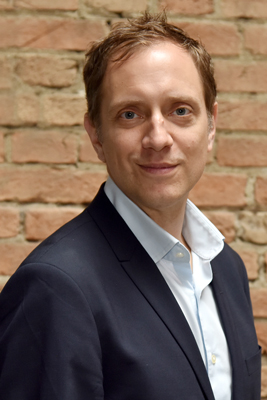
<p dir="ltr">The practice of museum decolonisation will be examined by Japanese sociologist <a href="https://www.iea.usp.br/en/persons/speakers/mariko-murata" class="external-link">Mariko Murata</a> (Kansai University) on May 29, at 10:00 am, when she will give the conference <span>"Decolonising Museums and Exhibitions on the Indigenous Ainu in Japan."</span></p>
<p dir="ltr">The debaters will be <a href="https://www.iea.usp.br/en/persons/speakers/michiko-okano" class="external-link">Michiko Okano</a> (Federal University of São Paulo), <a href="https://www.iea.usp.br/en/persons/speakers/sandra-salles" class="external-link">Sandra Mara Salles</a> (Afro Brasil Museum), <a href="https://www.iea.usp.br/en/persons/speakers/susilene-melo" class="external-link">Susilene Elias de Melo</a> (Worikg Museum), and <a href="https://www.iea.usp.br/en/persons/speakers/suzenalson-kaninde" class="external-link">Suzenalson da Silva Santos</a> (Kanindé Museum). The mediator will be <a href="https://www.iea.usp.br/en/persons/speakers/ilana-goldstein" class="external-link">Ilana Goldstein</a> (Federal University of São Paulo).</p>
<p dir="ltr">The activity has been organized by <a class="external-link" href="http://www.forumpermanente.org/en">IEA's Research Group Fórum Permanente: Cultural System Between Public and Private</a> in partnership with the <a href="https://www.iea.usp.br/research/chairs/olavo-setubal-chair-of-arts-culture-and-science" class="external-link">Olavo Setubal Chair of Art, Culture, and Science</a>. It will be held in English with simultaneous translation into Portuguese, taking place in the Alfredo Bosi Room, at the IEA. There will be a live transmission over the internet.</p>
<table class="tabela-esquerda">
<tbody>
<tr>
<th><img src="https://www.iea.usp.br/imagens/mariko-murata" alt="Mariko Murata" class="image-inline" title="Mariko Murata" /></th>
</tr>
<tr>
<td><span class="discreet">Sociologist Mariko Murata</span></td>
</tr>
</tbody>
</table>
<p><span><span>Ainu, the earliest settlers of northern Japan, have been colonised and marginalised by the Japanese for centuries</span>, according to Murata. <span>They were also collected, exhibited, and subjected to othering in expositions and museum exhibitions</span>. <span>Meanwhile, the Ainu people themselves created some collections as part of their ethnic movement, also organizing ethnic tourism in their settlements.</span></span><br /><br />In 2020, the <a class="external-link" href="https://ainu-upopoy.jp/en/facility/museum/">Upopoy National Ainu Museum and Park</a> was opened in Hokkaido <span>as the first national museum specialising in Ainu culture. <span>While the movement to establish a national museum had started earlier, it became part of the government’s campaign to showcase the diversity of Japanese culture to the international audience only after Japan’s bid for the Tokyo 2020/2021 Olympic and Paralympic Games.</span></span><br /><br /><span>The museum adopted various methods to decolonise the earlier representation of Ainu culture. However, since its opening, the museum received much criticism, especially due to its approach to storytelling from a first-person perspective of the Ainu.</span></p>
<p><span>For Murata, m<span>useum exhibitions are media that convey the museums’ messages directly to the audience; they are also sites of tension, negotiation, and contestation among the stakeholders.</span></span></p>
<p> </p>
<hr />
<p><i><strong><span>Decolonising Museums and Exhibitions on the Indigenous Ainu in Japan</span></strong><br />May 29, at 10:00 am<br />The event will be held in English and there will be simultaneous translation into Portuguese<br />Venue: Alfredo Bosi Room (IEA - 109, Rua da Praça do Relógio, ground floor, Cidade Universitária, São Paulo, SP)<br />Live transmission at <a href="https://www.iea.usp.br/aovivo" class="external-link">http://www.iea.usp.br/aovivo</a><br />More information with Sandra Sedini (<a class="mail-link" href="mailto:sedini@usp.br">sedini@usp.br</a>) or by phone (+55 11 3091 1687)<br /><a href="https://www.iea.usp.br/en/iea/events/between-diversity-decolonisation" class="external-link">http://www.iea.usp.br/en/iea/events/between-diversity-decolonisation</a></i></p>
<p style="text-align: right; "><span class="discreet">Photos (from the top): Upopoy National Ainu Museum and Park and Kansai University</span></p>]]></content:encoded>
    <dc:publisher>No publisher</dc:publisher>
    <dc:creator>Richard Meckien</dc:creator>
    <dc:rights>Original version in Portuguese by Mauro Bellesa.</dc:rights>
    
      <dc:subject>Olavo Setubal Chair</dc:subject>
    
    
      <dc:subject>cover</dc:subject>
    
    
      <dc:subject>Museums</dc:subject>
    
    
      <dc:subject>Culture</dc:subject>
    
    
      <dc:subject>Decolonisation</dc:subject>
    
    
      <dc:subject>Research Group: Fórum Permanente: Cultural System Between Public and Private</dc:subject>
    
    
      <dc:subject>Event</dc:subject>
    
    <dc:date>2023-05-17T14:05:00Z</dc:date>
    <dc:type>Notícia</dc:type>
  </item>


  <item rdf:about="https://www.iea.usp.br/en/news/journal-issue-103">
    <title>Culture, sustainability, and religious spaces are the themes of "Estudos Avançados" #103</title>
    <link>https://www.iea.usp.br/en/news/journal-issue-103</link>
    <description> </description>
    <content:encoded xmlns:content="http://purl.org/rss/1.0/modules/content/"><![CDATA[<p><img src="https://www.iea.usp.br/imagens/capa-da-revista-estudos-avancados-103" alt="Capa da revista &quot;Estudos Avançados&quot; 103" class="image-right" title="Capa da revista &quot;Estudos Avançados&quot; 103" /></p>
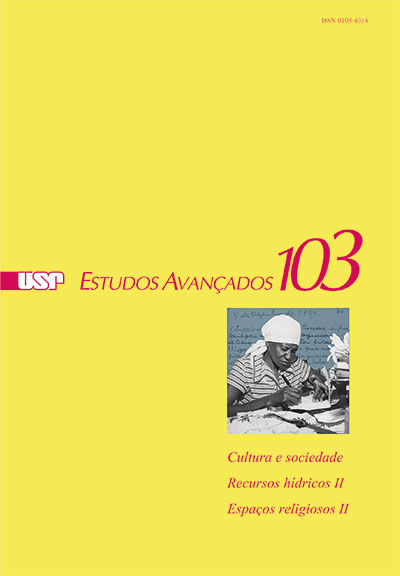
<p>The digital and printed versions of issue #103 of IEA's journal <i><a class="external-link" href="https://www.scielo.br/j/ea/i/2020.v34n99/">Estudos Avançados</a> </i><span>are available to be downloaded and purchased. It includes three dossiers: "Culture and Society," "Hybrids of Knowledge II," and "Religious Spaces II." The articles can also be accessed on the </span><a class="external-link" href="https://www.scielo.br/scielo.php?script=sci_issuetoc&amp;pid=0103-401420200002&amp;lng=pt&amp;nrm=iso">SciELO</a><span> platform (Portuguese only).</span></p>
<p>According to the editor, <a href="https://www.iea.usp.br/en/persons/researchers/sergio-adorno" class="external-link">Sérgio Adorno</a><span>, "Culture and Society" contains texts that "revisit relevant themes of our contemporaneity." From different methodological perspectives applied to various thematic and conceptual territories, the dossier "seeks to approach the possible or perhaps even lost meanings of the present times."</span></p>
<p>Of the nine articles, seven address themes raised by the works of writers Carolina Maria de Jesus, Franz Kafka, Artur Azevedo, João Guimarães Rosa, William Blake, Rainer Maria Rilke, and Hermann Block. The other two discuss political aspects involved in the language of Brazilian psychoanalysts and the political-cultural performance of the Brazilian-American Cultural Institute (BACI,) which operated in Washington from 1964 to 2007.</p>
<p>In "(Ob)scene and Spectacle in Carolina Maria de Jesus: Reflections from her Unpublished Manuscripts," Valéria Rosito, from the Federal Rural University of Rio de Janeiro (UFRRJ,) reflects on the conflicts that de Jesus has faced from her professionalization as a writer with the publication of the best seller <i>Quarto de Despejo</i>.</p>
<p>According to Rosito, there is a "clash between a polished vision of the person of the favela (or <i>favelada</i>) as a first-person witness and a "reporter" as opposed to the prismatic desire of the author for creative writing disjointed from the references that were immediate."</p>
<p>Kafka is the subject of two articles. In "Belonging/Not-Belonging in Franz Kafka: An Example to Remember," Celeste Ribeiro-de-Sousa, from USP's Faculty of Philosophy, Languages and Literature, and Human Sciences (FFLCH), points out the decisive psychic, social, and historical circumstances that have led the author to include his particular feelings of "belonging/not-belonging" <span>in his writings</span><span>. </span>Although there are many ways to explore the author's writings, the idea of "belonging/not-belonging" is presented as a key to understanding not only the man and the writer but also the texts he has written, according to Ribeiro-de-Sousa.</p>
<p>As part of a study on re-readings of the myth of Odysseus, the article "The Sirens that Keep Silent (or Not)," by Adelia Bezerra de Menezes, from the <span>Institute of Language Studies</span> at the State University of Campinas (UNICAMP), addresses the short story "The Silence of the Sirens," by Kafka, based on Walter Benjamin's ideas about the impossibility of traditional narrative due to the degradation of experience. For the researcher, Kafka astonishingly anticipates what is currently in force in Brazil <span>in a century</span><span>: "The era of post-truth, of fake news, of the overwhelming demoralization of politics, of lies as a strategy."</span></p>
<p>"From Father to Son: Transmission, Permanence, and Change in <span>João Guimarães Rosa's</span><span> 'The Third Bank of the River'," by Belinda Mandelbaum, from USP's Institute of Psychology, discusses the "transmission chains" present in Guimarães Rosa's narratives. The argument uses a framework of bond psychoanalysis, which considers the family as a privileged space for the transmission of messages between generations. In the article, the processes of permanence and change in the narratives' chain of transmission, that include the literary work and the readers, are approximated to the disorders of transmission between the father, the son, the story, and the readers in the short story "</span><span>The Third Bank of the River.</span><span>"</span></p>
<p>The two articles that do not refer to literary works maintain the concern of the dossier in relating cultural aspects to the characteristics and challenges of Brazilian society. In "The Language of the Other and Ours: Politics, Translation, and Psychoanalysis," Paulo Sérgio de Souza Jr., also from UNICAMP's Institute of Language Studies, discusses the inadequacy and elitism of the language used by Brazilian psychoanalysts, based on translations that are poorly produced and / or originated from a language other than the original of renowned authors of the European psychoanalytic thought.</p>
<p>Dária Jaremtchuk, from USP's School of Arts, Sciences, and Humanities (EACH), is the author of "The Brazilian-American Cultural Institute as a Political-Cultural Tool." According to her, following the history of the BACI, created in 1964, allows you to learn about aspects of Brazilian cultural diplomacy in the United States during the Cold War. The hypothesis that she adopts is that the spaces of art and culture have functioned as important environments of social articulation in diplomatic and commercial activities, with the BACI being a very revealing case of this process. "However, this reality changes in the contemporary globalized world, as artistic and cultural spaces seem to have ceased to be vital for the practice of cultural diplomacy, as the closing of the institute reveals."</p>
<p>The other two sets of texts in the issue complement the dossiers started in issue #102 of the journal. "Hybrids of Knowledge II" brings analyzes of new topics within the scope of issues addressed by IEA's Environment and Society Research Group," including energy governance, environmental impact assessment, nature and impact of participatory research in the production of knowledge, and hybrid nature of the concept of cultural heritage. <span>"Religious Spaces II," on the other hand, adds articles on the formation of museum collections and institutional collecting, the contributions of artists such as Cândido Portinari, Mino Cerezo Barredo, and Claudio Pastro to the formation of collections in the state of São Paulo, and the architectural legacies and their transformations over time.</span></p>
<p><span>The list below contains the names of the authors who have contributed with each one of the addressed themes:</span></p>
<p><strong>Culture and Society</strong></p>
<p><i>Valéria Rosito<br /></i><i>João Roberto Faria<br /></i><i>Paulo Sérgio de Souza Jr</i><span>.<br /></span><i>Celeste Ribeiro-de-Sousa<br /></i><i>Belinda Mandelbaum<br /></i><i>Adelia Bezerra de Meneses<br /></i><i>Juliana P. Perez, Daniel R. Bonomo, and </i><i>Danilo C. Serpa<br /></i><i>Andrio J. R. dos Santos<br /></i><i>Dária Jaremtchuk</i></p>
<p><strong>Hybrids of Knowledge II</strong></p>
<p dir="ltr"><i>Andrea Lampis, </i><i><span>João Marcos Mott Pavanelli, Ana Lía del Valle Guerrero, and Célio Bermann</span><br />Evandro Mateus Moretto, Simone Athayde, Carolina Rodrigues da Costa Doria, Amarilis Lucia Casteli Figueiredo Gallardo, Neiva Cristina de Araujo, Carla Grigoletto Duarte, Evandro Albiach Branco, Sergio Mantovani Paiva Pulice, and Daniel Rondineli Roquetti<br />Marina Ribeiro Corrêa, Luciana Yokoyama Xavier, Leandra R. Gonçalves, Mariana Martins de Andrade, Mayara de Oliveira, Nicole Malinconico, Camilo M. Botero, Celene Milanés, Ofelia Pérez Montero, Omar Defeo, and Alexander Turra<br /></i><i>Leandro L Giatti, Jutta Gutberlet, Renata Ferraz de Toledo, and</i><span> </span><i><span>Francisco Nilson Paiva dos Santos</span><br />Sílvia Helena Zanirato, Tatiana Gomes Rotondaro, Maria Letícia Mazzucchi Ferreira, and Cyril Isnarto</i></p>
<p><strong>Religious Spaces II</strong></p>
<p dir="ltr"><i>Christian Mascarenhas<br /></i><i>Andréa Franzoni Tostes<br /></i><i>Márcio Luiz Fernandes<br /></i><i>Hilda Souto e Márcio Luiz Fernandes<br /></i><i>Ubiratan J. A. Silva</i></p>
<div id="_mcePaste">
<div class="tlid-results-container results-container">
<div class="tlid-result result-dict-wrapper">
<div class="result tlid-copy-target">
<div class="text-wrap tlid-copy-target"></div>
</div>
</div>
</div>
</div>]]></content:encoded>
    <dc:publisher>No publisher</dc:publisher>
    <dc:creator>Richard Meckien</dc:creator>
    <dc:rights>Original version in Portuguese by Mauro Bellesa.</dc:rights>
    
      <dc:subject>Literature</dc:subject>
    
    
      <dc:subject>Sustainability</dc:subject>
    
    
      <dc:subject>Climate Change</dc:subject>
    
    
      <dc:subject>Journal</dc:subject>
    
    
      <dc:subject>Museums</dc:subject>
    
    
      <dc:subject>Religion</dc:subject>
    
    
      <dc:subject>Publications</dc:subject>
    
    <dc:date>2022-02-08T16:40:00Z</dc:date>
    <dc:type>Notícia</dc:type>
  </item>


  <item rdf:about="https://www.iea.usp.br/en/events/between-diversity-decolonisation">
    <title>Decolonising Museums and Exhibitions on the Indigenous Ainu in Japan</title>
    <link>https://www.iea.usp.br/en/events/between-diversity-decolonisation</link>
    <description></description>
    <content:encoded xmlns:content="http://purl.org/rss/1.0/modules/content/"><![CDATA[<div class="kssattr-target-parent-fieldname-text-69d0218562c643ad9cceea31ef7dd80d kssattr-macro-rich-field-view kssattr-templateId-widgets/rich kssattr-atfieldname-text " id="parent-fieldname-text-69d0218562c643ad9cceea31ef7dd80d">
<p><strong><a href="https://www.iea.usp.br/eventos/representacao-ainu-japao/" class="external-link">Clique aqui para a versão em Português</a></strong></p>
<p dir="ltr" id="docs-internal-guid-d0a3bb30-7fff-08ba-a56a-eac3b67b6e4f">This presentation examines the practice of decolonising museums. It particularly focuses on the museum exhibits related to the Indigenous Ainu and promotes museal consciousness towards the issue of decolonising Ainu culture.</p>
<p dir="ltr">Ainu, the earliest settlers of northern Japan, had been colonised and marginalised by the Japanese for centuries. They were also collected, exhibited, and subjected to othering in expositions and museum exhibitions. Meanwhile, the Ainu people themselves created some collections as part of their ethnic movement. The Ainu hosts also organised ethnic tourism in the Ainu settlements.</p>
<p dir="ltr">In 2020, the <a class="external-link" href="https://ainu-upopoy.jp/en/facility/museum/">Upopoy National Ainu Museum and Park</a> opened as the first national museum specialising in Ainu culture. While the movement to establish a national museum had started earlier, it became part of the government’s campaign to showcase the diversity of Japanese culture to the international audience only after Japan’s bid for the Tokyo 2020 Olympic and Paralympic Games. The museum adopted various methods to decolonise the earlier representation of Ainu culture. However, since its opening, the museum received much criticism, especially due to its approach to storytelling from a first-person perspective of the Ainu. Museum exhibitions are media that convey the museums’ messages directly to the audience; they are also sites of tension, negotiation, and contestation among the stakeholders.</p>
<p dir="ltr">Accordingly, this presentation aims to analyse the aforementioned process in which the complexity of decolonising museums is at stake. It will also assess other museum exhibits on Ainu culture for comparison and measure how museum practices have changed over time.</p>
<p dir="ltr"><strong>Presenter:</strong><span id="docs-internal-guid-604d4eda-7fff-4fc5-e33a-13ba5121a137"> </span></p>
<p dir="ltr"><span id="docs-internal-guid-604d4eda-7fff-4fc5-e33a-13ba5121a137"><a href="https://www.iea.usp.br/en/persons/speakers/mariko-murata" class="external-link">Mariko Murata</a> (Kansai University)<br /></span></p>
<ul id="docs-internal-guid-bf824f07-7fff-b90b-a64d-62489d94c7b7">
</ul>
<p><strong>Mediator:</strong></p>
<p><a href="https://www.iea.usp.br/en/persons/speakers/ilana-goldstein" class="external-link">Ilana Goldstein</a> (Federal University of São Paulo)</p>
<p><strong>Debaters:</strong></p>
<p><a href="https://www.iea.usp.br/en/persons/speakers/michiko-okano" class="external-link">Michiko Okano</a> (<span>Federal University of São Paulo</span>)<br /><a href="https://www.iea.usp.br/en/persons/speakers/sandra-salles" class="external-link">Sandra Mara Salles</a> (Afro Brasil Museum)<br /><a href="https://www.iea.usp.br/en/persons/speakers/susilene-melo" class="external-link">Susilene Elias de Melo</a><span> (Worikg Museum)<br /></span><a href="https://www.iea.usp.br/en/persons/speakers/suzenalson-kaninde" class="external-link">Suzenalson da Silva Santos</a><span> (Kanindé Museum)</span></p>
<p dir="ltr"><span>Free and public event </span><strong>|</strong><span> No registration required<br /></span><span>Online and on-site event </span><strong>|</strong><span> No attendance certification will be provided<br /></span><span>The event will be held in English and there will be simultaneous translation into Portuguese </span><strong>|</strong><span> Live transmission at </span><a href="https://www.iea.usp.br/aovivo" class="external-link">http://www.iea.usp.br/aovivo</a></p>
<h3><strong>Organization</strong></h3>
<p><a class="external-link" href="http://www.forumpermanente.org/en"><span>IEA's Research Group </span>Fórum Permanente: Cultural System Between Public and Private</a></p>
<h3><strong>Partner</strong></h3>
<p><span><a href="https://www.iea.usp.br/en/research/chairs/olavo-setubal-chair-of-arts-culture-and-science" class="external-link">Olavo Setubal Chair of Art, Culture, and Science</a></span></p>
</div>
<div></div>]]></content:encoded>
    <dc:publisher>No publisher</dc:publisher>
    <dc:creator>Richard Meckien</dc:creator>
    <dc:rights></dc:rights>
    
      <dc:subject>Olavo Setubal Chair</dc:subject>
    
    
      <dc:subject>Museums</dc:subject>
    
    
      <dc:subject>Culture</dc:subject>
    
    
      <dc:subject>Decolonisation</dc:subject>
    
    
      <dc:subject>Research Group: Fórum Permanente: Cultural System Between Public and Private</dc:subject>
    
    
      <dc:subject>Event</dc:subject>
    
    <dc:date>2018-07-30T18:50:00Z</dc:date>
    <dc:type>Evento</dc:type>
  </item>


  <item rdf:about="https://www.iea.usp.br/en/news/jochen-volz-will-present-his-plans">
    <title>Director of Pinacoteca presents his plans for the museum</title>
    <link>https://www.iea.usp.br/en/news/jochen-volz-will-present-his-plans</link>
    <description></description>
    <content:encoded xmlns:content="http://purl.org/rss/1.0/modules/content/"><![CDATA[<table class="tabela-esquerda">
<tbody>
<tr>
<th><img src="https://www.iea.usp.br/imagens/Christina-Rufatto_JochenVolz.jpg" alt="Jochen Volz" class="image-inline" title="Jochen Volz" /></th>
</tr>
<tr>
<td><strong>Jochen Volz, director of the São Paulo Pinacoteca</strong></td>
</tr>
</tbody>
</table>
<p>On August 7, at 2.00 pm, the <a href="https://www.iea.usp.br/en/research/research-groups/forum-permanente-cultural-system-between-public-and-private" class="external-link">Research Group Fórum Permanente: Cultural System Between Public and Private</a> will promote a debate with Jochen Volz, director of the São Paulo <span>Pinacoteca</span>.</p>
<p dir="ltr">At the meeting, which will take place in the IEA Events Room, Volz will present his plan for the museum, and dialogue with experts from the area and other guests on this and other topics related to cultural management. The coordination of the event will be in charge of <a href="https://www.iea.usp.br/en/persons/researchers/martin-grossmann" class="external-link">Martin Grossmann</a>, from USP's School of Communications and Arts (ECA), and coordinator of the research group and of <a href="https://www.iea.usp.br/en/research/chairs/olavo-setubal-chair-of-arts-culture-and-science" class="external-link">Olavo Setubal Chair of Arts, Culture and Science</a>.</p>
<p dir="ltr">The debaters will be Ana Letícia Fialho, from the Brazilian Ministry of Culture, Daniel Rangel, from <span>N+1 Arte Cultura, </span>Felipe Arruda and Paulo Myiada, from the Tomie Ohtake Institute, Ilana Goldstein, from the Federal University of São Paulo, Jorge Schwartz, from the Lasar Segall Museum, José Augusto Ribeiro, from the Pinacoteca, and Luciana Guimareães, from the São Paulo Biennial Foundation.</p>
<p dir="ltr"><span> </span><span>Prior to the Pinacoteca, Volz was the programming director for the Serpentine Gallerie, in London, from 2012 to 2015, artistic director of the Inhotim Institute, in Minas Gerais, from 2005 to 2012, and curator of the Portikus, in Frankfurt, from 2001 to 2004. At the São Paulo Biennial, he was the chief curator of the 32nd edition, held in 2016, and <span>guest </span>co-curator of the 27th edition in 2006. In other international exhibitions, Volz was the co-curator of the 53rd Venice Biennale in 2009 and of the 1st Aichi Triennial, in Nagoya, in 2010.</span></p>
<p dir="ltr">The research group has already held meetings with Paulo Herkenhoff, director of the Rio Art Museum (MAR), and with representatives of the <a href="https://www.iea.usp.br/en/news/museum-of-things-inbetween" class="external-link">Johann Jacobs Museum</a> of Zürich, both of them in order to debate issues related to cultural management and museums.</p>
<div></div>]]></content:encoded>
    <dc:publisher>No publisher</dc:publisher>
    <dc:creator>Richard Meckien</dc:creator>
    <dc:rights>Original version in Portuguese by Vinícius Sayão.</dc:rights>
    
      <dc:subject>Museums</dc:subject>
    
    
      <dc:subject>Olavo Setubal Chair</dc:subject>
    
    
      <dc:subject>Research Group: Fórum Permanente: Cultural System Between Public and Private</dc:subject>
    
    
      <dc:subject>Event</dc:subject>
    
    <dc:date>2017-07-21T17:05:00Z</dc:date>
    <dc:type>Notícia</dc:type>
  </item>


  <item rdf:about="https://www.iea.usp.br/en/news/museum-of-things-inbetween">
    <title>Roger Buergel proposes unclassified museums in a conference at the IEA</title>
    <link>https://www.iea.usp.br/en/news/museum-of-things-inbetween</link>
    <description></description>
    <content:encoded xmlns:content="http://purl.org/rss/1.0/modules/content/"><![CDATA[<table class="tabela-direita">
<tbody>
<tr>
<th><img src="https://www.iea.usp.br/imagens/Roger_M-_Buergel__Lidwien_van_de_Ven-_quadrada.jpg" alt="Roger M Buergel" class="image-inline" title="Roger M Buergel" /></th>
</tr>
<tr>
<td><span><strong><span>Roger Buergel, director of the </span><a class="external-link" href="http://www.johannjacobs.com/en/">Johann Jacobs Museum</a><span> in Zurich</span></strong></span></td>
</tr>
</tbody>
</table>
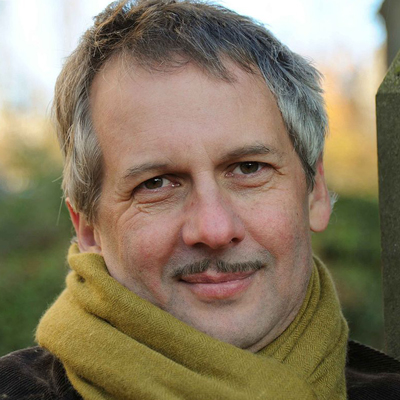
<p><a href="https://www.iea.usp.br/en/persons/speakers/roger-buergel" class="external-link">Roger Buergel</a>, director of the <a class="external-link" href="http://www.johannjacobs.com/en/">Johann Jacobs Museum</a> in Zurich and curator of the <a class="external-link" href="http://www.forumpermanente.org/event_pres/exposicoes/documenta-12-1">12th Documenta</a> in Kassel, will be at the IEA for the conference <i>The Museum of Things in-Between</i>. <span>The speech will be broadcast </span><a href="https://www.iea.usp.br/aovivo" target="_blank">live</a><span> on the Institute's website.</span></p>
<p><span>On </span><strong>February 9, at 2.30 pm</strong><span>, he will address the need to give more visibility and space to things that are now in an in-between condition in the field of culture. In Buergel's opinion, one must get rid of the museological categories, and of the distinctions between art and non-art, promoting the appreciation of the uniqueness of objects on display. The researcher believes that the existence of categories in museums leads to a restricted human perception about things.</span></p>
<p>According to <a href="https://www.iea.usp.br/en/persons/researchers/martin-grossmann/" class="external-link">Martin Grossmann</a>, coordinator of the <span><a href="https://www.iea.usp.br/en/research/research-groups/forum-permanente-cultural-system-between-public-and-private" class="external-link">Research Group Fórum Permanente: Cultural System Between Public and Private</a></span>, which organizes the meeting, the museum format proposed by Buergel operates in a post-colonial (transcultural) mode, critical to a museum model that was developed in Europe in the eighteenth and nineteenth centuries, but still very present today. "It is a museum that promotes a more horizontal relationship between cultures, languages and cosmologies, where the object - 'the thing' - can act 'in-between', whether in relation to museological or disciplinary categories, or in relation to different notions of space and time," he explains.</p>
<p>Grossmann recalls that the subject has already been explored <span>in Brazil, mainly in the fields of cultural theory and criticism.</span> Silviano Santiago's "The Space In-Between: Essays in Latin American Culture" (1971) and Roberto Schwartz's "<a class="external-link" href="https://www.amazon.com/Misplaced-Ideas-Brazilian-Critical-American/dp/086091576X">Misplaced Ideas: Essays on Brazilian Culture</a>" (1977) are two examples of works that address possibilities of action out of the European modern tradition.</p>
<p>The meeting at the IEA will feature a debate with the participation of <a href="https://www.iea.usp.br/en/persons/speakers/lisette-lagnado" class="external-link">Lisette Lagnado</a>, director of the School of Visual Arts Parque Lage; <a href="https://www.iea.usp.br/en/news/brandao-ibram" class="external-link">Carlos Roberto Brandão</a>, director of USP's Museum of Contemporary Art (MAC); <a href="https://www.iea.usp.br/en/persons/researchers/jose-teixeira-coelho-netto" class="external-link">José Teixeira Coelho Netto</a>, former director of MAC-USP and curator-general of MASP from 2006 to 2014; and the former director of the Museum of Modern Art of Bahia, curator and culture-<span>specialized </span>journalist <a href="https://www.iea.usp.br/en/persons/speakers/marcelo-rezende" class="external-link">Marcelo Rezende</a>. Moderation will be in charge of Grossmann.</p>]]></content:encoded>
    <dc:publisher>No publisher</dc:publisher>
    <dc:creator>Richard Meckien</dc:creator>
    <dc:rights>Original version in Portuguese by Fernanda Rezende.</dc:rights>
    
      <dc:subject>Museums</dc:subject>
    
    
      <dc:subject>Culture</dc:subject>
    
    
      <dc:subject>Research Group: Fórum Permanente: Cultural System Between Public and Private</dc:subject>
    
    
      <dc:subject>Art</dc:subject>
    
    <dc:date>2017-01-31T17:15:00Z</dc:date>
    <dc:type>Notícia</dc:type>
  </item>


  <item rdf:about="https://www.iea.usp.br/en/news/researcher-shows-the-power-of-games-and-virtuality-in-science-and-museums">
    <title>Researcher shows the power of games and virtuality in science and museums</title>
    <link>https://www.iea.usp.br/en/news/researcher-shows-the-power-of-games-and-virtuality-in-science-and-museums</link>
    <description></description>
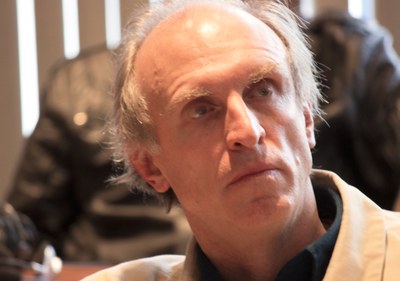
    <content:encoded xmlns:content="http://purl.org/rss/1.0/modules/content/"><![CDATA[<p><img src="https://www.iea.usp.br/imagens/christian-stein-perfil" alt="Christian Stein - Perfil" class="image-right" title="Christian Stein - Perfil" /><a href="https://www.iea.usp.br/en/persons/speakers/christian-stein" class="external-link">Christian Stein</a>, founder of <a class="external-link" href="https://www.facebook.com/gamelab.berlin/">Gamelab.berlin</a>, will be at the IEA on <strong>February 2</strong>, at <strong>2.30 pm</strong>, to show projects that use virtuality, virtual reality and games as a cultural technique. He will present current research on "Knowledge Architectures," the core area of the <i><a class="external-link" href="https://www.interdisciplinary-laboratory.hu-berlin.de/en/bwg/" target="_blank">Excellence Cluster Image Knowledge Gestaltung</a></i>. The conference <span style="text-align: justify; "><i>Architectures of Knowledge: About Interdisciplinary Research on Games, Virtuality and the Global Museum</i></span> will be broadcast <a href="https://www.iea.usp.br/en/aovivo" class="external-link">live</a> in the IEA website.</p>
<p><span>According to the <span>conferencist</span>, science and research need to communicate with a new audience, so museums, exhibitions and open science labs are proving to be promising playgrounds to try new ways of communicating and translating into new media. By addressing these themes, Stein will also cite research in highly interdisciplinary teams and interdisciplinarity itself.</span></p>
<p>Moderation will be in charge of <a href="https://www.iea.usp.br/en/persons/researchers/martin-grossmann/" class="external-link">Martin Grossmann</a>, coordinator of the <a href="https://www.iea.usp.br/en/research/research-groups/forum-permanente-cultural-system-between-public-and-private" class="external-link">Research Group <i>Fórum Permanente</i>: Cultural System Between Public and Private</a>, which organizes the meeting. The comments will be made by <a href="https://www.iea.usp.br/en/persons/speakers/gilson-schwartz" class="external-link">Gilson Schwartz</a>, from USP's School of Communications and Arts (ECA), <a href="https://www.iea.usp.br/en/persons/speakers/copy_of_giselle-beiguelman" class="external-link">Giselle Beiguelman</a>, from USP's Faculty of Architecture and Urbanism (FAU), <span class="external-link"><a href="https://www.iea.usp.br/en/persons/speakers/davi-noboru" class="external-link">Davi Nakano</a></span>, from USP's Polytechnic School (EP), <span class="external-link"><a href="https://www.iea.usp.br/en/persons/speakers/wilson-mizutani" class="external-link">Wilson Mizutani</a></span>, from USP's Institute of Mathematics and Statistics (IME), and <a href="https://www.iea.usp.br/en/persons/speakers/ricardo-karman" class="external-link">Ricardo Karman</a>, from Kompanhia of Centro de Terra.</p>]]></content:encoded>
    <dc:publisher>No publisher</dc:publisher>
    <dc:creator>Richard Meckien</dc:creator>
    <dc:rights>Original version in Portuguese by Fernanda Rezende.</dc:rights>
    
      <dc:subject>Art</dc:subject>
    
    
      <dc:subject>Knowledge</dc:subject>
    
    
      <dc:subject>Digital Culture</dc:subject>
    
    
      <dc:subject>Museums</dc:subject>
    
    
      <dc:subject>Research Group: Fórum Permanente: Cultural System Between Public and Private</dc:subject>
    
    <dc:date>2017-01-30T16:20:00Z</dc:date>
    <dc:type>Notícia</dc:type>
  </item>


  <item rdf:about="https://www.iea.usp.br/en/news/diretctor-presents-critical-guide-on-museums-at-conferences-in-europe">
    <title>Director of the IEA presents critical guide on museums at conferences in Europe</title>
    <link>https://www.iea.usp.br/en/news/diretctor-presents-critical-guide-on-museums-at-conferences-in-europe</link>
    <description></description>
    <content:encoded xmlns:content="http://purl.org/rss/1.0/modules/content/"><![CDATA[<table class="tabela-direita">
<tbody>
<tr>
<th><img src="https://www.iea.usp.br/en/media-library/photos/events-2014/debate-em-2-tempos-a-fantasmagoria-da-derrota-o-futebol-como-metafora-25-de-julho-de-2014/martin-grossmann-2/@@images/62106f5b-77d7-4add-aade-23ff9738fcb4.jpeg" alt="Martin Grossmann" class="image-inline" title="Martin Grossmann" /></th>
</tr>
<tr>
<td><strong>Martin Grossmann</strong></td>
</tr>
</tbody>
</table>
<p>The director of the IEA and coordinator of the Institute's research group <a href="https://www.iea.usp.br/en/research/research-groups/forum-permanente-cultural-system-between-public-and-private" class="external-link">Fórum Permanente: Cultural System Between Public and Private</a>, <a href="https://www.iea.usp.br/en/persons/researchers/martin-grossmann" class="external-link">Martin Grossmann</a> will be one of the lecturers of the seminar <a class="external-link" href="http://www.medientagung.humboldt-forum.de/?lang=en">Museums, Museumgoers, Media – A Visionary Project</a>, organized by the <a class="external-link" href="http://www.humboldt-forum.de/en/home/">Humboldt-Forum</a> in Berlin from <strong>December 3 to 5</strong>. "The Stranger's Guide to the Museum Galaxy" is the name of his conference, to be given on Friday, the 4th.</p>
<p>On December 10, Grossmann will deliver a more detailed presentation on the same theme at the <a class="external-link" href="http://www.birmingham.ac.uk/research/activity/ias/index.aspx">University of Birmingham's Institute of Advanced Studies</a>, where he will stay as a Distinguished Visiting Fellow Professor during this month and in June 2016.</p>
<p>With a title inspired by the bestseller "The Hitchhiker's Guide to the Galaxy" by Douglas Adams and Marshall McLuhan’s “The Gutenberg Galaxy: The Making of Typographic Man,” the speech intends to "offer a storyboard for a critical guide to attendees of museums in the contemporary society." In the future, the information may join a book or digital guide.</p>
<p>According to Grossmann, the paradigm of 20th century art museum, the "white cube" that has the MoMA as an exponent, has been deconstructed in recent decades. "Other types of museums are strengthening their differences and gaining global recognition. Today we are able to experience different types of 'mise-en-scène' in buildings aimed at art and culture," he says.</p>
<p>He highlights the growth of what he calls "paradoxical museum". A result of the "society of the spectacle", defined by Guy Debord, the phenomenon has as its backdrop the "spectacular" museums such as the Beoubourg in Paris, the Guggenheim in Bilbao, and the Tate Modern in London, besides the constant updating of the MoMA. Highlighted in this scenario is now the Humboldt-Forum, which will open to the public in 2019.</p>]]></content:encoded>
    <dc:publisher>No publisher</dc:publisher>
    <dc:creator>Richard Meckien</dc:creator>
    <dc:rights>Original version in Portuguese by Fernanda Rezende</dc:rights>
    
      <dc:subject>Museums</dc:subject>
    
    
      <dc:subject>Culture</dc:subject>
    
    
      <dc:subject>Art</dc:subject>
    
    
      <dc:subject>Parcerias internacionais</dc:subject>
    
    <dc:date>2015-12-02T17:35:00Z</dc:date>
    <dc:type>Notícia</dc:type>
  </item>


</rdf:RDF>