<?xml version="1.0" encoding="utf-8" ?>
<rdf:RDF xmlns:rdf="http://www.w3.org/1999/02/22-rdf-syntax-ns#" xmlns:dc="http://purl.org/dc/elements/1.1/" xmlns:syn="http://purl.org/rss/1.0/modules/syndication/" xmlns="http://purl.org/rss/1.0/">


<channel rdf:about="https://www.iea.usp.br/search_rss">
  <title>Instituto de Estudos Avançados da Universidade de São Paulo</title>
  <link>https://www.iea.usp.br</link>

  <description>
    
            These are the search results for the query, showing results 1 to 4.
        
  </description>


  <image rdf:resource="https://www.iea.usp.br/logo.png" />

  <items>
    <rdf:Seq>
      
        <rdf:li rdf:resource="https://www.iea.usp.br/en/news/seminar-reflects-on-a-balanced-relationship-between-humans-and-the-environment" />
      
      
        <rdf:li rdf:resource="https://www.iea.usp.br/en/news/a-dimensao-politica-da-obra-arquitetonica-de-lina-bo-bardi" />
      
      
        <rdf:li rdf:resource="https://www.iea.usp.br/en/news/massimo-canevacci" />
      
      
        <rdf:li rdf:resource="https://www.iea.usp.br/en/news/seminar-discusses-the-critical-and-empirical-approach-of-digital-culture" />
      
    </rdf:Seq>
  </items>

</channel>


  <item rdf:about="https://www.iea.usp.br/en/news/seminar-reflects-on-a-balanced-relationship-between-humans-and-the-environment">
    <title>Seminar reflects on a balanced relationship between humans and the environment</title>
    <link>https://www.iea.usp.br/en/news/seminar-reflects-on-a-balanced-relationship-between-humans-and-the-environment</link>
    <description></description>
    <content:encoded xmlns:content="http://purl.org/rss/1.0/modules/content/"><![CDATA[<p style="text-align: justify; "><img src="https://www.iea.usp.br/imagens/paisagem-no-rio-grande-do-sul" alt="Paisagem no Rio Grande do Sul" class="image-right" title="Paisagem no Rio Grande do Sul" />The <a href="https://www.iea.usp.br/en/research/research-groups/environmental-politics" class="external-link">IEA's Environmental Politics research group</a> will hold the international seminar <i>Landscapes: Home, Path and Water</i> <strong>from October 22 to 29</strong>, in three different venues. Researchers from Brazil, Italy and Portugal will reflect on the fundamental conditions for the establishment of a balanced relationship between humans and the environment.</p>
<p style="text-align: justify; "><span>According to Eda Tassara, coordinator of the research group, by addressing the presence and representation of home, path and water in the landscape and in the city, the seminar aims to "contribute to the intentional, poetic and shared construction of a more balanced social environment in the future in comparison to nowadays". She explains that the seminar's title is inspired in a statement by French geographer Jean Brunhes (1869-1930): "There are three key things to start a human community: home, path and water." She adds that psychologist Omar Ardans, from the Federal University of Santa Maria, by commenting on Brunhes's statement, said that its content "is in no way contradicted by the current state of life on the planet. On the contrary, it is even more modern than at the time of his writing."</span></p>
<p style="text-align: justify; "><span>However, there is one condition for the establishment of this balance, as Ardans's comment cited by the researcher: "That balance does not exist in (or to) a single individual, in a vacuum. Instead, the spaces of coexistence of this individual, and the participation in community and societal contexts define <span>the particular form of conquered balance (or, at worst, desired).</span>along with the physical environment and objects built by humans."</span></p>
<p style="text-align: justify; "><span>That's why, he said, "the first word for the proposed reflection should be 'city', privileged form of organization of the man on the grounds that he dwells." In support of this choice, Tassara points out that American urban planner and thinker Lewis Mumford (1895-1990) opened his book "The Culture of Cities" with a statement saying that the city "is the point of maximum concentration of force and culture in a community."</span></p>
<p style="text-align: justify; "><span>She also recalls that Italian philosopher Rosario Assunto (1915-1994) argued that "the concrete environment, the environment we live in and of which we live, is always the environment as a way of territory: a landscape". It follows that "landscape" is the second word of the seminar, "understood as the way that nature and man gave to the territory as they organized it on the basis of life."</span></p>
<p style="text-align: justify; "><span>Viewed from these perspectives, landscape and city can be understood as "more-than-spaces" inextricably linked, with the balance of the assembly having crucial importance for human life, but not just for it, according to Tassara. "Both our organic existence as the persistence of the very way of life of our community / society depend on this balance. Recognizing this mobilizes our reflection on the essential aspects of the human-environment relationship that is expressed in the countryside and in the cities."</span></p>
<p style="text-align: right; "><span class="discreet">Photo: <a class="external-link" href="http://www.flickr.com/photos/dpfeiffercardoso">Douglas Pfeiffer Cardoso/Flickr</a></span></p>]]></content:encoded>
    <dc:publisher>No publisher</dc:publisher>
    <dc:creator>Richard Meckien</dc:creator>
    <dc:rights>Original version in Portuguese by Mauro Bellesa</dc:rights>
    
      <dc:subject>Sociology</dc:subject>
    
    
      <dc:subject>Commons</dc:subject>
    
    
      <dc:subject>Research Group: Environmental Politics</dc:subject>
    
    
      <dc:subject>Environment</dc:subject>
    
    
      <dc:subject>Cities</dc:subject>
    
    
      <dc:subject>Event</dc:subject>
    
    <dc:date>2015-10-15T13:35:00Z</dc:date>
    <dc:type>Notícia</dc:type>
  </item>


  <item rdf:about="https://www.iea.usp.br/en/news/a-dimensao-politica-da-obra-arquitetonica-de-lina-bo-bardi">
    <title>The Political Dimension of Lina Bo Bardi’s Architectural Oeuvre </title>
    <link>https://www.iea.usp.br/en/news/a-dimensao-politica-da-obra-arquitetonica-de-lina-bo-bardi</link>
    <description></description>
    <content:encoded xmlns:content="http://purl.org/rss/1.0/modules/content/"><![CDATA[<table class="tabela-esquerda-200">
<tbody>
<tr>
<th><img src="https://www.iea.usp.br/imagens/lina-bo-bardi/@@images/28feb2f1-e936-4c3d-92fd-6a5ca85af869.jpeg" alt="Lina Bo Bardi" class="image-left" title="Lina Bo Bardi" /></th>
</tr>
<tr>
<td style="text-align: left; ">
<p align="center" class="Sub2"><strong>The Italian-Brazilian architect Lina Bo Bardi</strong></p>
</td>
</tr>
</tbody>
</table>
<p style="text-align: justify; "><i>Poetics in Lina Bardi: A Political Grammar</i> is the theme of the seminar that <a href="https://www.iea.usp.br/en/research/research-groups/environmental-politics" class="external-link">IEA’s Environmental Policy Research Group</a> will hold on November 25, from 10 am to 5 pm, in the Events Room of the Institute, celebrating the birth centenary of the Italian-Brazilian architect.</p>
<p class="Text" style="text-align: justify; "><span>The meeting will discuss the political dimension of the work of the architect who designed the São Paulo Museum of Art (MASP) and SESC Pompeia, focusing on her ideological commitment to popular culture and on the revolutionary character of her ideas as an intellectual of the Brazilian ethos. The lecturers will discuss particularly the ramifications of her thought, the influence of which extends to this today.</span></p>
<p class="Text" style="text-align: justify; "><span>Bardi emigrated to Brazil in 1946 and, according to Eda Tassara, the group’s coordinator and a professor at USP’s Institute of Psychology, she was confronted with a world still heavily rooted in its colonial past, which made her deeply aware of its cultural Eurocentrism and propelled her to become a forerunner of what was to become Postcolonial Criticism.</span></p>
<p class="Text" style="text-align: justify; "><span>“Initially developed mainly by Latin American thinkers, this movement expanded to other groups of intellectuals coming from Mestizo or Creole societies, or societies still under colonial yoke.”</span></p>
<p style="text-align: justify; "><span>For Tassara, it would be reductionist to attribute the epithet “political architecture” to Lina’s oeuvre. “It is Lina’s poetics that should earn the adjective ‘political’. It was what she sought to represent, whatever the material universe she might be dedicating herself to. And she dedicated herself to the Brazilian ethos, </span></p>
<ul style="text-align: justify; ">
</ul>
<table class="tabela-direita-200" style="text-align: justify; ">
<tbody>
<tr>
<th><img src="https://www.iea.usp.br/imagens/masp" alt="MASP" class="image-right" title="MASP" /></th>
</tr>
<tr>
<td style="text-align: right; "><strong>The São Paulo Museum of Art (MASP), arguably Bardi’s greatest architectural legacyi</strong></td>
</tr>
</tbody>
</table>
<p>The lecturers will address different facets of Bardi, based on the following reflections:</p>
<ul>
<li>Polyphonic Lina: A European Adrift in the World of the Tropics – <a href="https://www.iea.usp.br/en/persons/visiting-professors/copy2_of_massimo-canevacci/copy_of_massimo-canevacci" class="external-link">Massimo Canevacci</a></li>
<li>Intellectual Lina: A Critique of the Colonial Character of Power – Eda Tassara</li>
<li>Architect Lina: Space and the People in the Brazilian Ethos – José Oswaldo de Oliveira, Cilene Gomes and Márcia Augusto Ribeiro</li>
<li>Narrator Lina: Hope in Architectural Design and Utopia – Cristina Pontes Bonfiglioli</li>
<li>Poet Lina: Magic Lantern in the Emptiness of a Pool – Marcello G. Tassara</li>
<li>Dreamer Lina: Geopolitical Imagination and Miscegenation – Sandra Maria Patrício Ribeiro</li>
<li>Persona Lina: A Kaleidoscope – Maureen Bisilliat</li>
</ul>
<p> </p>
<p><span style="text-align: justify; ">The seminar happens on the same day as the encounter </span><i style="text-align: justify; ">Conversazioni e Video su Lina Bo Bardi</i><span style="text-align: justify; "> at the Università La Sapienza di Roma, Rome, Italy. The Italian event is part of the cycle </span><i style="text-align: justify; ">Lina Bo Bardi (1914-2014) – un’Architetta Romana in Brasile</i><span style="text-align: justify; ">, organized by the university’s Department of Architecture and Design, also in celebration of Bardi’s birth centenary.</span></p>
<p class="Text" style="text-align: justify; ">From noon to 1 pm, the lecturers from the Brazilian and the Italian events will debate via teleconference, moderated by architect Alessandra Criconia, member of the cycle’s scientific committee, in Rome, and by Eda Tassara, in São Paulo.</p>
<p class="Text" style="text-align: justify; "><span style="text-align: justify; ">The event will be broadcast live on the </span><a style="text-align: justify; " href="https://www.iea.usp.br/aovivo">web</a><span style="text-align: justify; ">.</span></p>
<p style="text-align: right; "><span class="discreet">Photos: <a class="external-link" href="https://www.flickr.com/photos/sescsp/8639926069/in/photostream">Olney Kuse</a> (top) and <span class="external-link">Benjamin Thompson</span>. </span></p>]]></content:encoded>
    <dc:publisher>No publisher</dc:publisher>
    <dc:creator>Flávia Dourado</dc:creator>
    <dc:rights>Carlos Malferrari (translator)</dc:rights>
    
      <dc:subject>Politics</dc:subject>
    
    
      <dc:subject>Urbanism</dc:subject>
    
    
      <dc:subject>Commons</dc:subject>
    
    
      <dc:subject>Research Group: Environmental Politics</dc:subject>
    
    <dc:date>2014-11-13T15:20:00Z</dc:date>
    <dc:type>Notícia</dc:type>
  </item>


  <item rdf:about="https://www.iea.usp.br/en/news/massimo-canevacci">
    <title>Canevacci: a new scientific thinking for the context of digital culture</title>
    <link>https://www.iea.usp.br/en/news/massimo-canevacci</link>
    <description>In the interview to IEA’s journalist Flávia Dourado, professor Massimo Canevacci explains some of the concepts of his authorship and questions the idea of an alienating culture.</description>
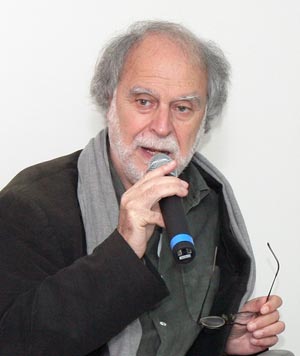
    <content:encoded xmlns:content="http://purl.org/rss/1.0/modules/content/"><![CDATA[<p style="text-align: justify; "><img src="https://www.iea.usp.br/imagens/massimo-canevacci-1" alt="Massimo Canevacci" class="image-right" title="Massimo Canevacci" />Researcher of digital culture, <a href="https://www.iea.usp.br/en/persons/visiting-professors/massimo-canevacci" class="external-link">Massimo Canevacci</a> does not look at the new world of digital technologies through old lenses. To cope with this emerging reality, the Italian anthropologist proposes new concepts – among  which the ‘ubiquity’, ‘multividual’ and ‘self-representation’ - and seeks to draw attention to the need of building a scientific thought that is more in tune with the changes taking place.</p>
<p style="text-align: justify; ">Professor at the Università degli Studi di Roma ‘La Sapienza’ and visiting professor at the IEA since March, his interdisciplinary studies mobilize referentials of communication, anthropology and critical theory, focusing on empirical research.</p>
<p style="text-align: justify; ">In the following interview to IEA’s journalist Flávia Dourado, Canevacci explains some of the concepts of his authorship, questions the idea of an alienating culture - a ‘standard determined by the economic and political structure’ - and proposes a relaxation of the classic scientific method through ‘reflective ethnography ‘, a methodological strategy that does not let itself stiffen by the rupture between subject and object.</p>
<p style="text-align: justify; "><strong>Your works speak of a transition from the ‘industrial city’, focused on productivity, class conflicts and political dialectic, to the 'communicational metropolis', marked by 'multi-centrism' and by modifying the perception of space-time. Is that what the concept of ‘ubiquity’ is?</strong></p>
<p style="text-align: justify; "><i>The dualistic logic of the industrial city was replaced by the multi-centrism of the communicational metropolis, in which the characteristic flexibility of digital culture prevails. This transformation is related to the size of ubiquity, which complicates the perception of space-time.</i></p>
<p style="text-align: justify; "><i>The person who passes through the network and the communicational metropolis can, in the same space-time, communicate with people from completely different contexts. This ubiquitous experience - unimaginable and nonexistent in the industrial city - raises enormous challenges for communication and ethnography: what kind of relationship with others does it cause? What about the issue of otherness? An ubiquitous connected (not collective) person is affirmed.</i></p>
<p style="text-align: justify; "><i>Before, in anthropology, the ‘other’ was the indigenous culture. But today I speak with the Bororo or the Xavante [indigenous peoples studied by Canevacci], who live in the state of Mato Grosso, through Skype or the website Aldeia Digital. They talk in Portuguese, sometimes in Spanish, but continue to speak Bororo and Xavante, and use the same digital technology as I ...</i></p>
<p style="text-align: justify; "><i>In the communicational metropolis, each person sets up an ‘other’, not as a radical alterity, but based on small differences. If, in the past, the concept of approval prevailed, in which everyone followed a pattern determined by the economic and political structure, currently the major challenge of communication and ethnography is to penetrate in each of these differences - differences that configure specific types of otherness and together form a patchwork, a glocal syncretic dimension that ranges in space and time.</i></p>
<p style="text-align: justify; "><strong> </strong></p>
<p style="text-align: justify; "><strong>Is it this possibility of going in different space-times that brings out the multividual?</strong></p>
<p style="text-align: justify; "><i>The formative of industrial culture, always developing an identical identity to itself, no longer works. In digital culture, identities are not fixed but floating. The concept of multividual modifies the classical concept of the individual - a Latin word that  translates the Greek word ‘atomom’,which means indivisible. The multividual is divisible, plural and fluid. Ubiquitous. The same person may have a multiplicity of identities, various ’I’s, and so 'multividualizes' its subjectivity.</i></p>
<p style="text-align: justify; "><i>One symptom of this is the idea of gender. Male and female are no longer perceived as a biologically defined division. Gender is seen as a cultural construct that does not contain a binary, dualistic logic anymore. It is understood that it is possible to have a multitude of erotic sensual experiences.</i></p>
<p style="text-align: justify; "><i>Fashion is another example: the multividual is not represented by a specific, unique fashion style. It modifies its styles according to the different contexts in which it lies. This poses major challenges for the study of fashion, which should no longer be taken as something that manipulates, because each multividual chooses different elements and, from that, creates its own performance.</i></p>
<p style="text-align: justify; "><strong>And what is the relationship between the emergence of this multividual and digital culture?</strong></p>
<p style="text-align: justify; "><i>Ubiquitous decentralization of the individual is a type of identity that is characteristic of digital culture. The desire to live an internal otherness used to be shared only at specific times, as in carnival. Today, with the explosion of digital culture, this desire for otherness, of multivocal, can be lived all the time, anytime. One just has to get on the internet to be able to express coexisting differences and heteronomous styles of writing, representing and connecting.</i></p>
<p style="text-align: justify; "><i>This transitive person characterized by floating multividual ‘selves’, who are claiming themselves as ‘others’, has the advantage of use of digital technologies - technologies that become more widespread on the ease of use, the price reduction, the acceleration of languages and the possibilities of standalone edition.</i></p>
<p style="text-align: justify; "><i>Of course, the digital culture also brings security problems - such as fraud – to be fought. Because digital culture is part of a conflict, a dialogical, a tension that we need to solve.</i></p>
<p style="text-align: justify; "><strong>So the manifestation of the multividual is linked to the emergence of a more horizontal communication, made ​​possible by digital culture?</strong></p>
<p style="text-align: justify; "><i>Digital culture modifies the ‘communicational division of labor’ (expression inspired in the concept of social division of labor, proposed by Marx) between the narrator and who is narrated. The idea of ​​self-representation arises: people want to represent themselves, and no longer be represented. And, from anywhere in the world, they have the technological and cultural conditions to do so, and never grant a third party the right to represent them. This comes from the desire of each voice, narrating its own story. In comes the criticism of the status of ‘who has the power to represent whom’.</i></p>
<p style="text-align: justify; "><i>The dichotomy between who is representing on one side and who is represented on the other has dropped. This is the right that each person has to politically and aesthetically self-represent and also to represent who is representing them. That means putting in permanent crisis the dualistic and dichotomic view between nature and culture, male and female, good and evil, who represents and who is represented. Therefore, we need to develop differentiated logics of thought that allow to harness the potential that digital culture offers us.</i></p>
<p style="text-align: justify; "><strong>You defend the adoption of a ‘reflexive ethnography’ in anthropological research. Does this epistemological shift emerge as an effect of the phenomenon of self-representation?</strong></p>
<p style="text-align: justify; "><i>Self-representation changes ethnography profoundly. It becomes more reflective and dialogic. The interviewer is also interviewed. My Bororo and Xavante friends do research on me at the same time they are being surveyed and together we build a self-representation into which we put our personalities, experiences, emotions and values​​. The emotional involvement becomes a constitutive part of ethnographic strategy, because the researcher is part of the research, and not out of the analyzed context. Thus, one does not insist in objectivity related to the object so that the object is no longer the object: it is a subject in all its complexity and in dialogue with the researcher.</i></p>
<p style="text-align: justify; "><i>Self-representation means that, as an anthropologist, I can no longer represent the culture of the Bororo and Xavante or the outskirts of São Paulo, because both indigenous and ‘paulistano’ youth assert their right to represent themselves and to represent me as a researcher.</i></p>
<p style="text-align: justify; "><strong>By giving up the policy of objectivity and assuming the principles of dialogism and reflexivity, isn’t the researcher at risk of being criticized for lack of scientific approach? How does academia deal with this issue?</strong></p>
<p style="text-align: justify; "><i>The paradigm that underpins the scientific dimension is largely based on physics and Euclidean mathematics. But from the 1950s the post-Euclidean vision began to rise up in the exact sciences as well. In the laboratories of CERN (European Center for Nuclear Research), for example, the context in which the experiments are placed is part of the evaluation, because it is understood that the context modifies the result. Subjectivity and objectivity, universality and particularity are connected and are part of the results.</i></p>
<p style="text-align: justify; "><i>Pure objectivity was important in the past. Now what we need is to combine the aesthetic force of imagination and subjective experience with scientific accuracy by means of what I call ‘exact imagination’. Post-Euclidean logics...</i></p>
<p style="text-align: justify; "><i>The works created by architect Zaha Hadid illustrate very well the emergence of this post-Euclidean culture. She developed a type of digital elaboration able to create architectural fantasies that do not belong to our everyday geometric experience. She applies a hybrid selfgenerative multidimension in architectural diagonal forms that have never existed before and that are not based on classical Euclidean geometry, composed of square, circle etc.. Thus, Zaha creates an innovative metropolitan experience, challenging our eyes, accustomed to rectangular and pyramidal buildings with modernist form.</i></p>
<p style="text-align: justify; "><strong>Still within the epistemological transformations linked to ethnography, could you explain your concept of ‘methodological stupor’?</strong></p>
<p style="text-align: justify; "><i>The ‘methodological stupor’ is an innovative way to position your body and mind in one porous dimension to find the unknown. It is a practice to open self corporeality and prepare it for the encounter with the stranger, who, precisely because it is strange, is desired. The problem of this meeting is essential in ethnography. It may be a chance encounter with something that is very close, on Facebook or on the street, for example. Because sometimes, while surfing the internet or walking down the street, we find elements that create a kind of awe. And you have to be prepared when that meeting happens. You must be trained in time to face the unknown, which is both alluring and amazing. It is necessary to grasp the moment, which is unique and can escape. To develop an ethnography of the youth in São Paulo, focused on the desire for creative urban movement, it is important to implement the self-representation or the stupor as ubiquitous methodologies.</i></p>
<p style="text-align: justify; "><strong>In your studies on digital culture, you rely on authors of critical theory linked to the Frankfurt School, including Kracauer, Adorno and Benjamin. This option seems contradictory if we consider that in the theories of communication the Frankfurt School is associated with the idea of the culture industry as a place of handling and disposal. Does this contradiction actually exist?</strong></p>
<p style="text-align: justify; "><i>Adorno, Benjamin and Kracauer were the first to empirically study the mass culture that was rising. Adorno focused on the analysis of radio, cinema, music, and the authoritarian personality. He was a philosopher who was not just thinking, because he was also doing empirical research. Kracauer, by studying cinema of the 1920s, had already understood that self-representation was a new paradigm that new reproducible film technology offered.</i></p>
<p style="text-align: justify; "><i>Critical theory from the concept of approval is a superficial reading. Just as it is superficial to understand the cultural industry as an absolute form of mass. For Kracauer and Benjamin, for example, it was the possibility of inserting reproducible technology in release processes of the poor social classes, which could, from this technological resource, enjoy the aesthetic culture.</i></p>
<p style="text-align: justify; "><i>In recent years, Germany and the United States are seeing the rise of an innovative current that makes a different reading of critical theory. What is the mass media today? The concept of mass is dead, as well as the idea of ​​media as mediatior between cultural industry and the public. In digital culture, each one can develop its own narrative. The fundamental problem now is how to make a critically oriented empirical research on digital culture - a culture that is changing the mass media and prefiguring the concept of self-representation.</i></p>
<p style="text-align: justify; "> </p>
<p style="text-align: justify; "><strong>Related news</strong></p>
<p style="text-align: justify; "><strong><a href="https://www.iea.usp.br/en/news/art-and-hacktivism-in-debate" class="external-link">Art and Hacktivism in debate</a></strong></p>]]></content:encoded>
    <dc:publisher>No publisher</dc:publisher>
    <dc:creator>Richard Meckien</dc:creator>
    <dc:rights></dc:rights>
    
      <dc:subject>Communication</dc:subject>
    
    
      <dc:subject>Commons</dc:subject>
    
    
      <dc:subject>Research Group: Environmental Politics</dc:subject>
    
    
      <dc:subject>Anthropology</dc:subject>
    
    
      <dc:subject>Internet</dc:subject>
    
    
      <dc:subject>Visiting Professors</dc:subject>
    
    <dc:date>2013-07-02T17:55:00Z</dc:date>
    <dc:type>Notícia</dc:type>
  </item>


  <item rdf:about="https://www.iea.usp.br/en/news/seminar-discusses-the-critical-and-empirical-approach-of-digital-culture">
    <title>Seminar moots the critical and empirical approach of digital culture</title>
    <link>https://www.iea.usp.br/en/news/seminar-discusses-the-critical-and-empirical-approach-of-digital-culture</link>
    <description>The possibilities of cross between critical theory and empirical research in the study of digital culture will be addressed at the seminar 'teoria crítica, cultura digital, cinema eXpandido', that IEA will hold on June 7 at 3 pm in IEA's Event Room.</description>
    <content:encoded xmlns:content="http://purl.org/rss/1.0/modules/content/"><![CDATA[<p><span style="text-align: justify; ">The possibilities of cross between critical theory and empirical research in the study of digital culture will be addressed at the seminar </span><i style="text-align: justify; ">teoria crítica, cultura digital, cinema eXpandido</i><span style="text-align: justify; "> (critical theory, digital culture, expanded cinema), that IEA will hold on June 7 at 3 pm in IEA's Event Room.</span></p>
<div id="_mcePaste">
<p class="MsoNormal" style="text-align:justify; ">Coordinated by Massimo Canevacci, visiting Professor at IEA, the event will focus on the theoretical and methodological innovations that arise from this intersection with the cinema as the axis of discussion. Exhibitors will be Marília Mello Pisani, Professor at the Center for Natural Sciences and Humanities of the Universidade Federal do ABC (UFABC), and Pedro Paulo Rocha, filmmaker and one of the founders of <a class="external-link" href="http://tranzmidias.com.br/">Rede Tranzmidias</a>.</p>
<p class="MsoNormal" style="text-align:justify; "><span>Pisani will exposure 'Cinema and Digital Culture: Considerations on Empirical Research in Critical Theory'. Building on the ideas of the philosophers Adorno, Benjamin, Kracauer and Marcuse (all members of the Frankfurt School) about cinema, the teacher will propose a combination of empirical research and critical theory to investigate subjectivity, art and politics in the context of digital culture.</span></p>
<p class="MsoNormal" style="text-align:justify; "><span>Rocha will talk about 'Tranzcinemas and poetic flow'. In addition to displaying the work of his own on the subject, the filmmaker will discuss the new territories of art and new forms of subjectivity that emerge in network environments. The goal is to promote a reflection on critical theory in the digital era from the debate about cinema and about contemporary artistic performances.</span></p>
<p class="MsoNormal" style="text-align:justify; "><strong><span>Participants</span></strong></p>
<p class="MsoNormal" style="text-align:justify; "><span>Pisani is a Philosophy Professor at the Center for Natural Sciences and Humanities of UFABC. Master and PhD in Philosophy and Methodology of Science from the Federal University of São Carlos (UFSCar), the researcher is engaged in the study of the work of Herbert Marcuse (1989-1979), the critical theory of society, technique and technology of philosophy, philosophy of psychoanalysis and teaching philosophy.</span></p>
<p class="MsoNormal" style="text-align:justify; "><span>Rocha is a filmmaker, multimedia artist and researcher of transmedia and collaborative art. His works include video art, installations, sound art, sound design and assembly of films. He has established and participated in several artist collectives, among which the 'Rede Tranzmidias', which brings together artists from diverse backgrounds in order to explore the possibilities of transmedia communication through projects of art and culture.</span></p>
<p class="MsoNormal" style="text-align:justify; "><span>Canevacci is Professor of Cultural Anthropology and of Digital Art and Culture at Università Degli Studi di Roma 'La Sapienza', Italy. His studies focus on ethnography, visual communication, art, and digital culture. The research he has been developing at IEA, situated among these themes, includes four main conceptual frameworks: self-representation, ubiquity, visual fetishism, and critical and experimental theory.</span></p>
</div>]]></content:encoded>
    <dc:publisher>No publisher</dc:publisher>
    <dc:creator>Richard Meckien</dc:creator>
    <dc:rights></dc:rights>
    
      <dc:subject>Art</dc:subject>
    
    
      <dc:subject>Communication</dc:subject>
    
    
      <dc:subject>Commons</dc:subject>
    
    
      <dc:subject>Research Group: Environmental Politics</dc:subject>
    
    
      <dc:subject>Culture</dc:subject>
    
    
      <dc:subject>Social Sciences</dc:subject>
    
    <dc:date>2013-06-03T14:10:00Z</dc:date>
    <dc:type>Notícia</dc:type>
  </item>


</rdf:RDF>
