<?xml version="1.0" encoding="utf-8" ?>
<rdf:RDF xmlns:rdf="http://www.w3.org/1999/02/22-rdf-syntax-ns#" xmlns:dc="http://purl.org/dc/elements/1.1/" xmlns:syn="http://purl.org/rss/1.0/modules/syndication/" xmlns="http://purl.org/rss/1.0/">


<channel rdf:about="https://www.iea.usp.br/search_rss">
  <title>Instituto de Estudos Avançados da Universidade de São Paulo</title>
  <link>https://www.iea.usp.br</link>

  <description>
    
            These are the search results for the query, showing results 1 to 7.
        
  </description>


  <image rdf:resource="https://www.iea.usp.br/logo.png" />

  <items>
    <rdf:Seq>
      
        <rdf:li rdf:resource="https://www.iea.usp.br/en/news/avanced-school-science-innovation-diplomacy" />
      
      
        <rdf:li rdf:resource="https://www.iea.usp.br/en/news/ubias-zif-essays" />
      
      
        <rdf:li rdf:resource="https://www.iea.usp.br/en/news/ubias-launches-call-covid19" />
      
      
        <rdf:li rdf:resource="https://www.iea.usp.br/en/news/installation-human-evolution" />
      
      
        <rdf:li rdf:resource="https://www.iea.usp.br/en/news/science-education-risk-awareness" />
      
      
        <rdf:li rdf:resource="https://www.iea.usp.br/en/news/jose-goldemberg-aged-90" />
      
      
        <rdf:li rdf:resource="https://www.iea.usp.br/en/news/new-headquarters-of-the-iea-inaugurated" />
      
    </rdf:Seq>
  </items>

</channel>


  <item rdf:about="https://www.iea.usp.br/en/news/avanced-school-science-innovation-diplomacy">
    <title>Advanced School on Science and Innovation Diplomacy accepts applications until May 31</title>
    <link>https://www.iea.usp.br/en/news/avanced-school-science-innovation-diplomacy</link>
    <description></description>
    <content:encoded xmlns:content="http://purl.org/rss/1.0/modules/content/"><![CDATA[<p>The Advanced School on Science and Innovation Diplomacy (InnScid) will have a new edition in 2023, between July 24 and August 4. The event is linked to the program São Paulo School of Advanced Science (<a class="external-link" href="https://espca.fapesp.br/home/">ESPCA</a>), being a spin-off of its <a class="external-link" href="https://espca.fapesp.br/school/sao_paulo_school_of_advanced_science_on_science_diplomacy_and_innovation_diplomacy/82/">2019 edition</a>, <a class="external-link" href="https://bv.fapesp.br/en/auxilios/102267/sao-paulo-school-of-advanced-science-on-science-diplomacy-and-innovation-diplomacy/">funded</a> by the São Paulo Research Foundation (FAPESP).</p>
<p>InnScid will bring together representatives from the private sector, governments, universities, and international organizations who will present theoretical and case studies on innovation and science diplomacy.</p>
<p>The main topics that will be addressed at the event are: scientific diplomacy, innovation diplomacy, scientific data, data through social networks, innovation ecosystem, global dissemination of research data, general circulation of data, academic databases, open science and management data, data economics, and related topics.</p>
<p>The target audience consists of students enrolled in master's, doctoral, or post-doctoral programs with an interest in the topics covered by the School. If there are several candidates with similar skills, the InnScid selection committee will seek to diversify/balance those selected by gender and geographic origin.</p>
<p>Postgraduate students of any nationality and field of knowledge can apply through this <a href="https://docs.google.com/forms/d/e/1FAIpQLSfsN4BXJdINWuEA3tOnH3yuxbUwp2LvGY8UE1gnSrPLgjNPSg/viewform" target="_blank">online form</a> until May 21. Up to 80 participants will be selected, with 40 vacancies for Brazilians and 40 for foreigners.</p>
<p>The School is co-organized by the Institute of Advanced Studies (IEA) and the Department of Political Science at USP's Faculty of Philosophy, Languages and Literature, and Human Sciences (FFLCH). The activities will take place at the University's main campus in São Paulo.</p>
<p>Further information at <a href="https://2023.innscidsp.com/" target="_blank">https://2023.innscidsp.com/</a>.<iframe height="1" src="https://agencia.fapesp.br/republicacao_frame?url=https://agencia.fapesp.br/escola-avancada-de-diplomacia-cientifica-e-da-inovacao-recebe-inscricoes-ate-21-de-maio/41324/&amp;utm_source=republish&amp;utm_medium=republish&amp;utm_content=https://agencia.fapesp.br/escola-avancada-de-diplomacia-cientifica-e-da-inovacao-recebe-inscricoes-ate-21-de-maio/41324/" width="1"></iframe></p>]]></content:encoded>
    <dc:publisher>No publisher</dc:publisher>
    <dc:creator>Richard Meckien</dc:creator>
    <dc:rights>Original versin in Portuguese by Agência FAPESP.</dc:rights>
    
      <dc:subject>Science</dc:subject>
    
    
      <dc:subject>International Relations</dc:subject>
    
    
      <dc:subject>cover</dc:subject>
    
    
      <dc:subject>Diplomacy</dc:subject>
    
    <dc:date>2023-05-09T12:10:00Z</dc:date>
    <dc:type>Notícia</dc:type>
  </item>


  <item rdf:about="https://www.iea.usp.br/en/news/ubias-zif-essays">
    <title>UBIAS and ZiF start publishing essays on the post-pandemic world</title>
    <link>https://www.iea.usp.br/en/news/ubias-zif-essays</link>
    <description></description>
    <content:encoded xmlns:content="http://purl.org/rss/1.0/modules/content/"><![CDATA[<table class="tabela-direita-200-borda">
<tbody>
<tr>
<th>
<h3 class="kssattr-macro-title-field-view kssattr-templateId-kss_generic_macros kssattr-atfieldname-title documentFirstHeading" id="parent-fieldname-title" style="text-align: center; "><i><a href="https://www.iea.usp.br/en/iea/networks/call-for-essays-on-the-post-covid-19-world" class="external-link">Essays on the Post-COVID-19 World</a></i></h3>
</th>
</tr>
<tr>
<td></td>
</tr>
</tbody>
</table>
<p>The blog <a class="external-link" href="https://zif.hypotheses.org/">Interdisciplinarity</a> has started to publish essays on the post-coronavirus world, received after a <a class="external-link" href="http://www.ubias.net/call-essays-covid19">call opened</a> in April. The inaugural article, <a class="external-link" href="https://zif.hypotheses.org/634">Science and its Public after the Pandemic</a>, by Lorraine Daston, from the Max Planck Institute for Human Development in Berlin, addresses the public's greatest interest in the scientific content produced during the COVID-19 pandemic. Daston has analyzed the future prospects for the dissemination of science and its relationship with people.</p>
<p>Created by the partnership between the <a class="external-link" href="https://www.uni-bielefeld.de/ZiF/">Center for Interdisciplinary Research</a><span> (Z</span>iF) at Bielefeld Univertity, which manages the blog, and the network of University-Based Institutes for Advanced Study (<a class="external-link" href="http://www.ubias.net">UBIAS</a>), the initiative has launched the question <i>How will/should the world change? The corona crisis as an interdisciplinary challenge</i>. In addition to the blog, the selected essays will be published on the websites of UBIAS and the <a href="https://www.iea.usp.br/en/iea/networks-1/call-for-essays-on-the-post-covid-19-world" class="external-link">IEA-USP</a>, which supports the call. The next selected works will <span>continuously </span>be published in the coming weeks<span>.</span></p>
<p><span></span><span>The call is still open to interested parties from all areas and countries. The texts must address the impacts and challenges of the post-coronavirus world for society.</span></p>
<p><span></span><span>"There are growing indicators that the world will be different after this crisis and that globalization will be questioned in many areas. According to these observations, the corona crisis should mark a turning point. In times of great uncertainty, science is asked to look to the future and offer a rational discourse on how to react to the situation," evaluates the letter of the call.</span></p>
<p><span></span>Essays must be written in English and have a maximum of 10,000 characters, including spaces. The receiving addresses are <a class="mail-link" href="mailto:zif@uni-bielefeld.de">zif@uni-bielefeld.de</a> or <a class="mail-link" href="mailto:ubiasnetwork@gmail.com">ubiasnetwork@gmail.com</a>.</p>]]></content:encoded>
    <dc:publisher>No publisher</dc:publisher>
    <dc:creator>Richard Meckien</dc:creator>
    <dc:rights>Original version in Portuguese by Nelson Niero Neto.</dc:rights>
    
      <dc:subject>Ubias</dc:subject>
    
    
      <dc:subject>Science</dc:subject>
    
    
      <dc:subject>cover</dc:subject>
    
    
      <dc:subject>Covid-19</dc:subject>
    
    
      <dc:subject>Research</dc:subject>
    
    
      <dc:subject>Coronavirus</dc:subject>
    
    <dc:date>2020-06-10T18:15:00Z</dc:date>
    <dc:type>Notícia</dc:type>
  </item>


  <item rdf:about="https://www.iea.usp.br/en/news/ubias-launches-call-covid19">
    <title>UBIAS network launches call to receive essays on a post-COVID-19 world</title>
    <link>https://www.iea.usp.br/en/news/ubias-launches-call-covid19</link>
    <description></description>
    <content:encoded xmlns:content="http://purl.org/rss/1.0/modules/content/"><![CDATA[<table class="tabela-direita-300">
<tbody>
<tr>
<th><img src="https://www.iea.usp.br/imagens/pessoas-na-rua" alt="Mundo pós-Covid-19" class="image-inline" title="Mundo pós-Covid-19" /></th>
</tr>
<tr>
<td><span class="discreet">For the coordination of UBIAS, there are growing indicators that the world will be different after this crisis and that globalization will be questioned in many areas</span></td>
</tr>
</tbody>
</table>
<p class="Default">The network UBIAS (University-Based Institutes for Advanced Study) has an <a class="external-link" href="http://www.ubias.net/documents/letter_zif_ubias">open call</a> to receive essays on the theme <i>How will/should the world change? The corona crisis as an interdisciplinary challenge</i>. Researchers from all areas and countries may participate.</p>
<p class="Default">The articles will be published on the websites of the <a class="external-link" href="http://www.ubias.net">network</a> and of the IEA, as well as on the blog <a class="external-link" href="http://zif.hypotheses.org/">Interdisciplinarity</a>, managed by <span>University of Bielefeld's </span><a class="external-link" href="http://www.uni-bielefeld.de/ZIF/">ZiF (Center for Interdisciplinary Research)</a>. Texts <span>written in English </span>must have a maximum of 10,000 characters, including spaces, and sent to the emails <a class="mail-link" href="mailto:zif@uni-bielefeld.de">zif@uni-bielefeld.de</a> or <a class="mail-link" href="mailto:ubiasnetwork@gmail.com">ubiasnetwork@gmail.com</a> <span>by the end of May</span>. If the received material is considered to be of high quality, it is possible that it will later generate a publication by UBIAS.</p>
<p class="Default"><strong><br />The network</strong></p>
<p class="Default">UBIAS is currently composed of 41 members, representing 44 institutes of advanced studies, all based in universities. <a href="https://www.iea.usp.br/en/iea/organization/direction" class="external-link">Guilherme Ary Plonski</a>, deputy director of the IEA, is the coordinator for the 2018-2020 biennium. The network aims to exchange experiences and carry out joint research. For this call, UBIAS works in partnership with ZiF.</p>
<p class="Default" style="text-align: right; "><span class="discreet">Photo: <a class="external-link" href="https://pxhere.com/en/photo/421">Pxhere</a></span></p>]]></content:encoded>
    <dc:publisher>No publisher</dc:publisher>
    <dc:creator>Richard Meckien</dc:creator>
    <dc:rights>Original version in Portuguese by Fernanda Rezende.</dc:rights>
    
      <dc:subject>Ubias</dc:subject>
    
    
      <dc:subject>Science</dc:subject>
    
    
      <dc:subject>Covid-19</dc:subject>
    
    
      <dc:subject>Research</dc:subject>
    
    
      <dc:subject>Coronavirus</dc:subject>
    
    
      <dc:subject>Geopolitics</dc:subject>
    
    <dc:date>2020-04-08T16:05:00Z</dc:date>
    <dc:type>Notícia</dc:type>
  </item>


  <item rdf:about="https://www.iea.usp.br/en/news/installation-human-evolution">
    <title>IEA displays fossil replicas in an installation on human evolution</title>
    <link>https://www.iea.usp.br/en/news/installation-human-evolution</link>
    <description></description>
    <content:encoded xmlns:content="http://purl.org/rss/1.0/modules/content/"><![CDATA[<table class="tabela-direita-300">
<tbody>
<tr>
<th><img src="https://www.iea.usp.br/imagens/WEB-Exposicao-Ocupacao-Homininia-Nelson-Niero.jpg" alt="Exposição Ocupação Hominínia" class="image-inline" title="Exposição Ocupação Hominínia" /></th>
</tr>
<tr>
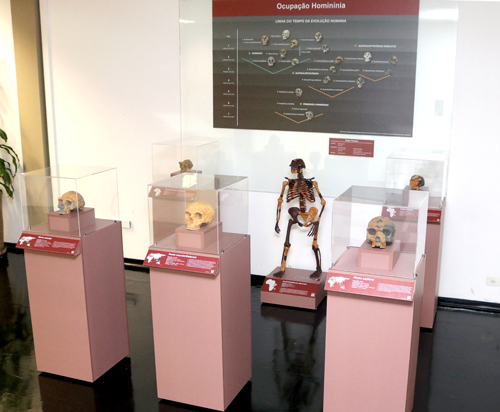
<td><span class="discreet">Curated by paleoanthropologist Walter Neves, installation was opened to the public | Photo: Nelson Niero Neto / IEA-USP</span></td>
</tr>
</tbody>
</table>
<p>On February 27, the IEA inaugurated the installation "Hominine Occupation" on the human evolutionary process. It is open to the public, and has replicas of six hominins and a panel with a timeline summarizing the evolution of our species.<br /><br />The installation was made possible with resources from the Institute and its organizer and curator is paleoanthropologist Walter Neves, a professor retired from USP's Institute of Biosciences (IB). The pieces have been produced by paleoartist Rogério Corrêa de Souza.<br /><br />Despite the existence of hundreds of discovered hominins, the six selected ones are considered the most iconic in the evolutionary timeline, according to Neves: <i>Sahelanthropus tchadensis</i> (who lived between 6 and 7 million years ago), <i>Australopithecus afarensis</i> (between 3.9 and 2.9 million years ago), <i>Homo habilis</i> (between 2.6 and 1.5 million years ago), <i>Homo erectus</i> (between 1.89 million and 100 thousand years ago), <i>Homo neanderthalensis</i> (between 200 thousand and 30 thousand years ago), and <i>Homo sapiens</i> (who appeared 200 thousand years ago).<br /><br />The full-body replica of <i>Australopithecus afarensis</i> is based on the fossil known as Lucy, found in Ethiopia <span>in 1974 </span>and considered the most famous one of a human ancestor. According to the dating process, Lucy lived 3.2 million years ago and measured about 1.10 m, walking upright like humans today, but with body proportions similar to those of a chimpanzee.<br /><br />Among all the replicas, the oldest human ancestor is <i>Sahelanthropus tchadensis</i>, who lived between 6 and 7 million years ago. The fossil was found in<span> Chad in </span>2001.<br /><br />A QR Code next to each replica gives access to further information on the displayed ancestors. The individual characteristics are addressed in <a class="external-link" href="https://www.youtube.com/watch?v=xT3oBWXPyYI">video lessons with Professor Neves</a>. The content (<span>in Portuguese)</span> is available on YouTube.<br /><br />The <span>panel presenting the </span>evolutionary timeline is an adaptation of the image "Hominid Evolutionary Tree," from the Natural History Museum in London, and summarizes 7 million years of evolution.<br /><br /><strong>Scientific divulgation</strong><br /><br />Walter Neves is one of the leading names in the areas of evolutionary biology, evolutionary anthropology, and archeology in Brazil. During his studies of human origins in South America, he was responsible for the analysis of "Luzia," the oldest human skeleton (11 thousand years old) discovered in the subcontinent until now. The fossil's name, given by Neves, was inspired by Lucy.<br /><br />Since the beginning of his academic career, over 40 years ago, Neves has been striving to promote scientific divulgation, and the dissemination of evolutionary theory and the human evolutionary process to the general public. This is the first time the researcher has managed to create an exhibition like this at USP. Throughout his career, he has gathered a collection of replicas sufficient to carry out a great exhibition to review the entire human evolutionary timeline.</p>
<p>Currently, Neves is concerned with what he sees as an exponential growth in the acceptance of the creationist theory among Brazilian government agencies, such as the Ministry of Education. "Evangelical representation in the National Congress has articulated this movement, which can culminate in the mandatory teaching of creationism in public schools," he says.<br /><br />"Research institutions, universities, and museums are at a standstill in this regard. A reaction is missing. We need to take advantage of all the opportunities and spaces to publicize evolutionism," says the professor, who highlights "IEA's sensitivity in realizing that this is a hot topic."<br /><br />For Neves, the University of São Paulo and all Brazilian capitals should have a permanent exhibition on human evolution. "Thus, people can be introduced to what science has to say on the subject. From there, choosing creationism or evolutionism is a personal decision. But there must be this visibility to science."</p>]]></content:encoded>
    <dc:publisher>No publisher</dc:publisher>
    <dc:creator>Richard Meckien</dc:creator>
    <dc:rights>Original version in Portuguese by Nelson Niero Neto.</dc:rights>
    
      <dc:subject>Science</dc:subject>
    
    
      <dc:subject>Paleoanthropology</dc:subject>
    
    
      <dc:subject>Theory of evolution</dc:subject>
    
    
      <dc:subject>Senior Professor</dc:subject>
    
    <dc:date>2020-02-27T19:10:00Z</dc:date>
    <dc:type>Notícia</dc:type>
  </item>


  <item rdf:about="https://www.iea.usp.br/en/news/science-education-risk-awareness">
    <title>Awareness of global risks must be a component of scientific education, says researcher</title>
    <link>https://www.iea.usp.br/en/news/science-education-risk-awareness</link>
    <description></description>
    <content:encoded xmlns:content="http://purl.org/rss/1.0/modules/content/"><![CDATA[<p><dl class="image-right captioned" style="width:400px;">
<dt><img src="https://www.iea.usp.br/imagens/mauriciio-pietrocola-pinto-de-oliveira-10-5-19/image" alt="Maurício Pietrocola Pinto de Oliveira - 10/5/19" title="Maurício Pietrocola Pinto de Oliveira - 10/5/19" height="404" width="400" /></dt>
 <dd class="image-caption" style="width:400px;">Maurício Pietrocola: ''A conscientização sobre riscos deve passar do nível local para o global''</dd>
</dl></p>
<p>Despite the shortcomings and inequalities in many societies in accessing the benefits provided by scientific and technological development, large portions of humanity take advantage of significant improvements in the quality of life <span>to varying degrees</span>. Many of these improvements, however, come at high costs in environmental, social, and even cultural terms.</p>
<p>Research on the atomic nucleus and the consumption of fossil fuels, for example, led to two civilizing risks: the ever-present possibility of nuclear conflict and climate change due to global warming caused by greenhouse gases.</p>
<p>It is also clear that awareness of the negative implications of many consumption and behavior habits, such as the indiscriminate use of plastics and automobiles or the excessive consumption of meat, has grown in significant parts of the population in recent decades.</p>
<p>"The problem is that people are still basically concerned with the negative impacts at the individual and local level, without considering the interrelation of all factors on a global scale," says educator <a href="https://www.iea.usp.br/en/persons/researchers/mauricio-oliveira" class="external-link">Mauricio Pietrocola</a>, a professor at USP' School of Education (FE) and a participant in the 2019 <a href="https://www.iea.usp.br/en/persons/sabbatical" class="external-link">Sabbatical Year Program</a>.</p>
<p><strong>Scientific education</strong></p>
<p>At the IEA, Pietrocola is developing the project <span>"Scientific Education in the Risk Society."</span> The objective is to identify how students in basic education can be awakened to perceive the risks inherent in scientific and technological development, not only from a local point of view, but also in connection with global aspects. "Young people must be able to understand the risks, be aware of their causes and implications, and be able to take actions that contribute to minimizing these risks, not only at <span>individual or local </span>levels, but also globally. For this to be achieved, it will be necessary to adapt teacher training and curricula," says the researcher.</p>
<table class="tabela-esquerda-200-borda">
<tbody>
<tr>
<td>
<h3>Related material</h3>
<p><strong>News</strong></p>
<ul>
<li><a href="https://www.iea.usp.br/en/news/sabbatical-program-2019" class="external-link">Sabbatical Year Program chooses seven researchers for 2019</a></li>
<li><a href="https://www.iea.usp.br/en/news/research-project-analyzes-global-influence-fifa-world-cup-brics-members" class="external-link">Research project analyzes the use of the FIFA World Cup by three BRICS members in order to increase their global influence</a></li>
<li><a href="https://www.iea.usp.br/en/news/evolutionary-approaches-to-culture" class="external-link">New scientific field analyzes cultural transmission from an evolutionary point of view</a></li>
<li><a href="https://www.iea.usp.br/en/news/peripheral-cultural-collectives" class="external-link">Dennis de Oliveira analyzes peripheral cultural collectives in São Paulo</a></li>
</ul>
</td>
</tr>
</tbody>
</table>
<p>The sociological framework used by him to characterize the current period of humanity as that of a "risk society" is based, above all, on the formulations of sociologists Ulrich Beck (1944-2015) and Anthony Giddens.</p>
<p>In the preface to "<span>Reflexive Modernization: Politics, Tradition and Aesthetics in the Modern Social Order,"</span> published in 1995 in partnership with Scott Lash, they state that "as a species, we are no longer guaranteed our survival, even in the short term - and this is a consequence of our own actions, as a collective humanity." They warn that "new areas of unpredictability are often created by the very attempts to control them."</p>
<p>For <span>Beck, Giddens, and Lash</span>, the great relevance acquired by ecological issues "is due to the fact that the 'environment' is no longer something external to human social life, but completely impregnated and reordered by it. (...) What used to be is today so completely entangled with what is 'social' that, in this area, we can no longer take anything for granted."</p>
<p><strong>Late modernity</strong></p>
<p>In the conception of risk society formulated by Beck, he considers that globalization has played a fundamental process in the diffusion of risks on a global scale, including the diffusion of technologies and industrialization in addition to possibilities and consumption habits, in a context in which globalization is one of the engines that he, together with Giddens and Lash, calls late modernity or reflexive modernity.</p>
<p>We are a society that experiences post-nature, a reflection of how technoscience has transformed nature into technonature. In this type of modernity, the central concerns of society change from the development and implementation of new technologies to the management of risks associated with existing technologies," comments the researcher.</p>
<p>He explains that until the middle of the 20th century science education was thought almost exclusively as a kind of qualification for young people who wanted to pursue a profession of a scientific or technological nature, of a higher or technical level.</p>
<p>"After World War II, scientific education is understood as more than a training for scientists and technicians, and that science and technology are much more connected with society. Then, a movement emerges to think about the importance of science for the citizen who will not become a scientist or technician."</p>
<p>As a result, curricula are being reformulated to reflect scientific education as one of the aspects of citizenship training. "For the past 30 to 40 years we have been working on curricula and teacher training with this purpose." However, says Pietrocola, this concern still reflects orientation towards good practices, "about what should be done or not, with science being a grading tool of that scale."</p>
<p>In his studies, Beck begins to show that the relationship between science and society is so complex that it is no longer possible to distinguish where one or the other begins, explains the researcher. "Certain social practices only came into existence from science and technology. An example of this is communication. Until the invention of the telegraph, communication was linked to the speed of the fastest horses. Today it can happen in less than a second." Beck also showed that the globalization process started to generate several types of risks, different from those previously existing, "risks that the very science and technology create."</p>
<p><span>According to Pietrocola, school curricula are still very much focused on risks and individual or local needs, such as the importance of using sunscreen, for example. "But if someone decides to buy a car for greater mobility, they will not only contribute to the congestion and pollution of their city, but also to global warming, the melting of the polar ice caps, and the submersion of the Maldives Islands."</span></p>
<p>The nefarious consequences "are <span>more or less <span>evenly </span></span>distributed across the planet". The researcher explains that this goes against the logic of capitalism itself, which sought to produce wealth in one place and export <span>(environmental, above all)</span> risks to another. "Confined profit and risks used to be the pattern, including used tires, broken cell phones, and other discarded products and waste being sent to poor countries. This confinement of risk disappeared with late modernity."</p>
<p><strong>Methodology</strong></p>
<p>Pietrocola and his mentored students are working on two fronts. One of them is student-centered and will firstly map their perception of the risks arising from scientific and technological development. "The prospect is that the level of this perception is very low." Then, the project will raise awareness of the global scope of risks previously considered to have local impact only. The third phase will be dedicated to the identification of individual and group educational actions that can contribute to the reduction of risks at local and global levels.</p>
<p>"If we can get students to go through these three stages, we will also have to work on another front, which involves curricular additions and teacher training for methodological use." Australia, the United Kingdom, and the United States already deal with the risk <span>issue </span>in their curricula, "but I do not know to what extent civilizing risks are being addressed," he comments. In the Brazilian case, he considers that emphasis is placed only on risks in which local impact is perceived..</p>
<p>In the second semester, Pietrocola intends to start working with teachers from a public school in the municipality of Osasco and hold a cycle of seminars on the principle of precaution, inequality, global warming, and other topics with specialists from Brazil and the United States, Canada, and the United Kingdom. In 2020, fieldwork will take place in the schools, making it possible to see how much teachers and students are already aware of the issue of global risks.</p>
<p style="text-align: right; "><span class="discreet">Photo: Leonor Calasans / IEA-USP</span></p>]]></content:encoded>
    <dc:publisher>No publisher</dc:publisher>
    <dc:creator>Richard Meckien</dc:creator>
    <dc:rights>Original version in Portuguese by Mauro Bellesa.</dc:rights>
    
      <dc:subject>Sociology</dc:subject>
    
    
      <dc:subject>Basic Education</dc:subject>
    
    
      <dc:subject>Science</dc:subject>
    
    
      <dc:subject>ST&amp;I</dc:subject>
    
    
      <dc:subject>Research</dc:subject>
    
    
      <dc:subject>Sabbatical</dc:subject>
    
    
      <dc:subject>Education</dc:subject>
    
    <dc:date>2019-05-10T16:25:00Z</dc:date>
    <dc:type>Notícia</dc:type>
  </item>


  <item rdf:about="https://www.iea.usp.br/en/news/jose-goldemberg-aged-90">
    <title>José Goldemberg: 90 years of the scientist and public manager</title>
    <link>https://www.iea.usp.br/en/news/jose-goldemberg-aged-90</link>
    <description></description>
    <content:encoded xmlns:content="http://purl.org/rss/1.0/modules/content/"><![CDATA[<table class="tabela-direita-400">
<tbody>
<tr>
<th><img src="https://www.iea.usp.br/imagens/jose-goldemberg-marco-de-2018" alt="José Goldemberg - março de 2018" class="image-inline" title="José Goldemberg - março de 2018" /></th>
</tr>
<tr>
<td><strong>Physicist José Goldemberg during a conference he gave at the IEA in March</strong></td>
</tr>
</tbody>
</table>
<p>Nuclear physicist, and specialist in sustainable energy, education and the environment, José Goldemberg reached the age of 90 on May 27. He is still active in both academic and public management, an activity that accompanies his research career since 1986, when he became the first president of USP after the Brazilian re-democratization.</p>
<p>Current chairman of the São Paulo Research Foundation's Board of Governors, Goldemberg has received numerous honors for his 90th birthday. The creation of the IEA during his first year as president has been highlighted as one of the important contributions for the academic development of the country.</p>
<p>One of the honors was the dedication of the 5th Regional Conference on Global Changes: Renewable Energies, Forests and Future of International Negotiations, held on June 5 and 6, to him.</p>
<p>In addition to having been USP's president, Goldemberg has been Minister of Education, National Secretary of Science and Technology, National Secretary of Environment, State Secretary of Environment in São Paulo, and president of São Paulo's Energy Company (CESP) and of the Brazilian Society for the Progress of Science.</p>
<div id="_mcePaste"><span>Professor Emeritus from USP's Institute of Energy and Environment (IEE), and honorary professor of the IEA, Goldemberg was honored in 2008 with the Blue Planet Award, granted by the Asahi Glass Foundation and considered one of the most important ones in the environmental area. He also received the Conrad Wessel Foundation Science Award (2014) and the Volvo Environmental Award (2000), as well as the Grand Cross of the National Order of Scientific Merit (1995).</span></div>
<div id="_mcePaste"><span><br /></span></div>
<div id="_mcePaste">Patron of the IEA, Goldemberg has participated in several achievements throughout the Institute's nearly 32-year history. His most recent performance was the <a href="https://www.iea.usp.br/en/media-library/video/ubias-director-meeting" class="external-link">speech</a> he delivered in March at the <a href="https://www.iea.usp.br/en/news/directors-conference-ubias" class="external-link">UBIAS Directors' Conference</a>, biennial event of the network that has the IEA among its founders and professor <a href="https://www.iea.usp.br/en/iea/organization/direction" class="external-link">Guilherme Ary Plonski</a>, deputy director of the Institute, as chairman of the Steering Committee.</div>
<div id="_mcePaste"><span><br /></span></div>
<div id="_mcePaste"><span>While speaking of Goldemberg's constant participation at the IEA, it is impossible not to mention his participation in the team that produced the Floram Project in 1990. This project foresaw a Brazilian contribution </span>to the 50-year delay in the risk of global warming caused by greenhouse gases through the forest recovery in 2.3% of the country's territory. During the period, the international community could reduce that risk through the development of sustainable energy technologies.</div>
<p style="text-align: right; "><span class="discreet">Photo: Leonor Calasans/IEA-USP</span></p>]]></content:encoded>
    <dc:publisher>No publisher</dc:publisher>
    <dc:creator>Richard Meckien</dc:creator>
    <dc:rights>Original version in Portuguese by Mauro Bellesa.</dc:rights>
    
      <dc:subject>Institutional</dc:subject>
    
    
      <dc:subject>Science</dc:subject>
    
    
      <dc:subject>Education</dc:subject>
    
    <dc:date>2018-06-08T14:55:00Z</dc:date>
    <dc:type>Notícia</dc:type>
  </item>


  <item rdf:about="https://www.iea.usp.br/en/news/new-headquarters-of-the-iea-inaugurated">
    <title>New headquarters of the IEA inaugurated</title>
    <link>https://www.iea.usp.br/en/news/new-headquarters-of-the-iea-inaugurated</link>
    <description></description>
    <content:encoded xmlns:content="http://purl.org/rss/1.0/modules/content/"><![CDATA[<table class="tabela-direita-400">
<tbody>
<tr>
<th><img src="https://www.iea.usp.br/imagens/inauguracao-da-nova-sede-do-iea-18-1-18-1" alt="Inauguração da nova sede do IEA - 18/1/18 - 1" class="image-inline" title="Inauguração da nova sede do IEA - 18/1/18 - 1" /></th>
</tr>
<tr>
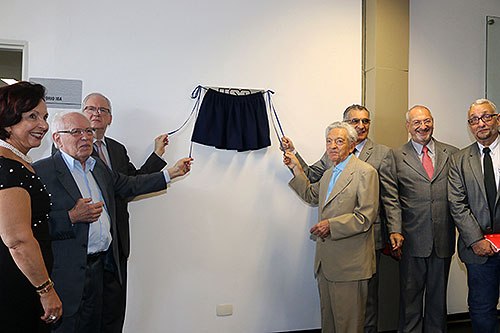
<td><strong>From the left: Linamara Rizzo Battistella, José Goldemberg, Marco Antonio Zago, Alfredo Bosi, Vahan Agopyan, José Renato Nalini and Paulo Saldiva during the unveiling of the commemorating <span>plaque</span></strong></td>
</tr>
</tbody>
</table>
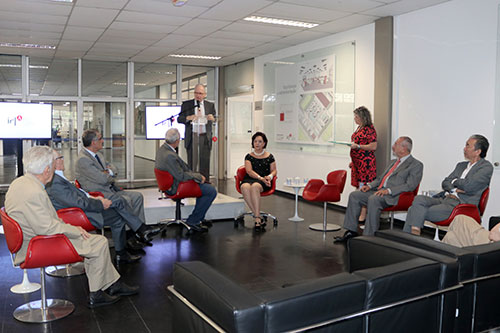
<p>'The IEA has grown, is alive and now occupies the space it deserves,' said USP's President Marco Antonio Zago at the inauguration ceremony of the Institute's new headquarters, on January 18. He and the other speakers of the event have emphasized the distinctive feature of the IEA: a meeting place for researchers from the various areas of knowledge and a channel for the University-society interaction.</p>
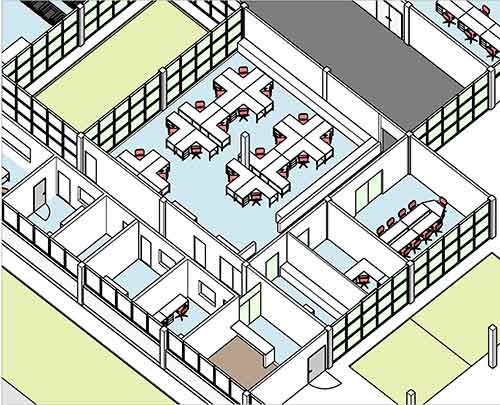
<p>The new headquarters are located in the space where the University Council, the General Secretariat and some bodies of the President's Office previously functioned. With an area that is 170% larger than the space currently occupied by the IEA, the site has been totally refurbished to host the Institute.</p>
<table class="tabela-esquerda-200-borda">
<tbody>
<tr>
<td>
<h3>RELATED MATERIAL</h3>
<p><span><strong><strong>I</strong>nauguration ceremony of the Institute's new headquarters</strong></span></p>
<p><strong>Media library</strong></p>
<ul>
<li><a href="https://www.iea.usp.br/en/midiateca/video/videos-2018/inauguracao-das-novas-instalacoes-do-iea" class="external-link">Video</a> (in Portuguese) | <a href="https://www.iea.usp.br/en/media-library/photos/events-2018/inauguration-iea-new-headquarters-january-18-2018" class="external-link">Photos</a></li>
</ul>
</td>
</tr>
</tbody>
</table>
<p><strong>Infrastructure</strong></p>
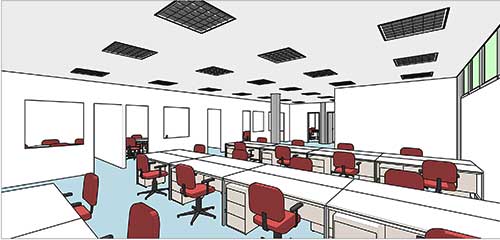
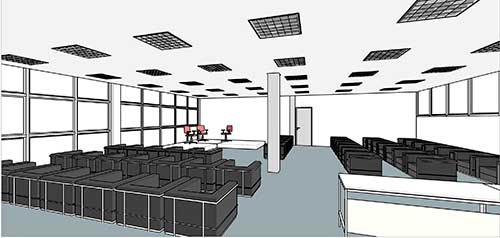
<p><span><span>If </span></span><span>the Institute used to have facilities for 15 researchers, an event room for 50 people and a meeting room for a dozen researchers, it can now host 40 researchers simultaneously and organize meetings, seminars and conferences <span>for 120 people</span> in the IEA Auditorium (former University Council room) or for 60 people in the Alfredo Bosi Room, named in honor of the only professor to be part of the Institute since its inception. The new academic infrastructure is supplemented by five meeting rooms, three for 12 people and two for five researchers.</span></p>
<div id="_mcePaste">In addition to Zago, FAPESP's President José Goldemberg (creator of the IEA in 1986, when he was the president), State Secretary of Education José Renato Nalini, State Secretary for the Rights of Persons with Disabilities Linamara Rizzo Battistella, the director of the IEA, Paulo Saldiva, and the editor of the journal <i>Estudos Avançados</i>, Alfredo Bosi, former director of the Institute, <span>spoke at the ceremony.</span></div>
<div><span><br /></span></div>
<div><span> </span> <span>Attended by about 80 people, the event has counted on the presence of USP's Vice-President and elected President Vahan Agopyan, UNICAMP's President Marcelo Knobel, the president of the Institute of Technological Research (IPT), José Fernando Gomes Landgraf, as well as provosts, superintendents and directors of USP's units. Former directors, advisers, former advisers, senior professors, sabbatical professors, and research and study group coordinators have completed the group of illustrious presences.</span></div>
<div><span><br /></span></div>
<table class="tabela-esquerda">
<tbody>
<tr>
<th><img src="https://www.iea.usp.br/imagens/area-para-pesquisadores-e-grupos-de-pesquisa-e-estudo" alt="Área para pesquisadores e grupos de pesquisa e estudo" class="image-inline" title="Área para pesquisadores e grupos de pesquisa e estudo" /></th>
</tr>
<tr>
<td><strong><strong>Rooms can host up to 40 researchers simultaneously</strong></strong></td>
<td><br /></td>
</tr>
</tbody>
</table>
<p><strong>Cognition and Ethics</strong></p>
<p>Bosi, who considers the IEA his 'second academic home,' <span>said that by integrating the first composition of the Board in 1987 he realized the vocation of the Institute to be 'a space to approach the people that the geography of the campus had dispersed.' He has</span><span> developed his entire teaching career at the Faculty of Philosophy, Languages and Literature, and Human Sciences (FFLCH).</span></p>
<p>He recalled the 'democratic' discussions on the process of Brazil's re-democratization within the Board in the early years of the Institute. 'Studying these issues was a way to pay off academia's debt to society and contribute to reducing inequalities.'</p>
<table class="tabela-direita-400">
<tbody>
<tr>
<th><img src="https://www.iea.usp.br/imagens/inauguracao-da-nova-sede-do-iea-18-1-18-2" alt="Inauguração da nova sede do IEA - 18/1/18 - 2" class="image-inline" title="Inauguração da nova sede do IEA - 18/1/18 - 2" /></th>
</tr>
<tr>
<td><strong>President Antonio Zago during the ceremony</strong></td>
</tr>
</tbody>
</table>
<p><span>For him, to d</span>iscuss public policies in areas such as education, health, environment and energy alongside the debate on scientific boundaries is the key to the mission of the Institute, since it allows 'dedication to cognition and ethics, truth and the common good.'</p>
<p>Saldiva thanked Goldemberg 'for the vision of creating the IEA' and Bosi 'for perhaps being the person who most embodies the spirit of the Institute, with this link between cognition and ethics.' He also thanked former director Martin Grossmann 'for having started the fight for the IEA to leave a corridor and find a suitable space for its activities.'</p>
<p>Commenting on the president's commitment to the new space of the IEA, Saldiva said that this is the first time that the Institute, in its 31-year history, can count on headquarters that, 'besides representing an area increase, represent something that dignifies USP.'</p>
<p>For Saldiva, the existence of the IEA 'presupposes the idea of exercising an attitude of coexistence, as if the former Faculty of Philosophy, Letters and Sciences at downtown São Paulo was resurfacing.' That was a place where there was close contact between researchers of the natural sciences, the social sciences and the humanities.</p>
<table class="tabela-esquerda">
<tbody>
<tr>
<th><img src="https://www.iea.usp.br/imagens/sala-alfredo-bosi" alt="Sala Alfredo Bosi" class="image-inline" title="Sala Alfredo Bosi" /></th>
</tr>
<tr>
<td><strong>Alfredo Bosi Room</strong></td>
</tr>
</tbody>
</table>
<p><strong>Profile</strong></p>
<p>'The IEA currently gathers 400 researchers, has increased its production, has an impact journal and obtained national and international funds,' commented the director, who sees the Institute as a 'channel of porosity with society, something very important for USP <span>at a moment when the country needs to hear proposals from the University, which should </span><span>be part of the solution to the problems.</span></p>
<p>Linamara Rizzo Battistella stressed the importance of the IEA at a time when 'we are seeing public policies dilute.' José Renato Nalini, who was an adviser at the Institute before assuming the State Secretary of Education, said he had the compliments of Governor Geraldo Alckmin, 'who has great appreciation for the IEA, as demonstrated by the fact that Martin Grossmann was the only new member appointed to the State Board of Education.'</p>
<p>Nalini argued that the IEA should devote itself even more to the problems of public primary education, since 'there is a risk of deepening inequalities between young people with fewer opportunities and those with access to elite private schools.'</p>
<p><strong>Vocation</strong></p>
<p>Like Bosi and Saldiva, Goldemberg has also emphasized the vocation of the IEA to be a place of approaching people. 'When the Institute was created, the Professors' Club also came to be. It was very difficult to talk to people due to the differentiated geography of USP in relation to more compact universities such as Princeton.'</p>
<table class="tabela-direita">
<tbody>
<tr>
<th><img src="https://www.iea.usp.br/imagens/diretoria-e-area-do-staff-academico-administrativo-e-de-comunicacao" alt="Diretoria e área do staff acadêmico, administrativo e de comunicação" class="image-inline" title="Diretoria e área do staff acadêmico, administrativo e de comunicação" /></th>
</tr>
<tr>
<td><strong>Area for the Board of Directors and the academic, administrative and communication staff</strong></td>
</tr>
</tbody>
</table>
<p>'I consider this new space appropriate for the IEA,' said the president of FAPESP. 'Intellectuals can work anywhere, but to make people interact, the place needs to be pleasant, stimulating.'</p>
<p>At the end of the ceremony, USP's president said that throughout his administration he was concerned with living spaces, inserting the new headquarters of the IEA among the actions undertaken for this purpose, such as the creation of Milton Santos Square.</p>
<p>For him, the IEA and the Institute of Brazilian Studies (IEB), whose new headquarters were inaugurated on the same day, represent what 'the <span>University has of </span><span>most important and noble.' He made this point by highlighting IEB's collection and studies on culture, history and Brazilian literature, and the 'central role of the IEA in bringing people and USP closer to society.'</span></p>
<p>Zago said that a triangle of coexistence, interdisciplinarity and interaction with society is now being set up, with one of the vertices being the Brasiliana Guita and Jose Mindlin Library together with the IEB, as both share the same premises, and the others being the IEA and Inova USP Research and Innovation Center, inaugurated in December.</p>
<p style="text-align: right; "><span class="discreet">Photos: Leonor Calasans/IEA-USP | Graphic perspectives: Arthur Santos Francisco/SEF-USP</span></p>]]></content:encoded>
    <dc:publisher>No publisher</dc:publisher>
    <dc:creator>Richard Meckien</dc:creator>
    <dc:rights>Original version in Portuguese by Mauro Bellesa.</dc:rights>
    
      <dc:subject>Institutional</dc:subject>
    
    
      <dc:subject>Science</dc:subject>
    
    
      <dc:subject>Research</dc:subject>
    
    
      <dc:subject>Society</dc:subject>
    
    
      <dc:subject>Interdisciplinarity</dc:subject>
    
    
      <dc:subject>IEA</dc:subject>
    
    <dc:date>2018-01-19T13:35:00Z</dc:date>
    <dc:type>Notícia</dc:type>
  </item>


</rdf:RDF>