<?xml version="1.0" encoding="utf-8" ?>
<rdf:RDF xmlns:rdf="http://www.w3.org/1999/02/22-rdf-syntax-ns#" xmlns:dc="http://purl.org/dc/elements/1.1/" xmlns:syn="http://purl.org/rss/1.0/modules/syndication/" xmlns="http://purl.org/rss/1.0/">


<channel rdf:about="https://www.iea.usp.br/search_rss">
  <title>Instituto de Estudos Avançados da Universidade de São Paulo</title>
  <link>https://www.iea.usp.br</link>

  <description>
    
            These are the search results for the query, showing results 1 to 15.
        
  </description>


  <image rdf:resource="https://www.iea.usp.br/logo.png" />

  <items>
    <rdf:Seq>
      
        <rdf:li rdf:resource="https://www.iea.usp.br/en/news/mooc-time" />
      
      
        <rdf:li rdf:resource="https://www.iea.usp.br/en/news/intercontinental-academia-launches-documentary-on-the-nagoya-phase-of-the-first-edition-of-the-program" />
      
      
        <rdf:li rdf:resource="https://www.iea.usp.br/en/news/shooting-mooc-time" />
      
      
        <rdf:li rdf:resource="https://www.iea.usp.br/en/news/time-in-physics-and-experienced-time" />
      
      
        <rdf:li rdf:resource="https://www.iea.usp.br/en/news/precise-time" />
      
      
        <rdf:li rdf:resource="https://www.iea.usp.br/en/news/how-we-began-to-count-years-months-days-and-hou" />
      
      
        <rdf:li rdf:resource="https://www.iea.usp.br/en/news/holography-as-metaphor-for-the-emergence-of-spacetime" />
      
      
        <rdf:li rdf:resource="https://www.iea.usp.br/en/news/the-relativity-of-time" />
      
      
        <rdf:li rdf:resource="https://www.iea.usp.br/en/news/second-intercontinental-academia-starts-on-march-in-japan" />
      
      
        <rdf:li rdf:resource="https://www.iea.usp.br/en/news/space-time-dimension" />
      
      
        <rdf:li rdf:resource="https://www.iea.usp.br/en/news/social-jet-lag" />
      
      
        <rdf:li rdf:resource="https://www.iea.usp.br/en/news/climate-time-scales" />
      
      
        <rdf:li rdf:resource="https://www.iea.usp.br/en/news/single-celled-organisms" />
      
      
        <rdf:li rdf:resource="https://www.iea.usp.br/en/news/physics-build-time" />
      
      
        <rdf:li rdf:resource="https://www.iea.usp.br/en/news/time-astronomy" />
      
    </rdf:Seq>
  </items>

</channel>


  <item rdf:about="https://www.iea.usp.br/en/news/mooc-time">
    <title>Intercontinental Academia launches online course on "Time"</title>
    <link>https://www.iea.usp.br/en/news/mooc-time</link>
    <description></description>
    <content:encoded xmlns:content="http://purl.org/rss/1.0/modules/content/"><![CDATA[<p><img src="https://www.iea.usp.br/imagens/logo-ica-e-ubias/@@images/6fedeccc-f587-4c04-ae90-cb8f5378139c.jpeg" alt="Logo ICA e Ubias" class="image-right" title="Logo ICA e Ubias" /><span class="VIiyi"><span class="ChMk0b JLqJ4b"><strong>On April 14</strong>, the IEA and Nagoya University's <a class="external-link" href="http://www.iar.nagoya-u.ac.jp/eng/">Institute for Advanced Research (IAR)</a> will launch the massive open online course (MOOC) <a class="external-link" href="https://www.coursera.org/learn/offtheclock">"Off the Clock: The Many Faces of Time,"</a> which will be available on the <a class="external-link" href="https://www.coursera.org/">Coursera</a> platform.</span></span></p>
<p><span class="VIiyi"><span class="ChMk0b JLqJ4b">The launch will take place during the 6th UBIAS Directors' Conference, which will gather representatives from <a class="external-link" href="http://www.ubias.net">institutes for advanced study linked to universities</a> on all continents. This will be possible thanks to the partnership between USP's Dean of Research and Coursera.</span></span></p>
<p>The MOOC is the result of debates undertaken by 13 young researchers from various fields and several countries participating in the first edition of the <a class="external-link" href="http://www.ica.usp.br">Intercontinental Academia (ICA)</a> in 2015 and 2016. Organized by the IEA and the IAR, the project's theme was "Time."</p>
<p>The ICA is a UBIAS program in which two institutes for advanced study from different continents organize periods of immersion in conferences and debates on an interdisciplinary theme. The fourth edition will be held in 2021 and 2022 around the theme "Intelligence and Artificial Intelligence."</p>
<p><strong>Facets of time</strong></p>
<p>The aim of the course is to present a comprehensive overview of the main formulations about time in science, philosophy, and the arts. The <span>discussed </span>issues range from the dynamic or static time of the pre-Socratics to Heidegger's phenomenology, from the discussion about the arrow of time towards the future to the inexistence of the concept of time in quantum gravity, and from geological time to the circadian cycles that control the human organism.</p>
<p>During the periods of intense activity at the IEA (April 2015) and the IAR (March 2016), the young researchers had the opportunity to participate in dozens of conferences by senior specialists on the conception and importance of time in anthropology, physics, neurobiology, chronobiology, psychoanalysis, environmental sciences, and other areas.</p>
<p>So that a synthesis of the debates raised by these conferences and the working meetings could reach a wide audience, the researchers were tasked with producing a MOOC.</p>
<p>IEA's director at the time of ICA's first edition and a member of the senior committee of the project, <a class="external-link" href="http://ica.usp.br/people/copy_of_martin-grossmann">Martin Grossmann</a> recalls that the idea of producing the MOOC came from chronobiologist <a class="external-link" href="http://ica.usp.br/people/copy_of_till-roenneberg">Till Roenneberg</a> (Ludwig Maximilian University of Munich - LMU) during a meeting of the committee at the Freiburg Institute for Advanced Studies (FRIAS), in September 2014.</p>
<p>Consisting of 17 video classes divided into four modules and a total length of five and a half hours, the course has been produced by six of the young researchers.</p>
<p>The content coordination has been in charge of <a class="external-link" href="http://ica.usp.br/people/nikki-moore">Nikki Moore</a> (Wake Forest University), <a class="external-link" href="http://ica.usp.br/people/marius-muller">Marius Müller</a> (Federal University of Pernambuco), and <a class="external-link" href="http://ica.usp.br/people/valtteri-arstila">Valtteri Arstila</a> (University of Turku). <a class="external-link" href="http://ica.usp.br/people/eduardo-almeida">Eduardo Almeida</a> and <a class="external-link" href="http://ica.usp.br/people/helder-nakaya">Helder Nakaya</a>, both affiliated to USP, and <a class="external-link" href="http://ica.usp.br/people/david-gange">David Gange</a> (University of Birmingham), have participated as creators and exhibitors.</p>
<p>The filming, under the audiovisual direction of Priscila Lima, took place at the "Clarimundo de Jesus" Research Base of USP's Oceanographic Institute (IO), in Ubatuba, coast of the Brazilian state of São Paulo, in 2017.</p>
<p>According to Grossmann, the MOOC has met the objectives of the ICA, since "the expectations in relation to the results were quite broad and not very well defined."</p>
<p>He considers that the course format has become even more relevant due to the demands of today: "The position of teachers, who still attribute a secondary role to <span>MOOCs </span>in education, tends to change in the face of the reality of online interactions during the pandemic." <span>Grossmann says that he used to consider the format to be very limited, as it tried to reproduce the classroom formula, "but the result achieved by the researchers' work surprised me."</span></p>
<table class="tabela-esquerda">
<tbody>
<tr>
<th><img src="https://www.iea.usp.br/imagens/gravacao-do-mooc-off-the-clock" alt="Gravação do Mooc 'Off the Clock'" class="image-inline" title="Gravação do Mooc 'Off the Clock'" /></th>
</tr>
<tr>
<td><span class="discreet">Preparation for recording one of the MOOC classes</span></td>
</tr>
</tbody>
</table>
<p><span>For him, the interdisciplinary course on "Time" is introductory and influenced by the cultural and scientific universe of the young researchers of the ICA. "There is no ambition to address issues more assertively."</span></p>
<p>He finds it difficult to define the MOOC's audience. He believes that the course will attract graduate students from different areas in addition to "restless undergraduates with the need to venture into different fields."</p>
<p>According to Grossmann, the course also leaves a legacy of confirmation that the UBIAS network can work with such initiatives and propose similar ones in the future.</p>
<p> </p>
<p><strong>Participants' experience</strong></p>
<p>Two of the six researchers involved in the production of the MOOC, Eduardo Almeida and Marius Müller, will act as pedagogical coordinators of the course at Coursera.</p>
<p>Almeida classifies the experience of producing the course as "incredible," as it required "the harmonization of visions, knowledge, and interpretations from areas as diverse as literature, mathematics, history, psychology, biology, physics, bioinformatics, arts, and philosophy in a discussion that would make a minimum of sense for everyone involved."</p>
<p>For Müller, it has been a difficult process "not only in relation to the theme but also in terms of intercultural interaction." Despite the difficulties, he considers that the work "was a great and <span>very rewarding</span>learning experience."</p>
<p>The choice of the theme "Time" has been an advantage, according to Almeida, "because it is a dimension of existence that permeates any area of knowledge and is challenging in all disciplines."</p>
<p>Two obstacles stood out in the execution of the work, in his opinion. One of them is the fact that the greater the specialization in an academic area, the more difficult it is to understand the perspectives (conceptual basis, problematic aspects, theoretical questions, history) of the other areas, although "philosophy sometimes acts as a bridge between some of these knowledge islands." The other is the difference between languages from different areas ("even having English as a language of communication"), which "makes understanding the concepts themselves very difficult." For him, this is due to the adoption of a jargon typical to each discipline "and, I believe, even by the ways of thinking and arguing that differ between people who represent these areas."</p>
<p>All of the topics addressed by the MOOC were challenging, says Almeida. In his case, the topics that are not part of his scope of action as a scientist in the biological field were especially demanding. "The discussion about the physical nature of time is difficult because the mathematical basis or the very abstraction of theories is counterintuitive at first; the perspective of time in a work of art follows principles even more distinct from those that I consider reasonable for my perspective as a scientist."</p>
<p><span class="VIiyi"><span class="ChMk0b JLqJ4b"><span>He reported that his participation in the production of the course caused a mixture of curiosity and skepticism ("I think something somewhat enigmatic") among his department colleagues, because it was something different from the usual activity of researchers.</span></span></span><span> </span></p>
<p>"I gave a seminar on the topic in the department and several colleagues were curious to know a little more. At the time, the MOOC had not yet been completed. It will be interesting to find out if the course can generate reflections in the colleagues who attend it."</p>
<p>Almeida stated that the online course has been his first experience in scientific dissemination on a larger scale, as his common activity in the area takes place through lectures, extension courses, and small fairs. Müller said that he had already participated in scientific dissemination, "but that the production of a MOOC was very specific and a valuable experience."</p>
<p>According to Almeida, the discussions among the participants have evidenced the feeling that everyone had their academic activities influenced by their work. <span>He said he was more skeptical about some certainties and more attentive to the perspectives that varied disciplines bring about some subjects. He also believes he has become more careful about communicating ideas and being able to speak to an audience broader than his closest circle.</span></p>
<p>For Müller, participating in the project has influenced his academic mind and "opened up the interest in working and acting in different academic areas in the future."</p>
<p>Both the ICA on "Time" and the production of MOOC were sponsored by the Itaú Cultural Foundation with support from the São Paulo Research Foundation (FAPESP), the Brazilian National Council for Scientific and Technological Development (CNPq), FRIAS, the Waseda Institute for Advanced Study (WIAS), and the Center for Advanced Studies (CAS) at LMU Munich.</p>]]></content:encoded>
    <dc:publisher>No publisher</dc:publisher>
    <dc:creator>Richard Meckien</dc:creator>
    <dc:rights>Original version in Portuguese by Mauro Bellesa.</dc:rights>
    
      <dc:subject>Ubias</dc:subject>
    
    
      <dc:subject>Intercontinental Academia</dc:subject>
    
    
      <dc:subject>Time</dc:subject>
    
    
      <dc:subject>Interdisciplinarity</dc:subject>
    
    <dc:date>2021-03-26T21:40:00Z</dc:date>
    <dc:type>Notícia</dc:type>
  </item>


  <item rdf:about="https://www.iea.usp.br/en/news/intercontinental-academia-launches-documentary-on-the-nagoya-phase-of-the-first-edition-of-the-program">
    <title>Intercontinental Academia launches a documentary on the Nagoya phase of the program's first edition</title>
    <link>https://www.iea.usp.br/en/news/intercontinental-academia-launches-documentary-on-the-nagoya-phase-of-the-first-edition-of-the-program</link>
    <description></description>
    <content:encoded xmlns:content="http://purl.org/rss/1.0/modules/content/"><![CDATA[<p><a class="external-link" href="http://ica.usp.br/nagoya/nagoya"><img src="https://www.iea.usp.br/imagens/video-da-fase-nagoya-da-intercontinental-academia-sobre-o-tempo" style="float: right; " title="Vídeo da fase Nagoya da Intercontinental Academia sobre o &quot;tempo&quot;" class="image-inline" alt="Vídeo da fase Nagoya da Intercontinental Academia sobre o &quot;tempo&quot;" /></a>A <a class="external-link" href="http://www.ica.usp.br/nagoya">docu<span>mentary on the Nagoya phase</span></a> of the first edition of the <a class="external-link" href="http://ica.usp.br/">Intercontinental Academia</a> was recently published on the project's website.</p>
<p><span>With the theme 'Time,' the edition has gathered 13 young participating researchers in two meetings that took place at the IEA-USP in April 2015 and at the <span>University of Nagoya's <span>Institute for </span><span>Advanced Research (IAR) </span></span>in March 2016. The <a class="external-link" href="http://intercontinental-academia.ubias.net/media-center/videos/intercontinental-academnia-first-phase-documentary"><span>documentary of the São Paulo phase</span></a> is also available on the website. A third film that compiles both phases will also be released.</span></p>
<p>The 12-minute long video reporting the activities held in Nagoya presents testimonials of the majority of the young researchers on the importance of the interdisciplinary dialogue regarding the concepts of time. They also talk about the production of a <span>Massive Open Online Course (MOOC)</span> on 'Time' as the final outcome of the initiative. The other testimonials are from Hisanori Shinohara, director of the IAR, and Martin Grossmann, director of IEA during the São Paulo phase of the project, both members of the Senior Committee of this first edition.</p>
<table class="tabela-esquerda-200-borda">
<tbody>
<tr>
<td>
<h3>Related material</h3>
<p><strong>News</strong></p>
<ul>
<li><a href="https://www.iea.usp.br/en/news/terceira-edicao-da-intercontinental-academia-tera-representante-do-iea" class="external-link">3rd edition of the Intercontinental Academia will have a researcher selected by the IEA</a></li>
</ul>
<hr />
<p><i> <a class="external-link" href="http://ica.usp.br/nagoya/news"><br />More news on the Intercontinental Academia</a></i></p>
</td>
</tr>
</tbody>
</table>
<p><strong>Editions</strong></p>
<p>The Intercontinental Academia is an initiative of the <a class="external-link" href="http://www.ubias.net">University-Based Institutes for Advanced Study network (UBIAS)</a>. The partnership between the IEA and the IAR for the inauguration of the project has been sponsored by Itaú Cultural and supported by five institutions: FAPESP, CNPq, the Freiburg Institute for Advanced Studies (FRIAS), the Waseda Institute for Advanced Study (WIAS) and the Center for Advanced Studies at the Ludwig-Maximilians University in Munich. The edition also featured Coursera (where the MOOC will be available soon) as a partner.</p>
<p>The project is currently in the final preparations for the start of the third edition, whose theme is 'Laws: Rigidity and Dynamics,' with meetings <span>at the <span>Institute of Advanced Studies at Nanyang Technological University, Singapore, in March 2018 and at the <span>University of Birmingham's </span></span>Institute for Advanced Studies i</span>n March 2019.</p>
<p>The second edition was entitled 'Human Dignity' and was held <span>at the <span>Hebrew University of Jerusalem's Israel</span> Institute of Advanced Studies in Marc</span>h 2016, and at <span>at <span>University of Bielefeld's </span>Center for Interdisciplinary Research </span>in August of the same year.</p>]]></content:encoded>
    <dc:publisher>No publisher</dc:publisher>
    <dc:creator>Richard Meckien</dc:creator>
    <dc:rights>Original version in Portuguese by Mauro Bellesa.</dc:rights>
    
      <dc:subject>Ubias</dc:subject>
    
    
      <dc:subject>Intercontinental Academia</dc:subject>
    
    
      <dc:subject>Time</dc:subject>
    
    
      <dc:subject>Research</dc:subject>
    
    <dc:date>2018-02-01T15:40:00Z</dc:date>
    <dc:type>Notícia</dc:type>
  </item>


  <item rdf:about="https://www.iea.usp.br/en/news/shooting-mooc-time">
    <title>Researchers of the first edition of the Intercontinental Academia begin the filming of a MOOC on Time</title>
    <link>https://www.iea.usp.br/en/news/shooting-mooc-time</link>
    <description></description>
    <content:encoded xmlns:content="http://purl.org/rss/1.0/modules/content/"><![CDATA[<table class="tabela-esquerda">
<tbody>
<tr>
<th><img src="https://www.iea.usp.br/imagens/base-clarimundo-de-jesus-io-usp" alt="Base Clarimundo de Jesus - IO/USP" class="image-inline" title="Base Clarimundo de Jesus - IO/USP" /></th>
</tr>
<tr>
<td><strong>Research Base of USP's Oceanographic Institute in Ubatuba, Brazil</strong></td>
</tr>
</tbody>
</table>
<p>The footage of the online course that the participants of the first edition of the <a class="external-link" href="http://intercontinental-academia.ubias.net/">Intercontinental Academia</a> (ICA) are producing on the theme "Time" started this Monday, March 6. In Ubatuba, at the "Clarimundo de Jesus" Research Base of USP's Oceanographic Institute (IO), five young researchers who are part of the project will be focused until March 10 to record the lessons of the four sections that make up their <span>Massive Open Online Course </span>(MOOC). With a total of two hours, the course shall be hosted at <a class="external-link" href="https://pt.coursera.org/">Coursera</a>'s database.</p>
<table class="tabela-esquerda-borda">
<tbody>
<tr>
<th>
<h3>Related material</h3>
<p><a href="https://www.iea.usp.br/en/media-library/photos/institutional/filming-mooc-time/" class="external-link">Photos of the filming</a></p>
<p><a href="https://www.iea.usp.br/en/midiateca/foto/projetos/intercontinental-academia-filmagem-mooc-sobre-o-tempo" class="external-link"></a>1st meeting - São Paulo</p>
<p class="kssattr-macro-title-field-view kssattr-templateId-kss_generic_macros kssattr-atfieldname-title documentFirstHeading" id="parent-fieldname-title"><a href="https://www.iea.usp.br/en/news/closing-report" class="external-link">Participants of the Intercontinental Academia present results of the event</a></p>
<p class="kssattr-macro-title-field-view kssattr-templateId-kss_generic_macros kssattr-atfieldname-title documentFirstHeading">2nd meeting - Nagoya</p>
<p class="documentFirstHeading kssattr-atfieldname-title kssattr-templateId-kss_generic_macros kssattr-macro-title-field-view" id="parent-fieldname-title"><a href="https://www.iea.usp.br/en/news/pesquisadores-detalham-curso-online-sobre-o-tempo" class="external-link">Researchers of the Intercontinental Academia detail course on Time</a></p>
</th>
</tr>
</tbody>
</table>
<table class="tabela-direita">
<tbody>
<tr>
<th><img src="https://www.iea.usp.br/imagens/gravacao-mooc-ubatuba" alt="Gravação Mooc Ubatuba" class="image-inline" title="Gravação Mooc Ubatuba" /></th>
</tr>
<tr>
<td>
<p><strong>MOOC recording </strong><strong><strong>b</strong><span>ackstage</span></strong></p>
</td>
</tr>
<tr>
<td><img src="https://www.iea.usp.br/imagens/gravacao-mooc-ubatuba-2" alt="Gravação Mooc Ubatuba - 2" class="image-inline" title="Gravação Mooc Ubatuba - 2" /></td>
</tr>
<tr>
<td><strong>Nikki Moore prepares to start filming</strong></td>
</tr>
</tbody>
</table>
<p>The group of 13 participants is being represented by <a class="external-link" href="http://intercontinental-academia.ubias.net/people/david-gange">David Gange</a>, from the University of Birmingham; <a class="external-link" href="http://intercontinental-academia.ubias.net/people/eduardo-almeida">Eduardo Almeida</a> and <a class="external-link" href="http://intercontinental-academia.ubias.net/people/helder-nakaya">Helder Nakaya</a>, both from USP; <a class="external-link" href="http://intercontinental-academia.ubias.net/people/nikki-moore">Nikki Moore</a>, from Rice University; and <a class="external-link" href="http://intercontinental-academia.ubias.net/people/valtteri-arstila">Valtteri Arstila</a>, from the University of Turku. During this week, they will be supervised by members of the ICA Senior Committee <a class="external-link" href="http://intercontinental-academia.ubias.net/people/copy_of_martin-grossmann">Martin Grossmann</a>, from USP's School of Communications and Arts (ECA), and <a class="external-link" href="http://intercontinental-academia.ubias.net/people/regina-markus">Regina Markus</a>, from USP's Institute of Biosciences (IB).</p>
<p>The ICA is a program of the <a class="external-link" href="http://www.ubias.net/">University-Based Institutes for Advanced Study</a> (UBIAS), a network that brings together 36 institutes of advanced studies from universities of all continents. The IEA-USP and Nagoya University's <a class="external-link" href="http://www.iar.nagoya-u.ac.jp/">Institute for Advanced Research</a> (IAR) are responsible for the first edition. The meeting in São Paulo took place from April 17 to 30, 2015, and the second phase in Nagoya, between March 6 and 18 of last year.</p>
<p>The project brings together young researchers from different nationalities and areas of knowledge to develop studies on a common subject. Its accomplishment was possible thanks to the partnership and support of the Deans for Research of USP and Nagoya University, besides <a class="external-link" href="http://www.itaucultural.org.br/">Itaú Cultural</a>, which finances a major part of the costs through the programme Global Networks of Young Investigators of the <a href="https://www.iea.usp.br/en/research/chairs/olavo-setubal-chair-of-arts-culture-and-science" class="external-link">Olavo Setubal Chair of Art, Culture and Science</a>.</p>
<p>The researchers arrived in Ubatuba after having prepared the scripts to be filmed by a video producer. After the recordings, the course is expected to be completely ready to air in June.</p>
<p style="text-align: right; "><span class="discreet">Photo 1: IO-USP; Photos 2 and 3: Richard Meckien / IEA-USP</span></p>]]></content:encoded>
    <dc:publisher>No publisher</dc:publisher>
    <dc:creator>Richard Meckien</dc:creator>
    <dc:rights>Original version in Portuguese by Fernanda Rezende.</dc:rights>
    
      <dc:subject>Intercontinental Academia</dc:subject>
    
    
      <dc:subject>ICA</dc:subject>
    
    
      <dc:subject>Research</dc:subject>
    
    
      <dc:subject>Olavo Setubal Chair</dc:subject>
    
    
      <dc:subject>Time</dc:subject>
    
    
      <dc:subject>Interdisciplinarity</dc:subject>
    
    <dc:date>2017-03-06T14:45:00Z</dc:date>
    <dc:type>Notícia</dc:type>
  </item>


  <item rdf:about="https://www.iea.usp.br/en/news/time-in-physics-and-experienced-time">
    <title>Time in physics and experienced time</title>
    <link>https://www.iea.usp.br/en/news/time-in-physics-and-experienced-time</link>
    <description></description>
    <content:encoded xmlns:content="http://purl.org/rss/1.0/modules/content/"><![CDATA[<table class="tabela-direita-200-borda">
<tbody>
<tr>
<td>
<h3>Related material</h3>
<p><strong>Naoshi Sugiyama's conference — March 9, 2016</strong></p>
<ul>
<li><a href="https://www.iea.usp.br/en/news/the-relativity-of-time" class="external-link">The relativity of time</a></li>
</ul>
<p style="text-align: right; "><i> </i></p>
<hr />
<i><i><a class="external-link" href="http://ica.usp.br/nagoya/news">More news on the Intercontinental Academia</a></i></i> <i> </i></td>
</tr>
</tbody>
</table>
<p>Two main issues were addressed at the final discussion of the <span>Physics Workshop of the </span><a class="external-link" href="http://ica.usp.br/nagoya" target="_blank">second phase of the Intercontinental Academia</a><span> (ICA)</span><span>, on March 9</span>: the difference between the concept of time in physics and the perception of time by living organisms, and the invariable aspects of time in relativity.</p>
<table class="tabela-esquerda-300">
<tbody>
<tr>
<th><img src="https://www.iea.usp.br/imagens/eliezer-rabinovici-3" alt="Eliezer Rabinovici" class="image-inline" title="Eliezer Rabinovici" /></th>
</tr>
<tr>
<td><span style="text-align: right; "><strong>Eliezer Rabinovici</strong></span></td>
</tr>
</tbody>
</table>
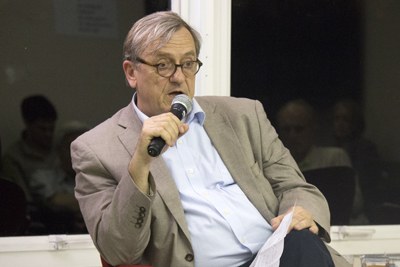
<p>For physicist <a class="external-link" href="http://intercontinental-academia.ubias.net/nagoya/people/copy_of_eliezer-rabinovici">Eliezer Rabinovici</a>, from the Hebrew University of Jerusalem and a member of the ICA's Senior Committee, whoever speaks the physical-mathematical language clearly sees what it means to add time as an extra dimension and the implications of having four dimensions. "The time dimension has different characteristics, but can be called so as it is a mathematical term. But it becomes confusing to talk about the fourth dimension in ordinary language, so it is best not to use the expression."</p>
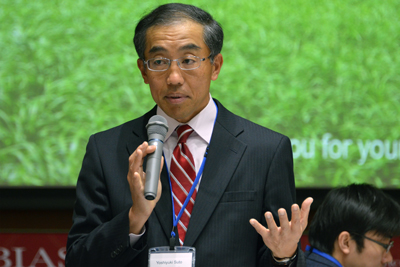
<p><span>Physicist <a class="external-link" href="http://intercontinental-academia.ubias.net/nagoya/people/naoshi-sugiyama">Naoshi Sugiyama</a>, associate director of the <span>Nagoya University's</span> Institute for Advanced Research (IAR), commented that dimensions are numbers required to specify the existence of something. As an analogy to the four dimensions of spacetime, he said that if someone needs to tell a friend how to find them, they will tell them the building address, the correct floor and the time when they will be there.</span></p>
<table class="tabela-direita-300">
<tbody>
<tr>
<th><img src="https://www.iea.usp.br/imagens/naoshi-sugiyama-1" alt="Naoshi Sugiyama" class="image-inline" title="Naoshi Sugiyama" /></th>
</tr>
<tr>
<td style="text-align: right; "><strong>Naoshi Sugiyama</strong></td>
</tr>
</tbody>
</table>
<p>Taking part in the discussion on the perception of time and the time in physics, physicist <a class="external-link" href="http://intercontinental-academia.ubias.net/nagoya/people/peter-goddard">Peter Goddard</a>, a researcher and former director of the <span>Princeton <span>Institute for Advanced Study, </span></span>said that to relate everyday experiences with what happens beyond can be confusing: "As humans, we can not have the experience of special relativity, because we can not travel at the speed of light."</p>
<p><span>Another mistake, he said, is to claim that something exists independently of the observer. "In the <span>Newtonian </span>thinking structure, space and time were considered uniform. One can not include relativity in this structure. What does exist at any given time? The answer to that depends on the observer."</span></p>
<p><span>Chemist <a class="external-link" href="http://intercontinental-academia.ubias.net/nagoya/people/hisanori-shinohara">Hisanori Shinohara</a>, Director of the IAR, recalled that the 2nd Law of Thermodynamics predicts the increase of entropy in an isolated system and asked if time will still make sense when the entropy of the universe as a whole ceases to increase, with it reaching a perfect state balance and, consequently, dying.</span></p>
<p><span>Sugiyama said that one can not predict the temperature and the time of the universe if we think of an infinite future. Moreover, "if there is dark energy, the universe will expand forever and in that sense will never come to an end." On the other hand, "if there is no dark energy and the universe is flat, it will stop expanding at some point, but this will be in an infinite future."</span></p>
<table class="tabela-esquerda-300">
<tbody>
<tr>
<td><img src="https://www.iea.usp.br/imagens/hisanori-shinohara-1" alt="Hisanori Shinohara" class="image-inline" title="Hisanori Shinohara" /></td>
</tr>
<tr>
<td style="text-align: left; "><strong>Hisanori Shinohara</strong></td>
</tr>
</tbody>
</table>
<p><span>Rabinovici has also commented on the issue exposed by Shinohara. He said that, in fact, entropy increases permanently, but it depends on the analyzed system. According to him, even in the universe the existence of long periods of increasing entropy and other ones of decreasing entropy <span>should be considered: </span>"And in a time far, far away, the universe will again be what it once has been. But I say to young students that this kind of issue is very deep and it is best to leave it aside for now and concentrate on simpler ones."</span></p>
<p><span>Sugiyama said there is a famous analogy about the return of the universe to a previous condition: "A monkey hits the keys of a typewriter. If it does this for a long, long time, it will evolve to Shakespeatre by chance."</span></p>
<p><span>Anthropologist Naoki Nomura, from the Nagoya University, has also participated in the discussion. In his view, the idea of relativity does not belong only to the physics but is also a matter of epistemology. He has even questioned the consistency of the theory of relativity: "When it <span>previews </span>a single nature for time it stops being relative and becomes contradictory."</span></p>
<table class="tabela-direita-300">
<tbody>
<tr>
<th><img src="https://www.iea.usp.br/imagens/naoki-nomura-1" alt="Naoki Nomura" class="image-inline" title="Naoki Nomura" /></th>
</tr>
<tr>
<td style="text-align: right; "><strong>Naoki Nomura</strong></td>
</tr>
</tbody>
</table>
<p>When responding to the comments by Nomura, Rabinovici said that one of the dangers of this type of workshop "is the use of words because they mean different things to each person." He added that the term relativity was incorporated into the theory's name wrongly: "It is not a theory of relativity but a theory of invariance. In the process of searching for what is not relative<span>, one discovers that many things considered invariable are actually not. <span>Newton thought that some </span>things were absolute, when they are actually relative. But not everything is relative. The order in time (something happening after another), this can not be negotiated. If two things are simultaneous while measuring time or not, this is negotiable, and it depends on certain factors."</span></p>
<p><span>Goddard also commented Nomura's statement: "The personal experience of time is one thing and the time in physics is another. The theory of relativity is consistent and has nothing to do with the subjective experience. It is very important to keep these separate."</span></p>
<table class="tabela-esquerda-300">
<tbody>
<tr>
<th><img src="https://www.iea.usp.br/imagens/peter-goddard" alt="Peter Goddard" class="image-inline" title="Peter Goddard" /></th>
</tr>
<tr>
<td><span style="text-align: right; "><strong>Peter Goddard</strong></span></td>
</tr>
</tbody>
</table>
<p><a class="external-link" href="http://intercontinental-academia.ubias.net/nagoya/people/martin-grossmann">Martin Grossmann</a>, former director of the IEA and also a member of the <span>ICA's Senior Committee</span>, wondered whether Goddard finds it impossible to relate time in the way it is thought in physics with the way it is seen by social sciences and humanities.</p>
<p><span>Goddard said that it is not impossible, but that one has to be careful with the words, as Rabinovici said. In his opinion, the confusion in the use of terms of one area in another one are partly the fault of the physicists who "like to use figurative speech, because metaphors can be quite productive while doing science."</span></p>
<p><a class="external-link" href="http://intercontinental-academia.ubias.net/nagoya/people/valtteri-arstila">Valtteri Arstila</a>, from the University of Turku, wanted to know the opinion of Goddard about a <a href="https://einstein.stanford.edu/SPACETIME/spacetime2.html">text</a> on <span>spacetime </span>that has been published at the Stanford University's website. According to the text, the general theory of relativity makes the spacetime <span>less relative</span> than the one in special relativity: "The absolute space and time of Newton are kept. They are merely amalgamated and enriched with the most flexible mathematical skeleton."</p>
<table class="tabela-direita-300">
<tbody>
<tr>
<th><img src="https://www.iea.usp.br/imagens/valtteri-arstila" alt="Valtteri Arstila" class="image-inline" title="Valtteri Arstila" /></th>
</tr>
<tr>
<td style="text-align: left; "><span style="text-align: right; "><strong> Valtteri Arstila</strong></span></td>
</tr>
</tbody>
</table>
<p><span>Goddard did not agree with the statement by Stanford. For him, time does not cease to be relative in the general theory of relativity because there is a "symmetry between mass and geometry of spacetime, given that Einstein conceived the intensely related spacetime and matter."</span></p>]]></content:encoded>
    <dc:publisher>No publisher</dc:publisher>
    <dc:creator>Richard Meckien</dc:creator>
    <dc:rights>Original version in Portuguese by Mauro Bellesa.</dc:rights>
    
      <dc:subject>Intercontinental Academia</dc:subject>
    
    
      <dc:subject>Physics</dc:subject>
    
    
      <dc:subject>Transformation</dc:subject>
    
    
      <dc:subject>Time</dc:subject>
    
    <dc:date>2016-03-30T14:55:00Z</dc:date>
    <dc:type>Notícia</dc:type>
  </item>


  <item rdf:about="https://www.iea.usp.br/en/news/precise-time">
    <title>In search of precise time</title>
    <link>https://www.iea.usp.br/en/news/precise-time</link>
    <description></description>
    <content:encoded xmlns:content="http://purl.org/rss/1.0/modules/content/"><![CDATA[<table class="tabela-esquerda">
<tbody>
<tr>
<th><img src="https://www.iea.usp.br/imagens/masao-takamoto" alt="Masao Takamoto" class="image-inline" title="Masao Takamoto" /></th>
</tr>
<tr>
<td><strong>Masao Takamoto, a researcher at the Quantum Metrology Laboratory<br /></strong></td>
</tr>
</tbody>
</table>
<p>10<sup>−18</sup> of a second. With this degree of accuracy a clock would be only one second too early or too late over a period of 30 billion years, more than twice the age of the universe. This is the challenge of a new type of atomic clock in development since 2003: an <span>optical lattice clock</span>.</p>
<p><span>The cutting edge construction of this type of clock was presented by <a class="external-link" href="http://intercontinental-academia.ubias.net/nagoya/people/masao-takamoto">Masao Takamoto</a>, a researcher at the <a class="external-link" href="http://www.riken.jp/en/research/labs/chief/qtm_metrol/">Quantum Metrology Laboratory of the Institute of Physical and Chemical Research </a><span> (RIKEN) during the <span>Physics Workshop of the </span><a class="external-link" href="http://ica.usp.br/nagoya">second phase of the Intercontinental Academia</a><span> (ICA)</span><span>, on March 9</span></span>.</span></p>
<p>At the conference <i>Precision Metrology with Optical Lattice Clocks</i>, Takamoto said that atomic clocks are the reference for accurate measurements with 15 digits <span>(</span><span style="text-align: -webkit-center; ">10</span><sup>-15 </sup><span>of a second) </span>and emphasized their importance to infrastructure sectors as they allow a greater accuracy in services such as systems Global Positioning (GPS) and the synchronization of high speed networks. He added that they are also very important for measurements in physical experiments, such as precision <span>spectroscopy </span>in quantum physics.</p>
<table class="tabela-direita-200-borda">
<tbody>
<tr>
<td>
<h3>Related material</h3>
<p><span><strong>Naoshi Sugiyama's conference — March 9, 2016</strong></span></p>
<ul>
<li><a href="https://www.iea.usp.br/en/news/the-relativity-of-time" class="external-link">The relativity of time</a></li>
</ul>
<p style="text-align: right; "><i> </i></p>
<hr />
<i><i><a class="external-link" href="http://ica.usp.br/nagoya/news">More news on the Intercontinental Academia</a></i></i></td>
</tr>
</tbody>
</table>
<p>The international standard of the second duration was defined in 1967 by cesium atomic clocks. The International Atomic Time (TAI, from the French name <i>Temps Atomique International</i>) is established by the average of such interconnected clocks. According to Takamoto, the best results in terms of accuracy so far have been obtained by cesium clocks of the <a class="external-link" href="https://syrte.obspm.fr/spip/?lang=fr">SYRTE</a> (Space-Time Reference System), in France, and of the <a class="external-link" href="http://www.nist.gov/">NIST</a> (National Institute of Standards and Technology), in the USA, which reached 3 x 10<sup>-16</sup> of a second.</p>
<p><span>The search for an even greater precision and greater stability has motivated researchers to design optical atomic clocks. There are two types of them trying to occupy the role of <span>reference in </span>second measurement, according to Takamoto:</span></p>
<ul>
<li>a single-ion clock in an electric field with ability to achieve a precision of 10<sup>-18</sup> s <span>(proposed by Hans Dehmelt in 1982)</span>;</li>
<li>an <span>optical lattice clock</span>, in which the potential of the optical lattice captures about 1 million atoms in <span>separated </span>"traps". It is able to achieve a precision of 10<sup>-18</sup> s and its stability is provided by the simulation of 1 million single-ion clocks in parallel <span>(proposed by Hidetoshi Katori in 2001).</span></li>
</ul>
<p><span><br />The RIKEN and the <a class="external-link" href="http://www.amo.t.u-tokyo.ac.jp/e_index.html">Katori Laboratory</a> of the University of Tokyo's School of Engineering have developed <span>optical lattice clocks</span>. Takamoto is the first researcher and <span>assistant director for </span>research of the laboratory.</span></p>
<p><span>The first demonstration of an <span>optical lattice clock </span>took place in 2003. In 2005 one of them had its absolute frequency measured. In 2006 the frequency measurement was made by three groups:. SYRTE, <a class="external-link" href="http://jila.colorado.edu/research/precision-measurement/precision-time-transfer">JILA</a> (USA) and the <a class="external-link" href="https://www.nmij.jp/english/">National Metrology Institute of Japan</a>. From these results, a new definition for the second has been proposed, Takamoto said.</span></p>
<p>In 2008-2009 experiments were carried out to measure the absolute frequency of the <span>strontium </span><span>optical lattice clock</span> using optical fiber between Tokyo and Tsukuba (an actual distance of 50 km that required 120 km of optical fiber). "This and other international experiments have shown an excellent agreement between the clocks with a degree of accuracy close to 6 x 10<sup>-16</sup> s," according to Takamoto.</p>
<p><span>In September 2006 the Consultative Committee for Time and Frequency (CCTF) adopted four types of optical clocks as "secondary representations of the second," according to the researcher: the <span>strontium </span><span>optical lattice clock</span> and the single-ion clocks of strontium, mercury and ytterbium.</span></p>
<p><span>The Time and Frequency Department of the International Bureau of Weights and Measures (<a class="external-link" href="http://www.bipm.org/metrology/time-frequency/">Bureau International des Poids et Mesures - BIPM</a>), which is responsible for the TAI, will discuss criteria for the redefinition of the second in the next 5 to 10 years, Takamoto said. Atomic clocks to serve as a reference shall:</span></p>
<ul>
<li>be fully described and have advanced research available on them;</li>
<li>be developed by various groups and laboratories;</li>
<li>be marketed (preferably).</li>
</ul>
<p><br />The chemical element and the clock scheme will be chosen from the performance of the various existing types. However, after the second is redefined by a clock with a precision of 10<sup>-18</sup> s it will be necessary to find a way to share time with 18 digits under the influence of the Earth's gravitational potential: "According to theory of general relativity, time goes faster on higher ground. The height difference of 1 cm makes a difference between two clocks with a precision of<span> 10</span><sup>-18</sup><span> s</span>. This is a problem from the <span>point of view </span>of a standard <span>establishment</span><span>."</span></p>
<p><span>Among the applications that <span>this type of clock with extreme precision</span> will allow, Takamoto cited:</span></p>
<ul>
<li>the production of precise proof for the gravitational potential by using the Theory of General Relativity;</li>
<li>the demonstration of relativistic geodesy by comparing clocks connected by very long optical fiber;</li>
<li><span>the geopotential mapping for the search for mineral resources;</span></li>
<li><span>the monitoring of the variation in the gravitational potential time due to tidal effects;</span></li>
<li><span>the detection of the Earth's crust movements and of volcanic activity.</span></li>
</ul>
<p><span><br />For measuring the gravitational potential, research aims at the development of transportable clocks with stable <span>long-term </span>operation and clocks with hollow core photonic crystal fiber.</span></p>
<p><span> </span></p>
<div id="_mcePaste"><span>Currently nine countries have </span><span>optical lattice clocks</span><span>: Japan - strontium, ytterbium, mercury and cadmium; United States and Italy - strontium and ytterbium; France - strontium and mercury; Germany - strontium and magnesium; UK and China - strontium; and Korea and Australia - ytterbium.</span></div>]]></content:encoded>
    <dc:publisher>No publisher</dc:publisher>
    <dc:creator>Richard Meckien</dc:creator>
    <dc:rights>Original version in Portuguese by Mauro Bellesa.</dc:rights>
    
      <dc:subject>Intercontinental Academia</dc:subject>
    
    
      <dc:subject>Event</dc:subject>
    
    
      <dc:subject>Time</dc:subject>
    
    
      <dc:subject>Physics</dc:subject>
    
    
      <dc:subject>Transformation</dc:subject>
    
    <dc:date>2016-03-24T12:35:00Z</dc:date>
    <dc:type>Notícia</dc:type>
  </item>


  <item rdf:about="https://www.iea.usp.br/en/news/how-we-began-to-count-years-months-days-and-hou">
    <title>How we began to count years months days and hours</title>
    <link>https://www.iea.usp.br/en/news/how-we-began-to-count-years-months-days-and-hou</link>
    <description></description>
    <content:encoded xmlns:content="http://purl.org/rss/1.0/modules/content/"><![CDATA[<table class="tabela-direita">
<tbody>
<tr>
<th><img src="https://www.iea.usp.br/imagens/Y-Suto.jpg" alt="Yoshiyuki Suto" class="image-inline" title="Yoshiyuki Suto" /></th>
</tr>
<tr>
<td>
<p><strong>Yoshiyuki Suto, from the Na<span>goya University.</span></strong></p>
</td>
</tr>
</tbody>
</table>
<p>The Hellenistic world, regarded as the earliest age of globalization in human history, was discussed at the conference <i>Articulating Time in the Hellenistic World</i>, given by <a href="http://intercontinental-academia.ubias.net/nagoya/people/yoshiyuki-suto" target="_self">Yoshiyuki Suto</a><span>, a professor of Ancient History and academic staff of the Center for the Cultural Heritage and Texts (CHT) at the Nagoya University.</span>.</p>
<p>The emergence of a multicultural society has imposed the need to synchronize calendars and to standardize documentary records and the dating of historical events. "The setting of time was closely related to the sense of social stability," said Suto <span>during the Humanities / Social Sciences Workshop of the </span><a class="external-link" href="http://ica.usp.br/nagoya" target="_blank">second phase of the Intercontinental Academia</a><span> (ICA)</span>, on March 10.</p>
<table class="tabela-esquerda-borda">
<tbody>
<tr>
<th>
<h3>Related material</h3>
<p><strong>Video:</strong></p>
<p><strong><a class="external-link" href="http://intercontinental-academia.ubias.net/nagoya/media-center/videos/intercontinental-academnia-second-phase-nagoya-thursday-march-10-lecture-by-yoshiyuki-suto">Articulating Time in the Hellenistic World</a></strong></p>
<p><strong> </strong></p>
<p><i style="text-align: center; ">More information:</i></p>
<p><a href="http://intercontinental-academia.ubias.net/nagoya/programme" target="_blank">Full programme</a></p>
<p><a class="external-link" href="http://intercontinental-academia.ubias.net/nagoya/news">All the news</a></p>
<br />
<p style="text-align: center; "><strong><i><a href="http://intercontinental-academia.ubias.net/" target="_blank">http://intercontinental-academia.ubias.net</a></i></strong></p>
</th>
</tr>
</tbody>
</table>
<p>"We have agreed on the use of units such as hours, minutes, seconds and days to express time, but we do not think about the origin of these markers."</p>
<p><span>From the observation of the stars, the Egyptians have been the first to count annual periods and also the pioneers in creating 12 subdivisions of time based on seasons. <span>Greek h</span>istorian and geographer Herodotus wrote on this ability of the so-called "time masters" <span>in 3 BC. "Their calculations are more accurate than those of the Greeks, who added an intercalary month every two years so that the seasons could coincide. The Egyptians counted 30 days for each of the 12 months, adding five days to the total of each year and thus the full circle of the seasons would coincide with the calendar," Herodotus wrote.</span></span></p>
<p><span>Suto has been specializing in the history of Egypt under the Ptolemaic dinasty. "It is interesting to observe not only the advanced knowledge of the Egyptians, but also the unique feature of that moment. During Hellenism there has been the first era of globalization in human history. The creation of huge empires and the division into large kingdoms features a totally different time in comparison to the previous one," he said. </span></p>
<p><span>This period was marked by the <span>expeditions of </span>Alexander the Great to Asia, by the first invasion of Rome in Eastern Greece and by the spread of the Greek language. Public announcements and historical events often needed to be recorded in more than one type of spelling or language, and considering the calendars adopted by different peoples, Suto said. Those were common public documents referencing reigns, bishoprics and other historical facts, accordingly to Sumerian, Egyptian or Greek calendars, to avoid mistakes about the date or the fact that they wanted to portray.</span></p>
<p><span>Thus, the time synchronization was necessary. In order to date documents, some important reference points have been used, such as the Trojan War, the Flood of Deucalion (the Greek Noah) or the Return of the Heracleidae. A more explicit time series was created from the Olympic Games in Athens. "The new benchmark was based on the list of Olympic winners," Suto said.</span></p>
<p><span>To show how time synchronization evolved between the different peoples of ancient history, Suto introduced two basic concepts related to time in history. The first concept compares progressive time and recurring time, where progressive time is connected to a linear chain of events between past, present and future, and recurring time is caracterized by a repeated cycle of events from period to period, such as celebrations. The second concept compares natural time and human time, where natural time is related to astronomical phenomena and nature, and human time is linked to </span><span>cultural articulations and a personal interpretation of natural time.</span></p>
<p><span>Even in ancient societies, natural time did coincide with celebrations and human needs as harvesting and planting, for example. But it was during the Hellenistic period that the definition of beginning and end of basic chronological units occurred, as well as the synchronization of various human times and ways to denote human time in daily life, he said.</span></p>
<p><span>There was no way to articulate a unit of time that had more than one year. Besides, there were difficulties to distinguish one year from another in a chronologically progressive time. Initially, the way that was found to do this was giving the name of a magistrate or an elected priest to a year. "It has certainly avoided a lot of trouble, but it was not practical because these references did not give a sense of relative sequence in relation to the facts," Suto said.</span></p>
<p><span>The way to mark time progressed in the Hellenistic kingdoms, especially in the Ptolemaic Egypt, the most successful and enduring of them. An alternative system became better known: to count the year from the throne succession of each king. For example, the year of the coronation of Ptolemy I (305-4 BC) was called the Year I of Ptolemy of Egypt.</span></p>
<p><span>The establishment of the concept of regular years has not only contributed to the identification of a given year, but also of longer periods. "It allowed to articulate progressive time with the respective period of <span>each king's </span>domain," he said.</span></p>
<p>This was demonstrated in a 300-name-long king list graphed over a papyrus<span>. The document, entitled <i>Turin Royal Canon</i>, dates from the time of Ramses II and brings the exact duration of each reign. It is unknown why it is the only list of kings of the Pharaonic period.</span></p>
<p><span>Ptolemy II, co-regent of his father, Ptolemy I Soter, introduced changes in the calendar. He tried to extend the year of his reign, considering the period during which he was co-regent. "The reason for this is unknown but it is believed that it has been an attempt to extend his authority over the legislators of other kingdoms," Suto said.</span></p>
<p><span>After all, the regular year system starting from the year in which a new king succeeded the former one resulted in a convenient way to determine the beginning and the end of each period, Suto said. Thus, the striking feature of the Hellenistic phase was not only the structural and cultural integration of the kingdom. There was also the important time synchronization that in previous periods was locally separated in different parts of the kingdom.</span></p>]]></content:encoded>
    <dc:publisher>No publisher</dc:publisher>
    <dc:creator>Richard Meckien</dc:creator>
    <dc:rights>Original version in Portuguese by Sylvia Miguel.</dc:rights>
    
      <dc:subject>Humanities</dc:subject>
    
    
      <dc:subject>Institutional</dc:subject>
    
    
      <dc:subject>Human Sciences</dc:subject>
    
    
      <dc:subject>Archaeology</dc:subject>
    
    
      <dc:subject>Culture</dc:subject>
    
    
      <dc:subject>Globalization</dc:subject>
    
    
      <dc:subject>Social Sciences</dc:subject>
    
    
      <dc:subject>Time</dc:subject>
    
    
      <dc:subject>Astronomy</dc:subject>
    
    
      <dc:subject>Academia Intercontinental</dc:subject>
    
    
      <dc:subject>History</dc:subject>
    
    <dc:date>2016-03-22T19:10:00Z</dc:date>
    <dc:type>Notícia</dc:type>
  </item>


  <item rdf:about="https://www.iea.usp.br/en/news/holography-as-metaphor-for-the-emergence-of-spacetime">
    <title>Holography as a metaphor for the emergence of spacetime</title>
    <link>https://www.iea.usp.br/en/news/holography-as-metaphor-for-the-emergence-of-spacetime</link>
    <description></description>
    <content:encoded xmlns:content="http://purl.org/rss/1.0/modules/content/"><![CDATA[<p><span>Spacetime can expand, contract and be created. Matter can change and be created. The theoretical conception of these events can be explained by the String Theory, the only one able to unify the four forces of matter (electromagnetism, weak and strong interactions, and gravity) in microscopic conditions.</span></p>
<p><span>Physicist <a class="external-link" href="http://intercontinental-academia.ubias.net/nagoya/people/tadashi-takayanagi">Tadashi Takanayagi</a>, from the Kyoto University's Yukawa Institute for Theoretical Physics (YITP), said that a good analysis model for these conceptions are black holes, a metaphor for the analyses of 3D-realities from the observable information on 2D-surfaces, <span>with the help of the Holographic Principle</span>. The professor spoke during the Physics Workshop of the </span><a class="external-link" href="http://ica.usp.br/nagoya">second phase of the Intercontinental Academia</a><span> (ICA)</span><span>, on March 9.</span></p>
<table class="tabela-esquerda-300">
<tbody>
<tr>
<th><img src="https://www.iea.usp.br/imagens/hasannori-shinohara" alt="Tadashi Takanayagi" class="image-inline" title="Tadashi Takanayagi" /></th>
</tr>
<tr>
<td><strong>Theoretical physicist Tadashi Takanayagi</strong></td>
</tr>
</tbody>
</table>
<p>He explained that the Standard Model, a traditional approach of particle physics, works perfectly for three forces of matter: electromagnetism, strong interaction (nuclear power) and weak interaction (beta decay, neutrino). But it does not describe the action of the fourth force (gravity). "In the microscopic field, gravity behaves completely different from the other three forces."</p>
<p><span>This difficulty led to the String Theory, according to Takayanagi. As the strings rapidly vibrate, they give rise to heavy particles. As they vibrate slowly, they produce light particles. "With this approach, the theories on matter are consistent with the unification of the four forces: the open string describes electromagnetism, and the strong and weak interactions; simultaneously, the same string describes gravity when <span>closed</span>."</span></p>
<p><span>To check whether the String Theory is true, it is necessary to find a phenomenon that can only be explained by it, Takanayagi said. Some aspects of black holes are good cases for research, especially from the microscopic point of view: "We want to use a theoretical microscope to enlarge a black hole and see what is inside."</span></p>
<p><span>He said that this concern eventually resulted in the development of the Holographic Principle, "one of the most important advances in this theoretical field in the last 20 years."</span></p>
<table class="tabela-direita-200-borda">
<tbody>
<tr>
<td>
<h3>Related material</h3>
<p><strong>Cosmic History and Time’s Arrow</strong></p>
<p><span>Matthew Kleban's conference — April 21, 2015</span></p>
<p><strong>News</strong></p>
<ul>
<li><a href="https://www.iea.usp.br/en/news/arrow-time" class="external-link">Matthew Kleban discusses the arrow of time and the evolution of the universe</a></li>
</ul>
<p><strong><br />Media</strong></p>
<ul>
<li><a href="https://www.iea.usp.br/en/midiateca/video/videos-2015/intercontinental-academia-talk-with-matthew-kleban" class="external-link">Video</a> / <a class="external-link" href="http://intercontinental-academia.ubias.net/media-center/photos/talks">Photos</a></li>
</ul>
<p style="text-align: right; "><i> </i></p>
<hr />
<i><a class="external-link" href="http://ica.usp.br/nagoya/news">More news on the Intercontinental Academia</a></i></td>
</tr>
</tbody>
</table>
<p>The concept of spacetime is defined by a four-dimensional coordinate system (<strong>x</strong>, <strong>y</strong>, and <strong>z</strong> for space, and <strong>t</strong> for time). The Einstein's <span>General </span>Theory of Relativity considers this concept. "The question is whether this description system of spacetime is real and if it is the best framework for understanding the universe."</p>
<p><span>Perhaps the analysis of very microscopic structures indicates that space is emerging, and maybe even time is emerging, warns Takanayagi. For him, this kind of consideration leads to the idea that spacetime is equivalent to the information of matter.</span></p>
<p><span>Once that massive objects form a black hole, the information in it is not accessible to outsiders. The amount of non-accessible information is called entropy, <span>explains</span> the physicist, adding that the String Theory can solve the problem by playing the role of a microscope to extract information from the black hole. "Among the massive particles there are open strings and one can extract their behavior information. This makes it possible to explain the entropy of the black hole."</span></p>
<p><span>Takayanagi showed the formula that defines the amount of entropy of a black hole, proposed by Jacob Bekenstein and Steven Hawking, and stressed that one of its terms, represented by the letter A, corresponds to the surface area of the black hole.</span></p>
<p><span>"This is not common. If we observe any matter agglomerate (gas, liquid or solid), entropy is proportional to the volume, not to the surface. But the information seems to be on the surface of a black hole. This is similar to what happens in an hologram, where a 3D-image is encoded on a 2D-surface, but the mechanism is totally different, just an analogy. "</span></p>
<p><span><span>Takayanagi </span>said that physicists Gerard 't Hooft and Leonard Susskind have conjectured that the gravitational theories are equivalent to microscopic theories of "a certain matter" on its border.</span></p>
<p><span>According to him, this idea is quite popular and intuitive, but the String Theory proposes something beyond that. He commented that <span>in 1997 J</span>uan Maldacena proposed that the Holographic Principle must be understood as a Gauge / Gravity Duality in the String Theory, meaning that there is an equivalence between gravity (closed strings) and matter (open strings).</span></p>
<p><span>At the same time, the Holographic Principle states that spaces can emerge from matter in gravity. Gravity would function as a series of sieves with different frame sizes, allowing the passage of information <span>according to the granulation </span>accepted by each sieve, said Takanayagi.</span></p>
<table class="tabela-esquerda-300">
<tbody>
<tr>
<th><img src="https://www.iea.usp.br/imagens/A-Toy-model-of-BHs-web.jpg" alt="A Toy model of BHs" class="image-inline" title="A Toy model of BHs" /></th>
</tr>
<tr>
<td><strong>T<span>oy model</span><br /></strong></td>
</tr>
</tbody>
</table>
<p><span>He said that physicists use a toy model to express the hidden information in a black hole: a white dot or a black dot (similar to 0 or 1 in computers). The information unit based on these dots (or "coins") is called one qubit.</span></p>
<p><span>For the whole system it must be considered that possibly both the white dot and the black dot are inside and outside the black hole, with a 50% probability for each occurrence. "It follows that if within the black hole there is a white dot then out of it there will always be a white dot (and vice versa). If we can not look inside the black hole, then we can not know the outside of it (hidden information, for example)."</span></p>
<p><span>This phenomenon is called quantum entanglement and it is said that "the interior and the exterior are entangled." The amount of "coins" (or qubits) is called entropy of the <span>entanglement</span> (Sent), which measures the amount of hidden information.</span></p>
<p>Thanks to holography, it appears that the entropy of the black hole is equal to the entropy of the <span>entanglement</span>. In fact, Takanayagi adds, the entropy of the entanglement is equal to the area of any surface, even without any black hole. The formula that Takanayagi proposed with Shinsei Ryu in 2006 implies that spacetime consists of qubits of information.</p>
<p><span>The Holographic Principle states that the spaces in gravity emerge from matter (or information). In the String Theory, the holography allows us to say that the gravity in the </span><span>3D-</span><span>universe is equal to the matter in the 2D- spacetime. In the gravity of the 3D-Universe spacetime can expand, contract and even be created. Considering the matter in the 2D-spacetime, spacetime is not dynamic, but matter can change and be created.</span></p>]]></content:encoded>
    <dc:publisher>No publisher</dc:publisher>
    <dc:creator>Richard Meckien</dc:creator>
    <dc:rights>Original version in Portuguese by Mauro Bellesa.</dc:rights>
    
      <dc:subject>Intercontinental Academia</dc:subject>
    
    
      <dc:subject>Event</dc:subject>
    
    
      <dc:subject>Time</dc:subject>
    
    
      <dc:subject>Physics</dc:subject>
    
    
      <dc:subject>Transformation</dc:subject>
    
    <dc:date>2016-03-21T14:40:00Z</dc:date>
    <dc:type>Notícia</dc:type>
  </item>


  <item rdf:about="https://www.iea.usp.br/en/news/the-relativity-of-time">
    <title>The relativity of time</title>
    <link>https://www.iea.usp.br/en/news/the-relativity-of-time</link>
    <description></description>
    <content:encoded xmlns:content="http://purl.org/rss/1.0/modules/content/"><![CDATA[<table class="tabela-direita-400">
<tbody>
<tr>
<th><img src="https://www.iea.usp.br/imagens/naoshi-sugiyama" alt="Naoshi Sugiyama" class="image-inline" title="Naoshi Sugiyama" /></th>
</tr>
<tr>
<td style="text-align: right; "><strong>Naoshi Sugiyama: didacticism to <br />explain why time is relative</strong></td>
</tr>
</tbody>
</table>
<p><span><span><a class="external-link" href="http://intercontinental-academia.ubias.net/nagoya/people/naoshi-sugiyama">Naoshi Sugiyama</a>, a physicist from the Nagoya University, spoke about time according to the Einstein's special and general theories of relativity on March 9, at </span>the Physics Workshop of the </span><a class="external-link" href="http://ica.usp.br/nagoya">second phase of the Intercontinental Academia</a><span> (ICA), in Nagoya.</span><span> </span></p>
<p><span>Sugiyama's approach has been <span>didactic and </span>simplified for a proper understanding of the audience, with several participants from the humanities and the social sciences.</span></p>
<p><span>He explained that the special theory of relativity (1905) is based on two principles:</span></p>
<ul>
<li>Principle of Relativity, which states that all inertial frames of reference (moving at a constant speed) are equal;</li>
<li>Principle of Invariant Light Speed, which is the same for <span>all inertial frames of reference</span>.</li>
</ul>
<p> </p>
<p><span>According to him, the understanding of these principles makes it easy to understand why time is relative and not absolute, as considered before Einstein's theories, which he quoted: "If the observer is still, the clock of a moving system beats more slowly." This is called dilution, Sugiyama said.</span></p>
<p><span>He added that in the General Theory of Relativity (1915) Einstein included the effect of gravity in the theory ("with the presence of strong gravity, time is also retarded") and established the equivalence <span>principle</span>, in which gravity and <span>inertial </span>strength can not be distinguished.</span></p>
<p><span>Regarding practical life, Sugiyama demonstrated how this dilution of time needs to be considered in the operation of a Global Positioning System (GPS). "It takes at least four satellites to determine x, y, z and t (the three spatial dimensions and time), and to calculate the distance from them by means of <span>very precise</span> measuring of time."</span></p>
<p><span>This precision is important because <span>as the speed of light is 300,000 km / s</span> if there is an error of a second the determined location will be at a distance of 300,000 km from where it actually is.</span></p>
<p><span>For the location to be identified with a margin of error of 10 cm, time needs to be measured with a maximum tolerance of 3/10 of a billionth of a second.</span></p>
<p><span>The effect of dilution by relativity implies the identification of spots on the Earth's surface outside their actual location: "In the case of special relativity, as satellites travel at high speed (4 km / s), <span>the estimated location gets 25 cm away from the actual position </span>at each second. In the case of general relativity, as gravity at 20,000 km high is weaker than that on the Earth's surface, the difference between the assumed location and the actual one is 160 cm."</span></p>
<p><span>To be precise, the GPS has to deal with the dilution of time caused by the satellite's speed and the weak gravity at the height of its orbit, said Sugiyama.</span></p>]]></content:encoded>
    <dc:publisher>No publisher</dc:publisher>
    <dc:creator>Richard Meckien</dc:creator>
    <dc:rights>Original version in Portuguese by Mauro Bellesa.</dc:rights>
    
      <dc:subject>Intercontinental Academia</dc:subject>
    
    
      <dc:subject>Event</dc:subject>
    
    
      <dc:subject>Time</dc:subject>
    
    
      <dc:subject>Physics</dc:subject>
    
    
      <dc:subject>Transformation</dc:subject>
    
    <dc:date>2016-03-15T17:55:00Z</dc:date>
    <dc:type>Notícia</dc:type>
  </item>


  <item rdf:about="https://www.iea.usp.br/en/news/second-intercontinental-academia-starts-on-march-in-japan">
    <title>Second phase of the Intercontinental Academia starts on March 6 in Japan</title>
    <link>https://www.iea.usp.br/en/news/second-intercontinental-academia-starts-on-march-in-japan</link>
    <description></description>
    <content:encoded xmlns:content="http://purl.org/rss/1.0/modules/content/"><![CDATA[<p><strong>Disclaimer: Due to copyright issues, the lectures of Ryoji Noyori and Toshihide Maskawa will not be transmitted.</strong></p>
<p>The participants of the first edition of the <a class="external-link" href="http://intercontinental-academia.ubias.net/nagoya">Intercontinental Academia</a> will gather in <strong>March (6-18)</strong> for the second phase of the project. Almost a year after the <a class="external-link" href="http://intercontinental-academia.ubias.net/">meeting in São Paulo</a>, organized by the IEA, the thirteen young researchers will complete their studies on the subject "time" in Nagoya and present the content to a Massive Open Online Course (MOOC).</p>
<p>This phase is being organized by the <span>Nagoya University's</span> <a class="external-link" href="http://www.iar.nagoya-u.ac.jp/~iar/?lang=en">Institute for Advanced Research (IAR)</a> with the technical support of the IEA. In addition to the former director of the Brazilian institute, Martin Grossmann, also a member of the scientific committee of the project, two employees of the IEA will be in Nagoya. Rafael Borsanelli and Sergio Bernardo have been invited by the Japanese institute to integrate the technical team of the event.</p>
<table class="tabela-direita">
<tbody>
<tr>
<th><img src="https://www.iea.usp.br/imagens/Toshihide_Masukawa-Prolineserver-wikipedia-72.jpg" alt="Toshihide Maskawa - Perfil" class="image-inline" title="Toshihide Maskawa - Perfil" /></th><th><img src="https://www.iea.usp.br/imagens/Rioji_Noyori-Koristuvach-Brunei-72.jpg" alt="Ryoji Noyori - Perfil" class="image-inline" title="Ryoji Noyori - Perfil" /></th>
</tr>
<tr>
<td><strong>Toshihide Maskawa</strong></td>
<td><strong>Ryoji Noyori</strong></td>
</tr>
</tbody>
</table>
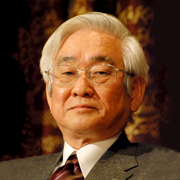
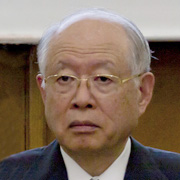
<p>The programme includes conferences with two Nobel Prize winners: physicist <a class="external-link" href="http://en.nagoya-u.ac.jp/people/nobel/toshihide_maskawa/index.html">Toshihide Maskawa</a>, awarded in 2008, and chemist <a class="external-link" href="http://en.nagoya-u.ac.jp/people/nobel/ryoji_noyori/index.html">Ryoji Noyori</a>, awarded in 2001. Maskawa will give a master class on<strong> March 7</strong>, <strong>at 1.30 pm (Nagoya time)</strong>, followed by Noyori, who will speak at <strong>3 pm</strong>. Maskawa and Noyori are two out of six Nobel Prize winners from Nagoya University.</p>
<p><span>Besides them, more than 30 specialists in biology, physics, humanities, social sciences and arts will give conferences throughout the 12-day meeting. The president of Nagoya University, Michinari Hamaguchi, will discuss higher education and academic research in Japan (March 7, at 6.30, Nagoya time). The former director of the <span>Princeton</span> Institute for Advanced Study, Peter Goddard, will talk about the development and the role of <span>institutes for </span>advanced study (March 11, at 1.00 pm, Nagoya time).</span></p>
<p>The activities will take place on the campuses of Nagoya University and Waseda University, in Tokyo. The full programme can be found <a class="external-link" href="http://intercontinental-academia.ubias.net/nagoya/programme">here</a>.</p>
<p><i>All conferences will be broadcast <i><a href="https://www.iea.usp.br/en/aovivo" class="external-link">live</a></i> on the websites of the IEA and the Intercontinental Academia. The videos will also be available on the IEA website later.</i></p>
<p>The Intercontinental Academia is a project of the <a class="external-link" href="http://www.ubias.net/">University-Based Institutes for Advanced Study</a> (UBIAS), a network that brings together 36 <span>institutes for </span><span>advanced study</span> of universities from all continents. The IEA-USP and the IAR-Nagoya are responsible for the first edition. The phase held in Brazil was part of the Global Networks of Young Researchers <span>program</span> of the <a href="https://www.iea.usp.br/en/research/chairs/olavo-setubal-chair-of-arts-culture-and-science" class="external-link">Olavo Setubal Chair of Arts, Culture and Science</a>, based on IEA with the support of Itaú Cultural.</p>
<p>The <a href="https://www.iea.usp.br/en/news/second-edition-intercontinental-academia-will-address-human-dignity" class="external-link">second edition of the Intercontinental Academia</a> will begin on March 7, in Israel, with the theme "human dignity". The organizers are the Israel Institute for Advanced Studies at the Hebrew University of Jerusalem and the Center for Interdisciplinary Research (Zentrum für <span> interdisziplinäre </span>Forschung - ZiF), of the Bielefeld University. <a href="https://www.iea.usp.br/en/news/akemi" class="external-link">Akemi Kamimura</a>, a lawyer and human rights activist, is one of the 21 young researchers that will participate in the project, after being nominated by the IEA and approved by the organizing committee.</p>]]></content:encoded>
    <dc:publisher>No publisher</dc:publisher>
    <dc:creator>Richard Meckien</dc:creator>
    <dc:rights>Original version in Portuguese by Fernanda Rezende.</dc:rights>
    
      <dc:subject>Institutional</dc:subject>
    
    
      <dc:subject>Intercontinental Academia</dc:subject>
    
    
      <dc:subject>ICA</dc:subject>
    
    
      <dc:subject>IEA</dc:subject>
    
    
      <dc:subject>Time</dc:subject>
    
    
      <dc:subject>Astrophysics</dc:subject>
    
    
      <dc:subject>Chemistry</dc:subject>
    
    <dc:date>2016-03-02T17:50:00Z</dc:date>
    <dc:type>Notícia</dc:type>
  </item>


  <item rdf:about="https://www.iea.usp.br/en/news/space-time-dimension">
    <title>The Space-Time Dimension in Digital Culture</title>
    <link>https://www.iea.usp.br/en/news/space-time-dimension</link>
    <description></description>
    <content:encoded xmlns:content="http://purl.org/rss/1.0/modules/content/"><![CDATA[<p><img src="https://www.iea.usp.br/midiateca/foto/eventos-2015/conferencias/talk25.jpg/@@images/a8c1e706-bec7-407e-a607-6975e3493a52.jpeg" alt="Conferência de Massimo Canevacci - 27 de abril de 2015" class="image-right" title="Conferência de Massimo Canevacci - 27 de abril de 2015" /></p>
<p>According to anthropologist <a class="external-link" href="http://www.ica.usp.br/people/massimo-canevacci">Massimo Canevacci</a>, digital culture challenges the classic distinction between space and time by promoting syncretism between both dimensions and by breaking with hegemonic dualistic thinking. Canevacci, a visiting professor at the IEA, spoke on this subject at the last conference of the <a class="external-link" href="http://www.ica.usp.br/">Intercontinental Academia</a> (ICA) on April 27.</p>
<p class="Text"><span>His exposition focused on the notion of “ubiquitime,” a neologism he created to define, from an ethnographic viewpoint, “the uncentered and non-linear experiences of space-time” promoted by contemporary digital communication.</span></p>
<p class="Text"><span>In his view, the notion of ubiquitime combines three central notions: <i>simultaneity</i>, “an aesthetics made of fragments from metropolises and technologies,” as advocated by Futurism, the art movement; <i>chronotope</i>, established by philosopher Mikhail Bahktin to denote the dialogic relationship between the spatial and the temporal horizons that “has become essential to the development of literary polyphony;” and <i>ubiquity</i>, a metaphor that expresses the ability to be anywhere at the same time made possible by the potential for global connection of the global digital networks.</span></p>
<p><span><strong>Ubiquity</strong></span></p>
<p><strong> </strong></p>
<p>In Canevacci’s assessment, ubiquity is a key concept in digital culture, because it “characterizes human and non-human space-time relationships on the Internet.” He recalled that the traditional definition of the term has a theological undertone and relates to the idea of an omnipresent, invisible and inescapable godhead that observes everything and everyone: “God knows everything and will judge you,” he summarized.</p>
<p class="Text"><span>The metaphorical nature of the definition proposed by Canevacci expands the threshold of ubiquity to the material world of everyday life, and extends “the presence of all human or divine beings to everywhere.”</span></p>
<p class="Text"><span>Ubiquitous individuals can move about between different identities, spaces and times, giving rise to the <i>multividual</i>, according to Canevacci. The multividual emerges from the multiplication of subjectivities beyond fixed identities: “Ubiquity defies identity, which becomes more flexible. The ubiquitous subject of ethnographic experience is a multidividual.”</span></p>
<table class="tabela-esquerda-borda">
<tbody>
<tr>
<td>
<h3>Related material</h3>
<p><strong>INTERCONTINENTAL ACADEMIA</strong></p>
<p><strong><i>Thematic axis: Time</i></strong></p>
<p><strong>Massimo Canevacci's conference</strong></p>
<ul>
<li><span><a href="https://www.iea.usp.br/en/midiateca/video/videos-2015/intercontinental-academia-talk-with-massimo-canevacci" class="external-link">Video</a> / <a class="external-link" href="http://intercontinental-academia.ubias.net/media-center/photos/talks">Photos<br /><br /></a></span></li>
</ul>
<p><span><strong>News</strong></span></p>
<ul>
<li><a href="https://www.iea.usp.br/en/news/concepcao-de-tempo-em-diferentes-sociedades-e-tema-de-conferencia-da-ica" class="external-link">Conception of time in different societies</a></li>
</ul>
<p style="text-align: right; "><strong><i><a class="external-link" href="http://intercontinental-academia.ubias.net/news">More news</a></i></strong></p>
<p><strong><a class="external-link" href="http://intercontinental-academia.ubias.net/docs/reports" target="_blank">Critical reports</a></strong></p>
<p><strong><a class="external-link" href="http://intercontinental-academia.ubias.net">Mais informações</a><br /></strong></p>
</td>
</tr>
</tbody>
</table>
<p class="Sub1"><span><strong>Empirical cases</strong></span></p>
<p>Canevacci presented four empirical cases that exemplify the experience of ubiquitime in various cultures, starting with the Greek mythological deity Kairós, who symbolizes “a moment in an indeterminate period in which something special happens,” i.e., a propitious moment for decision or action.</p>
<p class="Text"><span>Unlike Chronos, the god of chronological time, whose nature is quantitative, Kairós represents unmeasurable temporality and refers us to the idea of <i>carpe diem</i> – living intensely in the moment – and the power to make decisions. According to Canevacci, the concept of Kairós “does not fit restricted definitions because it is situated between two concepts: action and time, expertise and skill.”</span></p>
<p class="Text"><span>He said that the ubiquitime dimension in Kairós refers to what he calls “methodological stupor” or “undisciplined methodological wandering” – an attitude of openness toward the unknown that enables “ethnographers to turn and move, stride and walk with abandoned slowness and attention to detail,” always willing to observe and grasp spontaneous and casual study objects.</span></p>
<p class="Text"><span>The second case mentioned by Canevacci was the post-Euclidean architecture of Zaha Hadid. According to him, Hadid builds hybrid forms that break with the classic rules of composition and representation of space-time. “[Hadid] transforms non-normative geometry into mysterious, distorted and impure geometric shapes,” he said.</span></p>
<p class="Text"><span>The funeral rites of the Bororo, an indigenous people studied by Canevacci, was the third empirical case presented at the conference. The rites are long and complex, and involve burying the body in a shallow ditch, waiting for the decomposition of tissues, cleaning the skull, and special ornamentation for the final farewell ceremony.</span></p>
<p class="Text"><span>Canevacci explained that in the final stage, which lasts three days, time is suspended. “It is a period when there is time, only the celebration of the ritual that reaffirms that no distance exists between life and death, between space and time.”</span></p>
<p class="Text"><span>The last example, also related to the Bororo, was the “multividual subjectivity” of Kléber Meritororeu, a Bororo native. For Canevacci, Meritororeu embodies the idea of the multividual because he traverses from one identity to another: he is at the same time a native who lives his culture on a daily basis and a teacher at the Indigenous State School “Sacred Heart of Jesus” in Meruri village, in the city of General Carneiro, state of Mato Grosso.</span></p>
<p class="Text"><span>“He has two identities: he is a Bororo and teacher,” Canevacci said, stressing that Meritororeu faces the challenge not only of connecting these two identities, but also of self-representing himself with the aid of digital technologies – all this without letting go of the traditions of his people – to combine digital culture and Bororo culture.</span></p>
<p class="Text"><span>“The use of technology by the natives helps the development of a decentralized network that cannot be compare with any analog network,” he explained. “The dichotomous relationship between technology and culture, science and arts is obsolete,” he added.</span></p>]]></content:encoded>
    <dc:publisher>No publisher</dc:publisher>
    <dc:creator>Richard Meckien</dc:creator>
    <dc:rights>Original version in Portuguese by Flávia Dourado and translation by Carlos Malferrari</dc:rights>
    
      <dc:subject>Intercontinental Academia</dc:subject>
    
    
      <dc:subject>Ethnology</dc:subject>
    
    
      <dc:subject>Digital Culture</dc:subject>
    
    
      <dc:subject>Anthropology</dc:subject>
    
    
      <dc:subject>Time</dc:subject>
    
    
      <dc:subject>Technology</dc:subject>
    
    <dc:date>2015-05-27T20:30:00Z</dc:date>
    <dc:type>Notícia</dc:type>
  </item>


  <item rdf:about="https://www.iea.usp.br/en/news/social-jet-lag">
    <title>Conference of the Intercontinental Academia discusses the social jet lag syndrome</title>
    <link>https://www.iea.usp.br/en/news/social-jet-lag</link>
    <description></description>
    <content:encoded xmlns:content="http://purl.org/rss/1.0/modules/content/"><![CDATA[<p><img src="https://www.iea.usp.br/imagens/photo-till-roenneberg/@@images/714dbf9d-2126-453c-a2ae-173b128ccc4d.jpeg" alt="Photo Till Roenneberg" class="image-right" title="Photo Till Roenneberg" />The modern lifestyle has led many individuals to develop what chronobiologist <a class="external-link" href="http://ica.usp.br/people/till-roenneberg">Till Roenneberg</a>, professor and vice-president of the Medical Psychology Institute at Ludwig-Maximilians University (Germany), defined as “social jet lag” syndrome – the physical and mental impairment caused by a mismatch between the biological clock that regulates an organism’s physiological activities and the social clock that determines one’s daily personal and work commitments.</p>
<p class="Text">Roenneberg spoke of the causes and effects of this syndrome at the conference <i>Circadian Behavior and Sleep in the Real World</i>, held on April 21 as part of the program of the <a class="external-link" href="http://ica.usp.br/">Intercontinental Academia</a> (ICA) on the issue of “Time.”</p>
<p class="Text">According to the professor, social jet lag can be defined as a discrepancy between internal body rhythms and external environmental rhythms. It is very similar to what happens when a traveler crosses several time zones in succession: the sudden changes lead the body clock (which is adjusted to the time of the place of departure) to conflict with the local clock.</p>
<p class="Text">Unlike ordinary jet lag, however, the effects of which are transient, social jet lag is chronic, forcing individuals to fight systematically against their own biological clock in order to cope with the demands of everyday life – and this include ever-longer working hours and greater difficulties to reconcile professional and personal life.</p>
<table class="tabela-esquerda-borda">
<tbody>
<tr>
<th>
<h3>Related material</h3>
<p><strong>INTERCONTINENTAL ACADEMIA</strong></p>
<p><strong><i>Thematic axis: Time</i></strong></p>
<p><strong>Till Roenneberg's conference</strong></p>
<ul>
<li><a href="https://www.iea.usp.br/midiateca/video/videos-2015/intercontinental-academia-talk-with-till-roenneberg" class="external-link" target="_blank">Video</a> / <a class="external-link" href="http://ica.usp.br/media-center/photos/talks" target="_blank">Photos</a></li>
</ul>
<p> </p>
<p><strong>News</strong></p>
<ul>
<li><a href="https://www.iea.usp.br/en/news/theory-relationship-sleep-hormone-body-defense-regina-markus" class="external-link">A Theory of the Relationship between the Sleep Hormone and the Body’s Defense is the Subject of Regina Markus’ Conference</a></li>
</ul>
<p style="text-align: right; "><i><a class="external-link" href="http://ica.usp.br/news" target="_blank">More news</a></i></p>
<br /> 
<ul>
</ul>
<p><strong><a class="external-link" href="http://www.ica.usp.br/docs/reports" target="_blank">Critical reports</a></strong></p>
<p><strong><a class="external-link" href="http://intercontinental-academia.ubias.net/" target="_blank">More information</a></strong></p>
</th>
</tr>
</tbody>
</table>
<p class="Text">“Everything in our body is controlled and organized by the circadian system. The circadian system, in turn, is not organized by the social clock, but rather by the clock of the Sun, by the clock of light &amp; dark. So there will always be a discrepancy between what society wants us to do and what, under the conditions of modern life, our body wants us to do,” noted Roenneberg.</p>
<p class="Text">Some people compensate this discrepancy between biological and social rhythms by extending their period of activity and reducing their period of repose. According to Roenneberg, those who suffer from social jet lag are generally early risers who remain active until late at night to cope with their daily commitments. In the end, however, things don’t add up for them: they sleep less than eight hours a day and are therefore chronically sleep-deprived.</p>
<p class="Text">One can measure this “negative sleep balance” by comparing the pattern of their circadian behavior during weekdays, governed by the social clock, and during their free days, governed by their biological clock. “If we measure the difference between both patterns, we will obtain a quantifiable measure of what we call ‘social jet lag’,” said the professor.</p>
<p class="Sub1"><strong>The afflictions of modernity</strong></p>
<p>The negative sleep balance is at the root of many afflictions of modern society, especially those related to metabolic problems. “The greater the social jet lag, the greater the likelihood of becoming obese, developing diabetes, using drugs, smoking to relieve stress, and drinking alcohol to slumber off when one is not yet ready to sleep,” warned Roenneberg .</p>
<p class="Text">The implications of social jet lag also extend to the realm of behaviors. According to the chronobiologist, one of the first qualities that disappear when someone sleeps too little is social competence: “You become a true psychopath if you don’t sleep enough.”</p>
<p class="Text">For him, the social jet lag syndrome is associated with the idea that sleep keeps us from becoming more productive: “People tend to sleep one hour less in order to remain active for one hour more. Yet, sleeping does not mean ceasing to be active, but rather preparing the body and the mind for activity.”</p>
<p class="Text">He explained that simple math underlies this statement: “If someone sleeps one hour less, depriving himself of 1/8 of his sleep period, he only gains 1/16 in terms of activity. On the other hand, his efficiency is reduced by about 1/20.”</p>
<p class="Text">The result, he said, is a vicious cycle – one that has become endemic in the United States. “You lose efficiency, so you have to work more and more; to work more, you have to sleep less; and by sleeping less, you lose efficiency.”</p>
<p class="Text">In his assessment, the widespread use of alarm clocks is evidence that overall people sleep less than they should. “What is the fundamental issue underlying the use of an alarm clock? That we have not completed our biological sleep period! Otherwise, we would need no help to wake up,” he warned. “We must change our attitude toward sleep,” he added.</p>
<p class="Sub1"><strong>Chronotypes</strong></p>
<p>In addition to propelling social jet lag, the modern lifestyle also contributes to an extreme expression of the so-called chronotypes – the classification of individuals according to the preferences of their body regarding the time they perform daily activities such as sleeping, waking up, working out and exercising the mind.</p>
<p class="Text">There are two main chronotypes: the “morning people,” who sleep and rise early, and reserve the night period to sleep; and the “evening people,” who prefer to sleep and wake up late, even if that means dedicating part of the day to sleep.</p>
<p class="Text">Roenneberg said that, in terms of their circadian behavior, these two chronotypes are growing farther and farther apart because of how the patterns of exposure to natural light are changing in the modern age.</p>
<p class="Text">According to him, throughout the course of evolution, our biological clock was synchronized with a light/dark cycle regulated by exposure to sunlight: “The environment in which we were synchronized during the last thousands of years was one of much light during the day and no light at all at night. The morning and evening chronotypes existed, but the distance between them was not significant.”</p>
<p class="Text">However, the dissemination of electric lighting and the habits of modern life have imposed different levels of exposure to solar and artificial light. Indeed, the luminous signals that help synchronize internal body rhythms and external environment rhythms are being minimized.</p>
<p class="Text">Roenneberg used the ICA’s own dynamics as an example: in daytime, when people should normally be exposed to the Sun, participants were confined indoors, with little natural light; at night, on the other hand, when the body should be in the dark, they were exposed to a prolonged period of artificial light. “We are darkening the day and illuminating the night. And this light is increasingly turning us into evening people,” he said.</p>
<p class="Text">According to him, exposure to artificial light at night would hardly make a farmer become an evening person, because, when working outdoors, under the Sun, he would signal to the biological clock that sunlight, stronger and natural, was the real light. “It is the <i>contrast</i> between light and dark that synchronizes our biological clock, making us sleep from 10 pm to 6 am,” he said.</p>
<p class="Text">In Roenneberg’s view, unlike what is commonly thought, being an evening person does not imply any type of pathology. “There is no innate timing of the circadian clock,” he explained, pondering that sleeping and waking up later is “a natural reaction to the environment where one lives, a normal way for the circadian clock to synchronize a body that is not being sufficiently exposed to light.”</p>]]></content:encoded>
    <dc:publisher>No publisher</dc:publisher>
    <dc:creator>Richard Meckien</dc:creator>
    <dc:rights>Translation by Carlos Malferrari.</dc:rights>
    
      <dc:subject>Psychology</dc:subject>
    
    
      <dc:subject>Intercontinental Academia</dc:subject>
    
    
      <dc:subject>Humans</dc:subject>
    
    
      <dc:subject>Time</dc:subject>
    
    
      <dc:subject>Medicine</dc:subject>
    
    
      <dc:subject>Event</dc:subject>
    
    <dc:date>2015-05-27T17:45:00Z</dc:date>
    <dc:type>Notícia</dc:type>
  </item>


  <item rdf:about="https://www.iea.usp.br/en/news/climate-time-scales">
    <title>Climate Time Scales and Climate Change</title>
    <link>https://www.iea.usp.br/en/news/climate-time-scales</link>
    <description></description>
    <content:encoded xmlns:content="http://purl.org/rss/1.0/modules/content/"><![CDATA[<p>After humans began to recognize cycles and patterns in nature, the uncertainties of the future became less distressing, at least with regard to matters such as obtaining food and seeking shelter from inclement weather. But how should we react when the very future of life on our planet is at risk because one of the environmental variables has reached an unanticipated level?</p>
<p class="Text">According to astrogeophysicist <a class="external-link" href="http://ica.usp.br/people/luiz-gylvan-meira-filho-1">Luiz Gylvan Meira Filho</a>, former visiting professor and currently member of the IEA’s Environment and Society research group, humanity is entering a period when it is difficult to predict what might happen, “because in the last 800,000 years the concentration of atmospheric CO<sub>2</sub> never exceeded 280 parts per million (ppm), and we have now reached 400 ppm.”</p>
<p class="Text"><img src="https://www.iea.usp.br/imagens/photo-luiz-gylvan-meira-filho" alt="Photo Luiz Gylvan Meira Filho" class="image-left" title="Photo Luiz Gylvan Meira Filho" />Meira Filho, who is one of Brazil’s leading experts on climate change and international climate negotiations, talked about the time scales of climate and of climate change in his conference at the <a class="external-link" href="http://ica.usp.br/">Intercontinental Academia</a> on April 22. For him, climate change should be seen in the context of time and treated as an urgent issue, “but not in the sense that something catastrophic may happen tomorrow or next week.”</p>
<p class="Text">During his exposition, he presented several graphs extracted from the 2014 Climate Change Synthesis Report prepared by the United Nations Intergovernmental Panel on Climate Change (IPCC).</p>
<p class="Sub1"><strong>CO<sub>2</sub> Concentration</strong></p>
<p>According to Meira Filho, the “proxy data” (data collected by paleoclimatologists from natural records of climate variations, e.g., stomata, phytoplankton and paleosoils) allow us to analyze the history of climate over a very long time. “In the very distant past, there have been concentrations of CO<sub>2</sub> higher ​​than the current 400 ppm. Three and half million years ago, it was 200 ppm and between that time and 800,000 years ago, CO<sub>2</sub> concentration often reached 400 ppm.”</p>
<p class="Text">However, when we observe a shorter period of time, up to 800,000 years ago, and also consider three astronomical variables that affect climate (orbital obliquity, orbital eccentricity and the precession of Earth’s axis), “we find that we are in a period when the concentration of atmospheric CO<sub>2</sub> should reach a maximum of 280 ppm; it never reached 300 ppm in the last 800,000 years.”</p>
<p class="Text">It turns out that very recent history, as verified by measurements at the top of the Mauna Loa volcano in Hawaii, shows that CO<sub>2</sub> concentration was 320 ppm in 1970 and reached 380 ppm in 2005. According to Meira Filho, measurements at Mauna Loa began in 1958 and, at that time, already exceeded the 280 ppm typical of the pre-industrial period. “Nowadays, we don’t need to read scientific journals; the daily newspapers tell us that levels have reached 400 ppm.”</p>
<p class="Text">“This increase was caused by man. It is relatively simple to measure and apply the scientific method to find that CO<sub>2</sub> concentration is increasing. And, by analyzing several hypotheses, we can conclude that this is due to the burning of fossil fuels.” For Meira Filho, this conclusion is supported by the fact that there are no natural processes that burn fossil carbon in significant amounts. Even volcanic activity releases relatively small quantities of CO<sub>2</sub>.</p>
<p class="Sub1"><strong>The greenhouse effect</strong></p>
<p>He explained how the greenhouse effect derives from excess CO<sub>2</sub> in the atmosphere: “Our planet receives energy from the Sun and radiates part of it back into space in the form of infrared radiation, which acts as a cooling mechanism to maintain the thermal balance of the Earth’s surface. There has to be an equilibrium, otherwise the planet will heat up or cool down. CO<sub>2</sub> absorbs infrared radiation, unbalancing the system and causing the greenhouse effect, which warms the surface of the Earth.”</p>
<p class="Text">According to him, climate is determined by the absorption of electromagnetic energy from the Sun in the visible spectrum. “This does not occur uniformly, because tropical regions receive more energy than the polar ones. This difference in energy deposition causes the movements of the atmosphere and the transfer of energy. The oceans are also involved in the process. This is how climate models and their dynamics came about.”</p>
<p class="Text">From the point of view of science, the greatest dilemma has been the fact that climate change as reported in the newspapers cannot be observed: “In geophysics and astrophysics, we usually can’t apply the scientific method of laboratory experiments; things have to be done piecemeal. The beginning of this story has been solved, with the finding that the increase of atmospheric CO<sub>2</sub> is due to emissions caused by man. The result, i.e., the impact on the climate, is harder to explain.”</p>
<p class="Sub1"><strong>Numerical models</strong></p>
<p>What scientists have been doing for years is “to improve the numerical models so as to predict weather <i>a posteriori</i>, that is, to predict today how climate evolved over the last century.” This job requires increasingly powerful supercomputers. However, according to Meira Filho, the physics behind it is very simple and uses “well-known and very stable laws of conservation of mass, energy (first law of thermodynamics) and momentum (Newton’s law). They are written in the form of differential equations with respect to time; we take a numerical quantity at a certain point in time, integrate the variants numerically and find the value in the future.”</p>
<p class="Text">“These models have been significantly improved, to the point of being able to estimate rather accurately how climate evolved over the last 100 years vis-à-vis how it actually developed. Once this is simulated in a computer, we can easily change the procedures to take into account increased atmospheric concentration of greenhouse gases and see what happens.”</p>
<p class="Sub1">Future scenarios</p>
<p>The result is the realization that we must reduce the emission of greenhouse gases to control the rise in temperature. He showed graphs with four possible scenarios for 2100: 1) increase of 3.5 °C in the average temperature of the planet’s surface as early as 2100 and a trend of sharp increases in the following centuries if the emission of greenhouse gases continues to grow at the current rate; 2) increase of 0.5 °C if all emissions cease now; 3) increase of up to 2 °C (agreed at the UN Conference on Climate Change in December 2009 in Copenhagen), provided all countries concur to lower their emissions accordingly at the conference that the United Nations will hold in December in Paris; 4) increase of up to 3 °C if decisions adhere only to what was defined in Copenhagen.</p>
<p class="Text">According to Meira Filho, the climate system has essentially two memories: the first one has to do with the fact that greenhouse gases remain in the atmosphere for different periods (ten years for methane and more than 100 years for nitrous oxide; in the case of CO<sub>2</sub>, the decrease is related to the level of biological activity on the planet); the second memory concerns the slow warming movement of the oceans, governed by maritime currents, which are relatively slow.</p>
<p class="Sub1"><strong>The permanence of gases</strong></p>
<p>The combination of these two memories leads the maximum effect on climate change of methane to take place 20 years after the emission, and of carbon dioxide and nitrous oxide, 40 to 50 years. “This means that if we want to stabilize temperature in 2100, we have to stabilize emissions by 2050 and this depends on the industries and the infrastructure that are being planned today. Hence the urgency of dealing with the problem.”</p>
<p class="Text">Meira Filho concluded with a warning based on another scientific methodology: “If we look at this scenario using the concept of phase space and if we place in the coordinates of a multidimensional space one of the important variables that describe the climate system over time, the conclusion we reach is that we have already entered a phase space that we have never occupied in the last 800,000 years. This is scary, to say the least. We are in uncharted territory and this brings risks to the continuity of life.”</p>]]></content:encoded>
    <dc:publisher>No publisher</dc:publisher>
    <dc:creator>Mauro Bellesa</dc:creator>
    <dc:rights>Translation by Carlos Malferrari</dc:rights>
    
      <dc:subject>Climate Change</dc:subject>
    
    
      <dc:subject>Time</dc:subject>
    
    
      <dc:subject>Ecology</dc:subject>
    
    
      <dc:subject>Intercontinental Academia</dc:subject>
    
    <dc:date>2015-05-27T14:20:00Z</dc:date>
    <dc:type>Notícia</dc:type>
  </item>


  <item rdf:about="https://www.iea.usp.br/en/news/single-celled-organisms">
    <title>Discerning the Biological Clock of Single-Celled Organisms</title>
    <link>https://www.iea.usp.br/en/news/single-celled-organisms</link>
    <description></description>
    <content:encoded xmlns:content="http://purl.org/rss/1.0/modules/content/"><![CDATA[<p>The biological processes of most living beings are governed by the so-called circadian clock, a kind of natural timepiece that adjusts internal vital rhythms to external environmental rhythms, regulating cellular metabolic activity according to cycles of light and dark. Synchronized with a 24-hour time period, this clock is what causes a person to feel sleepy at night, remain awake during the day or feel jet lag when traveling across time zones.</p>
<p class="Text"><img src="https://www.iea.usp.br/imagens/photo-takao-kondo" alt="Photo Takao Kondo" class="image-right" title="Photo Takao Kondo" />Although the workings of the circadian clock in complex, multicellular organisms has been the object of research for a long time, studies on the biological rhythms of microorganisms are rather recent. In a conference at the <a class="external-link" href="http://ica.usp.br/">Intercontinental Academia</a> (ICA) addressing the main theme “Time,” on April 22, <a class="external-link" href="http://ica.usp.br/people/takao-kondo">Takao Kondo</a> spoke about the progress he has achieved in this field with experiments involving prokaryotes – unicellular organisms lacking some organelles and a nuclear membrane.</p>
<p class="Text">Kondo is professor of Biological Sciences at the University of Nagoya (Japan) and member of the Scientific Committee of the Institute for Advanced Research (IAR) at the ICA. He is known for having been the first scientist to reconstitute a circadian clock <i>in vitro</i>, laying the foundation for numerous discoveries on the molecular basis of biological rhythms.</p>
<p class="Text">At the conference, Kondo presented the results of experiments that he carried out to demonstrate the occurrence of circadian clocks in the <i>Synechococcus elongatus</i> cyanobacterium – a unicellular photosynthetic bacterium, similar to blue-green algae, which is at the base of the food chain in marine environments. According to Kondo, “cyanobacteria are the simplest organisms that display circadian rhythms.”</p>
<p class="Sub1"><strong>A QUESTION OF GENETICS</strong></p>
<p>Kondo’s great headway was to identify a group of genes – known as kaiABC – that controls the <i>Synechococcus</i>’ circadian clock. He explained that the phosphorylation and dephosphorylation cycles of the protein encoded by the trio of Kai genes – KaiA, KaiB and KaiC – act as regulators of the biochemical mechanism that times the daily rhythms of cyanobacteria.</p>
<p class="Text">Phosphorylation is the metabolic process of adding a phosphate group, donated by an ATP (a molecule that stores energy), to a protein. Dephosphorylation, in turn, is the removal of a phosphate group.</p>
<p class="Text">The dynamic addition and removal of phosphate, catalyzed by the kinase and phosphatase enzymes, inhibits or activates the expression of a gene, i.e., its encoding in a protein. That is why it is one of the main mechanisms for regulating proteins.</p>
<p class="Text">The discovery of the role of the Kai genes in the metabolism of <i>Synechococcus</i> cleared the way for the <i>in vitro</i> reconstitution of the circadian clock of cyanobacteria. Toward this end, Kondo mixed the trio of Kai proteins with an ATP molecule in a test tube.</p>
<p class="Text">The incubation confirmed the hypothesis that, in the presence of these four elements, the 24-hour cycles of cyanobacteria occur autonomously, even in the absence of external “time cues,” such as the alternation of light and dark.</p>
<p class="Text">The experiment showed that the processes of phosphorylation and dephosphorylation of the three Kai proteins are interconnected and generate a threaded cycle of protein activation and inactivation. Kondo noted that the oscillation of the gene expression of these proteins acts as the time stamp of the <i>Synechococcus’</i> circadian clock and that “the state of phosphorylation of KaiC is the central component of this system.”</p>
<p class="Text">According to Kondo, the circadian rhythms generated by the oscillation of KaiC act as a molecular timer that regulates the entire metabolism of cyanobacteria.</p>
<p class="Sub1"><strong>MECHANICAL CLOCK</strong></p>
<p>Kondo compared the circadian cycles of the <i>Synechococcus</i> to a mechanical timekeeping system: “The Kai protein clock is designed much as a grandfather clock.”</p>
<p class="Text">He said that the oscillation between the phosphorylation cycle of KaiC and the gene expression of KaiA and KaiB resembles the mechanism of the pendulum: as the escapement transmits timekeeping to the clock’s hands, the pulses generated by Kai proteins transmit temporal signals to the cell, performing the fine adjustment of vital processes that depend on synchronization with external factors.</p>
<p class="Text">He also drew attention to the accuracy of the biological rhythms of cyanobacteria. “Nature imitates art. The circadian clock of the Kai protein seems to have been designed by a master watchmaker,” he concluded.</p>
<p class="Text" style="text-align: right; "><span class="discreet">Photo: Leonor Calazans/IEA-USP</span></p>]]></content:encoded>
    <dc:publisher>No publisher</dc:publisher>
    <dc:creator>Flávia Dourado</dc:creator>
    <dc:rights>Translation by Carlos Malferrari</dc:rights>
    
      <dc:subject>Intercontinental Academia</dc:subject>
    
    
      <dc:subject>Biology</dc:subject>
    
    
      <dc:subject>Natural sciences</dc:subject>
    
    
      <dc:subject>Time</dc:subject>
    
    <dc:date>2015-05-27T14:20:00Z</dc:date>
    <dc:type>Notícia</dc:type>
  </item>


  <item rdf:about="https://www.iea.usp.br/en/news/physics-build-time">
    <title>The Attempts of Physics to Build Time</title>
    <link>https://www.iea.usp.br/en/news/physics-build-time</link>
    <description></description>
    <content:encoded xmlns:content="http://purl.org/rss/1.0/modules/content/"><![CDATA[<table class="tabela-direita-300">
<tbody>
<tr>
<th><img src="https://www.iea.usp.br/imagens/eliezer-rabinovici-2" alt="Eliezer Rabinovici" class="image-inline" title="Eliezer Rabinovici" /></th>
</tr>
<tr>
<td style="text-align: right; "><strong>Physicist Eliezer Rabinovici, from the Hebrew University of Jerusalem</strong></td>
</tr>
</tbody>
</table>
<p>The largest measured span of time is the 13.7 billion years since the Big Bang. The smallest is 10<sup>-18</sup> second: one millionth of a millionth of a millionth of a second, measured in atomic excitation. From this time spectrum, physicists try to understand the experience and the flow of time.</p>
<p class="Text"><span>In his lecture, <i>Building Time in Physics – Attempts</i>, on April 20 at the <a class="external-link" href="http://intercontinental-academia.ubias.net/">Intercontinental Academia</a>, physicist <a class="external-link" href="http://intercontinental-academia.ubias.net/people/eliezer-rabinovici">Eliezer Rabinovici</a>, from the Hebrew University of Jerusalem (HUJI), addressed some concepts that were discovered and developed to study the large and small scales of time, especially those used to explain the constitution of matter in unified theories and in string theory.</span></p>
<p class="Text">An expert on particle physics, Rabinovici was director of <a class="external-link" href="http://www.as.huji.ac.il/">HUJI’s Institute for Advanced Study</a> and creator of the proposal that resulted in the Intercontinental Academia.</p>
<p class="Sub1"><span><strong>Unified theory</strong></span></p>
<p>“Although most of us measure from 1 to 2 meters, we boldly presume to explain the entire universe, from the smallest to the largest aspects. We want to explain and reduce everything to what is simplest. We believe we can put in one page all the equations that describe matter in the universe. That’s quite a feat.” Rabinovici’s comment seems to indicate that, at the very least, he sees with some reservation the possibility that physics will arrive at a unified theory combining all the forces that affect matter (electromagnetism, gravity, the weak interaction and strong interaction).</p>
<p class="Text"><span>He said that in the 1920s scientists knew two interactions of matter, electromagnetism and gravity, which at low energies occur in four dimensions – three spatial ones, the fourth being time. “When energy was increased in particle accelerators, it was found that there is one basic interaction, gravity, and five dimensions. This was a great leap in our understanding of matter.”</span></p>
<p class="Text"><span>According to Rabinovici, to evade the notion that an omnipotent equation may unify all the forces affecting matter (electromagnetism, gravity, strong interaction and weak interaction) and fully explain the constitution of matter, all we have to do is give it an infinite number of solutions. “In string theory, where strings (the components of matter) move in ten dimensions, this is what happens: we have an equation with, as far as we know, infinite solutions.”</span></p>
<p class="Sub1"><span><strong>Dualities</strong></span></p>
<table class="tabela-esquerda-200-borda">
<tbody>
<tr>
<td>
<h3>Related material</h3>
<p><strong>INTERCONTINENTAL<br />ACADEMIA</strong></p>
<p><strong><i>Thematic axis: Time</i></strong></p>
<p><strong>Eliezer Rabinovici's conference</strong></p>
<ul>
<li><a href="https://www.iea.usp.br/en/midiateca/video/videos-2015/intercontinental-academia-talk-with-eliezer-rabinovici" class="external-link">Video</a> / <a class="external-link" href="http://intercontinental-academia.ubias.net/media-center/photos/talks">Photos</a></li>
</ul>
<p> </p>
<p><strong>News</strong></p>
<ul>
<li><a href="https://www.iea.usp.br/en/news/matthew-kleban-discusses-arrow-time-evolution-universe" class="external-link">Matthew Kleban Discusses the Arrow of Time and the Evolution of the Universe</a></li>
</ul>
<p style="text-align: right; "><strong><i><a class="external-link" href="http://intercontinental-academia.ubias.net/news">More news</a></i></strong></p>
<p><strong><a class="external-link" href="http://intercontinental-academia.ubias.net/docs/reports" target="_blank">Critical reports</a></strong></p>
<p><strong><a class="external-link" href="http://intercontinental-academia.ubias.net">Mais informações</a><br /></strong></p>
</td>
</tr>
</tbody>
</table>
<p>Rabinovici mentioned that the current work of physicists is impregnated with many mysterious things that seem dualities. “Initially, all known mathematical principles become ambiguous or seem to have the same theory. One of these concepts concerns the number of existing dimensions. The theory of five dimensions provides the same description as the theory of ten dimensions. And one of the dualities is the Big Crunch [the collapse of the universe due to contraction caused by gravity], which would be a terrible event for some and magnificent to others, with each explanation being as good as another.”</p>
<p class="Sub1"><span><strong>Relativity</strong></span></p>
<p>Everyone now says everything is relative. This is not true, according to Rabinovici. “One of the worst representations of a theory is the fact that the Theory of Relativity is called Theory of Relativity. Einstein knew that the word was not appropriate. When asked five years later whether it might be better to change the name, he answered, ‘It’s too late’.”</p>
<p class="Text"><span>According to Rabinovici, the Theory of Relativity is an attempt to isolate what is not relative, to become a theory about what every observer can agree on. “Time has relative aspects, but it is part of something that is not relative. Cause and effect relationships are not relative. The decay time of a particle (neutrons decay in 14 minutes) is not relative.”</span></p>
<p class="Sub1"><span><strong>Symmetry</strong></span></p>
<p>He said that laws of physics are roughly the same in both directions of the flow of time, but there is a small “breach of time” that can be measured in reverse symmetry. Even if the laws of physics are symmetric, why isn’t their manifestation symmetric? Why something destroyed cannot return to its previous state? To this question, Rabinovici said that that is not how things happen, because over a long course of time (“zillions of times the age of the Universe”) reconstitution might occur and that something could become quite similar to what it was.</p>
<p><strong>Space-time</strong></p>
<p>Rabinovici said that everyone learns at school or in popular readings that time merges with the space and only space-time exists, being impossible to think of each of them separately. “Time and space do indeed merge, but some things are invariant,” according to the physicist. “Space-time and gravity are closely linked and time and space are average quantities; however, they are not fundamental because they emerge from something else.”</p>
<p class="Text"><span>Because humans are subject to extremely weak gravity (compared to other places in the universe, such as black holes), we have a relatively stable perception of time: “Because the universe expands, it has a radius. We can say where we are in terms of the size of that radius. That is our clock.”</span></p>
<p style="text-align: right; "><span class="discreet"><i>Photo: Leonor Calasans/IEA-USP</i></span></p>]]></content:encoded>
    <dc:publisher>No publisher</dc:publisher>
    <dc:creator>Richard Meckien</dc:creator>
    <dc:rights>Original version in Portuguese by Mauro Bellesa and translation by Carlos Malferrari</dc:rights>
    
      <dc:subject>Transformation</dc:subject>
    
    
      <dc:subject>Intercontinental Academia</dc:subject>
    
    
      <dc:subject>Event</dc:subject>
    
    
      <dc:subject>Time</dc:subject>
    
    <dc:date>2015-05-26T17:55:00Z</dc:date>
    <dc:type>Notícia</dc:type>
  </item>


  <item rdf:about="https://www.iea.usp.br/en/news/time-astronomy">
    <title>The Relationship between Time and Astronomy in the Theory of Relativity</title>
    <link>https://www.iea.usp.br/en/news/time-astronomy</link>
    <description></description>
    <content:encoded xmlns:content="http://purl.org/rss/1.0/modules/content/"><![CDATA[<p><img src="https://www.iea.usp.br/midiateca/foto/eventos-2015/conferencias/talk12jpg.jpg/@@images/9311d377-519c-44a7-991c-074aa1b19684.jpeg" alt="Conferência de Hideyo Kunieda - 21 de abril de 2015" class="image-right" title="Conferência de Hideyo Kunieda - 21 de abril de 2015" /></p>
<p><i>Time in Astronomy</i> was the subject of the conference of <a class="external-link" href="http://intercontinental-academia.ubias.net/people/hideyo-kunieda">Hideyo Kunieda</a>, deputy dean of research and students at Nagoya University (Japan), at the <a class="external-link" href="http://intercontinental-academia.ubias.net/">Intercontinental Academia</a> (ICA) on April 21.</p>
<p class="Text"><span>Kunieda, who is also professor of the university’s Department of Physics, addressed in particular the advances in the observation of active galactic nuclei (AGNs) with the help of X-ray telescopes, his area of ​​expertise.</span></p>
<p class="Text"><span>According to him, this area of ​​research has contributed substantially to the understanding of astronomical phenomena predicted by the Theory of Relativity, such as black holes, the bending of light, and the deformation of space-time in the presence of supermassive objects.</span></p>
<p><span><strong>Echoes from the past</strong></span></p>
<p><strong> </strong></p>
<p><span>“The light of heavenly bodies we see today was emitted long ago. Looking into space is like looking into the past,” Kunieda said, noting that this is due to the huge scale of the universe: “The propagation of light in space is measured in years,” he added.</span></p>
<p class="Text"><span>For the professor, one of the positive aspects of light’s “delay” is to make it possible to study the evolution of the universe over time, from the Big Bang to the present day.</span></p>
<p class="Text"><span>According to the Big Bang theory, dominant among scientists, the universe came about 13.7 billion years ago, from a huge explosion. Planets, stars and galaxies were like splinters that progressively moved away from the center of detonation, causing the universe to expand continuously.</span></p>
<p class="Text"><span>“The universe was fairly uniform after the Big Bang. But then the fragments grew and the stars and galaxies came about. We currently can observe a broad variety of objects,” said Kunieda.</span></p>
<p class="Text"><span>According to him, to observe faint, lighted objects in space, with little glare, is like observing the early stages of the Big Bang, when the fragments began to take shape. “To look at distant galaxies is to see how these galaxies were in the early universe.”</span></p>
<p class="Text"><span>The idea of a moving and expanding universe, a notion that underlies the Big Bang theory, was strongly influenced by Hubble’s Law, according to which there is a relationship between a galaxy’s distance from Earth and the speed with which it is moving away: the farther, the faster.</span></p>
<p class="Text"><span>The law was formulated by observing a phenomenon known as “redshift,” or changes in the frequency of the waves that make up the spectrum of light caused by the relative velocity between the observer and the source of emission. If the object moves away from the observer at high speed, low frequency waves become more visible and their color is shifted toward red; and if the object is approaching, the high frequency waves become sharper and the color is shifted to violet.</span></p>
<p class="Text"><span>Thus, it was ascertained that most galaxies display a redshift and that the greater the deviation, the greater the distance between said galaxies and the Earth. “By Hubble’s law, the time axis is converted into depth in space,” summed up Kunieda.</span></p>
<table class="tabela-esquerda-borda">
<tbody>
<tr>
<td>
<h3>Related material</h3>
<p><strong>INTERCONTINENTAL<br />ACADEMIA</strong></p>
<p><i><strong>Thematic axis: Time</strong></i></p>
<p><strong>Hideyo Kunieda's conference</strong></p>
<ul>
<li><span><a href="https://www.iea.usp.br/en/midiateca/video/videos-2015/intercontinental-academia-talk-with-hideyo-kunieda" class="external-link">Video</a> / <a class="external-link" href="http://intercontinental-academia.ubias.net/media-center/photos/talks">Photos</a></span></li>
</ul>
<p><span><br /><strong>News</strong></span></p>
<ul>
<li><a href="https://www.iea.usp.br/en/news/matthew-kleban-discusses-arrow-time-evolution-universe" class="external-link">Matthew Kleban Discusses the Arrow of Time and the Evolution of the Universe</a></li>
</ul>
<p style="text-align: right; "><strong><i><a class="external-link" href="http://intercontinental-academia.ubias.net/news">More news</a></i></strong></p>
<p><strong><a class="external-link" href="http://intercontinental-academia.ubias.net/docs/reports" target="_blank">Critical reports</a></strong></p>
<p><strong><a class="external-link" href="http://intercontinental-academia.ubias.net">More information</a><br /></strong></p>
</td>
</tr>
</tbody>
</table>
<p><strong>Black hole</strong></p>
<p><strong> </strong></p>
<p>Predicted by the Theory of Relativity, a redshift also occurs in the presence of a strong gravitational field. Kunieda’s research on active galactic nuclei (AGNs) is based on observations of this phenomenon through images captured by X-ray telescopes.</p>
<p class="Text"><span>AGNs are supermassive (with mass up to 1 billion times that of our Sun) and very bright (up to 100 billion times brighter than the Sun) celestial bodies.</span></p>
<p><strong> </strong></p>
<p class="Text"><span>According to the professor, astronomical observations using different techniques suggest that AGNs harbor black holes – regions in space where gravity is so strong that nothing, not even light, can escape. Formed from the gravitational collapse of a star, known as supernova, black holes are the result of the curvature of space-time, the system of coordinate that underlies the Theory of Relativity.</span></p>
<p class="Text"><span>“Near a black hole, space-time is more curved. Because of this, time seems slowed down and the light emanating from that region seems redder,” Kunieda said, referring to the gravitational redshift.</span></p>
<p class="Text"><span>He explained that the brightness of AGNs does not derive from the black holes themselves, which are invisible, but from the radiation produced by the accretion disk – the agglomeration of particles and gases surrounding supermassive objects. Because they have a very powerful gravitational field, black holes suck in all surrounding matter. And when sucked in, matter does not fall into the hole in a straight path, but rather in spirals, like a whirlwind, giving rise to a disk that gradually adds mass to the central object.</span></p>
<p class="Text"><span>According to Kunieda, the heat produced by matter moving toward the gravitational body radiates in the disk’s surface, which is visible. The redshift occurs under the action of gravity, which causes an increase in the length of the light waves. He said this phenomenon is the curvature of the light under the effect of gravity, as predicted by the Theory of Relativity.</span></p>
<p class="Text"><span>The professor’s observations involve accretion disks in the center of host galaxies. He said images obtained by him and other researchers point to the existence of supermassive objects – in this case, black holes –, as determined by the Theory of Relativity.</span></p>
<p><span><strong>The Milky Way</strong></span></p>
<p>In Kunieda’s assessment, certain images of the Milky Way provide evidence that black holes exist. Obtained through infrared radiation or x-rays, these images show at first a common galaxy, with no central bright object, and therefore devoid of an active nucleus.</p>
<p class="Text"><span>However, stressed Kunieda, one cloud of particles at one end of the galaxy displays an unusual light pattern, as if it was lit from below and reflected the light emitted by an object in the vicinity. According to him, this is what astronomers refer to as “reflection nebula.”</span></p>
<p><span>“By measuring the distance between the reflection and the light source, one can calculate how long ago the light was emitted. The center of the galaxy was 10 million times brighter 350 years ago,” he said, noting that the reflection nebula provides evidence that the center of the Milky Way was once an AGN.</span></p>
<p class="Text"><span>“It’s a kind of astronomical archeology. It allows us to look at past activities in the center of the galaxy,” he compared. "In this case, the time axis is converted in a two-dimensional distribution."</span></p>
<p><span><strong>Supernovae</strong></span></p>
<p><strong> </strong></p>
<p>According to Kunieda, observations of supernovae (explosions that herald the beginning of the death of stars) have also contributed to our understanding of the history of the universe.</p>
<p class="Text"><span>The professor explained that stars, like our Sun, are bright because of the nuclear fusion of hydrogen into helium, a process that results in loss of mass and the formation of an increasingly dense core.</span></p>
<p class="Text"><span>When the fuel runs out, the core of the star shrinks and becomes a compact object, with an extremely strong gravitational field. The star then begins to attract all matter to its center, up to a point where the high density becomes unsustainable and the supermassive body collapses, expanding matter in a great explosion – the supernova. What remains of this collapse gives rise to black holes.</span></p>
<p class="Text"><span>Kunieda stressed that “the records of these explosions are very useful to understand the evolution of supernova remnants that we see today.” The remnants are nebulae formed from material ejected during the gravitational collapse, which speed away from the core. “In this case, the time axis is converted in a two-dimensional intensity distribution,” he said.</span></p>]]></content:encoded>
    <dc:publisher>No publisher</dc:publisher>
    <dc:creator>Richard Meckien</dc:creator>
    <dc:rights>Original version in Portuguese by Flávia Dourado and translation by Carlos Malferrari</dc:rights>
    
      <dc:subject>Astrophysics</dc:subject>
    
    
      <dc:subject>Intercontinental Academia</dc:subject>
    
    
      <dc:subject>Exact sciences</dc:subject>
    
    
      <dc:subject>Time</dc:subject>
    
    <dc:date>2015-05-26T15:15:00Z</dc:date>
    <dc:type>Notícia</dc:type>
  </item>


</rdf:RDF>