<?xml version="1.0" encoding="utf-8" ?>
<rdf:RDF xmlns:rdf="http://www.w3.org/1999/02/22-rdf-syntax-ns#" xmlns:dc="http://purl.org/dc/elements/1.1/" xmlns:syn="http://purl.org/rss/1.0/modules/syndication/" xmlns="http://purl.org/rss/1.0/">


<channel rdf:about="https://www.iea.usp.br/search_rss">
  <title>Instituto de Estudos Avançados da Universidade de São Paulo</title>
  <link>https://www.iea.usp.br</link>

  <description>
    
            These are the search results for the query, showing results 91 to 105.
        
  </description>


  <image rdf:resource="https://www.iea.usp.br/logo.png" />

  <items>
    <rdf:Seq>
      
        <rdf:li rdf:resource="https://www.iea.usp.br/en/news/jane-ohlmeyer-presents-case-of-successful-interdisciplinary-research-in-the-digital-humanities" />
      
      
        <rdf:li rdf:resource="https://www.iea.usp.br/en/media-library/photos/events-2013/o-instituto-de-estudos-avancados-da-universidade-de-birmingham-o-ano-do-desenvolvimento-e-planos-para-o-futuro-2013-11-de-abril-de-2013" />
      
      
        <rdf:li rdf:resource="https://www.iea.usp.br/eventos/conferencia-peter-weingart" />
      
      
        <rdf:li rdf:resource="https://www.iea.usp.br/en/news/intercontinental-academia-new-date-announced" />
      
      
        <rdf:li rdf:resource="https://www.iea.usp.br/en/media-library/photos/institutional/frias-18-a-21-de-setembro-de-2014" />
      
      
        <rdf:li rdf:resource="https://www.iea.usp.br/en/news/intercontinental-academia-4-call" />
      
      
        <rdf:li rdf:resource="https://www.iea.usp.br/noticias/intercontinental-academia-5" />
      
      
        <rdf:li rdf:resource="https://www.iea.usp.br/en/news/mooc-time" />
      
      
        <rdf:li rdf:resource="https://www.iea.usp.br/en/news/intercontinental-academia-launches-documentary-on-the-nagoya-phase-of-the-first-edition-of-the-program" />
      
      
        <rdf:li rdf:resource="https://www.iea.usp.br/noticias/lancado-video-da-fase-nagoya-da-intercontinental-academia" />
      
      
        <rdf:li rdf:resource="https://www.iea.usp.br/noticias/mooc-sobre-o-tempo" />
      
      
        <rdf:li rdf:resource="https://www.iea.usp.br/en/news/intercontinental-academia-extends-the-deadline-for-applications-to-August-31" />
      
      
        <rdf:li rdf:resource="https://www.iea.usp.br/en/news/ica-4" />
      
      
        <rdf:li rdf:resource="https://www.iea.usp.br/noticias/intercontinental-academia-comeca-nesta-sexta-17-de-abril" />
      
      
        <rdf:li rdf:resource="https://www.iea.usp.br/midiateca/foto/institutos-ubias-1/modelando-o-futuro-navegando-num-mundo-em-transformacao-de-4-a-6-de-marco-de-2013-no-instituto-de-estudos-avancados-da-universidade-hebraica-de-jerusalem-em-israel" />
      
    </rdf:Seq>
  </items>

</channel>


  <item rdf:about="https://www.iea.usp.br/en/news/jane-ohlmeyer-presents-case-of-successful-interdisciplinary-research-in-the-digital-humanities">
    <title>Jane Ohlmeyer presents a case of successful interdisciplinary research in the digital humanities</title>
    <link>https://www.iea.usp.br/en/news/jane-ohlmeyer-presents-case-of-successful-interdisciplinary-research-in-the-digital-humanities</link>
    <description></description>
    <content:encoded xmlns:content="http://purl.org/rss/1.0/modules/content/"><![CDATA[<p><img src="https://www.iea.usp.br/imagens/jane-ohmeyer-perfil" alt="Jane Ohmeyer - Perfil" class="image-right" title="Jane Ohmeyer - Perfil" />A professor of modern history and chair of the Irish Research Council (IRC), <a href="https://www.iea.usp.br/en/persons/speakers/jane-ohlmeyer" class="external-link">Jane Ohlmeyer</a> will be at the IEA on <strong>August 24</strong> for the conference <i>The Power of Interdisciplinary Research: the Example of Digital Humanities</i>, which will start at <strong>2 pm</strong> in the Events Room with <span><a href="https://www.iea.usp.br/aovivo" class="external-link">live</a><span> </span></span>webcast.</p>
<p>The researcher will report the importance of interdisciplinary research and her experience in the field of digital humanities with the <a class="external-link" href="http://1641.tcd.ie/" target="_blank">1641 Depositions</a> project, a collaboration of researchers from the arts, humanities, science, technology, engineering and mathematics. Ohlmeyer will also present an institutional overview as director of the <a class="external-link" href="https://www.tcd.ie/trinitylongroomhub" target="_blank">Trinity Long Room Hub</a>.</p>
<p><a href="https://www.iea.usp.br/en/persons/researchers/guilherme-plonski" class="external-link">Guilherme Ary Plonski</a>, deputy director of the IEA, will open the conference, which will be moderated by <a href="https://www.iea.usp.br/en/persons/researchers/jose-teixeira-coelho-netto" class="external-link">José Teixeira Coelho Netto</a>, a professor at USP's School of Communications and Arts (ECA) and coordinator of the <a href="https://www.iea.usp.br/en/research/study-groups/computational-humanities-1" class="external-link">IEA's Study Group on Computational Humanities</a>. <a href="https://www.iea.usp.br/en/persons/researchers/martin-grossmann" class="external-link">Martin Grossmann</a>, also a professor at ECA and academic coordinator of the <a href="https://www.iea.usp.br/en/research/chairs/olavo-setubal-chair-of-arts-culture-and-science" class="external-link">Olavo Setubal Chair of Arts, Culture and Science</a>, will make the final comments.</p>
<p>The Trinity Long Room Hub is the Arts and Humanities Research Institute of Trinity College Dublin. It is one of five flagship research institutes of the University, and the one dedicated to promoting and facilitating innovative research across its nine Arts and Humanities member Schools. It is a member of the <a class="external-link" href="http://www.ubias.net">UBIAS</a> network of university-based institutes for advanced study.</p>]]></content:encoded>
    <dc:publisher>No publisher</dc:publisher>
    <dc:creator>Richard Meckien</dc:creator>
    <dc:rights></dc:rights>
    
      <dc:subject>Green Room</dc:subject>
    
    
      <dc:subject>Ubias</dc:subject>
    
    <dc:date>2016-08-22T18:35:00Z</dc:date>
    <dc:type>Notícia</dc:type>
  </item>


  <item rdf:about="https://www.iea.usp.br/en/media-library/photos/events-2013/o-instituto-de-estudos-avancados-da-universidade-de-birmingham-o-ano-do-desenvolvimento-e-planos-para-o-futuro-2013-11-de-abril-de-2013">
    <title>Introducing the University of Birmingham's Institute of Advanced Studies: Development and Plans for the Future - April 11, 2013</title>
    <link>https://www.iea.usp.br/en/media-library/photos/events-2013/o-instituto-de-estudos-avancados-da-universidade-de-birmingham-o-ano-do-desenvolvimento-e-planos-para-o-futuro-2013-11-de-abril-de-2013</link>
    <description></description>
    
    <dc:publisher>No publisher</dc:publisher>
    <dc:creator>Richard Meckien</dc:creator>
    <dc:rights></dc:rights>
    
      <dc:subject>Ubias</dc:subject>
    
    <dc:date>2013-04-11T03:00:00Z</dc:date>
    <dc:type>Pasta</dc:type>
  </item>


  <item rdf:about="https://www.iea.usp.br/eventos/conferencia-peter-weingart">
    <title>Interdisciplinaridade e a Nova Governança das Universidades</title>
    <link>https://www.iea.usp.br/eventos/conferencia-peter-weingart</link>
    <description></description>
    <content:encoded xmlns:content="http://purl.org/rss/1.0/modules/content/"><![CDATA[<p><span>As universidades são organizadas com base em suas disciplinas, de modo que a administração central é geralmente apenas um setor burocrático com pouco poder de tomada de decisão. Isso tornou difícil o acolhimento da pesquisa interdisciplinar. No entanto, o cenário da ciência está mudando. Campos interdisciplinares estão emergindo em um ritmo crescente e as universidades vêm sendo chamadas a assumir uma política mais "empreendedora". Alguns exemplos podem ser tomados como modelos desse desenvolvimento e de seus obstáculos.</span></p>
<div></div>
<h3><span>Expositor</span></h3>
<p><a href="https://www.iea.usp.br/pessoas/expositores/peter-weingart" class="external-link">Peter Weingart</a></p>
<p>Evento com transmissão <a href="https://www.iea.usp.br/aovivo" class="external-link">ao vivo</a> pela web.<br /><span>Capacidade do auditório: 45 lugares</span></p>]]></content:encoded>
    <dc:publisher>No publisher</dc:publisher>
    <dc:creator>Rafael Borsanelli</dc:creator>
    <dc:rights></dc:rights>
    
      <dc:subject>Evento público</dc:subject>
    
    
      <dc:subject>Europa</dc:subject>
    
    
      <dc:subject>Interdisciplinaridade</dc:subject>
    
    
      <dc:subject>Ubias</dc:subject>
    
    
      <dc:subject>Interdisciplinar</dc:subject>
    
    
      <dc:subject>Pesquisa</dc:subject>
    
    
      <dc:subject>Universidade</dc:subject>
    
    
      <dc:subject>Institucional</dc:subject>
    
    
      <dc:subject>IEA</dc:subject>
    
    
      <dc:subject>Internacionalização</dc:subject>
    
    
      <dc:subject>Sala Verde</dc:subject>
    
    <dc:date>2015-07-01T19:45:00Z</dc:date>
    <dc:type>Evento</dc:type>
  </item>


  <item rdf:about="https://www.iea.usp.br/en/news/intercontinental-academia-new-date-announced">
    <title>Intercontinental Academia: new open call deadline announced</title>
    <link>https://www.iea.usp.br/en/news/intercontinental-academia-new-date-announced</link>
    <description></description>
    <content:encoded xmlns:content="http://purl.org/rss/1.0/modules/content/"><![CDATA[<p class="p1"><strong>The application period for the Intercontinental Academia has been extended to August 17</strong>. This project is an initiative of Ubias and aims to promote scientific and cultural exchange between institutions and young researchers around the world.</p>
<p class="p1"><strong>Time</strong> was chosen as the main theme, since its concept is usually different in each area of knowledge, whether in the humanities or in natural sciences. For a comprehensive overview of the impacts of these ideas in science and culture in general, there must be an academic dialogue among people that work with different concepts of time.</p>
<p class="p1">Two meetings of immersion are planned to occur in March 2015, at the University of São Paulo, and in January 2016, at the Nagoya University, besides other activities during this period.</p>
<p class="p1">Those interested in applying should be aged up to 40, hold a PhD or post-doctorate (completed or in progress) in any field of knowledge and be fluent in English. A letter of interest and a updated curriculum, both in English, should be sent to one of the Ubias members. <strong>The IEA-USP will receive the letters until the 7th of August, when the pre-selection process starts</strong>.</p>
<p class="p1">More information on the Intercontinental Academia: <span class="Object" id="OBJ_PREFIX_DWT2182_com_zimbra_url"><a href="http://intercontinental-academia.ubias.net/" target="_blank">http://intercontinental-academia.ubias.net</a></span>.</p>
<p class="p1"><strong>Related</strong></p>
<ul>
<li><span><a href="https://www.iea.usp.br/en/news/the-intercontinental-academia-will-bring-together-researchers-from-various-countries-to-interdisciplinary-studies-on-time" class="external-link">The Intercontinental Academia will bring together researchers from various countries to interdisciplinary studies on time</a></span></li>
</ul>]]></content:encoded>
    <dc:publisher>No publisher</dc:publisher>
    <dc:creator>Rafael Borsanelli</dc:creator>
    <dc:rights></dc:rights>
    
      <dc:subject>Ubias</dc:subject>
    
    
      <dc:subject>Institutional</dc:subject>
    
    
      <dc:subject>Intercontinental Academia</dc:subject>
    
    
      <dc:subject>Research</dc:subject>
    
    
      <dc:subject>IEA</dc:subject>
    
    <dc:date>2014-07-15T19:15:00Z</dc:date>
    <dc:type>Notícia</dc:type>
  </item>


  <item rdf:about="https://www.iea.usp.br/en/media-library/photos/institutional/frias-18-a-21-de-setembro-de-2014">
    <title>Intercontinental Academia Steering Committee Meeting - Freiburg Institute for Advanced Studies - September 18-21, 2014</title>
    <link>https://www.iea.usp.br/en/media-library/photos/institutional/frias-18-a-21-de-setembro-de-2014</link>
    <description></description>
    
    <dc:publisher>No publisher</dc:publisher>
    <dc:creator>Richard Meckien</dc:creator>
    <dc:rights></dc:rights>
    
      <dc:subject>Institutional</dc:subject>
    
    
      <dc:subject>Ubias</dc:subject>
    
    <dc:date>2014-10-08T03:00:00Z</dc:date>
    <dc:type>Pasta</dc:type>
  </item>


  <item rdf:about="https://www.iea.usp.br/en/news/intercontinental-academia-4-call">
    <title>Intercontinental Academia selects young researchers to study "intelligence and artificial intelligence"</title>
    <link>https://www.iea.usp.br/en/news/intercontinental-academia-4-call</link>
    <description></description>
    <content:encoded xmlns:content="http://purl.org/rss/1.0/modules/content/"><![CDATA[<p style="text-align: left; "><i><span><span class="VIiyi"><span class="ChMk0b JLqJ4b"><span>With information from the Institute of Advanced Transdisciplinary Studies (IEAT)</span></span></span><span> </span></span></i></p>
<p style="text-align: left; ">The network of University-Based Institutes for Advanced Study (UBIAS) has opened the selection process for the 4th edition of the <a class="external-link" href="http://www.ica.usp.br">Intercontinental Academia (ICA)</a>, whose theme is "Intelligence and Artificial Intelligence." Early and mid-career researchers with a doctorate and fluency in English can apply. Applications from researchers linked to any academic institution or with links to industry, non-governmental organizations, artistic or other institutions are welcome, provided that they have a position equivalent to that of a professor or researcher.</p>
<p style="text-align: left; ">A virtual meeting will take place in June 2021, followed by two immersion meetings - the first in October 2021, in Paris, and the second in June 2022, in Belo Horizonte. The <a class="external-link" href="http://rfiea.fr/en/iea/french-network-institutes-advanced-study-missions">French Network of Institutes for Advanced Study (RFIEA)</a> and the <a class="external-link" href="https://www.ufmg.br/ieat/instituto/?lang=en">Institute of Advanced Transdisciplinary Studies (IEAT)</a> at the Federal University of Minas Gerais (UFMG) are the hosts.</p>
<p style="text-align: left; "><span id="docs-internal-guid-dad2b560-7fff-7884-29b4-7fc04b3e3d31">The Intercontinental Academia brings together young researchers from different countries and fields of study to study a single topic. In 2015, the IEA hosted the <a class="external-link" href="http://ica.usp.br/home-sao-paulo">first phase of the program's inaugural edition</a>, organized in partnership with the Institute for Advanced Research (IAR) at Nagoya University.</span></p>
<p style="text-align: left; "><strong>Applications</strong><br />Submissions must be made through <a class="mail-link" href="mailto:applications-ica4@rfiea.fr">applications-ica4@rfiea.fr</a> until March 31, 2021.</p>
<p style="text-align: left; "><strong>Mentors and fellows<br /></strong><span class="VIiyi"><span class="ChMk0b JLqJ4b"><span>At the meetings, selected participants will have the chance to discuss research topics with a notable group of mentors, who were previously invited to participate in this edition of the Intercontinental Academia.</span></span></span></p>
<p style="text-align: left; "><span class="VIiyi"><span class="ChMk0b JLqJ4b"><strong>Candidates affiliated to USP</strong> must undergo prior selection by the local scientific committee. If the University endorses the application and it is approved in the final selection, then USP will be responsible for supporting the participant for the immersive meetings. The sending of doubts and the complete documentation must be made through the address <a class="external-link" href="http://rkmeckien@usp.br">rkmeckien@usp.br</a> until March 11, 2021.</span></span></p>
<div class="afi-document" style="float: left; text-align: left; ">
<div class="afi-document-icon" style="text-align: center; float: left; "><img src="https://www.ufmg.br/ieat/wp-content/plugins/attachment-file-icons/mime/pdf-icon.png" /></div>
<div class="afi-document-link" style="padding-left: 5px; text-align: center; float: left; "><a class="external-link" href="http://www.ubias.net/march31">CALL for fellows – Intercontinental Academia</a></div>
</div>
<div class="afi-clear" style="text-align: left; "></div>
<p style="text-align: left; "> </p>
<p style="text-align: left; "><strong>UBIAS network</strong><br />Started in 2010, the Ubias network currently congregates around 50 institutes for advanced study around the world and has the proposal to promote an environment for the exchange of experiences between researchers from different areas, cultures, and backgrounds, creating a productive space for innovative research. One of the most successful initiatives of the Ubias network is the Intercontinental Academia (ICA), in which the scientific exchange between generations, disciplines, cultures, and continents takes place around a major theme. More at <a href="http://www.ubias.net/" target="_blank">www.ubias.net</a><strong>.</strong></p>]]></content:encoded>
    <dc:publisher>No publisher</dc:publisher>
    <dc:creator>Richard Meckien</dc:creator>
    <dc:rights>Original version in Portuguese by Letícia Tanaka.</dc:rights>
    
      <dc:subject>Ubias</dc:subject>
    
    
      <dc:subject>International Cooperation</dc:subject>
    
    
      <dc:subject>Intercontinental Academia</dc:subject>
    
    
      <dc:subject>ICA</dc:subject>
    
    
      <dc:subject>Research</dc:subject>
    
    
      <dc:subject>Interdisciplinarity</dc:subject>
    
    
      <dc:subject>Artificial Intelligence</dc:subject>
    
    <dc:date>2021-02-10T14:05:00Z</dc:date>
    <dc:type>Notícia</dc:type>
  </item>


  <item rdf:about="https://www.iea.usp.br/noticias/intercontinental-academia-5">
    <title>Intercontinental Academia seleciona pesquisadores para edição sobre relações humanas</title>
    <link>https://www.iea.usp.br/noticias/intercontinental-academia-5</link>
    <description>Serão dois encontros presenciais: de 29 de junho a 3 de julho de 2026 em Erfurt (Alemanha), e de 8 a 12 de março de 2027 em Belo Horizonte. </description>
    <content:encoded xmlns:content="http://purl.org/rss/1.0/modules/content/"><![CDATA[<p>A 5ª edição da Intercontinental Academia (ICA) está com inscrições abertas para pesquisadores que queiram estudar o tema "Pluralidades de Relações Ressonantes". Os selecionados irão explorar, de forma teórica e prática, como os indivíduos constroem relações significativas com pessoas, sociedades, objetos e conceitos. Veja detalhes <a class="external-link" href="http://iea.usp.br/pesquisa/oportunidades-pesquisa/ica-5">aqui</a>.</p>
<p>Baseado na teoria sociológica de Hartmut Rosa, o programa da ICA prevê dois encontros presenciais: de 29 de junho a 3 de julho de 2026 em Erfurt (Alemanha), e de 8 a 12 de março de 2027 em Belo Horizonte. Os institutos anfitriões são o Max-Weber-Kolleg da Universidade de Erfurt, referência em teoria crítica e engajamento global, e o Instituto de Estudos Avançados Transdisciplinares da Universidade Federal de Minas Gerais, que trará a perspectiva sociopolítica latino-americana.</p>
<p>Para se candidatar, é necessário ter doutorado obtido nos últimos 15 anos, fluência em inglês e vínculo institucional. Todas as áreas do conhecimento serão aceitas.</p>
<p>Por meio da Cátedra Olavo Setubal – Transversalidades: Arte, Cultura, Ciência e Educação, o IEA irá financiar a participação de um candidato vinculado à USP. Para esta seleção prévia, os interessados devem mandar email <strong>até 24 de agosto</strong> para Richard Meckien <a class="mail-link" href="mailto:rkmeckien@usp.br">(rkmeckien@usp.br</a>) com currículo e um resumo de seu interesse no tema, suas expectativas e uma apresentação do projeto, indicando como pretendem contribuir para a Intercontinental Academia. O selecionado nesta etapa deverá submeter sua proposta à organização geral da ICA.</p>
<p>Outros candidatos (vinculados à USP ou não) podem submeter suas propostas diretamente aos organizadores até <strong>31 de agosto</strong>. Além do projeto e do currículo, é necessário enviar para <a href="mailto:mwk.bewerbungen@uni-erfurt.de">mwk.bewerbungen@uni-erfurt.de</a> uma carta de recomendação institucional que garanta apoio financeiro para os encontros.</p>
<p>A ICA é um projeto da rede Ubias, que reúne institutos de estudos avançados sediados em universidades de todo o mundo. Iniciada em 2015, tem por objetivo reunir jovens pesquisadores de diferentes países e áreas de estudo para abordarem um tema único.<span> </span></p>]]></content:encoded>
    <dc:publisher>No publisher</dc:publisher>
    <dc:creator>Fernanda Rezende</dc:creator>
    <dc:rights></dc:rights>
    
      <dc:subject>Sociologia</dc:subject>
    
    
      <dc:subject>Ubias</dc:subject>
    
    
      <dc:subject>Intercontinental Academia</dc:subject>
    
    
      <dc:subject>ICA</dc:subject>
    
    
      <dc:subject>capa</dc:subject>
    
    
      <dc:subject>Academia Intercontinental</dc:subject>
    
    <dc:date>2025-07-17T14:05:00Z</dc:date>
    <dc:type>Notícia</dc:type>
  </item>


  <item rdf:about="https://www.iea.usp.br/en/news/mooc-time">
    <title>Intercontinental Academia launches online course on "Time"</title>
    <link>https://www.iea.usp.br/en/news/mooc-time</link>
    <description></description>
    <content:encoded xmlns:content="http://purl.org/rss/1.0/modules/content/"><![CDATA[<p><img src="https://www.iea.usp.br/imagens/logo-ica-e-ubias/@@images/6fedeccc-f587-4c04-ae90-cb8f5378139c.jpeg" alt="Logo ICA e Ubias" class="image-right" title="Logo ICA e Ubias" /><span class="VIiyi"><span class="ChMk0b JLqJ4b"><strong>On April 14</strong>, the IEA and Nagoya University's <a class="external-link" href="http://www.iar.nagoya-u.ac.jp/eng/">Institute for Advanced Research (IAR)</a> will launch the massive open online course (MOOC) <a class="external-link" href="https://www.coursera.org/learn/offtheclock">"Off the Clock: The Many Faces of Time,"</a> which will be available on the <a class="external-link" href="https://www.coursera.org/">Coursera</a> platform.</span></span></p>
<p><span class="VIiyi"><span class="ChMk0b JLqJ4b">The launch will take place during the 6th UBIAS Directors' Conference, which will gather representatives from <a class="external-link" href="http://www.ubias.net">institutes for advanced study linked to universities</a> on all continents. This will be possible thanks to the partnership between USP's Dean of Research and Coursera.</span></span></p>
<p>The MOOC is the result of debates undertaken by 13 young researchers from various fields and several countries participating in the first edition of the <a class="external-link" href="http://www.ica.usp.br">Intercontinental Academia (ICA)</a> in 2015 and 2016. Organized by the IEA and the IAR, the project's theme was "Time."</p>
<p>The ICA is a UBIAS program in which two institutes for advanced study from different continents organize periods of immersion in conferences and debates on an interdisciplinary theme. The fourth edition will be held in 2021 and 2022 around the theme "Intelligence and Artificial Intelligence."</p>
<p><strong>Facets of time</strong></p>
<p>The aim of the course is to present a comprehensive overview of the main formulations about time in science, philosophy, and the arts. The <span>discussed </span>issues range from the dynamic or static time of the pre-Socratics to Heidegger's phenomenology, from the discussion about the arrow of time towards the future to the inexistence of the concept of time in quantum gravity, and from geological time to the circadian cycles that control the human organism.</p>
<p>During the periods of intense activity at the IEA (April 2015) and the IAR (March 2016), the young researchers had the opportunity to participate in dozens of conferences by senior specialists on the conception and importance of time in anthropology, physics, neurobiology, chronobiology, psychoanalysis, environmental sciences, and other areas.</p>
<p>So that a synthesis of the debates raised by these conferences and the working meetings could reach a wide audience, the researchers were tasked with producing a MOOC.</p>
<p>IEA's director at the time of ICA's first edition and a member of the senior committee of the project, <a class="external-link" href="http://ica.usp.br/people/copy_of_martin-grossmann">Martin Grossmann</a> recalls that the idea of producing the MOOC came from chronobiologist <a class="external-link" href="http://ica.usp.br/people/copy_of_till-roenneberg">Till Roenneberg</a> (Ludwig Maximilian University of Munich - LMU) during a meeting of the committee at the Freiburg Institute for Advanced Studies (FRIAS), in September 2014.</p>
<p>Consisting of 17 video classes divided into four modules and a total length of five and a half hours, the course has been produced by six of the young researchers.</p>
<p>The content coordination has been in charge of <a class="external-link" href="http://ica.usp.br/people/nikki-moore">Nikki Moore</a> (Wake Forest University), <a class="external-link" href="http://ica.usp.br/people/marius-muller">Marius Müller</a> (Federal University of Pernambuco), and <a class="external-link" href="http://ica.usp.br/people/valtteri-arstila">Valtteri Arstila</a> (University of Turku). <a class="external-link" href="http://ica.usp.br/people/eduardo-almeida">Eduardo Almeida</a> and <a class="external-link" href="http://ica.usp.br/people/helder-nakaya">Helder Nakaya</a>, both affiliated to USP, and <a class="external-link" href="http://ica.usp.br/people/david-gange">David Gange</a> (University of Birmingham), have participated as creators and exhibitors.</p>
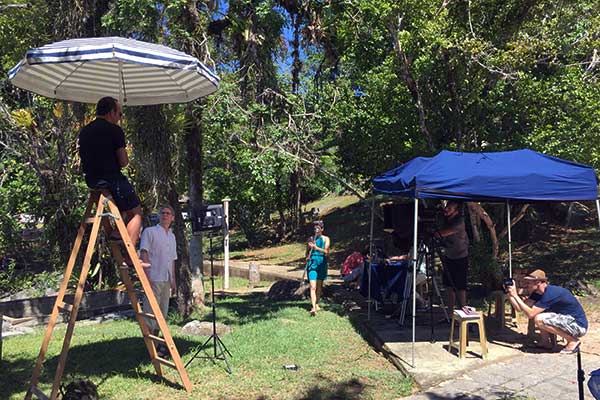
<p>The filming, under the audiovisual direction of Priscila Lima, took place at the "Clarimundo de Jesus" Research Base of USP's Oceanographic Institute (IO), in Ubatuba, coast of the Brazilian state of São Paulo, in 2017.</p>
<p>According to Grossmann, the MOOC has met the objectives of the ICA, since "the expectations in relation to the results were quite broad and not very well defined."</p>
<p>He considers that the course format has become even more relevant due to the demands of today: "The position of teachers, who still attribute a secondary role to <span>MOOCs </span>in education, tends to change in the face of the reality of online interactions during the pandemic." <span>Grossmann says that he used to consider the format to be very limited, as it tried to reproduce the classroom formula, "but the result achieved by the researchers' work surprised me."</span></p>
<table class="tabela-esquerda">
<tbody>
<tr>
<th><img src="https://www.iea.usp.br/imagens/gravacao-do-mooc-off-the-clock" alt="Gravação do Mooc 'Off the Clock'" class="image-inline" title="Gravação do Mooc 'Off the Clock'" /></th>
</tr>
<tr>
<td><span class="discreet">Preparation for recording one of the MOOC classes</span></td>
</tr>
</tbody>
</table>
<p><span>For him, the interdisciplinary course on "Time" is introductory and influenced by the cultural and scientific universe of the young researchers of the ICA. "There is no ambition to address issues more assertively."</span></p>
<p>He finds it difficult to define the MOOC's audience. He believes that the course will attract graduate students from different areas in addition to "restless undergraduates with the need to venture into different fields."</p>
<p>According to Grossmann, the course also leaves a legacy of confirmation that the UBIAS network can work with such initiatives and propose similar ones in the future.</p>
<p> </p>
<p><strong>Participants' experience</strong></p>
<p>Two of the six researchers involved in the production of the MOOC, Eduardo Almeida and Marius Müller, will act as pedagogical coordinators of the course at Coursera.</p>
<p>Almeida classifies the experience of producing the course as "incredible," as it required "the harmonization of visions, knowledge, and interpretations from areas as diverse as literature, mathematics, history, psychology, biology, physics, bioinformatics, arts, and philosophy in a discussion that would make a minimum of sense for everyone involved."</p>
<p>For Müller, it has been a difficult process "not only in relation to the theme but also in terms of intercultural interaction." Despite the difficulties, he considers that the work "was a great and <span>very rewarding</span>learning experience."</p>
<p>The choice of the theme "Time" has been an advantage, according to Almeida, "because it is a dimension of existence that permeates any area of knowledge and is challenging in all disciplines."</p>
<p>Two obstacles stood out in the execution of the work, in his opinion. One of them is the fact that the greater the specialization in an academic area, the more difficult it is to understand the perspectives (conceptual basis, problematic aspects, theoretical questions, history) of the other areas, although "philosophy sometimes acts as a bridge between some of these knowledge islands." The other is the difference between languages from different areas ("even having English as a language of communication"), which "makes understanding the concepts themselves very difficult." For him, this is due to the adoption of a jargon typical to each discipline "and, I believe, even by the ways of thinking and arguing that differ between people who represent these areas."</p>
<p>All of the topics addressed by the MOOC were challenging, says Almeida. In his case, the topics that are not part of his scope of action as a scientist in the biological field were especially demanding. "The discussion about the physical nature of time is difficult because the mathematical basis or the very abstraction of theories is counterintuitive at first; the perspective of time in a work of art follows principles even more distinct from those that I consider reasonable for my perspective as a scientist."</p>
<p><span class="VIiyi"><span class="ChMk0b JLqJ4b"><span>He reported that his participation in the production of the course caused a mixture of curiosity and skepticism ("I think something somewhat enigmatic") among his department colleagues, because it was something different from the usual activity of researchers.</span></span></span><span> </span></p>
<p>"I gave a seminar on the topic in the department and several colleagues were curious to know a little more. At the time, the MOOC had not yet been completed. It will be interesting to find out if the course can generate reflections in the colleagues who attend it."</p>
<p>Almeida stated that the online course has been his first experience in scientific dissemination on a larger scale, as his common activity in the area takes place through lectures, extension courses, and small fairs. Müller said that he had already participated in scientific dissemination, "but that the production of a MOOC was very specific and a valuable experience."</p>
<p>According to Almeida, the discussions among the participants have evidenced the feeling that everyone had their academic activities influenced by their work. <span>He said he was more skeptical about some certainties and more attentive to the perspectives that varied disciplines bring about some subjects. He also believes he has become more careful about communicating ideas and being able to speak to an audience broader than his closest circle.</span></p>
<p>For Müller, participating in the project has influenced his academic mind and "opened up the interest in working and acting in different academic areas in the future."</p>
<p>Both the ICA on "Time" and the production of MOOC were sponsored by the Itaú Cultural Foundation with support from the São Paulo Research Foundation (FAPESP), the Brazilian National Council for Scientific and Technological Development (CNPq), FRIAS, the Waseda Institute for Advanced Study (WIAS), and the Center for Advanced Studies (CAS) at LMU Munich.</p>]]></content:encoded>
    <dc:publisher>No publisher</dc:publisher>
    <dc:creator>Richard Meckien</dc:creator>
    <dc:rights>Original version in Portuguese by Mauro Bellesa.</dc:rights>
    
      <dc:subject>Ubias</dc:subject>
    
    
      <dc:subject>Intercontinental Academia</dc:subject>
    
    
      <dc:subject>Time</dc:subject>
    
    
      <dc:subject>Interdisciplinarity</dc:subject>
    
    <dc:date>2021-03-26T21:40:00Z</dc:date>
    <dc:type>Notícia</dc:type>
  </item>


  <item rdf:about="https://www.iea.usp.br/en/news/intercontinental-academia-launches-documentary-on-the-nagoya-phase-of-the-first-edition-of-the-program">
    <title>Intercontinental Academia launches a documentary on the Nagoya phase of the program's first edition</title>
    <link>https://www.iea.usp.br/en/news/intercontinental-academia-launches-documentary-on-the-nagoya-phase-of-the-first-edition-of-the-program</link>
    <description></description>
    <content:encoded xmlns:content="http://purl.org/rss/1.0/modules/content/"><![CDATA[<p><a class="external-link" href="http://ica.usp.br/nagoya/nagoya"><img src="https://www.iea.usp.br/imagens/video-da-fase-nagoya-da-intercontinental-academia-sobre-o-tempo" style="float: right; " title="Vídeo da fase Nagoya da Intercontinental Academia sobre o &quot;tempo&quot;" class="image-inline" alt="Vídeo da fase Nagoya da Intercontinental Academia sobre o &quot;tempo&quot;" /></a>A <a class="external-link" href="http://www.ica.usp.br/nagoya">docu<span>mentary on the Nagoya phase</span></a> of the first edition of the <a class="external-link" href="http://ica.usp.br/">Intercontinental Academia</a> was recently published on the project's website.</p>
<p><span>With the theme 'Time,' the edition has gathered 13 young participating researchers in two meetings that took place at the IEA-USP in April 2015 and at the <span>University of Nagoya's <span>Institute for </span><span>Advanced Research (IAR) </span></span>in March 2016. The <a class="external-link" href="http://intercontinental-academia.ubias.net/media-center/videos/intercontinental-academnia-first-phase-documentary"><span>documentary of the São Paulo phase</span></a> is also available on the website. A third film that compiles both phases will also be released.</span></p>
<p>The 12-minute long video reporting the activities held in Nagoya presents testimonials of the majority of the young researchers on the importance of the interdisciplinary dialogue regarding the concepts of time. They also talk about the production of a <span>Massive Open Online Course (MOOC)</span> on 'Time' as the final outcome of the initiative. The other testimonials are from Hisanori Shinohara, director of the IAR, and Martin Grossmann, director of IEA during the São Paulo phase of the project, both members of the Senior Committee of this first edition.</p>
<table class="tabela-esquerda-200-borda">
<tbody>
<tr>
<td>
<h3>Related material</h3>
<p><strong>News</strong></p>
<ul>
<li><a href="https://www.iea.usp.br/en/news/terceira-edicao-da-intercontinental-academia-tera-representante-do-iea" class="external-link">3rd edition of the Intercontinental Academia will have a researcher selected by the IEA</a></li>
</ul>
<hr />
<p><i> <a class="external-link" href="http://ica.usp.br/nagoya/news"><br />More news on the Intercontinental Academia</a></i></p>
</td>
</tr>
</tbody>
</table>
<p><strong>Editions</strong></p>
<p>The Intercontinental Academia is an initiative of the <a class="external-link" href="http://www.ubias.net">University-Based Institutes for Advanced Study network (UBIAS)</a>. The partnership between the IEA and the IAR for the inauguration of the project has been sponsored by Itaú Cultural and supported by five institutions: FAPESP, CNPq, the Freiburg Institute for Advanced Studies (FRIAS), the Waseda Institute for Advanced Study (WIAS) and the Center for Advanced Studies at the Ludwig-Maximilians University in Munich. The edition also featured Coursera (where the MOOC will be available soon) as a partner.</p>
<p>The project is currently in the final preparations for the start of the third edition, whose theme is 'Laws: Rigidity and Dynamics,' with meetings <span>at the <span>Institute of Advanced Studies at Nanyang Technological University, Singapore, in March 2018 and at the <span>University of Birmingham's </span></span>Institute for Advanced Studies i</span>n March 2019.</p>
<p>The second edition was entitled 'Human Dignity' and was held <span>at the <span>Hebrew University of Jerusalem's Israel</span> Institute of Advanced Studies in Marc</span>h 2016, and at <span>at <span>University of Bielefeld's </span>Center for Interdisciplinary Research </span>in August of the same year.</p>]]></content:encoded>
    <dc:publisher>No publisher</dc:publisher>
    <dc:creator>Richard Meckien</dc:creator>
    <dc:rights>Original version in Portuguese by Mauro Bellesa.</dc:rights>
    
      <dc:subject>Ubias</dc:subject>
    
    
      <dc:subject>Intercontinental Academia</dc:subject>
    
    
      <dc:subject>Time</dc:subject>
    
    
      <dc:subject>Research</dc:subject>
    
    <dc:date>2018-02-01T15:40:00Z</dc:date>
    <dc:type>Notícia</dc:type>
  </item>


  <item rdf:about="https://www.iea.usp.br/noticias/lancado-video-da-fase-nagoya-da-intercontinental-academia">
    <title>Intercontinental Academia lança documentário da fase Nagoya da edição sobre o 'tempo'</title>
    <link>https://www.iea.usp.br/noticias/lancado-video-da-fase-nagoya-da-intercontinental-academia</link>
    <description>Instituto de Pesquisa Avançada da Universidade de Nagoya lança vídeo da fase japonesa da primeira edição da Intercontinental Academia, realizada em parceria com o IEA.</description>
    <content:encoded xmlns:content="http://purl.org/rss/1.0/modules/content/"><![CDATA[<p><a class="external-link" href="http://ica.usp.br/nagoya/nagoya"><img src="https://www.iea.usp.br/imagens/video-da-fase-nagoya-da-intercontinental-academia-sobre-o-tempo" style="float: right; " title="Vídeo da fase Nagoya da Intercontinental Academia sobre o &quot;tempo&quot;" class="image-inline" alt="Vídeo da fase Nagoya da Intercontinental Academia sobre o &quot;tempo&quot;" /></a>O <a class="external-link" href="http://www.ica.usp.br/nagoya">documentário da fase Nagoya</a> da primeira edição da <a class="external-link" href="http://ica.usp.br/">Intercontinental Academia</a> foi publicado recentemente no site do projeto.</p>
<p>As fases de imersão dos 13 jovens pesquisadores participantes aconteceram em abril de 2015, no IEA, e em maio de 2016, no <a class="external-link" href="http://www.iar.nagoya-u.ac.jp/">Instituto de Pesquisa Avançada</a> (IAR, na sigla em inglês) da Universidade de Nagoya, quando se pesquisou o tema "tempo" sob diversas perspectivas da ciência. O <a class="external-link" href="http://intercontinental-academia.ubias.net/media-center/videos/intercontinental-academnia-first-phase-documentary">documentário da fase São Paulo</a> também está disponível no site. Ainda será lançado um terceiro filme que compila as duas edições.</p>
<p>Com 12 minutos de duração, o vídeo de Nagoya apresenta depoimentos da maioria dos jovens pesquisadores sobre a importância do diálogo interdisciplinar a respeito dos conceitos de "tempo". Eles também falam da produção de um Mooc (Massive Open Online Course) sobre o tempo como produto final da iniciativa. Os outros depoimentos são de Hisanori Shinohara, diretor do IAR, e Martin Grossmann, diretor do IEA quando da fase São Paulo do projeto, ambos integrantes do Comitê Sênior dessa primeira edição do projeto.</p>
<table class="tabela-esquerda-200-borda">
<tbody>
<tr>
<td>
<h3>Relacionado</h3>
<p><strong>Notícia</strong></p>
<ul>
<li><a href="https://www.iea.usp.br/noticias/terceira-edicao-da-intercontinental-academia-tera-representante-do-iea" class="external-link">3ª Edição da Intercontinental Academia terá pesquisadora indicada pelo IEA</a></li>
</ul>
<hr />
<p><i> <a href="https://www.iea.usp.br/noticias/colecoes/noticias-sobre-intercontinental-academia" class="external-link"><br />Leia outras notícias sobre a Intercontinental Academia</a></i></p>
</td>
</tr>
</tbody>
</table>
<p><strong>Edições</strong></p>
<p>A Intercontinental Academia é uma iniciativa da rede de <a class="external-link" href="http://www.ubias.net/">Institutos de Estudos Avançados Baseados em Universidades</a> (Ubias, na sigla em inglês). A parceria entre o IEA e o IAR para a inauguração do projeto teve patrocínio do Itaú Cultural e apoio de cinco instituições: Fapesp, CNPq, Instituto de Estudos Avançados da Universidade de Freiburg (Alemanha), Instituto de Estudos Avançados da Universidade de Waseda (Japão) e Centro de Estudos Avançados da Universidade Ludwig-Maximilians de Munique (Alemanha). A edição também contou com a Coursera (onde o Mooc sobre o tempo estará disponível em breve) como parceira.</p>
<p>Atualmente o projeto está nos preparativos finais para o início da terceira edição, cujo tema é "Leis: Rigidez e Dinâmica", com períodos de imersão em março de 2018, no Instituto de Estudos Avançados da Universidade Tecnológica de Nanyang, Cingapura, e em março de 2019, no Instituto de Estudos Avançados da Universidade de Birmingham, Reino Unido.</p>
<p>A segunda edição teve como tema "Dignidade Humana" e aconteceu em março de 2016, no Instituto de Estudos Avançados de Israel da Universidade Hebraica de Jerusalém, Israel, e em agosto do mesmo ano, no Centro de Pesquisa Interdisciplinar da Universidade de Bielefeld, Alemanha.</p>]]></content:encoded>
    <dc:publisher>No publisher</dc:publisher>
    <dc:creator>Mauro Bellesa</dc:creator>
    <dc:rights></dc:rights>
    
      <dc:subject>Intercontinental Academia</dc:subject>
    
    
      <dc:subject>Pesquisa</dc:subject>
    
    
      <dc:subject>Tempo</dc:subject>
    
    
      <dc:subject>Ubias</dc:subject>
    
    <dc:date>2018-02-01T15:40:00Z</dc:date>
    <dc:type>Notícia</dc:type>
  </item>


  <item rdf:about="https://www.iea.usp.br/noticias/mooc-sobre-o-tempo">
    <title>Intercontinental Academia lança curso online sobre o tempo</title>
    <link>https://www.iea.usp.br/noticias/mooc-sobre-o-tempo</link>
    <description>Curso online "Off the Clock: The Many Faces of Time", produzido por participantes da primeira Intercontinental Academia, será lançado no dia 14 de abril, na plataforma Coursera.</description>
    <content:encoded xmlns:content="http://purl.org/rss/1.0/modules/content/"><![CDATA[<p><img src="https://www.iea.usp.br/imagens/logo-ica-e-ubias/@@images/6fedeccc-f587-4c04-ae90-cb8f5378139c.jpeg" alt="Logo ICA e Ubias" class="image-right" title="Logo ICA e Ubias" />O IEA e o <a class="external-link" href="http://www.iar.nagoya-u.ac.jp/eng/">Instituto de Pesquisa Avançada (IAR)</a> da Universidade de Nagoya lançam no <strong>dia 14 de abril</strong> o curso <i><a class="external-link" href="https://www.coursera.org/learn/offtheclock?utm_campaign=opencourse.qDaZPFzDEeq2MgoCzrWDhw.launch&amp;utm_medium=email&amp;utm_source=other">Off the Clock: The Many Faces of Time</a></i>, um massive open online course (Mooc) que ficará disponível na plataforma <a class="external-link" href="https://www.coursera.org">Coursera</a>.</p>
<p>O lançamento ocorrerá durante a 6ª Conferência de Diretores da <a class="external-link" href="http://www.ubias.net/">Ubias (University-Based Institutes for Advanced Study)</a>, rede internacional de institutos de estudos avançados vinculados a universidades de todos os continentes. A disponibilização online do curso será possível graças à <a class="external-link" href="https://www.coursera.org/usp">parceria</a> entre a Pró-Reitoria de Pesquisa da USP e a Coursera.</p>
<p>O Mooc é resultante dos debates empreendidos por 13 jovens pesquisadores de várias áreas e diversos países participantes da primeira edição da <a class="external-link" href="http://ica.usp.br/">Intercontinental Academia (ICA)</a>, em 2015 e 2016. Organizada pelo IEA e pelo IAR de Nagoya, a edição teve por tema o “Tempo”.</p>
<p>A ICA é um projeto da Ubias no qual dois institutos de estudos avançados de diferentes continentes organizam períodos de imersão em conferências e debates sobre um tema interdisciplinar. A quarta edição será realizada este ano, com o tema “Inteligência e Inteligência Artificial”.</p>
<p><strong>Faces do tempo</strong></p>
<p>O objetivo do curso é apresentar um panorama abrangente das principais formulações sobre o tempo nas ciências, na filosofia e nas artes. As questões discutidas vão do tempo dinâmico ou estático dos pré-socráticos à fenomenologia de Heidegger, da discussão sobre a flecha do tempo em direção ao futuro à inexistência do conceito de tempo na gravidade quântica, do tempo geológico aos ciclos circadianos que controlam o organismo humano.</p>
<p>Durantes os períodos de imersão no IEA (abril de 2015) e no IAR (março de 2016), os participantes da ICA tiveram a oportunidade de participar de dezenas de conferências de pesquisadores seniores sobre a concepção e importância do tempo em antropologia, filosofia, física, neurobiologia, cronobiologia, psicanálise, ciências ambientais e outras áreas.</p>
<p>Para que uma síntese dos debates suscitados por essas conferências e por reuniões de trabalho pudesse atingir um público amplo, os pesquisadores foram encarregados de produzir o Mooc agora disponível na Coursera.</p>
<p>O diretor do IEA à época da ICA, <a href="https://www.iea.usp.br/pessoas/pasta-pessoam/martin-grossmann" class="external-link">Martin Grossmann</a>, também integrante do Comitê Sênior do projeto, lembra que a ideia de produção do Mooc partiu do cronobiologista <a href="https://www.iea.usp.br/pessoas/pasta-pessoat/till-roennenberg" class="external-link">Till Roenneberg</a>, da Universidade Ludwig Maximilian de Munique, Alemanha, em reunião do Comitê Sênior da primeira ICA no Instituto de Estudos Avançados de Freiburg, Alemanha, em setembro de 2014.</p>
<p>Constituído de 17 aulas em vídeo divididas em quatro módulos, com duração total de 5 horas e meia, o curso foi produzido por seis dos 13 jovens pesquisadores participantes da ICA.</p>
<p>A coordenação de conteúdo foi de <a class="external-link" href="http://ica.usp.br/people/nikki-moore">Nikki Moore</a>, da <span>Wake Forest University</span>, EUA, <a class="external-link" href="http://ica.usp.br/people/marius-muller">Marius Müller</a>, da Universidade Federal de Pernambuco, e <a class="external-link" href="http://ica.usp.br/people/valtteri-arstila">Valtteri Arstila</a>, da Universidade de Turku, Finlândia. Também participaram como criadores e expositores <a class="external-link" href="http://ica.usp.br/people/eduardo-almeida">Eduardo Almeida</a>, da Faculdade de Filosofia, Letras e Ciências de Ribeirão Preto (FFLCRP) da USP, <a class="external-link" href="http://ica.usp.br/people/david-gange">David Gange</a>, da Universidade de Birmingham, Reino Unido, e <a class="external-link" href="http://ica.usp.br/people/helder-nakaya">Helder Nakaya</a>, do Instituto de Biociências (IB) da USP.</p>
<p>As filmagens do Mooc, sob a direção audiovisual de Priscila Lima, aconteceram em Ubatuba (SP), em março de 2017, na Base de Pesquisa Clarimundo de Jesus do Instituto Oceanográfico (IO) da USP.</p>
<p>Segundo Grossmann, o Mooc atendeu aos objetivos da ICA, uma vez que “as expectativas em relação aos resultados eram bastante amplas e não muito bem definidas”.</p>
<p>Ele considera que o Mooc se tornou ainda mais relevante em função das exigências da atualidade: “A posição dos professores, que ainda atribuem aos Moocs um papel secundário na educação, tende a mudar diante da realidade do ensino online durante a pandemia”.</p>
<p><dl class="image-left captioned" style="width:600px;">
<dt><img src="https://www.iea.usp.br/imagens/gravacao-do-mooc-off-the-clock/image" alt="Gravação do Mooc 'Off the Clock'" title="Gravação do Mooc 'Off the Clock'" height="400" width="600" /></dt>
 <dd class="image-caption" style="width:600px;">Preparativos para gravação de uma das aulas do Mooc</dd>
</dl>Grossmann afirmou que considerava o formato dos Moocs bastante limitado, por procurarem reproduzir a fórmula da sala de aula, "mas o resultado atingido pelo trabalho dos pesquisadores me surpreendeu.”</p>
<p>Para ele, o Mooc é um curso introdutório interdisciplinar sobre o tempo e, logicamente, influenciado pelo universo cultural e científico dos jovens pesquisadores da ICA. “Não há a ambição de dar conta dos temas de forma mais assertiva.”</p>
<p>Ele considera difícil definir o público do Mooc. Acredita que o curso vai atrair pós-graduandos de diferentes áreas, além de graduandos “inquietos, com necessidade de se aventurar em diferentes campos”.</p>
<p>De acordo com Grossmann, o Mooc também deixa como legado a confirmação de que a Ubias pode trabalhar com iniciativas desse tipo e propor outras similares futuramente.</p>
<p><strong>Experiência dos participantes</strong></p>
<p>Dois dos seis pesquisadores envolvidos na produção do Mooc, Eduardo Almeida e Marius Müller, atuarão como coordenadores pedagógicos do curso na Coursera.</p>
<p>Almeida classifica como “incrível” a experiência de produzir o curso, por ter exigido “a conciliação de visões, conhecimentos e interpretações de áreas tão distintas como literatura, matemática, história, psicologia, biologia, física, bioinformática, artes e filosofia, em uma discussão que fizesse um mínimo de sentido para todos os envolvidos”.</p>
<p>Para Müller, foi um processo<i> </i>difícil, “não apenas em relação ao tema, mas também quanto à interação intercultural”. Apesar das dificuldades, ele considera que o trabalho “foi uma grande aprendizagem e bem gratificante”.</p>
<p>A escolha do tema “Tempo” foi uma vantagem, segundo Almeida, “por ser uma dimensão da existência que perpassa qualquer área do conhecimento e é desafiadora em todas as disciplinas”.</p>
<p>Duas dificuldades se destacaram na execução do trabalho, em sua opinião. Uma delas é o fato de quanto maior a especialização em uma área acadêmica mais difícil a compreensão das perspectivas (base conceitual, aspectos problemáticos, questões teóricas, história) das demais áreas, apesar de “a filosofia às vezes atuar como uma ponte entre algumas dessas ilhas de conhecimento”.</p>
<p>Outra dificuldade são as diferenças entre linguagens de áreas distintas (“mesmo com o inglês como idioma de comunicação”), que “tornam a compreensão dos próprios conceitos muito difícil”. Para ele, isso se dá pela adoção de jargões típicos das disciplinas “e, creio, até mesmo por modos de pensar e argumentar que diferem entre pessoas que representam essas áreas”.</p>
<p>Todos os temas abordados pelo Mooc foram desafiadores, disse. Em seu caso, foram especialmente desafiadores os temas que não integram sua atuação como cientista da área biológica. “A discussão sobre a natureza física do tempo é difícil porque a base matemática ou a própria abstração das teorias são contraintuitivas à primeira vista; a perspectiva do tempo em uma obra de arte segue princípios ainda mais distintos daqueles que tenho como razoáveis para minha perspectiva como cientista.”</p>
<p>Ele relatou que sua participação na ICA e na produção do Mooc causou um misto de curiosidade e ceticismo (“creio que algo enigmático até”) entre seus colegas de departamento, por ser algo diferente da atuação usual dos pesquisadores.</p>
<p>“Fiz um seminário sobre o tema no departamento e vários colegas tiveram curiosidade em saber um pouco mais. Na época, o Mooc ainda não havia sido concluído. Será interessante descobrir se o curso poderá gerar reflexões interessantes nos colegas que o assistirem.”</p>
<p>Almeida afirmou que o Mooc foi sua primeira experiência em divulgação científica numa escala de maior porte, pois sua atividade comum na área se dá por meio de palestras, cursos de extensão e pequenas feiras. Müller também disse já ter feito divulgação científica, “mas a produção de um Mooc foi bem específica e, no total, uma experiência valiosa”.</p>
<p>Segundo Almeida, as discussões entre os participantes da produção do Mooc evidenciaram a sensação de que todos tiveram suas atividades acadêmicas influenciadas pelo trabalho.</p>
<p>Em seu caso, disse que ficou mais cético quanto a algumas certezas e mais atento às perspectivas que disciplinas variadas trazem sobre alguns assuntos. Também acredita ter se tornado mais cuidadoso quanto à comunicação de ideias e à capacidade de falar para um público maior do que seu círculo mais próximo.</p>
<p>Para Müller, a participação na ICA e na produção do Mooc influenciou sua mente acadêmica e “abriu o interesse em trabalhar e atuar em diferentes áreas acadêmicas no futuro”.</p>
<p>A ICA sobre o “Tempo” e a produção do Mooc foram patrocinados pelo Itaú Cultural (no âmbito da <a href="https://www.iea.usp.br/pesquisa/catedras-e-convenios/catedra-olavo-setubal-de-arte-cultura-e-ciencia" class="external-link">Cátedra Olavo Setubal de Arte, Cultura e Ciência</a>), com apoio de Fapesp, CNPq, Pró-Reitoria de Pesquisa da USP, Frias (Instituto de Estudos Avançados da Universidade de Freiburg, Alemanha), Wias (Instituto de Estudos Avançados da Universidade de Waseda, Japão) e CAS-LMU (Centro de Estudos Avançados da Universidade Ludwig Maximilian de Munique, Alemanha).</p>]]></content:encoded>
    <dc:publisher>No publisher</dc:publisher>
    <dc:creator>Mauro Bellesa</dc:creator>
    <dc:rights></dc:rights>
    
      <dc:subject>Interdisciplinaridade</dc:subject>
    
    
      <dc:subject>Ubias</dc:subject>
    
    
      <dc:subject>curso</dc:subject>
    
    
      <dc:subject>Tempo</dc:subject>
    
    
      <dc:subject>Intercontinental Academia</dc:subject>
    
    <dc:date>2021-03-26T21:40:00Z</dc:date>
    <dc:type>Notícia</dc:type>
  </item>


  <item rdf:about="https://www.iea.usp.br/en/news/intercontinental-academia-extends-the-deadline-for-applications-to-August-31">
    <title>Intercontinental Academia extends the deadline for applications to August 31</title>
    <link>https://www.iea.usp.br/en/news/intercontinental-academia-extends-the-deadline-for-applications-to-August-31</link>
    <description></description>
    <content:encoded xmlns:content="http://purl.org/rss/1.0/modules/content/"><![CDATA[<p class="p1" style="text-align: left; "><b><img src="https://www.iea.usp.br/imagens/logo-da-intercontinental-academia/@@images/b3dc0e78-1318-4002-9cb3-0ca449544434.jpeg" style="text-align: justify; " title="Logo da Intercontinental Academia" class="image-right" alt="Logo da Intercontinental Academia" />The deadline for submission of the letter of interest and an updated curriculum (in English) by those interested in participating in the Intercontinental Academia has been extended to August 31. </b>Researchers who are interested should be aged up to 40, hold a PhD or post-doctorate (completed or in progress) in any field of knowledge and be fluent in English. After receiving a letter of endorsement from one of the 34 Institutes of Advanced Studies that conform <a class="external-link" href="http://www.ubias.net/">UBIAS</a>, the candidates must complete the application form and attach the required documents.</p>
<p class="p2" style="text-align: left; "><span>The project is an international and interdisciplinary initiative organized by the network University-based Institute for Advanced Study (Ubias), the Institute of Advanced Studies of the University of São Paulo (IEA-USP) and the Institute for Advanced Research (IAR) of Nagoya University, Japan. The goal is to promote scientific and cultural exchange between institutions and young researchers around the world.</span></p>
<table class="tabela-esquerda-200-borda">
<tbody>
<tr>
<th>
<h3>IEA-USP's pre-selection</h3>
</th>
</tr>
<tr>
<td>The deadline for submission of the letter of interest and an updated curriculum by those interested in participating in the Intercontinental Academia, via IEA-USP, is <b>August 21</b>. The ones pre-selected by the Institute will have until August 31 to complete the documentation.</td>
</tr>
</tbody>
</table>
<p class="p2" style="text-align: left; "><span>The theme of the Intercontinental Academia is time. This theme was chosen because it is usually conceptualized differently in each area of knowledge, whether humanities or natural sciences; and because, according to the project leaders, "to obtain a comprehensive overview of the impacts of these notions in science and culture in general there must be an academic dialogue between people working and experiencing the different concepts of time."</span></p>
<p class="p1" style="text-align: left; ">Two meetings of immersion are planned to occur in March 2015, at the University of São Paulo, and in January 2016, at the Nagoya University, besides other activities during this period.<span> </span></p>
<p class="p1" style="text-align: left; ">See the steps to applying: <a class="external-link" href="http://intercontinental-academia.ubias.net/howwtoapply">intercontinental-academia.ubias.net/howwtoapply</a>.</p>
<h3 class="p1" style="text-align: left; ">Related news</h3>
<p class="p1" style="text-align: left; "><a href="https://www.iea.usp.br/en/news/the-intercontinental-academia-will-bring-together-researchers-from-various-countries-to-interdisciplinary-studies-on-time" class="external-link">The Intercontinental Academia will bring together researchers from various countries to interdisciplinary studies on time</a></p>]]></content:encoded>
    <dc:publisher>No publisher</dc:publisher>
    <dc:creator>Rafael Borsanelli</dc:creator>
    <dc:rights></dc:rights>
    
      <dc:subject>Ubias</dc:subject>
    
    
      <dc:subject>Institutional</dc:subject>
    
    
      <dc:subject>Intercontinental Academia</dc:subject>
    
    
      <dc:subject>Research</dc:subject>
    
    
      <dc:subject>IEA</dc:subject>
    
    <dc:date>2014-08-07T19:40:00Z</dc:date>
    <dc:type>Notícia</dc:type>
  </item>


  <item rdf:about="https://www.iea.usp.br/en/news/ica-4">
    <title>Intercontinental Academia edition on intelligence and artificial intelligence starts on June 13</title>
    <link>https://www.iea.usp.br/en/news/ica-4</link>
    <description></description>
    <content:encoded xmlns:content="http://purl.org/rss/1.0/modules/content/"><![CDATA[<p><img src="https://www.iea.usp.br/imagens/logo-da-4a-intercontinental-academia" alt="Logo da 4th Intercontinental Academia" class="image-right" title="Logo da 4th Intercontinental Academia" /></p>
<p>"Intelligence and Artificial Intelligence" is the theme of the fourth edition of the Intercontinental Academia (ICA 4), which will have its opening sessions virtually held from June 13 to 18. The face-to-face sessions will take place next October in Paris and in June 2022 in Belo Horizonte.</p>
<p>The ICA is a project by <a class="external-link" href="http://www.ubias.net">UBIAS</a>, an international network of institutes for advanced study linked to universities. Each edition is hosted by two institutes from different continents. ICA 4 has been organized by the <a class="external-link" href="https://www.ufmg.br/ieat/instituto/?lang=en">Institute of Advanced Transdisciplinary Studies (IEAT)</a> at the Federal University of Minas Gerais (UFMG) and the <a class="external-link" href="https://www.paris-iea.fr/en/presentation-of-the-institute/about-us">Paris Institute for Advanced Study (IAS)</a>, a member of the <a class="external-link" href="http://rfiea.fr/en/iea/french-network-institutes-advanced-study-missions">French Network of Institutes for Advanced Studies (RFIEA)</a>.</p>
<p>Since implementing the project in 2015, the objective of UBIAS has been to create global networks of future research leaders to work together on paradigm shifts and transdisciplinary research under the mentorship of eminent researchers from around the world.</p>
<table class="tabela-direita-400">
<tbody>
<tr>
<th><img src="https://www.iea.usp.br/imagens/andre-fujita-patricia-soarez-e-evandro-castro" alt="Andre Fujita, Patricia Soarez e Evandro Castro" class="image-inline" title="Andre Fujita, Patricia Soarez e Evandro Castro" /></th>
</tr>
<tr>
<td><span class="discreet">Brazilian participants of ICA 4: André Fujita, Patricia Coelho de Soárez, and Evandro Castro</span></td>
</tr>
</tbody>
</table>
<p>According to the ICA 4 organizers, the edition will explore key interdisciplinary issues at the intersection of cognitive science, neuroscience, and artificial intelligence (AI). By highlighting the importance of the topic, they point out that decisive advancements have taken place in recent decades regarding the analysis of brain activity and its behavioral counterpart, as well as the information processing sciences. "Complementarities between neuroscience/cognitive science and AI make it possible to explore synergies and raise ethical issues between these disciplines, which involve enormous challenges and opportunities for societal progress."</p>
<table class="tabela-direita-200-borda">
<tbody>
<tr>
<td>
<h3><strong>Previous editions</strong></h3>
<p><a class="external-link" href="http://ica.usp.br/home-sao-paulo">ICA 1</a> was held in 2015/16 and its theme was "Time." The hosts were the IEA and the Institute for Advanced Research at Nagoya University (IAR). From the debates of the edition, the participants produced the <span>massive open online course</span> <a class="external-link" href="https://www.coursera.org/learn/offtheclock?utm_campaign=opencourse.qDaZPFzDEeq2MgoCzrWDhw.launch&amp;utm_medium=email&amp;utm_source=other" target="_blank">Off the Clock: The Many Faces of Time</a>, available on the <a class="external-link" href="https://www.coursera.org/" target="_blank">Coursera</a> platform.</p>
<p>"Human Dignity" was the theme of the <a class="external-link" href="https://scholars.huji.ac.il/iahd">second edition</a> in 2016. The organizers for the initiative were the Center for Interdisciplinary Research at Bielefeld University and the Israel Institute for Advanced Studies at the Hebrew University of Jerusalem.</p>
<p><a class="external-link" href="https://www.icalaws.com/">ICA 3</a> took place in 2018/19 and addressed the theme "Laws: Rigidity and Dynamics." The organizers were the Institute of Advanced Studies at the Nanyang Technological University and the Institute of Advanced Studies at the University of Birmingham.</p>
</td>
</tr>
</tbody>
</table>
<table class="tabela-esquerda-300-borda">
<tbody>
<tr>
<td>
<h3>Some of the mentors</h3>
<p><dl class="image-inline captioned" style="width:300px;">
<dt><img src="https://www.iea.usp.br/imagens/ada-yonath/image" alt="Ada Yonath" title="Ada Yonath" height="300" width="300" /></dt>
 <dd class="image-caption" style="width:300px;">Ada Yonath</dd>
</dl></p>
<p><dl class="image-inline captioned" style="width:300px;">
<dt><img src="https://www.iea.usp.br/imagens/robert-aumann/image" alt="Robert Aumann" title="Robert Aumann" height="300" width="300" /></dt>
 <dd class="image-caption" style="width:300px;">Robert Aumann</dd>
</dl></p>
<p><dl class="image-inline captioned" style="width:300px;">
<dt><img src="https://www.iea.usp.br/imagens/martin-rees/image" alt="Martin Rees" title="Martin Rees" height="300" width="300" /></dt>
 <dd class="image-caption" style="width:300px;">Martin Rees</dd>
</dl></p>
<p><dl class="image-inline captioned" style="width:300px;">
<dt><img src="https://www.iea.usp.br/imagens/antonio-damasio/image" alt="António Damásio" title="António Damásio" height="300" width="300" /></dt>
 <dd class="image-caption" style="width:300px;">António Damásio</dd>
</dl></p>
<p><dl class="image-inline captioned" style="width:300px;">
<dt><img src="https://www.iea.usp.br/imagens/timnit-gebru/image" alt="Timnit Gebru" title="Timnit Gebru" height="300" width="300" /></dt>
 <dd class="image-caption" style="width:300px;">Timnit Gebru</dd>
</dl></p>
<p><dl class="image-inline captioned" style="width:300px;">
<dt><img src="https://www.iea.usp.br/imagens/zaven-pare/image" alt="Zaven Paré" title="Zaven Paré" height="300" width="300" /></dt>
 <dd class="image-caption" style="width:300px;">Zaven Paré</dd>
</dl></p>
</td>
</tr>
</tbody>
</table>
<p>In parallel to the second face-to-face session, scheduled for June 2022, a "satellite session" will be held at UFMG, with conferences and roundtables, and the participation of ICA 4 mentors and other guests from academia and the industry. There will be live streaming over the internet. Some of the topics covered in this session will be: "Fundamentals and Ethics of AI," "Intelligence and Rationality," "Cognition and Neurosciences," "Interdisciplinary Explorations of AI," and "AI and Health Sciences."</p>
<p><strong>Participants</strong></p>
<p><a class="external-link" href="https://www.intercontinental-academia.org/fellows/">19 researchers</a> working in universities and research institutes in Brazil, Germany, France, United Kingdom, Poland, United States, Japan, South Africa, Israel, and the Netherlands have been chosen out of the 60 candidates to participate in ICA 4 (23 of them Brazilians). The research areas of those selected include mathematics, computing, engineering, law, philosophy, linguistics, neuroscience, and history.</p>
<p>The representatives of Brazil are André Fujita (nominated by the IEA), from USP's Institute of Mathematics and Statistics (IME), Patricia Coelho de Soárez (independently enrolled), from USP's Medical School (FM), and Evandro Cunha (nominated by the IEAT), from UFMG's Faculty of Languages, Literature, and Linguistics (FALE).</p>
<p>Fujita's expectation is to participate in intense philosophical and scientific discussions with the other participants, and obtain "stimulus and inspiration" to make the Postgraduate Program in Bioinformatics at USP, which he coordinates, more vigorous. He emphasizes that bioinformatics is an interdisciplinary field integrated by researchers in mathematics, computer science, physics, chemistry, biology, medicine, and engineering, among others. "People usually define bioinformatics as the big data study of areas of biology using computational techniques. I think we could define bioinformatics as the field that uses artificial intelligence to discover how cells and beings learn or acquire intelligence."</p>
<p>Soárez, who is a member of IEA's Study Group on Science, Technology, and Innovation in Health, proposes the adoption of a holistic point of view in evaluating the contributions of AI in health care, including economic, ethical, and social impacts. More specifically, her interest is the implications of incorporating AI into health policies, decision-making processes, and equality in the Brazilian health system. One of her expectations in relation to ICA 4 is to obtain subsidies for the development of an interdisciplinary research project on the importance of AI for decision-making in health. She also hopes to learn about applicable procedures and tools needed to broaden the impact of her research and advance her career development as a research leader.</p>
<p>Cunha's main research interest is computer-mediated communication and the use of computational methods for solving linguistic problems, especially those related to historical linguistics, revitalization of endangered languages, and language neuroscience. At ICA 4 he intends to discuss the applications of language science in AI and the effects of technology on human communication, particularly with regard to manipulation, extremism, and dissemination of disinformation in the current scenario of pandemic and climate crisis.</p>
<p><strong>Mentoring</strong></p>
<p>The participants will have the support of <a class="external-link" href="https://www.intercontinental-academia.org/mentors/">17 mentors</a>, all renowned researchers with worldwide recognition in various scientific areas, philosophy, and arts. Among them are molecular biologist Ada Yonath, from the Weizmann Institute, winner of the 2009 Nobel Prize in Chemistry, economist Robert Aumann, winner of the 2005 Nobel Prize in Economics and a professor at the Hebrew University of Jerusalem, astrophysicist and cosmologist Martin Rees, Astronomer Royal and co-founder of the The Centre for the Study of Existential Risk at Cambridge University, neurologist and neuroscientist António Damásio, a specialist in the mental processes underlying emotions, feelings, and consciousness, computer scientist Timnit Gebru, co-founder of Black in AI, a support organization for black AI researchers and professionals, and one of the former leaders of Google's ethical artificial intelligence research team, and artist Zaven Paré, dedicated to new media and robotics, and a contributor to the <span>Postgraduate</span> Program in Arts, Culture, and Languages ​​at the Federal University of Juiz de Fora.</p>
<p>The <a class="external-link" href="https://www.intercontinental-academia.org/about/">coordinators</a> of ICA 4 are Guilherme Ary Plonski, director of the IEA and former coordinator of UBIAS, Estevam Barbosa de Las Casas, director of the IEAT, Eliezer Rabinovici, a professor at The Racah Institute of Physics at the Hebrew University of Jerusalem and proponent of the Intercontinental Academia project, and Olivier Bouin, director of the RFIEA and new coordinator of UBIAS.</p>
<p style="text-align: right; "><span class="discreet">Photos: Intercontinental Academia</span></p>]]></content:encoded>
    <dc:publisher>No publisher</dc:publisher>
    <dc:creator>Richard Meckien</dc:creator>
    <dc:rights>Original version in Portuguese by Mauro Bellesa.</dc:rights>
    
      <dc:subject>Ubias</dc:subject>
    
    
      <dc:subject>International Cooperation</dc:subject>
    
    
      <dc:subject>Cognition</dc:subject>
    
    
      <dc:subject>ICA</dc:subject>
    
    
      <dc:subject>cover</dc:subject>
    
    
      <dc:subject>Cognitive Science</dc:subject>
    
    
      <dc:subject>Computer Science</dc:subject>
    
    
      <dc:subject>Intercontinental Academia</dc:subject>
    
    
      <dc:subject>Neuroscience</dc:subject>
    
    
      <dc:subject>Artificial Intelligence</dc:subject>
    
    
      <dc:subject>Interdisciplinarity</dc:subject>
    
    <dc:date>2021-05-27T19:50:00Z</dc:date>
    <dc:type>Notícia</dc:type>
  </item>


  <item rdf:about="https://www.iea.usp.br/noticias/intercontinental-academia-comeca-nesta-sexta-17-de-abril">
    <title>Intercontinental Academia começa nesta sexta, 17 de abril</title>
    <link>https://www.iea.usp.br/noticias/intercontinental-academia-comeca-nesta-sexta-17-de-abril</link>
    <description></description>
    <content:encoded xmlns:content="http://purl.org/rss/1.0/modules/content/"><![CDATA[<p>Começa hoje, às 19h, a <a class="external-link" href="http://www.ica.usp.br/">Intercontinental Academia</a> (ICA), evento científico organizado pelo IEA e pelo Instituto de Pesquisa Avançada da Universidade de Nagoya, Japão, no âmbito da rede internacional <a class="external-link" href="http://www.ubias.net/">University-Based Institutes for Advanced Study</a> (Ubias).</p>
<p>A cerimônia de abertura, fechada para convidados, será na Faculdade de Medicina da USP e terá participação de <a href="https://www.iea.usp.br/pessoas/pesquisadores/renato-janine-ribeiro" class="external-link">Renato Janine Ribeiro</a>, ministro da Educação e membro do <a class="external-link" href="http://www.ica.usp.br/people/iea-usp-scientific-committee">comitê científico do IEA para a ICA</a>. Também fazem parte da mesa de abertura o pró-reitor de pesquisa da USP, José Eduardo Krieger, o diretor do IEA, <a href="https://www.iea.usp.br/pessoas/pesquisadores/martin-grossmann?searchterm=martin+grossmann" class="external-link">Martin Grossmann</a>, o presidente do CNPq, <a href="https://www.iea.usp.br/pessoas/expositores/hernan-chaimovich?searchterm=Hernan+Chaimovich" class="external-link">Hernan Chaimovich</a>, e o representante da Universidade de Nagoya, Dapeng Cai. A cerimônia, assim como as demais conferências, será transmitida ao vivo no site do IEA e da ICA.</p>
<p>Este é o primeiro encontro de imersão da ICA e acontece de 17 a 30 de abril de 2015. O segundo será em Nagoya, de 7 a 18 de março de 2016. O projeto irá reunir 13 jovens pesquisadores de diferentes nacionalidades e áreas do conhecimento para desenvolver estudos sobre o tema “tempo”, produzindo, ao final, o conteúdo para um <i>Massive Open Online Course</i> – MOOC (curso virtual, gratuito e de nível superior). A orientação da pesquisa ficará a cargo de um comitê científico sênior e dos 17 conferencistas que falarão sobre diferentes aspectos do “tempo”.</p>
<p>Durante a ICA também se discutirão novas formas de produzir conhecimento. Com seu formato singular, será um laboratório para futuros trabalhos colaborativos em universidades e para a criação de um novo modelo de academia.</p>
<p>Além do desenvolvimento do MOOC, a programação em São Paulo inclui um dia inteiro de debate sobre o ensino superior. No período da manhã de 24 de abril, haverá um workshop sobre a universidade do futuro comandado pelo ministro da Educação, Renato Janine Ribeiro, membro do comitê científico do IEA para a ICA. À tarde, a discussão é sobre o futuro das universidades, e reunirá reitores e expoentes na pesquisa sobre educação superior, com mediação da jornalista especializada em educação Sabine Righetti, do jornal Folha de S. Paulo.</p>
<p>Visite o <a class="external-link" href="http://www.ica.usp.br/">site da Intercontinental Academia</a> e conheça a <a class="external-link" href="http://www.ica.usp.br/programme">programação</a>.</p>]]></content:encoded>
    <dc:publisher>No publisher</dc:publisher>
    <dc:creator>Fernanda Rezende</dc:creator>
    <dc:rights></dc:rights>
    
      <dc:subject>Ubias</dc:subject>
    
    
      <dc:subject>Intercontinental Academia</dc:subject>
    
    
      <dc:subject>ICA</dc:subject>
    
    
      <dc:subject>Pesquisa</dc:subject>
    
    
      <dc:subject>Transformação</dc:subject>
    
    <dc:date>2015-04-17T15:35:00Z</dc:date>
    <dc:type>Notícia</dc:type>
  </item>


  <item rdf:about="https://www.iea.usp.br/midiateca/foto/institutos-ubias-1/modelando-o-futuro-navegando-num-mundo-em-transformacao-de-4-a-6-de-marco-de-2013-no-instituto-de-estudos-avancados-da-universidade-hebraica-de-jerusalem-em-israel">
    <title>Instituto de Estudos Avançados da Universidade Hebraica de Jerusalém - Israel - "Modelando o Futuro: Navegando num Mundo em Transformação" - de 4 a 6 de março de 2013</title>
    <link>https://www.iea.usp.br/midiateca/foto/institutos-ubias-1/modelando-o-futuro-navegando-num-mundo-em-transformacao-de-4-a-6-de-marco-de-2013-no-instituto-de-estudos-avancados-da-universidade-hebraica-de-jerusalem-em-israel</link>
    <description></description>
    
    <dc:publisher>No publisher</dc:publisher>
    <dc:creator>Maria Leonor de Calasans</dc:creator>
    <dc:rights>Martin Grossmann</dc:rights>
    
      <dc:subject>Ubias</dc:subject>
    
    <dc:date>2013-03-05T03:00:00Z</dc:date>
    <dc:type>Pasta</dc:type>
  </item>


</rdf:RDF>