<?xml version="1.0" encoding="utf-8" ?>
<rdf:RDF xmlns:rdf="http://www.w3.org/1999/02/22-rdf-syntax-ns#" xmlns:dc="http://purl.org/dc/elements/1.1/" xmlns:syn="http://purl.org/rss/1.0/modules/syndication/" xmlns="http://purl.org/rss/1.0/">


<channel rdf:about="https://www.iea.usp.br/search_rss">
  <title>Instituto de Estudos Avançados da Universidade de São Paulo</title>
  <link>https://www.iea.usp.br</link>

  <description>
    
            These are the search results for the query, showing results 1 to 15.
        
  </description>


  <image rdf:resource="https://www.iea.usp.br/logo.png" />

  <items>
    <rdf:Seq>
      
        <rdf:li rdf:resource="https://www.iea.usp.br/eventos/brasil-voltou-educacao-ambiental-processos-construcao-capacidades" />
      
      
        <rdf:li rdf:resource="https://www.iea.usp.br/en/news/journal-issue-107" />
      
      
        <rdf:li rdf:resource="https://www.iea.usp.br/noticias/pablo-ortellado-e-jose-alvaro-moises-avaliam-conjunturas-que-levaram-aos-ataques-de-8-de-janeiro" />
      
      
        <rdf:li rdf:resource="https://www.iea.usp.br/en/news/journal-issue-106" />
      
      
        <rdf:li rdf:resource="https://www.iea.usp.br/en/news/journal-issue-105" />
      
      
        <rdf:li rdf:resource="https://www.iea.usp.br/en/news/corruption-combat" />
      
      
        <rdf:li rdf:resource="https://www.iea.usp.br/en/news/research-project-analyzes-global-influence-fifa-world-cup-brics-members" />
      
      
        <rdf:li rdf:resource="https://www.iea.usp.br/eventos/qual-reforma-do-licenciamento-ambiental" />
      
      
        <rdf:li rdf:resource="https://www.iea.usp.br/en/news/seminar-discusses-the-risks-of-trumps-economic-policy-for-brazil-and-latin-america" />
      
      
        <rdf:li rdf:resource="https://www.iea.usp.br/en/news/social-geography-of-zika-in-brazil" />
      
      
        <rdf:li rdf:resource="https://www.iea.usp.br/en/news/hub-sao-carlos-holds-debate-consequences-of-the-disaster-in-mariana" />
      
      
        <rdf:li rdf:resource="https://www.iea.usp.br/en/news/IEA-USP-expresses-its-appreciation-and-support-to-Renato-Janine-for-his-contribution-as-minister-of-education" />
      
      
        <rdf:li rdf:resource="https://www.iea.usp.br/en/news/unemployment-in-Brazil-and-future-prospects" />
      
      
        <rdf:li rdf:resource="https://www.iea.usp.br/en/news/history-and-environment-necessary-dialogue" />
      
      
        <rdf:li rdf:resource="https://www.iea.usp.br/en/news/book-national-congress" />
      
    </rdf:Seq>
  </items>

</channel>


  <item rdf:about="https://www.iea.usp.br/eventos/brasil-voltou-educacao-ambiental-processos-construcao-capacidades">
    <title> Políticas Públicas de Educação Ambiental como Elemento Estruturante dos Processos de Construção de Capacidades Adaptativas e Transformadoras de Territórios </title>
    <link>https://www.iea.usp.br/eventos/brasil-voltou-educacao-ambiental-processos-construcao-capacidades</link>
    <description></description>
    <content:encoded xmlns:content="http://purl.org/rss/1.0/modules/content/"><![CDATA[<p dir="ltr" id="docs-internal-guid-23c48b7e-7fff-90e8-f9b6-317a852d321a" style="text-align: left; "><span></span><span><strong>"O Brasil voltou" - diálogos transdisciplinares sobre meio ambiente e sociedade</strong></span></p>
<p dir="ltr" style="text-align: left; "><span></span><span>O <a href="https://www.iea.usp.br/pesquisa/grupos-pesquisa/politica-ambiental" class="external-link">Grupo de Pesquisa em Política Ambiental</a> do IEA-USP em parceria com a <a class="external-link" href="https://www.funbea.org.br/anppea/">ANPPEA-Articulação Nacional de Políticas Públicas de Educação Ambiental</a>, propõe dialogar sobre o lugar da Educação Ambiental nos processos e estratégias de enfrentamento da crise climática e seus desdobramentos considerando o novo cenário político do Brasil em 2023, que retoma os processos democráticos do Estado de Direito. </span></p>
<p dir="ltr" style="text-align: left; "><span>Historicamente, os esforços de enfrentamento das mudanças climáticas e seus impactos tem se concentrado em abordagens </span><span><i>top-down</i> </span><span>(de cima para baixo), considerando que a mitigação das mudanças do clima é um desafio global. Tal perspectiva, que notadamente dilui responsabilidades, demanda uma forte estrutura de cooperação internacional. </span></p>
<p dir="ltr" style="text-align: left; "><span>Iniciativas como o IPCC, criado em 1988, a Convenção-Quadro das Nações Unidas sobre Mudança do Clima (UNFCCC), adotada em 1992, o Protocolo de Kioto, acordado em 1997 demarcaram um primeiro período de forte ação internacional. </span></p>
<p dir="ltr" style="text-align: left; "><span>Na esfera nacional, desde 2009 o Brasil conta com uma Política Nacional sobre Mudança do Clima - PNMC (Lei nº 12.187/2009) e, mais recentemente, desenvolveu seu Plano Nacional de Adaptação à Mudança do Clima – PNA (Brasil, 2016), além de planos setoriais de mitigação e adaptação e decisões sobre adaptação assumidas pelo Brasil no âmbito da Conferência das Partes sobre Mudança do Clima. </span></p>
<p dir="ltr" style="text-align: left; "><span>Tais iniciativas, embora sejam muito relevantes, por si só, não são suficientes para dar conta da magnitude dos desafios. Estratégias </span><span><i>top-down </i></span><span>adotadas por governos e organizações intergovernamentais, embora estruturantes do ponto de vista do estabelecimento de um arcabouço maior para o enfrentamento dos riscos e impactos climáticos, não endereçam necessariamente, soluções concretas para lidar com os enormes desafios e problemas nos níveis local e regional (Hajer et al., 2015). </span></p>
<p dir="ltr" style="text-align: left; "><span>É neste contexto que se colocam a multiplicidade de Políticas Públicas de Educação Ambiental (PPEA) consideradas em toda sua diversidade, passando desde as formuladas e implementadas por atores estatais, como as políticas de EA municipais e estaduais, à políticas definidas e geridas por arenas híbridas como comitês de bacia hidrográfica, conselhos gestores de unidades de conservação, conselhos municipais e estaduais de meio ambiente, até iniciativas voltadas ao atendimento de um problema público propostas a partir de instituições do terceiro setor, redes, coletivos, unidades de ensino e pesquisa, e até mesmo em relação a algumas estratégias operadas a partir de atores engajados da iniciativa privada, cada qual adotando uma lógica própria de abrangência espacial para sua atuação. </span></p>
<p dir="ltr" style="text-align: left; "><span>Este evento inícia a série de debates para 2024 </span><span><i>"O Brasil voltou" - diálogos transdisciplinares sobre meio ambiente e sociedade</i>. </span></p>
<p dir="ltr" style="text-align: left; ">Esta mesa tem como objetivo geral dialogar sobre o lugar da Educação  Ambiental nos processos e estratégias de enfrentamento da crise  climática e seus desdobramentos considerando o novo cenário político do  Brasil, que retoma os processos democráticos do Estado de Direito.</p>
<p dir="ltr" style="text-align: left; "><strong>Material de referência pré-evento:</strong></p>
<p dir="ltr" style="text-align: left; ">Documentário "<a class="external-link" href="https://vimeo.com/907072868">O Discurso: Dialética e Dialetos</a>" (dir. Marcello G. Tassara, 2009, 28')</p>
<p dir="ltr" style="text-align: left; "><strong>Expositores:</strong></p>
<p dir="ltr"><a href="https://www.iea.usp.br/pessoas/pasta-pessoae/evandro-albiach" class="external-link">Evandro Albiach Branco</a> (Inpe-MCTI)</p>
<p dir="ltr"><a href="https://www.iea.usp.br/pessoas/pasta-pessoam/marcos-sorrentino" class="external-link">Marcos Sorrentino</a> (MMA e USP)</p>
<p dir="ltr"><a class="external-link" href="http://lattes.cnpq.br/9493196640606968">Maria Henriqueta Andrade Raymundo</a> (ANPPEA e UFABC)</p>
<p dir="ltr"><a class="external-link" href="http://lattes.cnpq.br/4463855811644843">Rachel Trajber</a> (Cemaden-MCTI)</p>
<p dir="ltr"><a href="https://www.iea.usp.br/pessoas/pasta-pessoat/thais-brianezi" class="external-link">Thais Brianezi Ng</a> (Funbea e USP)</p>
<div id="_mcePaste"><strong>Coordenação e Moderação:</strong><span> </span><a href="https://www.iea.usp.br/pessoas/pasta-pessoae/eda-terezinha-de-oliveira-tassara" class="external-link">Eda Tassara</a><span> (IP e IEA - USP)</span></div>
<h3><strong>Transmissão:</strong></h3>
<p>Acompanhe a transmissão do evento em <a href="https://www.iea.usp.br/aovivo">www.iea.usp.br/aovivo</a></p>]]></content:encoded>
    <dc:publisher>No publisher</dc:publisher>
    <dc:creator>Sandra Sedini</dc:creator>
    <dc:rights></dc:rights>
    
      <dc:subject>Brazil</dc:subject>
    
    
      <dc:subject>Gestão pública</dc:subject>
    
    
      <dc:subject>Evento público</dc:subject>
    
    
      <dc:subject>Meio Ambiente</dc:subject>
    
    
      <dc:subject>Grupo de Pesquisa Ciências Ambientais</dc:subject>
    
    
      <dc:subject>ODS</dc:subject>
    
    
      <dc:subject>Política Ambiental</dc:subject>
    
    
      <dc:subject>Ciencias Ambientais</dc:subject>
    
    
      <dc:subject>Clima</dc:subject>
    
    
      <dc:subject>Mudanças Climáticas</dc:subject>
    
    <dc:date>2023-12-19T12:55:00Z</dc:date>
    <dc:type>Evento</dc:type>
  </item>


  <item rdf:about="https://www.iea.usp.br/en/news/journal-issue-107">
    <title>"Estudos Avançados" #107 analyzes inequalities based on urban infrastructure</title>
    <link>https://www.iea.usp.br/en/news/journal-issue-107</link>
    <description> </description>
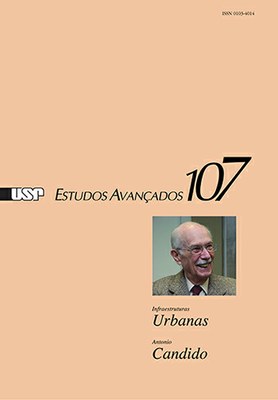
    <content:encoded xmlns:content="http://purl.org/rss/1.0/modules/content/"><![CDATA[<p><img src="https://www.iea.usp.br/imagens/capa-da-revista-estudos-avancados-107/@@images/847f19ab-3acf-401f-8e8d-beff392de3a6.jpeg" alt="Capa da revista Estudos Avançados 107" class="image-right" title="Capa da revista Estudos Avançados 107" /></p>
<p>Deficiencies that highlight inequalities in the Metropolitan Region of Rio Janeiro are the subject of the opening dossier of <i><a href="https://www.iea.usp.br/en/journal" class="external-link">Estudos Avançados</a></i> #107. Its digital version is available on the <a class="external-link" href="https://www.scielo.br/j/ea/i/2023.v37n107/">Scientific Electronic Library Online</a> (Portuguese only). Entitled "Urban Infrastructure," the five studies in the set discuss both the very concept of "infrastructural turn" in urban studies in the last two decades and aspects related to the precariousness of access to water, waste management, distribution of the electricity network, and the social life connected with a cycle path. The authors are from the areas of sociology, anthropology, and urbanism.</p>
<p>According to the journal's editor, <a href="https://www.iea.usp.br/en/persons/researchers/sergio-adorno" class="external-link">Sérgio Adorno</a>, the dossier explores the new dimensions of social inequalities, "as well as highlights the strangulation of urban policies implemented by different government administrations."</p>
<p dir="ltr">The article by Mariana Cavalcanti and Marcella Araújo, both from the Rio de Janeiro State University (UERJ), discusses the "structural turn" from the theories and temporalities of the urbanization of Brazilian cities. The objective, they say, is to bring a "panoramic view of theoretical discussions produced in Brazil, based on ethnographic research that has been the subject of everyday production in cities for fifty years" <span>to the international debate.</span></p>
<p dir="ltr">The importance of water in the daily life of women living in <i>favelas</i> (local slums) and occupations in Rio de Janeiro is analyzed in the study by Camila Pierobon, from the Brazilian Center of Analysis and Planning (CEBRAP), and Camila Fernandes, from the Federal University of Rio de Janeiro (UFRJ). Through small domestic events, dialogues with residents of those places, or more extensive ethnographic descriptions, the researchers show how "water carries the strength of what is ordinary and is one of the objects that allow us to see the power and vulnerability that daily life carries in terms of gender, class, and race."</p>
<p dir="ltr">Based on the infrastructural changes in the <i>favelas</i> of Rio de Janeiro, urbanist Francesca Piló, from Utrecht University, examines how the configuration of electricity networks collaborates in formatting the urban fabric of the city in its material and technological forms, symbolic discourse, and everyday practices. The article identifies three ways in which this contribution occurs: 1) reordering of urban space, 2) urban fragmentation, and 3) daily practices of handling meters and direct connection to the network (<i>gatos</i>).</p>
<p dir="ltr">The work of sociologist Maria Raquel Passos Lima, from UERJ, adopts the spaces of waste dumps and landfills, usually made invisible and stigmatized, as a privileged focus of analysis to think about the production of the city. She introduces the concept of "residual infrastructure" as a strategy for this examination. Based on the case of the closure of the waste landfill at Jardim Gramacho, in the Metropolitan Region of Rio de Janeiro, she addresses "a process of infrastructural change or dismantling of an infrastructure." The ethnographic part corresponds to the fieldwork carried out during her doctoral research, when she accompanied the activities of recyclable waste pickers for 14 months.</p>
<table class="tabela-esquerda">
<tbody>
<tr>
<th><img src="https://www.iea.usp.br/imagens/desabamento-da-ciclovia-tim-maia" alt="Desabamento da Ciclovia Tim Maia" class="image-inline" title="Desabamento da Ciclovia Tim Maia" /></th>
</tr>
<tr>
<td><span class="discreet">Collapse of part of the Tim Maia Cycleway, in the southern zone of Rio de Janeiro, in April 2016</span></td>
</tr>
</tbody>
</table>
<p>The effects of the implantation of the Tim Maia Cycleway on social life is the subject of the article by anthropologist Julia O'Donnell. She recalls that the equipment was hailed at its inauguration, in 2016, for offering new frameworks for the oceanfront landscape in addition to new alternatives for urban mobility, a combination that made it a "central element of a broader city project, which had the harmonization between man and nature as one of its main axes." By following the process of idealization, construction, and inauguration of the equipment and its successive collapses, the work intends to discuss how this peculiar case allows reflection on important aspects of urban infrastructure from anthropology.</p>
<p dir="ltr">The nine articles in the second section of the issue, "Presences," brings articles on various topics related to history, education, culture, and the history of science. In the first one, Milena Fernandes de Oliveira analyzes the way in which the relationship between economy and history has been presented in the work of Gilberto Freyre, particularly in "The Masters and the Slaves" (<i>Casa-Grande &amp; Senzala</i>) and "The Mansions and the Shanties" (<i>Sobrados e Mucambos</i>).</p>
<p dir="ltr">In his article, Victor Santos Vigneron de la Jousselandière seeks to identify the tensions that cross the work of critic Paulo Emílio Salles Gomes in a period marked by the emergence of a new cinematographic production and by discussions around the economic development of the country. The reference is the conference<i> Cinema Brasileiro e Realidade Social</i>, written by the critic in the early 1960s. The relationship between cinema and literature present in the film <i>La Flor</i> (2018), by Argentine filmmaker Mariano Llinás, is explored in the article by Rogério de Almeida and Cesar Zamberlan, which aims to understand the interpretative perspectives that emerge from the film and the way in which they relate to the literary and cinematographic resources used by Llinás.</p>
<table class="tabela-direita">
<tbody>
<tr>
<th><img src="https://www.iea.usp.br/imagens/antonio-candido-2-2" alt="Antonio Candido - 2" class="image-inline" title="Antonio Candido - 2" /><br /></th>
</tr>
<tr>
<td><span class="discreet">Literary critic Antonio Candido (1918-2017), whose work is analyzed from the point of view of its importance for education</span></td>
</tr>
</tbody>
</table>
<p dir="ltr">The works of literary critic Antonio Candido and Peruvian Marxist thinker José Carlos Mariátegui are the subjects of articles by Márcia Machado and Deni Alfaro Rubbo, respectively. For Machado, it is not an exaggeration to say that Candido has provided important contributions, subsidies, and theoretical tools to rethink the way in which the training process has been conceived, and education and university have been historically constructed in Brazil. Rubbo's work makes a critical evaluation of the book "In the Red Corner: The Marxism of José Carlos Mariátegui," by historian Mike Gonzales, to observe the scope and gaps of the work from the comparison with other works.</p>
<p dir="ltr">Three articles address specific literary works. Edinael Sanches Rocha undertakes a stylistic analysis of <i>Meu Tio o Iauaretê</i>, by João Guimarães Rosa, and seeks to identify data in the culture of native peoples that could establish links of meaning with the tale. Based on Winnicottian psychoanalysis, the study by Luan Felipe de Souza Junqueira and Fabio Scorsolini-Comin reflects on the psychic illness process of the character Laura in the short story <i>A Imitação da Rosa</i>, by Clarice Lispector. The relationship between the characters Don Quixote, Sancho Panza, and Dulcineia is the subject of the article by Maria Augusta da Costa Vieira, whose objective is to understand the reasons that lead the reader to "admir and intensely respect a character who, in essence, is a complete madman."</p>
<p>The section ends with a study by Heráclio Tavares on the non-verbal dimension of scientific practice. He examines ideas from different authors, and drafts of articles and entries by physicist César Lattes in his laboratory notebooks. Lattes has been one of the main people responsible for the experimental observation of the decay of the pi meson. Tavares explains that part of this process took place through the development of the visual scientist's ability to perceive the shapes of the traces left by the particles in the detectors.</p>
<p>The editor of the journal highlights the opportunity of the article by physicist and environmentalist José Goldemberg about the 30 years of the Climate Convention, which opens the "Current affairs" section. The other studies in the section are about the enunciative-discursive differences in street demonstrations in Brazil in 1983-84 and 2013, the challenge of environmental and social integration of primitive and contemporary humanity, the historical contextualization of the relationships between consumption, capitalism, and human passions that have shaped contemporary consumer culture, and the discourses present in articles about tattoos published in Brazilian journals between 1990 and 2020.</p>
<table class="tabela-esquerda">
<tbody>
<tr>
<th><img src="https://www.iea.usp.br/imagens/capa-de-torto-arado" alt="Capa de &quot;Torto Arado&quot;" class="image-inline" title="Capa de &quot;Torto Arado&quot;" /></th>
</tr>
<tr>
<td><span class="discreet">''Crooked Plow: A Novel'' (<i>Torto Arado</i>), one of the books reviewed in issue #107</span></td>
</tr>
</tbody>
</table>
<p>The issue closes with six book reviews, including "Crooked Plow: A Novel" (<i>Torto Arado</i>), by Itamar Vieira Junior, reviewed by Winifred Knox and Miridan Britto Falci. The other texts address books about the interest of Americans of African descent in knowing the strong connections of the Brazilian state of Bahia with Africa, the history of literary and cultural relations between Brazil and France, the characteristics of the Soviet revolutionary process until Stalinism, the typology of bildungsromane, and the development of artificial intelligence in China.</p>
<p>The list below contains the names of the authors who have contributed with each one of the addressed themes:</p>
<p><strong>Urban infrastructures</strong></p>
<p>Autoconstruction and City Production: Another Genealogy of Urban Infrastructure Studies - <i>Mariana Cavalcanti and Marcella Araujo</i><i><br /></i>Caring for Others, Taking Care of Water: Gender and Race in the Production of the City - <i>Camila Pierobon and Camila Fernandes</i><br />From "Cycle-view" to "the Bike Path to Death": The Social Life of Urban Infrastructure - <i>Julia O’Donnell</i><br />Residual Infrastructures: Colonialisms in Waste Management and <i>Catador</i> Politics - <i>Maria Raquel Passos Lima</i><br />The Techno-political Fabric of Rio de Janeiro: Insights from Electricity Infrastructure - <i>Francesca Pilo’</i></p>
<p><strong>Presences</strong></p>
<p>On the Economic Interpretation of History in Gilberto Freyre (1933-1956) - <i>Milena Fernandes de Oliveira</i><br />"Brazilian Cinema and Social Reality," by Paulo Emílio Salles Gomes - <i>Victor Santos Vigneron de la Jousselandière</i><br />La Flor, by Mariano Llinás: Cinema Re-encounters Literature - <i>Rogério de Almeida and Cesar Zamberlan</i><br />Literature, Instruction, and Education in the Work of Antonio Candido: The Humanization of Man - <i>Márcia Machado</i><br />Iauaretê, Further Beyond: New Relations between the Culture of Original Peoples and "My Uncle, the Iauaretê," by João Guimarães Rosa - <i>Edinael Sanches Rocha</i><br />The Ineffable Luminosity of Madness in "The Imitation of the Rose" - <i>Luan Felipe de Souza Junqueira and Fabio Scorsolini-Comin<br /></i>Don Quixote, Sancho Panza. and Dulcinea - <i>Maria Augusta da Costa Vieira</i><br />Mariátegui in Debate: Marxist Ghosts and Critical Horizons - <i>Deni Alfaro Rubbo</i><i><br /></i>Non-verbal Knowledge in the History of Science: The Prowess of César Lattes - <i>Heráclio Tavares</i></p>
<p><strong>Current affairs</strong></p>
<p><i> </i></p>
<p>Thirty Years of the Convention on Climate Change - <i>José Goldemberg</i><br />Postmodern Tension in Street Demonstrations in Brazil: Dialogical Notes on Political Signature - <i>Anderson Salvaterra Magalhães</i><br />An Integrative Conception of Humanity - <i>Julio Aurelio Vianna Lopes</i><br />Ethical Dilemmas in Consumer Culture: Anthropocene, Psychoanalysis, and Capitalism as the Operational Mode of Passions - <i>Isleide Arruda Fontenelle</i><br />Tattooing: a Rhizomatic Map of a Research Theme - <i>Valéria Cazetta</i></p>
<p><strong>Reviews</strong></p>
<p><i> </i></p>
<p>Bahia as an African Destination - <i>Nathalia Silva</i><br />Crooked Plow and the Deep Brazil - <i>Winifred Knox and Miridan Britto Falci</i><br />French-Brazilian Literary and Cultural Space - <i>Marise Hansen</i><br />From Lenin to Stalin: Continuances and Ruptures - <i>Lincoln Secco</i><br />Bildungsroman: The Multiple Variations of a Genre - <i>Klaus Eggensperger</i><i><br /></i>Artificial Intelligence in the East-West Divide - <i>Isadora Maria Roseiro Ruiz and Cristina Godoy Bernardo de Oliveira</i></p>
<p style="text-align: right; "><span class="discreet">Photos: Fernando Frasão/Agência Brasil; Mauro Bellesa/IEA-USP</span></p>
<ul>
</ul>
<div id="_mcePaste">
<div class="tlid-results-container results-container">
<div class="tlid-result result-dict-wrapper">
<div class="result tlid-copy-target">
<div class="text-wrap tlid-copy-target"></div>
</div>
</div>
</div>
</div>]]></content:encoded>
    <dc:publisher>No publisher</dc:publisher>
    <dc:creator>Richard Meckien</dc:creator>
    <dc:rights>Original version in Portuguese by Mauro Bellesa.</dc:rights>
    
      <dc:subject>Brazil</dc:subject>
    
    
      <dc:subject>Biodiversity</dc:subject>
    
    
      <dc:subject>Democracy</dc:subject>
    
    
      <dc:subject>Journal</dc:subject>
    
    
      <dc:subject>Elections</dc:subject>
    
    
      <dc:subject>Amazon</dc:subject>
    
    
      <dc:subject>Publications</dc:subject>
    
    <dc:date>2023-05-08T17:40:00Z</dc:date>
    <dc:type>Notícia</dc:type>
  </item>


  <item rdf:about="https://www.iea.usp.br/noticias/pablo-ortellado-e-jose-alvaro-moises-avaliam-conjunturas-que-levaram-aos-ataques-de-8-de-janeiro">
    <title>Pablo Ortellado e José Álvaro Moisés avaliam conjunturas que levaram aos ataques de 8 de janeiro</title>
    <link>https://www.iea.usp.br/noticias/pablo-ortellado-e-jose-alvaro-moises-avaliam-conjunturas-que-levaram-aos-ataques-de-8-de-janeiro</link>
    <description>Em evento realizado dia 27 de janeiro no IEA, os pesquisadores analisaram cenários sociais e políticos que permitiram a ascensão da extrema direita no país</description>
    <content:encoded xmlns:content="http://purl.org/rss/1.0/modules/content/"><![CDATA[<p><span id="docs-internal-guid-6a174d9d-7fff-1af9-98ea-818c7d94047f"> </span></p>
<table class="tabela-direita-borda">
<tbody>
<tr>
<th>Relacionado</th>
</tr>
<tr>
<td>
<p><a href="https://www.iea.usp.br/midiateca/video/videos-2023/a-protecao-das-instituicoes-republicanas-os-atos-de-8-de-janeiro-seminario-ii" class="external-link">Vídeo do evento</a></p>
<p class="kssattr-macro-title-field-view kssattr-templateId-kss_generic_macros kssattr-atfieldname-title documentFirstHeading" id="parent-fieldname-title"><b>Notícia</b>: <a href="https://www.iea.usp.br/noticias/especialista-em-gestao-de-crise-enxerga-premeditacao-na-data-do-ato-terrorista-em-brasilia" class="external-link">Especialista em gestão de crise vê premeditação na data do ato terrorista em Brasília</a></p>
</td>
</tr>
</tbody>
</table>
<p dir="ltr" style="text-align: justify; ">Os atos do dia 8 de janeiro fizeram parte de um contexto complexo no qual o Brasil e outras partes do mundo estão inseridos: a ascendência da extrema direita. Muitas análises sobre esse assunto passam pelas redes sociais. “Com certeza, existe uma dimensão comunicacional importante, isso parece óbvio”, afirmou <a href="https://www.iea.usp.br/pessoas/pasta-pessoap/pablo-ortellado" class="external-link">Pablo Ortellado</a>, professor da Escola de Artes, Ciências e Humanidades (EACH) da USP. Para ele, apesar do grande empenho acadêmico em relacionar a ascensão de grupos radicalizados aos novos meios de comunicação digitais, não existem evidências contundentes para se determinar uma relação de causa e efeito entre esses dois fenômenos. Ortellado não descarta que “talvez os processos de natureza política e social sejam mais importantes do que as condições comunicacionais”.</p>
<p dir="ltr" style="text-align: justify; ">Ao lado do cientista político <a href="https://www.iea.usp.br/pessoas/pasta-pessoaj/jose-alvaro-moises" class="external-link">José Álvaro Moisés</a>, o filósofo participou do segundo seminário “A Proteção das Instituições Republicanas: Os Atos de 8 de Janeiro”, realizado no dia 27 de janeiro no IEA.</p>
<p dir="ltr" style="text-align: justify; "><span>Uma das principais teses que relacionam as mídias sociais com a ascensão do populismo autoritário de direita é baseada no conceito de bolhas nas redes, que são um tipo de vícios dos algoritmos das redes sociais com tendência a mostrar somente opiniões e notícias que convergem com a visão de mundo do usuário. Acredita-se que as bolhas provoquem, a longo prazo, a radicalização desse usuário. Porém, Ortellado afirma que não existem evidências suficientes para comprovar essa tese. Pelo contrário: o nível de homogeneidade das relações fora da internet é muito semelhante aos de dentro das redes. “Fora das mídias sociais, nós mantemos relações sociais homogêneas de amigos, até mesmo geograficamente. Tendemos a morar em bairros com pessoas de perfis muito semelhantes aos nossos”, afirmou.</span></p>
<p dir="ltr" style="text-align: justify; "><span>Outra tese é a de que as pessoas são levadas para esse campo ideológico pela desinformação, através de informações falsas. Mas, na análise de Ortellado, embora exista um crescimento de veículos hiper partidários, a mentira não é muito típica neles. Distorção, manchetes em desacordo com os textos ou notícias fora de contexto são muito mais importantes nesses veículos. Ele também argumentou que os veículos de comunicação e os partidos de esquerda tendem a valorizar o impacto das mentiras na formação desses novos grupos populistas. Para Ortellado, a imprensa o faz porque enfatiza a importância do próprio papel. Já a classe política é motivada a aumentar os efeitos da dinâmica comunicacional por não conseguir dar uma resposta à face política do problema. “Há muitos interesses concorrendo para a ideia de que estamos formando juízos políticos equivocados por estarmos consumindo mentiras”, analisou o professor.</span></p>
<p dir="ltr" style="text-align: justify; "><span>A dificuldade para se conseguir evidências do uso maligno da comunicação digital se dá pelo modelo criptográfico dos aplicativos de mensagens instantâneas, como </span><span>Whatsapp </span><span>e </span><span>Telegram</span><span>, hoje mais utilizados por grupos radicalizados do que redes como </span><span>Facebook</span><span>,</span><span> Instagram</span><span> e </span><span>Twitter</span><span>. Por isso, Pablo Ortellado defende que seja regulamentada por lei a rastreabilidade desses conteúdos, distinguindo a privacidade do ponto de vista regulatório da conversa individual e da comunicação de massa, a fim de se conseguir evidências para investigações policiais. “É uma lei muito controversa, mas necessária para enfrentar o problema da difusão de conteúdos maliciosos virais”, avaliou.</span></p>
<p dir="ltr" style="text-align: justify; "><span>O que as evidências atuais apontam, segundo Ortellado, é que as pessoas estão consumindo mais informações distorcidas dentro de circuitos de produção que se empenham em adaptar o que está sendo produzido pelo jornalismo profissional e enquadram dentro de ideologias e narrativas partidárias. Também se observa a existência de grupos que perderam completamente contato com os veículos de imprensa tradicionais, o que, para o professor, afasta essas pessoas da verdade factual. Quando se consome tanto os veículos super-partidários quanto a imprensa tradicional, a segunda ajuda a corrigir distorções das primeiras. Mesmo considerando esses mecanismos, Pablo Ortellado acredita que não se deve abandonar a tese de que o problema é de natureza política e social.</span></p>
<p dir="ltr" style="text-align: justify; "><span>Nesse sentido, José Álvaro Moisés, coordenador do Grupo de Pesquisa Qualidade da Democracia do IEA, afirmou que “o que nós estamos presenciando no Brasil não é um fenômeno estritamente local”. Ele nota que há uma crise internacional da democracia especialmente devido à ineficácia dos mecanismos de representação e o aumento da desigualdade social. “As pessoas que perderam renda, status ou posição foram se distanciando da democracia e deixando de se sentirem representadas”, analisou.</span></p>
<p dir="ltr" style="text-align: justify; "><span>Para Ortellado, internacionalmente esses fenômenos têm em comum seu aspecto populista, ou seja, são baseados no antagonismo em relação às elites. “Em particular com as elites culturais e políticas, isso é relativamente comum entre os fenômenos e conseguimos mapear tanto nas retóricas dos presidentes quanto nas máquinas que estão a serviço deles”, apontou. </span></p>
<p dir="ltr" style="text-align: justify; "><span>Moisés também vê como crucial para essa análise o entendimento dos agentes que usam os mecanismos da democracia para subvertê-la. “É preciso olhar para esses aspectos da crise da representação e como as lideranças se apresentam para responder a essa crise”. E completa: “Não existe democracia sem democratas”.</span></p>
<p> </p>
<p dir="ltr" style="text-align: justify; "><span><strong>O dia 8 de janeiro</strong></span></p>
<p dir="ltr" style="text-align: justify; "><span>Ao mesmo tempo que o novo governo que se propõe, com pouco mais de 50% dos votos, a reconstruir o país após tudo que aconteceu no Brasil nos últimos quatro anos, na visão de Moisés, o país passou por uma ameaça extremamente séria de golpe de Estado por parte dos apoiadores do candidato que teve pouco mais de 49% dos votos. Os ataques às sedes dos Três Poderes republicanos em Brasília não foram atos isolados, em sua opinião, e sim um ponto de uma conjuntura delicada. “O Brasil é hoje uma sociedade literalmente dividida ao meio, e uma das duas metades é formada por segmentos golpistas que ameaçam a democracia”. </span></p>
<p dir="ltr" style="text-align: justify; "><span>Por isso, a eleição e a posse do presidente Lula aconteceram entre graves desestabilidades. Além da contestação do resultado das eleições por parte do Partido Liberal (PL), sigla com maior número de representantes na Câmara dos Deputados, Moisés cita a tentativa de invasão do prédio da polícia federal no dia 12 de dezembro, dia da diplomação da chapa vencedora do pleito presidencial, quando radicais atearam fogo em ônibus e ameaçaram civis. Na véspera do Natal, houve a tentativa de causar uma explosão com bomba dentro de um caminhão pipa que carregava querosene. Por fim, o episódio de depredação aos prédios dos Três Poderes. “Não são pequenos atos e todos eles tinham uma conexão", afirmou.</span></p>
<p dir="ltr" style="text-align: justify; "><span> O cientista político defendeu que o golpe contra a democracia no Brasil envolveu preparação, financiamento e cuidadoso planejamento. “Ainda não temos informações suficientes, mas teve civis, parlamentares e militares apoiadores do ex-presidente Jair Bolsonaro”. Nesse contexto, Moisés avaliou que o governo Lula acertou em cheio ao não declarar uma Garantia da Lei e da Ordem (GLO), prevista no artigo 142 da Constituição brasileira. A intervenção na segurança do Distrito Federal foi suficiente para estancar a sangria da paralisia das forças policiais. Para ele, a declaração do presidente de que havia perdido a confiança em alguns militares soou como uma demonstração do governo de que está preparado para ir adiante no processo de responsabilização dos crimes cometidos.</span></p>
<p dir="ltr" style="text-align: justify; "><span>O pesquisador avalia que o problema vem desde 2013. Na época das jornadas de junho, houve uma falha na resposta dos principais partidos – segundo ele, PT, PSDB, PMDB e DEM. Essa falha deixou um espaço que foi ocupado pela extrema-direita, principalmente no que diz respeito ao combate à corrupção, avalia Moisés. </span></p>
<div><span><br /></span></div>
<p> </p>]]></content:encoded>
    <dc:publisher>No publisher</dc:publisher>
    <dc:creator>Matheus Nistal</dc:creator>
    <dc:rights></dc:rights>
    
      <dc:subject>Brazil</dc:subject>
    
    
      <dc:subject>Desinformação</dc:subject>
    
    
      <dc:subject>Brasil</dc:subject>
    
    
      <dc:subject>Democracy</dc:subject>
    
    
      <dc:subject>Ciências Humanas</dc:subject>
    
    
      <dc:subject>Democracia</dc:subject>
    
    
      <dc:subject>Ciência Política</dc:subject>
    
    
      <dc:subject>capa</dc:subject>
    
    
      <dc:subject>Algoritmo</dc:subject>
    
    <dc:date>2023-02-10T14:45:00Z</dc:date>
    <dc:type>Notícia</dc:type>
  </item>


  <item rdf:about="https://www.iea.usp.br/en/news/journal-issue-106">
    <title>Brazilian elections and forest governance are themes of "Estudos Avançados" #106</title>
    <link>https://www.iea.usp.br/en/news/journal-issue-106</link>
    <description> </description>
    <content:encoded xmlns:content="http://purl.org/rss/1.0/modules/content/"><![CDATA[<p><img src="https://www.iea.usp.br/imagens/capa-da-revista-estudos-avancados-no-106" alt="Capa da Revista Estudos Avançados no. 106" class="image-right" title="Capa da Revista Estudos Avançados no. 106" /></p>
<p>Highlighting the elections in Brazil and the theme of forest governance, issue #106 of the journal <i><a href="https://www.iea.usp.br/en/journal" class="external-link">Estudos Avançados</a></i> was launched in November. Its digital version is available on the <a class="external-link" href="https://www.scielo.br/j/ea/i/2022.v36n106/">Scientific Electronic Library Online</a><span> (Portuguese only)</span>.</p>
<p>The first dossier, entitled "Elections," brings articles that are based on investigations in the field of political sciences to approach the Brazilian electoral history. "The articles explore concerns present in public opinion, in the media debate, and in the political agenda, whether at the national, regional or local level", explains editor <a href="https://www.iea.usp.br/en/persons/researchers/sergio-adorno" class="external-link">Sérgio Adorno</a>.</p>
<p dir="ltr">Three themes of the greatest relevance, according to Adorno, are addressed by the issue: electoral polls, candidacy programs, and the ideological foundations of Bolsonarism.</p>
<p dir="ltr">The trends and performance of electoral polls have been analyzed by Fernando Meireles, from the Brazilian Center of Analysis and Planning (CEBRAP), and Guilherme Russo, a lecturer at the São Paulo School of Economics (EESP) of the Getúlio Vargas Foundation (FGV), based on estimates from surveys carried out between 2012 and 2020. Bruno Wilhelm Speck, from the Department of Political Science at USP's Faculty of Philosophy, Languages and Literature, and Human Sciences (FFLCH), has <span>concluded that political leaders are capable of retaining voters more than parties, having analyzed data on the elections for mayors held between 2000 and 2020</span><span> for the article "</span><span>Parties Dominate the Registration of Candidates, Leaders Connect Better with the Electorate.</span><span>" Lucio Rennó, from the Institute of Political Science at the University of Brasília (UnB), has analyzed the ideological components of the voters who support Jair Bolsonaro based on preferences on political issues in the article "</span><span>Bolsonarism and the 2022 Elections.</span><span>"</span></p>
<p dir="ltr">"<span>Is Brazil Really a Polarized Country? Analysis of Presidential Elections from 1989 to 2018,</span>" by Antonio Carlos Alkmim, from the Pontifical Catholic University of Rio de Janeiro (PUC-Rio), and Sonia Luiza Terron, PhD in Political Science, considers the eight Brazilian presidential elections in the post-military dictatorship period as an object of analysis. "The geographic polarization between the first and second placed is a characteristic of the Brazilian presidential elections from 1989 to 2018. The meaning, intensity, and geography of the confrontation varies, but the <span>polarization</span><span> is present in all elections," the authors point out.</span></p>
<p dir="ltr">Electoral reforms as reflections of the maturation of the Brazilian political system after the 1988 Constitution have been addressed by Arthur Fisch and Lara Mesquita, researchers at FGV's Center for Politics and Economics in the Public Sector Studies (CEPESP), who have explored the changes in the proportional system and electoral financing. For them, "it is important to be aware of such changes so that the system evolves in a way that consolidates the gains of democracy."</p>
<p dir="ltr">Other contributions to the dossier have addressed Brazilian voters' perceptions of political parties since the redemocratization process, campaign financing, and women's performance in the national elections.</p>
<p dir="ltr">"If, on the one hand, recent legislative innovations have produced positive impacts, on the other hand, conservative reactions have still mitigated achievements and maintained male representation as <span>predominant,</span><span>" said Sérgio Adorno about reforms and gender equality in the Brazilian electoral arena in the last three decades.</span></p>
<p dir="ltr"><span><strong>Forest Governance</strong></span></p>
<p dir="ltr">According to the article that opens the second dossier, forest governance has been a strategic theme for IEA's journal since the publication of <a class="external-link" href="https://www.scielo.br/j/ea/i/1990.v4n9/">issue #9</a> on the Floram Project – Forests for the Environment (1990), led by professor Aziz Ab'Saber, from FFLCH. The articles bring subsidies for a reflection on the advances in the field of forest governance in Brazil, and the global perspectives in the field of environmental and climate governance.</p>
<p dir="ltr">To talk about Brazilian forest legislation, the article by Paulo Eduardo dos Santos Massoca, a researcher associated with the Center for the Analysis of Social-Ecological Landscapes (CASEL) at the University of Indiana, and Eduardo Sonnewend Brondízio, from the Department of Anthropology at the same University, starts with an examination of the narratives about the values of trees and forests in law since the 16th century, and its recent revaluation and the conflict of opposing interests.</p>
<p dir="ltr">Next, the article "<span>Sectarian Fundamentalism Prevents the Strengthening of the Sociobiodiversity Economy,</span>" by Ricardo Abramovay, from USP's Institute of Energy and Environment (IEA), explores the ideological and cultural roots of incentives for forest destruction, and presents forces that seek to oppose the current federal policies and initiatives with the potential to pave the way for an economy of forest socio-biodiversity.</p>
<p dir="ltr">The other articles address topics such as reactions and resistance led by civil society associations and by virtue of multisectoral coalitions and platforms, socio-ecological innovations that shape social relationships that have the local community as protagonist, and an analysis of the highlights of the web seminar "Building Dialogues on Forest Governance."</p>
<p><span>The list below contains the names of the authors who have contributed with each one of the addressed themes:</span></p>
<p><strong>Elections</strong></p>
<p><span>Is Brazil Really a Polarized Country? Analysis of Presidential Elections from 1989 to 2018</span> - <span><i>Antonio Carlos Alkmim and Sonia Luiza Terron</i></span><i><br /></i><span>Electoral Reforms in Contemporary Brazil: Changes in the Proportional Representation and Electoral Financing Systems</span> - <i>Arthur Fisch and Lara Mesquista</i><br /><span>Where Did the Parties Go According to Public Opinion? Perceptions of the Political Parties in the Redemocratization of Brazil</span> - <i>Rachel Meneguello and Oswaldo E. do Amaral</i><br /><span>Parties Dominate the Registration of Candidates, Leaders Connect Better with the Electorate</span> - <i>Bruno Wilhelm Speck</i><br /><span>Campaign Funding and Women’s Electoral Performance in Brazilian Elections (1998-2020)</span> - <i>Vitor de Moraes Peixoto, Larissa Martins Marques, and Leandro Molhano Ribeiro</i><br /><span>Election Polls in Brazil: Trends and Performance</span> - <i>Fernando Meireles and Guilherme Russo</i><br />Left, Right, and Presidential Elections in Brazil - <i>Gabriela Tarouco</i><br /><span>Bolsonarism and the 2022 Elections</span> - <i>Lucio Rennó</i></p>
<p><strong>Forest Governance</strong></p>
<p>Forest Governance: Three Decades of Advances<span> - </span><i>Cristina Adams, Luciana Gomes de Araujo, and Liviam E. Cordeiro-Beduschi</i><br />We Protect When We Value: History of Brazilian Forestry Legislation<span> - </span><i>Paulo Eduardo dos Santos Massoca and Eduardo Sonnewend Brondízio</i><br />Sectarian Fundamentalism Prevents the Strengthening of the Sociobiodiversity Economy<span> - </span><i>Ricardo Abramovay</i><br />Governance Experiences in Ecosystem and Landscape Restoration in Brazil<span> - </span><i>Robin L. Chazdon, Rafael B. Chaves, Miguel Calmon, Ludmila Pugliese de Siqueira and Rodrigo G. Prates Junqueira</i><br />Brazilian Cases of Socio-Innovative Landscape Restoration<span> - </span><i>Aurélio Padovezi, Jordano Roma, Daniela Coura, Lucas Antunes da Silva, Marina Campos, Patrick Ayrivie de Assumpção, and Laura Secco</i><br />Multilevel Collective Action and Socio-Ecological Innovation in Forest Governance<span> - </span><i>Liviam E. Cordeiro-Beduschi, Cristina Adams, Luciana Gomes de Araujo, Aurelio Padovezi, Jordano Roma Buzati, Marcus Vinícius Chamon Schmidt, and Raquel Rodrigues dos Santos</i></p>
<ul>
</ul>
<div id="_mcePaste">
<div class="tlid-results-container results-container">
<div class="tlid-result result-dict-wrapper">
<div class="result tlid-copy-target">
<div class="text-wrap tlid-copy-target"></div>
</div>
</div>
</div>
</div>]]></content:encoded>
    <dc:publisher>No publisher</dc:publisher>
    <dc:creator>Richard Meckien</dc:creator>
    <dc:rights>Original version in Portuguese by Mauro Bellesa.</dc:rights>
    
      <dc:subject>Brazil</dc:subject>
    
    
      <dc:subject>Biodiversity</dc:subject>
    
    
      <dc:subject>Democracy</dc:subject>
    
    
      <dc:subject>Journal</dc:subject>
    
    
      <dc:subject>Elections</dc:subject>
    
    
      <dc:subject>Amazon</dc:subject>
    
    
      <dc:subject>Publications</dc:subject>
    
    <dc:date>2022-12-08T16:40:00Z</dc:date>
    <dc:type>Notícia</dc:type>
  </item>


  <item rdf:about="https://www.iea.usp.br/en/news/journal-issue-105">
    <title>Dossier of "Estudos Avançados" #105 discusses challenges and impasses of independent Brazil</title>
    <link>https://www.iea.usp.br/en/news/journal-issue-105</link>
    <description> </description>
    <content:encoded xmlns:content="http://purl.org/rss/1.0/modules/content/"><![CDATA[<p><img src="https://www.iea.usp.br/imagens/capa-da-edicao-105-da-revista-estudos-avancados" alt="Capa da edição 105 da revista Estudos Avançados" class="image-right" title="Capa da edição 105 da revista Estudos Avançados" /></p>
<p>The analysis of relevant themes of the Brazilian social and political life in the last two centuries is the central aspect of the dossier "Bicentennial of Independence," present in the latest issue of the journal <i><a href="https://www.iea.usp.br/en/journal" class="external-link">Estudos Avançados</a></i>, a four-monthly publication of the IEA. The online version of issue #105 is now available, free of charge, at the<span> </span><a class="external-link" href="https://www.scielo.br/j/ea/i/2022.v36n105/">Scientific Electronic Library Online</a><span> (Portuguese only)</span><span>.</span></p>
<p><span>Although the set of texts is not intended to review the historiography of Independence or to fill gaps pointed out by historians and other social scientists, aspects of this type are also present in the articles, says the editor of the publication, sociologist </span><a href="https://www.iea.usp.br/en/persons/researchers/sergio-adorno" class="external-link">Sérgio Adorno</a><span>.</span></p>
<p><span>The dossier is curated by three USP professors: Carlos Zeron, from the Faculty of Philosophy, Languages and Literature, and Human Sciences (FFLCH), Alexandre Macchione Saes, from the School of Economics, Management, Accounting, and Actuarial Sciences (FEA), and Antônio David, from the School of Communications and Arts (ECA). They are authors of the opening article "</span><span>3 times 22: Ideas of a Modern and Sovereign Brazil Circa 1822, 1922, and 2022</span><span>," which questions the revisions of the ideas of sovereignty and modernization in essayism and historical-economic thought.</span></p>
<p><span>Two main questions have motivated the curators in composing the set of texts: What makes the ideas of sovereignty and modernity unique in Brazilian society? How did the dialectic between modernity and tradition materialize in actions, government plans, public policies, social thought, science, culture, and education, and what are its consequences?</span></p>
<p>Based on these questions, the dossier explores "challenges and impasses, especially in the contributions that focus on paradoxes and antinomies of social thought in Brazil," explains Adorno. With this perspective, the essays address "the tensions between memory, politics, and the writing of history by highlighting different narratives about Independence as a fact and historical process." One of the texts with this concern is "<span>Memory, Historiography, and Politics: The Independence of Brazil, 200 Years Later,</span>" by Cecilia Helena de Salles Oliveira, from USP's Paulista Museum.</p>
<p>In the article "<span>State and Society in Brazil: A Deferred Meeting with Democracy,</span>" Andre Botelho, from the Federal University of Rio de Janeiro (UFRJ), and Grabriela Nunes Ferreira, from the Federal University of São Paulo (UNIFESP), discuss decisive moments in which the relations between State and society were problematized, highlighting themes such as political centralization and decentralization, the adequacy of political institutions to the characteristics of society, and the confrontation of the democratic issue.</p>
<p>Close to the present, "<span>2022: The Pact of 1988 under the Sword of Damocles,</span>" by Camila Rocha, from FFLCH, and Jonas Medeiros, from the Brazilian Center of Analysis and Planning (CEBRAP), points out how the "crisis of the democratic pact of 1988 originated from new dynamics fostered by the Brazilian post-bourgeois public sphere itself, which developed in the midst of the national redemocratization process."</p>
<p>Commenting on the Brazilian reality of the last 20 years, Kabengele Munanga, a professor retired from FFLCH, reflects on issues regarding diversity. He highlights that conflicts are notably translated into racist and xenophobic practices that engender the violation of the human rights of different people and the resulting social inequalities. The question that arises, he says, is how to establish equity and equality of treatment "without first recognizing the collective existence of the bearers of differences and their identities."</p>
<p>The role of science in the constitution of the Nation and the contribution of the arts in the conformation of the so-called "late modernisms" are analyzed in the articles "<span>The Sciences in the Formation of Brazil from 1822 to 2022: History and Reflections on the Future,</span>" by three researchers from the Oswaldo Cruz Foundation (FIOCRUZ), and "<span>The Modernist Legacy: Reception and Developments in the 1960s and 1970s,</span>" by Ivan Francisco Marques, from FFLCH.</p>
<p>Among the texts that discuss post-Independence historiography, the editor cites the "stimulating overview of reference works" present in the interview given to the curators by historian Carlos Guilherme Mota, also retired from FFLCH, and founder and first director of the IEA.</p>
<p>The dossier also brings together analyzes of facts and social processes relevant to the understanding of the Bicentennial. Among them, Adorno lists:</p>
<ul>
<li>the construction of the public sphere since 1822 and its current crises,</li>
<li>the social dynamics that establish the existence of armed groups with hegemonic ambitions over territories, populations, and illegal markets,</li>
<li>the destruction and degradation of national biomes, beckoning an environmental catastrophe,</li>
<li>and the patterns of socio-spatial accumulation and segregation in São Paulo, leveraged by large-scale real estate operations.</li>
</ul>
<p> </p>
<p><span><strong>Education</strong></span></p>
<p>"Classics of Education" is the dossier that complements issue #105. According to Adorno, the articles address problems and dilemmas of contemporary education from a specific angle: "Books and authors that, when becoming 'classics' in this field, guided strategic themes for understanding relationships between actors, everyday school life, changing values, challenges in unique periods such as those of pandemics, and, above all, for the formulation of <span>educational</span><span> public policies."</span></p>
<p>The texts analyze aspects of works by Israel Scheffler, Maria Helena Souza Patto, Pierre Bourdieu, Jean-Claude Passeron, José Mário Pires Azanha, John Goodlad, Michel Foucault, Herbert Spencer, Émile Durkheim, and Roger Chartier. The authors of the articles are researchers from <span>UNIFESP, UFRJ, </span><span>USP's School of Education (FE), the Lisbon University Institute (</span><span>ISCTE)</span><span>, </span>Rio de Janeiro State University (UERJ), and the Federal University of Uberlândia (<span>UFU).</span></p>
<p><span>The list below contains the names of the authors who have contributed with each one of the addressed themes:</span></p>
<p><strong>Bicentennial of Independence</strong></p>
<p>3 times 22: Ideas of a Modern and Sovereign Brazil Circa 1822, 1922, and 2022 - <i>Antônio David, Alexandre Macchione Saes, and Carlos A. de M. R. Zeron<br /></i>Memory, Historiography, and Politics: The Independence of Brazil, 200 Years Later - <i>Cecilia Helena de Salles Oliveira</i><br />State and Society in Brazil: A Deferred Meeting with Democracy - <i>André Botelho and Gabriela Nunes Ferreira</i><br />2022: The Pact of 1988 under the Sword of Damocles - <i>Camila Rocha and Jonas Medeiros</i><br />Country of the Future? Time Conflicts and Historicity in Contemporary Brazil - <i>Rodrigo Turin</i><br />On "Misplaced" Concepts, Historiography, and Ideas - <i>Carlos Guilherme Mota</i><br />The World and Diversity: Issues in Debate - <i>Kabengele Munanga</i><br />Armed Domains and Their Criminal Governments: A Non-phantasmic Approach to "Organized Crime" - <i>Jacqueline de Oliveira Muniz and Camila Nunes Dias</i><br />The Modernist Legacy: Reception and Developments in the 1960s and 1970s - <i>Ivan Francisco Marques</i><br />Brazil, 200 Years of Devastation: What Will Remain of the Country after 2022? - <i>Luiz Marques<br /></i>São Paulo: One Hundred Years of an urban Growth Machine - <i>Mariana Fix and Pedro Fiori Arantes</i><br />The Sciences in the Formation of Brazil from 1822 to 2022: History and Reflections on the Future - <i>Nísia Trindade Lima, Dominichi Miranda de Sá, Ingrid Casazza, and Carolina Arouca</i></p>
<p><span><strong>Classics of Education</strong></span></p>
<p>Convergences: Thinking about Teaching and Inequality with Scheffler, Patto, Bourdieu, and Passeron<span> - </span><i>Juliana de Souza Silva, Katiene Nogueira da Silva, and Renata Marcílio Cândido</i><br />“Thinking with” José Mário Pires Azanha about Elaborating Brazil’s Educational Future<span> - </span><i>Patrícia Aparecida do Amparo, Ana Laura Godinho Lima, and Denice Barbara Catani</i><br />Education, Society, and Democracy: John Goodlad’s Legacy<span> - </span><i>Domingos Fernandes</i><br />Michel Foucault in (De)formations: On the Classics and their Uses in the History of Education<span> - </span><i>José Cláudio Sooma Silva e José Gonçalves Gondra</i><br />Science, Evolution, and Education in Herbert Spencer<span> - </span><i>Décio Gatti Junior e Leonardo Batista dos Santos</i><br />Teaching Away from School: Essay on the Representations in E. Durkheim and R. Chartier<span> - </span><i>Roni Cleber Dias de Menezes e Vivian Batista da Silva</i></p>
<ul>
</ul>
<div id="_mcePaste">
<div class="tlid-results-container results-container">
<div class="tlid-result result-dict-wrapper">
<div class="result tlid-copy-target">
<div class="text-wrap tlid-copy-target"></div>
</div>
</div>
</div>
</div>]]></content:encoded>
    <dc:publisher>No publisher</dc:publisher>
    <dc:creator>Richard Meckien</dc:creator>
    <dc:rights>Original version in Portuguese by Mauro Bellesa.</dc:rights>
    
      <dc:subject>Brazil</dc:subject>
    
    
      <dc:subject>Journal</dc:subject>
    
    
      <dc:subject>Research</dc:subject>
    
    
      <dc:subject>Publications</dc:subject>
    
    
      <dc:subject>Political Science</dc:subject>
    
    
      <dc:subject>Education</dc:subject>
    
    
      <dc:subject>Economy</dc:subject>
    
    
      <dc:subject>Social Sciences</dc:subject>
    
    
      <dc:subject>History</dc:subject>
    
    <dc:date>2022-07-08T17:40:00Z</dc:date>
    <dc:type>Notícia</dc:type>
  </item>


  <item rdf:about="https://www.iea.usp.br/en/news/corruption-combat">
    <title>Political scientist examines more than 3,000 anti-corruption operations</title>
    <link>https://www.iea.usp.br/en/news/corruption-combat</link>
    <description></description>
    <content:encoded xmlns:content="http://purl.org/rss/1.0/modules/content/"><![CDATA[<table class="tabela-direita-300">
<tbody>
<tr>
<th><img src="https://www.iea.usp.br/imagens/rogerio-bastos-arantes-2018" alt="Rogério Bastos Arantes - 2018" class="image-inline" title="Rogério Bastos Arantes - 2018" /></th>
</tr>
<tr>
<td><span class="discreet">Rogério Bastos Arantes: "Changes in the Public Prosecutor's Office, the Federal Police, the federal courts, and the system they integrate have reshaped the criminal jurisdiction related to political corruption and organized crime.''</span></td>
</tr>
</tbody>
</table>
<p>Knowing the causes of political corruption and the organized crime associated with it in Brazil, as well as the way in which the bodies destined to combat it operate, is something that requires understanding from the micro-foundations of rational action, through the weight of patrimonialism in the historical formation of the country, up to the effects of the institutional and organizational scheme on the behavior of the crimes' actors, according to political scientist <a href="https://www.iea.usp.br/en/persons/researchers/rogerio-arantes" class="external-link">Rogério Bastos Arantes</a>, a professor at the Department of Political Science at USP's Faculty of Philosophy, Languages and Literature, and Human Sciences.<br /> <br />Arantes is one of the participants in <a href="https://www.iea.usp.br/en/news/sabbatical-program-2019" class="external-link">IEA's Sabbatical Year Program in 2019</a>, in which he develops the research project "Political Corruption and Organized Crime in Brazil."<br /> <br />For him, however, the components linked to the causes of corruption and organized crime in the country should not be understood only in the light of a positive theory, characterized by the explanation of processes and institutions from realistic assumptions about human behavior and through resources and techniques for research and validation of results towards the search for generalizations. "This work must also be inspired by the democratic promises to be made."<br /> <br /><strong>Database</strong><br /> <br />The survey of convictions produced by the penal system, the analysis of cases reported by the media, and interviews with citizens and specialists are the three types of research used to circumvent the difficulties of directly measuring corruption, according to the literature examined by Arantes. His project will go beyond the simple survey of convictions, "as it will gather information about the phenomenon from the early stages of the criminal investigation and organize them in the form of a large qualitative database."</p>
<table class="tabela-esquerda-200-borda">
<tbody>
<tr>
<td>
<h3>Related material</h3>
<p><strong>News</strong></p>
<ul>
<li><a href="https://www.iea.usp.br/en/news/sabbatical-program-2019" class="external-link">Sabbatical Year Program chooses seven researchers for 2019</a></li>
<li><a href="https://www.iea.usp.br/en/news/research-project-analyzes-global-influence-fifa-world-cup-brics-members" class="external-link">Research project analyzes the use of the FIFA World Cup by three BRICS members in order to increase their global influence</a></li>
<li><a href="https://www.iea.usp.br/en/news/evolutionary-approaches-to-culture" class="external-link">New scientific field analyzes cultural transmission from an evolutionary point of view</a></li>
<li><a href="https://www.iea.usp.br/en/news/peripheral-cultural-collectives" class="external-link">Dennis de Oliveira analyzes peripheral cultural collectives in São Paulo</a></li>
</ul>
<ul>
<li><a href="https://www.iea.usp.br/en/news/science-education-risk-awareness" class="external-link">Awareness of global risks must be a component of scientific education, says researcher</a></li>
</ul>
</td>
</tr>
</tbody>
</table>
<p><span>More than 3,000 operations carried out by the Federal Police (PF) and the Public Prosecutor's Office (MPF) between 2003 and 2017 will be analyzed. The objective is to map crimes related to political corruption and examine the performance of the main institutions involved in combating these criminal practices, especially both mentioned above and the federal courts.</span></p>
<p>According to Arantes, the mapping "may result in a new empirical typology of state and governmental activities, and of private economies that are more subject to political corruption and organized crime." He estimates that the result of this work will be the most comprehensive picture of these criminal actions.</p>
<p><strong>Institutions</strong></p>
<p>The study will also provide knowledge about the institutional and organizational bases of action of the bodies in charge of investigating and prosecuting such crimes, explains the researcher. The constitutive poles of the penal system, namely PF, MPF, and the federal courts, "have undergone significant displacements that have reshaped the criminal jurisdiction related to the fight against political corruption and organized crime."</p>
<p>Taken as a whole, the research project will require an interdisciplinary approach, especially by mobilizing the fields of political science and law. The main results of the work will be the subject of at least one scientific article. Arantes also intends to draft a book on the research topics. The publicly accessible database will be structured after the publications and will be permanently updated, so that "studies and analyzes can be replicated, new hypotheses can be tested, and new theories can be tried".</p>
<p>Arantes plans to give two conferences, one in each semester of 2019, and organize a seminar at the end of his sabbatical period, with the participation of researchers and public leaders concerned with the research topic.</p>
<p><strong>Quantitative data</strong></p>
<p>The database on the more than 3,000 operations began to be built in 2018 and uses the summaries written by the PF <span>as source. </span>Gaps and inconsistencies of information have been solved through research on official websites of other institutions involved in the operations, professional associations (especially those linked to the PF), and also the mainstream press.</p>
<p>To examine the organizational dimension, Arantes uses the available data on the renewal of staff, and of the technical and strength apparatus of the PF that occurred in recent years.</p>
<p>According to him, the preliminary analysis of the first 600 operations of the investigated period has revealed the occurrence of more than 50 types of crimes, with 23% of them being related to corruption crimes and 16% pointing to public servants involved in other types of crimes that needed the support of corrupt practices. Another obtained information was that no less than 24,923 provisional arrests were carried out <span>from 2003 to 2015 </span>in 2,866 operations.</p>
<p>"Through judicial authorizations and under the supervision or active participation of the MPF, the PF has already launched hundreds of operations against corrupt politicians at all levels of the federation and in all branches of government. It has also reached out to judges and police officers of all existing corporations in the country, including itself, as well as to corrupt public servants in the most diverse areas of public administration."</p>
<p>According to Arantes, Operation <i>Lava Jato</i> has so far carried out almost a thousand search and seizure warrants, executed more than two hundred coercive conducts, and served 115 preventive and 121 temporary arrests." Adding up the sentences of those convicted so far, including former president Luiz Inácio Lula da Silva, <i>Lava Jato</i> has already reached almost 2,000 years in convictions."</p>
<p>Although the unprecedented collection of information that reveal the profile and extent of these practices in Brazil <span>only </span>provides knowledge of the cases in which the actions of the PF and MPF had some effect, "this is the largest volume of data <span>on such criminal practices </span>ever produced in the country."</p>
<p><strong>Qualitative information</strong></p>
<p>In-depth interviews and exemplary case studies will provide qualitative information for the research. PF delegates and public prosecutors will be interviewed with an emphasis on knowledge about the investigated <span>crimes</span> and the approach to changes in the institutional system.</p>
<p>Members of other institutions who worked on task forces with the PF will also be interviewed. In this case, the objective is to assess the hypothesis of institutional densification within the network of accountability institutions.</p>
<p>The analysis of exemplary cases will seek to assess the effectiveness of criminal proceedings in the operations. In these studies, in addition to the <span>mentioned</span> agents, magistrates will also be interviewed. Lawsuits will be selected for case studies in order to verify whether the obstacles inherent to the triangulation of the criminal justice system have in fact been overcome or not, and whether the system has started to operate with a greater degree of effectiveness.</p>
<p><strong>Changes</strong></p>
<p><span class="VIiyi"><span class="ChMk0b JLqJ4b"><span>Arantes identifies three significant displacements that the MPF, the PF, the Federal Justice, and the system that they have been part of since the past decade have gone through.</span></span> <span class="ChMk0b JLqJ4b"><span>These changes "reshaped the criminal jurisdiction related to political corruption and organized crime."</span></span></span><span> </span></p>
<p>One of them was the fact that actions of administrative impropriety, "elected in the 1990s as the dominant strategy of prosecutors in the fight against corruption," gave way to police investigations and criminal prosecutions of corruption as a common crime <span>in the 2000s</span>, according to the researcher.</p>
<p>Another change in the 2000s was that the main role has shifted from state public ministries to federal agencies, notably the PF, MPF, and federal judges.</p>
<p>The third change has to do with the interaction between the agencies: "the historical disarticulation of the institutions that make up the penal system has led to a greater consolidation of their reciprocal relations, resignifying the forms of investigation, prosecution, and judgment in this field."</p>
<p>Arantes' hypothesis about these three displacements is institutional and organizational in nature. In the first case, "the changes can be explained by the institutional design capable of providing more effective results in the criminal and federal spheres." This effectiveness "also depends on the endogenous motivation and the commitment of organizations to increase the effectiveness of their actions and the consolidation of their reciprocal relations within the accountability network with a view to overcoming isolation and having a greater impact on activities against corruption."</p>
<p>"Considering the period of just over a decade with almost daily operations it is difficult to find a parallel in politics compared to other countries. In addition, the search for greater effectiveness in combating corruption and organized crime through concerted action by the police, prosecutors, and judges represents one of the great news in contemporary Brazil."</p>
<p><strong>Neopatrimonialism</strong></p>
<p>"In a country with patrimonialist formation, in which the modernization of economy and State has not been preceded or even accompanied by new power relations based on the liberal principle of the contract, the archaic coexists with the modern as neopatrimonialism or bureaucratic patrimonialism," in the definition of Simon Schwartzman, comments Arantes.</p>
<p>In fact, according to the researcher (based on the studies by Edson Nunes), "the incomplete and contradictory Brazilian modernization could have bequeathed a set of four 'grammars' that organize the relations between the State and society: clientelism, corporatism, bureaucratic isolation, and universal procedures."</p>
<p>In a historical constitution like this, "political corruption could not fail to be endemic and to be present in the most diverse instances of power and representation." Arantes says that in a scenario "in which private agents organize themselves to capture income, and politicians and bureaucrats control massive resources, the opportunity for the practice of corruption is given."</p>
<p><strong>Public debate</strong></p>
<p>"Despite these difficulties, we must recognize that since Brazil's redemocratization the problems of corruption and organized crime have occupied a central place in the public debate, involving representative institutions, being permanently observed by the media, occupying the attention of public opinion in election times (but not only), and mobilizing civil society actors and even international organizations on mission in the country, leading to the promotion of legislative changes and to the signing of treaties in which the need to combat them is highlighted."</p>
<p>Arantes points out the institutional evolution of the country's organs and of the system as a whole to fight corruption: "New methods of investigation associated with new legal provisions and mechanisms of international cooperation have led to incisive actions by the investigative bodies. Added to this is a new stance by the federal magistracy, which places itself closer to the MPF and the PF than as its counterpoint. This means a fight against corruption and organized crime on a scale never seen in the country."</p>
<p>According to the researcher, his project is part of the analytical trajectory of studies that sought to demonstrate that the definitive consolidation of democracy in the countries of the third wave of democratization (as established by Samuel Huntington) depends on advances beyond simple electoral competition and alternation of power. "Among these studies, I highlight those that investigated the connections between corruption, institutional trust, and adherence to the democratic regime," says Arantes referring to the work of political scientist <a href="https://www.iea.usp.br/en/persons/researchers/alvaro-moises" class="external-link">José Álvaro Moises</a>, a senior professor at the IEA, where he coordinates the <a href="https://www.iea.usp.br/en/research/research-groups/quality-of-democracy" class="external-link">Quality of Democracy Research Group</a>.</p>
<p style="text-align: right; "><span class="discreet">Photo: Fernanda Rezende / IEA-USP</span></p>]]></content:encoded>
    <dc:publisher>No publisher</dc:publisher>
    <dc:creator>Richard Meckien</dc:creator>
    <dc:rights>Original version in Portuguese by Mauro Bellesa.</dc:rights>
    
      <dc:subject>Brazil</dc:subject>
    
    
      <dc:subject>Organized crime</dc:subject>
    
    
      <dc:subject>Political Science</dc:subject>
    
    
      <dc:subject>Research</dc:subject>
    
    
      <dc:subject>Sabbatical</dc:subject>
    
    
      <dc:subject>Corruption</dc:subject>
    
    <dc:date>2019-05-16T15:30:00Z</dc:date>
    <dc:type>Notícia</dc:type>
  </item>


  <item rdf:about="https://www.iea.usp.br/en/news/research-project-analyzes-global-influence-fifa-world-cup-brics-members">
    <title>Research project analyzes the use of the FIFA World Cup by three BRICS members in order to increase their global influence</title>
    <link>https://www.iea.usp.br/en/news/research-project-analyzes-global-influence-fifa-world-cup-brics-members</link>
    <description></description>
    <content:encoded xmlns:content="http://purl.org/rss/1.0/modules/content/"><![CDATA[<table class="tabela-direita">
<tbody>
<tr>
<th><img src="https://www.iea.usp.br/imagens/copa-do-mundo-da-fifa" alt="Copa do Mundo da Fifa" class="image-inline" title="Copa do Mundo da Fifa" /></th>
</tr>
<tr>
<td>
<p><span class="discreet">Former FIFA President Joseph Blatter between Dilma Rousseff and Vladimir Putin, presidents of Brazil and Russia, during a ceremony in 2014 | Photo: Press Release / Kremlin</span></p>
</td>
</tr>
</tbody>
</table>
<p dir="ltr">Physical educator Marco Antonio Bettine, a professor at USP's School of Arts, Sciences and Humanities (EACH) since 2013, started the development of his research project on the geopolitical dynamics involved in the choice of host countries for the FIFA World Cup. He has been one of the selected researchers to participate in this year's <a href="https://www.iea.usp.br/en/persons/sabbatical" class="external-link">Sabbatical Year Program</a>.<br /><br />With "Soft Power: A Look at the Strategic Use of BRICS Hosting the FIFA World Cup - Analysis of South Africa, Brazil and Russia," Bettine will try to understand how FIFA has become an economic, political and legal power capable of governing a cultural asset such as football, the most popular and practiced sport in the world. At the same time, he intends to build relationships between the participation of three BRICS members - Brazil, Russia, and South Africa - as host countries of the World Cup and the variations in their soft power.</p>
<p dir="ltr">The concept of soft power has been developed by American political scientist Joseph Nye in contrast to hard power. According to Nye's definition, while hard power provides for the use of the economic and war power of a state to influence decisions of another state or political body, soft power presupposes the use of diplomacy and culture as instruments of influence. "Examples of hard power used by the USA government are the economic sanctions on Cuba and Venezuela, and the military actions in the Middle East," explains Bettine. "The American soft power, on the other hand, aims to reach other countries through persuasion, example and the film industry."</p>
<p dir="ltr">The researcher's analysis will focus on the World Cup editions held in South Africa (2010), Brazil (2014) and Russia (2018). News stories that were published during these events by some of the world's top media outlets will be the main source of information. With data from Google Trends, Bettine has compared the number of hits from eight outlets based in four countries to determine which ones would be analyzed. Le Monde (France), BBC (UK), and El Pais (Spain) have been chosen due to greater methodological adaptation.</p>
<p dir="ltr">Brazilian, Russian and South African outlets will not be considered for the project "because the objective of the work is the analysis of foreign visions on the BRICS. And who holds the power of international decisions in the political sphere are the foreign newspapers."</p>
<table class="tabela-esquerda">
<tbody>
<tr>
<th><img src="https://www.iea.usp.br/imagens/marco-antonio-bettine-de-almeida-1" alt="Marco Antonio Bettine de Almeida" class="image-inline" title="Marco Antonio Bettine de Almeida" /></th>
</tr>
<tr>
<td><span class="discreet">Researcher Marco Antonio Bettine | Photo: Personal archive</span></td>
</tr>
</tbody>
</table>
<p><strong>Mega-sport events and soft power</strong></p>
<p>Bettine understands that sport, because of its undeniable cultural and social influence, has become a powerful instrument of soft power. As a result, organizations such as FIFA and the International Olympic Committee (IOC) have acquired a great capacity for persuasion towards potential host countries for events such as the FIFA World Cup and the Olympics. From the perspective of the countries, these competitions are commonly seen as opportunities to spread their culture, infrastructure and sovereignty to the world, as well as to strengthen local trade and tourism. For the researcher, the interest is mutual: to FIFA, the financial gains and the increase of its political force is very attractive, while for the host countries there is a desire of increasing soft power and international influence.</p>
<p>South Africa saw the event as an opportunity to become the representative country of pan-Africanism - a movement that seeks the emancipation and socioeconomic development of the African continent -, explains the researcher. Brazil wanted to consolidate the national image abroad. Among other things, the Brazilian government sought a permanent member position in the United Nations Security Council, a more active participation in international relations, and the gain of relevance within BRICS and MERCOSUR.</p>
<p dir="ltr">According to Bettine, Brazil was seen with disrepute by the foreign press, which believed the country was unable to carry out a mega-sport event. He recalls, however, that a week after the start of the matches, the outlets declared themselves deceived: without major problems, Brazil conducted the World Cup in an efficient way. For him, in terms of soft power, "the Cup was a success for Brazil and Dilma Rousseff's government."</p>
<p dir="ltr">In a contrary movement by the time of the 2016 Olympics in Rio de Janeiro, Brazil had undergone a presidential impeachment process in addition to several economic and social fragilities which damaged the image of the event. The clear vulnerability of Brazilian democracy led international outlets to pay more attention to the malfunctions practiced during the Olympic Games.</p>
<p dir="ltr">"If the country is doing well internally and has a certain international strength, it is able to influence the ways and choices of the media," explains the researcher. "If it is destabilized, it can not create its own agendas for dissemination in international media."</p>
<table class="tabela-direita">
<tbody>
<tr>
<th><img src="https://www.iea.usp.br/imagens/copa-do-mundo-no-castelao" alt="Copa do Mundo" class="image-inline" title="Copa do Mundo" /></th>
</tr>
<tr>
<td><span class="discreet">Germany and Argentina face off in the final of the World Cup 2014 | Photo: Danilo Borges / Wikimedia Commons</span></td>
</tr>
</tbody>
</table>
<p dir="ltr"><strong>BRICS and the World Cup legacy</strong></p>
<p dir="ltr">The last three editions of the FIFA World Cup have been hosted by BRICS-member countries. According to Bettine, this is due to the fact that they are, in general, "nations with fragile democracies, but with great financial potentials and in search of greater international visibility". The democratic weakness of host countries is, according to him, a fundamental part of FIFA's decision-making process: "Jérôme Valcke, former FIFA secretary general who was dismissed on charges of corruption and misconduct in ticket sales for the 2010 and 2014 events, said that 'too much democracy hampers the holding of the World Cup.'"</p>
<p dir="ltr">One of the mechanisms of influence and co-optation used by FIFA to persuade countries to host the World Cup is the promise of structural reforms and the improvement of the country's infrastructure, according to the researcher. In the events hosted by BRICS members, however, the promises have been disregarded almost completely. The improvement of the regional HDI, public transport, and access to basic sanitation have been the main broken pacts. "Brazil and South Africa are countries that continue to have basic infrastructure problems, even around the big stadiums built for the matches," says Bettine.</p>
<p dir="ltr">The researcher points out that from 2015 FIFA's mistakes have come to an inflection point. Several high-ranking members of the organization started to be tried and convicted of crimes committed during the World Cups in 2010 and 2014, and in the choices of Russia and Qatar as host cities for 2018 and 2022, respectively. The convictions, however, were not motivated by noncompliance with promises made in the periods prior to the events, by frauds in ticket sales, or by gentrification processes influenced by sporting events, but by attempts at money laundering in shell companies In the USA.</p>
<p dir="ltr"><strong>Interdisciplinarity</strong></p>
<p dir="ltr">According to the professor, the interdisciplinary character of the project comes from the simultaneous approach of themes such as international relations, global governance, media influence, Brazilian culture, and the cultural importance of football.</p>
<p>For him, the main focus of the research is to understand how all of these news stories can help "to define the role of FIFA, of sociological theory, and of soft power's and hard power's political theory during the organization of the World Cup by the BRICS members."</p>]]></content:encoded>
    <dc:publisher>No publisher</dc:publisher>
    <dc:creator>Richard Meckien</dc:creator>
    <dc:rights>Original version in Portuguese by Victor Matioli.</dc:rights>
    
      <dc:subject>Brazil</dc:subject>
    
    
      <dc:subject>International Relations</dc:subject>
    
    
      <dc:subject>Power</dc:subject>
    
    
      <dc:subject>Pesquisa</dc:subject>
    
    
      <dc:subject>Sabbatical</dc:subject>
    
    
      <dc:subject>Sport</dc:subject>
    
    
      <dc:subject>Russia</dc:subject>
    
    <dc:date>2019-03-08T19:05:00Z</dc:date>
    <dc:type>Notícia</dc:type>
  </item>


  <item rdf:about="https://www.iea.usp.br/eventos/qual-reforma-do-licenciamento-ambiental">
    <title>Qual Reforma do Licenciamento Ambiental?</title>
    <link>https://www.iea.usp.br/eventos/qual-reforma-do-licenciamento-ambiental</link>
    <description></description>
    <content:encoded xmlns:content="http://purl.org/rss/1.0/modules/content/"><![CDATA[<p><span>Diversas propostas de modificação da <a class="external-link" href="http://www.planalto.gov.br/ccivil_03/leis/L6938.htm">Lei da Política Nacional do Meio Ambiente</a> (de </span><span>1981) e de emendas à Constituição foram apresentadas e vêm sendo debatidas na Câmara dos </span><span>Deputados e no Senado Federal. Ademais, o Executivo tem trabalhado na elaboração de uma “Lei </span><span>Geral de Licenciamento Ambiental”. Entidades como a Confederação Nacional da Indústria e a </span><span>Associação Brasileira de Entidades Estaduais de Meio Ambiente realizaram estudos e propuseram </span><span>diversas mudanças.</span></p>
<div><span>Por outro lado, organizações da sociedade civil e Ministério Público alertam </span><span>para o risco de graves retrocessos se determinadas propostas legislativas forem aprovadas.</span></div>
<div></div>
<div></div>
<div><span>O </span><span>debate público, porém, tem sido eclipsado pela discussão sobre outras reformas legislativas e </span><span>precisa ser não apenas ampliado, mas principalmente aprofundado para que se possa antever com </span><span>mais clareza as consequências de uma reforma: fortalecimento ou retrocesso? simplificação ou </span><span>insegurança jurídica?</span></div>
<div><span><br /></span></div>
<p><strong>Debatedores</strong></p>
<p class="visualClear"><a href="https://www.iea.usp.br/pessoas/pasta-pessoas/suely-araujo" class="external-link">Suely Araújo</a> (Ibama)<a href="https://www.iea.usp.br/pessoas/pasta-pessoaa/ana-cristina-da-costa" class="external-link"></a></p>
<p class="visualClear"><a href="https://www.iea.usp.br/pessoas/pasta-pessoaa/ana-cristina-da-costa" class="external-link">Ana Cristina Pasini da Costa</a> (Cetesb)<a href="https://www.iea.usp.br/pessoas/pasta-pessoam/mauricio-guetta" class="external-link"></a></p>
<p class="visualClear"><a href="https://www.iea.usp.br/pessoas/pasta-pessoam/mauricio-guetta" class="external-link">Mauricio Guetta</a> (ISA/COGEAE-PUC/SP)</p>
<p class="visualClear"><a href="https://www.iea.usp.br/pessoas/pasta-pessoae/elisa-romano-dezolt" class="external-link">Elisa Romano</a> (Confederação Nacional da Indústria)</p>
<p><strong><span>Coordenação</span></strong></p>
<p class="mceContentBody documentContent"><a href="https://www.iea.usp.br/pessoas/pasta-pessoal/luis-enrique-sanchez" class="external-link">Luis Enrique Sánchez </a><span class="external-link">(EP e IEA - USP)</span></p>
<div class="visualClear"></div>]]></content:encoded>
    <dc:publisher>No publisher</dc:publisher>
    <dc:creator>Sandra Sedini</dc:creator>
    <dc:rights></dc:rights>
    
      <dc:subject>Brazil</dc:subject>
    
    
      <dc:subject>Ciências Ambientais</dc:subject>
    
    
      <dc:subject>Evento público</dc:subject>
    
    
      <dc:subject>Meio Ambiente</dc:subject>
    
    
      <dc:subject>Grupo de Pesquisa Meio Ambiente e Sociedade</dc:subject>
    
    
      <dc:subject>Sustentabilidade</dc:subject>
    
    
      <dc:subject>Política Ambiental</dc:subject>
    
    
      <dc:subject>Ecologia</dc:subject>
    
    
      <dc:subject>Recursos Naturais</dc:subject>
    
    <dc:date>2017-05-17T18:25:00Z</dc:date>
    <dc:type>Evento</dc:type>
  </item>


  <item rdf:about="https://www.iea.usp.br/en/news/seminar-discusses-the-risks-of-trumps-economic-policy-for-brazil-and-latin-america">
    <title>Seminar discusses the risks of Trump's economic policy for Brazil and Latin America</title>
    <link>https://www.iea.usp.br/en/news/seminar-discusses-the-risks-of-trumps-economic-policy-for-brazil-and-latin-america</link>
    <description></description>
    <content:encoded xmlns:content="http://purl.org/rss/1.0/modules/content/"><![CDATA[<table class="tabela-direita">
<tbody>
<tr>
<th><img src="https://www.iea.usp.br/imagens/donald-trump" alt="Donald Trump" class="image-inline" title="Donald Trump" /></th>
</tr>
<tr>
<td><strong>US President Donald Trump. His economic policy may require adjustments of the trade and development agenda in Latin America</strong></td>
</tr>
</tbody>
</table>
<p><span><span>What is the risk of Donald Trump's neoconservative agenda interrupting or perverting public policies in Latin America aimed at sustainable development with innovation and democratization of opportunities? </span>How will national and multilateral financial markets and institutions react to the new political scenario that heads to unilateralism? What does the new populism mean on a global scale? </span></p>
<p>Trying to answer these and further questions, economist <a href="https://www.iea.usp.br/en/persons/speakers/gilson-schwartz" class="external-link">Gilson Schwartz</a>, a member of the IEA 2017 <a href="https://www.iea.usp.br/en/persons/sabbatical" class="external-link">Sabbatical Year Program</a>, has organized the seminar 'New Frontiers of Economic Geopolitics: Trump, Brazil and Latin America'. A group of speakers will discuss foreign policy and the profile of the new president of the United States of America on <strong>March 28</strong>, <strong>at 2.00 pm</strong>, in the IEA Events Room. <span>The activity is a partnership between the IEA, USP's International Relations Research Center (NUPRI) and the Knowledge City Research Group, coordinated by Schwartz at the School of Communications and Arts (ECA-USP).</span></p>
<p><span>The event will be broadcast </span><a href="https://www.iea.usp.br/en/aovivo" class="external-link">live</a><span> in the IEA website.</span></p>
<p><span>"The focus of the debate is the identification of the new long-term challenges for the economy and society in Latin America after Trump's surprising victory. It is urgent to re-discuss the development model, not just short-term macroeconomic traps," says Schwartz.</span></p>
<p>The round-table format will bring together Otaviano Canuto, executive director of the International Monetary Fund (IMF) for a group of countries that includes Brazil; Demétrio Magnoli, <span>columnist for </span><i>Folha de S. Paulo</i> and <i>GloboNews</i>; Gesner de Oliveira, a professor at the Getúlio Vargas Foundation (FGV) and director of <i>GO Associados</i>; Octavio de Barros, former chief economist of <i>Bradesco</i> and creator of <i>Instituto República</i>; Marcelo Carvalho, chief economist for Latin America at <i>BNP Paribas</i>; Marcelo P. Cypriano, researcher at the Brazil Investment Link (NUPRI) and strategist at <i>Mont Capital</i>; Guilherme Ary Plonski, deputy director of the IEA; and Rafael Duarte Villa, scientific coordinator of the NUPRI.</p>
<p>According to Schwartz, the discussion will be guided by the theme of innovation, considering its financial, technological and cultural dimensions. The group will discuss the public policies of the new global digital and financial emergency, and the national economic issues that are being replaced in face of the global crisis unleashed by the global financial crisis that began in 2008. The central question will be: Is Latin America, and especially Brazil, prepared for the new global agenda?</p>
<p>The seminar opens a series of activities aimed at formulating a new agenda and global scenarios for economic development policies focused on the digitization of production, consumption and finance. It is also the launching point for the Brazilian Investment Link, which will continue this agenda of debates and research.</p>
<p style="text-align: right; "><span class="discreet">Photo: <a class="text external" href="https://www.flickr.com/people/22007612@N05" rel="nofollow">Gage Skidmore</a></span></p>]]></content:encoded>
    <dc:publisher>No publisher</dc:publisher>
    <dc:creator>Richard Meckien</dc:creator>
    <dc:rights>Original version in Portuguese by Fernanda Rezende.</dc:rights>
    
      <dc:subject>Brazil</dc:subject>
    
    
      <dc:subject>Economic crisis</dc:subject>
    
    
      <dc:subject>Capitalism</dc:subject>
    
    
      <dc:subject>United States</dc:subject>
    
    
      <dc:subject>Sabbatical</dc:subject>
    
    
      <dc:subject>Innovation</dc:subject>
    
    
      <dc:subject>Latin America</dc:subject>
    
    
      <dc:subject>Economy</dc:subject>
    
    <dc:date>2017-03-09T19:10:00Z</dc:date>
    <dc:type>Notícia</dc:type>
  </item>


  <item rdf:about="https://www.iea.usp.br/en/news/social-geography-of-zika-in-brazil">
    <title>The Social Geography of Zika in Brazil</title>
    <link>https://www.iea.usp.br/en/news/social-geography-of-zika-in-brazil</link>
    <description></description>
    <content:encoded xmlns:content="http://purl.org/rss/1.0/modules/content/"><![CDATA[<table class="tabela-direita">
<tbody>
<tr>
<th><img src="https://www.iea.usp.br/imagens/jeffrey-lesser" alt="Jeffrey Lesser" class="image-inline" title="Jeffrey Lesser" /></th>
</tr>
<tr>
<td><strong>Jeffrey Lesser studies science and social history in the metropolises</strong></td>
</tr>
</tbody>
</table>
<p>Seen as a threat to global health, the Zika virus can be an indicator of the inequality that persists in Brazil, since its impact is greater in poorer areas. The topic has been discussed in the article <a href="http://www.tandfonline.com/doi/abs/10.1080/10714839.2016.1201268">The Social Geography of Zika in Brazil</a>, by <a href="https://www.iea.usp.br/en/persons/visiting-professors/jeffrey-lesser" class="external-link">Jeffrey Lesser</a>, a professor at <span>Emory University and </span>visiting professor at the IEA-USP. The article is co-authored by Uriel Kitron, head of the department of environmental sciences at Emory, and has been published in the 48th issue of the <a href="http://www.tandfonline.com/toc/rnac20/48/2">NACLA Report on the Americas</a>.</p>
<p><span>Samuel Candler Dobbs Professor and Chair at Emory's Department of History, Lesser specializes in Brazilian Studies and is the author of several books published in Brazil, including three for which he has won international awards: </span><i>A Discontented Diaspora: Japanese Brazilians and the Meanings of Ethnic Militancy, 1960–1980 </i>(Duke University Press, 2007; Editora Paz e Terra, 2008)<span>, </span><i>Welcoming the Undesirables: Brazil and the Jewish Question</i><span> (University of California Press, 1994; Imago Editora, 2005; Tel Aviv University Publishing Projects, 1997) and </span><i>Negotiating National Identity: Immigrants, Minorities, and the Struggle for Ethnicity in Brazil </i>(Duke University Press, 1999; Editora UNESP, 2001)<span>.</span></p>
<p><span></span>While taking a sabbatical year from Emory, Lesser is conducting research on a project entitled <a href="https://www.iea.usp.br/en/pesquisa/pessoas/projetos-lesser"><i>Metropolis, Migration and Mosquitoes: Historicizing Health Outcomes in São Paulo, Brazil</i></a>. His most recent book is <i>Immigration, Ethnicity and National Identity in Brazil</i> (<span>Cambridge University Press, 2013; Editora UNESP, 2015)</span>.</p>
<p>Approaches to public health in Brazil, the attitudes of the population on how to contain the mosquito that <span>primarily </span><span>transmits the </span>Zika virus (<i>Aedes aegypti</i>), government campaigns on the insect and the socioeconomic conditions of the areas that Lesser has visited for his research are some of the topics covered in the article. The analysis combines interdisciplinary methods of history, anthropology and epidemiology, as proposed in the project financed partly by Emory and partly by the IEA-USP.</p>
<p><span>When São Paulo <span>was still undergoing the <span>impacts of the </span>most critical drought in its history i</span></span>n March 2016, Lesser visited the <span>Capão Redondo neighbourhood</span><span> in the company of health officials in charge of orienting the population and fumigating possible sources of the mosquito. At that time, most part of the city was supplied by tanker trucks. The problem was that the water stored by families usually ended up turning into breeding sites of mosquito larvae due to <span>very poor </span>storage conditions.</span></p>
<table class="tabela-esquerda">
<tbody>
<tr>
<th><img src="https://www.iea.usp.br/imagens/mosquito-aedes-aegypti" alt="Mosquito Aedes Aegypti" class="image-inline" title="Mosquito Aedes Aegypti" /></th>
</tr>
<tr>
<td><strong><i>Aedes aegypti</i> is not the only vector of the Zika virus, which causes microcephaly in newborns</strong></td>
</tr>
</tbody>
</table>
<p>According to Lesser, the community residents (with an average monthly income of about two minimum wages and a half) had few resources to repair the water tanks or buy equipment to seal the storage tanks. In a region where most of the civil works is semi-finished and access to basic services such as garbage collection and sewage treatment is irregular or non-existent, the population ends up with an unequal burden to carry.</p>
<p>Poor and pregnant women living in areas where there is an outbreak of fever caused by Zika are also more penalized, both in relation to men and in relation to women who can afford private medical care or even leave the danger zone while pregnant. "Health officials recommend that women at risk areas should prevent pregnancy and avoid sexual intercourse, but generally ignore the men's role in this matter," says the author.</p>
<p>Government campaigns showing "monster mosquitoes" with fangs and bad guy expressions can be "remnants" of educational materials used in the 19th century, as <span>analyzed by Lesser</span>. This type of image has been criticized by experts, since it can lead people to believe that any type of mosquito can be an imminent danger.</p>
<p>Furthermore, the way to conduct mosquito containment campaigns assumes widely paternalistic characteristics, as in the past. The use of the military in public health operations also brings distrust of a population that is used to dealing with the police force especially in confrontational situations. Many people end up seeing health workers as state social agents responsible for monitoring individuals rather than prioritizing the community's health.</p>
<table class="tabela-esquerda">
<tbody>
<tr>
<th><img src="https://www.iea.usp.br/imagens/a-revolta-da-vacina-charge-de-leonidas" alt="A revolta da vacina - charge de Leonidas" class="image-inline" title="A revolta da vacina - charge de Leonidas" /></th>
</tr>
<tr>
<td><strong>"T<span>he Vaccine Revolt</span>", by Leonidas, published in the <i>O Malho</i> magazine in 1904</strong></td>
</tr>
</tbody>
</table>
<p>Such approaches of government campaigns and "brigades" against the mosquito resemble the practices of the 19th and early <span>20th </span>centuries, which led to episodes that culminated in clashes, as the Vaccine Revolt, held against compulsory vaccination for smallpox <span>in Rio de Janeiro <span>in 1904</span></span>.</p>
<p><strong>Crucial factors for transmission</strong></p>
<p>The concentration of people in poor areas, public health planning by managers attuned to the past century policies and the uneven distribution of water, which makes the <span>poor</span> more dependent on storage in water tanks, are three <span>crucial factors for the </span>transmission of Zika as evidenced in the survey.</p>
<p>These factors show that the geography of inequality in Brazil persists, making the poor more susceptible to a problem that is not new, since the epidemics caused by mosquitoes date back to the "age of discovery" of America, <span>concludes Lesser</span>.</p>
<p>In March, same month of the article's publication, it was discovered that the <i>Culex quinquefasciatus</i>, known as the southern house mosquito, can also transmit the Zika virus, which causes microcephaly and malformations in babies. The discovery of biologist <span>Constância Ayres</span>, from the Fiocruz Pernambuco, has the potential to provide a leap in knowledge about the virus and radically change the Brazilian strategy of prevention, since there are no <i>Culex</i> control strategies in Brazil.</p>
<p>Unlike the <i>Aedes</i>, the <i>Culex</i> is more active at night, which would imply in awareness campaigns on the use of repellents and long clothing also at this period of the day, especially for pregnant women. In addition, the mosquito prefers to lay its eggs in extremely polluted places such as sewers, drains and channels. Thus, basic sanitation measures can be even more urgent to prevent the spread of cases of Zika and microcephaly in more precarious neighbourhoods.</p>]]></content:encoded>
    <dc:publisher>No publisher</dc:publisher>
    <dc:creator>Richard Meckien</dc:creator>
    <dc:rights>Original version in Portuguese by Sylvia Miguel.</dc:rights>
    
      <dc:subject>Brazil</dc:subject>
    
    
      <dc:subject>Human Rights</dc:subject>
    
    
      <dc:subject>Institutional</dc:subject>
    
    
      <dc:subject>Interdisciplinarity</dc:subject>
    
    
      <dc:subject>Human Sciences</dc:subject>
    
    
      <dc:subject>Research</dc:subject>
    
    
      <dc:subject>Globalization</dc:subject>
    
    
      <dc:subject>Poverty</dc:subject>
    
    
      <dc:subject>Visiting Professors</dc:subject>
    
    <dc:date>2016-07-27T14:15:00Z</dc:date>
    <dc:type>Notícia</dc:type>
  </item>


  <item rdf:about="https://www.iea.usp.br/en/news/hub-sao-carlos-holds-debate-consequences-of-the-disaster-in-mariana">
    <title>IEA's São Carlos Center holds a debate on the consequences of the disaster in Mariana</title>
    <link>https://www.iea.usp.br/en/news/hub-sao-carlos-holds-debate-consequences-of-the-disaster-in-mariana</link>
    <description></description>
    <content:encoded xmlns:content="http://purl.org/rss/1.0/modules/content/"><![CDATA[<p><img src="https://www.iea.usp.br/polos/sao-carlos/debate_Mariana.jpg" alt="" class="image-left" title="" />Four months after the disruption of the Fundão tailings dam belonging to the mining company Samarco, the disaster that spread iron ore waste troughout the course of the Doce River is still in progress. Thousands of people of <span>the municipality of Mariana, where the catastrophe took place, and of other municipalities that depend on the affected river </span>have had their lives changed because of the toxic mud: coastal communities have lost their main livelihood and the water collection in several municipalities has been impaired.</p>
<p>To discuss the effects of the tragedy, which extends not only to environmental issues, <a href="https://www.iea.usp.br/en/hubs/sao-carlos-en" class="external-link">IEA's São Carlos Center</a> will hold the debate <i>The Doce River Valley: a Disaster in Progress </i>on <strong>March 31</strong>, at <strong>7.00 pm</strong>. The event will bring together four panelists and a moderator with different experiences on the subject. <span style="text-align: justify; ">The event will be broadcast live on the </span><a style="text-align: justify; " href="https://www.iea.usp.br/aovivo">web</a><span style="text-align: justify; ">.</span></p>
<p>Marcelo Tramontano and Luciano Costa, both professors at the USP's Institute of Architecture and Urbanism (IAU), will discuss the experience of traveling through <span>affected</span> areas. <span>Tramontano</span> took about ten days to travel from Mariana, <span>in the State of Minas Gerais, until Linhares, in the State of Espírito Santo, </span>where the mouth of Doce River is located. He has also visited the ports where the ore is shipped abroad: Camburi, in Vitória (the capital of Espírito Santo), where trains arrive after leaving the Doce River Valley; and Ubu, in the municipality of Anchieta, end point of the pipeline that brings the ore directly from Mariana.</p>
<p><span>During his trip, Tramontano interviewed experts, activists, politicians, researchers, environmentalists, and the inhabitants of the region, such as indians, people in riverine settlements and traders. The footage will be used in order to produce a documentary. "The disaster brought <span>the serious problems generated by mining activities</span> to light, an issue that is not restricted to Mariana. All populations <span>throughout the Doce River to the sea</span>, including fauna and flora, are in jeorpardy," said Tramontano.</span></p>
<p><span>Costa gave priority to small <span>cities and </span>local roads, trying to be as close to the Doce River <span>and its tributaries </span>as he could. Working with <span>Rafael Lazzarotto Simioni, a</span> professor at the Faculty of Law of Southern Minas Gerais (MSDS) and at the University of the Sapucaí Valley (UNIVÁS), he has visited two districts that have been completely destroyed by the mud (Camargos and Paracatu de Baixo), and further municipalities on the way to Linhares.</span></p>
<p><span>"Through the photographs that have been taken, our perspective is to bring a set of impressions on the local culture, on the Doce River Valley and on the economic corporations operating in the region beyond the disaster. The 'mud', in my view, has allowed the restoration of a forgotten link between the economic corporations and the<span> geographical space that the </span>Valley is, <span>often treated only as a resource,</span>" said Costa.</span></p>
<p><span>Professor <span>Reinaldo Duque Brasil, from </span>the Federal University of Juiz de Fora (UFJF), had a close experience with the problem. Besides being an expert in the Doce River Basin, he teaches at the UFJF campus of Governador Valadares, one of the cities that have suspended the water supply because of the contamination.</span></p>
<p><span>The group of debaters will be completed by Eduardo Mario Mendiondo, a professor at the USP's School of Engineering in São Carlos (EESC-USP), and general coordinator of the National Center for Monitoring and Natural Disaster Alerts of the Ministry of Science, Technology and Innovation (CEMADEN / MCTI). The moderator will be Marcel Fantin, a professor at the IAU and author of <i>Agregados Minerais, Meio Ambiente e Urbanização na Perspectiva das Políticas Públicas Canadenses: Províncias de Ontário e Québec</i> ("Mineral Aggregates, Environment and Urbanization in the Perspective of the Canadian Public Policy: Provinces of Ontario and Québec"), a book on Canadian public policy that addresses mineral aggregates and the insertion of the mining sector in the <span>process of </span>environmental, <span>urban and regional</span> planning.</span></p>
<p><span>The event is supported by the IAU and will be held in the Jorge Caron A<span>uditorium</span> on the USP's campus 1 in São Carlos.</span></p>]]></content:encoded>
    <dc:publisher>No publisher</dc:publisher>
    <dc:creator>Richard Meckien</dc:creator>
    <dc:rights>Original version in Portuguese by Thais Cardoso.</dc:rights>
    
      <dc:subject>Brazil</dc:subject>
    
    
      <dc:subject>Water</dc:subject>
    
    
      <dc:subject>São Carlos Center</dc:subject>
    
    
      <dc:subject>Environment</dc:subject>
    
    
      <dc:subject>Public event</dc:subject>
    
    <dc:date>2016-03-10T14:05:00Z</dc:date>
    <dc:type>Notícia</dc:type>
  </item>


  <item rdf:about="https://www.iea.usp.br/en/news/IEA-USP-expresses-its-appreciation-and-support-to-Renato-Janine-for-his-contribution-as-minister-of-education">
    <title>IEA-USP expresses appreciation and support to Renato Janine for his contribution as Minister of Education</title>
    <link>https://www.iea.usp.br/en/news/IEA-USP-expresses-its-appreciation-and-support-to-Renato-Janine-for-his-contribution-as-minister-of-education</link>
    <description></description>
    <content:encoded xmlns:content="http://purl.org/rss/1.0/modules/content/"><![CDATA[<p>In a meeting held on October 9, the Board of the Institute of Advanced Studies of the USP approved the support to Professor <a href="https://www.iea.usp.br/en/persons/researchers/renato-janine-ribeiro" class="external-link">Renato Janine Ribeiro</a> due to his dismissal from the post of Minister of Education in late September.</p>
<p><strong>SUPPORT</strong></p>
<p><span>In this grave moment for the country, the fact that Professor Renato Janine Ribeiro has resigned brings this Board to unanimously consider the expression of its full support to the illustrious philosopher, <span> professor at the University and former advisor of the Institute</span> <span>imperative</span>.</span></p>
<p><span></span><span>Besides emphasizing the work he has performed as minister, we want to reinforce, once again, our pride in having his name linked to our Institute. His irreproachable conduct as an active and permanently critical intellectual dignifies our University and magnifies Brazil, which was evident during his presence at the Ministry of Education.</span></p>]]></content:encoded>
    <dc:publisher>No publisher</dc:publisher>
    <dc:creator>Richard Meckien</dc:creator>
    <dc:rights>Original version in Portuguese by Fernanda Rezende</dc:rights>
    
      <dc:subject>Brazil</dc:subject>
    
    
      <dc:subject>Institutional</dc:subject>
    
    
      <dc:subject>Education</dc:subject>
    
    
      <dc:subject>Public Policies</dc:subject>
    
    <dc:date>2015-11-03T11:25:00Z</dc:date>
    <dc:type>Notícia</dc:type>
  </item>


  <item rdf:about="https://www.iea.usp.br/en/news/unemployment-in-Brazil-and-future-prospects">
    <title>Unemployment in Brazil and future prospects</title>
    <link>https://www.iea.usp.br/en/news/unemployment-in-Brazil-and-future-prospects</link>
    <description></description>
    <content:encoded xmlns:content="http://purl.org/rss/1.0/modules/content/"><![CDATA[<p style="text-align: justify; ">Labor market, employment, income, social and economic development, and vocational training are recurring themes in the debates at the IEA and in the dossiers published by the Institute's journal <i>Estudos Avançados</i>. On <strong>October 16</strong>, the IEA will host some of the greatest Brazilian specialists to discuss the issue, which will also receive a special dossier to be published in the next edition of the IEA's journal, issue 85. The debate <i>Unemployment in Brazil</i> will take place in the IEA Events Room, <strong>from 9 am to 12 pm</strong>.</p>
<p style="text-align: justify; ">According to the Brazilian Institute of Geography and Statistics (IBGE), in July 2015 there was a record annual growth of the unemployed population, in reference to the series started in 2002. In July, the population that was looking for work in the country reached 1.8 million people, an increase of 9.4% compared to June 2015 and of 56% compared to July 2014.</p>
<p style="text-align: justify; ">In the debate at the IEA, the conferencists will not only analyze this performance, but also present a comprehensive diagnosis of the current situation and future prospects of the labor market.</p>
<p style="text-align: justify; ">With the mediation of Alfredo Bosi, chief editor of <i>Estudos Avançados</i>, the meeting will have as panelists economist Marcio Pochman, who will also coordinate the seminar, Anselmo Luis dos Santos, Executive Director of the UNICAMP's Center for Studies on Unions and Work Economics (CESIT), José Dari Krein, a professor at UNICAMP and also director of CESIT, and economist Patrícia Pelatieri, expert in public finances and executive coordinator of the Inter-Union Department of Statistics and Socioeconomic Studies (DIEESE). Pochmann, Santos and Krein will have articles published in the dossier on unemployment that <i>Estudos Avançados</i> will launch.</p>
<p style="text-align: justify; ">Former president of the Institute of Applied Economic Research (IPEA) and former Secretary of Development, Labor and Social Development of the Municipality of São Paulo, Porchman will examine issues as the changes in the employee's income and the increase of the unemployment rate in big cities. For him, the panorama of the unemployed in the cities stems fundamentally from the advance of the economic recession. The reflections of the economic adjustment policies are reviewed by Pochmann in the article "Economic Adjustment and the recent unemployment in metropolitan Brazil", to be published in the issue 85 of the journal. The article presents consolidated data of recent months and the latest movements in the labor market.</p>
<p style="text-align: justify; ">Santos, from UNICAMP, will analyze the pattern of the insertion of the young in the Brazilian labor market between 2004 and 2015. The phases of relative economic stagnation, the demographic changes, the biggest growth rate in some periods and social policy reflections cause impact on the labor market. The professor will examine these aspects in the debate as he also did in the dossier's article, signed with economist Denis Maracci Gimenez, associate director of the CESIT / UNICAMP.</p>
<p style="text-align: justify; ">The intervention of the union movement in policies which affect employment and unemployment will be the theme of Krein's conference. In the journal's dossier, he has published the article "The unions and the dynamics of work" with other authors.</p>
<p style="text-align: justify; ">The dossier also includes an article by sociologist Clemente Ganz Lúcio, technical director of DIEESE and member of the Council for Economic and Social Development (CDES). In his text, Lúcio not only analyzes the new dynamics of the labor market in Brazil, but also indicates policies and measures to reverse the current situation.</p>]]></content:encoded>
    <dc:publisher>No publisher</dc:publisher>
    <dc:creator>Richard Meckien</dc:creator>
    <dc:rights>Original version in Portuguese by Sylvia Miguel</dc:rights>
    
      <dc:subject>Brazil</dc:subject>
    
    
      <dc:subject>Sociology</dc:subject>
    
    
      <dc:subject>Capitalism</dc:subject>
    
    
      <dc:subject>Inequality</dc:subject>
    
    
      <dc:subject>Poverty</dc:subject>
    
    
      <dc:subject>Employment</dc:subject>
    
    
      <dc:subject>Crisis</dc:subject>
    
    
      <dc:subject>Economy</dc:subject>
    
    <dc:date>2015-10-01T20:20:00Z</dc:date>
    <dc:type>Notícia</dc:type>
  </item>


  <item rdf:about="https://www.iea.usp.br/en/news/history-and-environment-necessary-dialogue">
    <title>History and the Environment: A Necessary Dialogue</title>
    <link>https://www.iea.usp.br/en/news/history-and-environment-necessary-dialogue</link>
    <description></description>
    <content:encoded xmlns:content="http://purl.org/rss/1.0/modules/content/"><![CDATA[<p style="text-align: justify; ">The manner by which historians organize and analyze different approaches to the interlocution between history and the environment is the central axis of the seminar <i>Environment and Historical Dimension: Approach Perspectives</i>, which will take place on <strong>September 28</strong>, <strong>from 10 am to 6 pm</strong> in the IEA’s Events Room. Organized by the <a href="https://www.iea.usp.br/en/research/research-groups/environmental-sciences" class="external-link">IEA's Environment and Society Research Group</a> and by <a href="http://www.anpuhsp.org.br/conteudo/view?ID_CONTEUDO=715" target="_blank"><span>Work Group on Environmental History - ANPUH/SP</span></a>, the debate will bring together experts from various institutions.</p>
<p class="Text" style="text-align: justify; "><span>Brazilian historiography on the environment was structured as a field of thought and research in the late 20<sup>th</sup> century. According to Silvia Helena Zanirato, member of IEA Research Group and professor of Environmental Management at <a class="external-link" href="http://each.uspnet.usp.br/site/"><span>USP’s School of Arts, Sciences and Humanities (EACH)</span></a>, the challenges posed by major social and environmental changes have forced History, as a science, to find new explanatory arguments for the historically acquired habits of social players in their interaction with the physical environment.</span></p>
<p style="text-align: justify; "><span>“The environment is essentially an interdisciplinary field of study and only the sum total of knowledge can help us overcome the environmental crisis. History’s role, in this context, is to seek to understand and explain the processes that have contributed to this crisis, which we know is based on the production and consumption system of the Modern Age,” says Zanirato, one of the coordinators of the seminar, who will take part in the debates on “Historical Knowledge and the Environment: Epistemological Considerations.”</span></p>
<p class="Text" style="text-align: justify; "><span>She says that the academy has not been able to raise the awareness of the public at large of the severity of the socio-environmental problem. “More than discuss, we need to present other possibilities involving consumer habits, lifestyles and the means to move towards a less impacting society. I am aligned with the thought of Mercedes Pardo, for whom nature conservation condition is not mainly physical, but rather cultural,” explains Zanirato.</span></p>
<p class="Text" style="text-align: justify; "><span>“Undeniably, after World War II, with the vertiginous expansion of the mass consumer society, the perception and a growing awareness of a complex interconnected phenomenon of global dimensions began to take shape. The problems intrigued historians, policy makers, scientists, artists and the general population,” says Paulo Henrique Martinez, a professor at <a class="external-link" href="http://www.assis.unesp.br/"><span>Paulista State University (UNESP) in Assis</span></a>, who will also be at the seminar.</span></p>
<p class="Text" style="text-align: justify; "><span>Such phenomena, says Martinez, emerged in the industrialized countries of the northern hemisphere in the form of pollution, destruction of ecosystems and threats of extinction of the local fauna and flora. In poor countries, environmental problems arose in the form of epidemics, accelerated deforestation and degradation of environmental health in rural and urban areas – involving water resources and landfills, in particular – he says.</span></p>
<p class="Text" style="text-align: justify; "><span>For Martinez, environmental history opens communication channels and creates situations for interdisciplinary dialogue, e.g., in studies of urbanization, family farming and public policies. However, interdisciplinary research still needs to go further. “We talk insistently about interdisciplinary research, but operationally we still have a long way to go. Everything remains more in the realm of rhetoric than of effective and concrete experiences and practices,” he believes.</span></p>
<p class="Text" style="text-align: justify; "><span>For Janes Jorge, a professor at <a class="external-link" href="http://www.unifesp.br/campus/gua/">UNIFESP</a>, Brazilian historiography maintains a constant dialogue with other areas of knowledge and an intense debate about the place that historical production occupies in thinking about the environment. Yet, there is still plenty to do in environmental history research and in the dissemination of the knowledge produced in this field, she says.</span></p>
<p class="Text" style="text-align: justify; "><span>“I believe that public policies concerning water, waste, biodiversity, climate change and other environmental issues must converse with scientific knowledge. But the policies are still way too timid for the scale of the problem,” says Jorge.</span></p>
<p class="Text" style="text-align: justify; "><span>Besides Zanirato, Martinez and Jorge, the seminar will be attended by Roger Domenech Collacios (UNESP), Dora Shellard Correa (UNIFIEO), Nelson Aprobato Filho (USP) and José Jonas Almeida (USP).</span></p>]]></content:encoded>
    <dc:publisher>No publisher</dc:publisher>
    <dc:creator>Richard Meckien</dc:creator>
    <dc:rights>Original version in Portuguese by Sylvia Miguel. Translation by Carlos Malferrari.</dc:rights>
    
      <dc:subject>Brazil</dc:subject>
    
    
      <dc:subject>Environment</dc:subject>
    
    
      <dc:subject>Research Group: Environment and Society</dc:subject>
    
    
      <dc:subject>History</dc:subject>
    
    <dc:date>2015-09-15T13:30:00Z</dc:date>
    <dc:type>Notícia</dc:type>
  </item>


  <item rdf:about="https://www.iea.usp.br/en/news/book-national-congress">
    <title>Book Examines Political Representation and How It Relates to the Quality of Democracy in Brazil</title>
    <link>https://www.iea.usp.br/en/news/book-national-congress</link>
    <description></description>
    <content:encoded xmlns:content="http://purl.org/rss/1.0/modules/content/"><![CDATA[<div class="kssattr-target-parent-fieldname-text-353b5b8bc739427eb693b2f69ac41085 kssattr-macro-rich-field-view kssattr-templateId-widgets/rich kssattr-atfieldname-text " id="parent-fieldname-text-353b5b8bc739427eb693b2f69ac41085">
<div class="eventDetail">
<div style="float: left; "><img src="https://www.iea.usp.br/imagens/capa-congressonacional-web.jpg" style="float: right; " title="Capa Livro o Congresso Nacional os Partidos Políticos e o Sistema de Integridade" class="image-right" alt="Capa Livro o Congresso Nacional os Partidos Políticos e o Sistema de Integridade" />
<p style="text-align: justify; ">The book <i>O Congresso Nacional, os partidos políticos e o sistema de integridade: representação, participação e controle interinstitucional no Brasil</i> [“Congress, Political Parties and the System of Integrity: Representation, Participation and Inter-Institutional Control in Brazil”], published by <a class="external-link" href="http://nupps.usp.br/">USP’s Center for Public Policy Research (NUPPs)</a> and the <a class="external-link" href="http://www.kas.de/brasilien/en/">Konrad Adenauer Foundation</a>, will be launched at a seminar on November 24, at 2 pm at the IEA-USP.</p>
<p class="Text" style="text-align: justify; "><span class="hps"><span>Organized</span></span><span> <span class="hps">by political scientist</span> <span class="hps">José</span> <span class="hps">Álvaro</span> <span class="hps">Moisés</span>, <span class="hps">scientific director of</span> <span class="hps">NUPPs</span>, <span class="hps">the book contains</span> <span class="hps">six studies</span> <span class="hps">on the performance of</span> <span class="hps">representative</span> <span class="hps">institutions</span> <span class="hps">and how they relate to the quality</span> <span class="hps">of democracy in</span> <span class="hps">Brazil</span>.</span></p>
<p class="Text" style="text-align: justify; "><span class="hps"><span>The authors</span></span><span> <span class="hps">of the book</span> <span class="hps">will give the following presentations</span> <span class="hps">(</span>corresponding to the <span class="hps">chapters of the work</span>) <span class="hps">at the seminar</span>:</span></p>
<ul style="text-align: justify; ">
<li>“An Index to Measure the Strength of the Legislature.” José Álvaro Moisés (NUPPs and IEA) and Sérgio Simoni Jr. (Neci and CEBRAP).</li>
<li>“Consensus and Representation in Democracy: A Systemic and Individual Analysis of Support to Political Parties in Comparative Perspective.” Gabriela de Oliveira Carneiro (NUPPs).</li>
<li>“Who Are the Brazilian Representatives? An Overview of Biographical Profiles from 1986 to 2012.” Rafael Moreira Dardaque Mucinhato (NUPPs).</li>
<li>“Women’s Political Representation and the Quality of Democracy: The Case of Brazil.” José Álvaro Moisés (NUPPs and IEA) and Beatriz Rodrigues Sanchez (NUPPs).</li>
<li>“External Control of the Federal Court of Accounts [TCU] and the Role of Accountability in the Debate on the Quality of Democracy.” Leandro Consentino (Insper, Mário Covas Foundation and NUPPs).</li>
<li>“The Role of Internal Controls in Combating Corruption: The Experience of the Federal Office of the Comptroller General [CGU] in the Brazilian Executive.” Bruno Rico (NUPPs).</li>
</ul>
<p style="text-align: justify; "> </p>
<p style="text-align: justify; ">Panel members will include Fátima Anastásia, professor at UFMG and PUC-MG, and Claudio Cout, professor at Fundação Getúlio Vargas, São Paulo. The event will be coordinated by José Álvaro Moisés.</p>
<p class="Text" style="text-align: justify; "><span class="hps"><span>The book launch is being organized by</span></span> <span class="hps">NUPPs</span> <span class="hps">and</span> by <a href="https://www.iea.usp.br/en/research/research-groups/quality-of-democracy" class="external-link">IEA’s </a><a style="text-align: justify; " href="https://www.iea.usp.br/en/research/research-groups/quality-of-democracy" class="external-link">Quality of Democracy <span style="text-align: justify; ">Research Group</span></a>, <span class="hps">coordinated</span> <span class="hps">by Moisés</span>. Those attending the event will <span class="hps">receive</span> <span class="hps">a complimentary copy</span> <span class="hps">of the book, and the digital edition</span> <span class="hps">may be</span> <span class="hps">downloaded from the</span> <span class="hps">Konrad</span> <span class="hps">Adenauer</span> <span class="hps">Foundation website</span>.</p>
<p style="text-align: justify; "><span><span class="hps"><span><strong>THE WORK OF THE REPRESENTATIVES</strong></span></span></span></p>
<p style="text-align: justify; ">According to Moisés, the book is a contribution to the empirical researches of democracy that have been carried out in Brazil over the last 25 years, i.e., since the enactment of the Federal Constitution in 1988. With support from the Konrad Adenauer Foundation, this study involved the work of two senior researchers and six assistants – graduate and undergraduate students of the Department of Political Science of USP’s School of Philosophy, Languages and Literature, and Human Sciences (FFLCH) – who examined the track record of Brazilian representatives and senators in the legislatures of 1995-1998, 1999-2002, 2003-2006 and 2007-2010. The databases were organized with information provided by the Center for Information and Documentation of the House of Representatives.</p>
<p style="text-align: justify; "><span>The book </span><i>O Congresso Nacional, os partidos políticos e o sistema de integridade: representação, participação e controle interinstitucional no Brasil</i><span> [“Congress, Political Parties and the Integrity System: Representation, Participation and Inter-Institutional Control in Brazil”], published by USP’s Center for Public Policy Research (NUPPs) and the Konrad Adenauer Foundation, will be launched at a seminar on November 24, at 2:00 pm at the IEA. The event will be broadcast live over the Web.</span></p>
</div>
</div>
<p class="Text"><span class="hps"><span>The</span></span><span> <span class="hps">book presents</span> <span class="hps">partial results</span> <span class="hps">from studies that examined the role</span> <span class="hps">of Congress,</span> <span class="hps">the profile and</span> <span class="hps">performance</span> <span class="hps">of elected</span> <span class="hps">representatives, and</span> <span class="hps">the support</span> given by the Brazilian people to <span class="hps">political parties</span>. <span class="hps">Moisés explains</span> <span class="hps">that the analyses</span> <span class="hps">adopt</span> <span class="hps">a comparative</span> <span class="hps">perspective with</span> <span class="hps">other Latin American countries and</span> <span class="hps">with</span> <span class="hps">recent cases</span> <span class="hps">of democratization</span>. <span class="hps">The goal is to</span> “assess and measure <span class="hps">the quality</span> <span class="hps">of Brazilian democracy</span>, and in this <span class="hps">sense, contribute to examine the</span> <span class="hps">political representation of women</span> <span class="hps">and the role</span> <span class="hps">of the </span>Federal Court of Accounts <span class="hps">and</span> of the Federal Office of the <span class="hps">Comptroller General as part</span> <span class="hps">of a system of integrity that</span> <span class="hps">interacts</span> <span class="hps">with Congress</span><span class="atn">.”</span></span></p>
<p class="Text"><span style="text-align: justify; "><strong>ACCOUNTABILITY</strong></span></p>
<p class="Text"><span><span class="atn"><span>These dimensions of the workings of a democratic regime are seen as essential to measure the quality of democracy, “particularly with regards to the concepts of accountability (horizontal and vertical) and responsiveness,” explains Moisés. In the book’s Introduction, he states that, ultimately, what is at issue is how Parliament and the political parties perform, on one hand, their representative duty (i.e., the mechanisms through which the preferences of voters are taken into account by the political system), and, on the other, their role as oversight &amp; control bodies through which society limits the risks of abuses of power.</span></span></span></p>
<p class="Text"><span><span class="atn"><span><span style="text-align: justify; ">“Whereas </span><span class="hps" style="text-align: justify; ">the function</span><span style="text-align: justify; "> </span><span class="hps" style="text-align: justify; ">of representation</span><span style="text-align: justify; "> </span><span class="hps" style="text-align: justify; ">organizes</span><span style="text-align: justify; "> </span><span class="hps" style="text-align: justify; ">the relationships between</span><span style="text-align: justify; "> political </span><span class="hps" style="text-align: justify; ">majorities and</span><span style="text-align: justify; "> </span><span class="hps" style="text-align: justify; ">minorities</span><span style="text-align: justify; "> </span><span class="hps" style="text-align: justify; ">based on the principle</span><span style="text-align: justify; "> </span><span class="hps" style="text-align: justify; ">of</span><span style="text-align: justify; "> </span><span class="hps" style="text-align: justify; ">majority decisions</span><span style="text-align: justify; ">, </span><span class="hps" style="text-align: justify; ">the mission</span><span style="text-align: justify; "> related to </span><span class="hps" style="text-align: justify; ">the concept of</span><span style="text-align: justify; "> inter-</span><span class="hps" style="text-align: justify; ">institutional</span><span style="text-align: justify; "> </span><span class="hps" style="text-align: justify; ">accountability</span><span style="text-align: justify; "> </span><span class="hps" style="text-align: justify; ">has the role</span><span style="text-align: justify; "> </span><span class="hps" style="text-align: justify; ">of providing updated information</span><span style="text-align: justify; "> </span><span class="hps" style="text-align: justify; ">with which</span><span style="text-align: justify; "> </span><span class="hps" style="text-align: justify; ">voters</span><span style="text-align: justify; "> </span><span class="hps" style="text-align: justify; ">make their choices</span><span style="text-align: justify; ">.” </span><span class="hps" style="text-align: justify; ">Moisés points out that</span><span style="text-align: justify; "> </span><span class="hps" style="text-align: justify; ">this is the reason</span><span style="text-align: justify; "> </span><span class="hps" style="text-align: justify; ">that representation</span><span style="text-align: justify; "> </span><span class="hps" style="text-align: justify; ">is seen</span><span style="text-align: justify; "> </span><span class="hps" style="text-align: justify; ">in the study as</span><span style="text-align: justify; "> “an extremely important </span><span class="hps" style="text-align: justify; ">determinant of</span><span style="text-align: justify; "> </span><span class="hps" style="text-align: justify; ">political participation</span><span style="text-align: justify; ">.”</span></span></span></span></p>
<p class="Text"><span><span class="atn"><span><span style="text-align: justify; "><span style="text-align: justify; ">The event will be broadcast live on the </span><a style="text-align: justify; " href="https://www.iea.usp.br/aovivo">web</a><span style="text-align: justify; ">.</span></span></span></span></span></p>
</div>
<div>
<div class="kssattr-target-parent-fieldname-programacao-353b5b8bc739427eb693b2f69ac41085 kssattr-macro-rich-field-view kssattr-templateId-widgets/rich kssattr-atfieldname-programacao " id="parent-fieldname-programacao-353b5b8bc739427eb693b2f69ac41085"></div>
</div>]]></content:encoded>
    <dc:publisher>No publisher</dc:publisher>
    <dc:creator>Richard Meckien</dc:creator>
    <dc:rights>Carlos Malferrari (translator)</dc:rights>
    
      <dc:subject>Brazil</dc:subject>
    
    
      <dc:subject>Democracy</dc:subject>
    
    
      <dc:subject>Commons</dc:subject>
    
    
      <dc:subject>Research Group: Quality of Democracy</dc:subject>
    
    
      <dc:subject>Political Science</dc:subject>
    
    
      <dc:subject>Event</dc:subject>
    
    <dc:date>2014-11-12T19:10:00Z</dc:date>
    <dc:type>Notícia</dc:type>
  </item>


</rdf:RDF>