<?xml version="1.0" encoding="utf-8" ?>
<rdf:RDF xmlns:rdf="http://www.w3.org/1999/02/22-rdf-syntax-ns#" xmlns:dc="http://purl.org/dc/elements/1.1/" xmlns:syn="http://purl.org/rss/1.0/modules/syndication/" xmlns="http://purl.org/rss/1.0/">


<channel rdf:about="https://www.iea.usp.br/search_rss">
  <title>Instituto de Estudos Avançados da Universidade de São Paulo</title>
  <link>https://www.iea.usp.br</link>

  <description>
    
            These are the search results for the query, showing results 1 to 5.
        
  </description>


  <image rdf:resource="https://www.iea.usp.br/logo.png" />

  <items>
    <rdf:Seq>
      
        <rdf:li rdf:resource="https://www.iea.usp.br/en/news/a-dimensao-politica-da-obra-arquitetonica-de-lina-bo-bardi" />
      
      
        <rdf:li rdf:resource="https://www.iea.usp.br/en/news/issue-86-estudos-avancados" />
      
      
        <rdf:li rdf:resource="https://www.iea.usp.br/en/news/journal-issue-110" />
      
      
        <rdf:li rdf:resource="https://www.iea.usp.br/en/news/journal-issue-109" />
      
      
        <rdf:li rdf:resource="https://www.iea.usp.br/en/news/estudos-avancados-91-rusian-revolution" />
      
    </rdf:Seq>
  </items>

</channel>


  <item rdf:about="https://www.iea.usp.br/en/news/a-dimensao-politica-da-obra-arquitetonica-de-lina-bo-bardi">
    <title>The Political Dimension of Lina Bo Bardi’s Architectural Oeuvre </title>
    <link>https://www.iea.usp.br/en/news/a-dimensao-politica-da-obra-arquitetonica-de-lina-bo-bardi</link>
    <description></description>
    <content:encoded xmlns:content="http://purl.org/rss/1.0/modules/content/"><![CDATA[<table class="tabela-esquerda-200">
<tbody>
<tr>
<th><img src="https://www.iea.usp.br/imagens/lina-bo-bardi/@@images/28feb2f1-e936-4c3d-92fd-6a5ca85af869.jpeg" alt="Lina Bo Bardi" class="image-left" title="Lina Bo Bardi" /></th>
</tr>
<tr>
<td style="text-align: left; ">
<p align="center" class="Sub2"><strong>The Italian-Brazilian architect Lina Bo Bardi</strong></p>
</td>
</tr>
</tbody>
</table>
<p style="text-align: justify; "><i>Poetics in Lina Bardi: A Political Grammar</i> is the theme of the seminar that <a href="https://www.iea.usp.br/en/research/research-groups/environmental-politics" class="external-link">IEA’s Environmental Policy Research Group</a> will hold on November 25, from 10 am to 5 pm, in the Events Room of the Institute, celebrating the birth centenary of the Italian-Brazilian architect.</p>
<p class="Text" style="text-align: justify; "><span>The meeting will discuss the political dimension of the work of the architect who designed the São Paulo Museum of Art (MASP) and SESC Pompeia, focusing on her ideological commitment to popular culture and on the revolutionary character of her ideas as an intellectual of the Brazilian ethos. The lecturers will discuss particularly the ramifications of her thought, the influence of which extends to this today.</span></p>
<p class="Text" style="text-align: justify; "><span>Bardi emigrated to Brazil in 1946 and, according to Eda Tassara, the group’s coordinator and a professor at USP’s Institute of Psychology, she was confronted with a world still heavily rooted in its colonial past, which made her deeply aware of its cultural Eurocentrism and propelled her to become a forerunner of what was to become Postcolonial Criticism.</span></p>
<p class="Text" style="text-align: justify; "><span>“Initially developed mainly by Latin American thinkers, this movement expanded to other groups of intellectuals coming from Mestizo or Creole societies, or societies still under colonial yoke.”</span></p>
<p style="text-align: justify; "><span>For Tassara, it would be reductionist to attribute the epithet “political architecture” to Lina’s oeuvre. “It is Lina’s poetics that should earn the adjective ‘political’. It was what she sought to represent, whatever the material universe she might be dedicating herself to. And she dedicated herself to the Brazilian ethos, </span></p>
<ul style="text-align: justify; ">
</ul>
<table class="tabela-direita-200" style="text-align: justify; ">
<tbody>
<tr>
<th><img src="https://www.iea.usp.br/imagens/masp" alt="MASP" class="image-right" title="MASP" /></th>
</tr>
<tr>
<td style="text-align: right; "><strong>The São Paulo Museum of Art (MASP), arguably Bardi’s greatest architectural legacyi</strong></td>
</tr>
</tbody>
</table>
<p>The lecturers will address different facets of Bardi, based on the following reflections:</p>
<ul>
<li>Polyphonic Lina: A European Adrift in the World of the Tropics – <a href="https://www.iea.usp.br/en/persons/visiting-professors/copy2_of_massimo-canevacci/copy_of_massimo-canevacci" class="external-link">Massimo Canevacci</a></li>
<li>Intellectual Lina: A Critique of the Colonial Character of Power – Eda Tassara</li>
<li>Architect Lina: Space and the People in the Brazilian Ethos – José Oswaldo de Oliveira, Cilene Gomes and Márcia Augusto Ribeiro</li>
<li>Narrator Lina: Hope in Architectural Design and Utopia – Cristina Pontes Bonfiglioli</li>
<li>Poet Lina: Magic Lantern in the Emptiness of a Pool – Marcello G. Tassara</li>
<li>Dreamer Lina: Geopolitical Imagination and Miscegenation – Sandra Maria Patrício Ribeiro</li>
<li>Persona Lina: A Kaleidoscope – Maureen Bisilliat</li>
</ul>
<p> </p>
<p><span style="text-align: justify; ">The seminar happens on the same day as the encounter </span><i style="text-align: justify; ">Conversazioni e Video su Lina Bo Bardi</i><span style="text-align: justify; "> at the Università La Sapienza di Roma, Rome, Italy. The Italian event is part of the cycle </span><i style="text-align: justify; ">Lina Bo Bardi (1914-2014) – un’Architetta Romana in Brasile</i><span style="text-align: justify; ">, organized by the university’s Department of Architecture and Design, also in celebration of Bardi’s birth centenary.</span></p>
<p class="Text" style="text-align: justify; ">From noon to 1 pm, the lecturers from the Brazilian and the Italian events will debate via teleconference, moderated by architect Alessandra Criconia, member of the cycle’s scientific committee, in Rome, and by Eda Tassara, in São Paulo.</p>
<p class="Text" style="text-align: justify; "><span style="text-align: justify; ">The event will be broadcast live on the </span><a style="text-align: justify; " href="https://www.iea.usp.br/aovivo">web</a><span style="text-align: justify; ">.</span></p>
<p style="text-align: right; "><span class="discreet">Photos: <a class="external-link" href="https://www.flickr.com/photos/sescsp/8639926069/in/photostream">Olney Kuse</a> (top) and <span class="external-link">Benjamin Thompson</span>. </span></p>]]></content:encoded>
    <dc:publisher>No publisher</dc:publisher>
    <dc:creator>Flávia Dourado</dc:creator>
    <dc:rights>Carlos Malferrari (translator)</dc:rights>
    
      <dc:subject>Politics</dc:subject>
    
    
      <dc:subject>Urbanism</dc:subject>
    
    
      <dc:subject>Commons</dc:subject>
    
    
      <dc:subject>Research Group: Environmental Politics</dc:subject>
    
    <dc:date>2014-11-13T15:20:00Z</dc:date>
    <dc:type>Notícia</dc:type>
  </item>


  <item rdf:about="https://www.iea.usp.br/en/news/issue-86-estudos-avancados">
    <title>Issue #86 of the journal 'Estudos Avançados' brings a dossier on metropolises and health</title>
    <link>https://www.iea.usp.br/en/news/issue-86-estudos-avancados</link>
    <description></description>
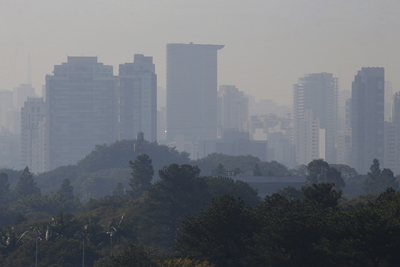
    <content:encoded xmlns:content="http://purl.org/rss/1.0/modules/content/"><![CDATA[<p><img src="https://www.iea.usp.br/imagens/cidade-neblina-foto-marcos-santos-001.jpg" alt="São Paulo Poluída" class="image-right" title="São Paulo Poluída" /><span>The relationship between the spread of diseases and the lifestyle of big cities is finally getting significant attention of a branch of medicine a</span>fter decades of investment in hospital technology and drug development. T<span>he risk of contracting infectious diseases increases with the presence of factors such as </span>air pollution, lack of green space in urban areas, low quality of public transport and poor housing conditions.</p>
<p><span>In order to explore this topic and to encourage changes, issue #86 of the Institute's journal 'Estudos Avançados' brings a dossier of seven articles on metropolises and health. "This dossier takes up one of the journal's goals: the combination of the objective study of Brazilian social problems with <span>consistent and responsible </span>public policy proposals," explains Alfredo Bosi, editor of the publication. The full content is already available at <a class="external-link" href="http://www.scielo.br/scielo.php?script=sci_issues&amp;pid=0103-4014&amp;lng=pt&amp;nrm=iso">SciELO</a>. To purchase a printed version (Portuguese only), please write to <a href="mailto:estavan@usp.br">estavan@usp.br</a>.</span></p>
<p><img src="https://www.iea.usp.br/imagens/Capa-Revista-Estudos-Avancados-v.30-n.86-web.jpg/@@images/e5e0de69-dbba-482b-a9c9-4daa4395239b.jpeg" alt="Capa Revista Estudos Avançados v.30 n.86" class="image-left" title="Capa Revista Estudos Avançados v.30 n.86" /><a href="https://www.iea.usp.br/en/iea/organization/directorship" class="external-link">Paulo Saldiva</a>, director of the IEA and a professor at the USP's School of Medicine, has closely worked with this issue, both with the publication of an article and with editorial advice. For years he has led research seeking to trace potential ways to improve the quality of life in cities. In the new issue's opening article, Saldiva, together with <span>Laís Fajerstajn</span> and Mariana Veras, gives concrete examples to <span>answer how cities can improve or hinder the health of their residents.</span></p>
<p><span>"The anti-smoking law, which banned smoking in collective <span>indoor spaces</span> in the State of São Paulo in 2009, has reduced the exposure of nonsmokers to tobacco smoke. This law has also resulted in the decrease of the <span>cigarettes / day </span>rate among smokers," say the authors, completing with an opposite example: "The mobility crisis [in São Paulo] affects health not only because of the time lost in traffic and the adverse impacts of exposure to air pollution but also for its contribution to obesity, emotional stress, among others. In a congested city, children do not play in the street and adults do not return home for lunch", they argue.</span></p>
<p><span>In addition to this first article, six others make up the dossier "Metropolises and health". The authors are </span><span>Aluisio Cotrim Segurado, Alex Jones Cassenote, Expedito de Albuquerque Luna, </span><span>Suzana Pasternak, </span><span>Helena Ribeiro, Célia Regina Pesquero, Micheline de Sousa Zanotti S. Coelho, S</span><span>teffani Nikoli Dapper, Caroline Spohr, Roselaine Ruviaro Zanini, </span><span>Emílio Telesi Júnior, </span><span>Luís Fernando Amato-Lourenço, Tiana Carla Lopes Moreira, Bruna Lara de Arantes, Demóstenes Ferreira da Silva Filho and Thais Mauad.</span></p>
<p>The new issue of the journal also features a set of articles on literature, with readings of poetry and fictional works, and social sciences. Bernardo Sorj, a former visiting professor at the IEA, contributes with a text on democratic coexistence as polytheism of values. There are also essays on the Brazilian truth commission (by journalist <a href="https://www.iea.usp.br/en/persons/researchers/eugenio-bucci-1" class="external-link">Eugênio Bucci</a>), on the Brazilian Civil Rights Framework for the Internet, on the political construction of Brazil, and on the public university in neoliberal times. The list below contains the names of the authors who have contributed with each one of the addressed themes:</p>
<p><span><strong>Social sciences and the search for a meaning</strong></span></p>
<p><span> </span><i>Bernardo Sorj<br /></i><i>Danilo Martuccelli<br /></i><i>Ricardo Abramovay</i></p>
<p><span><strong>Literature</strong></span></p>
<p><span> </span><i>Alfredo Bosi<br /></i><i>José Feres Sabino<br /></i><i>André Luis Rodrigues<br /></i><i>Diego A. Molina<br /></i><i>Alessandra Matias Querido</i></p>
<p><span><strong>Current affairs</strong></span></p>
<p><span> </span><i>Eduardo Tomasevicius Filho<br /></i><i>Jacques Marcovitch</i></p>
<p><span><strong>Comments</strong></span></p>
<p><span> </span><i>Eugênio Bucci<br /></i><i>Rubens R. Sawaya<br /></i><i>Samuel Araújo<br /></i><i>Bernardo Parodi Svartman<br /></i><i>Matheus Cardoso da Silva</i></p>
<p> </p>
<p style="text-align: right; "><span class="discreet">Photo: Marcos Santos/USP Imagens </span></p>]]></content:encoded>
    <dc:publisher>No publisher</dc:publisher>
    <dc:creator>Richard Meckien</dc:creator>
    <dc:rights>Original version in Portuguese by Fernanda Rezende.</dc:rights>
    
      <dc:subject>Climate</dc:subject>
    
    
      <dc:subject>Literature</dc:subject>
    
    
      <dc:subject>Climate Change</dc:subject>
    
    
      <dc:subject>Journal</dc:subject>
    
    
      <dc:subject>Public Policies</dc:subject>
    
    
      <dc:subject>Urbanism</dc:subject>
    
    
      <dc:subject>Medicine</dc:subject>
    
    
      <dc:subject>Cities</dc:subject>
    
    <dc:date>2016-04-27T15:20:00Z</dc:date>
    <dc:type>Notícia</dc:type>
  </item>


  <item rdf:about="https://www.iea.usp.br/en/news/journal-issue-110">
    <title>Impacts of Digital Technology on Society are addressed by "Estudos Avançados" #110</title>
    <link>https://www.iea.usp.br/en/news/journal-issue-110</link>
    <description> </description>
    <content:encoded xmlns:content="http://purl.org/rss/1.0/modules/content/"><![CDATA[<p><a href="https://www.iea.usp.br/en/revista" class="external-link"><img src="https://www.iea.usp.br/imagens/capa-da-revista-estudos-avancados-110" alt="Capa da revista Estudos Avançados 110" class="image-right" title="Capa da revista Estudos Avançados 110" /></a></p>
<p><span>"The current levels of technological development place the old dilemmas between the positive or perverse effects of the use of technologies in all fields of social existence under new perspectives," says sociologist </span><a href="https://www.iea.usp.br/en/persons/researchers/sergio-adorno" class="external-link">Sérgio Adorno</a><span>, editor of IEA's journal </span><i><a href="https://www.iea.usp.br/en/journal" class="external-link">Estudos Avançados</a></i><span>, when presenting the dossier "Human Implications of Technosciences," the main one of its 110th issue. </span><span>The </span><span>digital version is now available, free of charge, at the <a class="external-link" href="https://www.scielo.br/j/ea/i/2024.v38n110/">Scientific Electronic Library Online</a> (Portuguese only)</span><span>.</span></p>
<p><span>Adorno emphasizes that the opening article of the dossier, "Diagnostics of Contemporaneity," by semiologist Lucia Santaella, former holder of the Oscar Sala Chair (a partnership of the IEA with the </span>Brazilian Internet Steering Committee),<span> highlights the characteristics of the so-called second era of the internet, "characterized by big data, the explosion of data, and datafication." The author identifies five attributes of this era: hybridity, temporal entanglement, omnipresent interactivity, acceleration, and discursive shattering.</span></p>
<p><strong>Fragmentation</strong></p>
<p>According to Santaella, "the political, cultural, and psychic consequences of these disruptions are many and profound, including the fragmentation and dispersion of old concepts of people, populism, public space, public debate, etc." For her, "ill-informed, rhetorical, and nostalgic sensationalism does nothing to help facing the challenges." As a militant for the advancement of knowledge throughout her entire career, she defends the motto "to understand well to act better, even though this implies engagement in the ethics of the intellect that costs time, dedication, and a lot of study of what counts against the intellectual farces that breed in self-indulgent gregariousness."</p>
<p><strong>Consumption and hypervigilance</strong></p>
<p><span>Adorno states that the other six articles in the dossier seek to dialogue with Santaella's theoretical-empirical perspective through the analysis of various themes. One of them is the articulation between the experience of consumption as subjectivity and the transformations in global markets over the last 40 years, the subject of “Data Capitalism and Aesthetic Wars,” by Abel Reis and Silvia Piva.</span></p>
<p><span>In "</span><span>Sociotechnical Silencing and the Limits of <i>Instrumental Power</i></span><span>," Alcides Peron and Anderson Röhe discuss how electronic resources enable not only hypervigilance, but also risk classification and predictive devices. They warn that these systems, despite acting in crime prediction and risk management, provide the State with a non-violent form of power focused on shaping individuals' behaviors and decisions.</span></p>
<p><span>However, digital technologies also enable innovative educational perspectives. An example of this is discussed in the article "</span><span>Aesthetics, Playability, and Narrative for the Anthropocene</span><span>," in which Clayton Policarpo, Guilherme Cestari, and Luiz Napole study two video games that, through immersion, premises, and </span><span>proposed </span><span>critical scenarios, relate environmental impacts and dystopian perspectives to the future of the human species, a perspective in which "some of the epistemological, ethical, and identity challenges of the Anthropocene are present."</span></p>
<p><span><strong>Flying car</strong></span></p>
<p><span>A matter of the moment is the technological context of development of the so-called flying car, whose already developed and future models tend to be autonomous (without a pilot). Magaly Prado and Gustavo Galbiatti are the authors of "A Lot of Hot Air? A Feasibility Analysis of Flying Cars as Emission-Free Autonomous Machines." Based on interviews with experts and related bibliography, they analyze technical issues, environmental sustainability, and economic viability of the new vehicle.</span></p>
<p>Adorno comments that the dossier also revisits "old questions regarding the impact of digital technology in the Brazilian context, focusing on its virtues arising from the expansion of sharing and access to information for a greater number of citizens, but also its dangers in terms of possible effects of domination."</p>
<p>The final article in the dossier, "<span>Technototalitarianism and the Risks for Democracy and Individuals</span><span>," by Eder Van Pelt, addresses the risks of legitimacy in the exercise of power with the use of new technologies in a possible technocracy that makes the political use of technologies as instruments for controlling individuals' activities. He defends the need to think about effective means for the integration between specialized technology systems and democracy, which leads to concrete possibilities for a more consistent and participatory public debate, especially with the inclusion of all those affected by these new control devices.</span></p>
<p><strong>Literature</strong></p>
<p><span>The issue also contains two sets of texts. One of them is the "Presences" section, a collection of "suggestive and rich essays on literary criticism," according to Adorno, as well as articles on gender issues. The essays on literature address the following themes: a self-criticism by Euclides da Cunha regarding the meaning of the War of Canudos; precariousness and memory in the fiction of Nélida Piñon and Ana Teresa Torres; the edition of an unpublished poem by Caldas Barbosa; the decomposition of the detective novel genre into a short story by Machado de Assis; the origins of poetry in French by Sérgio Milliet; and the theatrical scene in Bahia in 1551/1552 produced by a Jesuit group linked to Father Manuel da Nóbrega.</span></p>
<p><strong>Women's participation</strong></p>
<p>The meanings and psychological transformations that accompany women's political participation are discussed based on the life trajectory of one of the participants in the World March of Women (a movement started in 2000), feminist and anti-racist activist Helena Nogueira, who died in 2020. Based on <i>Das Kapital</i>, by Karl Marx, and "Fetishism – Colonizing the Other," by Vladimir Safatle, a further text discusses the "fetishism of the equal, one of the ramifications of commodity fetishism," based on the relationships between the characters from the film "The Second Mother," directed by Anna Muylaert. The section ends with an article about the emancipation of women and the presence of science and mathematics in the newspaper <i>O Quinze de Novembro do Sexo Feminino</i>, a "fortnightly, literary, recreational, news, and political journal" published in Rio de Janeiro in 1889 and 1890 by Francisca Senhorinha de Motta Diniz.</p>
<p><strong>Human evolution</strong></p>
<p><span>The section "Evolution, Nemory, and Discrimination" presents three articles. The first, with the participation of paleoanthropologist Walter Neves, a senior professor at the IEA, provides a synthesis of human evolution with special attention to issues of the Middle Pleistocene (the period when </span><i>Homo sapiens</i><span> emerged), advances in the area, and the Brazilian contribution to the topic. The second critically analyzes how the legacy of the professors of the French Mission at the former Faculty of Philosophy, Sciences, and Languages and Literature at USP became a relevant aspect of memorialistics among participants in the history course. The third theme of the section is the scarcity of conservatives in American academia, with an assessment of the relative strength of four hypotheses for this: meritocracy (less academic aptitude), discrimination, conversion (the environment inducing to the left), and self-selection (voluntary option in not joining the academy).</span></p>
<p>The issue is completed with reviews of four books: "Arrabalde: In Search of the Amazon," by João Moreira Salles; "The Whiteness Pact," by Cida Bento; "The Margins of Fiction," by Jacques Rancière; and "Conflict Management and Justice: Small Claims in a US Court," by Ann Arbor.</p>
<p>The list below contains the names of the authors who have contributed with each one of the addressed themes:</p>
<p><strong>Human implications of the technosciences</strong></p>
<p>A Diagnosis of Contemporaneity<span> - </span><i>Lucia Santaella</i><br />Data Capitalism and Aesthetic Wars<span> - </span><span><i>Abel Reis and Silvia Piva<br /></i></span>Sociotechnical Silencing and the Limits of "Instrumental Power"<span> - </span><span><i>Alcides Eduardo dos Reis Peron and Anderson Röhe<br /></i></span>Aesthetics, Playability, and Narrative for the Anthropocene<span> - </span><span><i>Clayton Policarpo, Guilherme Henrique de Oliveira Cestari, and Luiz Felipe Napole<br /></i></span>A Lot of Hot Air? A Feasibility Analysis of Flying Cars  as Emission-Free Autonomous Machines<span> - </span><span><i>Magaly Prado and Gustavo Galbiatti<br /></i></span><span>Consumerism, Citizenship, and Surveillance:  Refections on Technological Expansion and its Impact on the Brazilian Context</span><span> - </span><span><i>Bruno Pompeu, Eneus Trindade, and Silvio Koiti Sato<br /></i></span><span>Technototalitarianism and the Risks for Democracy  and Individuals </span><span>- </span><span><i>Eder Van Pelt</i></span></p>
<p><strong>Presences</strong></p>
<p>The "Madness of Crowds." Criticism and Self-Criticism in Euclides da Cunha<span> - </span><span><i>Ulysses Pinheiro<br /></i></span>Fictions of the Spoils. Precariousness and Memory  in the Writings of Nélida Piñon and Ana Teresa Torres<span> - </span><span><i>Jesús Arellano<br /></i></span>An Unpublished Poem by Caldas Barbosa:  Introduction, Edition, and Commentary<span> - </span><span><i>Caio Cesar Esteves de Souza and Leonardo Zuccaro<br /></i></span>Machado de Assis and His Parody of the Detective Novel<span> - </span><span><i>Cleber Vinicius do Amaral Felipe<br /></i></span>In the Beginning it Was Serge: Sérgio Milliet’s Poetry in French - <i>Valter Cesar Pinheiro<br /></i>Manuel da Nóbrega and the Performance of Merchandise - <i>Sérgio de Carvalho<br /></i>Taking the Floor: Helena Nogueira and the Spoken Word as a Political and Psychological Achievement - <i>Mariana Luciano Afonso<br /></i>The Mechanism of the "Fetishism of the Equal" and its Revelations in the Film "The Second Mother," by Anna Muylaert - <i>Camila Franquini Pereira<br /></i>The Emancipation of Women and the Presence  of Science and Mathematics in the Fortnightly Journal "O Quinze de Novembro do Sexo Feminino" - <i>Zaqueu Vieira Oliveira and Victoria Maria Lopes Corrêa</i></p>
<p><strong>Evolution, memory, and discrimination</strong></p>
<p><i> </i></p>
<p>The Middle Pleistocene in Human Evolution<span> - </span><i>Walter Neves and Gabriel Rocha<br /></i><span>The French Mission in USP’s History  Department: Inaugural Report and Monumentalization (1949-1971)</span><span> - </span><i>Diego José Fernandes Freire<br /></i><span>Four Hypotheses for the Conservative Dearth in North American Academia</span><span> - </span><i>Pedro Franco</i></p>
<p><strong>Reviews</strong></p>
<p><i> </i></p>
<p><span>New Words in Amazonian Literature - </span><i>Jacques Marcovitch<br /></i>Pact of Whiteness: Institutional Racism and Inequalities in the Workplace<span> </span><span>-</span><span> </span><i>Raul Gomes de Almeida<br /></i>The Space-Time of Contemporary Literature: on Jacques Rancière’s "The Edges of Fiction"<span> - </span><i>João Arthur Macieira<br /></i>On Fairness, Legal Rites, and Bargaining: An Anthropological Reading of the United States’ Small Claims Courts<span> </span><span>-</span><span> </span><i>Eduardo C.B. Bittar</i></p>
<ul>
</ul>
<ul>
</ul>
<ul>
</ul>
<ul>
</ul>
<div id="_mcePaste">
<div class="tlid-results-container results-container">
<div class="tlid-result result-dict-wrapper">
<div class="result tlid-copy-target">
<div class="text-wrap tlid-copy-target"></div>
</div>
</div>
</div>
</div>]]></content:encoded>
    <dc:publisher>No publisher</dc:publisher>
    <dc:creator>Richard Meckien</dc:creator>
    <dc:rights>Original version in Portuguese by Mauro Bellesa.</dc:rights>
    
      <dc:subject>Nutrition</dc:subject>
    
    
      <dc:subject>Research Group: Nutrition and Poverty</dc:subject>
    
    
      <dc:subject>Journal</dc:subject>
    
    
      <dc:subject>Urbanism</dc:subject>
    
    
      <dc:subject>Public Health</dc:subject>
    
    
      <dc:subject>Smart Cities</dc:subject>
    
    
      <dc:subject>Publications</dc:subject>
    
    
      <dc:subject>IEA</dc:subject>
    
    
      <dc:subject>Planetary Health</dc:subject>
    
    <dc:date>2024-04-28T17:40:00Z</dc:date>
    <dc:type>Notícia</dc:type>
  </item>


  <item rdf:about="https://www.iea.usp.br/en/news/journal-issue-109">
    <title>Health, nutrition, and cities are the themes of "Estudos Avançados" #109</title>
    <link>https://www.iea.usp.br/en/news/journal-issue-109</link>
    <description> </description>
    <content:encoded xmlns:content="http://purl.org/rss/1.0/modules/content/"><![CDATA[<p><a href="https://www.iea.usp.br/en/revista" class="external-link"><img src="https://www.iea.usp.br/imagens/capa-de-estudos-avancados-109" alt="Capa de 'Estudos Avançados' 109" class="image-right" title="Capa de 'Estudos Avançados' 109" /></a></p>
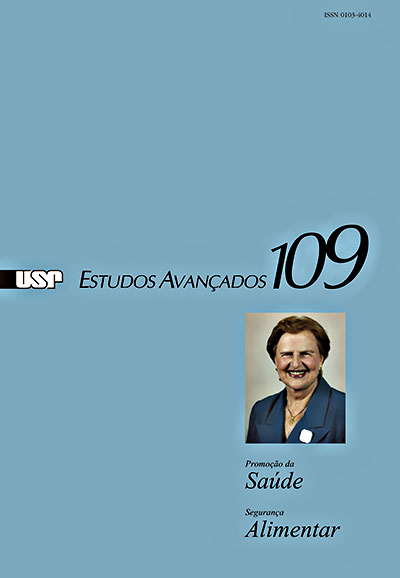
<p><span>T</span>he three dossiers that make up <i><a href="https://www.iea.usp.br/en/journal" class="external-link">Estudos Avançados</a></i> #109, launched last month, maintain the journal's tradition of "addressing current themes of social relevance, combining the communication of research results with public debate," in the words of editor <a href="https://www.iea.usp.br/en/persons/researchers/sergio-adorno" class="external-link">Sérgio Adorno</a>. The themes covered by this issue are "Health Promotion", "Food Security," and "Cities and Technologies". The intention, as always, is to collaborate with the "formulation and implementation of government policies aimed at overcoming problems that affect quality of life and reducing social inequalities." The <span>digital version is now available, free of charge, at the <a class="external-link" href="https://www.scielo.br/j/ea/i/2023.v37n109/">Scientific Electronic Library Online</a> (Portuguese only).</span></p>
<p>The interdisciplinarity of the analyzes is demonstrated in the opening article of the first dossier, entitled "<span>Cardiovascular Health and Housing: An Important Dialogue Held in Precarious Settlements in São Paulo."</span> Authored by experts in geography, urbanism, and pathology, the study analyzed data from residents of São Paulo who died due to diseases of the circulatory system <span>from 2010 to 2016 </span><span>or were hospitalized through the Brazilian public health service (SUS) due to the same </span><span>illnesses </span><span>from 2011 to 2016</span><span>. The type of housing settlement of individuals (subnormal, precarious, or regular), age, and sex have been taken into account.</span></p>
<p>The difference in cardiovascular health between the three types of settlements assessed through the proportions of hospital admissions and mortality rates has shown that almost 1.7 million people in São Paulo are at a great disadvantage in relation to the remaining 85% of the population .</p>
<p>Although precarious housing is "the cause or a determining factor of many physical and mental pathologies," another study in the dossier demonstrates that "the legal health framework in Brazil restricts or even prohibits the use of health resources in housing issues, delimits the composition of health teams to medical-hospital professions, as well as does not consider the use of resources from other budgetary functions in the provision of housing for specific health purposes."</p>
<p>Such delimitations should be removed in situations where there is scientific evidence that the housing issue is a social determinant of health, according to the recommendation of the article "<span>Why Investment and Focus on Housing Issues are Also a Measure of Health</span>."</p>
<p><strong>Vulnerability</strong></p>
<p>One must also consider the multiple vulnerabilities of peripheral territories, which makes intervention in these spaces a challenge that needs to be faced from the logic of complex problems, as "they do not have a single, linear solution to overcome them," warns a third study. Based on work developed by the Tide Setubal Foundation on the outskirts of São Miguel Paulista, in São Paulo, the article "<span>Intersectoriality and Urban Improvements in the Outskirts of São Paulo: The Case of São Miguel Paulista"</span> proposes that intersectorality should be promoted from the public budget, impact measurement, and community protagonism.</p>
<p>The dossier also presents a study on the history of ideas regarding the conditions for the development of individuals. The article "<span>Education, Health, and Progress: Discussions on Environmental Effects on Child Development (1930-1980)"</span> shows how there was a "strong association between promoting the development of individuals and social progress" in the covered period.</p>
<p>"It was understood that public investments in creating better health and education conditions for children would favor the country’s advancement." School was seen as "an environment conducive to the healthy development and civilization of children."</p>
<p>In terms of health, this development perspective has become vulnerability in many peripheral areas where the control of the territory is exercised by organized crime. The situation is exemplified in a study of a basic health unit located in an area dominated by drug trafficking.</p>
<p>Based on a field diary and open interviews with different interlocutors in the territory of a peripheral health unit in a medium-sized municipality in the state of São Paulo, the work pointed out that, "given the absence or insufficiency of the State in territories of social vulnerability, trafficking can function both as an agent of precarious working relationships between health teams and the community, and as a provider of support and protection mechanisms for the population, mediation, and management of the population's daily relationships, including their relationship with health equipment.</p>
<p dir="ltr"><span><strong>Health Promotion</strong></span></p>
<p>Even in the face of countless social vulnerabilities, it is necessary to find ways to promote health. It becomes relevant to understand the different interpretations of health promotion, despite the fact that the field is going through a process of institutionalization and strengthening. An article by public health experts discusses these interpretations, whose diversity demonstrates the need to delve deeper into some topics, such as the role of the health sector, behavioral change, and individual approaches, according to the researchers.</p>
<p>In their study, they present other ways of understanding these themes through the contribution of workers, primary care managers, and experts on the issue. The idea is to "expand the possibilities of practicing health promotion in primary care".</p>
<p>The work methodology has included semi-structured interviews with experts and consultation with municipal managers and workers in primary care using the electronic form FormSUS. 13 experts were interviewed between November 2017 and February 2018. The interviewees joined the Working Group on Health Promotion and Sustainable Development (GTPSDS), linked to the Brazilian Public Health Association (ABRASCO), "a group that defends action in social determination and does not restrict itself to risk and protective factors for chronic non-communicable diseases (NCDs)".</p>
<p>Another study in the dossier has analyzed the impact of the implementation of cycle paths in the city of São Paulo on the practice of leisure-time physical activities and the correlations of this practice with high blood pressure rates. A group of 1,431 people have been evaluated, living within a maximum of 1 km of cycle paths. The work highlights the need to improve environmental conditions (implementation of cycle paths, for example) in areas of greatest socioeconomic need in the city in order to generate greater opportunities to practice physical activity and the consequent reduction in rates of high blood pressure and other chronic diseases.</p>
<p><strong>Well-being</strong></p>
<p>Improving quality of life is also the subject of another article, which brings together notions of well-being in four main matrices: that of indigenous worldviews, that of the Latin Americanist utopian thought, the state-owned one, and the socio-environmental one. According to the authors, these matrices "hold convergent aspects among themselves, forming a common core that emulates new philosophical, economic, and political proposals as alternatives to the model of life, work, and relationship with the environment produced by neoliberal capitalism."</p>
<p>The autonomy of people under guardianship is also discussed in the dossier. A study by researchers in the field of law examines the possibility of substitute consent in the context of health in cases of people in a guardianship situation to determine whether the legal representative of people with disabilities would also be allowed to decide on existential aspects.</p>
<p><span>The dossier ends with an article on the socio-environmental reality of implementing reverse medication logistics to minimize drug contamination and achieve the relevant Sustainable Development Goal. The study highlights control, monitoring, and environmental education actions to reduce the impacts of pharmaceutical waste and promote sustainability.</span></p>
<p><strong>Nutrition</strong></p>
<p>The first article in the dossier entitled "Food Security" aims to contribute to the analysis of the current scenario on food insecurity in Brazil, based on studies carried out by two IEA research groups (Nutrition and Poverty, and Planetary Health) in partnership with the AgriBio Axis of the Center for Artificial Intelligence (C4AI) at USP.</p>
<p>The contribution of agricultural production to improving this scenario <span>in cities </span><span>is explained in an article about the results of the debate Urban Agriculture and Food and Nutritional Security: Organic Food in School Food, which took place at the 11th Service, Research, and Public Policy Seminar. The event was organized by the Nutrition and Poverty Research Group and the Urban Agriculture Study Group, both based at the IEA.</span></p>
<p>The set of texts includes the analysis of a practical health and food care project for families with children and adolescents in situations of malnutrition. The work dealt with the "short production-commercialization chain" of food to support project actions involving families with children and adolescents served by the Nutritional Recovery and Education Center (CREN).</p>
<p>A recent topic in the spectrum of eating habits, flexitarianism, is also present in the dossier, with a study on the factors that lead flexitarians to different levels of reduction in meat consumption.</p>
<p><span><strong>Urbanism</strong></span></p>
<p>Through a 2009 municipal law, strategies for adapting to climate change and disaster management were established in the city of São Paulo. The initial article in the dossier entitled "Cities and Technologies" analyzes the effectiveness of the legal framework of this policy, its articulation with other relevant standards and environmental law, and how its governance has been constructed.</p>
<p>Climate change and other factors, such as <i>El Niño</i>, have a direct impact on water availability, as demonstrated by the current drought affecting several municipalities in the Amazon, which lack policies and structures to face the problem. Hence the importance of municipalities having greater participation in the National Water Resources Management System (SINGREH), warn the authors of the article "<span>Water Governance in Brazil: What is the Role of City Governments?</span>".</p>
<p>In addition to weak participation in the system, researchers indicate that municipalities do not have a policy on water resources. Another problem highlighted is the fact that legal reforms regarding water resources tend to further weaken the role of municipalities in the SINGREH.</p>
<p>Nature-based solutions are also present in the dossier, for instance in an article that addresses the integration of this type of solution in a brownfield revitalization project. Brownfield is an underutilized and degraded urban area whose transformation provides benefits to the population.</p>
<p>The evolutionary process of cities is approached in a philosophical and technological way. An article discusses some concepts created by French philosopher Michel Foucault (1926-1984), such as discipline and biopower, and applies them to the history of Brazilian urbanism, especially in the cases of Rio de Janeiro and São Paulo. Another text examines the technologies that have led to an urban revolution with the emergence of smart cities, due to the proliferation of continuously connected electronic equipment, which allows managing the urban structure in a more efficient and optimized way, say the authors.</p>
<p>The list below contains the names of the authors who have contributed with each one of the addressed themes:</p>
<p><strong>Health Promotion</strong></p>
<p>Cardiovascular Health and Housing: An Important Dialogue Held in Precarious Settlements in São Paulo<span> - </span><i>Ligia Vizeu Barrozo, Carlos Leite, Edson Amaro Jr., and Paulo Hilário Nascimento Saldiva</i><br /><span>Why Investment and Focus on Housing Issues are Also a Measure of Health - </span><i>Eduardo Castelã Nascimento, Wesllay Carlos Ribeiro, and Suzana Pasternak</i><br /><span>Intersectoriality and Urban Improvements in the Outskirts of São Paulo: The Case of São Miguel Paulista - </span><i>Mariana Almeida</i><br /><span>Education, Health, and Progress: Discussions on Environmental Effects on Child Development (1930-1980) - </span><i>Ana Laura Godinho Lima</i><br /><span>Basic Healthcare in a Scenario of Vulnerability: Health Production and the Informal Governance of Drug Traffickers - </span><i>Amanda Dourado Souza Akahosi Fernandes, Sabrina Helena Ferigato, Massimiliano Minelli, and Thelma Simões Matsukura</i><br /><span>Health Promotion in Primary Care: The Role of the Healthcare Sector, Behavioral Change, and Individual Approaches - </span><i>Fabio Fortunato Brasil de Carvalho, Marco Akerman e Simone Cynamon Cohen<br /></i>Bike Paths, Leisure-Time Physical Activity and High Blood Pressure: A Longitudinal S<span>tudy</span><span> - </span><i>Alex Antonio Florindo, Guilherme Stefano Goulardins, and Inaian Pignatti Teixeira<br /></i>Between Desirable Utopias and Possible Realities: Contemporary Notions of Living Well<span> - </span><i>Gabriel Castro Siqueira, Bruno Simões Gonçalves, and Alessandro de Oliveira dos Santos</i><br />The Limits of Guardianship, and the Free and Informed Consent of People With Disabilities<span> - </span><i>Jussara Maria Leal de Meirelles and Ana Paula Vasconcelos</i><br />Reverse Medication Logistics in Brazil: A Socio-Environmental Analysis<span> - </span><i>Sara Raquel L. B. de Lima, Viviane Souza do Amaral, and Julio Alejandro Navoni</i></p>
<p><strong>Food Security</strong></p>
<p>Food Security: Reflections on a Complex Problem<span> - </span><i>Semíramis Martins Álvares Domene et al.</i><br /><span>Healthy Diets, and Urban and Family Farming - </span><i>Ana Lydia Sawaya et al.</i><br /><span>In the Gaps of Everyday Life: Reflections on Professional Practices and Insights Based on Local Foodstuffs - </span><i>Giulia de Arruda Maluf, Maria Paula de Albuquerque, Maria Fernanda Petroli Frutuoso, and Bernardo Teixeira Cury</i><br /><span>What Influences Flexitarians to Reduce Meat Consumption in Brazil? - </span><i>Mariele Boscardin, Andrea Cristina Dorr, Raquel Breitenbach, and Janaína Balk Brandão</i></p>
<p><strong>Cities and Technologies</strong></p>
<p><i> </i></p>
<p>Adaptation to Climate Change and Disaster Prevention in the City of São Paulo<span> - </span><i>Ana Maria de Oliveira Nusdeo, Andresa Tatiana da Silva, and Fernanda dos Santos Rotta</i><br /><span>Water Governance in Brazil: What is the Role of City Governments? - </span><i>Valérie Nicollier, Asher Kiperstok, and Marcos Eduardo Cordeiro Bernardes</i><br /><span>Nature-Based Solutions in Urban Brownfield Revitalization Projects: New Paradigms for Urban Problems - </span><i>Evandro Nogueira Kaam and Amarilis Lucia Casteli Figueiredo Gallardo</i><i><br /></i><span>On Foucault and Brazilian Urbanism: A Genealogy of Planning (c. 1850s-1945) - </span><i>Joel Outtes</i><br /><span>Cognitive Cities: Technological Utopia or Urban Revolution? - </span><i>Marcio Lobo Netto and João Francisco Justo</i><br /><span>Intrapreneurship and Innovation in Public Organizations: The Case of Brazil’s Census - </span><i>Roberto Kern Gomes and Magnus Luiz Emmendoerfer</i></p>
<ul>
</ul>
<ul>
</ul>
<ul>
</ul>
<div id="_mcePaste">
<div class="tlid-results-container results-container">
<div class="tlid-result result-dict-wrapper">
<div class="result tlid-copy-target">
<div class="text-wrap tlid-copy-target"></div>
</div>
</div>
</div>
</div>]]></content:encoded>
    <dc:publisher>No publisher</dc:publisher>
    <dc:creator>Richard Meckien</dc:creator>
    <dc:rights>Original version in Portuguese by Mauro Bellesa.</dc:rights>
    
      <dc:subject>Nutrition</dc:subject>
    
    
      <dc:subject>Research Group: Nutrition and Poverty</dc:subject>
    
    
      <dc:subject>Journal</dc:subject>
    
    
      <dc:subject>Urbanism</dc:subject>
    
    
      <dc:subject>Public Health</dc:subject>
    
    
      <dc:subject>Smart Cities</dc:subject>
    
    
      <dc:subject>Publications</dc:subject>
    
    
      <dc:subject>IEA</dc:subject>
    
    
      <dc:subject>Planetary Health</dc:subject>
    
    <dc:date>2023-11-06T16:40:00Z</dc:date>
    <dc:type>Notícia</dc:type>
  </item>


  <item rdf:about="https://www.iea.usp.br/en/news/estudos-avancados-91-rusian-revolution">
    <title>100 years of the Russian Revolution is the theme of 'Estudos Avançados' #91</title>
    <link>https://www.iea.usp.br/en/news/estudos-avancados-91-rusian-revolution</link>
    <description></description>
    <content:encoded xmlns:content="http://purl.org/rss/1.0/modules/content/"><![CDATA[<p><img src="https://www.iea.usp.br/imagens/capa-da-revista-estudos-avancados-91" style="float: right; " title="Capa da revista &quot;Estudos Avançados&quot; 91" class="image-inline" alt="Capa da revista &quot;Estudos Avançados&quot; 91" /></p>
<p>Throughout much of the 20th century, "there was no region or individual not living under the cloud of dream and gunpowder" that was formed in Russia in 1917, according to Bruno Barreto Gomide, a professor of Russian literature at USP's Faculty of Philosophy, Languages and Literature, and Human Sciences (FFLCH).</p>
<p>Various aspects of the cultural, political and social history of the Russian Revolution have been analyzed in a dossier organized by Gomide for issue 91 of the journal "Estudos Avançados", launched this month.</p>
<p>With contributions of researchers from the United Kingdom, Brazil and Argentina, "Centenary of the Russian Revolution" consists of one part dedicated to the sphere of culture, ideas and art, and another focused on the political and social history of the revolution.</p>
<p>In the first section, Galin Tihanov, from the <span>University of London's </span>Queen Mary College, addresses issues of the Russian-Soviet intellectual history that are "rarely attended by Brazilian scholars," according to Gomide, such as language theories and Eurosianism, and proposes a redefinition of the place of intellectual currents such as Marxism and Slavophilism in the course of the Soviet period. Evgeny Dobrenko, from the University of Sheffield, discusses the history of Soviet art and cultural institutions, and critically analyzes the deployment and significance of socialist realism. Andrea Gullotta, from the University of Glasgow, outlines a detailed panorama of the literature produced in the <i>gulag</i>, a system of labour camps maintained in the Soviet Union.</p>
<p>The second part of the dossier opens with a report by Martín Baña, from the University of Buenos Aires, on the main historiographical trends regarding the political-social aspects of the revolution, such as the "political sovietology of the Cold War, the fundamental contribution offered by the revisionist strand of social history from the 1970s onwards, and the "cultural turnaround," which is a strong vein of recent studies." The dossier ends with articles by Daniel Aarão Reis, from the Fluminense Federal University, and Lincoln Secco, from FFLCH-USP, on some key moments of the revolutionary cycles of 1905 and 1921.</p>
<p><strong>Urbanism</strong></p>
<p>"Urbanism, Society and Culture" is the theme of the second set of texts of the issue. The dossier was organized by architect and graphic designer <a href="https://www.iea.usp.br/en/persons/researchers/ricardo-ohtake" class="external-link">Ricardo Ohtake</a>, director of the Tomie Ohtake Institute and current holder of the <a href="https://www.iea.usp.br/en/research/chairs/olavo-setubal-chair-of-arts-culture-and-science" class="external-link">Olavo Setubal Chair of Art, Culture and Science</a>, a partnership between the IEA and the Itaú Cultural Institute.</p>
<p>For the constitution of this thematic section, the starting point was to consider that the discussion about Brazilian cities "could and should" permeate the contact between urbanism and different fields of knowledge, according to Ohtake.</p>
<p>This is why the essays explore "the possibilities of historical and critical reflection on the fields of urbanism, art and culture," from four thematic axes: the construction of the city, the historical dimension of human action in the city, the city as synthesis of knowledge, and the future of the Brazilian city. These four themes r<span>espectively </span>feature the articles by Daniel Corsi, Lilia Moritz Schwarcz, Priscyla Gomes, and Nelson Brissac Peixoto.</p>
<p><strong>Psychoanalysis</strong></p>
<p>According to the editor of the journal, Alfredo Bosi, the third dossier of the issue, entitled "Psychoanalysis and Culture," with articles by Nelson da Silva Junior, Christian Ingo Lenz Dunker, Vladimir Safatle and Pedro Ambra, "illustrates the breadth of interactions between psychoanalysis and culture, confirming the fruitfulness of psychoanalytic methods applied to human sciences and literature."</p>
<p>The articles discuss the changing of the place and social functioning of science in culture, the narratives of suffering in the Brazilian literature of the current decade, the political implications of <span>transference</span> concepts, analytic act and subjective destitution as elaborated by Jacques Lacan from the 1960s, and the possibility of determining the symbolic character of gender identity processes from the constitution of alliance groups and policies.</p>
<p>The issue also has six other texts: a testimony by anthropologist Betty Mindlin on Ecléa Bosi, a professor emeritus from USP's Institute of Psychology (IP) who died on July 10, an article on engineering of complex systems, an analysis of <span>illness</span> indicators in higher education due to the overload of work, and reviews of the books "Should We Fear Russia," by Dmitri Trenin, "<span>O Mundo Sitiado – A Poesia Brasileira e a Segunda Guerra Mundial,</span>" by Murilo Marcondes, and "Desdizer e Antes," by Antonio Carlos Sechin.</p>
<p>The list below contains the names of the authors who have contributed with each one of the addressed themes:</p>
<p><strong>Centenary of the Russian Revolution</strong></p>
<p dir="ltr"><i><i>Bruno Barreto Gomide<br /><i>Galin Tihanov<br /><i>Evgeny Dobrenko<br /><i>Andrea Gullotta<br /><i>Martín Baña<br /><i>Daniel Aarão Reis<br /><i>Lincoln Secco</i></i></i></i></i></i></i></i></p>
<p><strong>Urbanism, Society and Culture</strong></p>
<p dir="ltr"><i style="text-align: justify; "><i>Ricardo Ohtake</i><br /><i><i>Daniel Corsi</i><br /><i><i>Lilia Moritz Schwarcz</i><br /><i>Priscyla Gomes<br /><i>Nelson Brissac Peixoto</i></i></i></i></i></p>
<p><strong>Psychoanalysis and Culture</strong></p>
<p dir="ltr"><i><i>Nelson da Silva Junior</i><br /></i><i><i>Christian Ingo Lenz Dunker </i><br /></i><i>Vladimir Safatle<br /><i>Pedro Ambra</i></i></p>
<p><strong>Additional Articles</strong></p>
<p dir="ltr"><i><i>José Roberto Castilho Piqueira and Sérgio Mascarenhas de Oliveira</i><br />Celina Hoffmann, Roselaine Ruviaro Zanini, Gilnei Luiz de Moura, Vânia Medianeira Flores Costa and Emanuelly Comoretto</i></p>
<p><strong>Testimony</strong></p>
<p dir="ltr"><i><i>Betty Mindlin</i></i></p>
<p><strong>Reviews</strong></p>
<p dir="ltr"><i><i>Lenina Pomeranz</i><br /></i><i><i>Betina Bischof</i><br /></i><i><i>Marcos Pasche</i></i></p>
<ul>
</ul>
<ul>
</ul>]]></content:encoded>
    <dc:publisher>No publisher</dc:publisher>
    <dc:creator>Richard Meckien</dc:creator>
    <dc:rights>Original version in Portuguese by Mauro Bellesa.</dc:rights>
    
      <dc:subject>Literature</dc:subject>
    
    
      <dc:subject>Urbanism</dc:subject>
    
    
      <dc:subject>Interdisciplinarity</dc:subject>
    
    
      <dc:subject>Journal</dc:subject>
    
    
      <dc:subject>Culture</dc:subject>
    
    
      <dc:subject>Psychoanalysis</dc:subject>
    
    
      <dc:subject>Russia</dc:subject>
    
    
      <dc:subject>Russian Revolution</dc:subject>
    
    <dc:date>2017-12-18T13:15:00Z</dc:date>
    <dc:type>Notícia</dc:type>
  </item>


</rdf:RDF>